



U.S. Personalized Medicine Market Size, Companies, Share, Patient Volume, Treatment Adoption Rates, Pricing Analysis, Regulatory Landscape, Competitive Positioning, and Demand Forecast
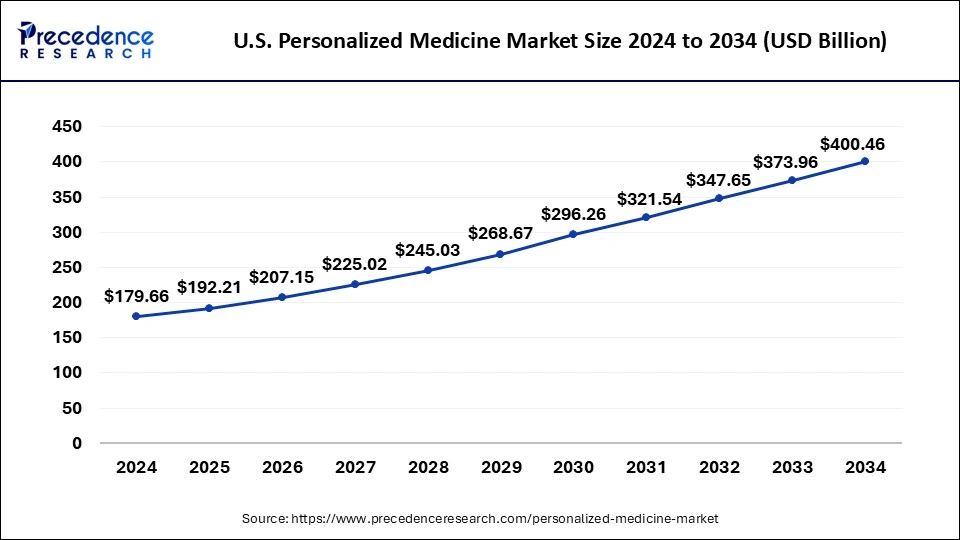
Rohan Patil, a Healthcare Industry Expert, highlights that the U.S. personalized medicine market has reached USD 207.15 billion in 2026 and is on track to reach USD 427.17 billion by 2035, advancing at a CAGR of 8.31%. Key U.S. personalized medicine market companies shaping the market include Thermo Fisher Scientific, Illumina, Johnson and Johnson, while major growth segments span By Product, By Application, By End-Use.
Source: https://www.precedenceresearch.com/us-personalized-medicine-market
 Get a Sample
 Table Of Content


U.S. Personalized Medicine Market Size and Forecast 2026 to 2035
The U.S. personalized medicine market size was calculated at USD 192.21 billion in 2025 and is predicted to increase from USD 207.15 billion in 2026 to approximately USD 427.17 billion by 2035, expanding at a CAGR of 8.31% from 2026 to 2035. The market is witnessing substantial growth due to the escalating burden of chronic diseases and the high demand for tailored treatments. This growth is supported by NGS and AI integration, spurring research and development in oncology and rare genetic disorders with precise, patient-specific therapies.
Key Takeaways
- By product, the personalized nutrition and wellness segment contributed the highest market share in 2025.
- By product, the personalized medicine therapeutics segment is expected to grow at a strong CAGR between 2026 and 2035.
- By application, the oncology segment held a major market share in 2025.
- By application, the central nervous system (CNS) segment is expected to expand at the fastest CAGR from 2026 to 2035.
- By end-use, the hospitals segment captured the highest market share in 2025.
- By end-use, the research and academic institutes segment is poised to grow at a healthy CAGR between 2026 and 2035.
Market Overview
The U.S. personalized medicine market is a transformative healthcare model that tailors medical treatments, interventions, and products to each patient's unique biological, genetic, and lifestyle profile. This market is driven by affordable genetic sequencing, targeted gene-based therapies, and favorable FDA regulations, leading to a shift from one-size-fits-all treatments to highly customized, effective, and less toxic patient care. The transformation is further accelerated by AI data modeling and companion tests, particularly in oncology and chronic disease management.
How is AI Revolutionizing the U.S. Personalized Medicine Industry?
Artificial Intelligence (AI) is revolutionizing the market by analyzing large datasets, including genomics, medical imaging, and clinical histories, to create predictive diagnostics, optimize drug dosages, and develop patient-specific therapies. AI processes genetic sequencing data to identify individual biomarkers and predict how patients will respond to specific drugs, reducing adverse effects and the need for trial-and-error in prescriptions. AI speeds up the research and development by predicting molecular targets and designing effective clinical trials, ensuring patients are matched with the most suitable therapies.
Market Report Coverage and Key Metrics
| Report Coverage | Details |
| Market Size in 2025 | USD 192.21 Billion |
| Market Size in 2026 | USD 207.15 Billion |
| Market Size by 2035 | USD 427.17 Billion |
| Growth Rate from 2026 to 2035 | CAGR of 8.31% |
| Base Year | 2025 |
| Forecast Period | 2026 to 2035 |
| Segments Covered | Product, Application, End Use, and Technology |
Market Dynamics
Drivers
Pharmacogenomics and Big Data Integration
The integration of AI and deep learning algorithms in pharmacogenomics is creating a new paradigm in which a person's genetic makeup determines their precise medication dosage and drug regimen. Supported by expansive national genomic projects and robust cloud infrastructure, healthcare providers can now cross-reference extensive datasets to predict drug metabolism, maximize therapeutic benefits, and prevent severe adverse reactions, resulting in highly customized, safer, and effective treatment plans.
Restraint
High Costs and Clinical Workflow Inefficiencies
Despite its revolutionary potential, the adoption of personalized medicine is hindered by the high costs associated with developing, testing, and manufacturing customized biologics and genetic therapies. Additionally, the U.S. clinical landscape faces operational bottlenecks. The lack of standardization in interpreting complex genomic data, along with a critical shortage of trained precision medicine specialists and genetic counselors, makes widespread adoption challenging in basic care settings.
Opportunity
Predictive Diagnostics and Early Intervention
Personalized medicine allows for the identification of cellular and molecular biomarkers that indicate disease risks even before clinical symptoms appear. By utilizing advanced companion diagnostics and liquid biopsies, oncologists and specialists can initiate targeted therapies at the earliest and most treatable stages of complex diseases. The market is set to transition from responding to advanced-stage illnesses to predictive, preventive, and precision-based patient care, ultimately improving patient quality of life.
How is the FDA Supporting the U.S. Personalized Medicine Market?
The FDA is actively facilitating the commercialization of precision medicine by establishing specialized regulatory frameworks and expedited approval pathways for targeted drugs and their corresponding companion diagnostics. Through designations such as Breakthrough Therapy and Orphan Drug status, the FDA fast-tracks the review process for treatments tailored to the molecular or genetic profiles of individual patients, providing innovators with quicker paths to market for customized, patient-specific therapies.
- For instance, the FDA has issued draft guidance outlining the "Plausible Mechanism Framework" to expedite the approval of individualized therapies for ultra-rare diseases, including gene editing and RNA treatments.
Market Segmentation Analysis
Product Insights
The personalized nutrition and wellness segment dominated the U.S. personalized medicine market in 2025, driven primarily by a significant shift toward preventive healthcare and lifestyle optimization. Consumers are increasingly relying on tech-enabled, data-driven approaches to manage their diet, weight, and chronic conditions. The integration of AI-driven meal planning, mobile health apps, and wearable technologies facilitates dynamic dietary adjustments and real-time metabolic tracking. Companies utilize microbiome sequencing, blood biomarkers, and epigenetic data to create highly specific nutritional interventions.
The personalized medicine therapeutics segment is expected to experience the fastest growth during the forecast period. This growth is driven by the increasing demand for targeted, genotype-specific therapies and companion diagnostics, and the rising clinical success of biologics and gene therapies in oncology and rare diseases. Healthcare providers are using genomic data to determine the correct drug and dosage, significantly minimizing trial-and-error prescribing and reducing severe adverse drug reactions. The shift toward outcome-driven, value-based models is propelling growth.
Application Insights
The oncology segment led the market in 2025 due to a rapid shift away from one-size-fits-all treatments. This approach minimizes adverse side effects and maximizes efficacy by tailoring therapies to a patient's unique genetic and molecular profile. Advanced NGS and liquid biopsies allow for early detection and precise identification of genetic mutations driving tumor growth. Pharmaceutical companies are increasingly shifting their drug pipelines toward biomarker-based cancer treatments, which yield higher response rates and are highly sought after by both patients and providers.
The central nervous system (CNS) segment is expected to experience the fastest growth during the forecast period, driven by innovations in genetic testing, neuroimaging, and AI-driven diagnostics. Traditional treatments for psychiatric and neurodegenerative conditions often suffer from low efficacy rates due to the complex and diverse nature of brain biology. However, new medicines are being developed that tailor therapies to a patient's unique molecular, genetic, and physiological profile to confirm early diagnoses, monitor disease progression, and track treatment efficacy.
End-use Insights
The hospitals segment led the U.S. personalized medicine market in 2025, primarily due to their ability to process high patient volumes and provide the specialized infrastructure required for complex clinical workflows. Hospitals serve as central hubs for patient care, equipped with advanced molecular imaging systems, multi-omics testing, and electronic health records (EHR) that seamlessly integrate AI into clinical decisions. The highest demand for personalized medicine originates from oncology, as hospitals are uniquely equipped to administer complex immunotherapies and companion diagnostics to large numbers of cancer patients.
The research and academic institutes segment is expected to experience the fastest growth during the forecast period, driven by a rapid surge in private and government funding, a push for translational research, and advancements in multi-omics. There is a strong emphasis on translating laboratory findings directly into patient care and clinical practice. The increased capability to analyze vast and complex datasets from genomics, proteomics, and transcriptomics enhances biomarker discovery and the development of innovative, patient-specific therapies.
U.S. Personalized Medicine Market: Country-Level Analysis
- Advanced Clinical Care for California and Massachusetts: States like California and Massachusetts are undisputed epicenters of biotechnology. Heavy venture capital investments and partnerships with major academic institutions in the Boston and San Francisco areas drive the development of targeted cancer immunotherapies and pharmacogenomics.
- The New York-Texas Digital Health Alliance: In response to a rising incidence of chronic ailments, states like Texas and New York are rapidly investing in big data and AI-driven clinical decision support software to match patients with the most effective, mutation-specific treatments.
- North Carolina and New Jersey's Manufacturing Renaissance: To meet the increasing domestic demand for precision therapeutics, major pharmaceutical and biotechnology companies are heavily investing in new localized manufacturing plants in states like North Carolina, bringing production closer to end users.
- Transforming Therapeutics in Washington and Illinois: Government initiatives and health organizations are providing substantial funding for biotech research. In states like Washington, this has led to a significant increase in the application of next-generation sequencing and liquid biopsies.
- Maryland's Clinical Trial Ecosystem: With the USFDA continuously evaluating the efficacy of breakthrough personalized therapies, pharma companies are running clinical trials for quality control, often centered on the clinical and regulatory powerhouses in Maryland.
- Retail Wellness and Nutrition of Florida and Arizona: In response to growing consumer demand for preventive healthcare, personalized dietary solutions, and genetically based wellness programs, states with large geriatric populations, such as Florida and Arizona, are experiencing significant growth in the personalized wellness product segment.
U.S. Personalized Medicine Market Value Chain Analysis
- Research and Development
This focuses on target gene identification, biomarker discovery, therapeutic vector design, and initial in vitro and in vivo safety and efficacy testing.
Key Players: Novartis, Pfizer, Sarepta Therapeutics, Charles River Laboratories, and IQVIA.
- Clinical Trials and Regulatory Approval
In this small-cohort and precision clinical trials, tailored to specific genetic subtypes, followed by data submission and FDA approval.
Key Players: Sarepta Therapeutics, Novartis, Pfizer, and Bluebird Bio.
- Manufacturing
This focuses on highly complex, bespoke production of viral vectors, mRNA formulations in strict sterile conditions.
Key Players: Catalent, Lonza, Biogen, FUJIFILM Diosynth Biotechnologies, and Gilead Sciences.
- Logistics and Patient Delivery
This involves mainly the specialized cryogenic and ultra-cold chain logistics to transport bespoke, time-sensitive therapies globally.
Key Players: DHL Group, FedEx Logistics, Marken, and UPS Healthcare.
Market Competitive Landscape: Leading Companies and Strategies
The U.S. personalized medicine market is highly established, primarily driven by NGS, AI integration, and biomarker-driven therapies. Leading companies such as Illumina, Inc., Thermo Fisher Scientific Inc., and Roche Diagnostics are focusing on genomic technology and are launching initiatives with healthcare systems to incorporate precision care into standard clinical workflows. For instance, Genentech utilizes comprehensive genomic sequencing in oncology to develop highly targeted, less toxic therapies tailored to specific patient mutations.
Looking ahead, emerging companies like Tempus, Nucleai, and Quantgene have significant opportunities to integrate AI-driven multi-omics into drug discovery to forecast patient responses. However, these companies face stringent barriers, including high upfront capital costs for clinical trials, complex FDA regulatory pathways, and restrictive reimbursement policies for innovative, costly genetic tests, which limit widespread market penetration.
US Personalized Medicine Market Companies
- Thermo Fisher Scientific
- Illumina
- Johnson and Johnson
- Pfizer
- Roche
- Novartis
- Bristol Myers Squibb
- Guardant Health
- Exact Sciences
- QIAGEN
Recent Developments US Personalized Medicine Market (2025-2026)
- In June 2026, Tempus AI, Inc. announced the formation of the IMS Open-Source Consortium to standardize digital pathology by collaborating with leading academic medical centers, including YNHH and MSK. The consortium aims to enhance clinical practices through advances in AI and digital pathology.(Source: https://www.businesswire.com/)
- In May 2026, CTIBIOTECH™ launched its North American subsidiary, CTIBIOTECH USA™, at the SelectUSA Investment Summit in Washington, D.C. Based in Philadelphia's Cellicon Valley, the subsidiary will deliver proprietary human cell and tissue bioassays and New Approach Methods to the pharmaceutical, biomedical, and dermatocosmetics markets to advance personalized predictive medicine.(Source: https://www.businesswire.com)
Segments Covered in the Report
By Product
- Personalized Medicine Diagnostics
- Genetic Testing
- DTC Diagnostics
- Esoteric Lab Services
- Esoteric Lab Tests
- Personalized Medicine Therapeutics
- Pharmaceutical
- Genomic Medicine
- Medical Devices
- Personalized Medical Care
- Telemedicine
- Health Information Technology
- Personalized Nutrition and Wellness
- Retail Nutrition
- Complementary & Alternative Medicine
By Application
- Oncology
- CNS
- Immunology
- Respiratory
- Liver
- Rhematology
- Others
By End-Use
- Hospitals
- Diagnostic Centers
- Research & Academic Institutes
- Others
For inquiries regarding discounts, bulk purchases, or customization requests, please contact us at sales@precedenceresearch.com
Frequently Asked Questions





Ask For Sample
No cookie-cutter, only authentic analysis – take the 1st step to become a Precedence Research client
 Get a Sample




 sales@precedenceresearch.com
 Schedule a Meeting
