



Veterinary Monoclonal Antibodies Market Size, Companies, Share, Patient Volume, Treatment Adoption Rates, Pricing Analysis, Regulatory Landscape, Competitive Positioning, and Demand Forecast
Veterinary Monoclonal Antibodies Market (By Animal Type: Dogs (Canine), Cats (Feline), Livestock Animals, Other Companion Animals; By Product Type: Anti-IL-31 Monoclonal Antibodies, Anti-NGF Monoclonal Antibodies, Immune-Modulating mAbs, Other Targeted mAbs; By Therapy Area: Dermatology (Atopic Dermatitis), Pain Management / Osteoarthritis, Infectious Diseases, Oncology, Other Therapeutic Areas; By Route of Administration: Injectable Monoclonal Antibodies, Subcutaneous Formulations, Other Delivery Methods; By End User: Veterinary Hospitals, Veterinary Clinics, Research Institutions, Other Animal Healthcare Providers) - Global Industry Analysis, Size, Trends, Leading Companies, Regional Outlook, and Forecast 2026 to 2035
Source: https://www.precedenceresearch.com/veterinary-monoclonal-antibodies-market
 Get a Sample
 Table Of Content


What is Veterinary Monoclonal Antibodies Market Size in 2026?
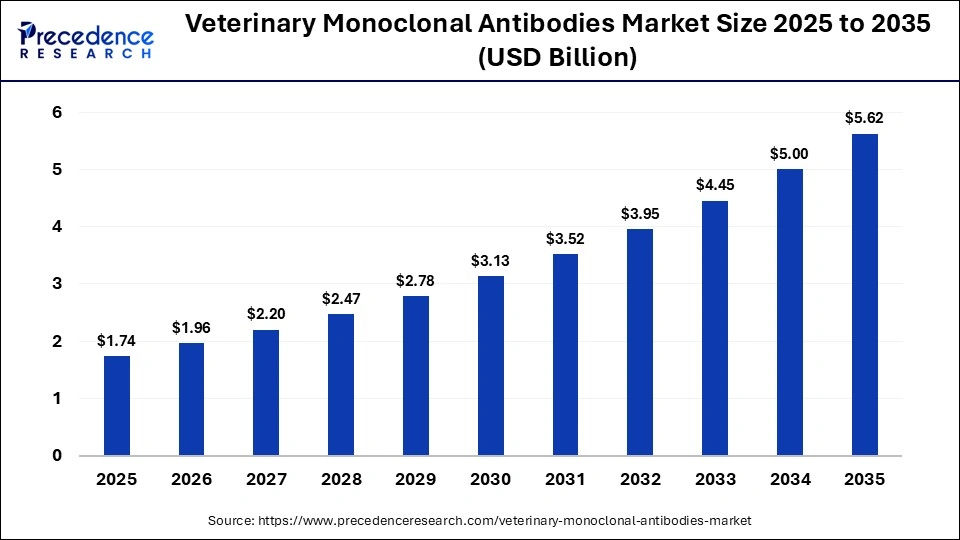
The global veterinary monoclonal antibodies market size was calculated at USD 1.74 billion in 2025 and is predicted to increase from USD 1.96 billion in 2026 to approximately USD 5.62 billion by 2035, expanding at a CAGR of 12.44% from 2026 to 2035. The market is driven by the growing demand for high-quality medications for treating infectious diseases, coupled with surging pet care expenditure globally.
Key Takeaways
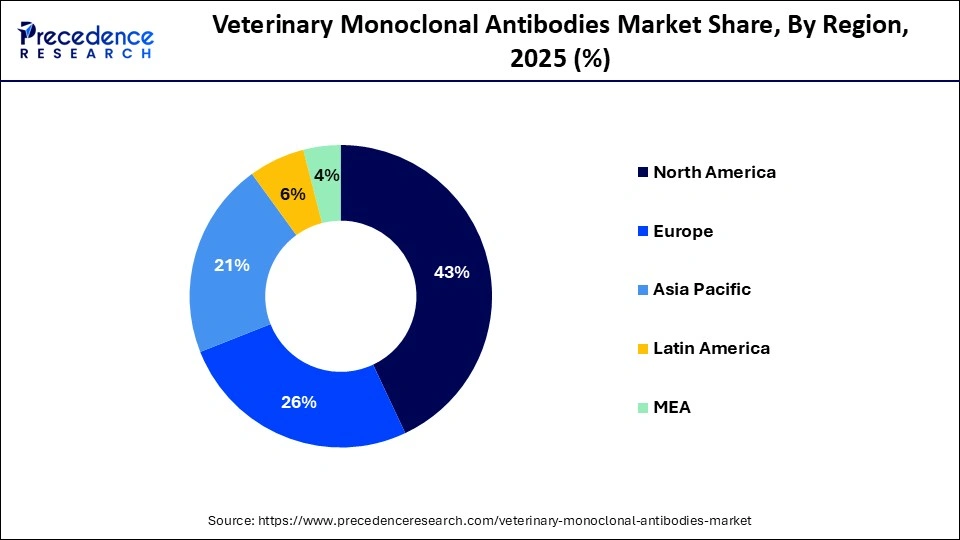
- North America led the market in 2025, holding a major share of around 43%.
- Asia Pacific is expected to grow at the highest CAGR during the forecast period.
- By animal type, the dogs segment held the largest share of the market in 2025, accounting for a 61%.
- By animal type, the cats segment is expected to expand with the highest CAGR during the forecast period.
- By product type, the anti-IL-31 monoclonal antibodies segment held the largest market share of 34% in 2025.
- By product type, the anti-NGF mAbs segment is expected to grow at the highest CAGR between 2026 and 2035.
- By therapy area, the dermatology (Atopic Dermatitis) segment held the highest market share of 42% in 2025.
- By therapy area, the pain management/ osteoarthritis segment is expected to grow with the fastest CAGR during the forecast period.
- By route of administration, the injectable monoclonal antibodies segment dominated the market with a share of around 78% in 2025.
- By route of administration, the subcutaneous formulations segment is expected to rise with the highest CAGR during the forecast period.
- By end user, the veterinary hospitals segment dominated the market in 2025, capturing a share of around 58%.
- By end user, the veterinary clinics segment is expected to grow at the fastest CAGR during the forecast period.
Market Overview
The veterinary monoclonal antibodies market focuses on developing lab-engineered proteins that mimic immune responses by targeting and binding specific antigens to treat a wide range of animal diseases. MAB-based therapies deliver superior treatment and efficacy compared to traditional medications due to their lower side-effect profile. The market is expanding rapidly due to the rising prevalence of chronic diseases in animals, along with technological advancements in the genetic engineering sector. The rapid expansion of the pharmaceutical sector worldwide is likely to support market expansion.
Veterinary Monoclonal Antibodies Market Trends
- Collaborations: Numerous veterinary care organizations are collaborating with animal supplement brands to improve the treatment of aged animals. For instance, in February 2026, the Senior Dog Veterinary Society (SDVS) collaborated with Antinol Plus. This collaboration aims to support veterinary professionals in diagnosing and treating mobility issues in senior dogs.
- Inauguration of New Production Units: Various animal therapeutics companies are engaged in opening new manufacturing centers to increase their production output. For instance, in November 2025, Zoetis announced to invest US$ 590 million. This investment is made to open an animal medicine production center in Georgia, near Atlanta, U.S., that is expected to be operational by 2029.
- Investments: The pharma companies have started investing rapidly in startup companies to develop MAB-based therapeutics for the veterinary sector. For instance, in April 2025, Yuyu Pharma announced an investment of US$834,174. This investment is made in two U.S.-based startups, including VETmAb Biosciences and the premium dog community platform DOG PPL, for developing MAB-therapies for cats and dogs.
- Product Launches: Market players are constantly launching a wide range of veterinary items to maintain their dominant position in the industry. For instance, in February 2025, Zoetis launched Librela in the U.S. Librela is an injectable monoclonal antibody therapy designed to treat osteoarthritis (OA) in dogs.
How is AI Contributing to the Development of the Veterinary Monoclonal Antibodies Industry?
Artificial Intelligence plays a crucial role in the development of the veterinary monoclonal antibodies industry, as it helps in improving precision design, enhancing the capabilities of drug discovery, and accelerating the manufacturing of therapeutics. AI algorithms and machine learning (ML) analyze massive genetic datasets to identify and optimize antibody sequences to develop novel therapies. The integration of AI in veterinary labs optimizes the bioprocessing and production of monoclonal antibodies by ensuring superior quality and high yield. Additionally, AI-driven modeling helps improve safety profiles, stability, and production efficiency, making veterinary mAbs more reliable and scalable for livestock, companion animals, and aquaculture applications.
- In January 2025, Absci Corporation partnered with Invetx. This partnership aims to launch an AI-based drug manufacturing platform that finds application in the production of animal therapeutics.
Market Scope
| Report Coverage | Details |
| Market Size in 2025 | USD 1.74 Billion |
| Market Size in 2026 | USD 1.96 Billion |
| Market Size by 2035 | USD 5.62 Billion |
| Market Growth Rate from 2026 to 2035 | CAGR of 12.44% |
| Dominating Region | North America |
| Fastest Growing Region | Asia Pacific |
| Base Year | 2025 |
| Forecast Period | 2026 to 2035 |
| Segments Covered | Animal Type, Product Type, Therapy Area, Route of Optimization, End User, and region |
| Regions Covered | North America, Europe, Asia-Pacific, Latin America, and Middle East & Africa |
Segment Analysis
Animal Type Insights
Why Did the Dogs Segment Dominate the Veterinary Monoclonal Antibodies Market?
The dogs segment dominated the veterinary monoclonal antibodies market with the largest share of 61% in 2025. This is mainly due to the increased canine population globally, along with the rapid investment by market players to provide advanced treatment to dogs. Dogs are mostly infected by numerous chronic diseases, including atopic dermatitis and osteoarthritis, which in turn increases the demand for monoclonal antibody therapies. Additionally, increasing pet ownership, rising veterinary care spending, and growing awareness of advanced treatment options among dog owners further support the segment's leading position.
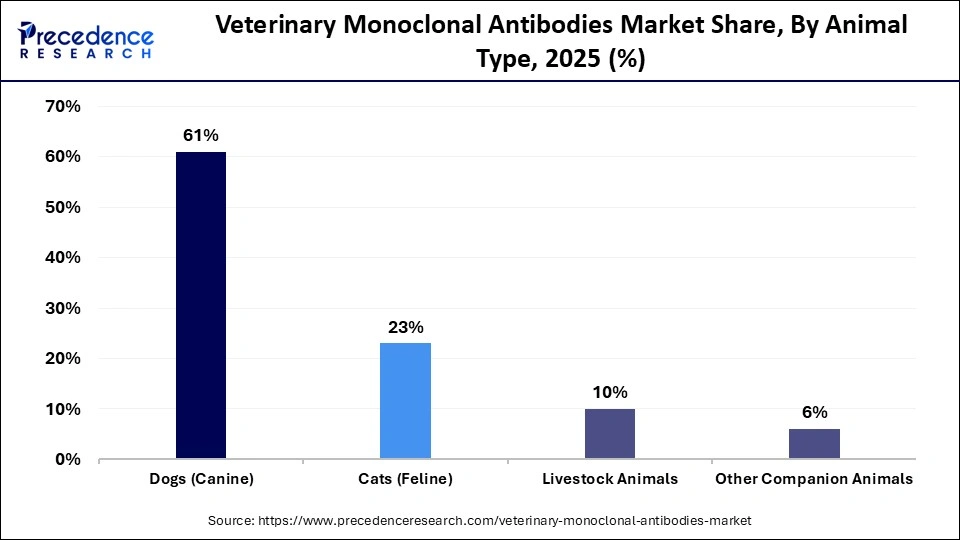
The cats segment is expected to grow at the highest CAGR during the forecast period, owing to the growing use of felinized monoclonal antibodies (mAbs) for treating chronic osteoarthritis. The innovations related to species-specific monoclonal antibodies, such as Solensia for cat treatment, have gained popularity. Moreover, R&D activities associated with feline-specific biologics have accelerated the application of MABs. The rising population of pet cats and increasing demand for advanced treatments for feline-specific conditions, such as chronic kidney disease, cancers, and infectious diseases, also drive the segment.
Product Type Insights
What Made Anti-IL-31 Monoclonal Antibodies the Leading Segment in the Market?
The anti-IL-31 monoclonal antibodies segment led the veterinary monoclonal antibodies market in 2025, capturing a major share of 34%. This is mainly due to their higher efficacy in the treatment of allergic skin conditions in cats and dogs. Interleukin-31 helps in triggering pruritus, which makes it highly effective for long-term dermatological treatment. These monoclonal antibodies provide the convenience of monthly dosing and cause fewer side effects, thus increasing their demand among pet owners.
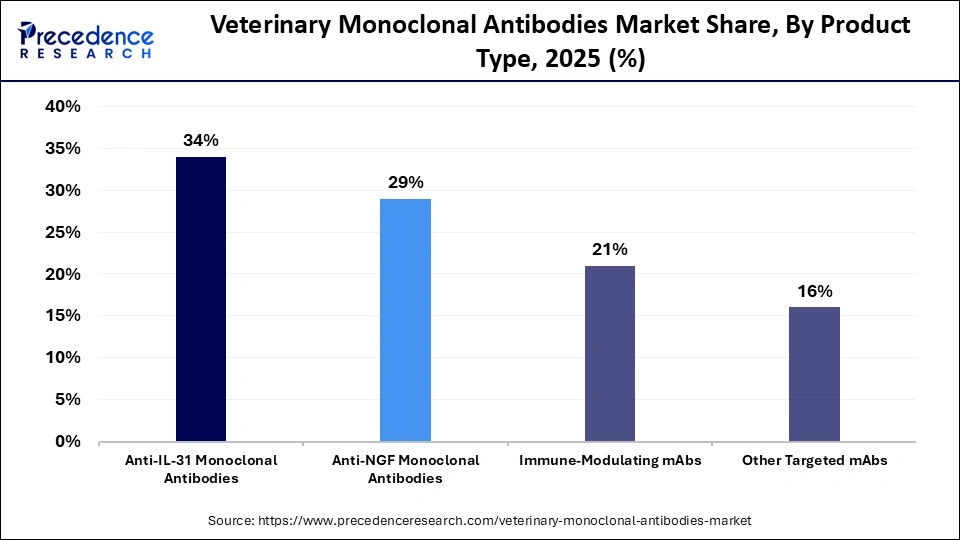
The anti-NGF monoclonal antibodies segment is expected to expand with the highest CAGR between 2026 and 2035, owing to the surging prevalence of chronic pain in companion animals. Anti-NGF mAbs deliver targeted, long-acting pain relief by blocking NGF-signalling pathways, without causing renal or gastrointestinal side effects in animals. Additionally, constant clinical trials associated with these mAbs in the feline population are further contributing to the segmental growth.
Therapy Area Insights
What Made Dermatology (Atopic Dermatitis) the Dominant Segment in the Veterinary Monoclonal Antibodies Market?
The dermatology (Atopic Dermatitis) segment dominated the veterinary monoclonal antibodies market with a share of 42% in 2025. The dominance of the segment is triggered by the rising incidences of allergic skin disorders in companion animals, such as cats and dogs. The adoption of IL-3-based therapeutics for managing allergic dermatitis further reinforced the segmental dominance.
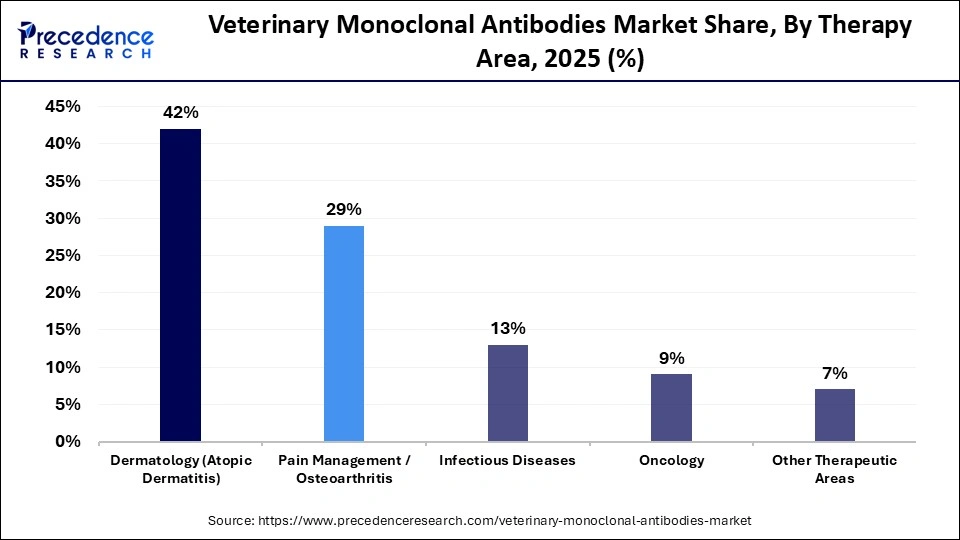
The pain management / osteoarthritis segment is expected to grow with the fastest CAGR during the forecast period. This is due to the increasing use of targeted anti-NGF therapies for treating degenerative joint diseases. Some of the popular mAb therapies, including Librela and Solensia, deliver long-acting pain relief in animals as compared to NSAIDs.
Route of Optimization Insights
Why Did the Injectable Monoclonal Antibodies Segment Dominate the Market?
The injectable monoclonal antibodies segment dominated the veterinary monoclonal antibodies market while holding the highest share of around 78% in 2025. This is mainly due to the growing adoption of mAb-based injections for treating chronic osteoarthritis in companion animals. Pharmaceutical companies are also engaged in developing injectable monoclonal antibodies for treating zoonotic diseases in livestock. Additionally, veterinarians favor injectable mAbs for their controlled administration, predictable pharmacokinetics, and ability to treat multiple species, supporting the segment's leading position.
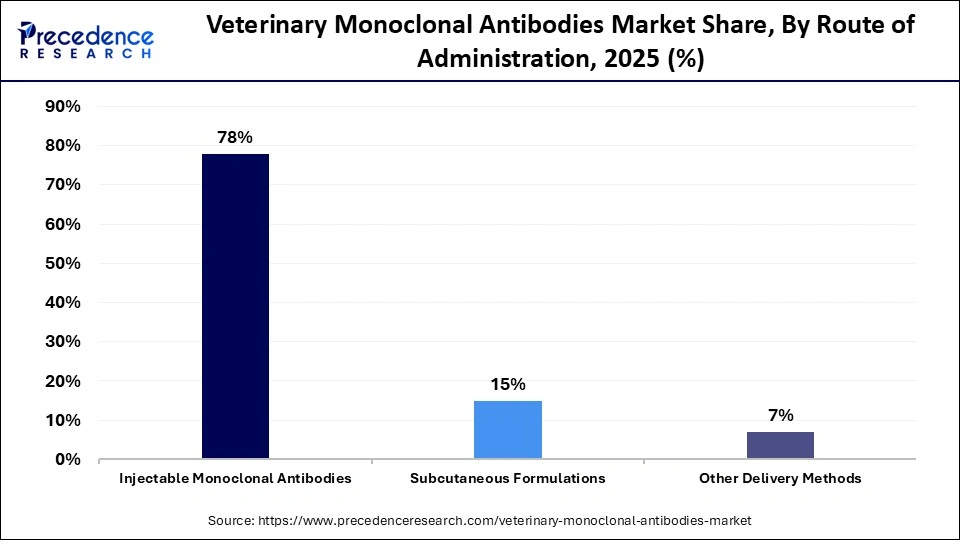
The subcutaneous formulations segment is expected to expand with the fastest CAGR during the forecast period, owing to its ease of administration, enhanced safety, and high efficacy. Subcutaneous delivery allows therapeutics to be administered rapidly in veterinary clinics with minimal stress in animals. This route of optimization offers superior pharmacokinetics, which enables enhanced treatment adherence in the veterinary sector.
End User Insights
What Made Veterinary Hospitals the Leading Segment in the Veterinary Monoclonal Antibodies Market?
The veterinary hospitals segment led the veterinary monoclonal antibodies market in 2025, accounting for around 58% share. This is mainly due to their superior diagnostic capabilities and the availability of skilled doctors. Veterinary hospitals are equipped with advanced facilities and ensure consistent product availability. Pet owners prefer to visit hospitals for regular checkups and provide specialized treatment to cats and dogs, contributing to the segment's dominance.
The veterinary clinics segment is expected to expand with the highest CAGR during the forecast period, owing to the growing accessibility of advanced monoclonal therapies at primary levels. Numerous public sector entities are engaged in opening new veterinary clinics to provide superior treatment to poultry. The increasing number of pet-owning households and the rising demand for advanced, targeted treatments for companion animals further fuel the segment's growth.
Regional Insights
North America Veterinary Monoclonal Antibodies Market Size and Growth 2026 to 2035
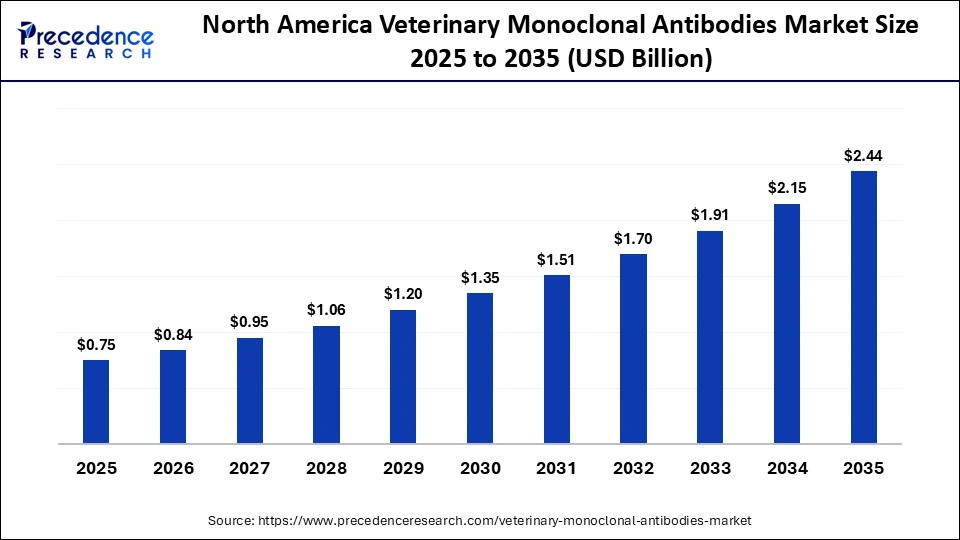
The North America veterinary monoclonal antibodies market size is estimated at USD 0.75 billion in 2025 and is projected to reach approximately USD 2.44 billion by 2035, with a 12.52% CAGR from 2026 to 2035.
Why Did North America Dominate the Veterinary Monoclonal Antibodies Market?
North America dominated the veterinary monoclonal antibodies market by capturing around 43% share in 2025. The region's dominance in the market is attributed to high rates of pet ownership, the opening of new veterinary clinics, and the growing awareness of people about animal health. Numerous animal therapeutics manufacturers, such as Zoetis and Abaxis, are engaged in developing high-quality monoclonal antibodies to treat different diseases in dogs and cats, which contributes to industrial development. Moreover, the availability of skilled veterinary professionals, coupled with the surging emphasis of healthcare organizations to enhance the treatment of zoonotic diseases, is driving the market expansion in this region.
- In January 2026, the University of California, Davis (UC Davis) announced that it received a donation of US$ 120 million. This donation is made to construct a veterinary hospital in the U.S.
U.S Veterinary Monoclonal Antibodies Market Size and Growth 2026 to 2035
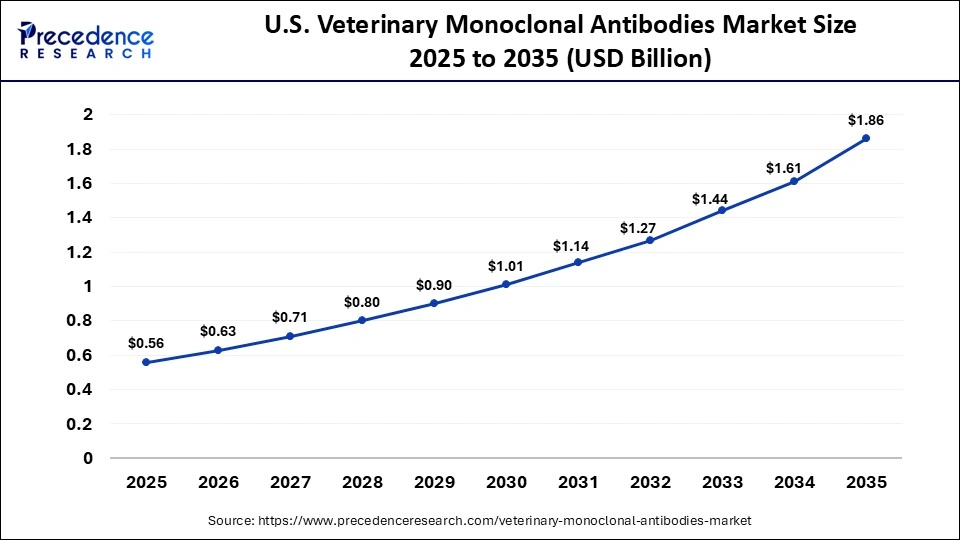
The U.S. veterinary monoclonal antibodies market size is calculated at USD 0.56 billion in 2025 and is expected to reach nearly USD 1.86 billion in 2035, accelerating at a strong CAGR of 12.75% between 2026 to 2035.
U.S. Market Trends
The U.S. is a major contributor to the North American veterinary monoclonal antibodies market due to the surging prevalence of infectious diseases in animals, as well as the rapid investment by the government in developing the veterinary infrastructure. The increasing emphasis of consumers on purchasing veterinary items from online pharmacies is further contributing to the market expansion.
Why is Asia Pacific Expanding with the Highest CAGR in the Market?
Asia Pacific is expected to expand with the highest CAGR during the forecast period due to the technological advancements in the genetic engineering sector, along with the surging adoption of pets in Australia and Japan. The clinical trials performed by therapeutic manufacturers, such as MabGenesis, MBL Lifesciences, and Anivet Diagnostics Inc., to check the efficacy of animal medicine and the increase in the number of veterinary research institutes are helping the industry to grow significantly. Additionally, the growing prevalence of canine coronavirus disease, as well as ongoing innovations in monoclonal antibodies, is expected to drive the market growth.
- According to the worldanimalfoundation.org, in Asia Pacific countries (APAC), around 32% of households own a dog, and 26% own a cat.
China Market Analysis
China is the major contributor to the Asia Pacific veterinary monoclonal antibodies market. This is due to the rise in the number of veterinary startups, coupled with the growing cases of swine diseases. Also, the surging demand for livestock care products and the rapid expansion of the biotechnology industry have played a crucial role in contributing to the industrial development.
Top Companies in the Veterinary Monoclonal Antibodies Market
- Zoetis (U.S.)
- Boehringer Ingelheim (DE)
- Merck Animal Health (U.S.)
- Elanco Animal Health (U.S.)
- Virbac (FR)
- Ceva Santé Animale (FR)
- Merial (U.S.)
- Abaxis (U.S.)
Recent Developments
- In December 2025, Elanco Animal Health Incorporated announced that the FDA had approved Befrena. Befrena is a monoclonal antibody (mAb) injection that finds application in the treatment of canine atopic dermatitis. (Source: https://www.prnewswire.com)
- In October 2025, Zoetis made an announcement stating that Health Canada had approved Lenivia (izenivetmab injection). Lenivia is a monoclonal antibody therapy used to treat osteoarthritis in dogs. (Source: https://news.zoetis.com)
- In April 2025, Virbac partnered with MabGenesis. Under this agreement, Virbac will develop a wide range of therapeutics using monoclonal antibodies to treat canine diseases. (Source: https://corporate.virbac.com)
Segments Covered in the Report
By Animal Type
- Dogs (Canine)
- Cats (Feline)
- Livestock Animals
- Other Companion Animals
By Product Type
- Anti-IL-31 Monoclonal Antibodies
- Anti-NGF Monoclonal Antibodies
- Immune-Modulating mAbs
- Other Targeted mAbs
By Therapy Area
- Dermatology (Atopic Dermatitis)
- Pain Management / Osteoarthritis
- Infectious Diseases
- Oncology
- Other Therapeutic Areas
By Route of Administration
- Injectable Monoclonal Antibodies
- Subcutaneous Formulations
- Other Delivery Methods
By End User
- Veterinary Hospitals
- Veterinary Clinics
- Research Institutions
- Other Animal Healthcare Providers
By Region
- North America
- Europe
- Asia-Pacific
- Latin America
- Middle East & Africa
For inquiries regarding discounts, bulk purchases, or customization requests, please contact us at sales@precedenceresearch.com
Frequently Asked Questions





Ask For Sample
No cookie-cutter, only authentic analysis – take the 1st step to become a Precedence Research client
 Get a Sample
.webp)



 sales@precedenceresearch.com
 Schedule a Meeting
