



Visible Light Range Scientific Camera Market Trends, Companies, Revenue / Sales Performance, Manufacturing Yield, Fab Capacity, Export & Import Dynamics, Supply Chain Analysis, Competitive Landscape, and Growth Forecast
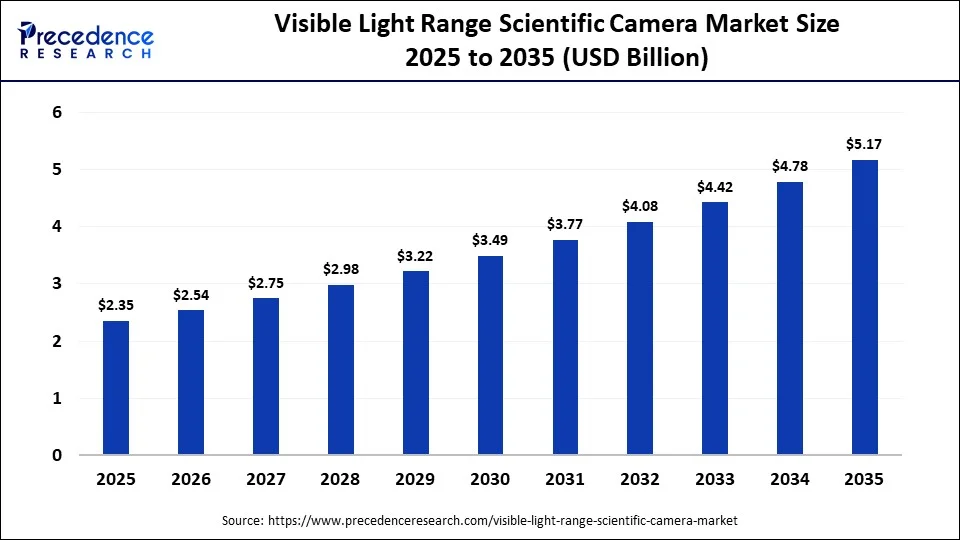
According to semiconductor and electronics specialist Laxmi Narayan, the visible light range scientific camera market is valued at USD 2.54 billion in 2026 and is forecast to reach USD 5.17billion by 2035, reflecting a CAGR of 8.21%. Leading visible light range scientific camera market companies, including Atik Cameras, Diffraction Limited, Excelitas PCO GmbH, Hamamatsu Photonics, Thorlabs, Inc., are strengthening their presence across key segments such as By Camera Type, By Sensor Technology, By Application, By End User.
Source: https://www.precedenceresearch.com/visible-light-range-scientific-camera-market
 Get a Sample
 Table Of Content


What is the Visible Light Range Scientific Camera Market Size in 2026?
The global visible light range scientific camera market size accounted for USD 2.35 billion in 2025 and is predicted to increase from USD 2.54 billion in 2026 to approximately USD 5.17 billion by 2035, expanding at a CAGR of 8.21% from 2026 to 2035. The market is driven by increasing demand for high-resolution imaging in life sciences, material analysis, and industrial inspection.
Key Takeaways
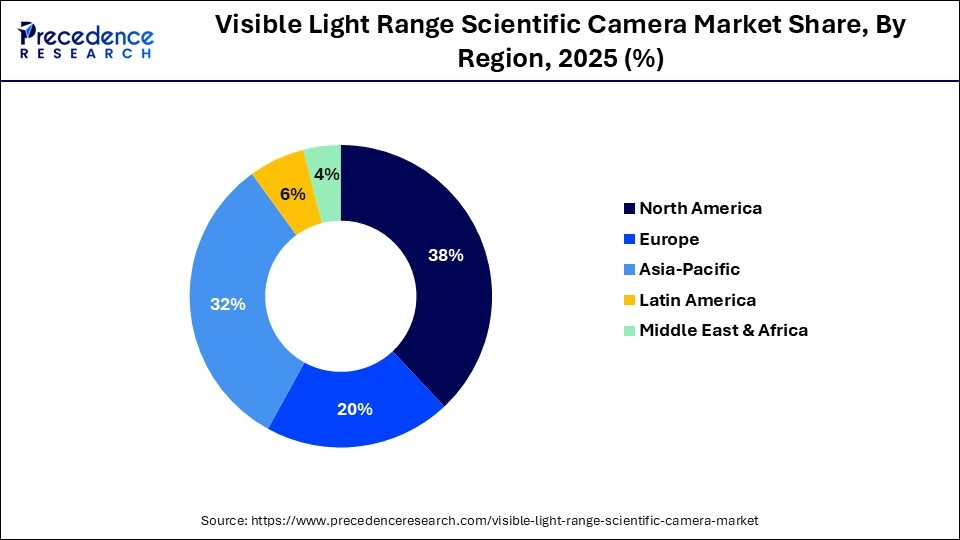
- North America dominated the market with a share of 45% in 2025.
- The Asia Pacific is expected to grow at the fastest CAGR of 8.9% in the market during the forecast period.
- By camera type, the CCD scientific cameras segment held a dominant position in the market with a share of 41% in 2025.
- By camera type, the CMOS scientific cameras segment is anticipated to grow at the fastest rate in the market over the forecast period.
- By sensor technology, the CCD sensors segment held a major share of 44% in the market in 2025.
- By sensor technology, the sCMOS sensors segment is expected to grow at the fastest CAGR over the forecast period.
- By application, the life sciences & biomedical research segment led the global market with a share of 37% in 2025.
- By application, the forensic analysis segment is anticipated to expand at a rapid pace in the market over the forecast period.
- By end user, the research institutions & universities segment registered its dominance in the global market by holding a 42% share in 2025.
- By end user, the healthcare & diagnostic laboratories segment is expected to expand at the fastest rate in the market over the forecast period.
Market Overview
The visible light range scientific camera market comprises imaging systems that are employed to capture high-resolution images in the visible spectrum of light that are typically positioned in the range of 400 to 700 nanometers. These cameras are designed for scientific and analytical use, where accuracy, sensitivity, and image sharpness are paramount. In contrast to the traditional cameras, visible light scientific cameras have specialized sensors (Charge-Coupled Device (CCD) and Complementary Metal-Oxide Semiconductor (CMOS) sensors) which have high quantum efficiency, low level of noise, and high accuracy in image acquisition. The market has been experiencing a steady growth over the past few years as a result of the rising usage of the most sophisticated imaging technologies, both in research laboratories and industrial settings.
How is AI Integration Transforming the Visible Light Range Scientific Camera Market?
The incorporation of artificial intelligence is transforming the visible light range scientific camera market by enhancing the quality of imaging and data analysis. Existing scientific cameras are undergoing enhancement with artificial intelligence software capable of intelligently processing, categorizing, and analyzing captured images at extremely high speeds and with high accuracy. The functions that are enhanced in processing data with AI-driven algorithms in scientific imaging are object recognition, pattern detection, and real-time identification of anomalies. The application of AI in life sciences and biomedical research can decompose more complex cellular structures, follow biological processes, and detect subtle differences in samples.
Visible Light Range Scientific Camera Market Trends
- Enhanced CMOS Sensors: Recent scientific cameras feature advanced CMOS sensors with higher frame rates, improved sensitivity, and reduced noise. These improvements make them ideal for real-time imaging applications in life sciences, microscopy, and industrial research, where high performance is critical.
- Integration with AI and Machine Learning: Scientific cameras are increasingly combined with AI and machine learning technologies, enabling automated image processing, pattern detection, and data interpretation. This allows researchers to analyze complex datasets faster, improving experimental accuracy and efficiency.
- High-Speed Visible Light Cameras: The demand for high-speed cameras is growing to capture fast biological and chemical processes. These systems allow scientists to observe dynamic events in real time, enhancing experimental precision in biomedical and materials research.
- Life Sciences and Biomedical Applications: Rapid advancements in life sciences and biomedical research are driving the need for advanced imaging systems. Applications such as fluorescence microscopy, cell imaging, and molecular analysis rely on visible light scientific cameras for precise and targeted observations.
- Miniaturization and Portability: Manufacturers are developing compact, lightweight scientific cameras for portable lab systems and field studies. Miniaturized designs enable easy integration with microscopes and analytical tools without compromising imaging performance or sensitivity.
Market Scope
| Report Coverage | Details |
| Market Size in 2025 | USD 2.35 Billion |
| Market Size in 2026 | USD 2.54 Billion |
| Market Size by 2035 | USD 5.17 Billion |
| Market Growth Rate from 2026 to 2035 | CAGR of 8.21% |
| Dominating Region | North America |
| Fastest Growing Region | Asia-Pacific |
| Base Year | 2025 |
| Forecast Period | 2026 to 2035 |
| Segments Covered | Camera Type, Sensor Technology, Application, End User, and Region |
| Regions Covered | North America, Europe, Asia-Pacific, Latin America, and Middle East & Africa |
Segment Insights
Camera Type Insights
Visible Light Range Scientific Camera Market Share, By Camera Type, 2025 (%)
| Camera Type | 2025 |
| CCD Scientific Cameras | 41% |
| CMOS Scientific Cameras | 36% |
| Multispectral Scientific Cameras | 14% |
| Digital Scientific Cameras (DSLR / Hybrid) | 9% |
Why Did the CCD Scientific Cameras Segment Hold the Largest Share in the Market?
The CCD scientific cameras segment held the largest market share of 41% in 2025 due to their outstanding image quality, high sensitivity, and low noise performance. CCD cameras are popular in research and industrial applications, such as microscopy, spectroscopy, and astronomy, where high accuracy and precision of image capturing are needed. The segment's dominance is also reinforced by the consistency and maturity of the CCD technology, which has developed trust among research institutions and laboratories. CMOS cameras are embraced because of the need to have versatile and power-efficient imaging products that can be implemented in the high-throughput research processes.
The CMOS scientific cameras segment held 36% market share in 2025 owing to technological advances that improve sensitivity, minimize noise, and improve general image quality. The use of CMOS cameras is on the rise due to the factors of cost efficiency, reduced power utilization, and small size that promote their applicability in high-speed imaging, real-time observations, and live-cell studies of biological research. The demand for these cameras is also driven by industrial inspection, quality control, and educational applications, where affordability and scalability are key factors. Additionally, CMOS cameras are increasingly adopted for their versatility and power-efficient design, making them suitable for high-throughput research workflows and large-scale imaging tasks.
The multispectral scientific cameras segment held 14% market share in the visible light range scientific camera market in 2025. These cameras are widely adopted for applications that require capturing data across multiple wavelengths, such as agricultural monitoring, environmental research, and material analysis. Their ability to provide detailed spectral information enables researchers to detect subtle variations in samples that standard cameras might miss. Additionally, advancements in sensor technology and software integration are further boosting the adoption of multispectral cameras in scientific research and industrial inspection.
The digital scientific cameras segment held 9% market share in 2025. These cameras are favored for their high resolution, rapid image acquisition, and compatibility with a range of laboratory and industrial equipment. They are commonly used in microscopy, spectroscopy, and imaging-based research where precision and accuracy are critical. Furthermore, improvements in digital sensor sensitivity and data processing capabilities are driving increased adoption across academic, medical, and industrial research applications.
Sensor Technology Insights
Visible Light Range Scientific Camera Market Share, By Sensor Technology, 2025 (%)
| Sensor Technology | 2025 |
| Charge-Coupled Device (CCD) Sensors | 44% |
| Complementary Metal-Oxide Semiconductor (CMOS) Sensors | 39% |
| Scientific CMOS (sCMOS) Sensors | 17% |
Why Did the CCD Sensors Segment Lead the Visible Light Range Scientific Camera Market?
The charge-coupled device (CCD) sensors segment led the global market with a share of 44% in 2025. This is because CCD sensors are commonly applied in applications that need a high degree of accuracy and reproducibility in imaging, e.g., microscopy and astronomy, spectroscopy, and materials science. Their performance of providing consistency even under low-light situations and having a wide dynamic range is critical in providing accurate and detailed information. The maturity and reliability of CCD technology are also another factor that contributes to its dominance. This technology has gained high acceptance in research institutions, universities, and industrial laboratories.
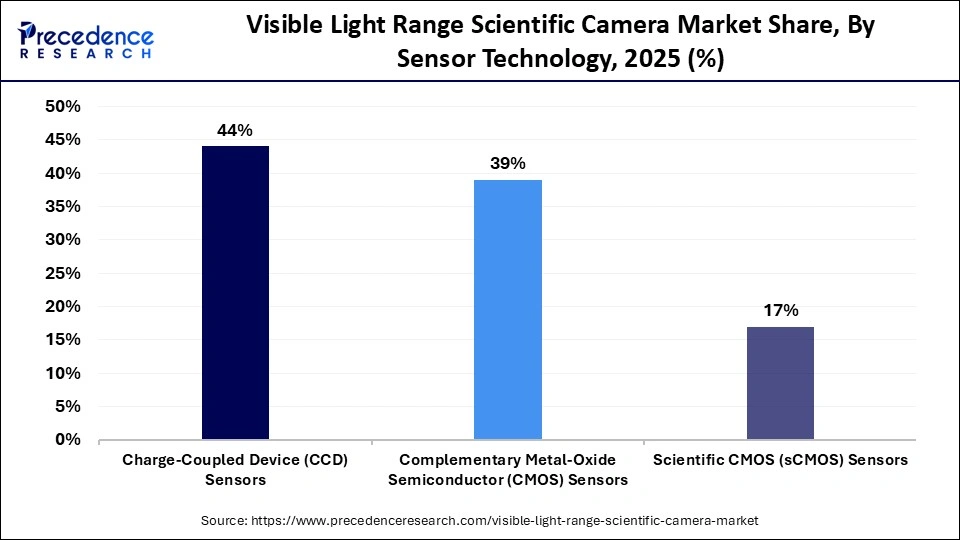
The sCMOS sensors segment held 39% market share and is expected to grow at the fastest rate in the upcoming period, driven by technological advancements that combine high speed, low noise, and wide field-of-view imaging. The rising demand for real-time monitoring and high-throughput imaging creates the need for an efficient and energy-saving solution and versatile sensors. The use of sCMOS sensors is driven by the fact that they can provide high resolution and wide dynamic range to enable applications that cannot be optimized by the use of CCD sensors. With labs, research facilities, and commercial customers interested in advanced technology, sCMOS sensors are gaining traction.
The Complementary Metal-Oxide Semiconductor (CMOS) sensors segment held 39% market share in 2025. CMOS sensors are highly favored for their low power consumption, fast readout speeds, and high integration capabilities, making them ideal for scientific cameras and imaging applications. They are widely adopted in research laboratories, industrial inspection, and medical imaging due to their accuracy, reliability, and ability to capture high-resolution images. Additionally, ongoing advancements in CMOS technology, including improved sensitivity and reduced noise, are driving further growth and expanding their use in advanced imaging systems.
Application Insights
Why Did the Life Sciences & Biomedical Research Segment Lead the Market?
The life sciences & biomedical research segment led the visible light range scientific camera market with a major share of 37% in 2025. This is mainly due to the increased demand for high-resolution imaging in science and clinical practice. The demand for scientific cameras is increasing in research institutions, as it is important to have accurate images in cellular biology, tissue analysis, drug development, and microscopy, where accuracy and sensitivity are important. Academic institutions, pharmaceutical companies, and research laboratories increasingly depend on advanced imaging technologies to support experiments and studies that demand reproducible, high-fidelity results. The adoption of CCD and other advanced sensors is further driven by the need for low-noise, high-sensitivity cameras in applications such as genomics, proteomics, and cellular imaging.
The forensic analysis segment held 10% market share in 2025 due to the increasing need to capture digital evidence accurately and provide documentation of the crime scene. The use of scientific cameras is becoming common in law enforcement, forensic laboratories, and legal investigations to capture high-resolution images, analyze trace evidence, and support digital forensics. The need to have low-noise, high-sensitivity imaging, which is able to view small details in fingerprints, documents, and biological samples, is also an impetus to growth. Technological innovations also promote adoption due to the ability to analyze in real-time, be portable, and integrate with forensic software systems.
Visible Light Range Scientific Camera Market Share, By Application, 2025 (%)
| Application | 2025 |
| Life Sciences & Biomedical Research | 37% |
| Industrial Inspection & Quality Control | 24% |
| Astronomy & Space Research | 17% |
| Environmental Monitoring | 12% |
| Forensic Analysis | 10% |
The industrial inspection and quality control segment held 24% market share in 2025. This segment benefits from increasing automation and the need for precise defect detection in manufacturing processes. High-resolution scientific cameras enable real-time monitoring, ensuring product quality and reducing waste. Additionally, advancements in machine vision and AI integration are enhancing inspection accuracy and efficiency across various industries.
The astronomy and space research segment held 17% market share in 2025. Scientific cameras in this sector are crucial for capturing detailed images of celestial bodies and phenomena, aiding in exploration and discovery. The demand is driven by growing investments in space missions, telescopes, and observational technologies. Moreover, improvements in sensor sensitivity and noise reduction are enabling clearer, more precise imaging in challenging low-light environments.
The environmental monitoring segment held 12% market share in 2025. Cameras used in this segment help track changes in ecosystems, pollution levels, and climate variables with high accuracy. These tools support data collection for research, policy-making, and conservation efforts. Increasing global awareness of environmental issues and regulatory requirements are boosting the adoption of advanced imaging technologies in this field.
End User Insights
Visible Light Range Scientific Camera Market Share, By End User, 2025 (%)
| End User | 2025 |
| Research Institutions & Universities | 42% |
| Industrial & Manufacturing Companies | 24% |
| Healthcare & Diagnostic Laboratories | 19% |
| Government Research Agencies | 15% |
Why Did the Research Institutions & Universities Segment Major Share in the Market?
The research institutions & universities segment led the visible light range scientific camera market by holding a major share of 42% in 2025. This leadership is driven by the widespread use of high-precision imaging in academic and research work. These institutions rely on scientific cameras for applications such as microscopy, spectroscopy, materials research, and experimental studies, where accuracy, resolution, and reproducibility are critical. Advanced sensors, including CCDs, provide low-noise, high-sensitivity imaging essential for complex scientific experiments. Reliable and consistent imaging systems are vital for supporting intricate procedures across life sciences, physics, and chemistry.
The healthcare & diagnostic laboratories segment held 19% market share in 2025 owing to the increasing demand for precise imaging in medical diagnostics, pathology, and laboratory automation. Scientific cameras are increasingly applied in digital pathology, high-resolution imaging of tissue samples, and diagnostic workflows that require speed, accuracy, and reliability. The adoption of CMOS and sCMOS cameras, offering high-speed imaging, low energy consumption, and cost-efficiency, is accelerating in clinical and diagnostic settings. Growth is further supported by the expansion of healthcare facilities, the rising need for high-quality laboratory diagnostics, and the demand for real-time imaging to enhance patient care.
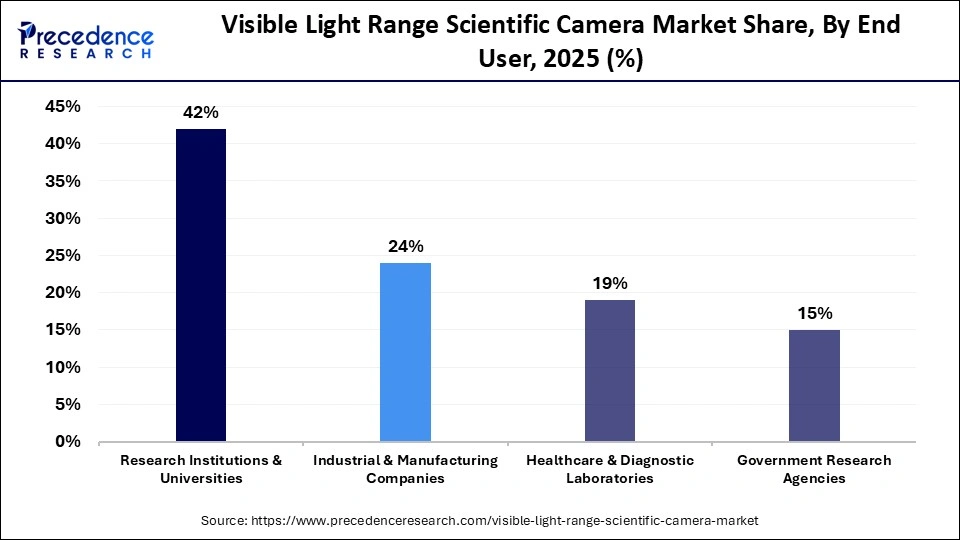
The industrial and manufacturing companies segment held 24% market share in 2025. This sector relies heavily on advanced technologies to improve operational efficiency, quality control, and automation. Increasing adoption of IoT, robotics, and data analytics is driving demand for solutions that optimize production processes and reduce downtime. Furthermore, growing investments in smart factories and Industry 4.0 initiatives are accelerating growth in this segment.
The government segment held 15% of market share in 2025. Governments are investing in digital transformation projects to enhance public services, infrastructure management, and national security. The demand for robust, scalable technology solutions is rising due to increased focus on data transparency, cybersecurity, and efficient resource management. Additionally, regulatory mandates and smart city initiatives are contributing to the expansion of this segment.
Regional Insights
North America Visible Light Range Scientific Camera Market Size and Growth 2026 to 2035
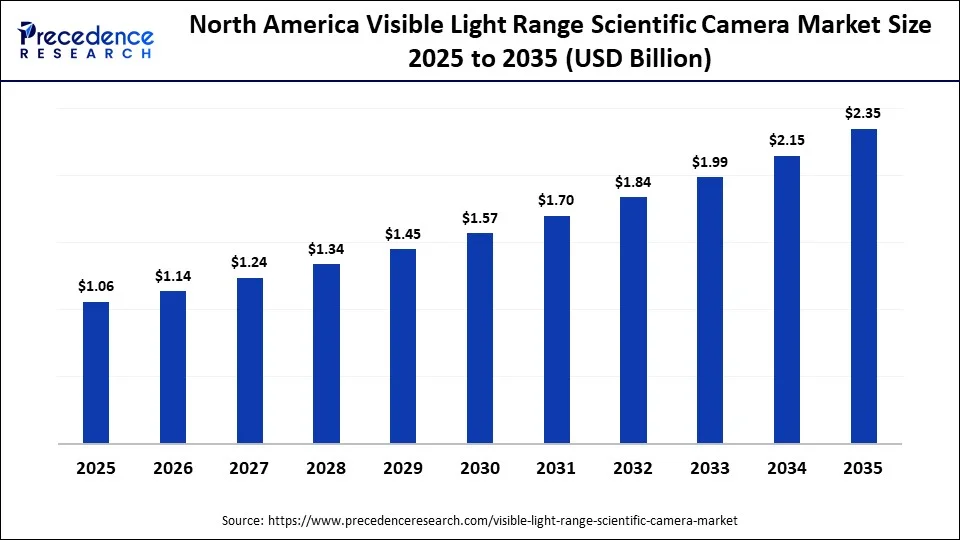
The North America visible light range scientific camera market size is estimated at USD 1.06 billion in 2025 and is projected to reach approximately USD 2.35 billion by 2035, with a 8.29% CAGR from 2026 to 2035.
Why Did North America Lead the Visible Light Range Scientific Camera Market?
North America led the global visible light range scientific camera market with a share of 45% in 2025. This leadership is driven by the presence of leading research institutions, universities, and biotechnology firms that extensively use high-precision imaging systems in life sciences, medical diagnostics, and materials research. Significant government funding for scientific research and innovation further supports the adoption of advanced imaging tools in laboratories and research facilities. In addition, the rapid integration of artificial intelligence, automation, and digital laboratory platforms across the U.S. and Canada has boosted demand for high-performance scientific cameras in the region.
U.S. Visible Light Range Scientific Camera Market Size and Growth 2026 to 2035
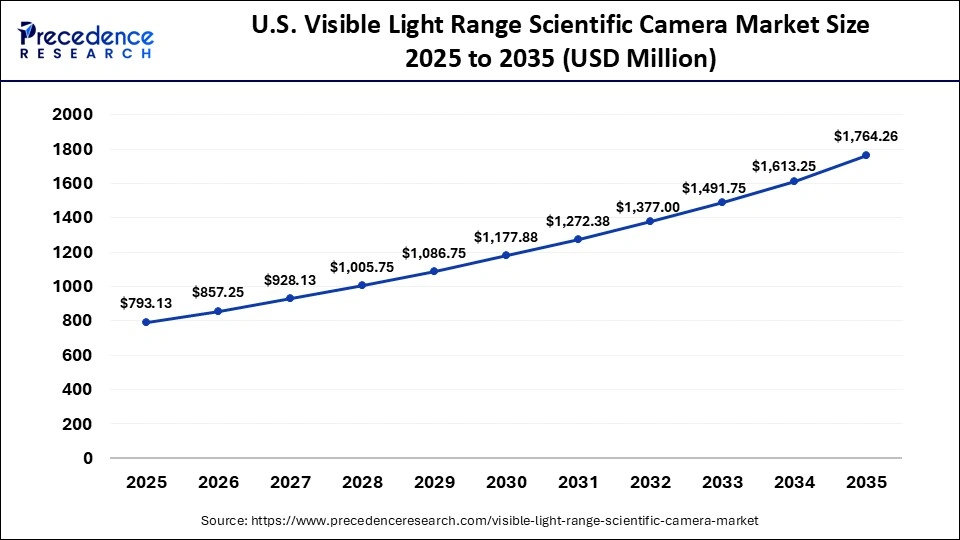
The U.S. visible light range scientific camera market size is calculated at USD 793.13 million in 2025 and is expected to reach nearly USD 1,764.26 billion in 2035, accelerating at a strong CAGR of 8.32% between 2026 and 2035.
U.S. Market Analysis
The visible light range scientific camera market in the U.S. is growing due to increasing investments by pharmaceutical and healthcare companies in drug discovery, diagnostics, and personalized medicine, which require advanced imaging solutions. Expansion of industrial and quality-control applications, such as semiconductor inspection and materials testing, is further driving demand for high-resolution scientific cameras. Moreover, the rise of start-ups and private research labs focusing on biotechnology, environmental monitoring, and applied physics is fueling the need for versatile and innovative imaging technologies.
Why is Asia Pacific Experiencing the Fastest Growth in the Market?
Asia Pacific is expected to expand at the fastest rate in the visible light range scientific camera market in the coming years, owing to growing research initiatives, industrialization, and rising investments in advanced technologies. Countries such as China, Japan, South Korea, and India are actively strengthening their scientific capabilities through modern laboratories, universities, and technology centers. The proliferation of research facilities has fueled demand for high-resolution imaging systems in life sciences, materials science, and environmental monitoring. Moreover, government initiatives promoting research, innovation, and technological development further support market growth.
Visible Light Range Scientific Cameras Market Supply Chain Analysis
- Component Manufacturing
At this stage, crucial components such as CMOS/CCD sensors, optical lenses, and precision imaging electronics are manufactured.
Key Players: Hamamatsu Photonics and Excelitas PCO GmbH
- Testing and Quality Control
Sensors are tested electrically before their implementation into camera systems to establish the functionality of the pixels, the response of the signal, and other factors of noise. Stress tests, reliability tests, and failure analysis are done by quality control teams to ensure that the standards have been met as per industry and long-term requirements of performance.
Key Players: Excelitas PCO GmbH, Hamamatsu Photonics, Oxford Instruments (Andor Technology), Horiba Scientific, Teledyne Technologies
- Distribution to OEMs and Integrators
To prevent damage to the components, the logistics networks are premised on safe transportation with the assistance of anti-static packaging and delivery at controlled temperatures.
Key Players: Atik Cameras, IDEX Health & Science, Meiji Techno, Photonic Science, Raptor Photonics, Spectral Instruments, Inc, XIMEA GmbH
- Lifecycle Support and Recycling
Manufacturers provide scientific camera systems with updates to the firmware, technical support, and repair, which is a way to lengthen the life of the system. Sustainable lifecycle management is also associated with the reuse of parts.
Key Players: Hamamatsu Photonics, Oxford Instruments (Andor Technology), Thorlabs, Inc, IDEX Health & Science, Excelitas PCO GmbH
Visible Light Range Scientific Camera Market Companies
- Atik Cameras
- Diffraction Limited
- Excelitas PCO GmbH
- Hamamatsu Photonics Thorlabs, Inc
- Horiba Scientific
- IDEX Health & Science
- Meiji Techno
- Oxford Instruments (Andor Technology)
- Photonic Science
- Raptor Photonics
- Spectral Instruments, Inc
- Teledyne Technologies
- Thorlabs, Inc
- XIMEA GmbH
Recent Developments
- In March 2026, Axiom Optics, a leading North American distributor of high-end optical instruments, announced its expanded range of MWIR, LWIR, and SWIR infrared cameras from top manufacturers. With an experienced team addressing complex engineering and research challenges, Axiom Optics provides high-quality infrared cameras designed to support researchers and engineers across diverse applications.(Source: https://www.blufftontoday.com)
- In August 2025, Teledyne Technologies purchased TransponderTech, a business of Saab, to become stronger in terms of technologies. This takeover comprises imaging and instrumentation solutions applicable to scientific and industrial uses.(Source: https://www.teledyne.com)
- In May 2025, Hamamatsu Photonics released the ORCA Halo C17440-20U scientific CMOS camera, whose sensor was a back-illuminated type. The camera has high quantum efficiency (approximately 86 percent) and a low noise level, which makes it suitable for high-quality microscopy imaging.(Source: https://www.hamamatsu.com)
Segments Covered in the Report
By Camera Type
- CCD Scientific Cameras
- CMOS Scientific Cameras
- Multispectral Scientific Cameras
- Digital Scientific Cameras (DSLR/Hybrid)
By Sensor Technology
- Charge-Coupled Device (CCD) Sensors
- Complementary Metal-Oxide Semiconductor (CMOS) Sensors
- Scientific CMOS (sCMOS) Sensors
By Application
- Life Sciences & Biomedical Research
- Industrial Inspection & Quality Control
- Astronomy & Space Research
- Environmental Monitoring
- Forensic Analysis
By End User
- Research Institutions & Universities
- Industrial & Manufacturing Companies
- Healthcare & Diagnostic Laboratories
- Government Research Agencies
By Region
- North America
- Latin America
- Europe
- Asia-pacific
- Middle and East Africa
For inquiries regarding discounts, bulk purchases, or customization requests, please contact us at sales@precedenceresearch.com
Frequently Asked Questions





Ask For Sample
No cookie-cutter, only authentic analysis – take the 1st step to become a Precedence Research client
 Get a Sample




 sales@precedenceresearch.com
 Schedule a Meeting
