



Wound Irrigation Systems Market Size, Companies, Share, Patient Volume, Treatment Adoption Rates, Pricing Analysis, Regulatory Landscape, Competitive Positioning, and Demand Forecast
Wound Irrigation Systems Market (By Product Type: Manual Wound Irrigation Systems, Battery-Operated Wound Irrigation Systems, Gravity Fed Irrigation Systems, Pressurized Canister-Based Irrigation; By Application: Surgical Wounds, Chronic Wounds, Traumatic Wounds, Burns; By End User: Hospitals and Clinics, Ambulatory Surgical Centers, Homecare, Specialty Clinics and Other) - Global Industry Analysis, Size, Trends, Leading Companies, Regional Outlook, and Forecast 2026 to 2035
Source: https://www.precedenceresearch.com/wound-irrigation-systems-market
 Get a Sample
 Table Of Content


What is the Wound Irrigation Systems Market Size in 2026?
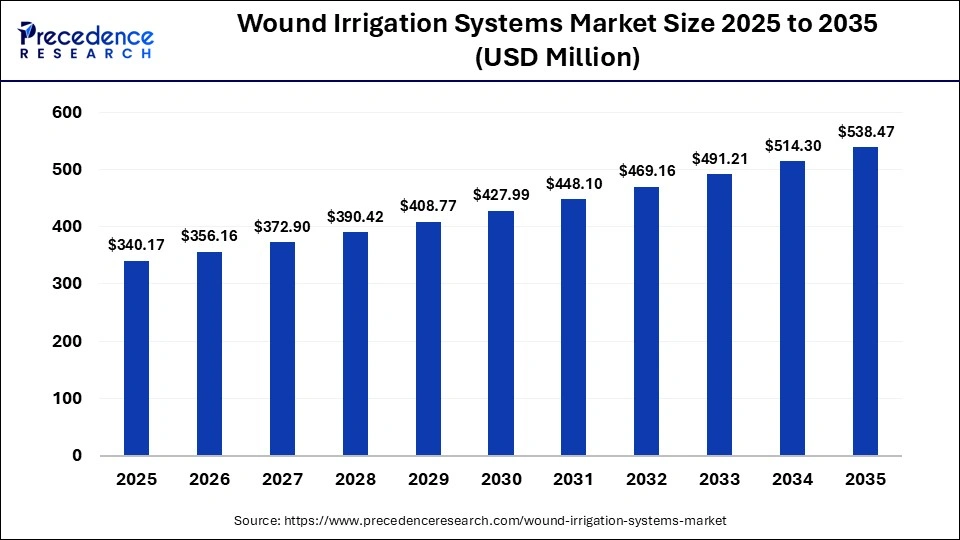
The global wound irrigation systems market size accounted for USD 340.17 million in 2025 and is predicted to increase from USD 356.16 million in 2026 to approximately USD 538.47 million by 2035, expanding at a CAGR of 4.70% from 2026 to 2035. The market is witnessing substantial growth due to the increasing chronic wound cases and the adoption of advanced, automated devices that improve infection control and healing efficacy.
Key Takeaways
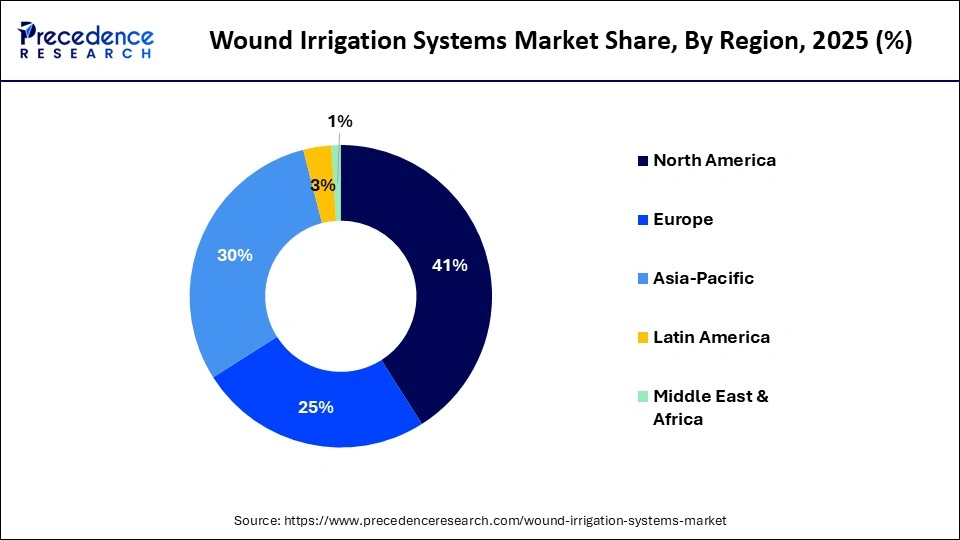
- North America dominated the market with a major share of around 41% in 2025.
- Asia Pacific is expected to grow at the fastest CAGR of 5.0% between 2026 and 2035.
- By product type, the manual wound irrigation systems segment held the biggest market share of around 61% in 2025.
- By product type, the battery-operated wound irrigation systems segment is expected to expand at a robust CAGR of 4.3% between 2026 and 2035.
- By application, the surgical wounds segment accounted for the largest market share of about 46% in 2025.
- By application, the chronic wounds segment is expected to grow at a solid CAGR of 4.1% between 2026 and 2035.
- By end user, the hospitals and clinics segment contributed the highest market share of around 58% in 2025.
- By end user, the ambulatory surgical centers (ASC) segment is expected to grow at a strong CAGR of 4.2% between 2026 and 2035.
What is the Wound Irrigation Systems Market?
The wound irrigation systems market comprises medical devices and systems that clean wounds by delivering controlled fluids to remove debris, bacteria, and necrotic tissue, thereby supporting wound healing and infection prevention. These systems range from manual to powered devices and are used across hospitals, surgical centers, and clinics for surgical, chronic, traumatic, and burn wounds. The growth of the market is driven by rising wound incidence, surgical procedures, and demand for advanced wound care solutions.
How is AI Transforming the Wound Irrigation Systems Market?
Artificial intelligence (AI) is transforming the wound irrigation systems market by leveraging computer vision, sensors, and machine learning for automated wound assessment, infection prediction, and personalized treatment planning. AI enables personalized irrigation protocols by analyzing patient-specific wound data and recommending optimal pressure, volume, and duration to optimize healing. AI algorithms analyze image and sensor data to classify wound types, measure area, and assess tissue types objectively, reducing reliance on subjective, manual assessments and improving training for healthcare professionals. AI also facilitates remote monitoring and guidance, improving access to care.
What are the Major Trends in the Wound Irrigation Systems Market?
- Adoption of Portable and Battery-Operated Devices: There is a significant shift from manual irrigation to battery-operated and automated, portable irrigation devices for managing complex, chronic, and burn wounds.
- Demand for Antimicrobial & Advanced Solutions: To combat infection risks and antibiotic resistance, the industry is moving toward incorporating antiseptic and antimicrobial agents directly into irrigation solutions.
- Strong Focus on Single-Use and Disposable Systems: Increasing concerns over infection control and cross-contamination in surgical and hospital settings are driving demand for disposable, sterile, single-use irrigation kits.
- Growth in Home-Based and Outpatient Care: The rising prevalence of chronic wounds, such as diabetic foot ulcers, is accelerating demand for user-friendly, portable irrigation devices.
Marlet Scope
| Report Coverage | Details |
| Market Size in 2025 | USD 340.17 Million |
| mMMarket Size in 2026 | USD 356.16 Million |
| Market Size by 2035 | USD 538.47 Million |
| Market Growth Rate from 2026 to 2035 | CAGR of 4.70% |
| Dominating Region | North America |
| Fastest Growing Region | Asia Pacific |
| Base Year | 2025 |
| Forecast Period | 2026 to 2035 |
| Segments Covered | Product Type, Application, End User, and Region |
| Regions Covered | North America, Europe, Asia-Pacific, Latin America, and Middle East & Africa |
Segment Insights
Product Type Insights
Why Did the Manual Wound Irrigation Systems Segment Dominate the Market?
The manual wound irrigation systems segment dominated the wound irrigation systems market by holding approximately 61% in 2025. This is mainly due to their cost-effectiveness, ease of use, and widespread availability in healthcare settings. These systems are favored for their low maintenance and affordability, making them the preferred choice in resource-limited areas and for routine debridement. Manual systems are widely utilized in hospitals due to their reliability in providing consistent, controlled cleansing of surgical site infections. They are employed in various care settings for both acute and chronic wound management, fueling a steady demand for these tools.
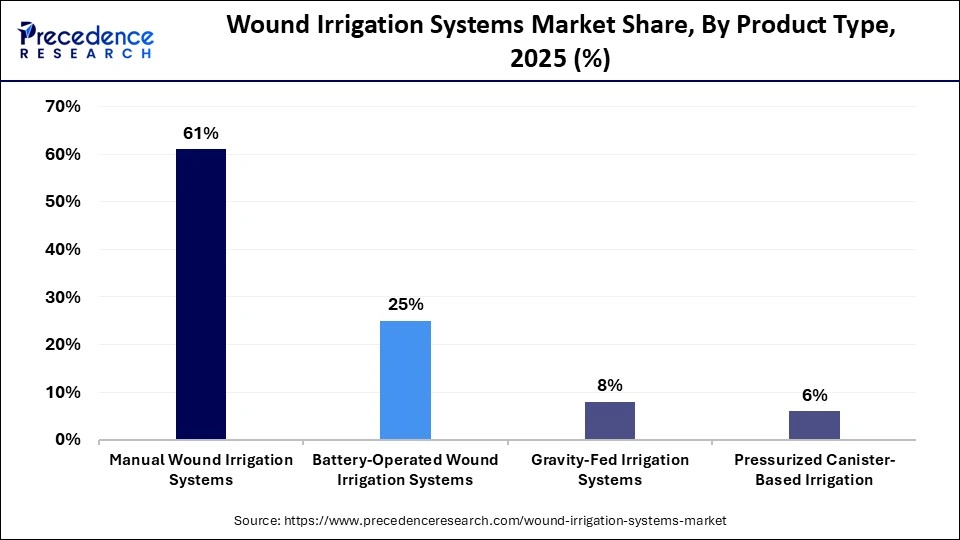
The battery-operated wound irrigation systems segment is expected to expand at a CAGR of 4.3% in the coming years. This growth is driven by their unique ability to deliver consistent pressure, reduce cross-contamination, and provide ergonomic convenience in treating complex burns and chronic wounds. These devices ensure controlled, consistent pressure for effective removal of necrotic tissue, bacteria, and debris, thus outperforming manual methods in managing complex wounds. Additionally, they minimize cross-contamination risks, addressing the essential need for hygiene in clinical and hospital environments.
Application Insights
How Did the Surgical Wounds Segment Lead the Wound Irrigation Systems Market?
The surgical wounds segment led the market with about 46% share in 2025, driven by the high volume of surgical procedures and the growing demand for preventing post-operative infections to ensure optimal healing. An increase in global surgical procedures, particularly in cosmetic surgeries, necessitates consistent use of irrigation for wound bed preparation. Strict adherence to infection control measures requires thorough cleaning of the surgical field, and the adoption of automated, battery powered irrigation devices that provide effective, pressurized cleaning contributes significantly to market growth.
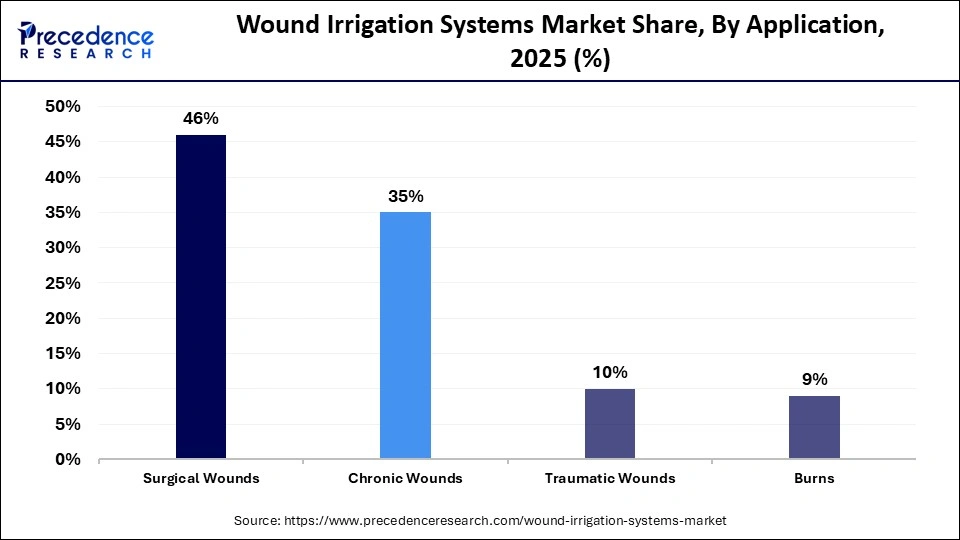
The chronic wounds segment is expected to grow at a robust CAGR of 4.1% throughout the forecast period. This growth is mainly driven by the rising global prevalence of diabetes, obesity, and an aging population, resulting in more chronic ulcers that require regular cleaning. The introduction of advanced, user-friendly irrigation systems, including battery-operated devices that enable efficient, targeted, and painless debris removal, is particularly suited for treating chronic wounds. The increasing demand for specialized, portable wound irrigation solutions in home care and long-term care settings is further driving this trend.
End User Insights
What Made Hospitals and Clinics the Dominant Segment in the Wound Irrigation Systems Market?
The hospitals and clinics segment dominated the market with approximately 58% share in 2025. This dominance is largely driven by a significant increase in surgical procedures and the high demand for sterile, specialized care to prevent infections. Hospitals manage the majority of acute, chronic, and traumatic wound cases, including high-volume orthopedic, cardiovascular, and general surgeries that necessitate thorough wound cleansing. The growing focus on reducing hospital-acquired infections propels the adoption of advanced, sterile, and often disposable wound irrigation systems in professional settings.
The ambulatory surgical centers (ASC) segment is expected to grow at a solid CAGR of 4.2% in the coming years. The growth of this segment is attributed to the rapid shift toward same-day, cost-effective, and minimally invasive procedures. ASCs have proven efficient in managing surgical wounds outside hospitals, and the increasing demand for portable, user-friendly devices drives this rapid expansion. Outpatient surgeries performed in ASCs are preferred for their faster turnover and lower operational costs, leading to a growing requirement for robust, on-site wound care to prevent surgical site infections.
Regional Insights
How Big is the North America Wound Irrigation Systems Market Size?
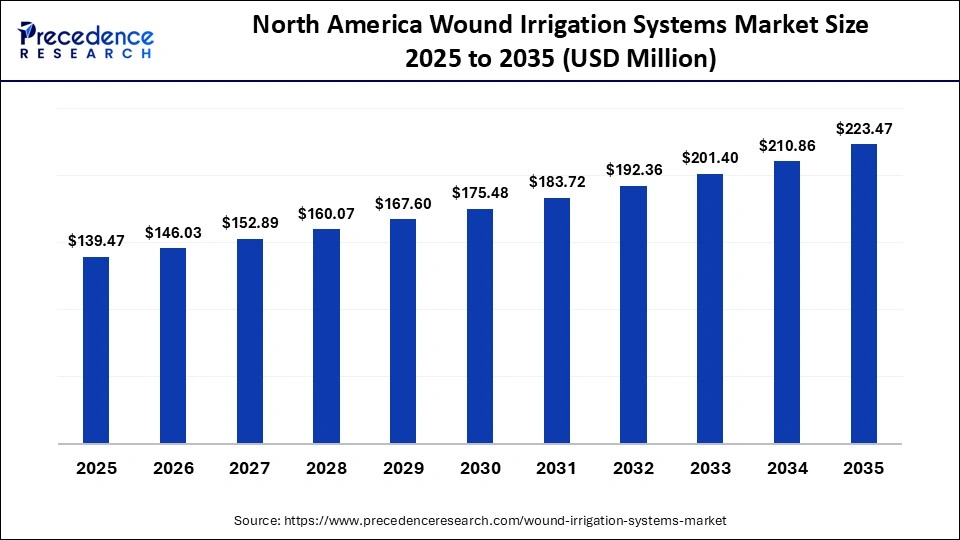
The North America wound irrigation systems market size is estimated at USD 139.47 million in 2025 and is projected to reach approximately USD 223.47 million by 2035, with a 4.83% CAGR from 2026 to 2035.
How Did North America Dominate the Wound Irrigation Systems Market?
North America dominated the wound irrigation systems market by capturing about 41% share in 2025. The region's dominant position in the market is attributed to the high prevalence of chronic diseases causing wounds, an aging population, and an advanced healthcare infrastructure. The widespread availability of hospitals, ambulatory surgical centers, and home care, along with high reimbursement rates for advanced wound treatments, supports adoption. Major industry leaders, including 3M, Smith & Nephew, Convatec, and Stryker, are driving innovation in automated and battery-operated devices. Stringent regulations and heightened awareness regarding the prevention of surgical site infections further boost the use of specialized, efficient irrigation solutions.
What is the Size of the U.S. Wound Irrigation Systems Market?
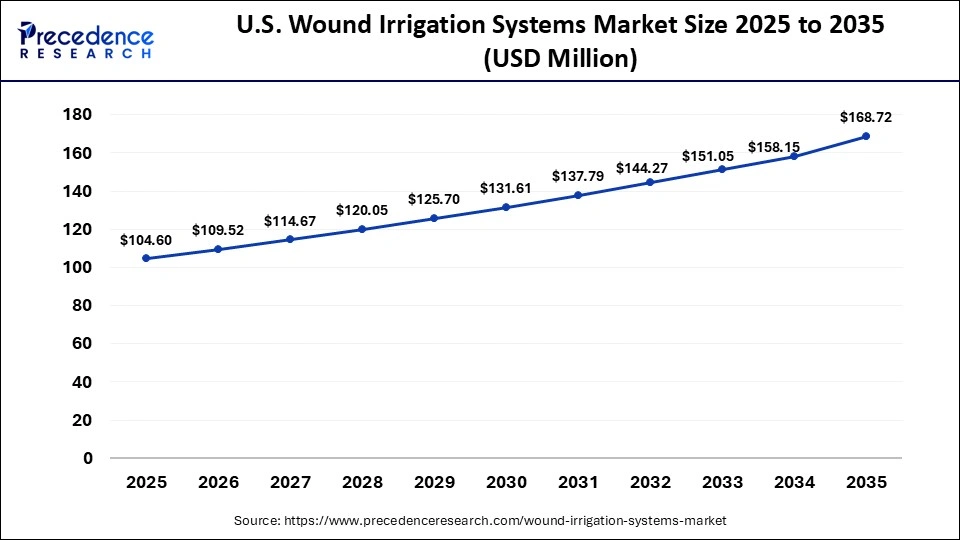
The U.S. wound irrigation systems market size is calculated at USD 104.60 million in 2025 and is expected to reach nearly USD 168.72 million in 2035, accelerating at a strong CAGR of 4.90% between 2026 and 2035.
U.S. Wound Irrigation Systems Market Trends
The U.S. plays a pivotal role in the market within North America, driven by a high prevalence of chronic wounds such as diabetic foot ulcers, an aging population, and a strong emphasis on infection control. These factors significantly drive the demand for advanced systems, including portable negative pressure wound therapy and automated pulsed lavage systems. Notable manufacturers like BD, 3M, Zimmer Biomet, and Stryker Corporation have a strong presence in the U.S., fostering continuous innovation in the market.
Why is Asia Pacific Considered the Fastest-Growing Region in the Wound Irrigation Systems Market?
Asia Pacific is expected to expand at the fastest CAGR of 5.0% throughout the forecast period. The growth of the market in the region is driven by a massive patient base, rapid healthcare infrastructure development, and increased adoption of advanced, cost-effective, and portable, battery-operated devices. A high prevalence of diabetes and obesity in the region results in diabetic foot ulcers and pressure ulcers, requiring regular, effective cleansing. A significant, aging population in countries like Japan, China, and South Korea is more susceptible to chronic wounds, driving the demand for advanced wound care products. As a hub for medical tourism, the region is seeing increasing demand for advanced wound care solutions for high-end wound management.
India Wound Irrigation Systems Market Trends
India stands out as an emerging market, mainly driven by a large patient population, rising incidents of chronic wounds, and increasing healthcare expenditure. Growing medical tourism and improvements in hospital infrastructure are increasing the adoption of advanced, cost-effective, or innovative wound care management devices. Additionally, government initiatives to strengthen primary healthcare services and reduce hospital‑acquired infections are encouraging the adoption of irrigation systems in hospitals, clinics, and outpatient care centers.
Wound Irrigation Systems Market Value Chain analysis
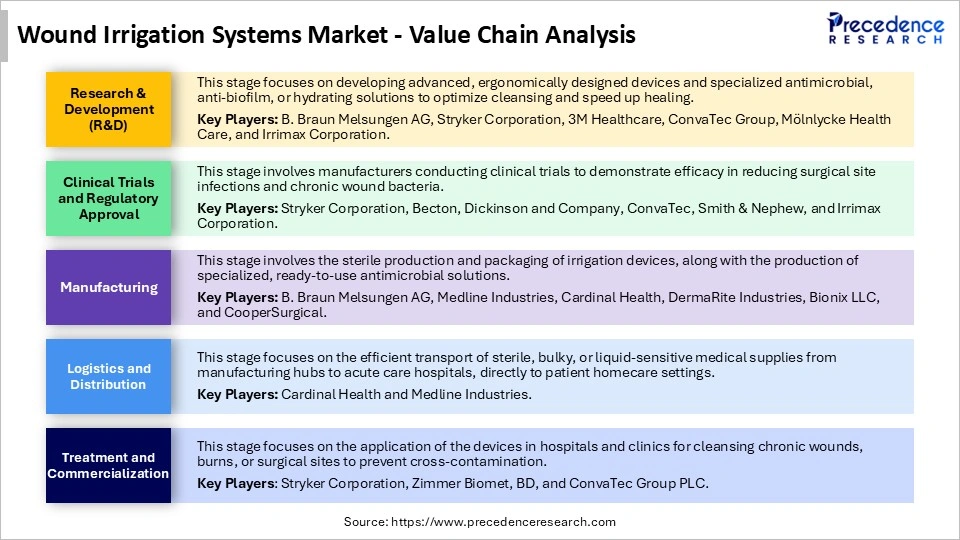
Wound Irrigation Systems Market Companies
- Becton, Dickinson and Company (BD)
- Smith & Nephew plc
- Stryker Corporation
- Zimmer Biomet Holdings, Inc.
- B. Braun Melsungen AG
- Cardinal Health, Inc
- Medline Industries, LP
- Mölnlycke Health Care AB
- CooperSurgical, Inc.
- Irrimax Corporation
- Centurion Medical Products
- Westmed Products
- 3M Company
- Medtronic plc
- Coloplast A/C
Recent Developments
- In February 2026, BioLargo's subsidiary, Clyra Medical Technologies, received its first commercial order for ViaCLYR™, an FDA-cleared wound irrigation solution, from Advanced Solution, LLC. This marks Clyra's transition from development to early revenue generation, allowing distribution to hospitals and clinics nationwide. ViaCLYR is a safe, effective solution for treating acute and chronic wounds. CEO Steve Harrison noted that this order signifies a move from innovation to execution, paving the way for revenue growth.(Source: https://www.biolargo.com)
- In November 2025, BD launched the BD Surgiphor Surgical Wound Irrigation System in Europe, the first of its kind with CE approval. This sterile, ready-to-use system helps reduce the bacterial load in surgical wounds, addressing a key factor in surgical site infections. BD's Rian Seger emphasized its impact on patient safety and hospital efficiency by simplifying the irrigation process. For more details, contact your BD sales representative.(Source: https://investors.bd.com)
Segments Covered in the Report
By Product Type
- Manual Wound Irrigation Systems
- Battery-Operated Wound Irrigation Systems
- Gravity Fed Irrigation Systems
- Pressurized Canister-Based Irrigation
By Application
- Surgical Wounds
- Chronic Wounds
- Traumatic Wounds
- Burns
By End User
- Hospitals and Clinics
- Ambulatory Surgical Centers
- Homecare
- Specialty Clinics and Others
By Region
- North America
- Europe
- Asia-Pacific
- Latin America
- Middle East & Africa
For inquiries regarding discounts, bulk purchases, or customization requests, please contact us at sales@precedenceresearch.com
Frequently Asked Questions





Ask For Sample
No cookie-cutter, only authentic analysis – take the 1st step to become a Precedence Research client
 Get a Sample
.webp)



 sales@precedenceresearch.com
 Schedule a Meeting
