



Autonomous Vehicle Market Market Size, Key Companies, Company Technology / Innovation, Production Output, Market Penetration, Sales Analysis, Export Performance, Company Investment Strategies, and Customer Demand
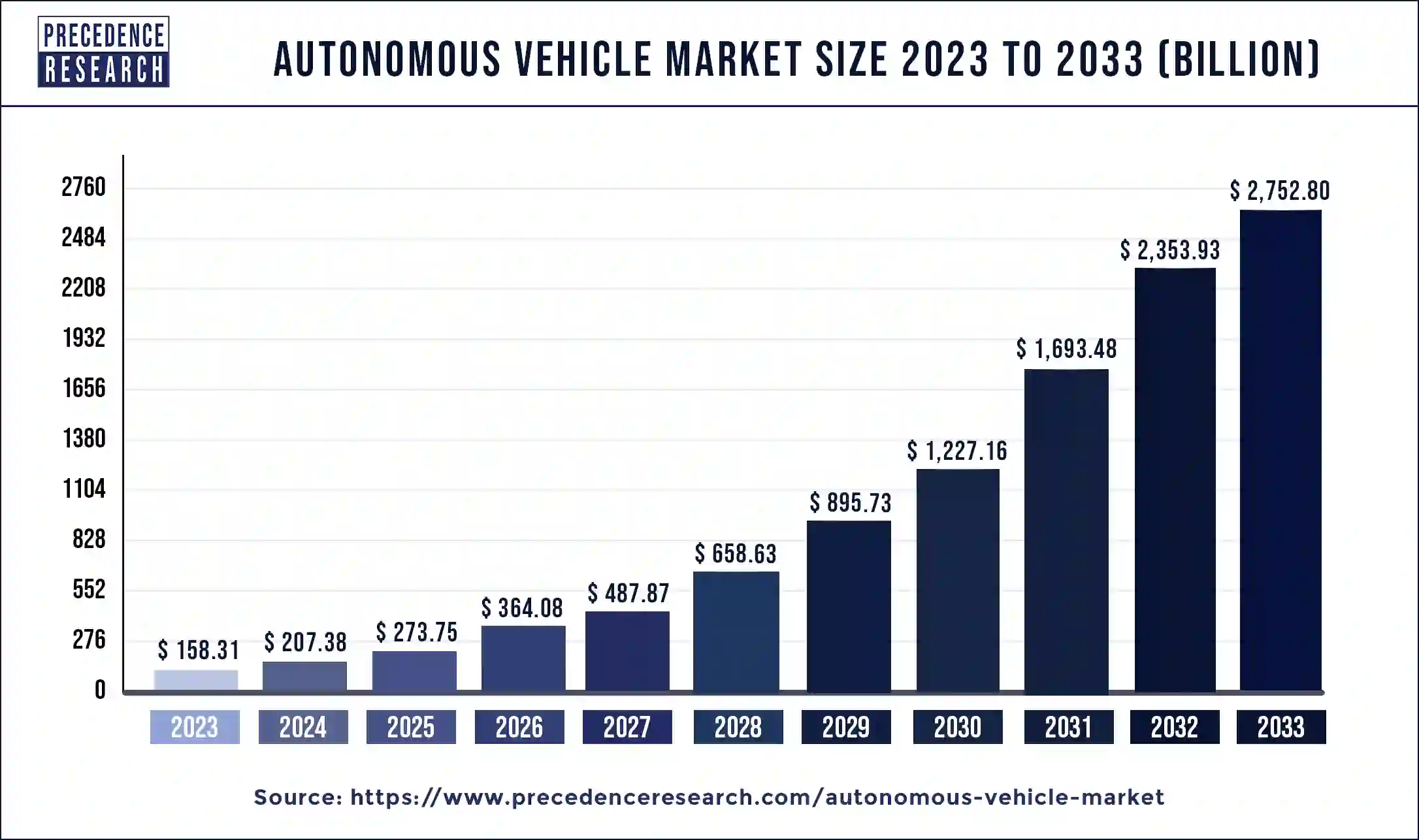
The global autonomous vehicle market is projected to grow from USD 364.08 billion in 2026 to USD 5,439.46 billion by 2035, registering a CAGR of 34.84%. Growth is driven by rapid advancements in AI, LiDAR, sensor technologies, vehicle connectivity, and increasing investments in smart mobility and autonomous transportation. North America leads the market, while Asia Pacific is expected to witness the fastest growth due to expanding smart city initiatives and government support for autonomous driving technologies.
Source: https://www.precedenceresearch.com/autonomous-vehicle-market
 Get a Sample
 Table Of Content


What is Autonomous Vehicle Market Size?
The global autonomous vehicle market is projected to grow from USD 364.08 billion in 2026 to USD 5,439.46 billion by 2035, registering a CAGR of 34.84%. Growth is driven by rapid advancements in AI, LiDAR, sensor technologies, vehicle connectivity, and increasing investments in smart mobility and autonomous transportation. North America leads the market, while Asia Pacific is expected to witness the fastest growth due to expanding smart city initiatives and government support for autonomous driving technologies.
Market Highlights
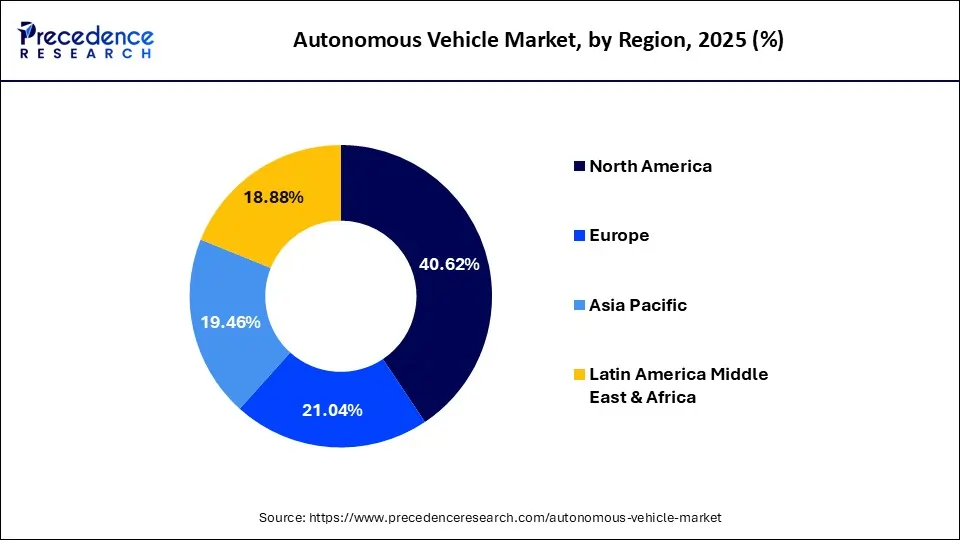
- North America dominated the global market with the largest market share of 40.46% in 2025.
- Asia-Pacific region is expected to hit a CAGR of 36.9% from 2026 to 2035.
- By application, the transportation segment accounted largest market share of 93.41% in 2025.
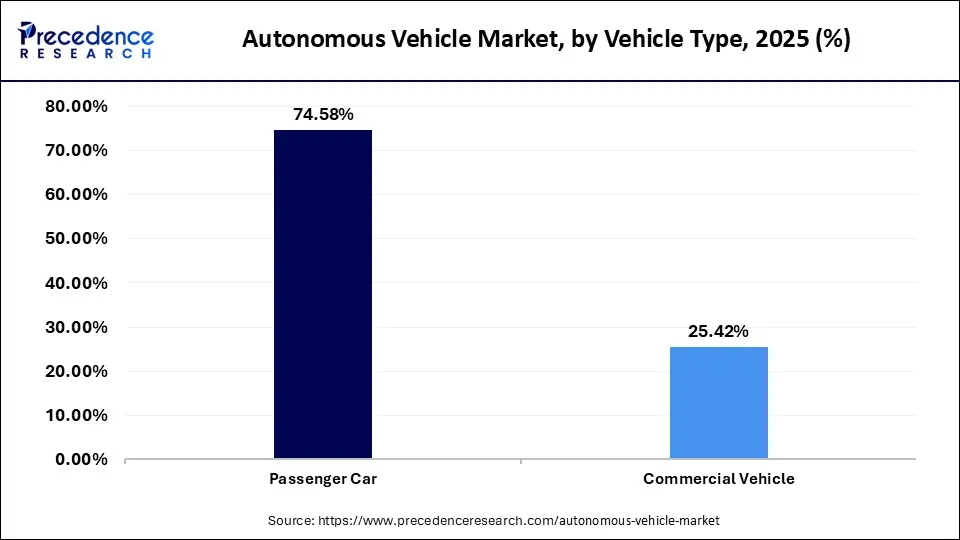
- By vehicle type, the passenger segment contributed the highest market share of 74.44% in 2025.
- By propulsion type, the semi-autonomous vehicle segment captured the biggest market share of 95.19% in 2025.
- By transportation, the commercial transportation segment generated a major market share of 85.17% in 2025.
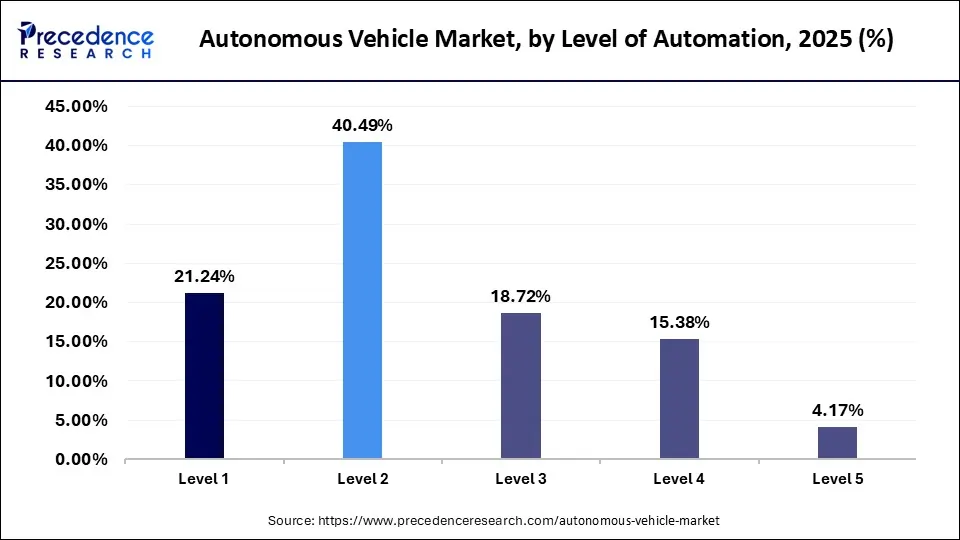
- By Level of Automation, the Level 2 segment has held the largest market share of 40.39% in 2025.
Market Overview
The Autonomous Vehicle Market continues to advance rapidly, as automotive companies and technology firms invest heavily in developing self-driving vehicles capable of navigating roads with minimal to no human intervention, relying on sensor, AI, cameras, radar, and LiDAR technology. This growth is being driven by ongoing innovation in AI, machine learning, vehicle connectivity, and smart transportation systems. Common autonomous driving technology features include adaptive cruise control, lane departure warning, and automated parking, with broader applications also emerging across logistics, ride-hailing, and delivery services.
While North America remains one of the most important markets today, Asia Pacific is expected to become the fastest-growing region, supported by strong investment in smart mobility and urban transport, favorable government policy, and growing consumer adoption alongside continued testing of advanced self-driving vehicles, all of which are creating substantial business opportunities.

In 2024, autonomous-ready vehicle production reached approximately 7.61 million units globally, marking a 39% increase from about 5.42 million vehicles in 2023. This sharp year-over-year growth highlights how quickly advanced driver-assistance and autonomous driving technology are moving from premium vehicle segments into mainstream manufacturing. This surge reflects stronger integration of AI processors, sensor fusion systems, and software-defined vehicle platforms directly at the factory level. Rather than remaining a niche innovation, autonomy is increasingly becoming embedded in large-scale automotive production. This significant rise in output also points to improved supply chain stability, falling component costs, and growing regulatory confidence, positioning autonomous-ready vehicles as a central pillar of next-generation automotive manufacturing.
AI in the Autonomous Vehicle Market
Artificial intelligence forms the technological backbone of the Autonomous Vehicle Market, enabling safer, smarter, and more efficient transportation. AI improves safety by reducing human error through advanced driver-assistance features and real-time hazard detection. It also helps manage traffic-related challenges through route optimization and congestion control, supporting more efficient energy use along the way. AI-based predictive maintenance further helps detect potential faults early, minimizing downtime and reducing operating costs. For passengers, AI improves accessibility by offering mobility solutions to those unable to drive, while also enabling hands-free productivity during travel. It further enhances the in-car experience through AI-enabled infotainment systems and voice assistants. Together, this deep integration of AI is helping make the Autonomous Vehicle Market more sustainable, convenient, safe, and economically viable.
What are Major Technological Advancements in Autonomous Vehicle Market
- The Autonomous Vehicle Market remains at the forefront of innovation, with advanced technologies continuing to push the industry closer to full autonomy. The growing use of LiDAR, radar, AI-enabled perception systems, and real-time data processing is reshaping how self-driving vehicles interpret and respond to their surroundings.
- When equipped with communication capabilities, autonomous vehicles can use machine learning algorithms to make reliable, predictive decisions through vehicle-to-everything (V2X) communication, improving both safety and coordination with other vehicles while reducing broader traffic friction.
- When paired with connected 5G networks, autonomous vehicles can share data in real time with each other, transportation infrastructure, and the wider urban ecosystem, with technologies such as V2X and roadside infrastructure creating strong synergistic connections across the system.
- All of this works together with vehicle applications such as advanced driver-assistance systems (ADAS), HD mapping, and over-the-air (OTA) software updates, developed and maintained by automotive manufacturers and technology companies alike.
Continued progress in edge computing and onboard sensor fusion is also improving the reliability, ease, and contextual awareness of autonomous navigation, even in previously unpredictable driving environments.
Trends in the Autonomous Vehicle Market
- Upgradation of AI Technology: Artificial intelligence continues to play a central role in the growth of self-driving vehicles. Through AI algorithms, autonomous vehicles can efficiently conserve energy, navigate traffic, process real-time information, and adapt to changing environmental conditions. AI models also monitor driver behavior and habits, such as adherence to traffic signs, speeding patterns, and preferred cabin temperature, while offering constructive feedback to drivers.
- Advanced Sensor Technology: Vehicle sensors continuously gather data on obstacles, road conditions, surrounding vehicles, and traffic signals, feeding this information to the onboard AI system with minimal delay. The AI system then processes this data to make real-time decisions, such as changing lanes, adjusting speed, or responding to traffic signals.
- Inter-CAV Communication: Inter-CAV, or Connected and Autonomous Vehicle Communication, refers to the exchange of information between autonomous vehicles. In simple terms, this technology allows vehicles to both share and receive data with nearby vehicles in real time.
- Security and Privacy Innovations: As autonomous vehicles become increasingly interconnected, protecting data privacy and security has become a top priority. Advanced encryption protocols now secure data as it moves between vehicles and the cloud, making it significantly harder for hackers to access or tamper with sensitive information.
Autonomous Vehicle Market Growth Factors
- Government funding and expanding digital infrastructure continue to support the broader integration of self-driving vehicles across transportation networks.
- For individuals with limited or no ability to drive, autonomous vehicles offer a potentially transformative opportunity to improve inclusiveness and independence.
- Demand also continues to rise as self-driving vehicles offer passengers greater comfort and flexibility, creating space for work, rest, or leisure during travel.
- Broader technological innovation across the automotive industry has significantly accelerated the arrival of autonomous vehicles, marking a major breakthrough following the earlier rise of electric and hybrid vehicles.
- As road safety concerns grow alongside increasing awareness of human error, momentum toward autonomy continues to build, driven by the promise of fewer accidents and more reliable transportation overall.
Autonomous Vehicle Market Outlook
- Industry Growth Overview: The market continues to grow rapidly, driven by advancements in AI and LiDAR technology, evolving urban mobility needs, strong government support, and rising demand for greater safety and convenience.
- Major Investors: Key investors in the Autonomous Vehicle Market include major technology companies such as Alphabet's Waymo, NVIDIA, and Intel, venture capital firms including Sequoia, IDG Capital, and Plug and Play, established automakers such as GM, Ford, Toyota, Volkswagen, and Mercedes-Benz, and government bodies such as the EU, all investing in autonomous driving technology, software, and emerging startups. That said, recent trends suggest some large-scale investments are beginning to face new challenges.
- Global Expansion: The market continues to grow globally, driven by advancements in AI, sensor technologies, and vehicle connectivity that support safer, more efficient transportation. Rising government support, increasing urbanization, and growing demand for reduced traffic congestion and lower emissions continue to accelerate adoption worldwide.
Market Scope
| Report Highlights | Details |
| Market Size in 2025 | USD 273.75 Billion |
| Market Size in 2026 | USD 364.08 Billion |
| Market Size by 2035 | USD 5,439.46 Billion |
| Market Growth Rate from 2026 to 2035 | CAGR of 34.84% |
| Dominated Region | North America |
| Fastest Growing Market | Asia Pacific |
| Base Year | 2025 |
| Forecast Period | 2026 to 2035 |
| Segments Covered | Application, Level of Automation, Propulsion, Transportation, Vehicle, and Region |
| Regions Covered | North America, Europe, Asia-Pacific, Latin America and Middle East & Africa |
Market Dynamics
Drivers
Rising Need for Road Safety
Road accidents continue to rise globally. According to the Association for Safe International Road Travel (ASIRT), more than one million people die in road accidents each year, with human error remaining the leading cause, often due to misjudgment during unpredictable situations such as head-on collisions. Mechanical failures, including brake or axle issues, also contribute to accident rates, prompting governments worldwide to strengthen road safety regulations.
Autonomous vehicles offer a safer alternative to traditional vehicles, equipped with advanced driving-assistance systems such as navigation, lane management, and anti-collision technology, all connected to a centralized decision-making system.
According to Automotive World Ltd., a leading source of automotive industry information, global car ownership is expected to surpass 2 billion vehicles by 2050. With such a dramatic rise in vehicle numbers, traffic congestion is expected to become an even greater concern, one that self-driving vehicles are well positioned to help address. By communicating with one another, self-driving vehicles can help avoid congestion, while the growing sharing economy further enables convenient, point-to-point travel with optimal efficiency and minimal traffic disruption.
Growing R&D Spending in Autonomous Vehicle Development
An autonomous vehicle relies on a combination of sensors and networking systems that work together to support computer-assisted driving. In 2018, BMW Group planned to allocate the largest share of its revenue to date toward research and development. While the company typically spends between 5% and 5.5% of sales on R&D, its recent annual report indicated plans to increase this to between 6.5% and 7%, with a strong focus on autonomous and electric vehicle development. To accelerate progress in autonomous driving technology, companies such as Audi and Tesla continue to collaborate with technology partners, including Nvidia, which supports automakers in developing advanced object recognition systems.
Similarly, Waymo has partnered with Intel Corporation to enhance vehicle infotainment systems, while several other industry players continue to conduct in-house research to develop cutting-edge autonomous driving technology. Within the luxury vehicle segment, both Tesla and Mercedes-Benz invest more than 60% of their R&D budgets in internal research. Several Japanese automakers, including Toyota, have similarly launched in-house research initiatives to strengthen their technological capabilities.
Environmental Impact Due to Traditional Vehicles
The environmental impact of pollution caused by traditional vehicles continues to contribute to rising global temperatures and health risks. According to the U.S. Environmental Protection Agency (EPA), more than 75% of carbon monoxide emissions in the country come from motor vehicles, contributing to respiratory and cardiovascular conditions such as asthma. As adoption of autonomous vehicles increases, overall pollution from cars and trucks is expected to decline, supported by more efficient fuel usage and the growing adoption of eco-friendly solutions such as electric vehicles.
The continued growth of the sharing economy is also expected to accelerate adoption of self-driving vehicles. Since autonomous vehicles can be shared more easily, their environmental impact is expected to decrease further. Uber, for example, has been developing and testing autonomous vehicles in Arizona, while other ride-sharing companies such as Lyft and Gett have begun partnering with automakers developing self-driving technology.
Increased Energy Savings by Autonomous Vehicles
The continued development of AI-integrated autonomous vehicles is expected to improve overall vehicle efficiency compared to human-driven cars. With access to real-time traffic updates and advanced telematics, self-driving vehicles can dynamically adjust routes, helping reduce fuel waste caused by traffic congestion.
Autonomous vehicles also improve fuel efficiency through smoother acceleration and gear shifting, compared to the more aggressive driving patterns common among human drivers. Vehicle platooning, made possible through autonomous technology, further improves efficiency by reducing aerodynamic drag between vehicles. Combined with the growing use of hybrid technologies in traditional vehicles today, and the expected shift toward fully electric and hybrid electric autonomous vehicles in the future, these advancements are expected to meaningfully improve energy efficiency across the industry. The broader sharing economy is expected to further support these energy savings as autonomous vehicle adoption increases.
Opportunities
Government Initiatives in the Autonomous Vehicle Market
Government programs play a critical role in accelerating growth across the Autonomous Vehicle Market. Through R&D funding, regulatory development, and smart infrastructure investment, public sector support continues to drive innovation and readiness for broader AV deployment. Countries such as the U.S., China, Germany, and Japan continue to invest heavily in smart cities, 5G connectivity, and V2X infrastructure, helping accelerate the testing, networking, and adoption of self-
driving vehicles.
Regulators worldwide continue to adapt existing transportation frameworks to accommodate Level 4 and Level 5 autonomy, expanding the availability of self-driving vehicles on public roads. This includes offering testing permits, designated pilot zones, and incentives for data sharing. Many governments are also introducing incentives, such as tax credits and green mobility grants, to support the adoption of electric autonomous vehicles in line with broader environmental goals.
Safety remains a top priority, with governments establishing cybersecurity protocols and standardization guidelines. These purpose-built regulatory frameworks are helping build public confidence while positioning countries to compete effectively in the global race toward autonomous mobility leadership.
Restraint
Vehicle Safety and Cybersecurity Concerns
Autonomous vehicles function as cyber-physical systems, combining physical components such as the vehicle itself with virtual systems including AI-based driving assistance, vehicle-to-vehicle communication, navigation, and cloud connectivity. This connectivity, however, introduces meaningful cybersecurity risks. Autonomous vehicles can potentially be hacked to access personal data such as behavioral patterns, or infected with ransomware that could lead to accidents or increased theft risk. In 2015, researchers from IOActive, Inc., a cybersecurity firm, successfully hacked a Jeep Cherokee through its internet-connected entertainment system, gaining control of the vehicle.
LiDAR and image recognition systems also remain vulnerable to manipulation through falsified images or road signs. Additionally, LiDAR struggles to detect glass, while radar is primarily limited to sensing metal objects, posing potential risks to passenger safety.
The possibility of vehicle malfunction remains one of the biggest barriers to public trust and adoption. Extensive testing and system redundancy remain essential, ensuring backup systems can maintain safe operation in the event of a failure, though this continues to add to overall vehicle costs. Public concern also persists around vehicle performance across varying weather and traffic conditions, with functional safety, defined as the absence of unreasonable risk from electronic system malfunctions, remaining a key barrier to broader adoption, particularly given the unpredictable nature of random system failures.
Lack of Infrastructure in Developing Countries
The successful growth of the Autonomous Vehicle Market depends on four key pillars: supportive policy and regulation, technological innovation, infrastructure, and consumer adoption. Self-driving vehicles rely heavily on well-maintained roads, clear signage, and updated navigation systems. In many developing countries, including India, Mexico, and Brazil, road infrastructure remains significantly less developed compared to countries such as the U.S., Singapore, and Sweden, creating a meaningful barrier to autonomous vehicle deployment.
Road network development also plays a critical role in supporting self-driving vehicle adoption. According to the World Economic Forum, Brazil ranked 107th out of 144 countries in infrastructure development in 2017. Challenges like these continue to act as a restraint on autonomous vehicle growth across developing economies, underscoring the importance of continued infrastructure investment to support long-term adoption.
Autonomous Vehicle Market Challenge
System Reliability and Uncertainty in User Acceptance
As autonomous driving technology continues to advance, public perception remains a key challenge to broader adoption. Many consumers currently prefer investing modestly in their existing vehicles by adding features such as crash avoidance and lane-keeping systems, which form the foundation of autonomous capabilities. Additionally, various social equity concerns tied to self-driving vehicles could further influence adoption trends, given the potential for uneven impact across different communities.
The rise of autonomous vehicles is also expected to reshape related industries. As crash rates decline, demand for vehicle repairs may decrease, impacting maintenance and repair revenue. A reduction in accident frequency could similarly disrupt the broader "crash economy," affecting insurance providers, chiropractors, and auto body shops alike. Despite these considerations, autonomous vehicle adoption continues to be driven by the substantial safety benefits it offers over human driving. That said, a faulty sensor reading or system miscalculation could still lead to unexpected vehicle behavior, potentially resulting in rare but highly complex accident scenarios that remain difficult to predict.
Segments Insights
Application Insights
Why Does the Defense and Transportation Segment Dominate the Autonomous Vehicle Market?
The defense and transportation segment dominated the Autonomous Vehicle Market in 2025, supported by strong applicability across logistics, monitoring, and cargo transportation. The defense sector continues to adopt autonomous driving technology to enhance mission capability while reducing risk to personnel, while the transportation industry relies on automation to improve efficiency and reduce operating costs.
The commercial transportation segment is expected to register the fastest growth during the forecast period, driven by rising demand for automation across logistics, ride-sharing, and delivery services. Growing investment in self-driving technology continues to improve process efficiency and reduce costs, further supported by expanding e-commerce activity and the increasing use of AI-based fleet management systems.
Looking ahead, the broader transportation segment is expected to see significant growth, supported by continued technological advancement and growing government acceptance of autonomous vehicles worldwide. At the same time, the defense sector is expected to emerge as one of the most prominent application areas during the forecast period, driven by various regional initiatives, particularly across North America.
- For instance, in April 2019, the U.S. military announced plans to deploy autonomous combat trucks to help reduce accidents for soldiers navigating rough terrain.
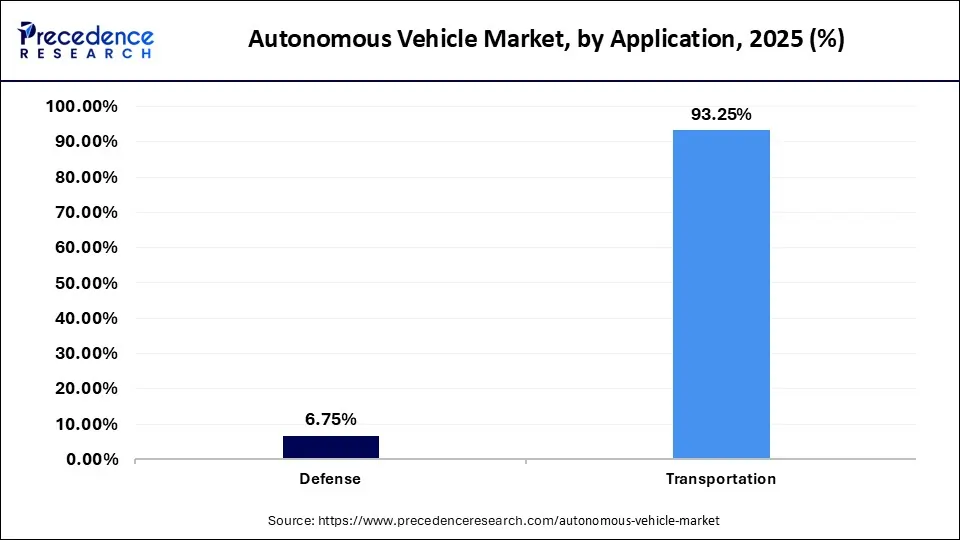
Global Autonomous Vehicle Market Revenue, By Application, 2023-2025 (USD Billion)
| Application | 2023 | 2024 | 2025 |
| Defense | 13.22 | 17.53 | 23.43 |
| Transportation | 145.09 | 189.85 | 250.32 |
Vehicle Type Insights
Why Does the Passenger Segment Dominate the Autonomous Vehicle Market?
The passenger vehicle segment dominated the Autonomous Vehicle Market in 2025, driven by strong consumer demand for improved safety and comfort. As more automakers integrate autonomous driving technology into passenger vehicles, the segment continues to benefit from rising vehicle production and ongoing technological improvements.
The commercial vehicle segment is expected to register the fastest growth during the forecast period, driven by increasing use of self-driving vehicles for logistics, freight transport, and last-mile delivery services. Companies are increasingly turning to autonomous technology to improve fleet performance, reduce operating costs, and offset ongoing driver shortages.
Global Autonomous Vehicle Market Revenue, By Vehicle Type, 2022-2024 (USD Billion)
| Vehicle Type | 2023 | 2024 | 2025 |
| Passenger Car | 117.61 | 154.37 | 204.17 |
| Commercial Vehicle | 40.70 | 53.02 | 69.58 |
Level of Automation Insights
Why Does the Level 2 Segment Dominate the Autonomous Vehicle Market?
The Level 2 automation segment dominated the Autonomous Vehicle Market in 2025, supported by its widespread availability in current passenger vehicles and its ability to offer valuable driver-assistance features such as adaptive cruise control, lane centering, and automatic braking. Strong consumer readiness, lower costs, and regulatory compliance have further reinforced this segment's dominance.
The Level 1 automation segment is expected to register the fastest growth during the forecast period, supported by its cost-effectiveness and popularity in mid-market vehicles. Features such as adaptive cruise control and lane assist continue to improve safety and convenience without significantly increasing vehicle costs, with rising consumer awareness and stricter safety regulations expected to further accelerate segment growth.
Global Autonomous Vehicle Market Revenue, By Level of Automation, 2023-2025 (USD Billion)
| Level of Automation | 2023 | 2024 | 2025 |
| Level 1 | 29.23 | 38.41 | 50.85 |
| Level 2 | 64.35 | 84.48 | 111.77 |
| Level 3 | 26.32 | 34.60 | 45.83 |
| Level 4 | 23.34 | 30.82 | 41.00 |
| Level 5 | 15.08 | 19.08 | 24.30 |
Regional Insights
Why is North America Dominating the Autonomous Vehicle Market?
North America continues to dominate the global Autonomous Vehicle Market, supported by a strong concentration of technology companies, automakers, and autonomous driving innovators. The region continues to see heavy investment in artificial intelligence, advanced transportation systems, and autonomous vehicle testing, with supportive regulation and strong consumer acceptance of emerging automotive technology reinforcing North America's global leadership position.
Rising investment in smart infrastructure, V2X communication networks, and mobility-as-a-service (MaaS) platforms continues to reflect a maturing market. As consumer interest in autonomous vehicle applications continues to grow, and demand rises for commercial use cases such as autonomous delivery and robo-taxis, North America is expected to maintain its leadership position well into 2030 and beyond.
U.S. Autonomous Vehicle Market Trends
Significant investment in artificial intelligence, autonomous driving software, and advanced vehicle technology continues to strengthen the U.S. market. Strong participation from innovative companies, active pilot programs, and rising adoption of robotaxis and autonomous delivery services continue to position the U.S. as a global leader, supported by favorable regulatory developments and growing demand for safe, connected mobility.
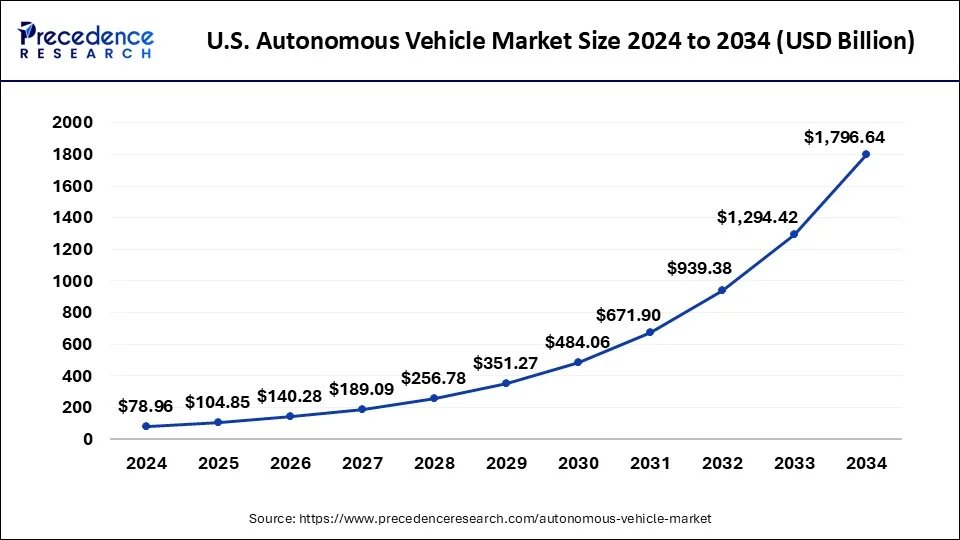
What is the U.S. Autonomous Vehicle Market Size?
The U.S. autonomous vehicle market size is valued at USD 104.85 billion in 2025 and is predicted to be worth around USD 2,200.74 billion by 2035, expanding at a CAGR of 35.58% from 2026 to 2035.
Asia Pacific Autonomous Vehicle Market Trends
Asia Pacific is expected to register the fastest growth in the Autonomous Vehicle Market during the forecast period, driven by rapid urbanization, expanding smart city development, and significant investment in intelligent transport systems. Autonomous driving technology continues to advance quickly across countries such as China, Japan, and South Korea, with rising vehicle production, growing adoption of connectivity services, and strong government support further fueling market growth.
China Autonomous Vehicle Market trends
China's strong established presence in the automotive industry, combined with rapid adoption of artificial intelligence and substantial investment in intelligent mobility solutions, continues to drive market growth. Government-led initiatives supporting autonomous vehicle development, along with expanding smart city implementation and ongoing vehicle testing, remain central to the country's progress.
Europe Expects the Significant Growth in the Market
Favorable regulation and strong investment in intelligent mobility solutions continue to support growth across Europe's Autonomous Vehicle Market. The presence of major automakers further strengthens the region's appeal, while ongoing government support for smart transport policies and vehicle safety measures continues to drive adoption. Rising demand for sustainable mobility solutions remains another key growth factor across the region.
Germany Autonomous Vehicle Market Trends
Germany's well-established automotive sector, advanced engineering expertise, and strong investment in autonomous driving technology continue to support market growth. Leading German automakers remain actively engaged in self-driving vehicle development, supported by favorable government regulation and a strong focus on electric and connected vehicles.
Similarly, the UK government continues to allocate funding toward developing connected and autonomous vehicle (CAV) testbeds through public-private partnerships, further supporting innovation across the region. Europe's broader focus on autonomous shuttles, last-mile delivery, and self-driving taxis, supported by strong existing public transit systems, continues to reinforce the region's important role in the global growth of the Autonomous Vehicle Market.
Middle East Expects the Significant Growth in the Market
Significant government investment in smart city infrastructure and intelligent transportation systems, combined with rising adoption of connected vehicles and ongoing AI-driven innovation, continues to support growth across the Middle East's Autonomous Vehicle Market, further reinforced by increasingly supportive regional policy frameworks.
UAE Autonomous Vehicle Market trends
The UAE's strong focus on mobility, digitalization, and sustainability continues to shape its Autonomous Vehicle Market, supported by various government-led initiatives promoting autonomous transport and smart city development. Continued investment in infrastructure, artificial intelligence, and connected vehicle technology remains central to the market's ongoing expansion.
South America Expects the Significant Growth in the Market
Rising adoption of connected vehicle technology and growing demand for safer mobility solutions continue to support market growth across South America. Government agencies and private companies alike are increasingly investing in smart transportation projects aimed at improving logistics efficiency, with urbanization, digitalization, and advancing vehicle technology further contributing to regional growth.
Brazil Autonomous Vehicle Market Trends
Rising demand for intelligent transport systems and advanced digital infrastructure continues to drive investment in artificial intelligence and vehicle automation across Brazil. Growing urbanization and ongoing improvements in logistics infrastructure remain key factors supporting the continued growth of autonomous vehicles in the country.
Value Cain Analysis
- Raw Material Sourcing: Procurement of raw materials like steel, plastics, and electronics, which are increasingly specialized for use in the one-of-a-kind sensors and computing systems of autonomous vehicles.
Key Players: Nvidia, Intel (Mobileye), Qualcomm, and NXP - Component Manufacturing: The production of hardware and software components in the greatest degree of specialization by AI systems, LiDAR, radar, cameras, and other sensors necessary for autonomous driving.
Key Players: Intel, Nvidia, and Bosch - Vehicle Assembly and Integration: The assembly of all vehicle parts and the seamless integration of advanced hardware and software into the vehicle system toward autonomous driving.
Key Players: Ford, GM/Cruise, Mercedes-Benz, and Honda - Testing and Quality Control: The rigorous validation and verification of the autonomous functions in terms of standard and performance through advanced simulation, hardware-in-the-loop, and real-world trials.
Key Players: Waymo and TÜV SÜD - Retail Sales and Financing: Sale of autonomous vehicles to end-consumers and fleets and potentially involving alternative business models, such as subscription and shared mobility services, rather than traditional ownership.
Key Players: Tesla, General Motors, and Ford
Competitive Landscape
The Autonomous Vehicle Market remains highly competitive, with technology companies, automakers, and software providers all competing to advance self-driving vehicle development. Leading players, including Tesla, Waymo, Mobileye, NVIDIA, and Baidu, continue to invest heavily in AI systems, sensor technology, and autonomous driving technology platforms. Companies across the market continue to pursue strategic partnerships with automakers, conduct pilot programs, and improve vehicle reliability and safety. Ongoing investment trends, evolving regulatory frameworks, and continuous advancements in machine learning continue to drive competition across the industry.
Key Companies & Market Share Insights
The global Autonomous Vehicle Market remains highly competitive, dominated by major automotive companies. Leading market players continue to prioritize inorganic growth strategies, including collaborations, partnerships, mergers and acquisitions, and regional expansion. In August 2017, Intel Corporation, BMW AG, Fiat Chrysler Automobiles (FCA), and Mobileye, an Intel-affiliated company, signed a memorandum of understanding to jointly develop an autonomous vehicle driving platform. This agreement aimed to combine the capabilities, resources, and strengths of all four companies to accelerate product development timelines while improving platform technology and overall development efficiency.
Industry participants also continue to invest heavily in product development, given the advanced electronic systems required for autonomous vehicle features. Rapidly evolving consumer preferences and growing environmental awareness continue to motivate market players to integrate these features into their vehicle lineups, often through strategic partnerships with electronic hardware manufacturers to meet rising consumer demand.
Leading Companies in the Autonomous Vehicle Market
- Tesla: Tesla Inc. remains a leading electric vehicle company, offering advanced energy storage solutions, innovative electric vehicles, and solar products alongside clean energy applications. Tesla's advanced driver-assistance features, developed through its full self-driving software, enable automated capabilities such as lane changes, street navigation, and obstacle recognition and avoidance. The company continues to update its driving software regularly as it works toward fully autonomous driving capability.
- Mercedes-Benz Group: Mercedes-Benz remains a renowned automotive company, widely recognized for developing the world's first independently built gasoline-powered vehicle. Over the decades, the company has continued to deliver innovative solutions that have helped shape the broader automotive industry. Ongoing expansion into new markets and regions continues to grow its global consumer base and support sales growth worldwide. The company also offers a diverse lineup of SUVs, EVs, and commercial vehicles designed to reach a broad range of consumers globally, while continuing to invest in eco-friendly technologies and production methods aimed at improving safety and reducing carbon emissions.
Autonomous Vehicle Market Companies
- BMW AG
- Audi AG
- Ford Motor Company
- Daimler AG
- Google LLC
- General Motors Company
- Nissan Motor Company
- Honda Motor Co., Ltd.
- Toyota Motor Corporation
- Tesla
- Volvo Car Corporation
- Uber Technologies, Inc.
- Volkswagen AG
Partnerships Taking Place in the Autonomous Vehicle Market
- In July 2026, Marti Technologies NC, which is Turkiye's mobility super app, and Tensor, a leader in personal autonomous vehicles, revealed a multi-year deliberate partnership to buy and use Tensor autonomous vehicles on Marti's mobility platform in cities present across Turkiye. (Source: https://www.businesswire.com)
- In June 2026, UBER, in partnership with WeRide WRD, a Chinese autonomous vehicle company, will disclose plans to offer commercial robotaxi services in the Greater Zurich Region. Such a move shows their second joint deployment situated in Europe, which was received weeks after the revelation of the Alik initiative in Madrid. (Source: https://www.tradingview.com)
- In June 2026, CaoCao, a top mobility service platform, and another one, May Mobility, a worldwide autonomous vehicle technology company, have disclosed an actionable partnership to currently reveal the big-range commercialization of robotaxi services in terms of international markets, which started in Europe. (Source: https://www.prnewswire.com)
Recent Developments
- In June 2026, Stellantis, Wayve, and Uber will reveal that they have entered into a partnership to collectively discover the growth and deployment of Level 4 (driverless) robotaxis on a huge scale. (Source: https://www.stellantis.com)
- In June 2026, China revealed GB/T 47025-2026, which is Intelligent and Connected Vehicle-Simulation test methods and Need for Automated Driving Function, has disclosed the latest national framework for checking automated driving systems with the assistance of simulation -based testing. (Source: https://www.china-certification.com)
- In June 2026, the International Automotive and Supply Chain Expo will officially begin at AsiaWorld -Expo in Hong Kong. As a top leader in current energy commercial vehicles, Geely Farizon New Energy Commercial Vehicle Group is back for its second consecutive year with a complete product lineup, which highlights the “methanol electric+ pure electric” technology direction. (Source: https://www.eqs-news.com)
- In June 2026, Tata Motors predicts main sourcing effectiveness and current product possibilities from its 3.8 billion euros acquisition of the Italian truck and bus manufacturer Iveco, which has a transaction on trucks to complete in the second quarter of 2027. (Source: https://timesofindia.indiatimes.com)
- On June 17, 2025, Pony.ai unveiled its Gen?7 Robotaxi at the Hong Kong Auto Expo, featuring 34 sensors and a 70% reduction in ADK hardware costs, designed for large-scale Level 4 deployment. (Source- Autonomous Vehicle International)
- On June 22, 2025 – Tesla launched its first robotaxi pilot in Austin, Texas, deploying 10–20 Model Y vehicles equipped with Full Self-Driving (FSD) software for flat-rate rides within a geofenced zone. (Source-https://www.fortuneindia.com)
- On July 17 2025, Uber announced a \$300 million investment in Lucid and a partnership with Nuro to launch 20,000 Gravity SUV-based robotaxis, with deployment scheduled to begin in late 2026. (Source- https://www.reuters.com)
- In January 2025, a leading company in the world, named Sony and Honda, collaborated and planned to launch an electric vehicle with the name Afeela EV in the U.S. and Japan by the end of 2026. This automobile will be equipped with various AI technologies to support self-driving capabilities. (Source: https://auto.hindustantimes.com/)
Segments Covered in the Report
By Application
- Defense
- Transportation
- Commercial transportation
- Industrial transportation
By Level of Automation
- Level 1
- Level 2
- Level 3
- Level 4
- Level 5
By Propulsion Type
- Semi-autonomous
- Fully Autonomous
By Vehicle Type
- Passenger Car
- Commercial Vehicle
By Region
- North America
- Europe
- Asia-Pacific
- Latin America
- Middle East & Africa
For inquiries regarding discounts, bulk purchases, or customization requests, please contact us at sales@precedenceresearch.com
Frequently Asked Questions
Tags





Ask For Sample
No cookie-cutter, only authentic analysis – take the 1st step to become a Precedence Research client
 Get a Sample




 sales@precedenceresearch.com
 Schedule a Meeting
