



Aldose Reductase Inhibitor Market Size, Companies, Share, Patient Volume, Treatment Adoption Rates, Pricing Analysis, Regulatory Landscape, Competitive Positioning, and Demand Forecast
Aldose Reductase Inhibitor Market (By Site of Action: Neural Tissue, Retina, Kidney, Cardiovascular, Others; By Drug: Carboxylic Acid Derivatives, Spirohydantoins and Cyclic Amide, Phenolic Derivatives, Others; By Route of Administration: Oral, Parenteral, Others; By Distribution Channel: Hospital Pharmacy, Online Pharmacy, Retail Pharmacy) - Global Industry Analysis, Size, Trends, Leading Companies, Regional Outlook, and Forecast 2026 to 2035
Source: https://www.precedenceresearch.com/aldose-reductase-inhibitor-market
 Get a Sample
 Table Of Content


What is the Aldose Reductase Inhibitor Market Size?
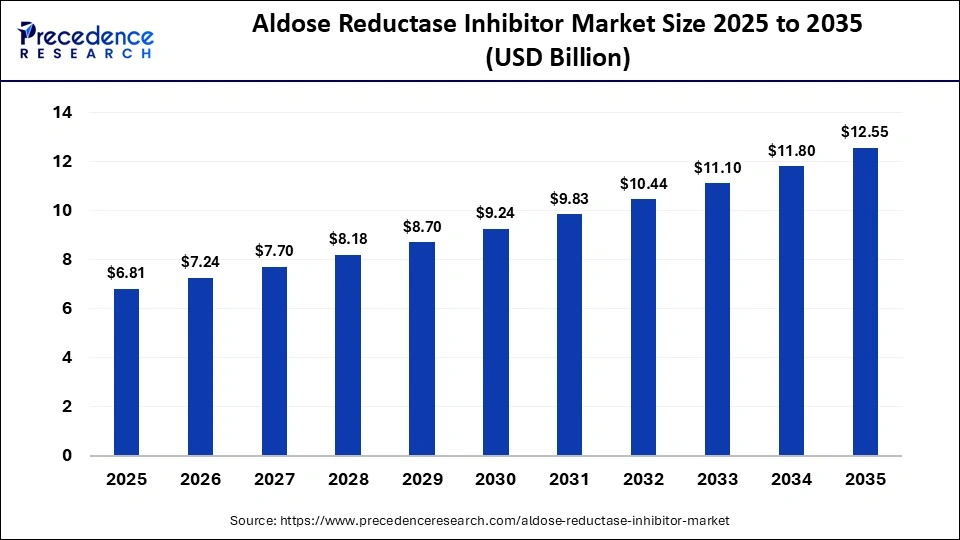
The global aldose reductase inhibitor market size accounted for USD 6.81 billion in 2025 and is predicted to increase from USD 7.24 billion in 2026 to approximately USD 12.55 billion by 2035, expanding at a CAGR of 6.30% from 2026 to 2035. Aldose reductase inhibitors have been proven to be effective in the prevention and treatment of several health complications, including diabetic neuropathy, diabetic retinopathy, diabetic nephropathy, neuroinflammation, and ischemic injury.
Market Highlights
- North America dominated the market in 2025.
- Asia Pacific is expected to grow at the fastest CAGR in the market during the forecast period.
- By site of action, the neural tissue segment dominated the market in 2025.
- By site of action, the kidney segment in the market is expected to grow at the fastest CAGR in the market during the forecast period.
- By drug, the carboxylic acid derivatives segment dominated the market in 2025.
- By drug, the spirohydantoins and cyclic amide segment is expected to grow at a notable rate in the market in 2025.
- By route of administration, the oral segment dominated the market in 2025.
- By route of administration, the parenteral segment is expected to grow at the fastest CAGR in the market during the forecast period.
- By distribution channel, the hospital pharmacy segment dominated the market in 2025.
- By distribution channel, the online pharmacy segment is expected to grow at the fastest CAGR in the market during the forecast period.
Aldose Reductase Inhibitor: Improved Potency and Better Safety Profile
The aldose reductase inhibitor market is leading due to the high incidence of diabetes and its associated secondary complications, which impose significant global health challenges. Several research studies were carried out to assess the aldose reductase inhibitory effects on diabetic tissues at the molecular level. Certain bioactive metabolites show aldose reductase inhibitor activity that helps researchers to address complications associated with hyperglycemia. These metabolites serve as a potential source to develop new therapeutic solutions to further manage diabetes-related oxidative stress. Clinical research focused on testing many aldose reductase inhibitors for their use in treating secondary diabetic complications such as neuropathy, retinopathy, and nephropathy. Several clinical studies are performed to develop aldose reductase inhibitors for the treatment of cancer and inflammatory disorders. Furthermore, the design and development of novel and potent aldose reductase inhibitors is driven by molecular dynamics studies, computer modelling, and genetic mutagenesis studies.
How is AI Advantageous to the Aldose Reductase Inhibitor Market?
The integration of AI, ML, and deep learning allows researchers to resolve the challenges associated with drug selection and the prevention of diabetic complications like retinopathy and neuropathy. Researchers use Graph Neural Networks (GNNs) and Convolutional Neural Networks (CNNs) to identify novel aldose reductase inhibitor candidates, and AI-driven platforms accelerate drug discovery. AI models like DeepChem are used to predict binding affinities, which prove enhanced selectivity and safety, and boost the expansion of the aldose reductase inhibitor market.
Aldose Reductase Inhibitor Market Trends
- Advances in Diabetic Neuropathy: Recent advances in protein research have introduced proteins as therapeutic targets for the pain management of diabetic neuropathy conditions, like foot ulcers, numbness, and amputations. Protein research has also identified potential targets related to the development and progression of diseases. Research focuses on the role of these proteins in various processes such as oxidative stress, polyol metabolism, and cytokine regulation.
- Integration of Personalized Medicine: The major areas revolving around personalized medicine research are longevity and regenerative medicine practices. They focus on improving health span and creating employment opportunities across the aldose reductase inhibitor market. According to the Food and Drug Administration (FDA), the approval of 18 personalized medicines represented approximately 38% of all newly approved therapeutic molecular entities.
Market Scope
| Report Coverage | Details |
| Market Size in 2025 | USD 6.81 Billion |
| Market Size in 2026 | USD 7.24 Billion |
| Market Size by 2035 | USD 12.55 Billion |
| Market Growth Rate from 2026 to 2035 | CAGR of 6.30% |
| Dominating Region | North America |
| Fastest Growing Region | Asia Pacific |
| Base Year | 2025 |
| Forecast Period | 2026 to 2035 |
| Segments Covered | Site of Action, Drug, Route of Administration, Distribution Channel, and Region |
| Regions Covered | North America, Europe, Asia-Pacific, Latin America, and Middle East & Africa |
Segmental Insights
Site of Action Insights
How does the Neural Tissue Segment Dominate the Aldose Reductase Inhibitor Market in 2025?
The neural tissue segment dominated the market in 2025, owing to the critical role of Aldose Reductase (AR) in the regulation of neuroinflammation and cellular signaling within both the peripheral and central nervous systems. Research focuses on understanding targeting of aldose reductase inhibition at specific neural sites such as microglia, schwann cells, optic nerve, and blood-brain barrier. The approved therapies like Epalrestat treat diabetic peripheral neuropathy, natural inhibitors like Rosmarinic acid and Avicularin modulate AR-mediated oxidative processes.
The kidney segment is expected to grow at the fastest CAGR in the aldose reductase inhibitor market during the forecast period due to the specific role of aldose reductase inhibitors with their primary site of action in the renal tubules. The modern therapeutic role of these inhibitors focuses on targeting their site of action in the renal cortex, specifically in the proximal tubule epithelial cells. The mechanism of action at the kidney site plays an important role in oxidative stress reduction, anti-inflammatory effects, and antifibrotic role.
Drug Insights
What made Carboxylic Acid Derivatives the Dominant Segment in the Aldose Reductase Inhibitor Market in 2025?
The carboxylic acid derivatives segment dominated the market in 2025, owing to the design and development of these compounds to treat diabetic neuropathy. The rising incidence of diabetic complications and the extensive clinical research on aldose reductase inhibitors drive the growth of these compounds. They serve as the backbone to develop therapies for neuropathy and ophthalmology.
The spirohydantoins and cyclic amide segment is estimated to grow at a notable rate in the aldose reductase inhibitor market during the predicted timeframe due to the gaining traction for new forms of cyclic amides like Fidarestat and Ranirestat for their improved potency and tissue penetration. Spirohydantoins are polycyclic compounds, which are renowned for their potent in vivo activity against aldose reductase. The newer forms of these compounds have enhanced safety profiles, and they are undergoing strong research in North America and Europe.
Route of Administration Insights
How did the Oral Segment Dominate the Aldose Reductase Inhibitor Market in 2025?
The oral segment dominated the market in 2025, owing to high patient compliance and its non-invasive nature for chronic diabetic management. Oral aldose reductase inhibitors are convenient for at-home administration. They deliver standard care for long-term diabetic complications such as diabetic neuropathy, retinopathy, and nephropathy.
The parenteral segment is anticipated to grow at a notable rate in the aldose reductase inhibitor market during the upcoming period due to the emergence of injectables and infusions as the primary parenteral route of administration. The parenteral route has critical functions in driving patient compliance in chronic care. Injections and infusions are ideal for acute intervention and rapid drug delivery in acute conditions.
Distribution Channel Insights
Why did the Hospital Pharmacy Segment dominate the Aldose Reductase Inhibitor Market in 2025?
The hospital pharmacy segment dominated the market in 2025, owing to the wide range of services offered by the pharmacy management system, which include inventory management, workflow systems, and interactive voice response systems. The integration of cutting-edge functionality in the hospital pharmacy management system optimized several operations in hospitals and pharmacies. The use of RFID and barcode scanning enables healthcare professionals and patients to precisely track the supply levels of medicines.
The online pharmacy segment is predicted to grow at a rapid rate in the aldose reductase inhibitor market during the studied period due to the accessibility of online pharmacies for chronic disease management and the shift towards generic aldose reductase inhibitors by online platforms. The online pharmacies provide integrated telehealth services and precise tele-consultation services. The direct-to-patient platforms are developed through collaborations between manufacturers and technology firms, which integrate data sharing, adherence tools, and education.
Regional Insights
How does North America dominate the Aldose Reductase Inhibitor Market in 2025?
North America dominated the market in 2025, owing to massive investments by major pharmaceutical firms in novel technologies and formulations, high prevalence of diabetes, and clinical research in preventing diabetic complications. In January 2026, Axol Bioscience secured $2.8 million to boost its expansion of the U.S. operations and product development. The NCATS Division of Rare Diseases Research Innovation (DRDRI) under the National Institutes of Health (NIH) aims to advance research on rare diseases to benefit patients.
U.S. Aldose Reductase Inhibitor Market Analysis
The shift towards preventive care, the integration of Computer-Aided Drug Design (CADD), and the urgent demand for disease-modifying treatments fuel the aldose reductase inhibitor market in the U.S. In November 2024, Applied Therapeutics received a complete response letter from the U.S. FDA for Govorestat new drug application for the treatment of classic Galactosemia.
- In March 2024, the U.S. FDA extended the review period of govorestat, which is developed by Applied Therapeutics to treat classic galactosemia. This period was extended by 3 months, and Govorestat was granted Pediatric Rare Disease designation.
What is the Potential of the Aldose Reductase Inhibitor Market in the Asia Pacific?
Asia Pacific is expected to grow at the fastest CAGR in the market during the forecast period due to the accessibility of generic drugs, improved healthcare infrastructure, rapid urbanization, and novel therapies. Many government programs have been launched by strongly focusing on pharmaceuticals and diabetes. The Ministry of Health, Labour, and Welfare (MHLW) of Japan launched a 10-year innovative government fund to boost drug discovery and development
India Aldose Reductase Inhibitor Market Trends
The expansion of generic manufacturing, R&D and clinical innovation, nd improving healthcare access drive the Indian aldose reductase inhibitor market. The Indian government launched many pharmaceutical and research programs that greatly impact the production of drugs for diabetes management.
How is the Noticeable Growth of Europe in the Aldose Reductase Inhibitor Market?
Europe is expected to grow at a notable rate in the market, owing to the increased public and private healthcare expenditure and stringent regulatory frameworks in the healthcare system. The European market is also driven by specialized funding programs for diabetes complications and EU pharmaceutical reforms. These reforms boost the launch of innovative treatments like aldose reductase inhibitors in the European market. Furthermore, the health technology assessment regulation has revolutionized the evaluation of new medicines across the EU. It has also supported collaborations to boost access to treatments for rare diseases.
Germany Aldose Reductase Inhibitor Market Analysis
The digital health integration, the national initiatives to support mHealth applications, and AI-driven drug discovery boost clinical trial efficiency in the German aldose reductase inhibitor market.
What made Latin America hold a considerable share of the Aldose Reductase Inhibitor Market?
Latin America is expected to grow at a significant rate in the market due to growing clinical research in natural secondary metabolites, robust presence of global pharmaceutical leaders, and expanded networks of local production and distribution.
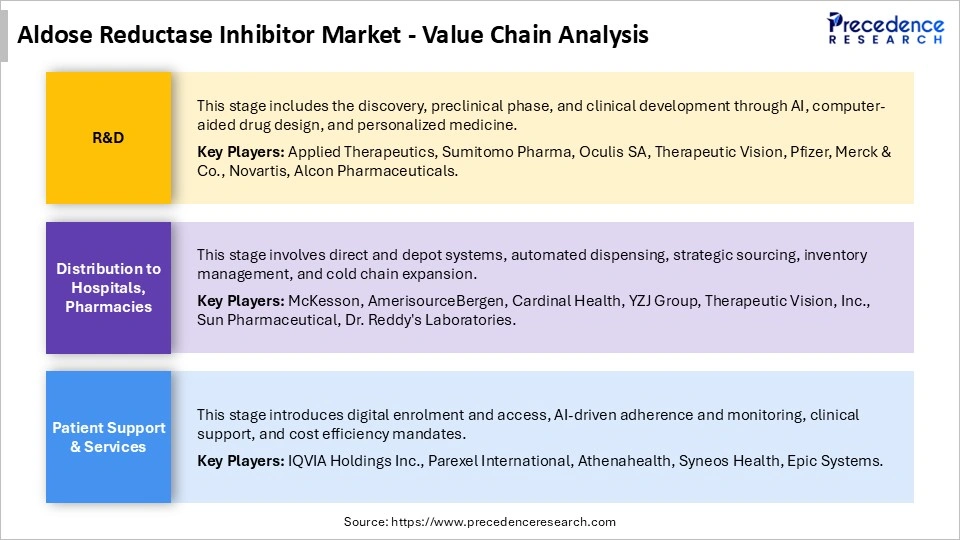
Aldose Reductase Inhibitor Market Value Chain Analysis
Who are the Major Players in the Global Aldose Reductase Inhibitor Market?
The major players in the aldose reductase inhibitor market include Sumitomo Pharma, Sanwa Kagaku Kenkyusho, Pfizer, Merck & Co., Sanofi, Novartis, Applied Therapeutics, Oculis SA, BioArctic AB, Therapeutic Vision, and Daewoong Pharmaceutical.
Recent Developments
- In May 2025, Applied Therapeutics presented clinical results and new data from the INSPIRE Phase 2/3 Trial of Govorestat for the treatment of sorbitol dehydrogenase deficiency. This achievement presents Govorestat, which is a central nervous system (CNS) penetrant Aldose Reductase Inhibitor (ARI), specifically developed to treat multiple rare diseases, including Classic Galactosemia, Charcot-Marie-Tooth Sorbitol Dehydrogenase Deficiency (CMT-SORD), and phosphomannomutase 2 congenital disorder of glycosylation (PMM2-CDG).(Source: https://ir.appliedtherapeutics.com)
- In September 2025, Monte Rosa Therapeutics Inc. made a partnership with Novartis to develop novel immune-mediated disease treatments. By signing this new agreement, scientists of Monte Rosa Therapeutics Inc. will apply their proprietary AI/ML-enabled QuEEN product engine to discover and develop degraders for immune-mediated diseases that will be further developed and commercialized by Novartis.(Source: https://www.contractpharma.com)
Segments Covered in the Report
By Site of Action
- Neural Tissue
- Retina
- Kidney
- Cardiovascular
- Others
By Drug
- Carboxylic Acid Derivatives
- Spirohydantoins and Cyclic Amide
- Phenolic Derivatives
- Others
By Route of Administration
- Oral
- Parenteral
- Others
By Distribution Channel
- Hospital Pharmacy
- Online Pharmacy
- Retail Pharmacy
By Region
- North America
- Europe
- Asia-Pacific
- Latin America
- Middle East & Africa
For inquiries regarding discounts, bulk purchases, or customization requests, please contact us at sales@precedenceresearch.com
Frequently Asked Questions





Ask For Sample
No cookie-cutter, only authentic analysis – take the 1st step to become a Precedence Research client
 Get a Sample




 sales@precedenceresearch.com
 Schedule a Meeting
