



Anti-Epileptic Drugs for Pediatrics Market Size, Companies, Share, Patient Volume, Treatment Adoption Rates, Pricing Analysis, Regulatory Landscape, Competitive Positioning, and Demand Forecast
Anti-Epileptic Drugs for Pediatrics Market (By Drug Generation: First-Generation Anti-Epileptic Drugs, Second-Generation Anti-Epileptic Drugs, Third-Generation/Novel AEDs; By Drug Type: Broad-Spectrum Anti-Epileptic Drugs, Narrow-Spectrum Anti-Epileptic Drugs; By End User: Hospitals & Specialty Neurology Clinics, Pediatric Care Centers, Ambulatory Surgical Centers, Other Healthcare Facilities) - Global Industry Analysis, Size, Trends, Leading Companies, Regional Outlook, and Forecast 2026 to 2035
Source: https://www.precedenceresearch.com/anti-epileptic-drugs-for-pediatrics-market
 Get a Sample
 Table Of Content


What is Anti-Epileptic Drugs for Pediatrics Market Size in 2026?
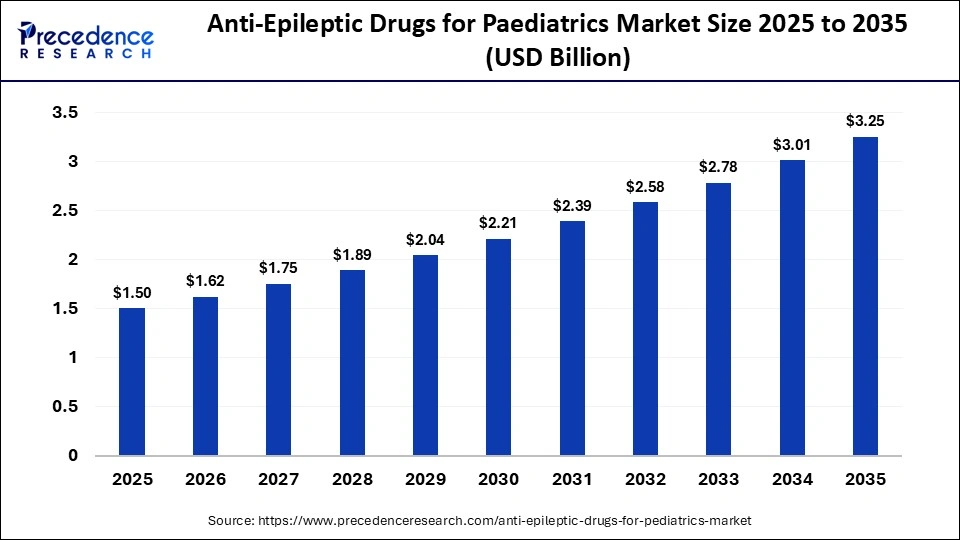
The global anti-epileptic drugs for pediatrics market size was calculated at USD 1.50 billion in 2025 and is predicted to increase from USD 1.62 billion in 2026 to approximately USD 3.25 billion by 2035, expanding at a CAGR of 8.04% from 2026 to 2035. The market is experiencing robust growth, driven by the increasing occurrence of childhood epilepsy and early diagnosis. The growing awareness of early diagnosis, favorable reimbursement policies, and the need to have safer and age-specific formulations are the major factors that are driving therapeutic innovation at a rapid pace.
Key Takeaways
- North America dominated the global anti-epileptic drugs for pediatrics market in 2025.
- Asia-Pacific is expected to grow at the fastest CAGR in the market during the forecast period.
- By drug generation, the second-generation anti-epileptic drugs segment held a dominant position in the market in 2025.
- By drug generation, the third generation/novel AEDs segment is expected to grow at the fastest CAGR in the market between 2026 and 2035
- By drug type, the broad spectrum anti epileptic drugs segment led the global market in 2025 and is expected to grow with the highest CAGR in the market during the studied years.
- By end user, the hospitals and specialty neurology clinics segment led the global market in 2025.
- By end user, the paediatric care centers segment is expected to grow with the highest CAGR in the market during the studied years.
- By distribution channel, the hospital pharmacies segment held the largest market share in 2025.
- By distribution channel, the online pharmacies segment is expected to expand rapidly in the market in the coming years.
Anti-Epileptic Drugs for Pediatrics: Safer Seizure Control in Children
The anti-epileptic drugs for pediatrics market is driven by high demand for successful therapies with better safety and tolerability rates that are specific to children. There is a growth of product pipelines due to the growing approvals of third-generation anti-epileptic drugs (AEDs) and pediatric formulations. To improve compliance, pharmaceutical companies are targeting extended-release and liquid preparations. Along with this, the orphan and rare pediatric epilepsy syndromes have regulatory incentives that are encouraging the growth of innovation in the market.
Can Artificial Intelligence Revolutionize Paediatric Epilepsy Care?
The use of artificial intelligence (AI) is revolutionizing the experience of seizure prediction with enhanced EEG analytics and predictive modelling. The use of AI-based drug discovery systems is hastening the process of the discovery of new AEDs with better safety profiles. Machine learning (ML) systems can help clinicians optimize patient-specific dosage personalization in accordance with patient-specific variables. Moreover, AI-based digital therapeutics are aiding real-time monitoring and compliance to treatment among paediatric patients.
Anti-Epileptic Drugs for Pediatrics Market Trends
- Demand for Third-Generation Agents: Greater use of more recent AEDs that have more efficacy and fewer cognitive side effects than first-generation medications.
- Focused and Customized Medicine: Individualized treatment of refractory pediatric epilepsy is becoming a reality in genetic testing and identification of biomarkers.
- Emergence of New Routes of Administration: Preparation of oral suspensions, dissolvable films, intranasal, and rectal preparations enhances paediatric compliance.
- Emerging Markets and Digital Health Growth: This will increase access to healthcare in Asia-Pacific and Latin America, as well as the use of telemedicine and remote monitoring technologies.
Market Scope
| Report Coverage | Details |
| Market Size in 2025 | USD 1.50 Billion |
| Market Size in 2026 | USD 1.62 Billion |
| Market Size by 2035 | USD 3.25 Billion |
| Market Growth Rate from 2026 to 2035 | CAGR of 8.04% |
| Dominating Region | North America |
| Fastest Growing Region | Asia Pacific |
| Base Year | 2025 |
| Forecast Period | 2026 to 2035 |
| Segments Covered | Drug Generation, Drug Type, End User, Distribution Channel, and region |
| Regions Covered | North America, Europe, Asia-Pacific, Latin America, and Middle East & Africa |
Segmental Insights
Drug Generation Insights
Which Drug Generation Segment Dominated the Market?
The second-generation anti-epileptic drugs segment dominated the anti-epileptic drugs for pediatrics market with a share of approximately 44% in 2025 because they are safer and better-tolerated than the first-generation therapies. These drugs have a wider range of seizure control and fewer cognitive and behavioral side effects, and thus, they can be used as long-term medications in children. Doctors choose such agents due to the availability of clinical information and predictable pharmacokinetics. The segmental growth is also attributed to their proliferation in child-friendly formulations.
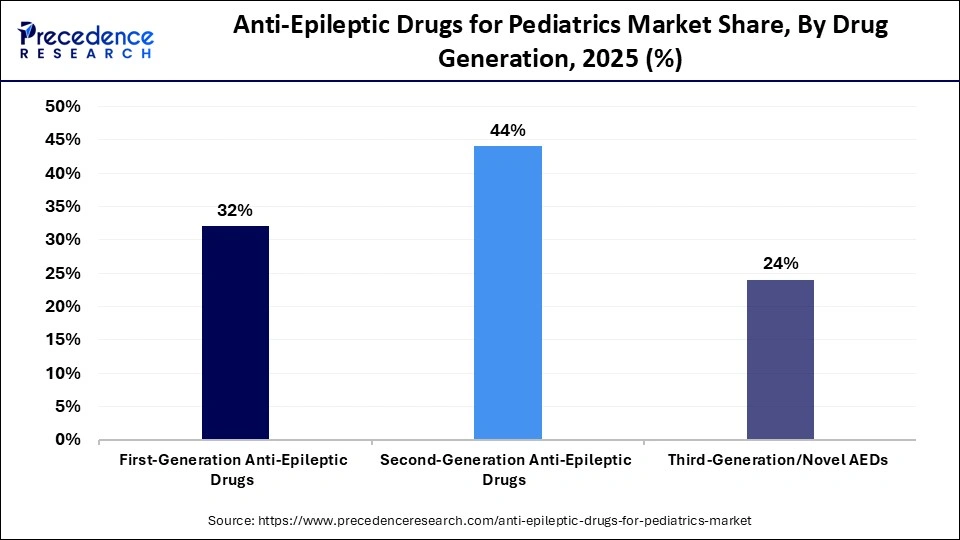
The third-generation/novel AEDs segment is expected to be the fastest-growing segment in the forecast period, as they are specific to pathways and refractory epilepsy signs. These agents usually exhibit a high level of efficacy and fewer drug-drug interactions. The increasing use of personalized medicine and treatment approaches based on genomes is increasing the demand. There are also regulatory incentives for the pipeline expansion and commercialization of rare paediatric epilepsy disorders.
Drug Type Insights
Why the Broad-Spectrum Anti-Epileptic Drugs Segment Dominated the Market?
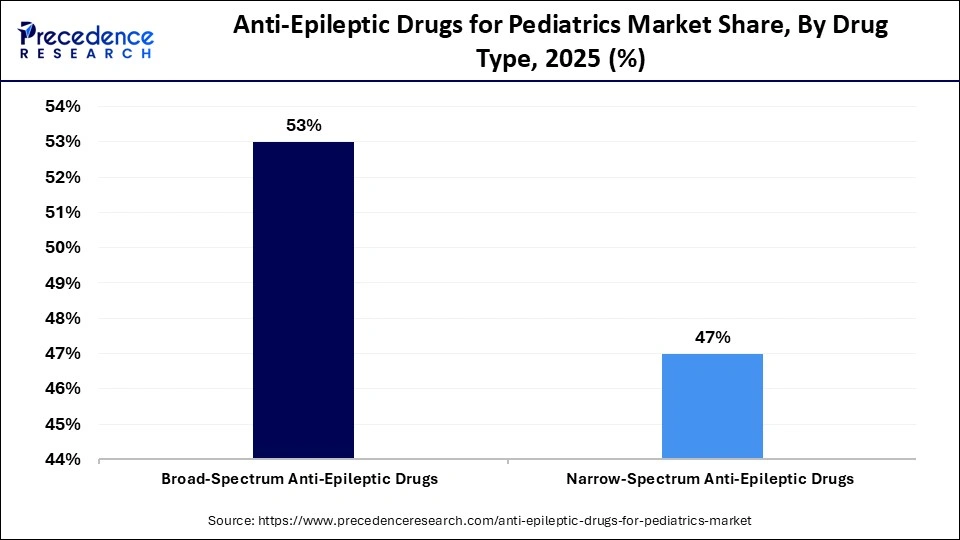
The board-spectrum anti-epileptic drugs segment held the largest revenue share of approximately 53% in 2025 and is expected to grow at the fastest CAGR in the anti-epileptic drugs for pediatrics market between 2026 and 2035 because they can treat various types of seizures, thus avoiding combination therapy. They are versatile and therefore useful, especially in cases that involve children, where, over time, the classification of seizures can change. The proliferation of generalized and mixed seizure disorders diagnosis contributes to their popularity. There is also a continuous innovation in this category, which is creating a high growth momentum in the world.
End User Insights
How the Hospitals and Specialty Neurology Clinics Segment Led the Market?
The hospitals & specialty neurology clinics segment led the market with a share of approximately 46% in 2025 because of the related well-developed diagnostic facilities and paediatric neurologist availability. In these settings, severe and complicated cases of epilepsy are mainly addressed. They are reinforced with the availability of EEG monitoring, emergency care, and multidisciplinary teams. Furthermore, the treatment pathways are greatly affected by the hospital-based prescriptions.
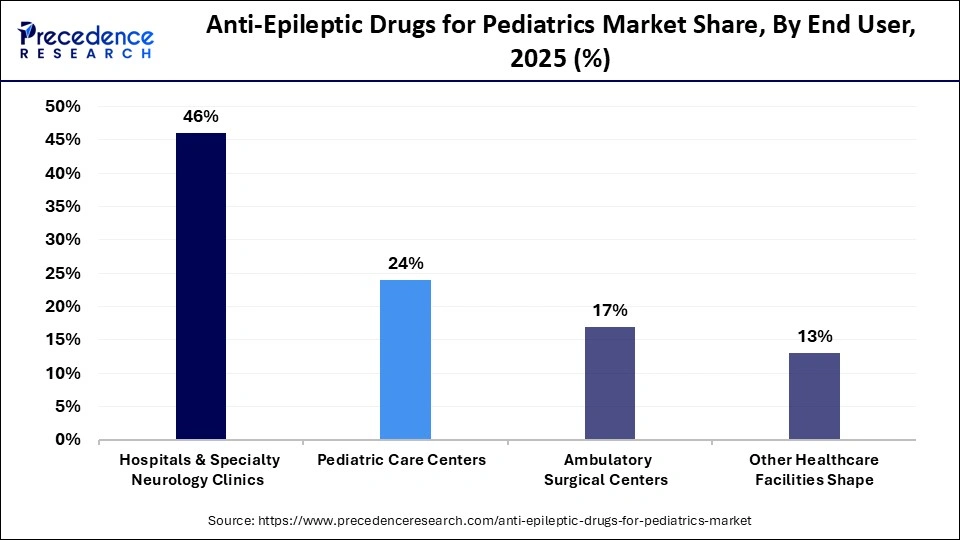
The paediatric care centers segment is expected to grow with the highest CAGR in the market during the studied years, as child-specific facilities are increasing all over the world. These facilities offer comprehensive management of epilepsy, such as behavioral therapy and developmental follow-up. Increasing awareness among parents about early diagnosis programs is influencing an inflow of patients. Expanding government and private funding towards the infrastructure of paediatric healthcare is another way that will grow the market.
Distribution Channel Insights
What Made Hospital Pharmacies the Dominant Segment in the Market?
The hospital pharmacies segment accounted for the highest revenue share of approximately 41% in the anti-epileptic drugs for pediatrics market in 2025 because the number of inpatient and outpatient epilepsy treatments commenced in the clinical settings is very high. They guarantee adequate storage, dosing information, and instant access to drugs. Paediatric dispensing of AEDs by prescription is largely a matter of institutional control. Such an organised supply chain improves pharmacovigilance and compliance.
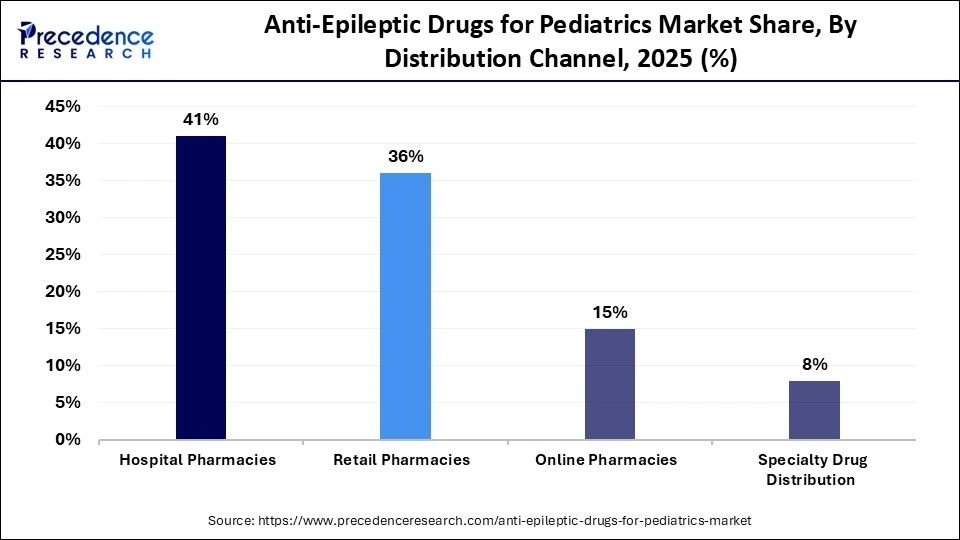
The online pharmacies segment is expected to show the fastest growth over the forecast period because of the convenient, home delivery services and affordable prices. The introduction of digital prescription uploads and the integration of teleconsultation are making accessibility easier for caregivers. They are being helped by the growing use of smartphones and the use of e-health. Nevertheless, regulation is also an important aspect that can be considered to make sure that there is safe paediatric dispensing.
Regional Insights
North America Anti-Epileptic Drugs for Pediatrics Market Size and Growth 2026 to 2035
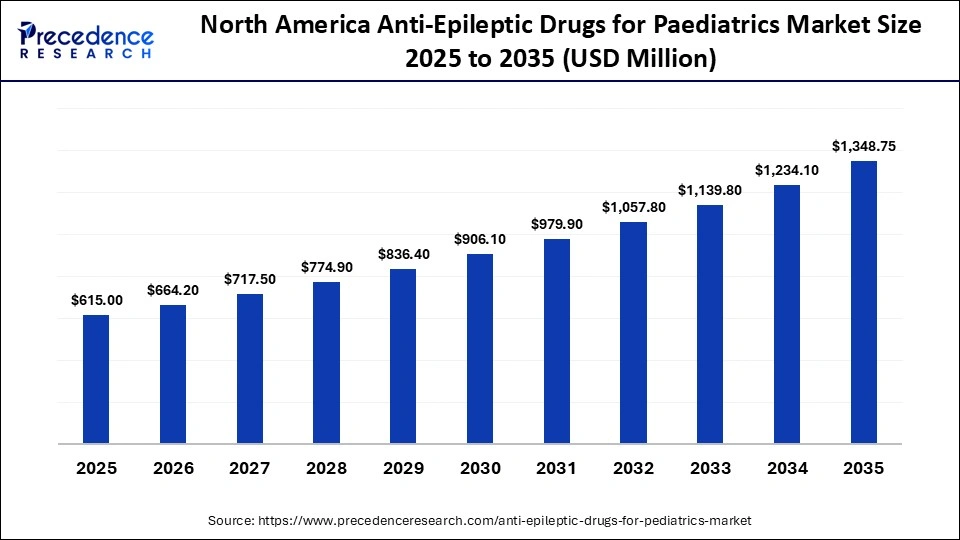
The North America anti-epileptic drugs for pediatrics market size is estimated at USD 615.00 million in 2025 and is projected to reach approximately USD 1,348.75 million by 2035, with a 8.15% CAGR from 2026 to 2035
Why North America Dominated the Anti-Epileptic Drugs for Pediatrics Market?
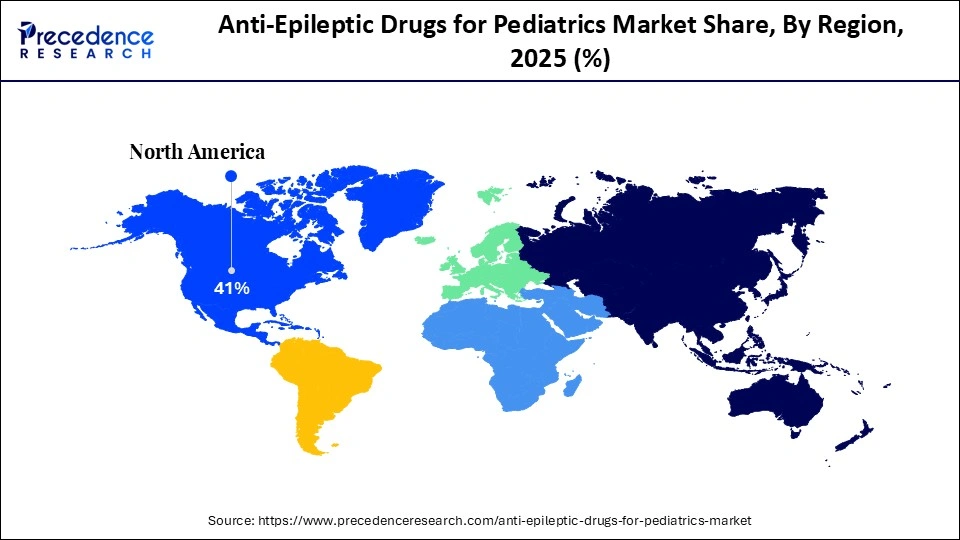
North America held a major revenue share of approximately 41% in the market in 2025 because of a robust healthcare infrastructure and the growing demand for early diagnosis of paediatric epilepsy. Positive reimbursement systems and quick usage of innovative AEDs promote long-term development. The dominance of the pharmaceutical industry by major pharmaceutical companies and an active pipeline of clinical research further consolidates the dominance of the region. The AI-driven seizure monitoring technological advancements also help to achieve better treatment outcomes.
U.S. Anti-Epileptic Drugs for Pediatrics Market Size and Growth 2026 to 2035
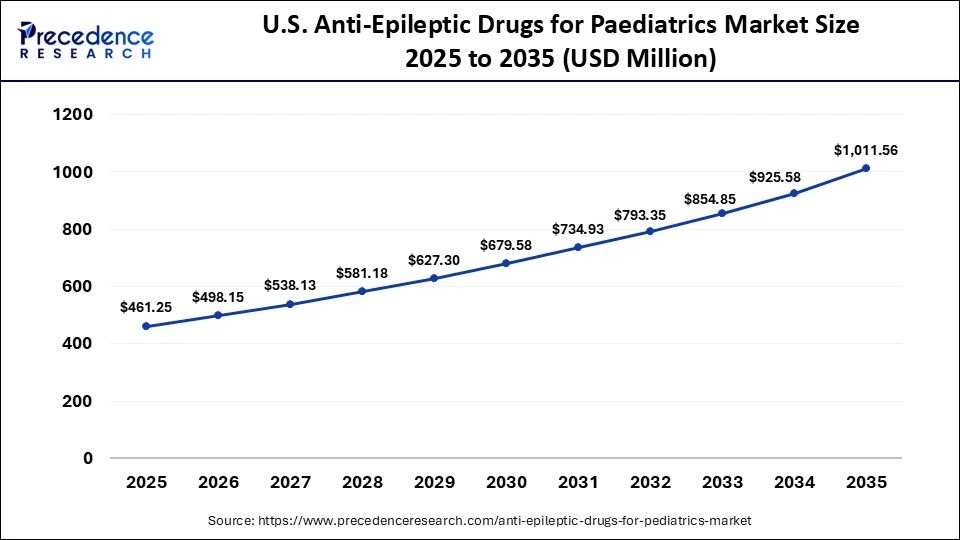
The U.S. anti-epileptic drugs for pediatrics market size is estimated at USD 461.25 million in 2025 and is projected to reach approximately USD 1,011.56 million by 2035, with a 8.17% CAGR from 2026 to 2035
Country-Level Analysis
The U.S. leads the market in North America because of huge investments in R&D, FDA incentives on orphan paediatric drugs, and coverage of insurance. Canada is next with the growing public healthcare programs and rising awareness programs. Two nations focus on the early diagnosis and specialized paediatric neurology services. The increasing healthcare expenditure guarantees access to modern treatments.
Why is Asia-Pacific the Fastest-Growing Region in the Anti-Epileptic Drugs for Pediatrics Market?
Asia-Pacific is expected to witness the fastest growth during the predicted timeframe, driven by a large paediatric population and increasing awareness of epilepsy. Increased access to diagnosis and treatment is being tackled by better healthcare facilities and government health programs. The pharmaceutical capacity and availability of generic drugs are augmented, increasing affordability. The increasing use of telemedicine is also assisting rural people in accessing care in pediatrics.
Country-Level Analysis
The growth at the country level is especially strong in China and India, where healthcare coverage is increasing, and the investment in neurology services is growing. The demand in Japan is stable due to modernized medical technologies and aging healthcare systems that are changing to accommodate the specialization in pediatrics. Southeast Asian countries are increasing access by developing public-private partnerships. Thus, geographic growth and economic advancement support regional acceleration.
Will Europe Grow in the Anti-Epileptic Drugs for Pediatrics Market?
Europe shows impressive growth owing to the universal healthcare plans and well-organized epilepsy management programs. The innovative pipelines are enhanced by regulatory support of drug development in the paediatric sector. Novel AEDs are increasingly being adopted due to increasing focus on rare epilepsy syndromes and precision medicine. Joint networks of research in the region improve clinical outcomes.
Country-Level Analysis
On the country level, Germany, France, and the United Kingdom are at the lead because of the developed healthcare systems and good policies of reimbursements. Italy and Spain are also undergoing slow growth due to the better paediatric neurology services. Eastern Europe is enhancing access through the modernization of healthcare. Regulatory supervision brings about control of safety and quality standards in the region.
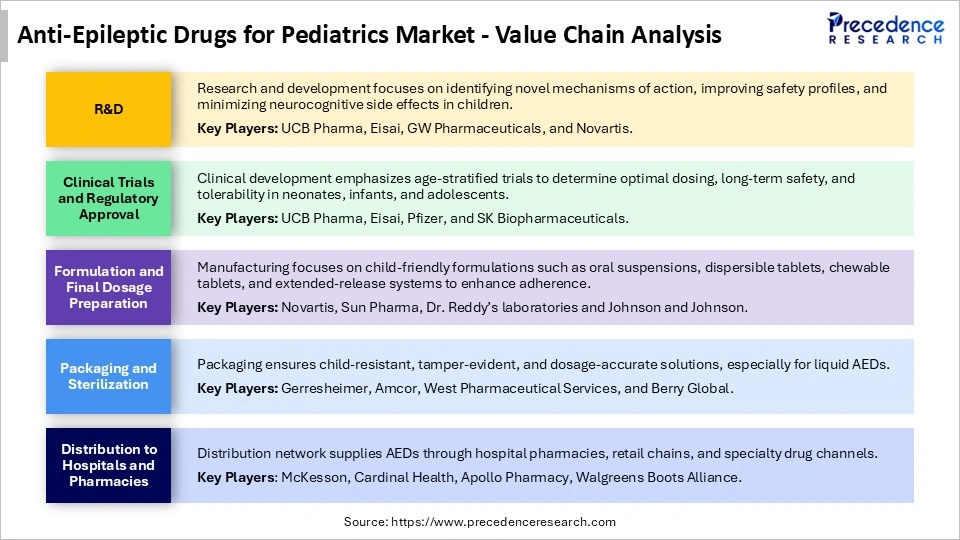
Anti-Epileptic Drugs for Pediatrics Market Value Chain Analysis
Top Companies in the Anti-Epileptic Drugs for Pediatrics Market
- UCB S.A.
- Eisai Co., Ltd.
- GlaxoSmithKline plc (GSK)
- Novartis AG
- Sanofi
- Johnson & Johnson
- GW Pharmaceuticals Jazz Pharmaceuticals plc
- Marinus Pharmaceuticals, Inc..
- Abbott Laboratories
- Teva Pharmaceutical Industries Ltd.
- Viatris Inc. (formerly Mylan)
- Bausch Health Companies Inc.
- Lupin Pharmaceuticals
- Sun Pharmaceutical Industries Ltd.
- H. Lundbeck A/S
Recent Developments in the Anti-Epileptic Drugs for Pediatrics Market
- In February 2026, Praxis Precision Medicines, Inc. announced the submission of two new drug applications to the U.S. FDA for ulixacaltamide and relutrigine. Relutrigine aims to target SCN2A and SCN8A developmental and epileptic encephalopathies. It received orphan drug designation (ODD) and rare pediatric disease designation (RPDD) from the FDA. (source: https://www.quiverquant.com)
- In December 2025, Jazz Pharmaceuticals announced that it would present extensive real-world data surrounding the use of Epidiolex(r) (cannabidiol) as a treatment for treatment-resistant epilepsy at the 2025 American Epilepsy Society meeting, and its efficacy as a treatment and its increasing importance in the care of children with seizure disorders. (source: https://www.prnewswire.com)
Segments Covered in the Report
By Drug Generation
- First-Generation Anti-Epileptic Drugs
- Carbamazepine
- Phenobarbital
- Phenytoin
- Second-Generation Anti-Epileptic Drugs
- Lamotrigine
- Levetiracetam
- Topiramate
- Third-Generation/Novel AEDs
By Drug Type
- Broad-Spectrum Anti-Epileptic Drugs
- Narrow-Spectrum Anti-Epileptic Drugs
By End User
- Hospitals & Specialty Neurology Clinics
- Pediatric Care Centers
- Ambulatory Surgical Centers
- Other Healthcare Facilities
By Distribution Channel
- Hospital Pharmacies
- Retail Pharmacies
- Online Pharmacies
- Specialty Drug Distribution
By Region
- North America
- Europe
- Asia-Pacific
- Latin America
- Middle East & Africa
For inquiries regarding discounts, bulk purchases, or customization requests, please contact us at sales@precedenceresearch.com
Frequently Asked Questions





Ask For Sample
No cookie-cutter, only authentic analysis – take the 1st step to become a Precedence Research client
 Get a Sample
.webp)



 sales@precedenceresearch.com
 Schedule a Meeting
