



Automotive Timing Belt Market Size, Share and Trends 2026 to 2035
Automotive Timing Belt Market (By Type: Dry Belt, Chain, Belt-in-Oil; By Vehicle Type: Passenger Vehicle, Light Commercial Vehicle, Heavy Commercial Vehicle; By Distribution Channel: OEM, Aftermarket) - Global Industry Analysis, Size, Trends, Leading Companies, Regional Outlook, and Forecast 2026 to 2035
Source: https://www.precedenceresearch.com/automotive-timing-belt-market
 Get a Sample
 Table Of Content


What is the Automotive Timing Belt Market Size?
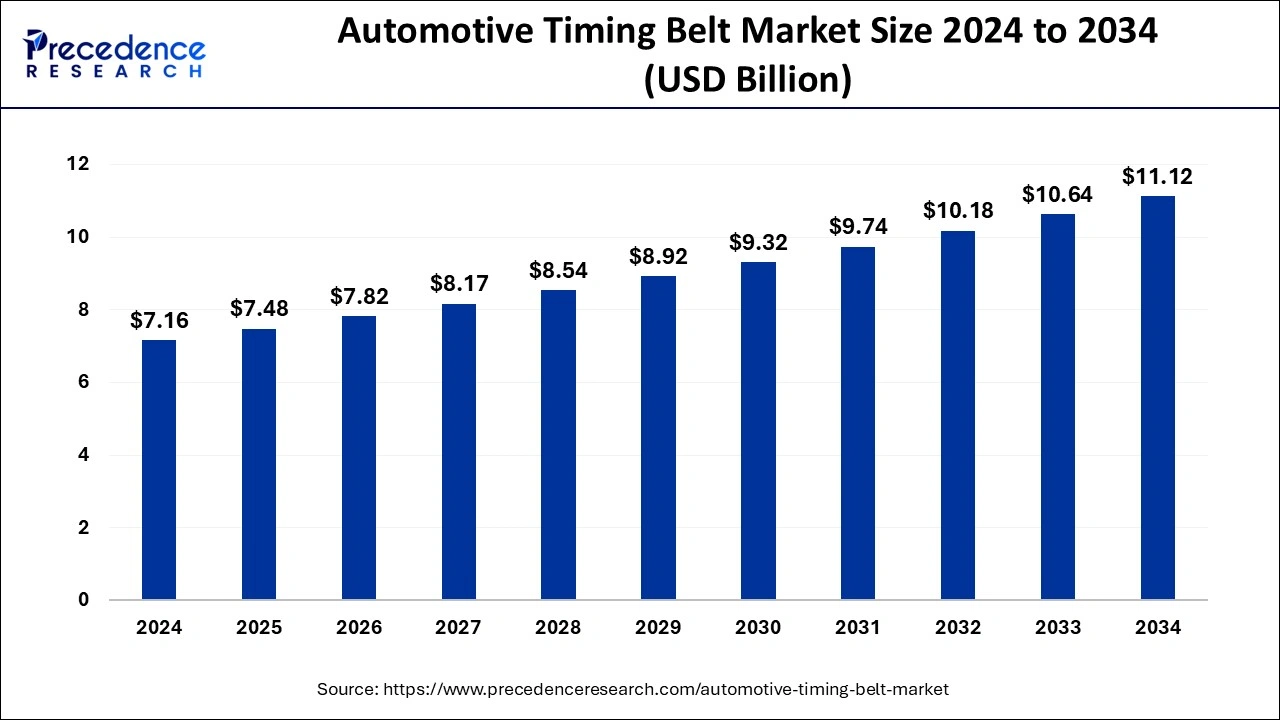
The global automotive timing belt market size was accounted for USD 7.48 billion in 2025 and is expected to exceed around USD 11.59 billion by 2035, growing at a CAGR of 4.48% from 2026 to 2035. The demand for the automotive timing belt market is increasing due to the expansion of the automotive industry in developing countries. This growth is also attracting several investments by companies for more innovations.
Automotive Timing Belt Market Key Takeaways
- In terms of revenue, the global automotive timing belt market was valued at USD 7.48 billion in 2025.
- It is projected to reach USD 11.59 billion by 2035.
- The market is expected to grow at a CAGR of 4.48% from 2026 to 2035.
- Asia Pacific generated the biggest market share of 35.14% in 2025.
- China is expected to grow at a notable CAGR of 7.82% during the forecast period.
- By type, the dry belt segment accounted for a major market share of 56% in 2025.
- By type, the chain segment is projected to expand at a CAGR of 4.7% during the forecast period.
- By vehicle type, the passenger vehicles segment contributed the highest market share of 66% in 2025.
- By vehicle type, the light commercial vehicle segment is expected to expand at the fastest CAGR of 4.93% during the forecast period.
- By distribution channel, the OEM segment has held a maximum market share of 61% in 2025.
- By distribution channel, the aftermarket segment is expected to show significant CAGR of 4.63% during the forecast period.
Market Overview
An automotive timing belt refers to a rubber belt that connects the crankshaft and camshaft of an engine. It is considered to be a crucial part of an engine as it ensures proper coordination with the movement of the valves and pistons. The disruption in coordination may also lead to severe damage to the vehicle engine, which increases the demand for the automotive timing belt market. Most of the common materials used in the belt are rubbers and cords, which are essential factors in providing durability and flexibility throughout the whole process. The number of companies focused on manufacturing and distribution is expanding with the growing sales of vehicles globally.
How Does Artificial Intelligence (AI) Help the Automotive Timing Belt Market?
The growth of technologies like artificial intelligence and machine learning (ML) has helped the automotive sector advance in several aspects, including the automotive timing belt market. The main role of AI is to analyze huge datasets, which can further help product design by marking improvements in the materials and other essential elements used in manufacturing. The technology also helps in the virtual simulations that are being used in the testing and can save additional costs. Automation in the manufacturing industry also helps enhance the precision of material assembly. The application of AI is also being supported by international organizations as it reduces waste generation, which can be helpful to the environment.
Automotive Timing Belt Market Growth Factors
- The increasing focus towards the innovation of high performance is boosting the growth of the automotive timing belt market.
- The expansion of timing belts is increasing as it is more convenient than the chains which increase its demand in these applications.
- The expansion of the industry is based on the partnerships and collaborations between manufacturers and other automakers that help the market grow.
- The rapid expansion of the e-commerce sector has been constantly helping towards the growth of the market as it provides business opportunities that can target a larger consumer base without any geographical boundaries.
Market Scope
| Report Coverage | Details |
| Market Size by 2035 | USD 11.59 Billion |
| Market Size in 2025 | USD 7.48 Billion |
| Market Size in 2026 | USD 7.82 Billion |
| Market Growth Rate from 2026 to 2035 | CAGR of 4.48% |
| Largest Market | Asia Pacific |
| Base Year | 2025 |
| Forecast Period | 2026 to 2035 |
| Segments Covered | Type, Vehicle Type, Distribution Channel, and Regions |
| Regions Covered | North America, Europe, Asia-Pacific, Latin America, and Middle East & Africa |
Market Dynamics
Drivers
Higher ownership of internal combustion engine (ICE) vehicles
The use of fuel-based vehicles like diesel, petrol, and CNG has been used widely in the past decades and has been a crucial factor in the growth of timing belts. The automotive timing belt market is growing efficiently due to the higher ownership rate of internal combustion engine (ICE) vehicles because of their affordability, which attracts a wider consumer base from all over the world. The presence of these vehicles cannot be passed easily by other engine-based vehicles. As a result, companies are investing heavily, which provides them with significant opportunities for the production and sales of these belts. Furthermore, the increasing ownership of commercial ICE vehicles is anticipated to grow rapidly in the coming years.
Increasing need for vehicle maintenance
Rapid urbanization has led to the increasing use of various vehicles as a mode of transport. Significant improvements in the road infrastructure also promote the use of these vehicles for traveling. The higher intensity of the use also leads to the need for vehicle maintenance, which raises the requirement for changes in the timing belt replacement after 60,000 to 1,00,000 miles. The automotive timing belt market has gained significant attention due to the aging of the vehicle fleet, which cannot be pushed further. Additionally, the lack of proper infrastructure in underdeveloped regions also plays an impactful role in the industry.
Restraint
Growth of the electric vehicles (EVs) sector
The rising environmental concerns regarding the use of fuel-based vehicles have played a vital role in the adoption of electric vehicles. Here, the automotive timing belt market can face potential barriers to growth as EVs do not use internal combustion engines. This eliminates the use of timing belts, which can affect market demand. Additionally, these EVs are gaining support from governments and other regulatory bodies, which can lead to higher adoption rates.
Opportunities
Increasing vehicle ownership rates in developing economies
The electric vehicle market has adopted significant growth in the developed economies, but it has still yet to mark its dominance in underdeveloped regions. The automotive timing belt market has potential opportunities due to its use of fuel-based vehicles that are used by middle-class economies. Additionally, the cost of EVs in these regions is not affordable for the majority of the population, which leads to the need for these vehicles. As a result, the market is also witnessing significant advancements in the vehicles that can be used by the lower-income population. The rising urbanization also promotes the use of private vehicles, which can be used in various conditions.
Growing production of hybrid vehicles
The dominance of the ICE engine vehicles has been constant due to the well-established user base and its affordability and robust fuel infrastructure. The automotive timing belt market is developing business opportunities due to the growing production of hybrid vehicles that rely on traditional fuels, and electric vehicles might require these timing belts. Additionally, governments are supporting its production as it meets environmental regulatory standards. Some governments are providing subsidies and incentives for purchasing, which will help promote the growth of these belts.
Segment Insights
Type Insights
The dry belt segment marked its dominance over the global market in 2025. These are timing belts that do not rely on lubrication for their functioning. The automotive timing belt market is growing rapidly due to the use of dry belts, which enhance the driver's experience because of their low operating noise. The huge market demand for these belts also makes them cost-effective due to the higher production volume and easy availability. Additionally, these belts require low maintenance as compared to the others, which makes them preferable to use, especially in passenger vehicles.
The chain segment is expected to grow at a notable CAGR during the forecast period of 2026 to 2035. These chains require lubrication to function, and they are found in vehicles that require higher power. The automotive timing belt market is growing due to the increasing need for high-performance vehicles that use these chains. Additionally, these chains, because of their longevity, can be used in advanced vehicles. The rise of commercial vehicles for various purposes makes them a preferable option for these chains. The rising focus on the development of advanced engines is anticipated to boost the expansion of heavy-duty vehicles, especially for commercial purposes.
Vehicle Type Insights
The passenger vehicles segment stood registered the highest share of the market in 2025. The dominance of the segment is attributed to the well-established user base of these vehicles for transportation purposes. The higher demand in the market has constantly led to significant growth that boosts the production volume of these vehicles. The automotive timing belt market is growing significantly due to the increasing need for vehicle ownership, which leads to the increasing requirement for maintenance. Additionally, there is a rise of disposable incomes in the developing regions.
The light commercial vehicle segment is expected to grow at the fastest CAGR during the forecast period of 2025 to 2034. These vehicles are used for the transportation of goods and passengers. The automotive timing belt market is growing due to the expansion of the goods transportation sector. Additionally, the rise of e-commerce also stands out to be a crucial factor that boosts business opportunities. The rise of small-scale businesses is also anticipated to be the crucial factor that will boost the growth of LCV in the coming years.
Distribution Channel Insights
The OEM segment marked its dominance globally in 2025. The channel includes the direct supply of automotive timing belts to the manufacturers during the production of the vehicle. The automotive timing belt market is growing efficiently due to the rising vehicle production in emerging economies. The rising urbanization plays an impactful role in the rising need for private transportation. The demand has led to the emergence of many companies that diversify their vehicles to target multiple audiences. Additionally, the expansion of the automotive sector is also providing many collaboration opportunities for small-sized companies.
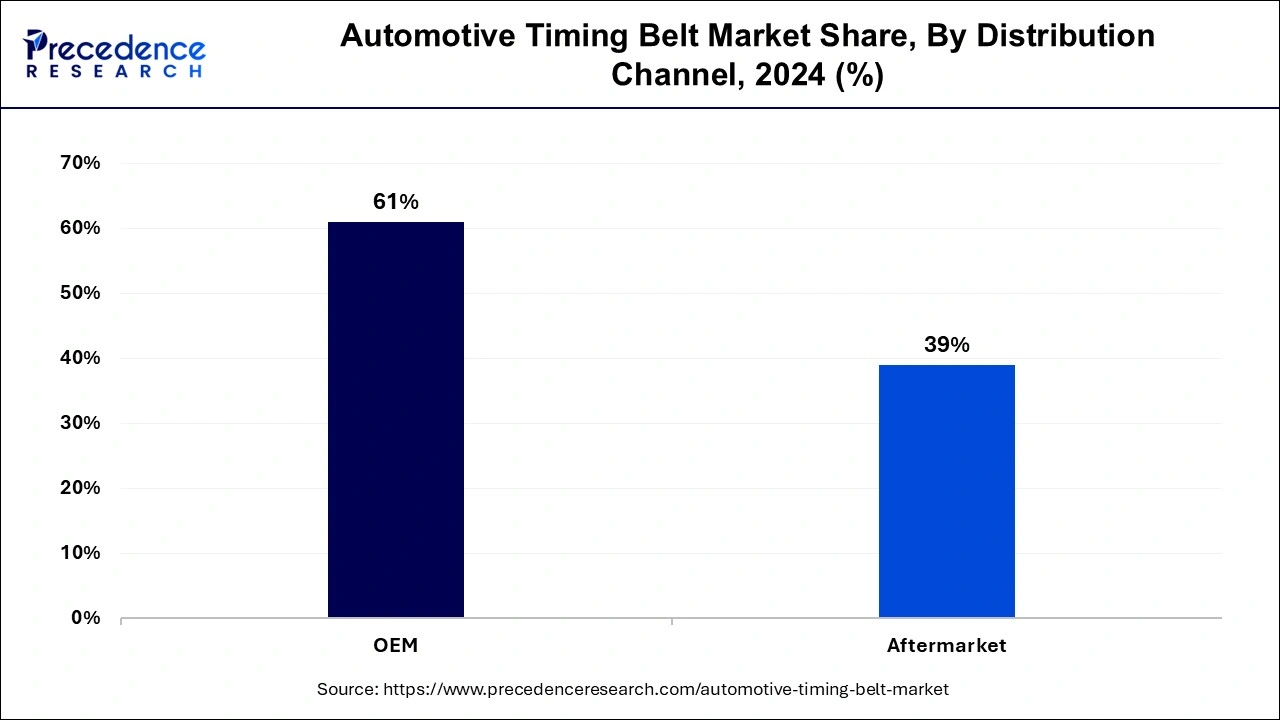
The aftermarket segment is expected to show significant growth during the forecast period of 2025 to 2034. The number of aging vehicles is constantly increasing, which leads to the requirement for servicing and maintenance, including timing belts. The rising vehicle ownership also provides significant opportunities as also leads to the requirement of maintenance. This demand is leading to significant business growth in the market through partnerships.
Regional Insights
What is the Asia Pacific Automotive Timing Belt Market Size?
The Asia Pacific automotive timing belt market size was exhibited at USD 2.63 billion in 2025 and is projected to be worth around USD 4.07 billion by 2035, growing at a CAGR of 4.46% from 2026 to 2035.
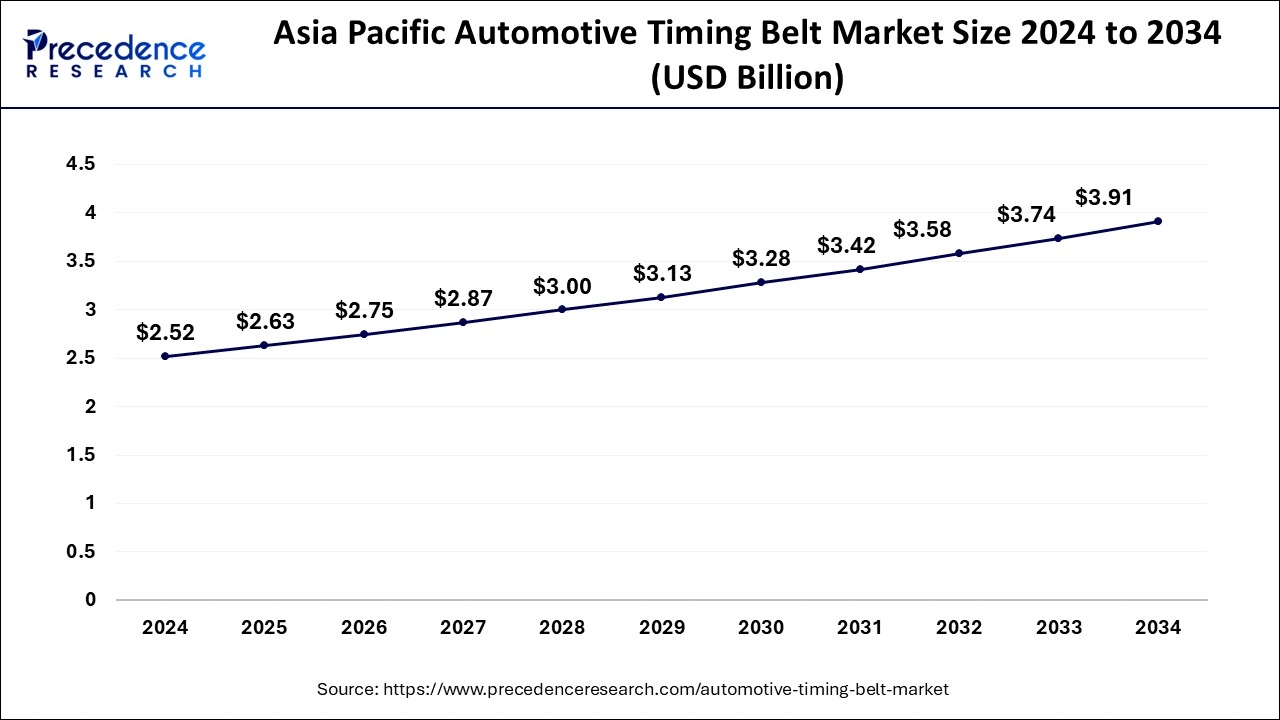
Asia Pacific dominated the global automotive timing belt market in 2025. The dominance of the region is attributed to the top countries like China and India, which have the highest vehicle ownership rates. The rising urbanization in these countries, including Japan and South Korea, leads to the increasing need for vehicle production. The growth of e-commerce also stands out as the crucial factor that drives the demand for these vehicles. Additionally, the rising disposable income in the region also significantly boosts the demand for advanced and premium vehicles. The government in the region is also supporting the production of hybrid vehicles.
China Market Trends
The use of high-performance materials such as aramid and carbon fibers to improve durability has led to the adoption of timing belts in the automotive industry in China. There is an improvement in efficiency and life span with an increased use of belt-in-oil systems. Demand for repair kits and replacement timing parts is increasing due to strong aftermarket growth, which is enabled by an ageing vehicle fleet.
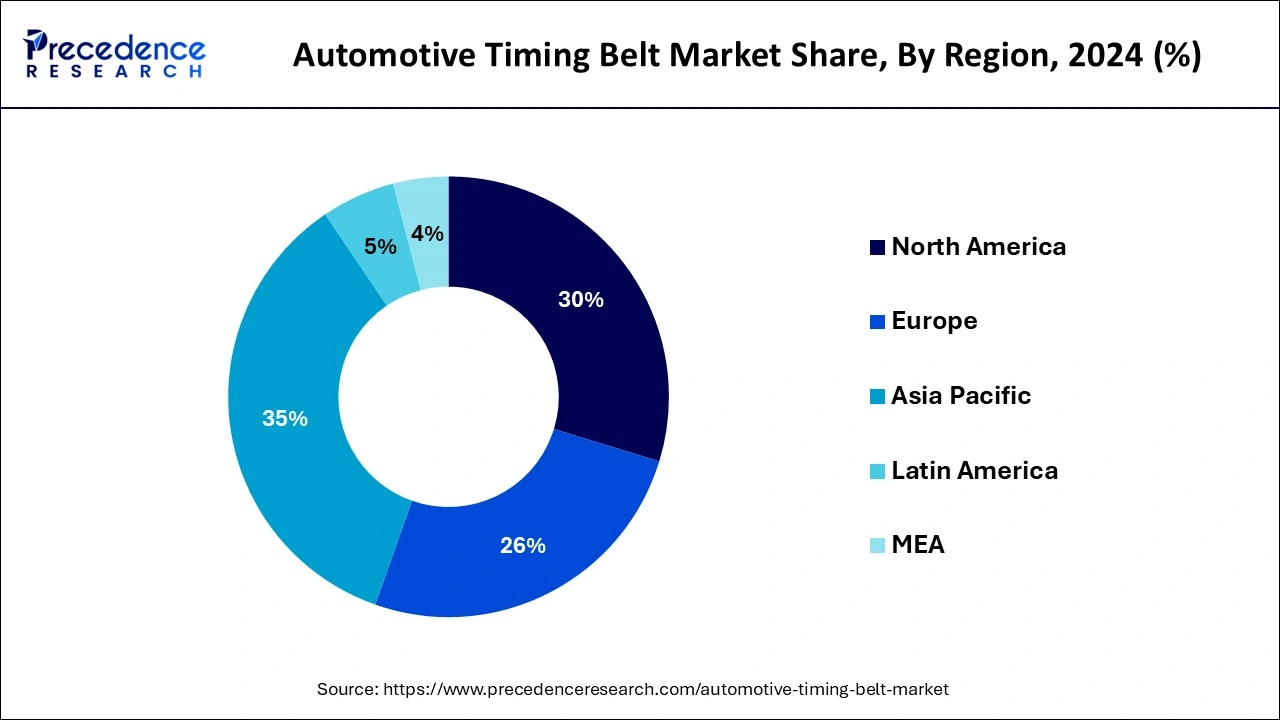
North America is anticipated to grow at the highest CAGR in the automotive timing belt market during the forecast period of 2026 to 2035. The growth of the region is attributed to the increasing demand for hybrid vehicles in countries like the United States and Canada. The region is known for its high-end technologies and robust infrastructure which provides significant business opportunities in the region. The presence of leading e-commerce leaders in the region has a significant impact on industry demand.
U.S. Market Trends
The market of the U.S. is highly in demand for total timing belt kits in the aftermarket. The use of SUVs and light trucks is high, and thus, they require durable heat-resistant belts. Sensing-based predictive maintenance systems are also becoming integrated, increasing their reliability and decreasing the unforeseen failures in contemporary automotive systems.
What Are the Driving Factors of The Automotive Timing Belt Market in Europe?
Europe is expected to grow at a significant CAGR during the forecast period, driven by emission regulations like EURO VI, which promote the utilization of durable and upgraded timing belts. The existence of high-quality automotive OEMs enables quality production. There is a large aftermarket based on the need to maintain older vehicles, and the increased use of lightweight and efficient parts.
Germany Market Trends
Germany is concentrating on timing belts that are designed with precision in order to comply with the strict Euro 7 emission requirements. Mature service networks contribute to strong OEM-quality aftermarket supply. Further development of specialized timing solutions within hybrid vehicles ensures that there is high performance, low friction, and adherence to the changing regulatory requirements.
What Are the Driving Factors of The Automotive Timing Belt Market in Latin America?
Latin America is expected to grow at a remarkable CAGR during the forecast period. Latin America has a good potential which highly adopts timing belt systems, especially in light vehicles. Growth is supported by manufacturing investments, particularly in Mexico. The demand is stimulated by urbanization and the growing production of vehicles, and a significant portion of vehicles using belt technology supports the long-term growth of the market.
Brazil Market Trends
The Brazilian market is motivated by the need for cost-effective and conventional rubber timing belts due to a high number of customers with passenger vehicles. The aftermarket servicing needs of older vehicles are the main drivers of growth. Localizing production more assists in reducing reliance on imports and stabilizes supply chains during economic fluctuations.
Automotive Timing Belt Market Companies
- ContiTech Deutschland GmbH
- BorgWarner Inc.
- Schaeffler Technologies AG & Co. KG
- SKF
- NTN Group
- AISIN CORPORATION
- TSUBAKIMOTO CHAIN CO
- JK Fenner
- Ningbo GUL TZ Rubber Belt Co., Ltd.
- Toyopower
- BGA (BRITISH GASKETS LIMITED)
- The Goodyear Tire & Rubber Company
- Gates Corporation
- Dayco Incorporated
- L.G.Balakrishnan & Bros Ltd.
Recent Development
- In December 2024, Barclays PLC raised its stake in BorgWarner Inc. by acquiring 56,988 additional shares. The acquisition will lead to the development of auto parts through significant investments.
- In December 2024, Schaeffler and Siemens signed an MoU to enhance industrial production through AI-driven solutions, which will improve the manufacturing market with more efficiency.
- In September 2024, SKF announced the launch of its Masterkit and in-house CV joints to enhance automotive maintenance, focusing on efficiency, durability, and sustainability.
Segments Covered in the Report
By Type
- Dry Belt
- Chain
- Belt-in-Oil
By Vehicle Type
- Passenger Vehicle
- Light Commercial Vehicle
- Heavy Commercial Vehicle
By Distribution Channel
- OEM
- Aftermarket
By Geography
- North America
- Asia Pacific
- Europe
- Latin America
- Middle East and Africa
For inquiries regarding discounts, bulk purchases, or customization requests, please contact us at sales@precedenceresearch.com
Frequently Asked Questions





Ask For Sample
No cookie-cutter, only authentic analysis – take the 1st step to become a Precedence Research client
 Get a Sample




 sales@precedenceresearch.com
 Schedule a Meeting
