



Biotech Ingredients Market Revenue, Leading Companies, Company Technology / Innovation, Diagnostic Testing Volume, Adoption Rates, Pricing Metrics, Supply Chain Performance, Competitive Positioning, and Industry Trends
Biotech Ingredients Market (By Type: Active Pharmaceutical Ingredients (APIs), Biosimilars; By Product: Monoclonal Antibodies, Vaccines, Hormones and Growth Factors, Cytokines, Fusion Proteins, Therapeutic Enzymes, Blood Factors; By Expression System: Mammalian Expression Systems, Microbial Expression Systems, Yeast Expression Systems, Plant Expression Systems, Insect Expression Systems) - Global Industry Analysis, Size, Trends, Leading Companies, Regional Outlook, and Forecast 2026 to 2035
Source: https://www.precedenceresearch.com/biotech-ingredients-market
 Get a Sample
 Table Of Content


What is the Biotech Ingredients Market Size?
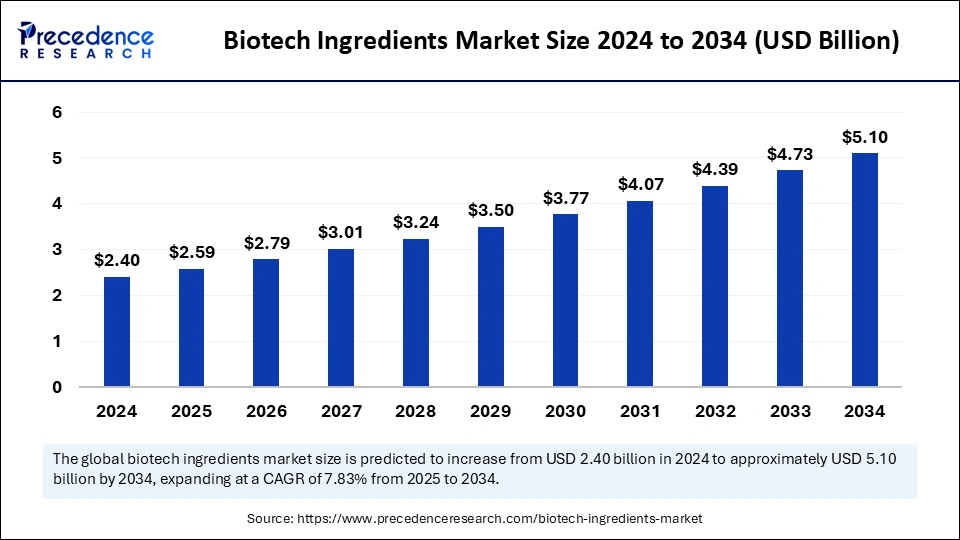
The global biotech ingredients market size was estimated at USD 2.59 billion in 2025 and is predicted to increase from USD 2.79 billion in 2026 to approximately USD 5.45 billion by 2035, expanding at a CAGR of 7.72% from 2026 to 2035. Advancements in biotechnology and rising demand for sustainable alternatives drive the growth of the biotech ingredients market.
Biotech Ingredients Market Key Takeaways
- Europe led the global biotech ingredients market with the largest share of 38% in 2025.
- Asia Pacific is estimated to expand at the highest CAGR between 2026 and 2035.
- By type, the active pharmaceutical ingredients (APIs) segment held the largest market share in 2025.
- By type, the biosimilar segment is anticipated to expand at a remarkable CAGR between 2026 and 2035.
- By product, the monoclonal antibodies segment led the market in 2025.
- By product, the vaccine segment is expected to grow at a significant rate during the projection period.
- By expression system, the microbial expression systems segment registered dominance in 2025.
- By expression system, the mammalian expression systems segment is likely to grow at the fastest rate over the studied period.
What are Biotech Ingredients?
The biotech ingredients market is centered around the production and distribution of biological molecules and substances that originate from living organisms, achieved through advanced biological processes. A defining feature of this market is the utilization of sophisticated biotechnology techniques, including genetic engineering, fermentation, and enzyme-based methods, which facilitate the creation of unique ingredients. Unlike conventional chemical synthesis methods, biotech ingredients are known for their distinct biological activities and functional attributes.
One of the major factors driving the market growth is the increasing consumer demand for sustainable and naturally derived alternatives to synthetic ingredients. Biotech ingredients are frequently produced using more eco-friendly methods and are sourced from renewable resources, making them an appealing choice for environmentally conscious consumers. Continuous innovation in the field of biotechnology is propelling the development of new and improved ingredients characterized by enhanced functionality and performance.
Impact of AI on the Biotech Ingredients Market
The incorporation of artificial intelligence (AI) can transform the biotech ingredients market landscape. AI technologies help identify new ingredients. AI algorithms are designed to automate the analysis of a vast amount of data, dramatically decreasing the time and effort typically required for manual interpretation. This automation not only accelerates the analysis process but also enhances the ability to manage large datasets efficiently. AI algorithms help identify promising drug candidates with unprecedented accuracy. AI can uncover subtle patterns and unique features within diagnostics tools that may escape the notice of human observers. Moreover, AI can process extensive datasets, enabling it to understand and gather records of chronic diseases and immune system responses and optimize them to develop precise, effective, and tailored treatments. As a result, researchers are empowered to design diagnostic tests that are not only more effective but also safer, thereby reducing the necessity for expensive and time-intensive drug trials. As a result, this technological integration fosters a deeper comprehension of disease mechanisms and can unveil new potential therapeutic targets for further exploration and treatment development.
- In January 2025, Debut, the biotech beauty leader, announced its AI-powered innovation engine launch, BeautyORB, to discover novel ingredients for top-grade beauty brands. The AI-driven platform will fuel the creation of ingredients that will address beauty issues.
Biotech Ingredients Market Growth Factors
- Advancements in Biotechnology: The rapid progress in biotechnology, particularly in areas such as genetic engineering, recombinant DNA technology, fermentation, and biocatalysis, is revolutionizing the efficient production of a diverse array of biotech ingredients. These innovations enable the creation of intricate biological molecules, including monoclonal antibodies, therapeutic proteins, and enzymes, which have extensive applications in pharmaceuticals, cosmetics, and food.
- Demand for Sustainable Alternatives: With rising environmental awareness, consumers are actively searching for sustainable and eco-friendly substitutes to traditional synthetic ingredients. Biotech ingredients, which often originate from renewable biomass, present a sustainable solution that aligns perfectly with this growing trend, leading to their increased adoption.
- Rising Awareness: The rising consumer knowledge regarding synthetic chemicals' potential health and environmental repercussions is propelling the demand for natural and bio-based products.
- Rising Applications: The rising area of applications of biotech ingredients contributes to market growth. In the pharmaceutical realm, the development of biopharmaceuticals, which include innovative biologics and biosimilars, is on the rise. In the cosmetics sector, there is a growing investment in natural and effective skin and hair care ingredients. The food and beverage industry is keenly focused on creating functional ingredients, enzymes, and flavor enhancers. Moreover, the agricultural sector is witnessing advancements in the development of biopesticides and biofertilizers.
Market Scope
| Report Coverage | Details |
| Market Size by 2035 | USD 5.45 Billion |
| Market Size in 2025 | USD 2.59 Billion |
| Market Size in 2026 | USD 2.79 Billion |
| Market Growth Rate from 2026 to 2035 | CAGR of 7.72% |
| Dominating Region | Europe |
| Fastest Growing Region | Asia Pacific |
| Base Year | 2025 |
| Forecast Period | 2026 to 2035 |
| Segments Covered | Type, Product, Expression System, and Regions. |
| Regions Covered | North America, Europe, Asia-Pacific, Latin America, and Middle East & Africa. |
Market Dynamics
Drivers
Consumers are increasingly prioritizing environmentally friendly solutions, making sourcing biotech ingredients from renewable resources important. Technological breakthroughs in genetic engineering, fermentation, and synthetic biology are enhancing the efficiency and diversity of biotech ingredient production. As consumers become more discerning about the components in their food, cosmetics, and pharmaceuticals, there is a corresponding increase in demand for natural and functional biotech ingredients. The rising demand for plant-based ingredients further drives the biotech ingredients market growth.
Restraint
The production of certain biotech ingredients can be prohibitively expensive due to the intricate technologies and specialized facilities required. Additionally, the regulatory landscape governing biotech ingredients can be complicated and varies significantly across different regions, posing challenges for companies looking to enter the market. Consumer apprehension regarding the safety and efficacy of biotech ingredients is another hurdle, particularly given the complexity of biotech production processes, which create challenges in the market.
Opportunity
Biotech ingredients hold substantial promise in the realm of personalized therapies and treatment innovations, signifying significant growth potential. The rising demand for functional foods and beverages that offer added health benefits is creating abundant opportunities for biotech ingredient development. In agriculture, biotech solutions such as biopesticides and biofertilizers present a sustainable response to environmental challenges. Furthermore, ongoing research and development efforts continue to unveil new and innovative biotech ingredients with expansive applications, creating immense opportunities in the market.
Segment Insights
Type Insights
The active pharmaceutical ingredients (APIs) segment dominated the biotech ingredients market with the largest share in 2025. This is mainly due to the increased production of pharmaceuticals. APIs are the fundamental building blocks of pharmaceuticals. They enhance the efficacy of drugs and therapies. Innovations in API manufacturing processes and advanced synthesis methods have improved production efficiency while lowering costs. This evolution in manufacturing practices is pivotal in the pharmaceutical industry. Pharmaceutical companies are investing heavily in research and development efforts to discover and bring new drugs to market, thereby increasing the demand for APIs. Moreover, the rising healthcare costs and the expiration of patents are boosting the demand for generic drugs, which predominantly rely on APIs.
The biosimilar segment is expected to expand at a remarkable CAGR in the coming years. The segmental growth is mainly attributed to the increasing demand for cost-effective biologic therapies. As healthcare costs continue to rise steadily, biosimilars stand out as an affordable option, offering patients access to essential treatments without the high costs associated with their branded counterparts. In addition, advancements in biotechnology are enabling the development of effective biosimilars, contributing to segmental growth.
Product Insights
The monoclonal antibodies segment dominated the biotech ingredients market in 2025. This is mainly due to the increased need for affordable biologic treatments. Monoclonal antibodies are used in therapeutics because they target disease-causing cells. With the rapid increase in the prevalence of chronic diseases, the demand for novel therapies has increased, which significantly propelled the demand for monoclonal antibodies.
The vaccine segment is likely to grow at a significant rate during the forecast period. The ongoing threat and emergence of infectious diseases, particularly the global pandemic triggered by COVID-19, have underscored the indispensable role of effective vaccines in public health. As a result, there has been a substantial increase in investment dedicated to research and development. Furthermore, the rising prevalence of diseases such as influenza, respiratory syncytial virus (RSV), and human papillomavirus (HPV) boosts the demand for new and effective vaccines, in which biotech ingredients play a crucial role.
Expression System Insights
The microbial expression systems segment led the biotech ingredients market in 2025. The versatility and diversity of microbial organisms enable them to produce a wide range of products, including diagnostics, probiotics, biopharmaceuticals, and biopesticides. Additionally, microbes play a crucial role in bioremediation efforts, where they are utilized to detoxify and clean up various environmental pollutants. Recent advancements in biotechnology, particularly in the fields of genetic engineering and fermentation technology, have substantially facilitated developments in microbial expression systems, enhancing efficiency and production capacity.
The mammalian expression systems segment is projected to grow at the fastest rate during the projection timeframe. These systems are vital in the production of many therapeutic proteins, including monoclonal antibodies and other biologics, which require intricate post-translational modifications, such as glycosylation, to function effectively. These modifications are essential for ensuring the potency, safety, and overall efficacy of biopharmaceutical products, making mammalian systems increasingly vital in meeting the rising demands of modern therapeutics.
Regional Insights
What is the Europe Biotech Ingredients Market Size?
The Europe biotech ingredients market size was exhibited at USD 1,060 million in 2026 and is projected to be worth around USD 2,100 million by 2035, growing at a CAGR of 7.92% from 2026 to 2035.
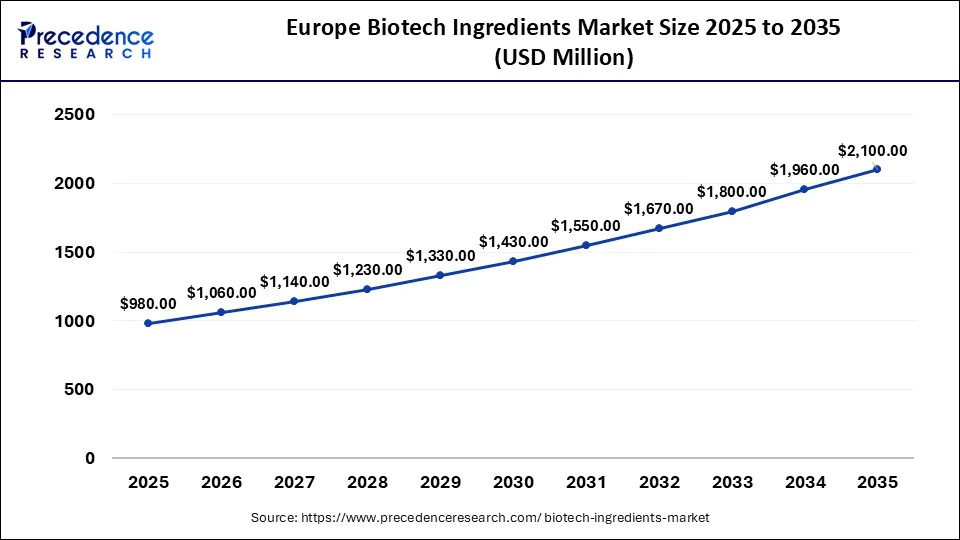
Europe registered dominance in the biotech ingredients market by capturing the largest share in 2025. This is mainly due to the increased integration of biologics in disease management. The region's strong foothold can be attributed to several factors, including a strong focus on sustainability. This boosts the demand for bio-based and environmentally friendly ingredients, resonating with the fundamental principles of biotechnology. Germany, in particular, boasts a robust chemical and pharmaceutical industry, which supports the production and distribution of biotech ingredients.
Germany Market Trends
Germany is expanding as a result of stringent sustainability laws and the rising demand for environmentally friendly ingredients. The replacement of petrochemicals with microbial and bio-based compounds also contributes to market growth. High-tech fermentation and enzyme technologies enhance ingredient performance. Green chemistry leads to the development of algae and yeast solutions. Intense ESG attention promotes the sustainability of sourcing and production in industries.
Asia Pacific is likely to expand at the highest CAGR in the coming years, driven by the rising incidence of chronic diseases such as cardiovascular conditions, cancer, and diabetes. The region is home to some of the world's most rapidly developing economies, including China, India, and various Southeast Asian nations, which are experiencing heightened demand for healthcare, cosmetics, and food products. This, in turn, boosts the demand for biotech ingredients. Notably, India stands out as a major contributor to pharmaceutical manufacturing, especially in the realm of generic drugs and active pharmaceutical components. The rapid expansion of the pharmaceutical and biopharmaceutical industries further contributes to regional market growth.
China Market Trends
China is growing because of the swift shift to innovative biotech research and development. Emphasis on generic production is replaced with high-value ingredients. Biosimilars and enzyme technologies are strong capabilities that facilitate growth. Global regulatory standards have the advantage of increasing market access. More investment in high-technology R&D enhances local innovation and output.
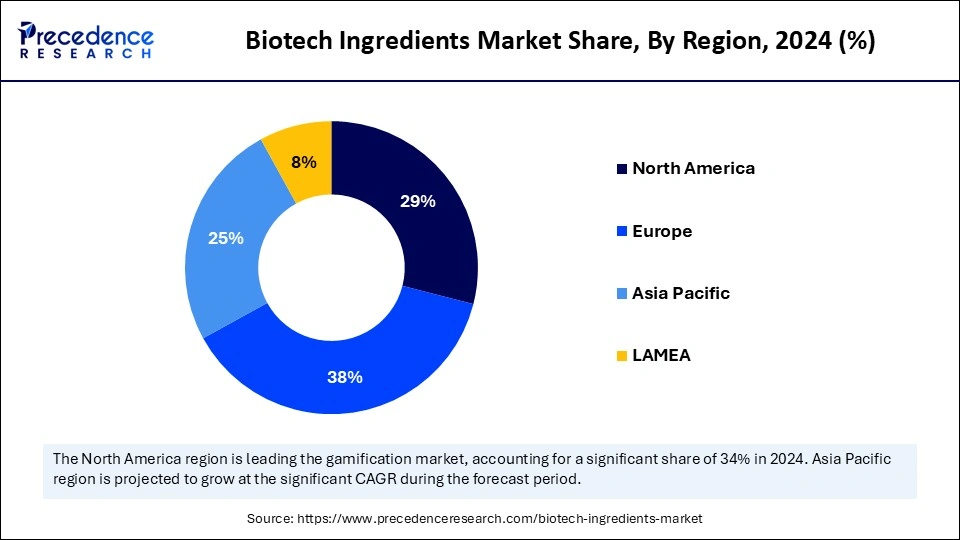
North America is seen to grow at a notable rate in the foreseeable future. This is mainly due to the presence of a well-established pharmaceutical sector. The U.S. and Canada are major contributors to the North American biotech ingredients market. This is mainly due to the rising investments in biotechnology research. In addition, increasing healthcare expenditure and the rising demand for personalized medicine.
U.S. Market Trends
The U.S. market is growing because of good innovation in biologics and developed technologies in drug development. Highly scalable mRNA and protein production drives demand. Bio processing is quickened by investment in synthetic biology. The emphasis on safety and sustainability by regulations facilitates innovation. The implementation of AI enhances the process of drug discovery and the development of ingredients in the pharmaceutical and cosmetic sectors.
Biotech Ingredients Market Companies
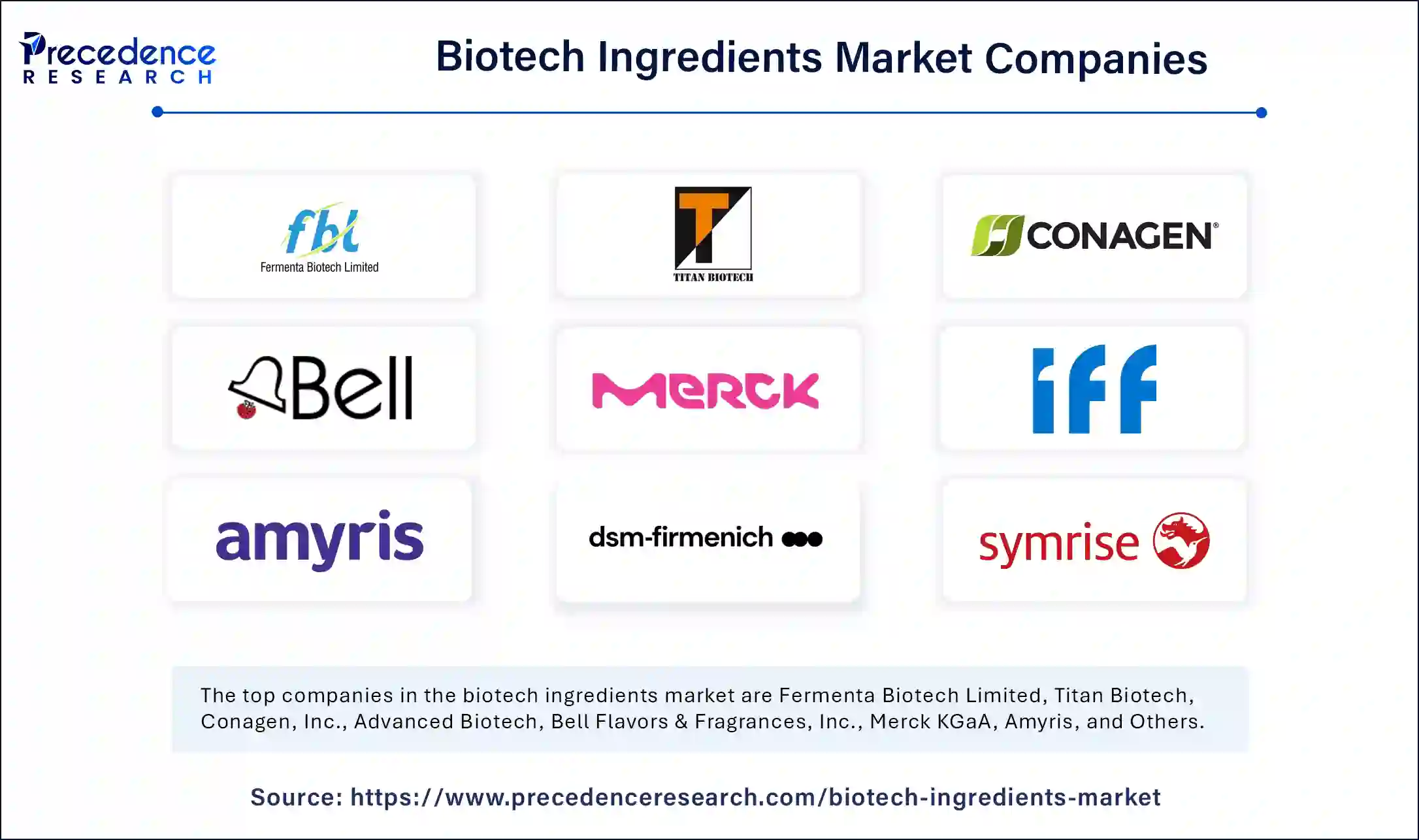
- Fermenta Biotech Limited: Specializes in Vitamin D3, nutrition premix, API, enzyme, and environmental solutions in favor of pharmaceutical and nutraceutical usage.
- Titan Biotech: Involved in the production of probiotics, culture media, peptones, and hydrolysates that serve the pharmaceutical, nutraceutical, and agrobiotechnology sectors worldwide.
- Conagen, Inc.: Synthetic biology-based food, fragrance, nutrition, and pharmaceutical industry fermentation to develop natural ingredients.
- Advanced Biotech: Provides natural flavors and fragrances, essential oils, and pyrazines to high-quality food and beverage applications.
Other Major Key Players
- Bell Flavors & Fragrances, Inc.
- Merck KGaA
- International Flavors & Fragrances, Inc.
- Amyris
- DSM-Firmenich
- Symrise
- Evonik Industries
Latest Announcement by Industry Leader
- In July 2024, Debut signed an agreement with L'Oréal to develop more than a dozen vital, bio-identical ingredients that will replace conventionally sourced ingredients currently used in L'Oréal global beauty and personal care brands across hair, skin, color cosmetics, and fragrance. Debut Founder and CEO Joshua Britton mentioned in an interview that bio-identical ingredients maintain global diversity and also help run ingredient supply chains.
Recent Developments
- In July 2025, Debut, a biotech beauty leader, launched a plant cell biotechnology platform to create fragrance ingredients without cultivation. This technology replicates key molecules from extracts and targets orris and vetiver, valuable perfume components, streamlining development processes that traditionally take years. (Source: https://www.prnewswire.com)
- In May 2025, Planttech Biotech announced the launch of the NOW Ingredient System, including NOW Energy and NOW Weight, at Vitafoods Europe. NOW Energy is a carob concentrate that helps moderate postprandial blood glucose levels, while NOW Weight is a carob extract that helps reduce abdominal fat and promote healthy weight management. (Source: https://nutraceuticalbusinessreview.com)
- In February 2025, Sensient Technologies Corp., a global supplier of color and personal care ingredients, took possession of Biolie, a French manufacturer specializing in white biotechnology and natural ingredient extraction.
- In October 2024, L'Oréal collaborated with Abolis Biotechnologies and Evonik to develop sustainable biotech-based ingredients to fulfill the global demand for beauty products.
Segments Covered in the Report
By Type
- Active Pharmaceutical Ingredients (APIs)
- Biosimilars
By Product
- Monoclonal Antibodies
- Vaccines
- Hormones and Growth Factors
- Cytokines
- Fusion Proteins
- Therapeutic Enzymes
- Blood Factors
By Expression System
- Mammalian Expression Systems
- Microbial Expression Systems
- Yeast Expression Systems
- Plant Expression Systems
- Insect Expression Systems
By Region
- North America
- Asia Pacific
- Europe
- Latin America
- Middle East and Africa
For inquiries regarding discounts, bulk purchases, or customization requests, please contact us at sales@precedenceresearch.com
Frequently Asked Questions
Tags





Ask For Sample
No cookie-cutter, only authentic analysis – take the 1st step to become a Precedence Research client
 Get a Sample
.webp)



 sales@precedenceresearch.com
 Schedule a Meeting
