



Body Augmentation Filler Market Size, Key Companies, Company Market Share, Sales Volume, Consumer Demand, Pricing Trends, Distribution Performance, Competitive Positioning, and Growth Forecast
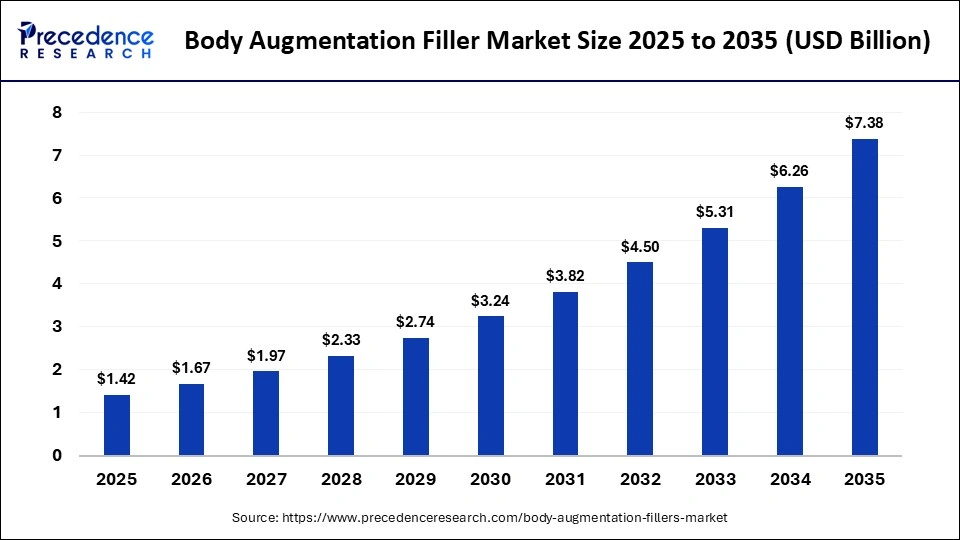
Vidyesh Swar, a Consumer Goods Industry Expert, finds that the body augmentation filler market has reached USD 1.67 billion in 2026 and is projected to reach USD 7.38 billion by 2035, growing at a CAGR of 17.91%. Leading body augmentation filler market brands and companies such as Suneva Medical, Ipsen, Laboratoires Vivacy are competing across high-demand segments including product type, material type, application, end-user, region.
Source: https://www.precedenceresearch.com/body-augmentation-filler-market
 Get a Sample
 Table Of Content


What is the Body Augmentation Filler Market Size?
The global body augmentation filler market size accounted for USD 1.42 billion in 2025 and is predicted to increase from USD 1.67 billion in 2026 to approximately USD 7.38 billion by 2035, expanding at a CAGR of 17.91% from 2026 to 2035. The market is driven by technological advancements in biocompatible materials and minimally invasive aesthetic procedures. The integration of advanced polymer chemistry and regenerative medicine is leading to the development of safer, longer-lasting, and customizable fillers that offer natural-looking results through personalized treatment monitoring and enhanced pre-procedure visualization.
Market Highlights
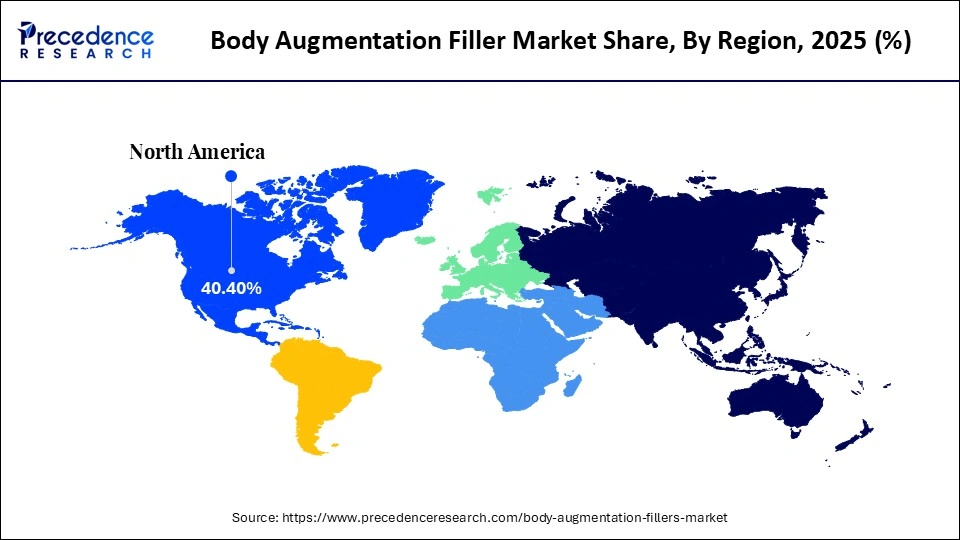
- North America held the largest market share of 40.4% in 2025.
- Asia Pacific is expected to grow at the fastest CAGR of 20% from 2026 to 2035.
- By product type, the temporary fillers segment contributed the biggest market share of 52.5% in 2025.
- By product type, the semi-permanent filler segment is growing at a solid CAGR of 18.3% from 2026 to 2035.
- By material type, the hyaluronic acid (HA) segment accounted for the largest market share of 29.7% in 2025.
- By material type, the poly-L-lactic acid (PLLA) segment is poised to grow at the fastest CAGR of 18.5% from 2026 to 2035.
- By application, the buttock augmentation segment led the market with a 32.5% share in 2025.
- By application, the breast augmentation segment is growing at a notable CAGR of 18.2% from 2026 to 2035.
- By end-user, the dermatology clinics segment captured the highest market share of 58.5% share in 2025.
- By end-user, the medical spas segment is expected to grow at the fastest CAGR of 18.8% from 2026 to 2035.
What are Body Augmentation Fillers?
Body augmentation fillers are injectable gels or substances like Hyaluronic Acid, Calcium Hydroxylapatite used to add volume, contour, and fullness to various, breasts, buttocks, hands, and face, driven by demand for minimally invasive beauty solutions, increased disposable income, and shifting cultural acceptance, with significant growth globally due to new tech, social media influence, and fewer recovery needs than surgery for less downtime procedures. The market includes hyaluronic acid, PMMA, calcium hydroxylapatite, fat grafting, and synthetic fillers used for body contouring. Segmentation supports understanding adoption drivers, regulatory differences, clinical outcomes, and demand shifts, enabling strategic planning for manufacturers, clinics, and cosmetic dermatology providers worldwide.
How is AI Impacting the Body Augmentation Filler Market?
Artificial intelligence (AI) is transforming the global market by enabling highly personalized treatment plans through 3D imaging, predicting outcomes to improve patient understanding, ensuring precision with AR and robotic guidance, and enhancing patient experiences with data-driven insights. AI models also simulate potential results, allowing patients to visualize outcomes and helping practitioners manage expectations and reduce touch-ups. Furthermore, AI analyzes 2D and 3D scans to detect volume loss, asymmetries, and recommend the best filler type, depth, and placement for customized post-treatment care, boosting satisfaction.
Body Augmentation Filler Market Outlook
- Industry Growth Overview: The market is poised for robust expansion from 2026 to 2035, driven by rising awareness of anti-aging solutions and the growing influence of social media and celebrity endorsements. The increasing global demand for minimally invasive cosmetic procedures and shifting consumer preferences for non-surgical aesthetic enhancements with minimal downtime also drive the market.
- Shift Toward Bio-Stimulatory Fillers: The shift toward bio-stimulatory fillers is driving the market by offering longer-lasting results and stimulating natural collagen production, which enhances skin volume and texture over time. This trend attracts consumers seeking more natural-looking, durable, and minimally invasive body contouring solutions, boosting overall market demand.
- Global Expansion: The global market is growing worldwide due to rising consumer awareness of aesthetic procedures, increasing demand for minimally invasive treatments, and advancements in safe, effective filler formulations. Emerging regions present opportunities through expanding medical tourism, growing disposable incomes, and rising adoption of cosmetic procedures in urban populations seeking non-surgical body enhancement solutions.
- Major Investors: Major investors in the market include pharmaceutical companies, aesthetic medicine firms, private equity funds, and venture capital investors. They contribute by funding research and development of innovative filler products, supporting clinical trials, expanding manufacturing capabilities, and driving marketing and distribution to reach new consumer segments globally.
- Startup Ecosystem: Various startup ecosystems, including companies like Prollenium Medical Technologies and BioPlus, are active in developing new formulations focusing on niche innovations, such as sustainable materials and new delivery technologies, to compete with global leaders.
Market Scope
| Report Coverage | Details |
| Market Size in 2025 | USD 1.42 Billion |
| Market Size in 2026 | USD 1.67 Billion |
| Market Size by 2035 | USD 7.38 Billion |
| Market Growth Rate from 2026 to 2035 | CAGR of 17.91% |
| Dominating Region | North America |
| Fastest Growing Region | Asia Pacific |
| Base Year | 2025 |
| Forecast Period | 2026 to 2035 |
| Segments Covered | Product Type, Material Type, Application, End-user, and Region |
| Regions Covered | North America, Europe, Asia-Pacific, Latin America, and Middle East & Africa |
Segment Insights
Product Type Insights
What Made Temporary Fillers the Leading Segment in the Body Augmentation Filler Market?
The temporary fillers segment led the market with a 52.5% market share in 2025. This is mainly due to their favorable safety profile, reversibility, and lower risk of complications. Temporary fillers are largely biodegradable and derived from naturally occurring substances in the body, reducing the risk of allergic reactions and long-term issues. An additional benefit is that these fillers can be dissolved with an enzyme if the patient is unhappy with the results, offering extra safety and peace of mind for both practitioners and patients. The increasing demand for minimally invasive cosmetic procedures also contributes to the segment's dominance.
The semi-permanent fillers segment is expected to grow at the fastest CAGR of 18.3% during the forecast period. This segment's growth is driven by rising demand for solutions that balance the safety of temporary fillers with the convenience of longer-lasting effects. Semi-permanent fillers usually last between one and two years, without the long-term safety issues or irreversibility associated with permanent fillers. They provide predictable results, enabling better management of potential side effects. Continuous improvements in product formulations and injection techniques also contribute to the segment's growth.
Material Type Insights
How Does the Hyaluronic Acid (HA) Segment Dominate the Body Augmentation Filler Market in 2025?
The hyaluronic acid (HA) segment dominated the market with a 29.7% share in 2025. This is due to its high biocompatibility, a proven safety record, and its unique ability to deliver natural-looking, reversible results. This makes it the preferred choice among practitioners and patients seeking minimally invasive aesthetic enhancements. HA fillers attract and retain water, resulting in natural volume enhancement and wrinkle correction. Widespread use and endorsement by dermatologists and cosmetic professionals, along with increased consumer awareness, have established HA fillers as an industry standard.
The poly-L-lactic acid (PLLA) segment is expected to grow at the fastest CAGR of 18.5% throughout the forecast period. This is because it stimulates collagen production, delivering natural, long-lasting results that appeal to patients seeking subtle, non-surgical body contouring treatments. As PLLA is a biocompatible and biodegradable synthetic polymer, it breaks down into water and carbon dioxide, ensuring complete elimination from the body and a favorable safety profile. PLLA treatments can last two years or more, requiring fewer maintenance sessions and offering better long-term value.
Application Insights
Why Did the Buttock Augmentation Segment Dominate the Body Augmentation Filler Market?
The buttock augmentation segment led the market, capturing a 32.5% share in 2025, mainly due to high consumer demand for body contouring procedures that enhance shape and volume with minimally invasive techniques. Non-surgical buttock fillers offer immediate results, reduced recovery time, and lower risk compared to surgical alternatives, making them widely preferred. In addition, strong influence from social media trends, celebrity aesthetics, and growing acceptance of cosmetic enhancements further accelerated demand in this segment.
The breast augmentation segment is expected to grow at an 18.2% CAGR in the upcoming period. This growth is driven by increasing preference for non-surgical and minimally invasive enhancement options. Injectable fillers allow subtle volume enhancement, improved symmetry, and shorter recovery times compared to traditional implants, making them attractive to a broader consumer base. Rising awareness of aesthetic treatments, advancements in filler safety, and growing demand for customizable, natural-looking results are further driving growth in this segment.
End-User Insights
How Does the Dermatology Clinics Segment Dominate the Body Augmentation Filler Market?
The dermatology clinics segment dominated the market by holding a 58.5% share in 2025. This is primarily because they offer specialized expertise, advanced technology, personalized care, and are relied upon for minimally invasive procedures. Although medical spas are rapidly gaining popularity due to convenience, clinics are integrating tools such as AI and 3D imaging to provide precise, customized treatment plans. Skilled professionals stay up to date on new filler techniques, offering tailored solutions and creating a comprehensive aesthetic environment, making them the preferred choice.
The medical spas segment is expected to grow at an 18.8% CAGR throughout the projection period. This is mainly due to increasing consumer preference for convenient, outpatient aesthetic treatments in a comfortable and less clinical setting. Medical spas offer minimally invasive filler procedures with shorter appointment times, competitive pricing, and access to trained medical professionals. Additionally, the expansion of aesthetic service portfolios, rising wellness trends, and growing trust in med-spa-based cosmetic treatments are driving segment growth.
Regional Insights
How Big is the North America Body Augmentation Filler Market Size?
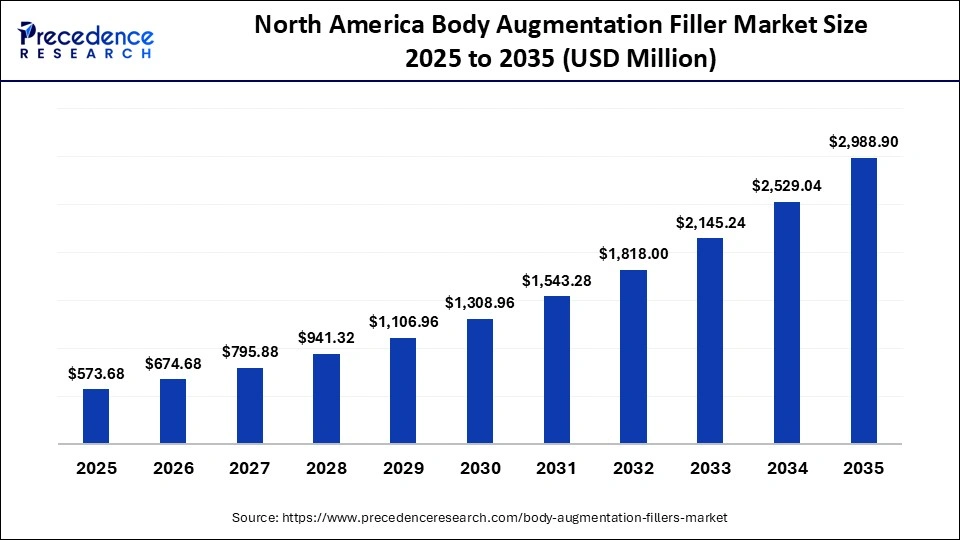
The North America body augmentation filler market size is estimated at USD 573.68 million in 2025 and is projected to reach approximately USD 2,988.90 million by 2035, with a 217.95% CAGR from 2026 to 2035.
What Made North America the Dominant Region in the Body Augmentation Filler Market in 2025?
North America led the market with a 40.4% share in 2025, mainly due to strong consumer demand, advanced healthcare systems, significant investment in R&D, and cultural acceptance of aesthetic procedures. In the U.S. and Canada, there is a strong focus on beauty and self-improvement, which helps reduce the stigma around cosmetic treatments. Social media and celebrity endorsements have further normalized and increased the demand for these procedures across different age groups. The region also benefits from a well-developed healthcare infrastructure with a high number of skilled, internationally recognized plastic surgeons and dermatologists. Major companies like AbbVie, Galderma, and Merz Pharma are key drivers of market growth.
What is the Size of the U.S. Body Augmentation Filler Market?
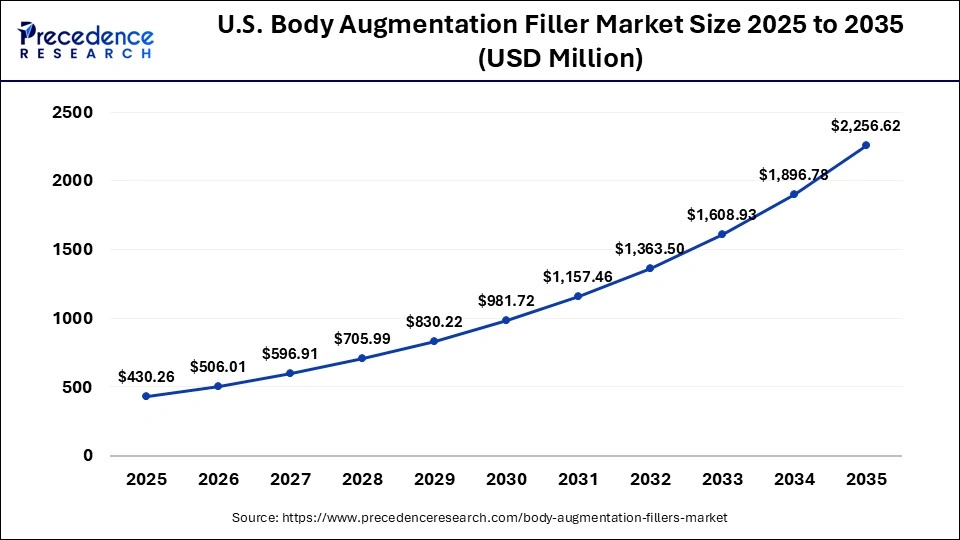
The U.S. body augmentation filler market size is calculated at USD 430.26 million in 2025 and is expected to reach nearly USD 2,256.62 million in 2035, accelerating at a strong CAGR of 18.02% between 2026 and 2035.
U.S. Body Augmentation Filler Market Analysis
The U.S. is a major contributor to the market within North America, serving as a global hub for R&D in biotechnology, AI, and materials science, all of which directly contribute to advancements in augmentation technologies. The U.S. FDA plays a critical role in regulating new filler formulations and digital health policies, ensuring quality and safety standards for IoT-integrated products. Additionally, major tech companies in the country are involved in developing general IoT and wearable medical devices for body augmentation procedures.
Why is Asia Pacific Considered the Fastest-Growing Region in the Body Augmentation Filler Market?
Asia Pacific is expected to grow at the fastest CAGR of 20% during the forecast period. This growth is driven by rising disposable incomes, the strong influence of social media on beauty standards, increasing consumer demand for minimally invasive procedures, and significant technological advancements in filler products. Economic growth in countries like China and India has expanded the middle class with greater purchasing power, eager to improve their appearance and confidence through options that offer quicker recovery, lower risks, and subtle, natural-looking results with quality and affordable services.
India Body Augmentation Filler Market Trends
India is a rapidly growing market within Asia Pacific. This growth is fueled by increasing consumer awareness, rising disposable incomes, and the influence of social media, which uses AI and VR to deliver accurate skin-type recommendations and post-procedure monitoring. India's participation in the International Medical Device Regulators Forum (IMDRF) indicates its commitment to global quality standards, improving patient care, optimizing services, and facilitating real-time monitoring.
How is Europe Contributing to the Body Augmentation Filler Market?
Europe is expected to see significant growth in the near future, driven by increased aesthetic awareness, an aging population, technological advancements, strict safety regulations, and high disposable incomes. Adherence to the strict EU Medical Device Regulation (EU MDR) and country-specific guidelines guarantees product quality, safety, and effectiveness, boosting consumer confidence. Additionally, Europe acts as an innovation hub, with major market players investing heavily in R&D to develop advanced, safer, and longer-lasting filler formulations.
Germany Body Augmentation Filler Market Trends
Germany is a key player in the European market, characterized by strict regulatory standards that ensure high safety and quality levels. The country is leading in integrating AI and IoT into smart injectors and personalized therapy solutions, with its innovations setting global benchmarks and offering a wide variety of products. The country's sophisticated regulatory framework, high disposable incomes, and well-established network of dermatology clinics and aesthetic practices support expanding adoption, especially in major urban centers.
What Opportunities Exist in Latin America for the Body Augmentation Filler Market?
Latin America offers significant opportunities for the market, driven by the popularity of cosmetic procedures and the growth of medical tourism in the region. Countries such as Brazil, Mexico, and Colombia have a deep cultural emphasis on physical beauty and self-care. The nations consistently rank among the top globally for the total number of aesthetic procedures performed, with Brazil and Mexico standing out as major hubs. The availability of flexible payment plans and mid-range pricing strategies by local clinics renders these treatments accessible to a broader middle-income population.
Brazil Body Augmentation Filler Market Trends
Brazil is also one of the largest markets worldwide, primarily due to a cultural acceptance of beauty enhancements. The country ranks at the top globally for the number of surgical procedures performed, and the market is expected to grow quickly, driven by ongoing demand for cosmetic body sculpting procedures and supported by a strong medical tourism sector that attracts both local and international clients. Social media influence, medical tourism, and increasing adoption of advanced, safer filler technologies are key trends shaping market growth in Brazil.
What Potentiates the Body Augmentation Filler Market in the Middle East & Africa?
The market in the Middle East & Africa is mainly driven by high disposable incomes, the rise of medical tourism hubs, and increasing social acceptance of non-surgical cosmetic procedures. Governments in the region, especially in the UAE and Saudi Arabia, are heavily investing in healthcare infrastructure and establishing strict regulations. The economic prosperity in Gulf Cooperation Council countries, including the UAE, Saudi Arabia, and Qatar, results in consumers having significant spending power on luxury aesthetic treatments.
UAE Body Augmentation Filler Market Trends
The UAE is a key contributor to the market within the MEA. The market in the UAE is driven by a growing number of luxury aesthetic centers and high consumer spending power. Increasing awareness and acceptance of cosmetic procedures also drives the market. Additionally, the presence of internationally accredited aesthetic clinics, rising influence of social media, and continuous adoption of cutting-edge cosmetic technologies are key trends driving market growth in the UAE.
Body Augmentation Filler Market Value Chain
- Research & Development (R&D)
This involves developing new filler formulations and delivery technologies that focus on improving safety, efficacy, longevity, and natural-looking results.
Key Players: AbbVie, Galderma, Merz Pharma, Teoxane, Revance Therapeutics, Sinclair Pharma, Hugel, LG Chem.
- Clinical Trials & Regulatory Approval
Human trials are conducted to prove the safety and effectiveness of the new filler products for extensive review and market approval.
Key Players: AbbVie, Galderma, Merz Pharma, Revance Therapeutics, and Sinclair Pharma.
- Manufacturing & Production
This involves the large-scale, sterile production of the filler material, purification, cross-linking, and packaging into final, often pre-filled, syringes.
Key Players: Galderma, Merz Pharma, IBSA, Sinclair Pharma, Teoxane, BioPlus Co., Ltd.
- Logistics & Distribution
This involves standard and occasionally cold-chain logistics, as the products are typically stable at room temperature, vital for market penetration.
Key Players: AbbVie, Galderma, Merz Pharma, and Alma.
- Marketing, Training & Commercialization
This is marketing, branding, and educating medical practitioners on proper injection techniques, safety protocols, and product differentiation.
Key Players: AbbVie, Galderma, Revance Therapeutics, and Teoxane.
- Treatment & Post-Market Surveillance
This involves the administration of the filler to the patient occurs in certified clinics and hospitals with continuous product improvement and regulatory compliance.
Key Players: AbbVie and Merz Pharma.
Top Companies in the Body Augmentation Filler Market & Their Offerings
- AbbVie: This company is widely considered the market leader, due to its highly popular and extensive Juvederm line of hyaluronic acid (HA) fillers.
- Galderma: Offers a broad portfolio including the well-known Restylane and Sculptra brands including both HA and poly-L-lactic acid fillers.
- Merz Aesthetics: Offers products such as Radiesse (calcium hydroxylapatite, CaHA) and Belotero (HA) fillers.
- Sinclair Pharma: Known for products like Perfectha, Ellanse, and Lanluma, a collagen-stimulating injectable filler.
- Teoxane: This Swiss-based company is known for its RHA (Resilient Hyaluronic Acid) dermal fillers and is an established player in the market.
Other Key Players
- Suneva Medical
- Ipsen
- Laboratoires Vivacy
- Prollenium Medical
- Croma Pharma
- BioPlus Co.
- Polytech Health & Aesthetics
- HansBiomed
- Stel+K
- Aptos
Recent Developments
- In July 2025, Waldencast plc acquired Novaestiq Corp and the U.S. rights to the Saypha line of HA injectable gels, enhancing Obagi Medical's offerings in medical-grade skincare and aesthetic solutions. The acquisition also provides access to future injectable products.(Source: https://ir.waldencast.com)
- In February 2025, Evolus, Inc. received FDA approval for Evolysse Form and Evolysse Smooth, marking its entry into the U.S. hyaluronic acid (HA) dermal filler market and expanding its addressable market by 78% to around $6 billion. CEO David Moatazedi stated that these products represent a major technological breakthrough, with plans for a launch in Q2 2025.(Source: https://www.businesswire.com)
- In January 2024, Galderma received Health Canada approval for Restylane SHAYPE, an HA injectable for chin augmentation, available from February 2024. This product offers a non-surgical alternative for chin definition, allowing aesthetic injectors to shape, project, and elongate the chin for natural-looking results from any angle.(Source: https://www.galderma.com)
Segments Covered in the Report
By Product Type
- Temporary Fillers
- Semi-Permanent Fillers
- Permanent Fillers
By Material Type
- Hyaluronic Acid (HA)
- Calcium Hydroxylapatite (CaHA)
- Poly-L-Lactic Acid (PLLA)
- Polymethylmethacrylate (PMMA)
- Autologous Fat
- Other Synthetic Polymers
By Application
- Breast Augmentation
- Buttock Augmentation
- Facial Volume Restoration
- Hand Rejuvenation
- Penile Augmentation
- Other Body Contouring
By End-user
- Hospitals
- Dermatology Clinics
- Medical Spas
By Region
- North America
- Europe
- Asia-Pacific
- Latin America
- Middle East and Africa
For inquiries regarding discounts, bulk purchases, or customization requests, please contact us at sales@precedenceresearch.com
Frequently Asked Questions





Ask For Sample
No cookie-cutter, only authentic analysis – take the 1st step to become a Precedence Research client
 Get a Sample




 sales@precedenceresearch.com
 Schedule a Meeting
