



Healthcare Gamification Market Size, Companies, Share, Patient Volume, Treatment Adoption Rates, Pricing Analysis, Regulatory Landscape, Competitive Positioning, and Demand Forecast
Healthcare Gamification Market (By Component: Software Platforms/Solutions, Services; By Application: Patient Engagement & Treatment Adherence, Wellness & Fitness Gamification, Chronic Disease Management, Employee Health & Workplace Wellness, Professional Training & Simulation, Other Healthcare Gamification Uses; By End-User: Patients & Consumers, Healthcare Providers (Hospitals, Clinics), Employers & Wellness Program Managers, Payers/Insurance Providers, Other End-Users; By Deployment Mode: Cloud-based/SaaS, On-premise, Hybrid) - Global Industry Analysis, Size, Trends, Leading Companies, Regional Outlook, and Forecast 2026 to 2035
Source: https://www.precedenceresearch.com/healthcare-gamification-market
 Get a Sample
 Table Of Content


What is the Healthcare Gamification Market Size?
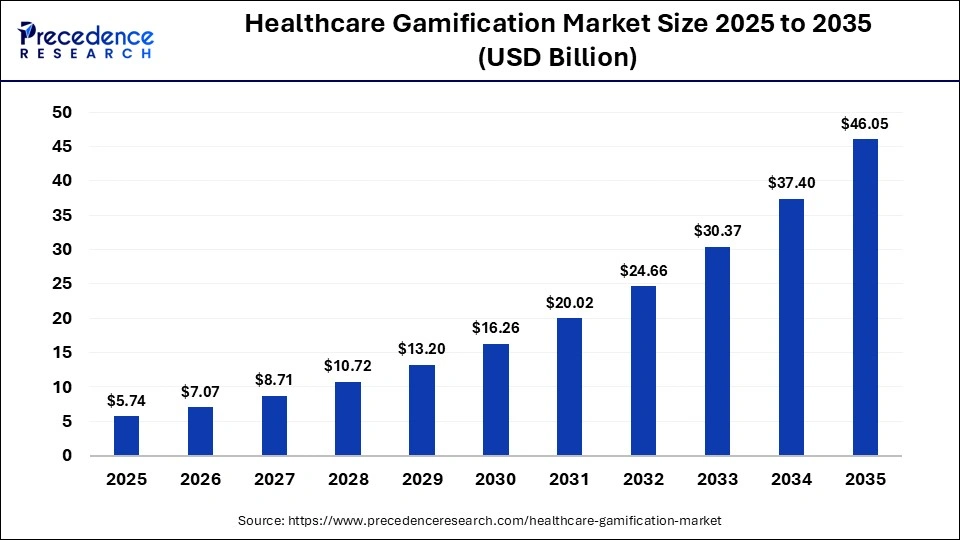
The global healthcare gamification market size was calculated at USD 5.74 billion in 2025 and is predicted to increase from USD 7.07 billion in 2026 to approximately USD 46.05 billion by 2035, expanding at a CAGR of 23.15% from 2026 to 2035. The market is growing steadily as providers adopt digital tools to boost patient engagement, improve treatment adherence, and support preventive care across chronic disease management and wellness programs.
Market Highlights
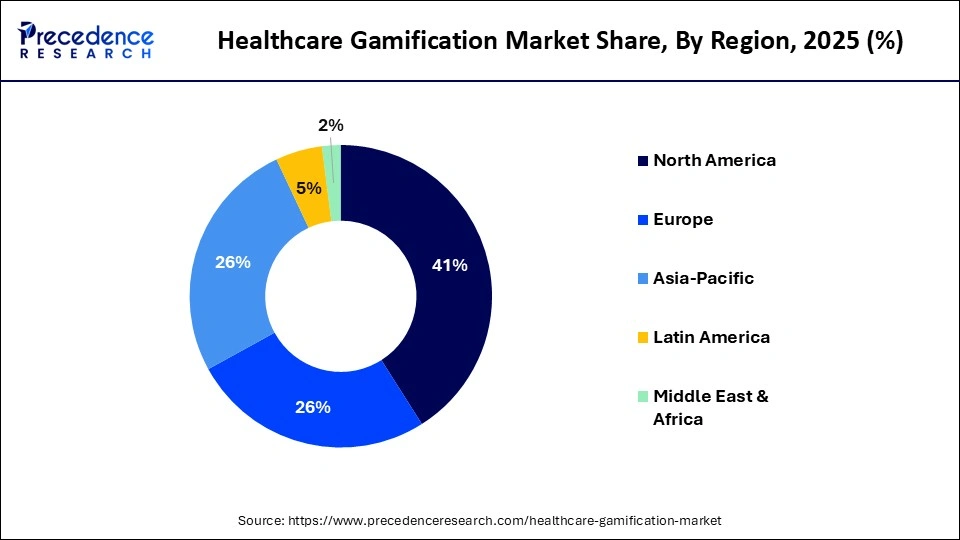
- North America led the healthcare gamification market with the largest market share of 41% in 2025.
- Asia-Pacific is expected to expand the fastest CAGR in the market between 2026 and 2035.
- By component, the software platforms/solutions segment dominated the market with a share of approximately 69% in 2025.
- By component, the services segment is expected to grow at a strong CAGR during 2026 and 2035.
- By application, the patient engagement & treatment adherence segment captured the highest market share of approximately 31% in 2025.
- By application, the chronic disease management segment is expected to expand rapidly from 2026 to 2035.
- By end-user, the patients & consumers segment led the market with a share of approximately 44% in 2025.
- By end-user, the healthcare providers segment is expected to grow at a solid CAGR between 2026 and 2035.
- By deployment mode, the cloud-based/SaaS segment held the largest revenue share of approximately 65% in 2025.
- By deployment mode, the hybrid segment is expected to expand at the highest CAGR from 2026 to 2035.
How is the Healthcare Gamification Market Gaining Strategic Importance?
The healthcare gamification industry includes healthcare service providers or systems that are leveraging gaming techniques, rewards, challenges, and tracking mechanisms to enhance patient engagement, improve health outcomes, and increase compliance with treatments. Game-based solutions for healthcare serve populations with wellness needs, chronic disease management, fitness, psychological wellbeing, and educational needs related to professional medical training.
The market is gaining strategic importance as systems transition to preventive care from traditional models while implementing value-based reimbursement models. The rising adoption of digital health technologies, increased use of smartphone devices, and greater consumer demand for personalized care experiences also fuel market growth.
Gamified platforms are now being integrated into wearable devices, telehealth mobile applications, and artificial intelligence (AI)-driven analytic applications designed to track and enable behavior modification in real-time. Providers and employers are utilizing healthcare gamification to reduce costs, increase treatment compliance, and enhance patient education.
What is the Role of AI in the Healthcare Gamification Market?
The transformative power of AI within the market is substantial due to its ability to create personalized, engaging & measurable experiences for patients, health care providers & payers. AI and machine learning (ML) algorithms can analyze each patient's data to develop an appropriate gamified intervention, which increases adherence rates & encourages sustained behaviour change; particularly useful in the management of chronic diseases & preventative care strategies.
- In December 2025, GravityLabs, an AI-powered healthcare startup, raised $17M in Series A funding to advance AI-based healthcare gamification products and expand marketing efforts in North America and Japan.
When integrating AI into developing gamification solutions for healthcare companies, AI enhances differentiation within a company's digital health product/service offerings, enables scalability to reach new facilities/individuals, & enhances retention by allowing healthcare companies to convert strategic goals into engaging experiences for all parties involved.
Key Trends Driving the Healthcare Gamification Market
- Engaging with Patients: Gamified health and wellness applications promote patient motivation through the use of engaging reward programs, compelling challenges/dynamic progress tracking, and by fostering increased patient engagement, retention rates, and long-term health-related outcomes through these features.
- Technologically Enhanced Healthcare: Over recent years, there has been a growing trend to integrate gamification within digital therapeutics in support of chronic disease management, mental health therapy, and rehabilitation as a means to provide an engaging experience while also leveraging clinical protocols with game play or interactive game mechanics.
- Personalized Gaming Experiences: Adapted or personalized game-play has been enhanced by using AI to assess a patient's health or behavior and to provide them with individualized challenges, rewards, or feedback through gamified actions, making the gamification experience even more impactful, motivating, successful, and satisfying for the patient.
- Patient Care at-a-distance: Gamification has increased the number of ways in which patients participate in or delivery methods of care by allowing for the inclusion of telehealth programs, virtual fitness and wellness challenges, and remote patient monitoring through authenticating their identification, creating a continuum of interaction between providers and patients regardless of where they are receiving care.
Market Scope
| Report Coverage | Details |
| Market Size in 2025 | USD 5.74 Billion |
| Market Size in 2026 | USD 7.07 Billion |
| Market Size by 2035 | USD 46.05 Billion |
| Market Growth Rate from 2026 to 2035 | CAGR of 23.15% |
| Dominating Region | North America |
| Fastest Growing Region | Asia Pacific |
| Base Year | 2025 |
| Forecast Period | 2026 to 2035 |
| Segments Covered | Component, Application, End-User, Deployment Mode, and Region |
| Regions Covered | North America, Europe, Asia-Pacific, Latin America, and Middle East & Africa |
Segmental Insights
Component Insights
Which Component Segment Dominated the Healthcare Gamification Market?
The software platforms/solutions segment held the largest revenue share of approximately 69% in the market in 2025, as they support the integration of game mechanics into patient engagement applications, clinician tools, and reports and dashboards to provide real-time data capture about behaviors and outcomes. Therefore, they are the foundation of any long-term healthcare organization's strategy to incorporate gamification into their ecosystems, due in part to their scalability, ease of connection to other digital health providers, and ability to individualize the end user's experience.
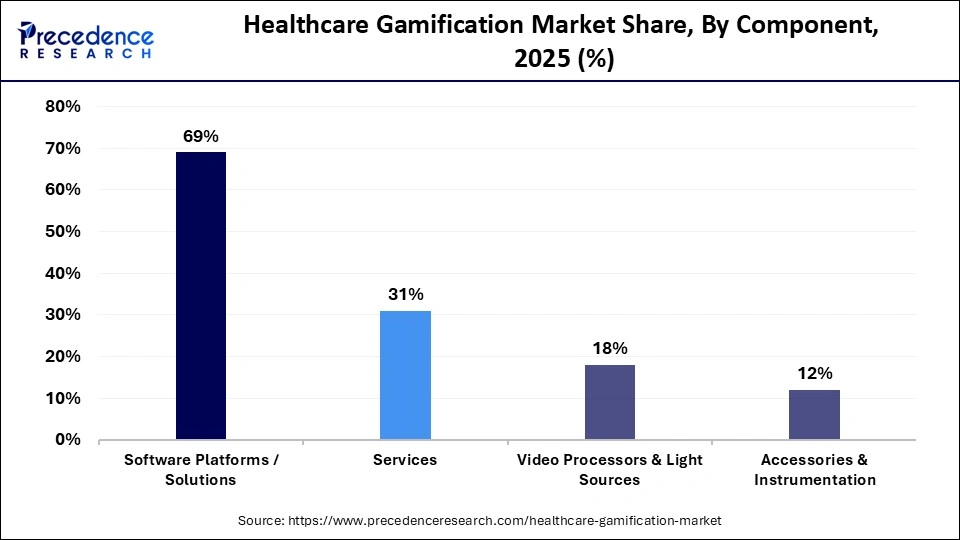
The services segment is expected to show the fastest growth over the forecast period as organizations pursuing successful gamification within their practice are frequently seeking specialized assistance. Service offerings include consulting, customizing, and effective game mechanic alignment with clinical purpose, regulatory requirements, and end-user preferences.
There is currently vast potential in the industry for continued service growth and ultimately adoption as a result of the increasing need for customized services, ongoing optimization and support, and training for healthcare organizations that do not possess digital expertise to continue to provide adequate levels of either care or support for the continuing efforts to implement gamification.
Application Insights
Which Application Segment Led the Healthcare Gamification Market?
The patient engagement & treatment adherence segment led the market with a share of approximately 31% in 2025. By enhancing users' motivation, consistency, and understanding of their health, gamification can create reward systems, track progress, and develop interactive challenges to motivate and encourage patients to adhere to their treatment plans and medication schedules. Due to increased adoption of digital health globally, there is a high need to improve outcomes while decreasing readmissions. Therefore, this segment will continue to be a primary focus for both healthcare providers and developers of healthcare solutions.
The chronic disease management segment is expected to expand rapidly in the market over the studied period. Chronic diseases typically require a long-term behavioral change. Daily monitoring, lifestyle changes, and self-care routines can be supported through gamified platforms for chronic diseases, including diabetes and cardiovascular disease. The growing prevalence of chronic diseases and the evolution towards a proactive model of care, including home-based delivery of services, is driving the rapid growth of gamification in this area.
End-User Insights
How the Patients & Consumers Segment Dominated the Healthcare Gamification Market?
The patients & consumables segment contributed the biggest revenue share of approximately 44% in the market in 2025, as they are primarily responsible for increasing the adoption of mobile health apps and wearable platforms. Furthermore, gamifying healthcare services provides individualized accountability through goal-setting, reward systems, and social networking features. The increased awareness of preventive care/wellness strategies, along with extensive smartphone use, continues to help strengthen the global health system's consumer-driven demand for these services.
The healthcare providers segment is expected to witness the fastest growth in the market over the forecast period, as more hospitals and clinics begin to use a range of gamification tools to facilitate their patients' compliance with health interventions and training for their staff. Healthcare providers prioritize these tools to enhance clinical workflow processes within their healthcare facility, educate patients about their medical conditions, and facilitate patients' engagement in their healthcare therapy.
Deployment Mode Insights
Why Did the Cloud-based/SaaS Segment Dominate the Healthcare Gamification Market?
The cloud-based/SaaS segment accounted for the highest revenue share of approximately 65% in the market in 2025, because of its flexibility, scalability, and low infrastructure cost. SaaS platforms enable rapid updates, access from anywhere, and simple integration with electronic health records and mobile apps. These benefits make cloud-based gamified solutions attractive to healthcare organizations looking for cost-effective and easily deployable digital engagement tools. Cloud-based/SaaS platforms eliminate the need for specialized infrastructure in healthcare organizations.
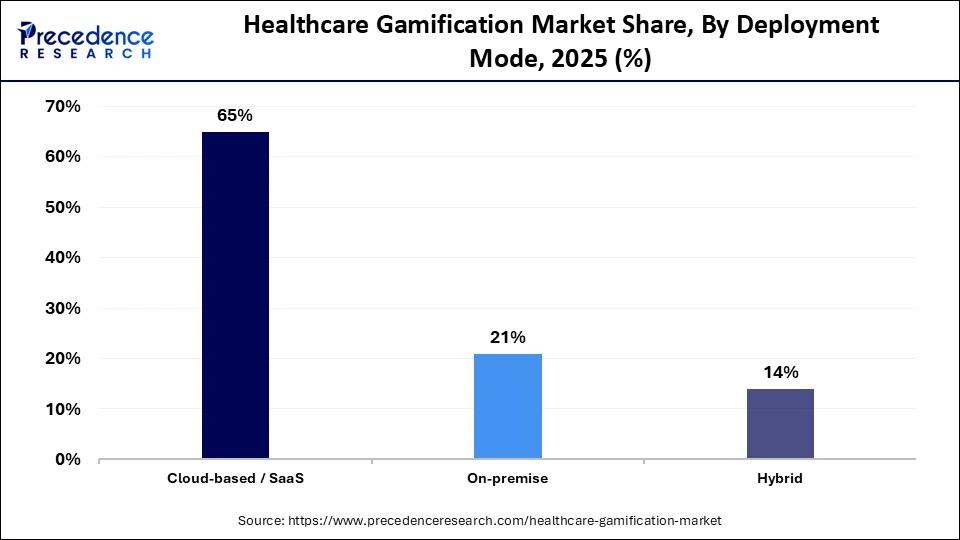
The hybrid segment is expected to grow with the highest CAGR in the market during the studied years, as organizations look to balance the benefits of the cloud with the need for some degree of control over their data. By combining on-premise security and cloud-based scalability, healthcare organizations can satisfy their compliance requirements while keeping their systems flexible. Concerns over data privacy and compatibility are driving many hospitals and other regulated healthcare organizations toward hybrid models.
Regional Insights
How Big is the North America Healthcare Gamification Market Size?
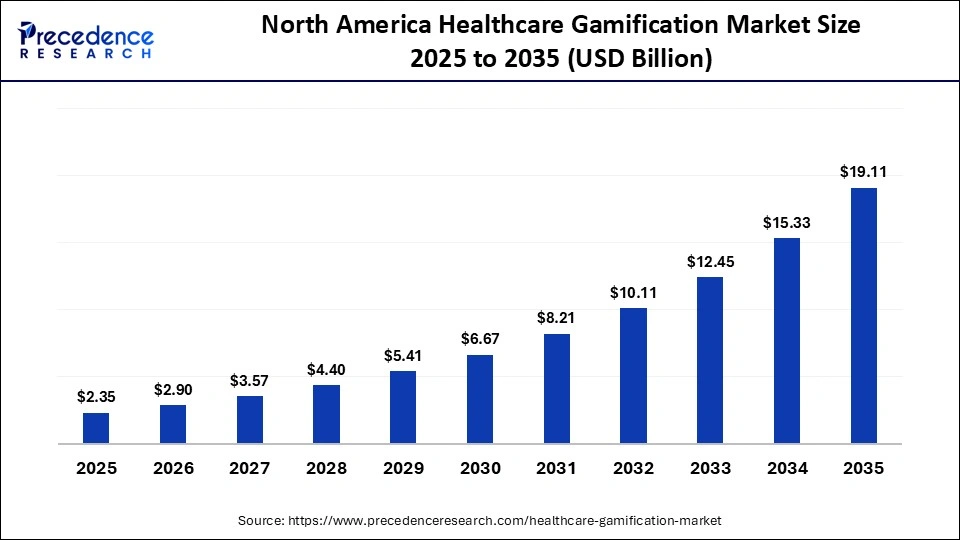
The North America healthcare gamification market size is estimated at USD 2.35 billion in 2025 and is projected to reach approximately USD 19.11 billion by 2035, with a 23.32% CAGR from 2026 to 2035.
Why North America Dominated the Healthcare Gamification Market?
North America dominated the market in 2025, due to its highly developed digital infrastructure and a multitude of health technology integrations. The region's healthcare providers and payers are actively using gamified platforms to increase patient engagement, adherence to treatment plans, and preventive health activity. The innovative culture of hospitals and health systems is accelerating the development and usage of interactive solutions that enhance health outcomes and encourage ongoing user engagement in programs for chronic conditions and general wellness.
What is the Size of the U.S. Healthcare Gamification Market?
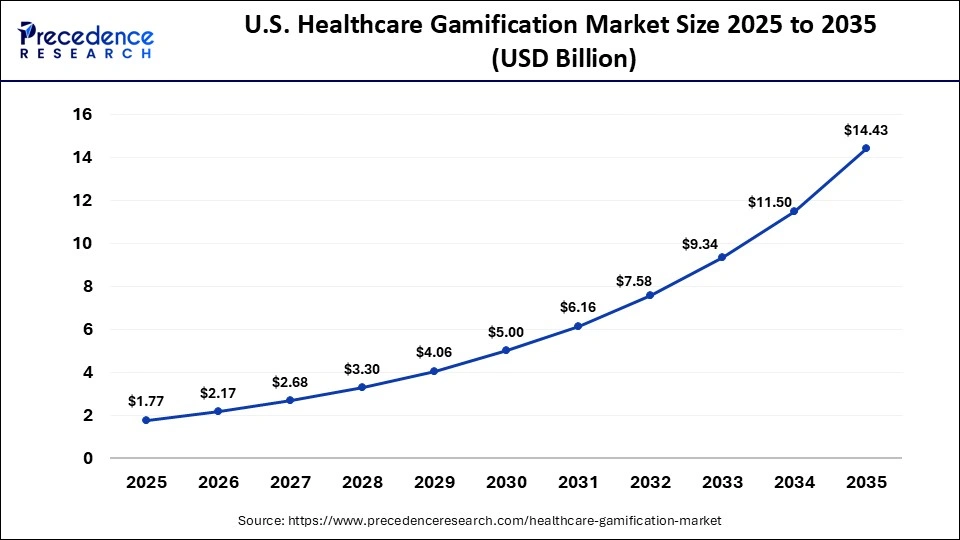
The U.S. healthcare gamification market size is calculated at USD 1.77 billion in 2025 and is expected to reach nearly USD 14.43 billion in 2035, accelerating at a strong CAGR of 23.35% between 2026 and 2035.
U.S. Market Trends
The U.S. is the leading country within North America, due to a dynamic ecosystem of tech startups, established healthcare delivery organizations, and strong investments in digital health. The use of gamification in healthcare is being driven by collaboration across sectors like clinical care, design, and technology, with an emphasis on providing tools that help change behaviours.
With high penetration of smartphones and consumer acceptance of digital health and wellness technologies, providers of gamified health applications have a significant opportunity to grow their customer base and offer services in areas such as fitness, mental health, and chronic disease management.
How is Asia-Pacific Growing in the Healthcare Gamification Market?
Asia-Pacific is expected to witness the fastest growth during the predicted timeframe, fueled by advances in digital technologies, increasing access to mobile technologies, and a greater focus on preventing illness through preventive medicine. Digital health innovation in the region is supported by government and private entities. The increased health awareness among large populations has led to a need for interactive and engaging methods to encourage healthy behaviours. Rapidly changing demographics present ample opportunities for the use of gamified health methods, making the Asia-Pacific a fast-growing and constantly changing marketplace.
Japan Market Trends
Japan's lead in advanced technology and the growing acceptance of digital health have helped make it a leader in healthcare gamification. Gamification applications are common in Japan to promote wellness, including the promotion of activities to improve the health and fitness of seniors and employees. There are several initiatives (wellness programs) in Japan that rely on gamified health applications to create and sustain commitment to a better lifestyle for many different groups, including all ages, by promoting improved lifestyles and long-term engagement.
What are the Advancements in the Healthcare Gamification Market in Europe?
Europe is witnessing significant growth in the market, driven by various factors such as increasing digital health adoption, a focus on preventive care, and supportive regulations are driving this trend. The European Union's initiatives to promote digital health solutions are also vital l in shaping the gamification industry, encouraging innovation and investment in gamification technologies. Countries like Germany, France, and the UK are leading players.
Germany Market Trends
The region's market landscape is characterized by collaborations between tech firms and healthcare providers, thus enhancing the effectiveness of gamification in improving patient outcomes.
What are the Key Trends in the Healthcare Gamification Market in Latin America?
Latin America is expected to have significant growth in the market, fueled by increasing smartphone penetration, a growing middle class, and rising health awareness among consumers. Governments in the region are also seen increasingly promoting digital health initiatives, which serve as catalysts for market expansion. Countries like Brazil and Mexico are leading players, with a burgeoning number of startups and established companies entering the gamification space.
Brazil Market Trends
The region's market features local players and international firms, all competing for the highest market share. As healthcare providers in these countries seek innovative ways to engage patients, the demand for gamified solutions is expected to rise further.
How is the Middle East and Africa Region Growing in the Healthcare Gamification Market?
The Middle East and Africa region is expected to have significant growth in the market, driven by increasing investments in healthcare infrastructure, a rising focus on patient engagement, and the adoption of digital health technologies. Countries like Saudi Arabia, the UAE, and South Africa are leading players in the region.
Saudi Arabia Market Trends
The country's market landscape is still in its developing stages, with a mix of local startups and international players beginning to explore opportunities. As healthcare systems evolve, the potential for gamification to enhance patient experiences is becoming increasingly recognized, paving the way for future growth.
Who are the Major Players in the Global Healthcare Gamification Market?
The major players in the healthcare gamification market include Fitbit, Inc., Ayogo Health, Inc, Evolv Rehabilitation Technology S.L., BI Worldwide (Bunchball, Inc.), Akili Interactive Labs, Inc. , Cognifit, Inc., Mango Health, Nike, Inc., Sephora, BrainLAB AG, EveryMove Inc., Google LLC, Microsoft Corporation, Medtronic PLC, Omada Health Inc., and GecKoCap.
Recent Developments
- In October 2025, MediBuddy launched the third edition of its MediBuddy Wellness League 3.0, India's largest corporate wellness challenge, using gamification, health tracking, quizzes, leaderboards, and rewards to boost workplace health and long-term habits. MWL 3.0 introduces deeper personalization and a stronger focus on long-term habit formation.(Source: https://www.passionateinmarketing.com)
- In August 2025, Lucra partnered with HiQOR to launch biometrics-powered, gamified fitness challenges that reward users with real-world incentives, live leaderboards, and performance-based perks to drive engagement in wellness and preventive health behavior. The collaboration combines athletic performance and health outcomes, unlocking real-time competition built on biometric data.(Source: https://insider.fitt.co)
- In July 2025, Jakarta's provincial health authorities launched the Jakstar program, a gamification-based program, in pilot schools to help prevent non-communicable diseases, such as diabetes mellitus, among adolescents. Through this initiative, students are encouraged to adopt healthy habits, such as regular exercise and balanced nutrition.(Source: https://en.antaranews.com)
Segments Covered in the Report
By Component
- Software Platforms/Solutions
- Patient engagement apps
- Provider/clinician gamification modules
- Backend analytics & dashboards
- Services
- Consulting & implementation
- Design & customization
- Support & training
By Application
- Patient Engagement & Treatment Adherence
- Wellness & Fitness Gamification
- Chronic Disease Management
- Employee Health & Workplace Wellness
- Professional Training & Simulation
- Other Healthcare Gamification Uses
By End-User
- Patients & Consumers
- Healthcare Providers (Hospitals, Clinics)
- Employers & Wellness Program Managers
- Payers/Insurance Providers
- Other End-Users
By Deployment Mode
- Cloud-based/SaaS
- On-premise
- Hybrid
By Region
- North America
- Europe
- Asia-Pacific
- Latin America
- Middle East & Africa
For inquiries regarding discounts, bulk purchases, or customization requests, please contact us at sales@precedenceresearch.com
Frequently Asked Questions





Ask For Sample
No cookie-cutter, only authentic analysis – take the 1st step to become a Precedence Research client
 Get a Sample




 sales@precedenceresearch.com
 Schedule a Meeting
