



Immunochemistry Instruments and Reagents Market Size, Key Companies, Company Market Share, Patient Volume, Treatment Adoption Rates, Pricing Analysis, Regulatory Landscape, Competitive Positioning, and Demand Forecast
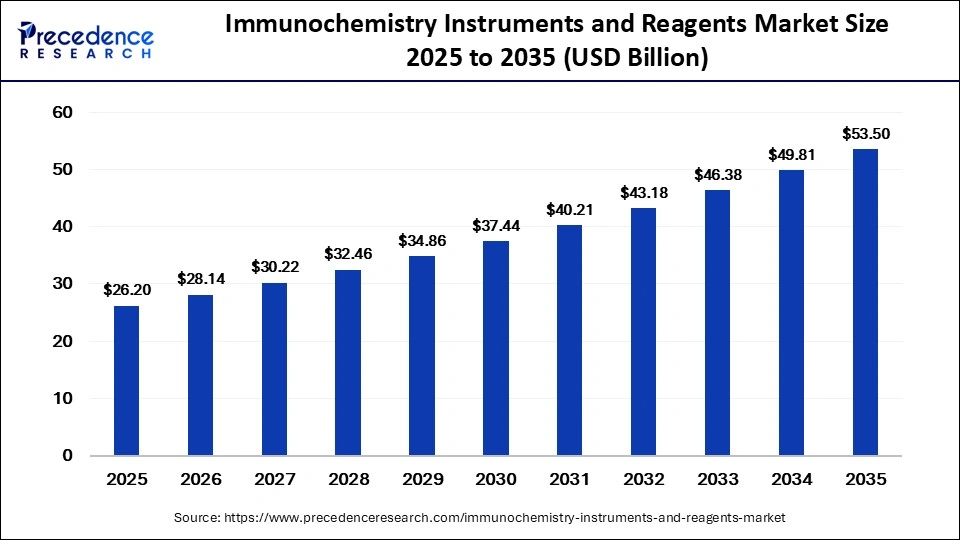
Rohan Patil, a Healthcare Industry Expert, highlights that the immunochemistry instruments and reagents market has reached USD 28.14 billion in 2026 and is on track to reach USD 53.50 billion by 2035, advancing at a CAGR of 7.40%. Key immunochemistry instruments and reagents market companies shaping the market include Roche Diagnostics, Abbott Laboratories, Danaher Corporation, Siemens Healthineers, while major growth segments span By Product, By Technology, By Application, By End-Use, By Test Type.
Source: https://www.precedenceresearch.com/immunochemistry-instruments-and-reagents-market
 Get a Sample
 Table Of Content


What is the Immunochemistry Instruments and Reagents Market Size in 2026?
The global immunochemistry instruments and reagents market size accounted for USD 26.20 billion in 2025 and is predicted to increase from USD 28.14 billion in 2026 to approximately USD 53.50 billion by 2035, expanding at a CAGR of 7.40% from 2026 to 2035. The immunochemistry instruments & reagents market is driven by growing demand for accurate and rapid diagnostic testing.
Key Takeaways
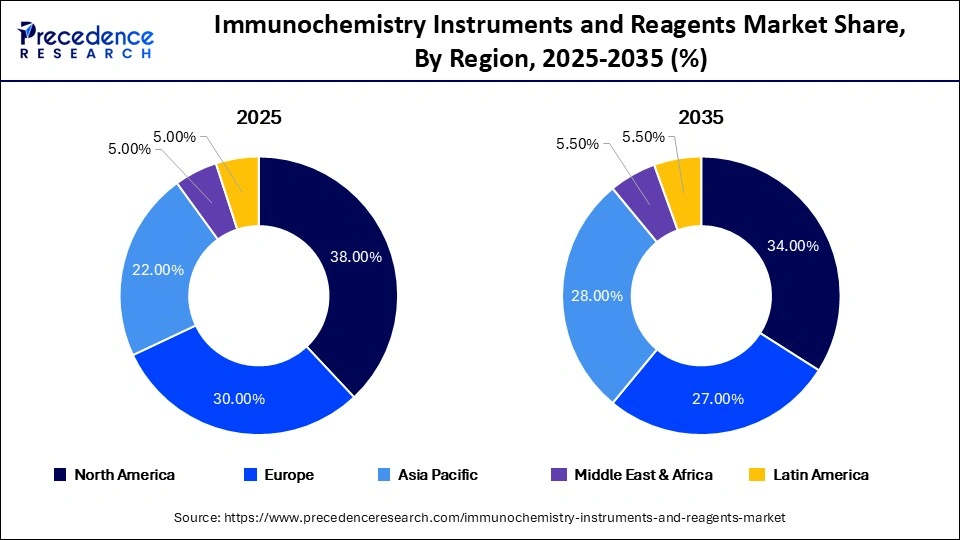
- North America dominated the global immunochemistry instruments & reagents market with a share of 38% in 2025.
- Asia Pacific is expected to grow at the fastest CAGR of 10.5% during the forecast period.
- By product, the reagents & kits segment held a dominant position in the market, accounting for 65% of the market share in 2025.
- By product, the instruments segment is the second-largest shareholder and is expected to grow at a 35% CAGR between 2026 and 2035.
- By technology, the CLIA segment accounted for a considerable revenue share of 35% in the market in 2025.
- By technology, the ELISA segment is the second-largest shareholder and is expected to grow at a 6% CAGR between 2026 and 2035.
- By application, the infectious diseases segment led the global market with a share of 28% in 2025.
- By application, the oncology segment is the second-largest shareholder and is expected to grow at a 9% CAGR between 2026 and 2035.
- By end-use, the diagnostic laboratories segment accounted for a considerable revenue share of 45% in the market in 2025.
- By end-use, the hospitals segment is the second-largest shareholder and is expected to grow at a 6.5% CAGR between 2026 and 2035.
- By test type, the routine testing segment led the global market with a share of 70% in 2025.
- By test type, the specialized testing segment is the second-largest shareholder and is expected to grow at a 9.5% CAGR between 2026 and 2035.
Market Overview
Immunochemistry instruments & reagents are instruments, analyzers, antibodies, reagents, and assay kits that are employed to detect and quantify certain levels of proteins, hormones, pathogens, and biomarker levels in biological samples. These products are applied in various clinical diagnostics, disease monitoring, and pharmaceutical/biotechnology research applications. As chronic and infectious diseases become more prevalent in the world, there is an increasing demand for early and accurate disease diagnosis. The growing investment in healthcare infrastructure and the growing investment in healthcare in emerging economies are creating growth opportunities.
Impact of AI on the Immunochemistry Instruments & Reagents Market
AI is transforming the immunochemistry instruments and reagents industry, increasing diagnostic accuracy, improving lab efficiency, and achieving better patient outcomes. These AI-powered systems are capable of analyzing vast amounts of patient data, detecting complex biomarker patterns, and delivering more accurate and timely test results. Automated analyzers and machine learning algorithms contribute to minimizing human error incidences in workflow efficiencies and to the diagnostics of chronic and infectious diseases in predictive ways.
Immunochemistry instruments & reagents market Trends
- The integration of AI and digital technologies into immunochemistry platforms is enhancing data analysis, workflow efficiency, and predictive diagnostics. Smart laboratory systems are improving productivity and enabling more accurate interpretation of complex clinical and research test results.
- Growing demand for rapid and portable diagnostic solutions is increasing the adoption of compact and mobile immunochemistry instruments. These technologies are particularly valuable in emergency care, remote diagnostics, and decentralized healthcare settings where faster test results are critical.
- Rising investments in biomarker research and precision medicine are accelerating innovation in immunochemistry reagents and assay kits. Healthcare and biotechnology companies are increasingly developing targeted diagnostic solutions to support personalized treatment, disease monitoring, and advanced therapeutic approaches.
Market Scope
| Report Coverage | Details |
| Market Size in 2025 | USD 26.20 Billion |
| Market Size in 2026 | USD 28.14 Billion |
| Market Size by 2035 | USD 53.50 Billion |
| Market Growth Rate from 2026 to 2035 | CAGR of 7.40% |
| Dominating Region | North America |
| Fastest Growing Region | Asia Pacific |
| Base Year | 2025 |
| Forecast Period | 2026 to 2035 |
| Segments Covered | Product, technology, Application, End-Use, Test Type, and Region |
| Regions Covered | North America, Europe, Asia-Pacific, Latin America, and Middle East & Africa |
Market Dynamics
Drivers
Rising Prevalence of Chronic and Infectious Diseases
The increasing incidence of cancer, cardiovascular diseases, diabetes, and infectious diseases is significantly driving the growth of the immunochemistry instruments & reagents market. Growing global disease burden has increased the demand for rapid, accurate, and reliable diagnostic solutions that support early disease detection and continuous patient monitoring. Immunochemistry technologies enable precise identification of disease-specific biomarkers, helping healthcare providers improve treatment planning and clinical outcomes.
Restraint
High Cost of Advanced Technologies
The high cost of advanced immunochemistry instruments, automated analyzers, and specialized reagents remains a major challenge for market growth. Establishing and maintaining sophisticated diagnostic systems requires substantial investment, limiting adoption among small laboratories, clinics, and healthcare facilities with constrained budgets, particularly in developing regions. Additionally, the need for skilled professionals to operate complex immunochemistry systems further increases operational costs.
Opportunity
Growing Automation and Development of High-Sensitivity Assays
Increasing automation and integration of laboratory systems are creating significant growth opportunities in the immunochemistry instruments & reagents market. Automated immunochemistry platforms improve laboratory efficiency, reduce human error, and enhance diagnostic accuracy, making them increasingly attractive for healthcare facilities. Furthermore, rising investments in biomarker research, precision medicine, and personalized healthcare are accelerating the development of high-sensitivity and multiplex assays, driving innovation across the market.
Segment Insights
Product Insights
Immunochemistry Instruments and Reagents Market Share, By Product, 2025-2035 (%)
| Product | 2025 | 2035 | CAGR (%) |
| Reagents & Kits | 65.00% | 68.00% | 8.50% |
| Instruments | 35.00% | 32.00% | 5.50% |
The Reagents & Kits Segment Held a 65% Market Share in 2025
The reagents & kits segment dominated the immunochemistry instruments & reagents market with a share of 65% in 2025, driven by the recurring demand for diagnostic testing in hospitals, laboratories, and research centers. These products are needed for all immunochemistry tests, resulting in regular resourcing and regular income. The increasing prevalence of chronic and infectious diseases is further boosting the need for frequent diagnostic screening, strengthening segment growth.
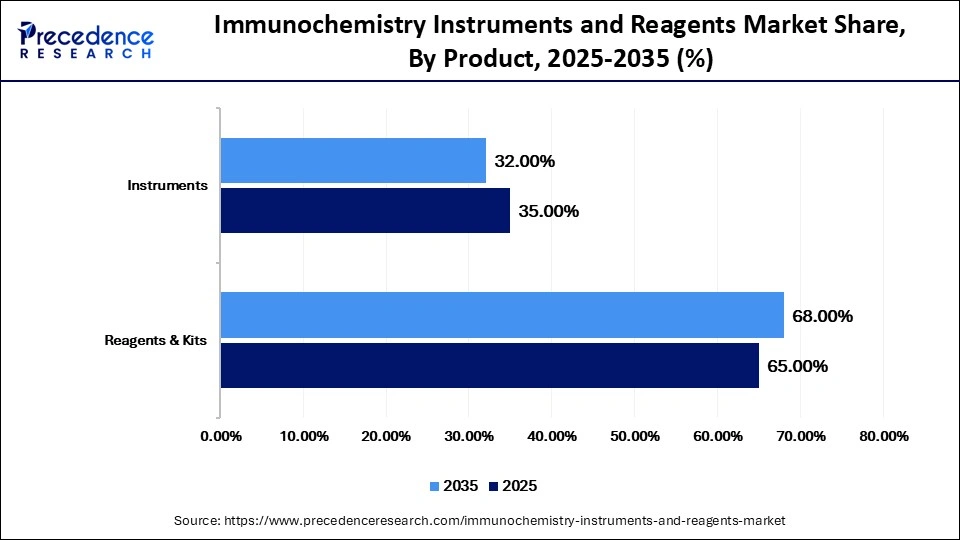
The instruments segment held a 35% share of the market in 2025 and is expected to grow at a CAGR of 5.5% during the projection period, owing to rising investments in advanced diagnostic instruments in hospitals, diagnostic laboratories, and research institutes. Healthcare providers are increasingly looking to upgrade their equipment to yield faster, more accurate, and higher throughput analysis. The introduction of new technologies, such as multiplexing, robots, and AI-based diagnostics, is playing a significant role in improving operational efficiency.
Technology Insights
Immunochemistry Instruments and Reagents Market Share, By Technology, 2025-2035 (%)
| Technology | 2025 | 2035 | CAGR (%) |
| CLIA | 35.00% | 38.00% | 9.50% |
| ELISA | 30.00% | 27.00% | 6.00% |
| Fluorescence Immunoassay | 20.00% | 22.00% | 8.50% |
| RIA | 15.00% | 13.00% | 4.50% |
The CLIA Segment Led the Market with a 35% Share in 2025
The CLIA segment held a dominant position in the immunochemistry instruments & reagents market with a share of 35% in 2025, fueled by its high sensitivity, and automatic as well as low concentration biomarker detection ability with high accuracy. Chemiluminescence immunoassay is well-used in clinical diagnostics because it offers better analytical sensitivity and performance. The increasing prevalence of chronic diseases, such as cancer, cardiovascular diseases, and infections, is driving the requirement for the development of accurate technologies for diagnosis.
The ELISA segment held a 30% market share in 2025 and is expected to grow at a CAGR of 6.5% during the projection period, owing to its extensive use, affordability, and proven reliability in the diagnosis of a variety of clinical and research applications. ELISA is one of the most widely used methods to detect antibodies, antigens, and proteins for its simplicity and accuracy. ELISA is widely used in hospitals, diagnostic and research laboratories due to its sensitivity, versatility, and suitability for a variety of samples.
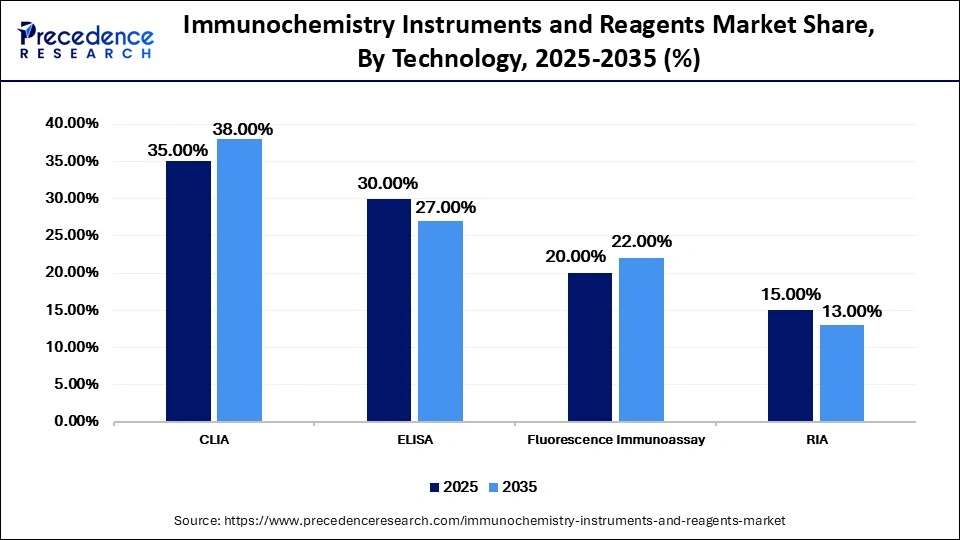
The fluorescence immunoassay segment held a 20% share of the market in 2025 and is expected to grow at a CAGR of 8.5% during the projection period, driven by the increasing demand for fast, sensitive, and accurate diagnostic testing solutions. It can be used for real-time, highly accurate detection of biomarkers that will enable early diagnosis and monitoring of diseases. In many laboratories, including clinical laboratories, the use of fluorescent testing methods is increasing in response to the increase in many infectious and chronic diseases.
The RIA segment held a 15% share of the market in 2025 and is expected to grow at the fastest CAGR of 6.5% during the projection period. This is because of the RIA's continued importance in the detection of hormones and antigens, such as in endocrinology and in specialized research applications. The radioimmunoassay method can detect biological substances even in trace amounts, and it is also a very sensitive and highly specific method.
Application Insights
Why Did the Infectious Diseases Segment Dominate the Market in 2025?
The infectious diseases segment dominated the immunochemistry instruments & reagents market with a share of 28% in 2025, driven by growing demand for fast and accurate diagnostic testing for infectious diseases. The increasing prevalence of viral, bacterial, and emerging infections is driving high demand for immunochemistry-based diagnostic solutions. These tests are vital for early detection, monitoring, and outbreak control for hospitals and laboratories.
The oncology segment held a 20% share of the market in 2025 and is expected to grow at the fastest CAGR of 9% during the projection period, driven by increasing demand for early and accurate cancer detection, which will drive the growth of the cancer segment. The immune chemistry technologies are pivotal in the discovery of tumor markers and in helping to create individual-based treatment approaches. People are increasingly educated about early cancer detection, and research into biomarkers is a breakthrough.
Immunochemistry Instruments and Reagents Market Share, By Application, 2025-2035 (%)
| Application | 2025 | 2035 | CAGR (%) |
| Infectious Diseases | 28.00% | 26.00% | 7.00% |
| Oncology | 20.00% | 22.00% | 9.00% |
| Endocrinology | 18.00% | 17.00% | 6.50% |
| Cardiology | 17.00% | 18.00% | 8.00% |
| Autoimmune Diseases | 17.00% | 17.00% | 7.50% |
The endocrinology segment held a 18% share of the market in 2025 and is expected to grow at a CAGR of 6.5% during the projection period, owing to the increasing rates of hormonal disorders such as thyroid disease, diabetes, and reproductive disorders. The immunochemistry-based diagnostic tests are in high demand because of the increasing need for accurate measurement of hormones. These tests are necessary for diagnosing and thereafter treatment and/or monitoring of disorders of the endocrine system.
The cardiology segment held a 17% share of the market in 2025 and is expected to grow at a CAGR of 8% during the projection period, driven by a continuous scale and the need for early diagnosis of cardiovascular diseases. The increasing occurrence of cardiovascular disease (CVD) and surging demand for early detection with biomarker testing in cardiac areas, which is referred to as cardiac catheterization. Various protein assays, including immunochemistry assays, are commonly used to help identify cardiac markers for heart-related disorders.
End-Use Insights
Diagnostic Laboratories Held a 45% Share of the Market in 2025
The diagnostic laboratories segment registered dominance in the immunochemistry instruments & reagents market with a share of 45% in 2025, due to a high number of tests being conducted and growth in outsourcing diagnostic services. These labs perform special tests and offer different testing solutions, primarily using immunochemistry. Chronic and infectious diseases have become more prevalent, and this is driving an increase in the number of patient tests.
The hospital segment held a 35% share of the market in 2025 and is expected to grow at a CAGR of 6.5% during the projection period, due to the surge in demand for in-house diagnostic centers for prompt clinical decisions and efficient patient treatment outcomes. Hospitals are increasingly procuring newer and better immunochemistry instruments to cut dependency on external laboratories and help them work more efficiently in the treatment process.
Immunochemistry Instruments and Reagents Market Share, By End-Use, 2025-2035 (%)
| End-Use | 2025 | 2035 | CAGR (%) |
| Diagnostic Laboratories | 45.00% | 48.00% | 8.50% |
| Hospitals | 35.00% | 32.00% | 6.50% |
| Academic & Research Institutes | 12.00% | 12.00% | 7.50% |
| Blood Banks | 8.00% | 8.00% | 6.00% |
The academic & research institutes segment held a 12% share of the market in 2025 and is expected to grow at the fastest CAGR of 7.5% during the projection period, owing to rising investments in biomedical research, disease studies, and drug development activities. Immunochemistry tools are extensively employed in these institutions for the discovery of biomarkers, clinical trials, and experimental diagnostics.
The blood banks segment held a 8% share of the market in 2025 and is expected to grow at a CAGR of 6% during the projection period, due to the rising demand for safe blood screening and blood transfusion safety in healthcare systems. There is many immunochemistry assays used for the diagnosis of infectious diseases, antigen-antibody reactions, and compatibility in donated blood. The awareness of blood safety and regulatory measures for compulsory screening is greatly strengthening the demand for blood.
Test Type Insights
Why Did the Routine Testing Segment Lead the Immunochemistry Instruments & Reagents Market?
The routine testing segment registered its dominance in the global market with a share of 70% in 2025, primarily driven by the frequent use of standard diagnostic procedures in hospitals and laboratories for disease screening and monitoring. Routine immunochemistry tests are widely utilized for diagnosing common conditions such as infections, hormonal imbalances, and metabolic disorders. The rising patient population and increasing prevalence of chronic diseases have significantly contributed to higher testing volumes worldwide.
Immunochemistry Instruments and Reagents Market Share, By Test Type, 2025-2035 (%)
| Test Type | 2025 | 2035 | CAGR (%) |
| Routine Testing | 70.00% | 68.00% | 6.50% |
| Specialized Testing | 30.00% | 32.00% | 9.50% |
The specialized testing segment held a 30% share of the market in 2025 and is expected to grow at the fastest CAGR of 9.5% during the projection period. This growth is attributed to the increasing demand for highly precise and sensitive diagnostic solutions for complex and rare diseases. Specialized assays are extensively applied in oncology, cardiology, endocrinology, infectious disease research, and advanced biomarker analysis. Furthermore, the expanding adoption of personalized medicine is expected to further accelerate demand for specialized immunochemistry testing.
Region Insights
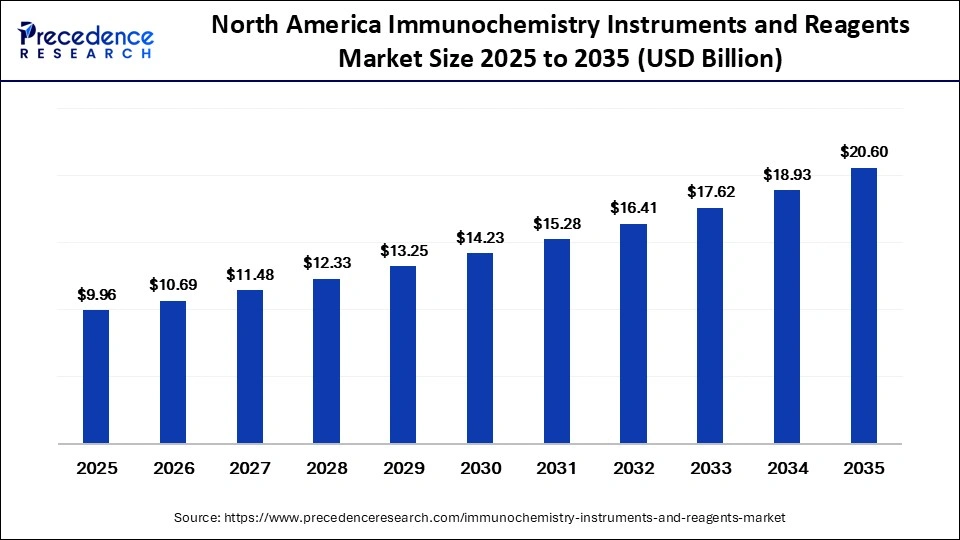
North America Immunochemistry Instruments & Reagents Market Size and Growth 2026 to 2035
The North America immunochemistry instruments & reagents market size is estimated at USD 9.96 billion in 2025 and is projected to reach approximately USD 20.60 billion by 2035, with a 7.54% CAGR from 2026 to 2035.
North America Lead the Global Immunochemistry Instruments & Reagents Market in 2025
North America dominated the global immunochemistry instruments & reagents market with a share of 38% in 2025. This is mainly due to its well-established diagnostic infrastructure, high healthcare expenditure, and uptake of innovative medical technologies. With a strong focus on early disease diagnosis and high demand for personalized medicine, therapy, and biomarker testing, the need for immunochemistry instruments and reagents has increased in the region. Furthermore, heightened investments in research and development and demand for innovative diagnostic solutions bolstered regional dominance.
U.S. Immunochemistry Instruments & Reagents Market Size and Growth 2026 to 2035
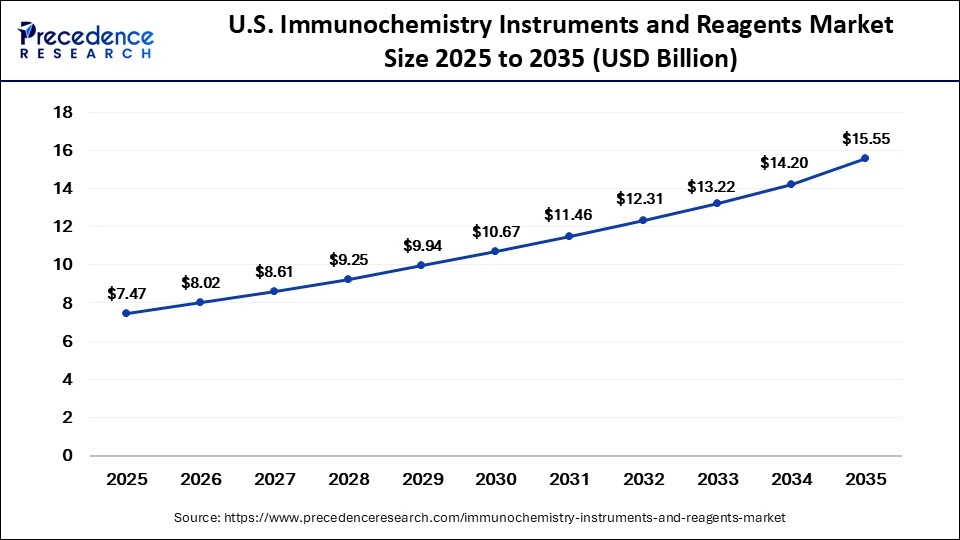
The U.S. immunochemistry instruments & reagents market size is calculated at USD 7.47 billion in 2025 and is expected to reach nearly USD 15.55 billion in 2035, accelerating at a strong CAGR of 7.61% between 2026 and 2035.
U.S. Market Analysis
The U.S. is a major contributor to the North American immunochemistry instruments & reagents market, supported by a highly advanced healthcare system and strong medical innovation ecosystem. However, the country faces a substantial burden from chronic diseases such as cancer, cardiovascular disorders, and diabetes. This has increased reliance on diagnostic solutions that enable early detection, accurate disease monitoring, and timely clinical intervention. In addition, the expanding network of diagnostic laboratories and the strong presence of leading diagnostic manufacturers continue to strengthen market growth.
Asia Pacific: The Fastest-Growing Region
Asia Pacific held a 22% share of the market in 2025 and is expected to grow at the fastest CAGR of 10.5% during the projection period, driven by the rapid improvements in healthcare infrastructure, increasing diagnostic awareness, and rising investments in laboratory services. Demand for immunochemistry-based diagnostics is rising significantly due to the growing prevalence of both chronic and infectious diseases. Government initiatives aimed at improving healthcare access and expanding insurance coverage are further accelerating adoption. Additional growth drivers include urbanization, rising disposable incomes, and increasing emphasis on early disease detection.
Japan Market Analysis
Japan leads the immunochemistry instruments & reagents market within Asia Pacific due to its highly advanced healthcare system and strong government encouragement for technological adoption. The country places significant emphasis on early disease detection and preventive healthcare. Its well-organized healthcare infrastructure and extensive laboratory network facilitate seamless integration of automated diagnostic systems. Continuous innovation in immunoassay technologies, particularly high-sensitivity and multiplex platforms, is further strengthening market expansion.
How is the Opportunistic Rise of Europe in the Immunochemistry Instruments & Reagents Market?
Europe held a 30% share of the market in 2025 and is expected to grow at a notable CAGR of 6.8% during the projection period. This growth is supported by well-established healthcare systems, extensive laboratory networks, and increasing adoption of advanced diagnostic technologies. The region is also witnessing rising demand for biomarker-based diagnostics and personalized medicine, which is boosting the uptake of immunochemistry solutions.
UK Market Analysis
The UL plays a major role in the European market, driven by strong investment in diagnostic innovation and a growing focus on early disease detection. The country's well-developed laboratory infrastructure supports the rapid adoption of advanced diagnostic technologies. In addition, the National Health Service plays a crucial role in standardizing diagnostic practices, improving access to modern laboratory services, and supporting widespread integration of advanced diagnostic solutions across the healthcare system.
Immunochemistry Instruments & Reagents Market Value Chain Analysis
- R&D
R&D results in increased accuracy in diagnosis, new biomarkers, and advances in innovative solutions for global personalized medicine and advanced disease diagnosis.
Key Players: Roche, Abbott Laboratories, Siemens Healthineers, Thermo Fisher Scientific, Danaher Corporation
- Clinical Trials and Regulatory Approvals
Immunochemistry instruments and reagents undergo clinical trials and regulatory approval for their safety, accuracy, and effectiveness.
Key Players: Roche, Beckman Coulter Diagnostics, Abbott Laboratories, bioMérieux, Sysmex Corporation
- Distribution to Hospitals, Pharmacies
The shipment to hospitals and pharmacies guarantees that immunochemistry instruments and reagents can be easily and widely used for diagnosis.
Key Players: McKesson Corporation, Cardinal Health, AmerisourceBergen, Thermo Fisher Scientific, Siemens Healthineers
Immunochemistry Instruments & Reagents Market Companies
- Roche Diagnostics
- Abbott Laboratories
- Danaher Corporation
- Siemens Healthineers
- Thermo Fisher Scientific
- Bio-Rad Laboratories
- Sysmex Corporation
- Ortho Clinical Diagnostics
- Agilent Technologies
- PerkinElmer
- DiaSorin
- BioMérieux
- Mindray
- QuidelOrtho
- Randox Laboratories
Recent Developments
- In July 2025, Leica Biosystems introduced the ChromoPlex III Triple Detection RUO detection system for chromogenic multiplex immunohistochemistry assays that promise to simplify assay setup and ensure a reduction in assay variability. The system is connected with its own translational research environment, allowing for staining on BOND RX, scanning on Aperio, and analysing with HALO for a simplified pathology workflow.(Source: https://www.the-scientist.com)
- In July 2024, the DxC 500i Clinical Analyzer, Beckman Coulter Diagnostics' integrated clinical chemistry and immunoassay platform developed for core and satellite clinical laboratories, launched. The system provides a greater efficiency of the networked laboratory by providing the use of common reagents and consumables to guarantee not only consistent patient results but also improved inventory control.(Source: https://www.beckmancoulter.com)
- In December 2024, Roche was granted CE market authorization for its cobas Mass Spec solution (analyser cobas i 601 and reagent pack Ionify) to test steroid hormones. The clinical mass spectrometry testing service will be automated and standardized to include over 60 analytes, such as hormones, drug monitoring, and toxicology.(Source: https://www.roche.com)
Segments Covered in the Report
By Product
- Instruments
- Reagents & Kits
By Technology
- Chemiluminescence Immunoassay (CLIA)
- Enzyme-linked Immunosorbent Assay (ELISA)
- Radioimmunoassay (RIA)
- Fluorescence Immunoassay
By Application
- Infectious Diseases
- Oncology
- Endocrinology
- Cardiology
- Autoimmune Diseases
By End-Use
- Hospitals
- Diagnostic Laboratories
- Academic & Research Institutes
- Blood Banks
By Test Type
- Routine Testing
- Specialized Testing
By Region
- North America
- Latin America
- Europe
- Asia-pacific
- Middle and East Africa
For inquiries regarding discounts, bulk purchases, or customization requests, please contact us at sales@precedenceresearch.com
Frequently Asked Questions





Ask For Sample
No cookie-cutter, only authentic analysis – take the 1st step to become a Precedence Research client
 Get a Sample




 sales@precedenceresearch.com
 Schedule a Meeting
