



Next-Gen Aircraft Propulsion System Market Trends, Companies, Contract Wins / Project Pipeline, Defense Contracts, Procurement Volume, Government Spending, Production Capacity, Competitive Positioning, and Growth Outlook
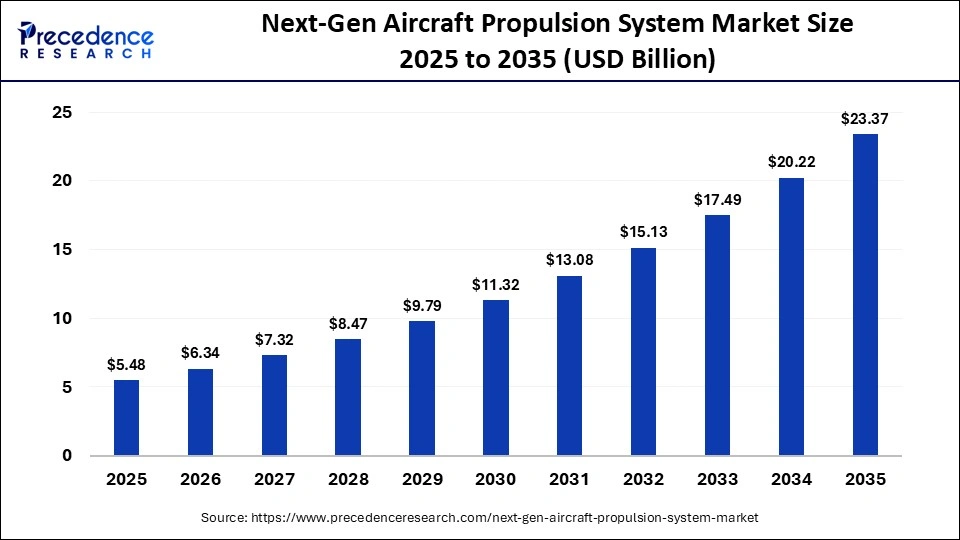
Gautam Mahajan, an Aerospace and Defence Industry Expert, identifies strong market momentum in the next-gen aircraft propulsion system market, which reached USD 6.34 billion in 2026 and is projected to attain USD 23.37 billion by 2035 at a CAGR of 15.61%. Major next-gen aircraft propulsion system market companies, including General Electric (GE Aerospace), Rolls-Royce Holdings plc, Pratt & Whitney (RTX Corporation), Safran S.A., Honeywell International Inc., compete across critical segments such as By Propulsion Type, By Component, By Platform, By Technology.
Source: https://www.precedenceresearch.com/next-gen-aircraft-propulsion-system-market
 Get a Sample
 Table Of Content


What is the Next-Gen Aircraft Propulsion System Market Size in 2026?
The global next-gen aircraft propulsion system market size accounted for USD 5.48 billion in 2025 and is predicted to increase from USD 6.34 billion in 2026 to approximately USD 23.37 billion by 2035, expanding at a CAGR of 15.61% from 2026 to 2035. The market is significantly expanding due to growing environmental regulations, shifts toward greener flights, increasing air-travel demand, and lower operational costs requirements.
Key Takeaways
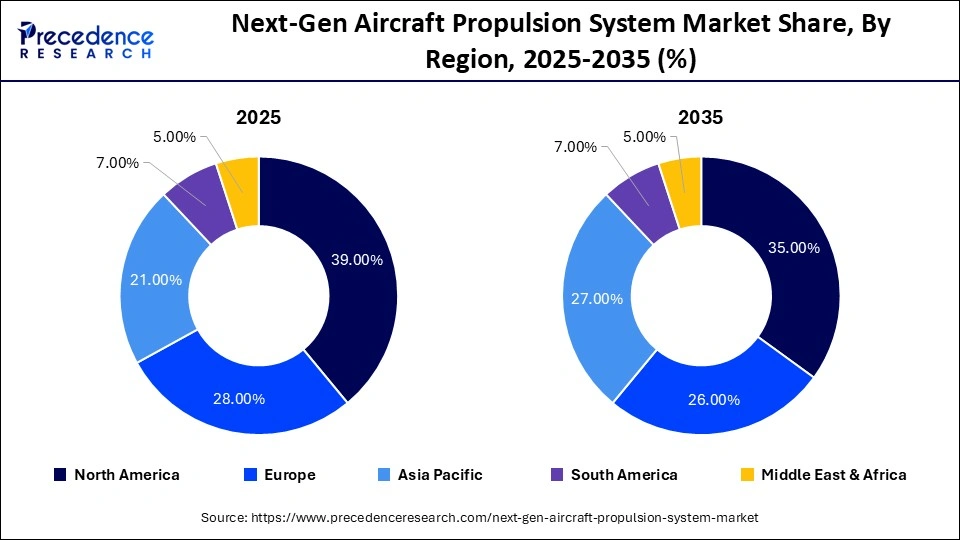
- North America held the largest market share of 39% in 2025.
- The Asia Pacific is expected to witness the fastest growth during the foreseeable period.
- By propulsion type, the conventional turbofan/turboprop segment held the largest market share of nearly 58% in 2025.
- By propulsion type, the hybrid-electric propulsion segment is the second largest shareholder and is expected to grow at the fastest rate between 2026 and 2035.
- By component, the engine systems segment held the largest market share of 50% in 2025
- By component, the energy storage systems segment is the second largest shareholder and is expected to grow at a significant rate between 2026 and 2035.
- By platform, the commercial aircraft segment held the largest market share of nearly 52% in 2025.
- By platform, the military aircraft segment is the second largest shareholder and is expected to grow at a significant rate between 2026 and 2035.
- By technology, the conventional propulsion segment held the largest market share of nearly 55% in 2025.
- By technology, the hybrid propulsion segment is the second largest shareholder and is expected to grow at the fastest rate between 2026 and 2035.
Market Overview
The next-generation aircraft propulsion system market focuses on the development and adoption of sustainable and efficient engine technologies as alternatives to conventional jet engines. The market is driven by the need to reduce carbon emissions and comply with environmental regulations, leveraging solutions such as hybrid-electric, fully electric, hydrogen, and advanced open-rotor systems. Hybrid-electric engines are gaining traction in commercial aviation, while innovations in high-density batteries, hydrogen propulsion, and solid oxide fuel cells are further accelerating the technological transformation of the next-gen aircraft propulsion system market.
How is AI Influencing the Next-Gen Aircraft Propulsion System Market?
Artificial intelligence is transforming the market by enabling real-time optimization of engine performance, improving fuel efficiency, and reducing emissions. It supports predictive maintenance through IoT-connected sensors, allowing early detection of component wear and minimizing operational downtime and costs. Additionally, AI accelerates the design of advanced propulsion technologies and enhances integration with hybrid, electric, and hydrogen systems, driving innovation and sustainability in aviation.
Next-Gen Aircraft Propulsion System Market Trends
- There is a rapid push toward zero-emission flights, driven by advances in hydrogen storage, fuel technologies, and robust infrastructure for airport refueling.
- Many aircraft manufacturing companies are adopting hybrid and electric propulsion systems, incorporating advanced battery technologies such as lithium-sulfur and solid-state batteries, alongside high-efficiency, low-noise electric motors.
- The increasing development of next-gen jet engines, such as the CFM Leap Family, which uses ceramic matrix composites for high-temperature operation, maximizes fuel efficiency, and reduces weight, is further supporting the market growth.
- There is a rising integration of AI for real-time propulsion optimization and IoT-based predictive maintenance, enabling the minimization of ground time and operational costs.
- The industry is also embracing biofuels and synthetic fuels to lower carbon emissions from turbine engines, reinforcing its focus on sustainability and environmental compliance.
Market Scope
| Report Coverage | Details |
| Market Size in 2025 | USD 5.48 Billion |
| Market Size in 2026 | USD 6.34 Billion |
| Market Size by 2035 | USD 23.37 Billion |
| Market Growth Rate from 2026 to 2035 | CAGR of 15.61% |
| Dominating Region | North America |
| Fastest Growing Region | Asia-Pacific |
| Base Year | 2025 |
| Forecast Period | 2026 to 2035 |
| Segments Covered | Propulsion Type, Component, Platform, Technology, and Region |
| Regions Covered | North America, Europe, Asia-Pacific, Latin America, and Middle East & Africa |
Market Dynamics
Drivers
Military Modernization
The primary catalyst for the next-generation aircraft propulsion system market is the modernization of the military infrastructure to deliver superior air combat capabilities, extended missile range, and enhanced operational efficiency in contested environments. The development of 5th- and 6th-generation fighter aircraft requires advanced propulsion systems that offer improved fuel efficiency, higher thrust-to-weight ratios, and superior thermal performance. These requirements are driving innovation in hybrid-electric, high-performance turbine, and advanced materials technologies within the defense aerospace.
Restraint
Technological Barriers
The market faces challenges related to existing technologies. Current lithium-ion batteries lack the energy density needed to power large, long-haul aircraft, limiting all-electric solutions to smaller, short-distance planes. Additionally, novel propulsion architectures require extensive testing and regulatory certification, adding further complexity and slowing the adoption of advanced systems.
Opportunity
Development of Sustainable Aviation Engines
The market is witnessing significant opportunities with the development of sustainable, fuel-optimized engines capable of running on high-blend biofuels such as HEFA, alcohol-based fuels, and FT-SPK, enabling immediate emissions reductions without requiring new aircraft infrastructure. Additionally, the industry is shifting toward advanced technologies, including high-energy-density batteries, lightweight electric motors, and next-generation power electronics, which are driving the evolution of hybrid and fully electric propulsion systems.
Segment Insights
Propulsion Type Insights
The Conventional Turbofan/Turboprop Segment Held a 58% Share of the Market in 2025
The conventional turbofan/turboprop segment dominated the next-gen aircraft propulsion system market with the largest share of 58% in 2025. This is mainly due to their unmatched fuel efficiency, superior speed, operational maturity, and proven reliability, with performance validated over millions of flight hours, an essential factor for meeting commercial airliner safety standards. These engines also require minimal infrastructure modifications and offer easy integration with existing aircraft platforms, further supporting their widespread adoption.
The hybrid-electric propulsion segment is the second-largest shareholder, holding around 18% share in 2025, and is expected to grow at the fastest rate in the coming years. This is because it offers a near-term option that joins conventional gas turbines and fully electric aviation. Hybrid systems do not require a complete overhaul of existing systems. They can use existing aviation fuels for a long range and efficient take-offs.
Next-Gen Aircraft Propulsion System Market Share, By Propulsion Type, 2025-2035 (%)
| Propulsion Type | 2025 | 2035 |
| High Bypass Turbofan | 60% | 55% |
| Low Bypass Turbofan | 20% | 18% |
| Geared Turbofan (GTF) | 20% | 27% |
The fully electric propulsion segment held a significant market share of nearly 12% in 2025. This is due to the increasing pressure to meet sustainability goals, lower operational costs, and rapid technological advancements that make electric flights viable for short-haul and urban air mobility applications.
The hydrogen propulsion segment held a 12% share of the market in 2025. This is because it provides a zero-carbon, high-energy-density solution that solves the long-term sustainability goals of the aviation sector. Hydrogen is comparatively lightweight and has roughly three times the energy per unit weight of conventional jet fuel, which enables aircraft to carry significantly less fuel weight for the same amount of energy. It supports overall take-off weight reduction and enhances efficiency.
Component Insights
The Engine Systems Segment Held the Largest Market Share of 50% in 2025
The engine systems segment dominated the next-gen aircraft propulsion system market with a share of 50% in 2025. This is because these systems are the core component of propulsion systems. The rapid shift toward sustainable aviation and a focus on lowering emissions and enhancing operational efficiency also boosted the demand for efficient engine systems. Additionally, airlines are increasingly focusing on retrofitting older fleets with efficient and modern components to meet stringent environmental regulations, ensuring the long-term growth of the segment.
The energy storage systems segment is the second-largest shareholder, holding a 20% share in 2025, and is expected to grow at a significant rate between 2026 and 2035. This is due to the increasing shift toward electric and hybrid-electric aviation that completely depends on the capacity to store, manage, and deliver huge amounts of electrical power. The segment is propelled by the need for high-density storage solutions in urban air mobility and all-electric aircraft platforms. Advancements in batteries and fuel cells also drive segmental growth.
Next-Gen Aircraft Propulsion System Market Share, By Component, 2025-2035 (%)
| Component | 2025 | 2035 |
| Engine Systems | 50.00% | 42.00% |
| Energy Storage Systems | 20.00% | 24.00% |
| Power Electronics | 15.00% | 20.00% |
| Thermal Management Systems | 15.00% | 14.00% |
The power electronics segment held a share of 15% in 2025. This is because they are fundamental parts of the propulsion system that enable hybrid-electric and all-electric aircraft. An advanced power electronics system is highly essential for managing, converting, and distributing high-voltage energy effectively in an electric-powered aircraft propulsion system. The increasing need for efficient power conversion and control systems also drives the growth of the segment.
The thermal management systems segment held a share of 15% in 2025. This is because these systems are essential for maintaining system performance and safety in advanced propulsion systems. As aircraft become highly electrified, it creates significantly higher temperatures due to concentrated thermal loads from batteries, motors, and power electronics, which need an integrated cooling solution to avoid catastrophic events.
Platform Insights
Next-Gen Aircraft Propulsion System Market Share, By Platform, 2025-2035 (%)
| Platform | 2025 | 2035 |
| Commercial Aircraft | 52.00% | 46.00% |
| Military Aircraft | 22.00% | 21.00% |
| Urban Air Mobility (UAM) | 12.00% | 20.00% |
| General Aviation | 14.00% | 13.00% |
The Commercial Aircraft Segment Held a 52% Share of the Market in 2025
The commercial aircraft segment dominated the next-gen aircraft propulsion system market with a share of nearly 52% in 2025. This is due to the unprecedented demand for enhanced fuel efficiency, targets for decarbonization, and a huge scale of commercial air travel that encourages manufacturers to rapidly innovate. Thus, major airlines are accelerating the replacement of older aircraft with next-gen propulsion systems.
The military aircraft segment is the second-largest shareholder, holding a 22% share in 2025, and is expected to grow at a significant rate in the coming years. This is because of extensive military modernization programs, rising geopolitical tensions, and increasing demand for high-performance propulsion systems that surpass the requirements of commercial aviation. Governments are investing heavily in advanced engine technologies to maintain air superiority, fueling substantial research and development spending in military aircraft.
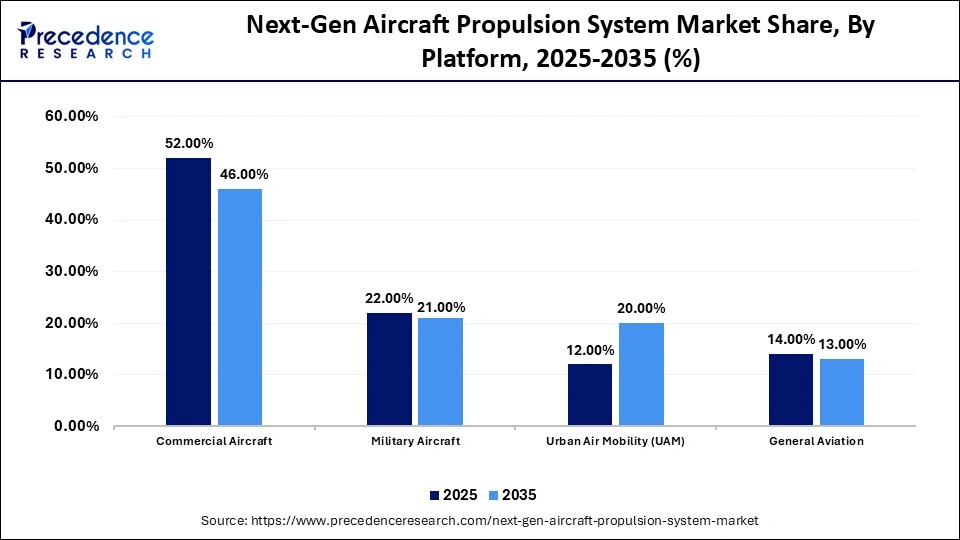
The urban air mobility segment held a market share of nearly 12% in 2025 and is expected to grow at the fastest rate throughout the forecast period. This is because of the rising demand for electric vertical takeoff and landing (eVTOL) aircraft. Advances in lightweight propulsion technologies and increasing investments in smart city transportation solutions that require efficient, low-emission aerial mobility also support segmental growth.
The general aviation segment held a market share of approximately 14% in 2025, driven by the growing use of small private and business aircraft. This segment benefits from advancements in hybrid-electric and fuel-efficient propulsion systems, which enhance operational efficiency, reduce emissions, and lower operating costs for private pilots and corporate operators. The rising adoption of electric propulsion in small aircraft also contributes to segmental growth.
Technology Insights
Next-Gen Aircraft Propulsion System Market Share, By Technology, 2025-2035 (%)
| Technology | 2025 | 2035 |
| Conventional Propulsion | 55.00% | 43.00% |
| Electric Propulsion | 20.00% | 25.00% |
| Hybrid Propulsion | 25.00% | 32.00% |
Why Did the Conventional Propulsion Segment Dominate the Market in 2025?
The conventional propulsion segment dominated the next-gen aircraft propulsion system market with a share of around 55% in 2025. This is due to its capabilities like high energy density, increased reliability, and constant incremental efficiency improvements. A conventional engine operated by Jet A-1 fuel provides an energy density 27 times higher than that of the lithium-ion battery. It enables a long-range flight with high-payload capabilities, which electric systems cannot yet offer with this much efficiency.
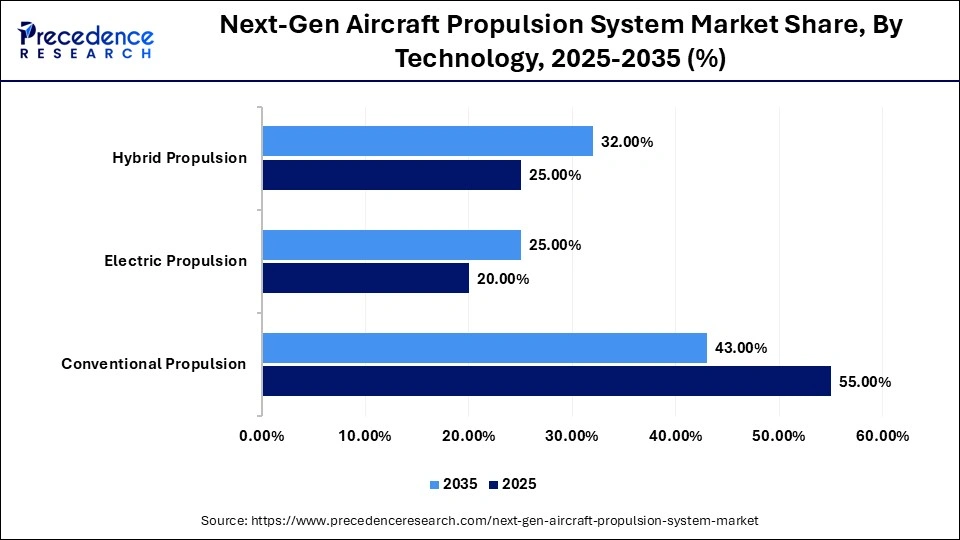
The hybrid propulsion segment held nearly 25% share in 2025 and is expected to grow at the fastest rate in the coming years. This is due to its capability to fill the gap between conventional fuel-based engines and electric technologies to overcome the limitations of energy density of batteries and instantly reduce carbon emissions. The balanced performance and sustainability make it the preferred choice.
The electric propulsion segment held a significant market share of nearly 20% in 2025. This is due to the strict regulations like the EU's ‘Fit for 55' and ICAO's CORSIA, which are encouraging the aviation sector to adopt an electric propulsion system. Technological advancements in electric propulsion systems are boosting their adoption.
Regional Insights
North America Next-Gen Aircraft Propulsion System Market Size and Growth 2026 to 2035
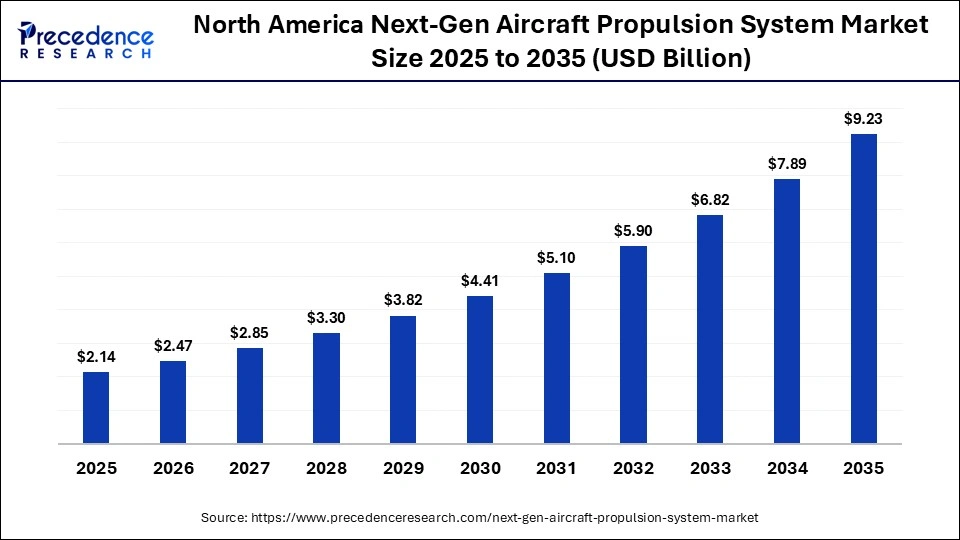
The North America next-gen aircraft propulsion system market size is estimated at USD 2.14 billion in 2025 and is projected to reach approximately USD 9.23 billion by 2035, with a 15.74% CAGR from 2026 to 2035.
What Made North America the Dominant Region in the Market in 2025?
North America dominated the next-gen aircraft propulsion system market by holding a major share of 39% in 2025. This leadership is driven by extensive research and development to modernize military fleets, substantial public and private investment in air defense, and the strong presence of the world's leading engine manufacturers. The region is home to companies such as General Electric and Honeywell Aerospace, which are at the forefront of developing advanced propulsion technologies that are shaping the next generation of aircraft systems.
Additionally, North America's aviation industry benefits from established hubs such as Seattle, Connecticut, and Ohio, which provide a highly skilled workforce and integrated supply chains. Leading organizations, including NASA and the U.S. Department of Defense, are investing heavily in advanced aerospace technologies, such as electric propulsion, hybrid systems, and high-efficiency engines. Strict regulations enforced by the U.S. Federal Aviation Administration and the Environmental Protection Agency to reduce carbon emissions are also driving the accelerated adoption of next-generation aircraft propulsion systems across the region.
U.S. Next-Gen Aircraft Propulsion System Market Size and Growth 2026 to 2035
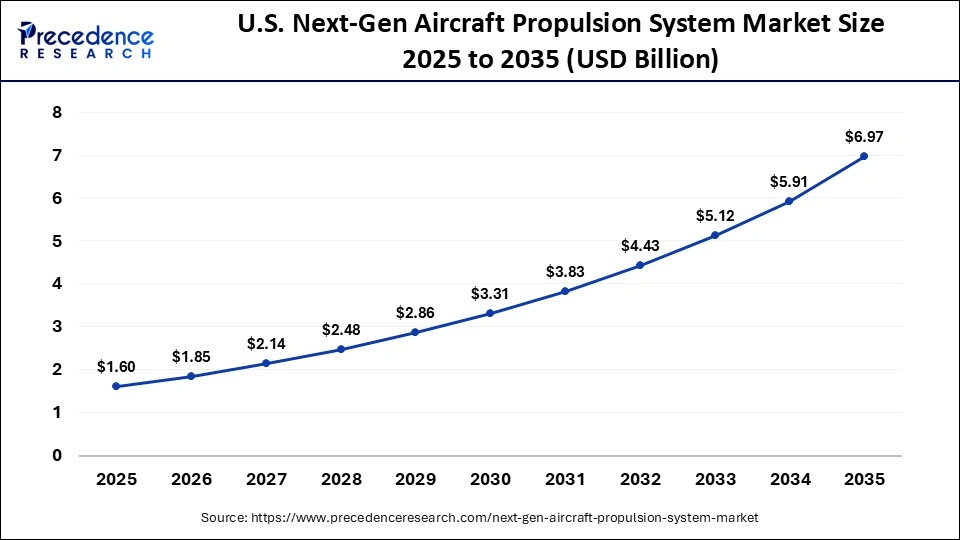
The U.S. next-gen aircraft propulsion system market size is calculated at USD 1.60 billion in 2025 and is expected to reach nearly USD 6.97 billion in 2035, accelerating at a strong CAGR of 15.85% between 2026 and 2035.
U.S. Next-Gen Aircraft Propulsion System Market Analysis
The U.S. is a leading contributor to the market, driven by a unique combination of substantial public and private R&D investment, top-tier aerospace manufacturers, and rapid military modernization. The U.S. Department of Defense provides significant funding for advanced propulsion technologies, including hypertonic systems, next-generation fighter jets like the F-35 and F-22, and autonomous platforms. Additionally, the country is home to major aerospace engine manufacturers, further supporting the growth and technological advancement of the propulsion system market domestically.
Europe: The Second-Largest Market
Europe is considered the second-largest market, holding a 28% share in 2025. This is primarily due to a combination of strict environmental regulations, such as the EU Green Deal, a dense aerospace ecosystem, and substantial government investment in research and development. EU initiatives like Fit-for-55 and Flight Path 2050 mandate rapid decarbonization, encouraging airlines to adopt next-generation and ultra-efficient propulsion technologies. The presence of Airbus further strengthens the market by providing nearby demand for programs such as the A320neo, A220, and future zero-emission aircraft.
Germany Next-Gen Aircraft Propulsion System Market Analysis
Germany is the major contributor to the European market, driven by a strong industrial base, intensive R&D for defense capability enhancements, and government-backed initiatives in hybrid/electric engines and hydrogen technologies. Leading organizations such as MTU Aero Engines and the German Aerospace Center are advancing high-efficiency, low-emission propulsion solutions to meet stringent environmental regulations. Additionally, Germany's mature aerospace supply chain, particularly in regions like Bavaria and Hamburg, supports high-volume manufacturing as well as maintenance, repair, and overhaul services, further fueling market growth.
Asia Pacific: The Fastest-Growing Region
Asia Pacific held a 21% share of the market in 2025 and is projected to grow at the fastest rate during the foreseeable period. This growth is driven by rising air travel demand, fleet expansion with advanced technologies, government initiatives supporting aviation industry development, and military modernization projects. Airlines in the region are increasingly adopting turbofan engines that deliver higher thrust with lower carbon emissions, while the transition to sustainable aviation fuels and next-generation engines, such as the RISE open-rotor concept, further supports market expansion.
China Next-Gen Aircraft Propulsion System Market Analysis
China is a major contributor to the growth of the next-generation aircraft propulsion system market in Asia Pacific, driven by substantial state-led investments, consolidation within the aviation sector, and advances in material sciences. The country is focusing on becoming a self-reliant manufacturer of aviation components, particularly high-temperature alloys, while leveraging advanced manufacturing techniques to support the development of next-generation propulsion technologies.
Next-Gen Aircraft Propulsion System Market Companies
- General Electric (GE Aerospace)
- Rolls-Royce Holdings plc
- Pratt & Whitney (RTX Corporation)
- Safran S.A.
- Honeywell International Inc.
- MTU Aero Engines AG
- Airbus SE
- Boeing Company
- GKN Aerospac
- MagniX
- ZeroAvia Inc
- Joby Aviation
- Lilium GmbH
- Kawasaki Heavy Industries
- IHI Corporation
Recent Developments
- In January 2026, a leader in the aviation industry, Rolls-Royce, strengthened its footprint in India by introducing its strategy that places the co-development of next-gen combat aircraft engines with high-level adaptability.(Source: https://defence.in)
- In February 2026, a propulsion system development partner, drive system design, collaborated with Airbus to expand the electrification of aviation with next-gen inverter technology.(Source: https://www.aero-mag.com)
- In March 2025, Airbus announced its project to incorporate novel technologies and cutting-edge engineering for next-gen single aisle of Airbus.(Source: https://www.airbus.com)
Segments Covered in the Report
By Propulsion Type
- Conventional Turbofan/Turboprop
- Hybrid-Electric Propulsion
- Fully Electric Propulsion
- Hydrogen Propulsion
By Component
- Engine Systems
- Energy Storage Systems
- Power Electronics
- Thermal Management Systems
By Platform
- Commercial Aircraft
- Military Aircraft
- Urban Air Mobility (UAM)
- General Aviation
By Technology
- Conventional Propulsion
- Electric Propulsion
- Hybrid Propulsion
By Region
- North America
- Latin America
- Europe
- Asia-pacific
- Middle and East Africa
For inquiries regarding discounts, bulk purchases, or customization requests, please contact us at sales@precedenceresearch.com
Frequently Asked Questions





Ask For Sample
No cookie-cutter, only authentic analysis – take the 1st step to become a Precedence Research client
 Get a Sample




 sales@precedenceresearch.com
 Schedule a Meeting
