



North America Nucleic Acid Amplification Testing Market Trends, Leading Companies, Company Revenue / Sales Performance, Procedure Volume, Healthcare Spending, Technology Adoption, Reimbursement Analysis, Competitive Landscape, and Growth Outlook
The North America nucleic acid amplification testing market reached USD 4.91 billion in 2026. This growth is driven by rising demand for point-of-care diagnostics and advances in genomic technologies. Deepa Pandey, Senior Research Analyst, curated this report based on several trends. Her report benefits biotechnology firms, biopharmaceutical companies, diagnostic laboratories, CROs and CDMOs, specialized service providers, and technology enablers.
Source: https://www.precedenceresearch.com/north-america-nucleic-acid-amplification-testing-market
 Get a Sample
 Table Of Content


North America Nucleic Acid Amplification Testing Market Growth, Innovations, and Market Size Forecast 2035
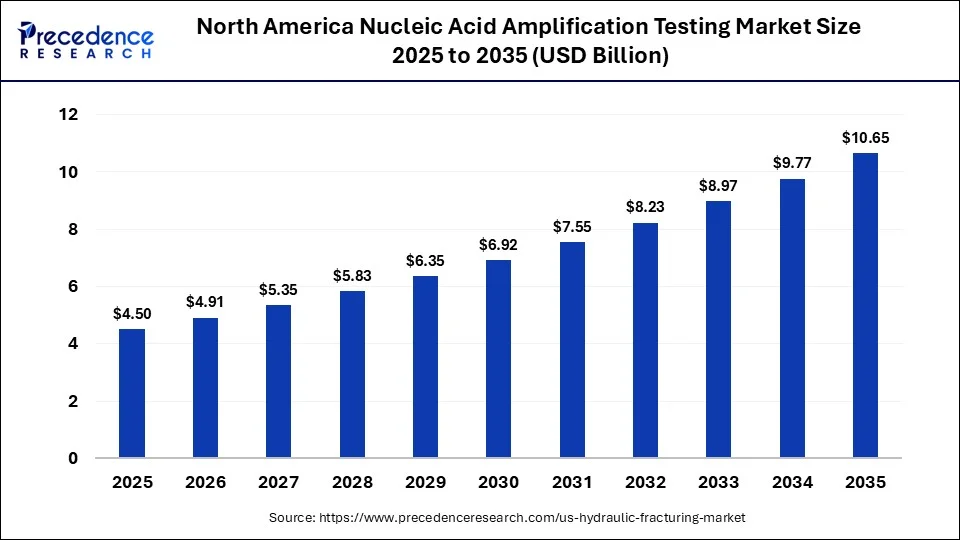
The North America nucleic acid amplification testing market is forecasted to expand from USD 4.91 billion in 2026 to USD 10.65 billion by 2035, growing at a CAGR of 9% from 2026 to 2035. The market growth is attributed to the rising prevalence of chronic disorders, advances in medical devices technologies, and evolving regulatory landscapes. Deepa Pandey, Senior Research Analyst, who has over 5 years of experience in healthcare and biotechnology research, found that the U.S. government and private organizations provide funding to conduct advanced research and that novel policies are implemented to introduce nucleic acid amplification tests for the prevention, diagnosis, and treatment of genetic disorders.
Key Takeaways
- By technology analysis, the real-time PCR segment dominated the market with a share of 42.85% in 2025.
- By product & component analysis, the instruments & analyzers segment held the largest market share of 27.65% in 2025.
- By test type analysis, the qualitative NAAT segment contributed the biggest market share of 48.65% in 2025.
- As of October 2025, 102 disease outbreaks with human transmission were reported in 66 countries globally.
- By application, the infectious disease testing segment accounted for the highest market share of 55.85% in 2025.
- By end-user, the hospitals & health systems segment led the market with a share of 36.85% in 2025.
- Canada's national gonorrhea surveillance program has reported that NAATs diagnose approximately 90% of annual gonorrhea cases.
- The U.S. market held 91.85% in 2025, growing at a CAGR of 8.9% from 2026 to 2035.
- The U.S. FDA approved more than 700 molecular diagnostics by June 2025.
- In 2025, Roche delivered about 31 million diagnostic tests globally.
How is the North America Nucleic Acid Amplification Testing Market Growing?
The market was valued at USD 4.5 billion in 2025 and is expected to reach USD 10.65 billion by 2035, growing at a CAGR of 9% from 2026 to 2035. The market encompasses the discovery, development, and distribution of molecular diagnostic technologies that amplify and detect DNA or RNA for infectious diseases, genetic testing, oncology, and transplant testing. Some common examples of nucleic acid amplification tests include PCR-based systems, isothermal amplification, digital PCR, multiplex molecular testing, and integrated testing platforms.
North America has an established molecular diagnostics environment owing to its large installed base of clinical laboratories, rapidly developing healthcare infrastructure, a well-established network of reference laboratories, and the rising prevalence of infectious and genetic disorders.
Expert Analyst View - Market Overview
The market is witnessing a shift from centralized infectious-disease PCR towards multiplex testing, point-of-care molecular diagnostics, digital PCR, and pharmacogenomics. The market's recurring revenue profile is particularly important. Reagents and kits generate recurring revenue for nucleic acid amplification testing (NAAT), holding a share of 42.85% in 2025.
Segmentation Analysis
Which Technology Analysis Segment Dominated the Market?
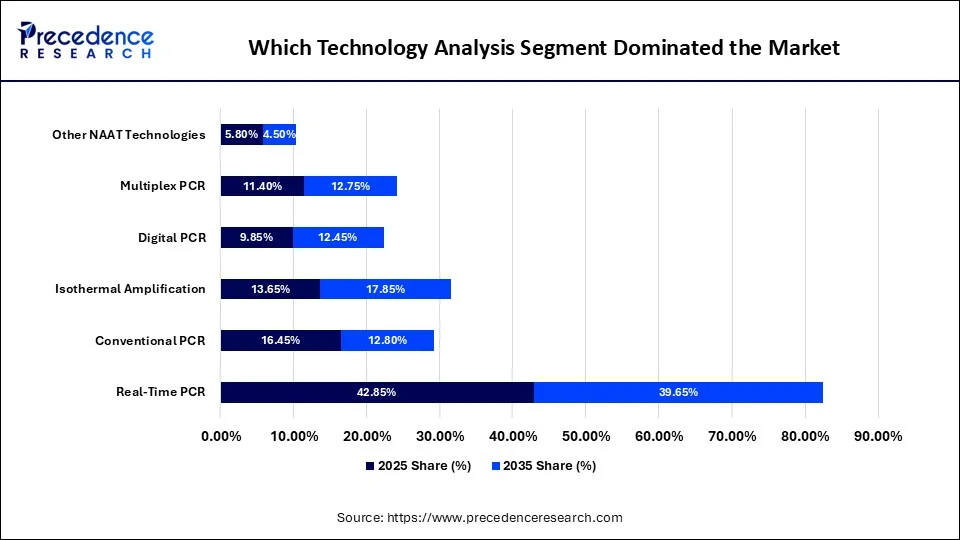
The real-time PCR segment held the largest market share of 42.85% in 2025 and remains dominant by 2035 with a share of 39.65%. The isothermal application segment is expected to expand rapidly at a CAGR of 12.15% over the studied period. Conventional PCRs will witness a declining trend over the coming years from 16.45% in 2025 to 12.8% in 2035. The demand for digital PCRs and multiplex PCRs is increasing at a rapid rate.
Expert Analyst View - Technology Analysis
Real-time PCR remains the installed base technology, and the slight decrease in market share is a result of the expansion of newer molecular technologies. Isothermal amplification is relevant to decentralization as it can simplify amplification requirements. Digital PCR is gaining significance due to its high sensitivity, absolute quantification, and low-level target detection capabilities. Multiplex PCR is unique in identifying multiple pathogens from a single specimen. In January 2026, the FDA approved the Xpert GI Panel, a gastrointestinal pathogen multiplex nucleic acid assay.
Why Did Reagents & Kits Hold the Largest Market Share?
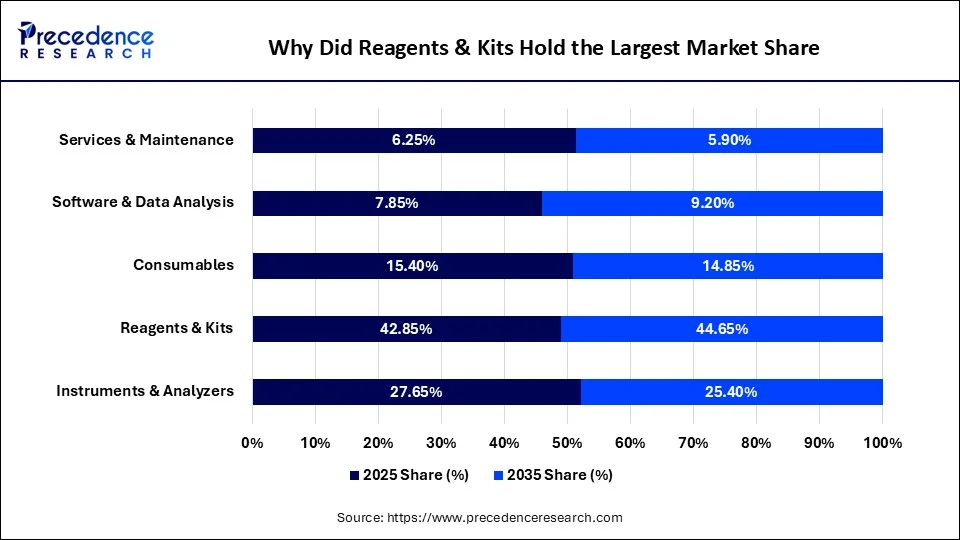
The reagents & kits segment dominated the North America nucleic acid amplification testing market with a share of 42.85% in 2025 and is expected to remain dominant with a share of 44.65% in 2035. Instruments & analyzers are another high-value component, holding a market share of 27.65% in 2025. The software & data analysis segment is expected to grow rapidly at a CAGR of 10.75% in the coming years. Consumables and services & maintenance are also in high demand, with a CAGR of 8.55% and 8.35%, respectively.
Expert Analyst View - Product & Component Analysis
Reagents & kits are highly consumed due to recurring testing requirements at hospitals, diagnostic laboratories, and research institutes. Once an instrument is installed, each test generally generates continuing demand for assay-specific reagents, controls, and consumables. Technological advancements have led to the development of user-friendly software & data analytics tools for complex analysis. Software tools enable automated result interpretation, workflow management, and connectivity & data integration.
Which Test Type Analysis Segment Led the Market?
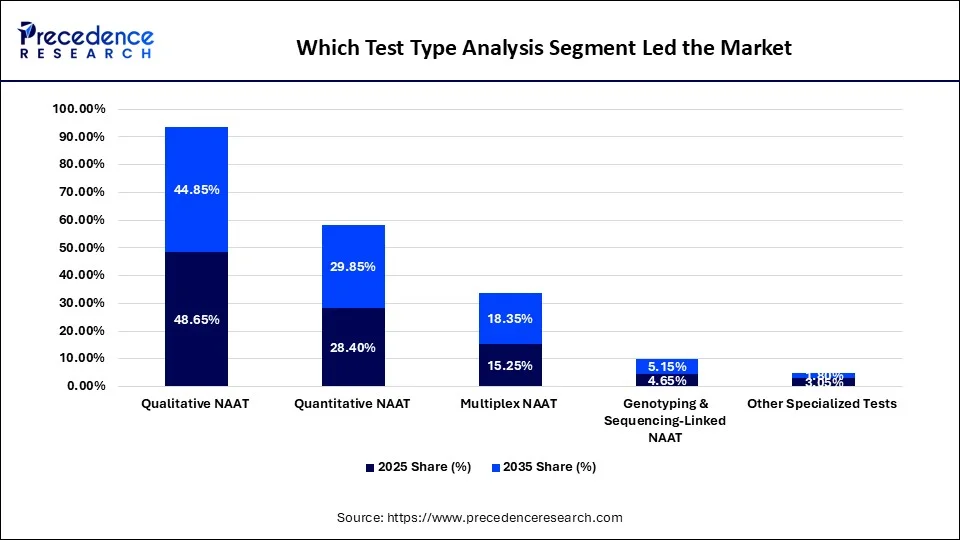
Qualitative NAAT accounted for the highest market share of 48.65% in 2025 and is expected to grow at a CAGR of 8.1% during the forecast period. Quantitative NAAT held a significant market share of 28.4% in 2025 and will increase slightly with a market share of 29.85% in 2035. The multiplex NAAT segment is expected to grow at the highest CAGR of 11.1% over the studied years. Genotyping & sequencing-linked NAAT grew from 4.65% in 2025 to 5.15% in 2035.
Expert Analyst View - Test Type Analysis
Qualitative NAAT is highly preferred due to its ability to determine the presence of pathogen species for amplification. However, multiplex NAAT grows at a CAGR of 11.1% and increases its 2035 share to 18.35%. The economic benefit comes from obtaining multiple clinically relevant results from one specimen and one workflow, saving time and cost for researchers and healthcare professionals. Quantitative NAAT also remains important for viral-load monitoring, treatment monitoring, and disease management.
What are the Major Applications of NAAT?
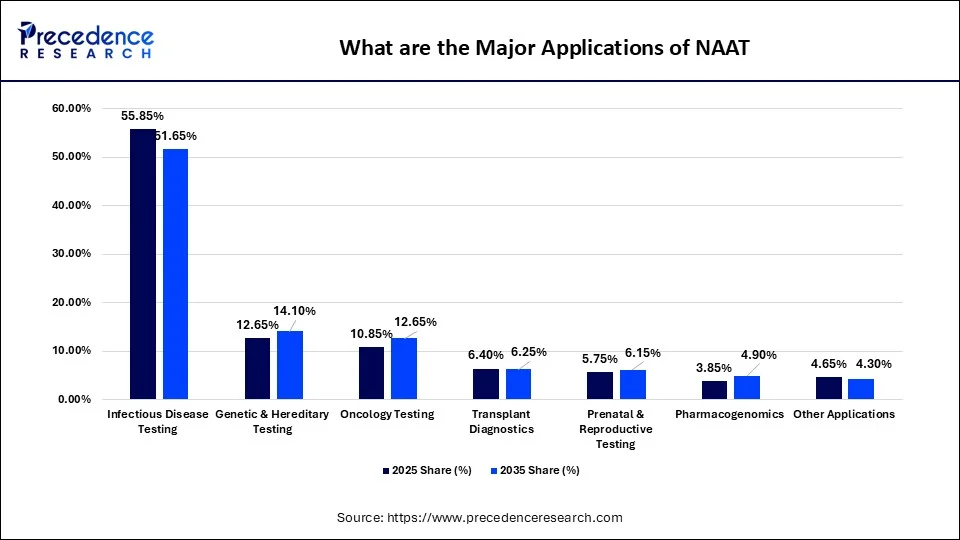
NAAT is widely used for infectious disease testing, accounting for a share of 55.85% in 2025 in the North America nucleic acid amplification testing market. Healthcare professionals are moving beyond infectious diseases and using NAAT for other applications like genetic & hereditary testing, oncology testing, transplant diagnostics, prenatal & reproductive testing, and pharmacogenomics. Pharmacogenomics is expected to witness the fastest growth with a CAGR of 11.75% from 2026 to 2035. Genetic & hereditary testing and oncology testing also witness high growth with a CAGR of 10.2% and 10.65%, respectively.
Expert Analyst View - Application Analysis
The rising prevalence of infectious disorders, genetic disorders, and cancer potentiates the need for NAAT to diagnose these disorders. As of October 2025, 102 disease outbreaks with human transmission were reported in 66 countries, and approximately 2.1 million cancer cases are projected to occur in the U.S. Apart from this, pharmacogenomics is an emerging application of NAAT, as it amplifies human DNA so that specific genetic variants affecting drug metabolism can be accurately identified.
Recent FDA approvals demonstrate how PCR-based testing is expanding into oncology.
- In November 2025, Promega received FDA approval for its OncoMate MSI Dx Analysis System, a qualitative multiplex PCR test, for microsatellite instability assessment in endometrial carcinoma.
- In August 2025, Biocartis Idylla CDx MSI Test which use PCR amplification and melt-curve analysis to determine microsatellite instability status in colorectal cancer tissue for treatment-selection purposes.
Which Specimen Types Support NAAT Demand?
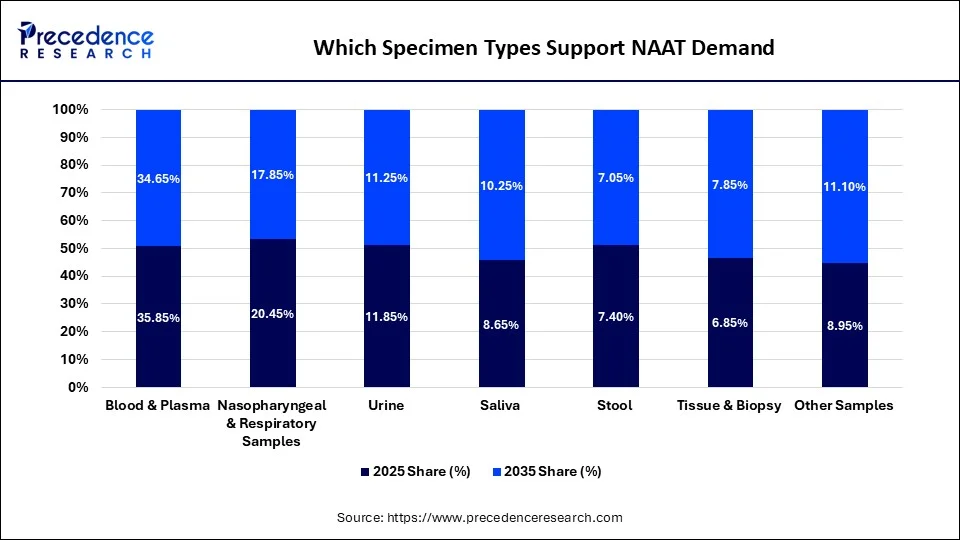
The blood & plasma segment dominated the North America nucleic acid amplification testing market with a share of 35.85% in 2025. The saliva segment is growing rapidly at a CAGR of 11.15% between 2026 and 2035. Tissue & biopsy and other sample types are also emerging, accounting for CAGRs of 10.55% and 11.05%, respectively. The urine and stool segments will witness a slight decrease in market shares from 11.85% to 11.25% and 7.40% to 7.05%, respectively.
Expert Analyst View - Sample Type Analysis
Blood & plasma are usually preferred due to their easy withdrawal and low diagnostic cost. The demand for tests using saliva samples is increasing due to the need for non-invasive testing and the reduced risk of injectable side effects. The decline in respiratory-sample share does not imply declining molecular testing overall. Rather, it indicates that the market is broadening into other specimen types and disease areas following the extraordinary respiratory-testing demand.
Why Did the Respiratory Infections Segment Dominate the Market?
The respiratory infections segment held the largest market share of 24.85% in 2025 and is expected to reach 21.4% by 2035. The oncology segment is expected to expand rapidly with a CAGR of 11.45% during the forecast period. NAAT tests are also increasingly used for sexually transmitted infections (9.15% CAGR), gastrointestinal infections (9.25% CAGR), and HPV & cervical disease (9.65% CAGR).
Expert Analyst View - Disease Area Analysis
The ability of NAAT to identify genetic alterations, microsatellite instability, and other molecular biomarkers that influence treatment decisions leads to the expansion of molecular oncology. STIs and gastrointestinal infections also benefit from multiplex infections, as several pathogens can be evaluated within a single diagnostic workflow. Canada's national gonorrhea surveillance program has reported that NAATs diagnose approximately 90% of annual gonorrhea cases, demonstrating the established role of molecular testing in STI diagnostics.
Which End-User Segment Dominated the Market?
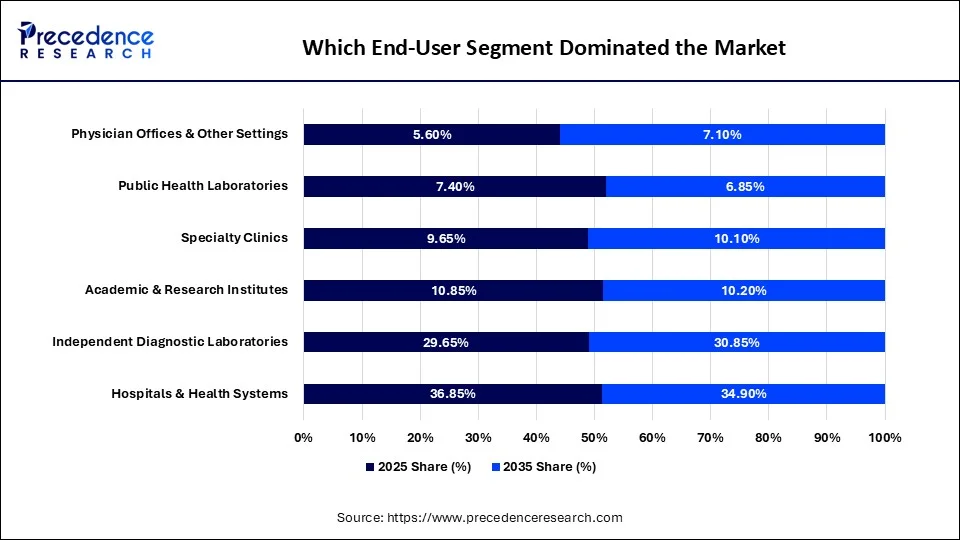
The hospitals & health systems segment contributed the biggest market share of 36.85% in 2025 and is expected to remain dominant with a share of 34.9% in 2035. Physician offices & other settings are projected to grow at a CAGR of 11.45% in the coming years. Independent diagnostic laboratories and specialty clinics are other major end-users of NAATs with 2025 market shares of 29.65% and 9.65%, respectively.
Expert Analyst View - End-User Analysis
Hospitals and health systems remain the largest end-user group, due to the increasing number of patient admissions, the rising adoption of advanced technologies, and the presence of skilled professionals. Physician offices & other settings are consistent with the broader move toward near-patient and decentralized molecular testing. This is supported by FDA approval of Cobas Liat SARS-CoV-2 v2 in April 2025 as a simple point-of-care nucleic acid test for near-patient settings.
Why is Point-of-Care Testing Growing Rapidly in the Market?
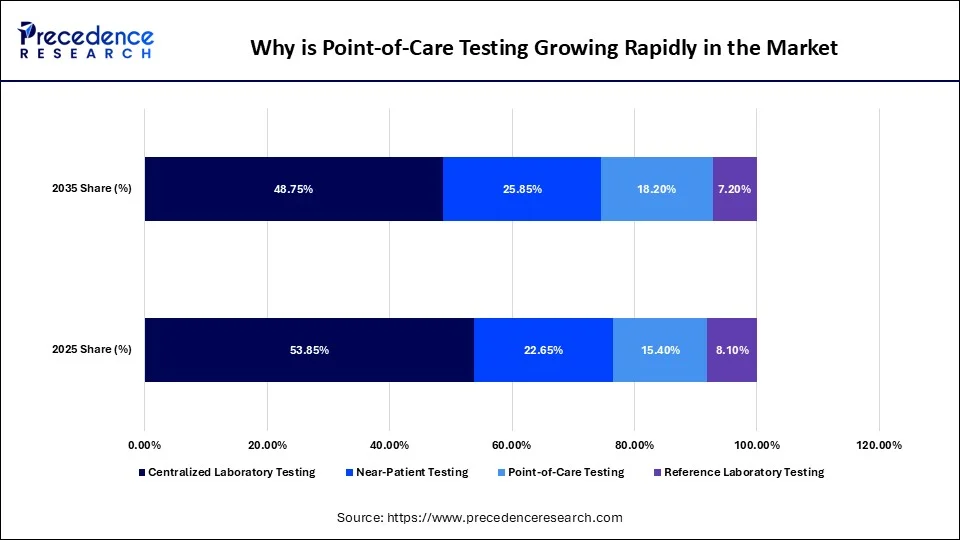
Centralized laboratory testing held the largest market share of 53.85% in 2025 and is expected to slightly decline to 48.75% in 2035. Point-of-care testing is witnessing the highest demand over the coming years, with a CAGR of 11.1%. With the rise in point-of-care testing, the demand for near-patient testing is also increasing, demonstrating segmental growth at a CAGR of 10.45%.
Expert Analyst View - Workflow Analysis
Workflow analysis data shows that researchers and healthcare professionals are moving from traditional centralized lab testing to point-of-care testing. Point-of-care testing is preferred due to its shorter turnaround times, low cost, and the ability to generate molecular results closer to patients. Canada's public-health guidance recognizes both point-of-care PCR and LAMP as rapid nucleic acid testing technologies outside traditional laboratories. The U.S. regulatory framework also distinguishes waived from moderate/high-complexity testing, with non-waived tests subject to broader CLIA requirements covering personnel, quality control, and oversight.
How is NAAT Distributed Globally?
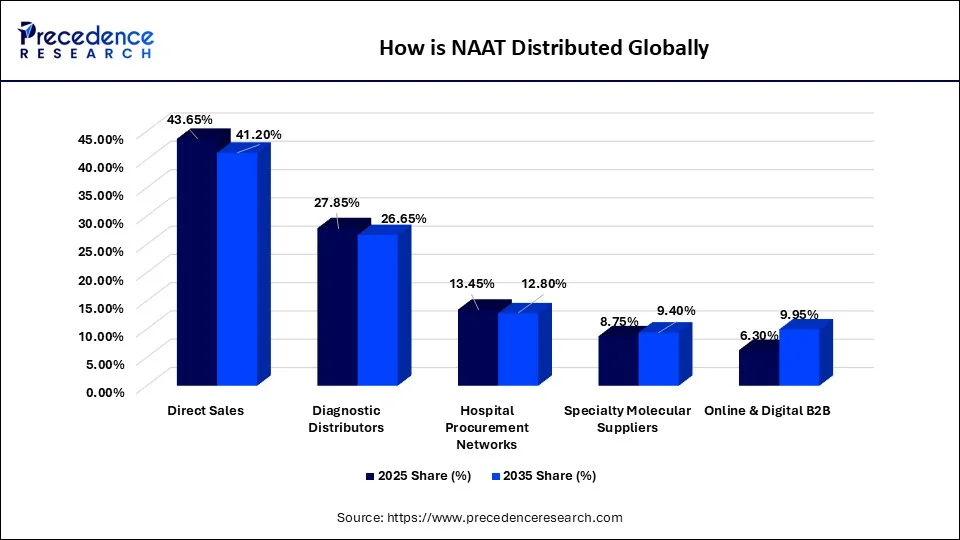
The direct sales channel is highly preferred, with a 2025 market share of 43.65%. However, online & digital B2B is expected to take over, growing at a CAGR of 14.2% during the forecast period. Specialized diagnostic distributors and hospital procurement networks are other traditional distribution channels, accounting for a share of 27.85% and 13.45% in 2025, respectively.
Expert Analyst View - Distribution Channel Analysis
Direct sales remain dominant because molecular diagnostic systems are generally technical products requiring validation, installation, training, and service support. Online sales & B2B enable manufacturers to directly deliver their standardized reagents, consumables, accessories, and replenishment purchases to consumers. This helps consumers to compare pricing, product availability, and lead time.
Country-Level Analysis
Which Country is at the Forefront of the North America Nucleic Acid Amplification Testing Market?
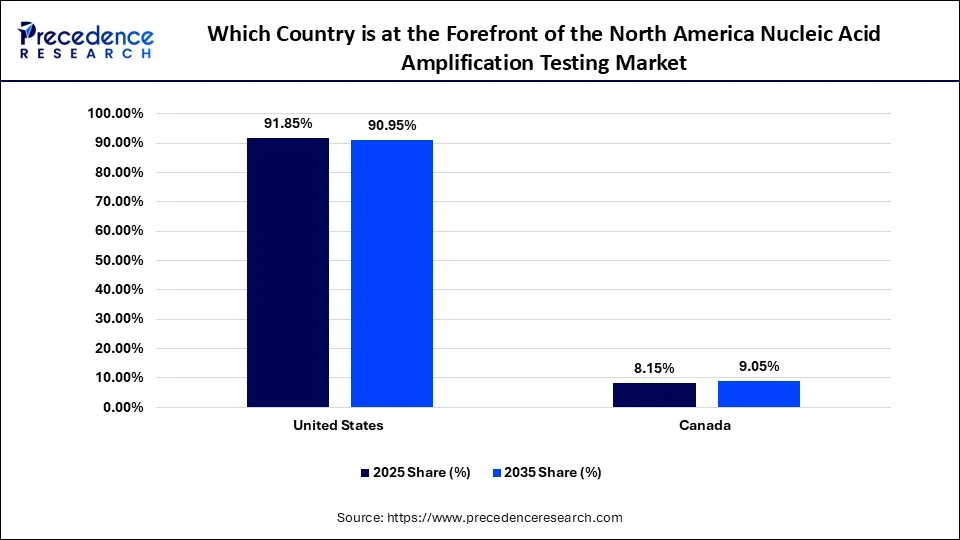
The U.S. dominated the market with a share of 91.85% in 2025 and will remain dominant through 2035 with a share of 90.95%. Canada is expected to experience the fastest growth with a CAGR of 10.1% in the predicted timeframe. Market growth is attributed to the presence of key players, evolving regulatory landscapes, and the burgeoning healthcare sector.
Expert Analyst View - Country-Level Analysis
The U.S. has a large molecular diagnostics ecosystem and a strong presence of CROs and CDMOs, supporting the development of innovative NAAT. The availability of an extensive clinical lab network, major molecular diagnostics manufacturers, and large installed testing infrastructure also contributes to market growth in the U.S.
Canada is expected to grow from 8.15% in 2025 to 9.05% in 2035, driving market growth throughout the forecast period. The increasing number of testing laboratories and expanding molecular testing capacity foster market growth. Statistics Canada maintains an annual dataset covering the number of tests performed by medical and diagnostic laboratories across Canada, while the National Microbiology Laboratory provides diagnostic/reference testing and infectious-disease surveillance.
A Deep Dive into the U.S. NAAT Demand
The U.S. market for NAAT benefits from large hospital and reference-laboratory infrastructure, stringent regulatory pathways by the U.S. FDA, and CLIA-regulated clinical testing. As of June 2025, the FDA approved more than 700 nucleic acid-based tests for multiple purposes. Other aspects that support market growth in the U.S. include the expansion of decentralized testing, growing pharmacogenomics & hereditary testing, and strong recurring reagent consumption.
Expert Analyst View - U.S. Market Intelligence
The U.S. opportunity is shifting from simply increasing PCR volume toward higher-value molecular testing applications. The strongest incremental opportunities are likely to occur in multiplex diagnostics, oncology, pharmacogenomics, decentralized testing, and automated laboratory workflows. FDA's recent molecular-device clearances span point-of-care SARS-CoV-2 testing, gastrointestinal multiplex testing, and oncology PCR diagnostics, illustrating the expansion of current applications.
A Deep Dive into Canada's NAAT Demand
Canada has a mature molecular testing ecosystem supported by provincial/territorial healthcare systems, reference laboratories, and national public health infrastructure. The Public Health Agency of Canada's National Microbiology Laboratory provides activities related to diagnostic and reference testing, laboratory-based infectious disease surveillance, emergency preparedness and response, research, leadership, training network, and capacity development, and laboratory science support services.
Expert Analyst View - Canada Market Intelligence
Canada's growth opportunity is strongly connected to decentralization, regional laboratory capacity, and molecular testing access outside major urban centers. This is particularly relevant for infectious diseases and remote populations. Canada's tuberculosis standards specifically discuss quality assurance for peripheral laboratories performing NAATs in remote settings under the oversight of accredited laboratories.
Which Companies Drive the North America Nucleic Acid Amplification Testing Market?
| Company | 2025 Operational Data | NAAT-Relevant Capability |
| Danaher Corporation | Diagnostics sales: USD 9.941B | Cepheid, molecular diagnostics instruments, consumables and software |
| Roche | Diagnostics sales: CHF 13.8B | cobas molecular platforms and assays |
| Abbott Laboratories | Molecular sales: USD 517M | Molecular diagnostics and Alinity platform |
| Hologic | Total revenue profile: USD 4.1B | Panther/Panther Fusion and Aptima molecular assays |
| Thermo Fisher Scientific | Specialty Diagnostics: USD 4.676B | Molecular biology, genetic sciences and diagnostics |
| Bio-Rad Laboratories | Clinical Diagnostics ≈ 60% of 2025 sales | PCR, digital PCR and molecular diagnostic technologies |
| QIAGEN | ~5,700 employees at year-end 2025 | Sample preparation, molecular assays and bioinformatics |
The competitive structure of the market is characterized by a combination of large integrated diagnostics companies and specialized molecular testing providers.
Danaher Corporation
Danaher Corporation reported diagnostics revenue of USD 9.94 billion in 2025, with 89% classified as recurring revenue. Its NAAT product portfolio includes Cepheid, molecular diagnostic instruments, consumables, and software. These products are available for respiratory diseases, sexual health, healthcare-associated infections, and virology.
Roche
Roche's diagnostics sector recorded revenue of CHF 13.8 billion in 2025. Roche offers cobas molecular platforms and assays. It delivered approximately 31 billion diagnostic tests to customers. The company strategizes to include new molecular solutions and continue expanding installed analytical platforms.
Abbott Laboratories
Abbott generated molecular revenue of USD 517 million in 2025 compared with USD 521 million in 2024 through its molecular diagnostics and Alinity platform. The company's diagnostic segment was affected by lower COVID-test demand, while routine diagnostic testing and Alinity platform deployment provided offsets.
Hologic
Hologic reported total revenue of USD 4.1 billion in 2025. Hologic's diagnostic portfolio includes Aptima molecular assays and Panther/Panther Fusion systems, covering STIs, HPV, and other molecular applications.
Thermo Fisher Scientific
Total revenue of Thermo Fisher Scientific was USD 44.56 billion, representing an increase of 4% from 2024. Of this, the specialty diagnostics segment contributed total sales of USD 4.67 million in 2025. This is supported by its sales of molecular biology, genetic sciences, and diagnostics.
Bio-Rad Laboratories
Bio-Rad Laboratories reported revenue of USD 2,583 million in 2025. The clinical diagnostics segment reported net sales of USD 1,562.1 million in 2025, an increase of 0.8% from 2024. It offers a series of PCR, digital PCR, and molecular diagnostic technologies.
QIAGEN
QIAGEN's net sales were USD 2.09 billion in FY2025. QIAGEN offers sample preparation, molecular assays, and bioinformatics.
Expert Analyst View - Company Intelligence
The company data reinforce the importance of separating diagnostics-company revenue from NAAT-specific market revenue. The recurring nature of molecular testing is particularly visible at Danaher, while Roche's reported 31 billion diagnostic tests delivered demonstrates the scale of its broader diagnostics ecosystem. For market participants, more useful competitive indicators are therefore installed instruments, assay menu breadth, recurring-test mix, new regulatory clearances, platform utilization, test volumes, and expansion into new disease areas rather than total company revenue alone.
What are Regulatory Frameworks for NAAT?
| Development | Market Relevance |
| FDA nucleic-acid test database | Tracks cleared/approved molecular diagnostic devices |
| CLIA | Establishes U.S. clinical laboratory quality requirements |
| FDA multiplex test clearances | Supports expansion of multi-target molecular diagnostics |
| FDA point-of-care clearances | Enables decentralization |
| Oncology companion diagnostics | Extends PCR into treatment-selection workflows |
| Health Canada device licensing | Supports commercialization of molecular platforms |
| Canadian public-health molecular surveillance | Supports infectious-disease NAAT demand |
Several authorities, including the Food and Drug Administration (FDA), Clinical Laboratory Improvement Amendments (CLIA), and Health Canada, are responsible for regulating the development and approval of NAAT in the U.S. and Canada. The FDA tracks molecular diagnostic devices, supports expansion of multi-target molecular diagnostics, and enables decentralization. CLIA establishes clinical laboratory quality requirements in the U.S. Health Canada provides device licensing to support the commercialization of molecular platforms.
Expert Analyst View - Regulatory and Market-Development Indicators
In FY2025-26, the FDA regulated multiplex respiratory tests, gastrointestinal pathogen panels, point-of-care SARS-CoV-2 NAAT, and oncology PCR assays. According to our Senior Researcher, Aman Singh, regulatory trends indicate that NAAT is becoming less dependent on a narrow infectious disease use case. NAAT applications expand the addressable market for assay developers, instrument manufacturers, and laboratory service providers.
What is the Buyer Intelligence of the North America Nucleic Acid Amplification Testing Market?
| Buyer Criterion | Importance | Procurement Consideration |
| Analytical Sensitivity | Very High | Ability to detect low target concentrations |
| Specificity | Very High | Minimizing false-positive results |
| Turnaround Time | Very High | Clinical decision-making requirements |
| Multiplexing Capability | High | Number of targets per test |
| Throughput | Very High | Daily test-volume requirements |
| Cost per Test | Very High | Reagent and consumable economics |
| Instrument Footprint | High | Laboratory and near-patient deployment |
| Automation | Medium–High | Reduction of hands-on labor |
| Assay Menu | Very High | Breadth of disease/application coverage |
| Connectivity | High | LIS/EHR integration |
| Regulatory Clearance | Very High | FDA/Health Canada authorization |
| Service & Maintenance | High | Uptime and technical support |
| Reagent Availability | Very High | Supply continuity |
| Workflow Integration | High | Near-patient/POC applications |
| Decentralized Capability | Increasing | Sample-to-answer automation |
Analytical sensitivity, specificity, turnaround time, throughput, cost per test, assay menu, regulatory clearance, and reagent availability are first preferences of buyers while purchasing NAAT. Buyers also prefer multiplexing capability, instrument footprint, connectivity, service & maintenance, and workflow integration. The demand for decentralized capability is also increasing among buyers.
Expert Analyst View - Buyer Intelligence
The purchasing decision depends on total workflow economics rather than instrument price alone. Large laboratories prioritize throughput, automation, assay menu, and cost per reportable result. Hospitals and emergency settings place greater emphasis on turnaround time, while physician offices & decentralized settings prioritize simplicity, footprint, and minimal hands-on processing.
What are the Major Growth Factors of the North America Nucleic Acid Amplification Testing Market?
- Expansion of Molecular Diagnostics: Apart from diagnosing infectious diseases, molecular diagnostics like NAAT are increasingly developed to diagnose cancer, reproductive health, hereditary testing, and pharmacogenomics.
- Multiplex Testing: NAAT can identify multiple pathogens from a single specimen, providing improved clinical workflow and laboratory efficiency.
- Point-of-Care Testing: Point-of-care molecular testing is gaining significance, as it can enable early diagnosis of diseases and resistance, supporting real-time therapeutic decision-making.
- Automation: Technological advancements such as artificial intelligence (AI) and machine learning (ML), are increasingly integrated into NAAT to derive automated workflows and results.
- Digital PCR: High-sensitivity quantification creates opportunities in oncology, rare targets, and research-linked clinical applications.
What are the Major Challenges of the North America NAAT Market?
| Challenge | Potential Impact |
| High instrument cost | Slows adoption in smaller facilities |
| Reagent dependency | Supply disruptions can affect utilization |
| Complex regulatory requirements | Extends commercialization timelines |
| Laboratory staffing constraints | Increases demand for automation |
| Reimbursement pressure | Can constrain test economics |
| Competition from non-molecular diagnostics | Limits NAAT use in some indications |
| Post-pandemic normalization | Reduces respiratory-testing volumes |
| Platform fragmentation | Creates interoperability and workflow challenges |
| Quality-control requirements | Adds operating complexity |
| Data-integration requirements | Increases software/connectivity investment |
The market faces formidable challenges, including high instrument costs, reagent dependency, complex regulatory requirements, and a lack of skilled professionals. The largest structural challenge is the normalization of respiratory testing following pandemic-era demand. The diversification into oncology, STI, gastrointestinal, genetic, reproductive, and pharmacogenomic applications are particularly important for the long-term market expansion.
Experts Insights
The North America nucleic acid amplification testing market is entering a phase in which growth is increasingly driven by application expansion rather than simply higher volumes of conventional PCR testing. Our Senior Researcher, Aditi Shivarkar, suggests that increasing investments in the sector lead to the development of advanced diagnostics with improved efficiency and precision. The market witnesses the strongest opportunities in isothermal amplification, digital PCR, multiplex NAAT, point-of-care molecular diagnostics, and automated lab workflows.
The competitive environment is also becoming diversified, with the presence of major players, such as Danaher Corporation, Roche, Hologic, and Abbott Laboratories. The most important commercial transition is therefore from instrument-centric molecular diagnostics toward integrated molecular testing ecosystems. Government initiatives to encourage early diagnosis and screening of chronic disorders also potentiate the demand for NAAT.
Our Experts
- The primary market research process was carried out by Deepa Pandey, Senior Research Analyst, who also designed the methodology and did market segmentation, regional trend analysis, buyer intelligence, competitive analysis, and forecasts, laying the foundation for the analytical part of the report.
- Aman Singh, Head of Research, has gathered and checked regulatory policies, company financial information, and various other quantitative information sources, which were obtained independently, thereby increasing the quality of evidence supporting the calculations of the market values.
- Aditi Shivarkar, VP Research, has validated and refined the research material, verified facts, corrected inconsistencies, and completed the research document, making it accurate and to the point.
North America Nucleic Acid Amplification Testing Market Segments Covered in the Report
By Technology
- Real-Time PCR
- Conventional PCR
- Isothermal Amplification
- Digital PCR
- Multiplex PCR
- Other NAAT Technologies
By Product & Component
- Instruments & Analyzers
- Reagents & Kits
- Consumables
- Software & Data Analysis
- Services & Maintenance
By Test Type
- Qualitative NAAT
- Quantitative NAAT
- Multiplex NAAT
- Genotyping & Sequencing-Linked NAAT
- Other Specialized Tests
By Application
- Infectious Disease Testing
- Genetic & Hereditary Testing
- Oncology Testing
- Transplant Diagnostics
- Prenatal & Reproductive Testing
- Pharmacogenomics
- Other Applications
By Sample Type
- Blood & Plasma
- Nasopharyngeal & Respiratory Samples
- Urine
- Saliva
- Stool
- Tissue & Biopsy
- Other Samples
By End User
- Hospitals & Health Systems
- Independent Diagnostic Laboratories
- Academic & Research Institutes
- Specialty Clinics
- Public Health Laboratories
- Physician Offices & Other Settings
By Workflow
- Centralized Laboratory Testing
- Near-Patient Testing
- Point-of-Care Testing
- Reference Laboratory Testing
By Disease Area
- Respiratory Infections
- Sexually Transmitted Infections
- Gastrointestinal Infections
- Hepatitis & HIV
- HPV & Cervical Disease
- Oncology
- Other Diseases
By Distribution Channel
- Direct Sales
- Diagnostic Distributors
- Hospital Procurement Networks
- Specialty Molecular Suppliers
- Online & Digital B2B
By Country
- United States
- Canada
For inquiries regarding discounts, bulk purchases, or customization requests, please contact us at sales@precedenceresearch.com
Frequently Asked Questions





Ask For Sample
No cookie-cutter, only authentic analysis – take the 1st step to become a Precedence Research client
 Get a Sample
.webp)



 sales@precedenceresearch.com
 Schedule a Meeting
