



Preventive Medicine Market Size, Companies, Share, Patient Volume, Treatment Adoption Rates, Pricing Analysis, Regulatory Landscape, Competitive Positioning, and Demand Forecast
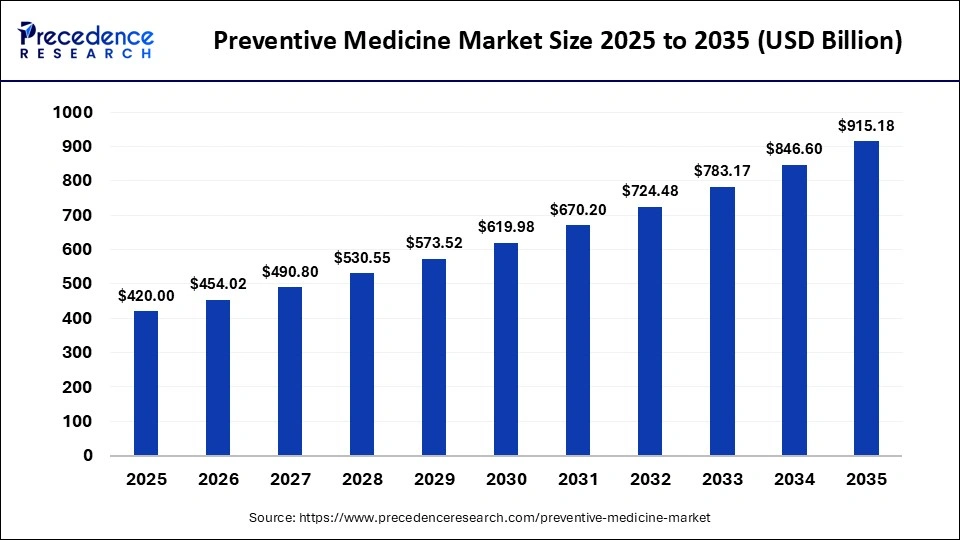
Rohan Patil, a Healthcare Industry Expert, highlights that the preventive medicine market has reached USD 454.02 billion in 2026 and is on track to reach USD 915.18 billion by 2035, advancing at a CAGR of 8.10%. Key preventive medicine market companies shaping the market include Pfizer Inc., GlaxoSmithKline plc (GSK), Merck & Co., Inc., Sanofi S.A, while major growth segments span By Type, By Application, By End-Use, By Delivery Mode.
Source: https://www.precedenceresearch.com/preventive-medicine-market
 Get a Sample
 Table Of Content


What is the Preventive Medicine Market Size in 2026?
The global preventive medicine market size accounted for USD 420.00 billion in 2025 and is predicted to increase from USD 454.02 billion in 2026 to approximately USD 915.18 billion by 2035, expanding at a CAGR of 8.10% from 2026 to 2035. The preventive medicine market is driven by the rising prevalence of chronic diseases, growing health awareness, and increasing focus on early intervention.
Key Takeaways
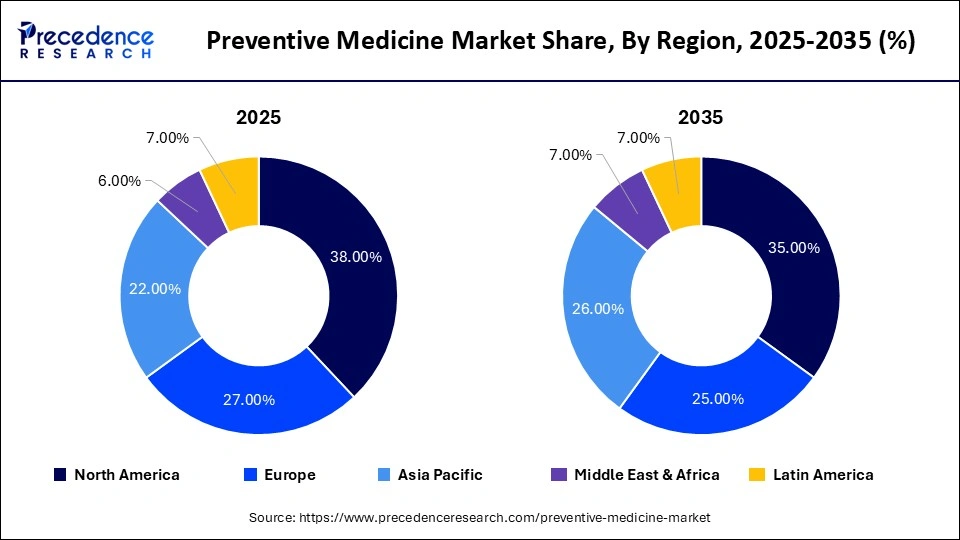
- North America dominated the global preventive medicine market with a share of 38% in 2025.
- Asia Pacific is expected to grow at the fastest CAGR of 9.5% during the forecast period.
- By type, the vaccines segment held a dominant position in the market by holding a 35% share in 2025.
- By type, the screening & early detection segment is the second-largest shareholder and is expected to grow at a significant CAGR of 9.5% between 2026 and 2035.
- By application, the infectious diseases prevention segment accounted for a 30% revenue share in the market in 2025.
- By application, the chronic disease prevention segment is the second-largest shareholder and is expected to grow at the fastest CAGR of 9.5% between 2026 and 2035.
- By end-use, the hospitals & clinics segment led the global market with a share of 40% in 2025.
- By end-use, the diagnostic centers segment is the second-largest shareholder and is expected to grow at a significant CAGR of 9% between 2026 and 2035.
- By delivery mode, the injectable segment accounted for a major revenue share of 50% in the market in 2025.
- By delivery mode, the oral segment is the second-largest shareholder and is expected to grow at a 7.5% CAGR between 2026 and 2035.
Market Overview
The preventive medicine market encompasses a wide range of healthcare services aimed at preventing disease formation and improving long-term health outcomes through early intervention and risk reduction. The market involves immunizations, routine medical examinations, risk assessment, fitness assessment, and lifestyle modification, all geared toward promoting optimal health. The market is driven by increasing government spending in improving healthcare infrastructure and ongoing advancements in technologies such as wearable health devices, digital diagnostics, and predictive analytics, which are enabling more personalized and proactive care.
How is AI Impacting the Preventive Medicine Market?
The role of artificial intelligence in the preventive medicine market is transformative, enabling early diagnosis, personalized healthcare, and data-driven clinical decision-making. AI algorithms analyze large volumes of patient data from electronic health records, wearables, and diagnostics to identify risk patterns and predict potential health issues before symptoms appear. Moreover, chatbots and virtual health assistants are enhancing the interaction with patients, offering them live health and lifestyle solutions. By connecting AI with digital health and remote monitoring to track its progress and provide patients with a personalized wellness program, AI can be effectively integrated.
Preventive Medicine Market Trends
- There is a growing adoption of digital health platforms and wearable devices, which is enabling continuous monitoring of vital signs, early disease detection, and personalized preventive care through real-time data and remote patient management.
- Healthcare systems are increasingly shifting toward value-based care models that emphasize prevention, early diagnosis, and improved patient outcomes while reducing overall treatment costs.
- Governments worldwide are implementing awareness campaigns, vaccination programs, and large-scale screening initiatives to reduce the burden of chronic diseases and improve public health outcomes.
Market Scope
| Report Coverage | Details |
| Market Size in 2025 | USD 420.00 Billion |
| Market Size in 2026 | USD 454.02 Billion |
| Market Size by 2035 | USD 915.18 Billion |
| Market Growth Rate from 2026 to 2035 | CAGR of 8.10% |
| Dominating Region | North America |
| Fastest Growing Region | Asia Pacific |
| Base Year | 2025 |
| Forecast Period | 2026 to 2035 |
| Segments Covered | Type, Application, End Use, Delivery Mode, and Region |
| Regions Covered | North America, Europe, Asia-Pacific, Latin America, and Middle East & Africa |
Market Dynamics
Drivers
Rising Prevalence of Chronic and Lifestyle Diseases
The preventive medicine market is driven by the growing global rates of chronic and lifestyle-related disorders, including diabetes, high blood pressure, obesity, heart disease, and cancer. This significantly puts a burden on healthcare systems and constitutes a big percentage of healthcare spending worldwide. Growing awareness of healthy lifestyles, nutrition, fitness, and routine health check-ups is further encouraging preventive care adoption. Additionally, advancements in diagnostic technologies, wearable health devices, and digital health platforms are enabling early intervention and continuous patient monitoring, supporting market growth.
Restraint
Uneven Distribution of Healthcare Resources and Limited Access to Preventive Services
The preventive medicine market faces challenges due to inadequate healthcare infrastructure, a shortage of skilled professionals, and limited awareness, which hinder widespread adoption of preventive services. The other significant challenge is the lack of reimbursement policies in emerging nations, as many preventive services are not fully covered by insurance or government programs. This creates financial barriers for patients and reduces provider incentives. Additionally, cultural attitudes and behavioral patterns, where individuals seek care only after symptoms appear, continue to limit the effectiveness of preventive healthcare initiatives.
Opportunity
Increasing Adoption of Personalized Healthcare Solutions
The increasing preference for personalized and digital healthcare solutions creates immense opportunities in the preventive medicine market. The growing popularity of mobile health applications, wearables, and smart health coaching platforms is advancing the approach of increasing access to healthcare and promoting proactive health management. Increasing investments by governments and NGOs in telemedicine, community wellness programs, and preventive health initiatives are further expanding access to care. Additionally, the shift toward value-based healthcare models is encouraging providers to prioritize prevention over treatment, supporting long-term market growth.
Segment Insights
Type Insights
Preventive Medicine Market Share, By Type, 2025-2035 (%)
| Type | 2025 | 2035 | CAGR (%) |
| Vaccines | 35.00% | 33.00% | 7.00% |
| Screening & Early Detection | 30.00% | 32.50% | 9.50% |
| Preventive Therapeutics | 20.00% | 19.50% | 7.80% |
| Digital Preventive Healthcare | 15.00% | 15.00% | 12.50% |
The Vaccines Segment Held a 35% Share of the Market in 2025
The vaccines segment dominated the preventive medicine market while holding a share of 35% in 2025, driven by increased immunization programs and government initiatives focused on pandemic preparedness across both developed and developing nations. The increased global awareness of the prevention of infectious diseases also bolstered segmental growth. The increase in childhood vaccination coverage and the demand for booster doses ensure the long-term growth of the segment.
The screening & early detection segment held a 30% share of the market in 2025 and is expected to grow at a CAGR of 9.5% during the projection period, driven by the growing interest in the early diagnosis of chronic and life-threatening diseases. Rising prevalence of conditions such as cancer, cardiovascular diseases, and diabetes is fueling demand for routine screenings and health check-ups. Additionally, advancements in diagnostic imaging, biomarker testing, and AI-based tools are improving accuracy and enabling earlier, more effective intervention.
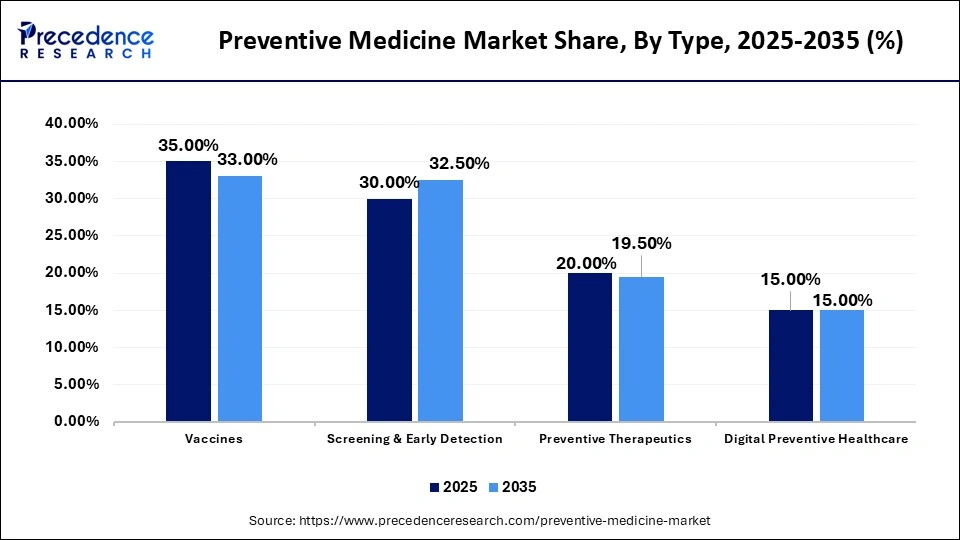
The preventive therapeutics segment held a 20% market share in 2025 and is expected to grow at a CAGR of 7.8% during the projection period, driven by the increasing prevalence of chronic illnesses and the growing focus on risk prevention. Preventive therapeutics involve medication like cholesterol-lowering medications, antihypertensives, and nutritional supplements that aid in the prevention or delaying the onset or progression of diseases. The growing awareness of health & wellness is also supporting segmental growth.
The digital preventive healthcare segment held a 15% market share in 2025 and is expected to grow at the fastest CAGR of 12.5% during the projection period, driven by the rapid adoption of digital health technologies. Innovations such as wearable devices, remote patient monitoring, mobile health applications, and AI-based analytics are transforming preventive care delivery. Healthcare providers are increasingly using digital platforms to identify at-risk patients, offer virtual consultations, and enable timely interventions.
Application Insights
Preventive Medicine Market Share, By Application, 2025-2035 (%)
| Application | 2025 | 2035 | CAGR (%) |
| Infectious Diseases Prevention | 30.00% | 28.00% | 7.00% |
| Chronic Disease Prevention | 25.00% | 27.00% | 9.50% |
| Cancer Prevention | 20.00% | 21.00% | 8.80% |
| Cardiovascular Disease Prevention | 15.00% | 15.50% | 8.20% |
| Others | 10.00% | 8.50% | 7.00% |
The Infectious Diseases Prevention Segment Led the Market with a 30% Share in 2025
The infectious diseases prevention segment led the preventive medicine market with a share of 30% in 2025, driven by massive vaccination efforts and health campaigns spreading awareness of infectious diseases. Governments and health organizations are actively launching immunization programs to minimize the spread of infectious diseases and enhance immunity among the populations. The growing prevalence of infectious diseases is prompting the demand for preventive healthcare solutions, thereby ensuring the long-term growth of the segment.
The chronic disease prevention segment held a 25% market share in 2025 and is expected to grow at the fastest CAGR of 9.5% during the forecast period, driven by the increased worldwide rates of diabetes, obesity, hypertension, and other lifestyle-related diseases. Sedentary lifestyles, unhealthy eating habits, and rising stress levels are making significant contributions to the rise in the number of chronic conditions. As a result, healthcare organizations are paying more attention to early interventions and frequent medical examinations to reduce the burden of chronic diseases.
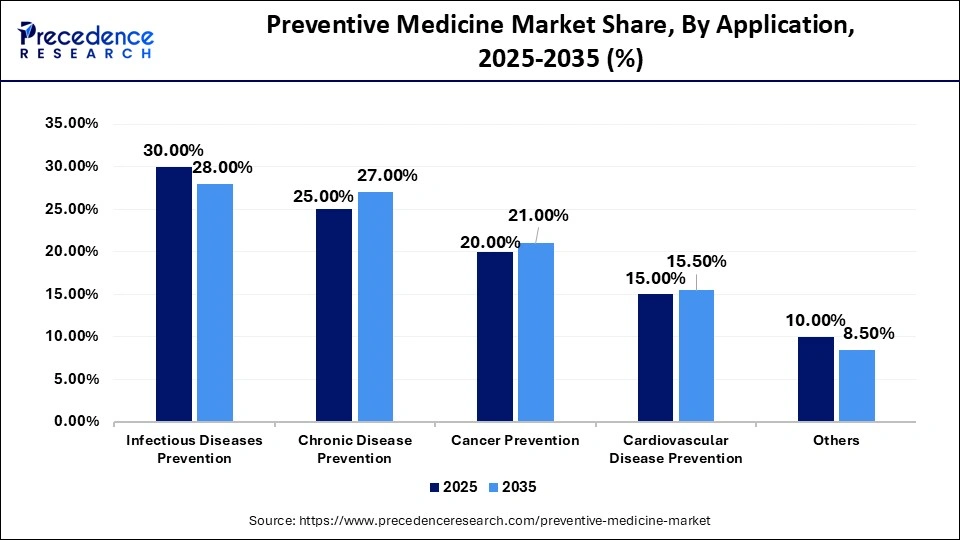
The cancer prevention segment held a 20% share of the market in 2025 and is expected to grow at a significant CAGR of 8.8% during the projection period, driven by rising awareness and advancements in early detection technologies. Increasing global cancer incidence is encouraging wider adoption of screening methods such as mammography, colonoscopy, and genetic testing among high-risk populations. Additionally, improvements in diagnostic technologies are enhancing the accuracy and efficiency of early cancer detection.
The cardiovascular disease prevention segment held a 15% market share in 2025 and is expected to grow at a CAGR of 8.2% in the upcoming period, owing to the increasing cases of cardiovascular diseases associated with lifestyle change, stress, and old age. The prevalence of hypertension, high levels of cholesterol, and obesity is creating a cardiovascular risk that is threatening the world. Healthcare systems are increasingly focusing on preventive diagnostics, routine screenings, and risk assessment programs to enable early detection and timely intervention, supporting segmental growth.
End-Use Insights
Why Did Hospitals & Clinics Dominate the Preventive Medicine Market in 2025?
The hospitals & clinics segment registered dominance in the global market while holding a major share of 40% in 2025. This is because they are at the primary center for comprehensive healthcare delivery. Hospitals provide advanced diagnostic services, routine health check-ups, immunizations, and specialist consultations, making them key centers for early disease detection and prevention. Their strong infrastructure, skilled healthcare professionals, and integrated care systems make them the most trusted setting for delivering preventive healthcare services.
The diagnostic centers segment held the second-largest share of 25% in the market in 2025 and is expected to grow at a CAGR of 9% in the coming years, driven by the increasing demand for early disease detection and preventive screening services. Increasing awareness of routine health check-ups is encouraging patients to seek specialized diagnostic services beyond traditional hospital settings. Additionally, diagnostic centers are gaining preference due to their cost-effectiveness, convenience, and accessibility for preventive healthcare services.
Preventive Medicine Market Share, By End-Use, 2025-2035 (%)
| End-Use | 2025 | 2035 | CAGR (%) |
| Hospitals & Clinics | 40.00% | 38.00% | 7.50% |
| Diagnostic Centers | 25.00% | 27.00% | 9.00% |
| Public Health Organizations | 20.00% | 18.50% | 6.50% |
| Home Healthcare | 15.00% | 16.50% | 10.50% |
The public health organizations segment held a 20% market share in 2025 and is expected to grow at a notable CAGR of 6.5% during the projection period, driven by large-scale disease prevention initiatives. These organizations play a key role in implementing vaccination drives, health awareness campaigns, and community screening programs to reduce the burden of both communicable and non-communicable diseases. The growth of the segment is further supported by strong policy backing, increased investment in preventive healthcare, and collaboration with global health agencies.
The home healthcare segment held a 15% share of the market in 2025 and is expected to grow at the fastest CAGR of 10.5% during the projection period, owing to the rising adoption of remote monitoring solutions and increasing preference for at-home preventive care. Patients are increasingly choosing convenient healthcare options that reduce hospital visits while ensuring continuous health monitoring. Wearable devices, telehealth platforms, and mobile health applications are enabling real-time tracking of vital parameters such as blood pressure, glucose levels, and heart rate.
Delivery Mode Insights
The Injectable Segment Held a 50% Share of the Preventive Medicine Market in 2025
The injectable segment dominated the global market with the largest share of 50% in 2025, driven by widespread use of vaccines and biologics in preventing disease. Injectable administration remains the most effective and reliable method for immunization, supporting large-scale vaccination programs and government-led immunization drives. Additionally, global awareness campaigns promoting preventive healthcare have further strengthened demand for injectable medicines.
Preventive Medicine Market Share, By Delivery Mode, 2025-2035 (%)
| Delivery Mode | 2025 | 2035 | CAGR (%) |
| Injectable | 50.00% | 47.00% | 6.50% |
| Oral | 30.00% | 29.00% | 7.50% |
| Digital & Remote Monitoring | 20.00% | 24.00% | 12.80% |
The oral segment held a 30% share of the market in 2025 and is expected to grow at a significant CAGR of 7.5% during the projection period, owing to its wide usage in preventative therapeutics and therapy of chronic diseases. Chronic illnesses are often treated by oral medications, as they help prevent the progression of the illness and manage symptoms. Oral medications such as supplements, antihypertensives, cholesterol-lowering drugs, and vitamins are in high demand. They are popular in preventive care since they can be administered without difficulty.
The digital & remote monitoring segment held a 20% share of the market in 2025 and is expected to grow at the highest CAGR of 12.8% during the forecast period, fueled by rapid advancements in healthcare technologies. The growing adoption of wearable devices, telehealth platforms, mobile health applications, and AI-enabled monitoring systems is transforming preventive care delivery. Rising consumer preference for in-home and personalized healthcare solutions is further contributing to segmental growth.
Regional Insights
North America Preventive Medicine Market Size and Growth 2026 to 2035
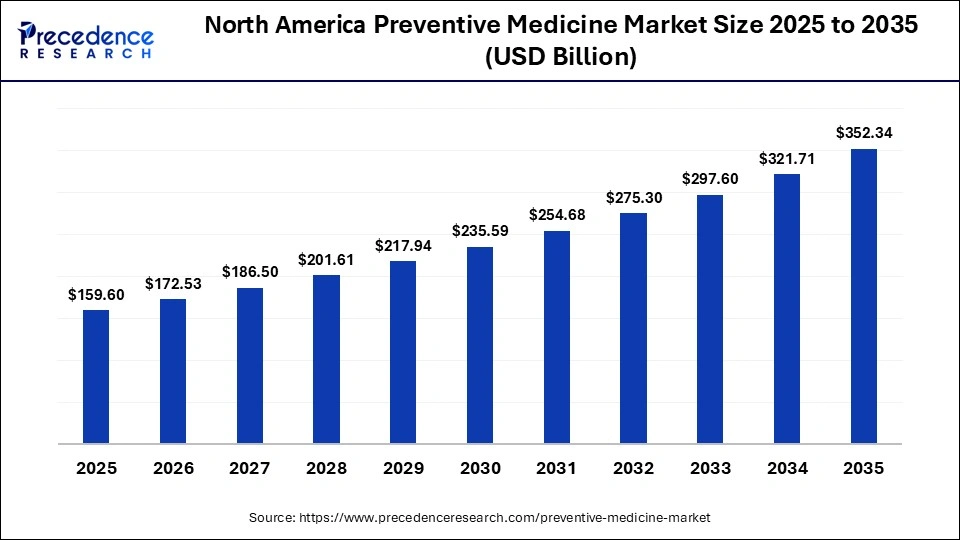
The North America preventive medicine market size is estimated at USD 159.60 billion in 2025 and is projected to reach approximately USD 352.34 billion by 2035, with a 8.24% CAGR from 2026 to 2035.
Why Did North America Lead the Global Preventive Medicine Market in 2025?
North America dominated the preventive medicine market by capturing a major share of 38% in 2025. This is because of its well-established healthcare infrastructure, heightened awareness of health and wellness among people, and government initiatives promoting preventive healthcare services. The region benefits from a well-structured healthcare system that focuses on early detection and long-term health management. Preventive measures, including vaccinations, regular checkups, and health promotion, are prevalent in the primary care provision in the U.S. and Canada. Health policies, such as the Affordable Care Act in the U.S, have greatly advanced access to preventive care across the region.
U.S. Preventive Medicine Market Size and Growth 2026 to 2035
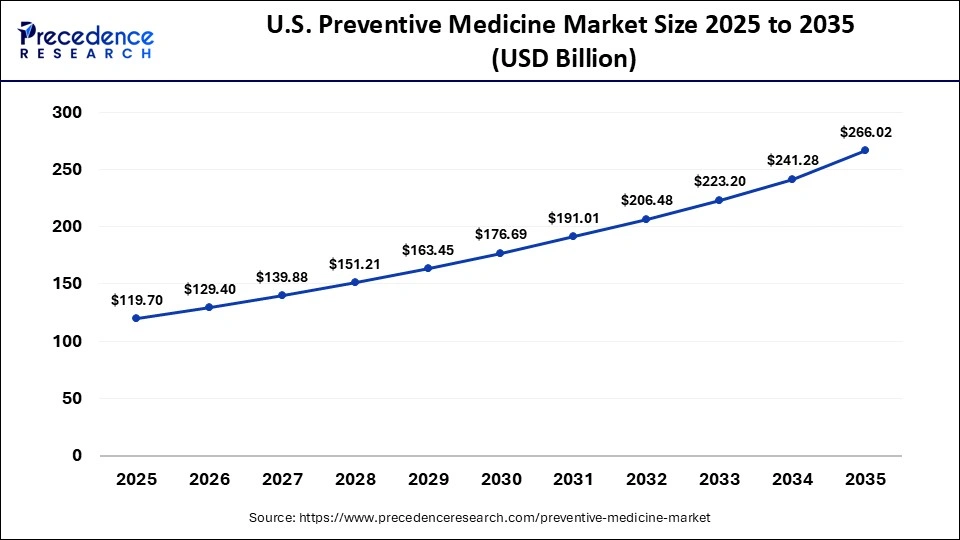
The U.S. preventive medicine market size is calculated at USD 119.70 billion in 2025 and is expected to reach nearly USD 266.02 billion in 2035, accelerating at a strong CAGR of 8.31% between 2026 and 2035.
U.S. Preventive Medicine Market Analysis
The U.S. is a major contributor to the North American market due to the high healthcare spending, availability of sophisticated healthcare infrastructure, and high acceptance of innovative healthcare technologies. The country has a well-established healthcare ecosystem, including hospitals, diagnostic centers, and digital health platforms that support early disease detection and real-time health monitoring. Additionally, government initiatives such as the Affordable Care Act have significantly improved access to preventive services, including vaccinations, cancer screenings, and annual wellness check-ups by reducing patient costs.
Europe: The Second-Largest Market
Europe held the second-largest share of 27% in 2025 and is expected to grow at a notable CAGR of 7.2% during the projection period. This is mainly due to its well-established public health systems and a strong shift toward early disease detection. The region benefits from robust government-supported healthcare infrastructure with a focus on preventive care, health education, and early intervention programs. Key countries such as Germany, France, the UK, and the Netherlands are investing heavily in national screening initiatives for cancer, cardiovascular diseases, and metabolic disorders, thereby contributing to market growth.
UK Preventive Medicine Market Analysis
The UK plays a significant role in the European market, supported by its publicly funded National Health Service (NHS) and strong emphasis on preventive healthcare delivery. The NHS provides widespread access to routine screenings, vaccinations, and health check-ups to enable early disease detection and long-term health management. Additionally, government-led initiatives promoting lifestyle changes, such as obesity reduction, smoking cessation, alcohol moderation, and increased physical activity, further support preventive healthcare adoption.
Why is Asia Pacific Undergoing the Fastest Growth in the Preventive Medicine Market?
Asia Pacific is expected to grow at the fastest CAGR of 9.5% during the projection period, owing to its large population base, rising healthcare awareness, and improving access to healthcare services. The region is witnessing a shift from reactive to preventive healthcare due to the increasing prevalence of chronic diseases such as diabetes, cardiovascular disorders, and cancer. Additionally, governments in countries like China, India, Japan, and Australia are significantly investing in healthcare infrastructure and preventive care initiatives.
Japan Preventive Medicine Market Analysis
The market in Japan is growing rapidly due to its aging population, advanced healthcare system, and strong focus on early disease detection. With one of the highest life expectancies globally, there is increasing emphasis on preventing and managing age-related chronic diseases such as cardiovascular disorders, cancer, and diabetes. Additionally, the adoption of digital health monitoring, robotics, and AI-based diagnostics is enhancing the accessibility and effectiveness of preventive healthcare services.
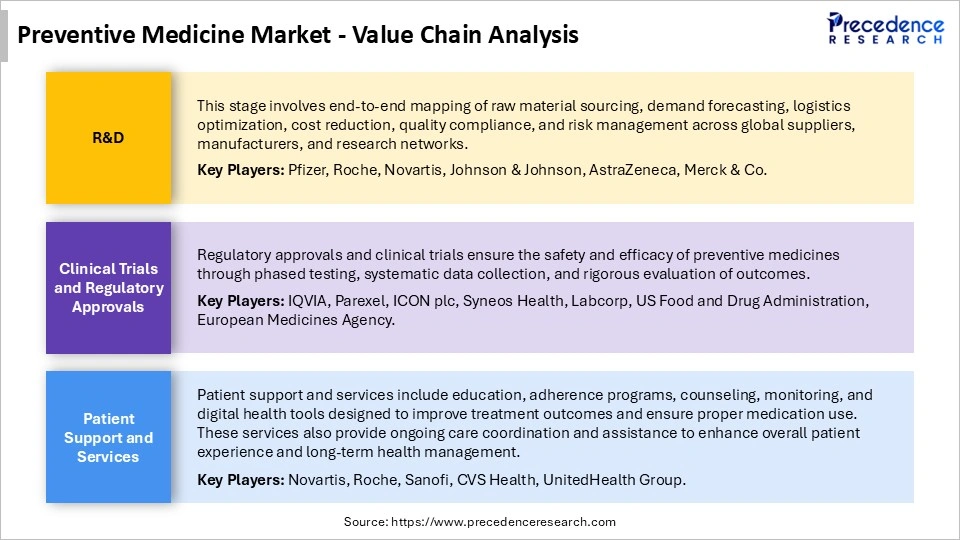
Preventive Medicine Market Value Chain Analysis
Preventive Medicine Market Companies
- Pfizer Inc.
- GlaxoSmithKline plc (GSK)
- Merck & Co., Inc.
- Sanofi S.A.
- Johnson & Johnson
- Abbott Laboratories
- Roche Holding AG
- Siemens Healthineers AG
- Quest Diagnostics Incorporated
- Labcorp (Laboratory Corporation of America Holdings)
- Medtronic plc
- Thermo Fisher Scientific Inc.
- CVS Health Corporation
- UnitedHealth Group Incorporated
- Becton, Dickinson and Company (BD)
Recent Developments
- In February 2025, Biograph, the advanced preventive health and diagnostics clinic, was officially launched to advance human healthspan and lifespan. It uses an evidence-based approach, collecting 1,000+ data points across 30+ evaluations to create highly personalized care plans.(Source: https://www.businesswire.com)
- In February 2025, the American Heart Association (AHA) announced a preventive health program in five regions of the U.S. that aims to address Cardiovascular-Kidney-Metabolic (CKM) syndrome. The project is expected to raise awareness, encourage screening at the outset, and foster collaboration among health professionals.(Source: https://newsroom.heart.org)
- In July 2024, Nervfit collaborated with MYCLNQ to design a Technology-Enabled Care (TEC) program to provide preventive care in India. The partnership combines wearables, telehealth, and digital health interactions to underpin the early intervention and individualized wellness care.(Source: https://myclnq.co)
Segments Covered in the Report
By Type
- Vaccines
- Screening & Early Detection
- Preventive Therapeutics
- Digital Preventive Healthcare
By Application
- Infectious Diseases Prevention
- Chronic Disease Prevention
- Cancer Prevention
- Cardiovascular Disease Prevention
- Others
By End-Use
- Hospitals & Clinics
- Diagnostic Centers
- Public Health Organizations
- Home Healthcare
By Delivery Mode
- Injectable
- Oral
- Digital & Remote Monitoring
By Region
- North America
- Latin America
- Europe
- Asia-pacific
- Middle and East Africa
For inquiries regarding discounts, bulk purchases, or customization requests, please contact us at sales@precedenceresearch.com
Frequently Asked Questions
Tags





Ask For Sample
No cookie-cutter, only authentic analysis – take the 1st step to become a Precedence Research client
 Get a Sample




 sales@precedenceresearch.com
 Schedule a Meeting
