



Tensiometer Market Size, Companies, Share, Crop Production Volume, Yield Analysis, Export & Import Trends, Pricing Metrics, Competitive Positioning, and Demand Forecast
Tensiometer Market (By Product Type: Soil Tensiometers, Laboratory Tensiometers, Industrial Tensiometers, Digital Tensiometers; By Technology/Instrument Type: Automated Force Tensiometers, Du Noüy Ring/Wilhelmy Plate Tensiometers, Drop Shape/Optical Tensiometers; By Application: Agriculture, Research & Academia, Industrial Processing, Environmental Monitoring; By End-Use Industry: Chemical Industry, Pharmaceutical and Biopharmaceutical, Food and Beverage, Cosmetics and Personal Care, Agriculture, Others) - Global Industry Analysis, Size, Trends, Leading Companies, Regional Outlook, and Forecast 2026 to 2035
Source: https://www.precedenceresearch.com/tensiometer-market
 Get a Sample
 Table Of Content


What is the Tensiometer Market Size in 2026?
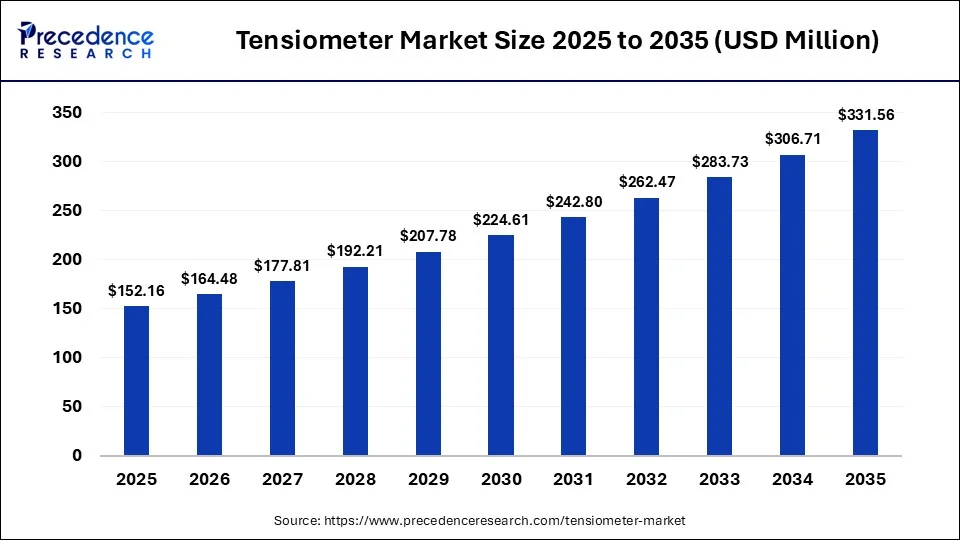
The global tensiometer market size was calculated at USD 152.16 million in 2025 and is predicted to increase from USD 164.48 million in 2026 to approximately USD 331.56 million by 2035, expanding at a CAGR of 8.10% from 2026 to 2035. Improved precision in measurements, real-time data acquisition, broad application versatility, and non-destructive testing are key drivers of market growth.
Key Takeaways
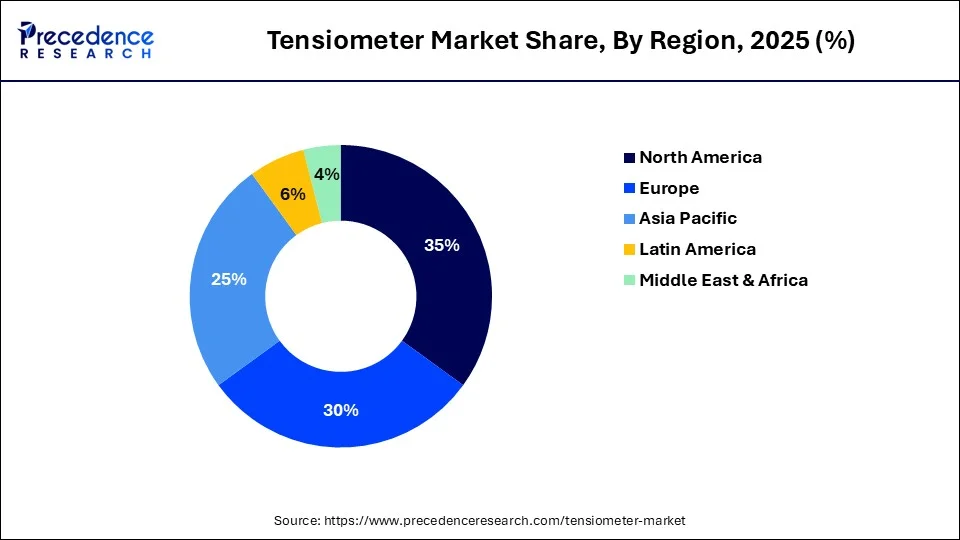
- North America led the tensiometer market in 2025 with a share of approximately 35%.
- Asia-Pacific is expected to be the fastest-growing region with a CAGR of 8.5% in the forecast period.
- By product type, the soil tensiometers segment held a dominant position with a share of approximately 52% in 2025.
- By product type, the digital tensiometers segment is expected to grow at the fastest CAGR of 6.7% in the market between 2026 and 2035.
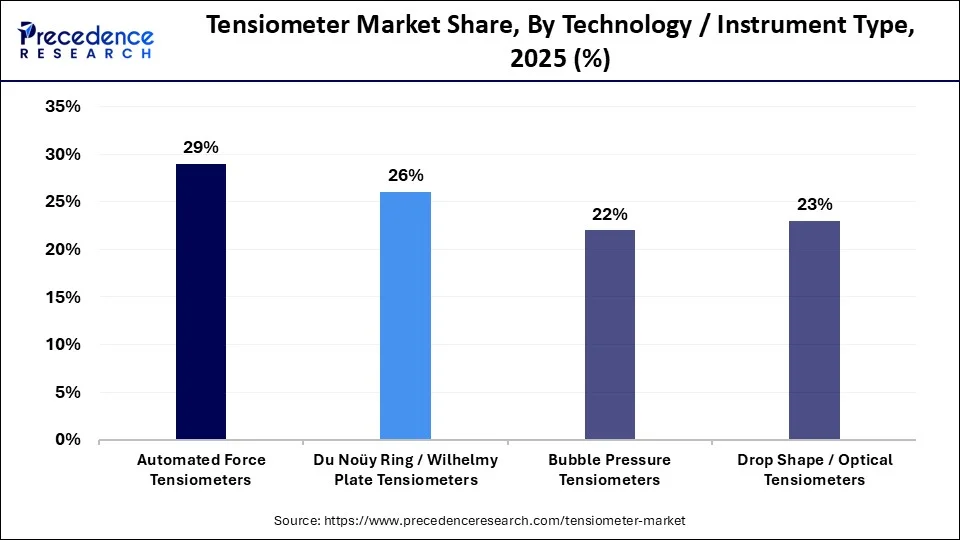
- By technology/instrument type, the automated force tensiometers segment registered its dominance over the market with a share of approximately 29% in 2025.
- By technology/instrument type, the bubble pressure tensiometers segment is expected to grow with the highest CAGR of 6.9% in the market during the studied years.
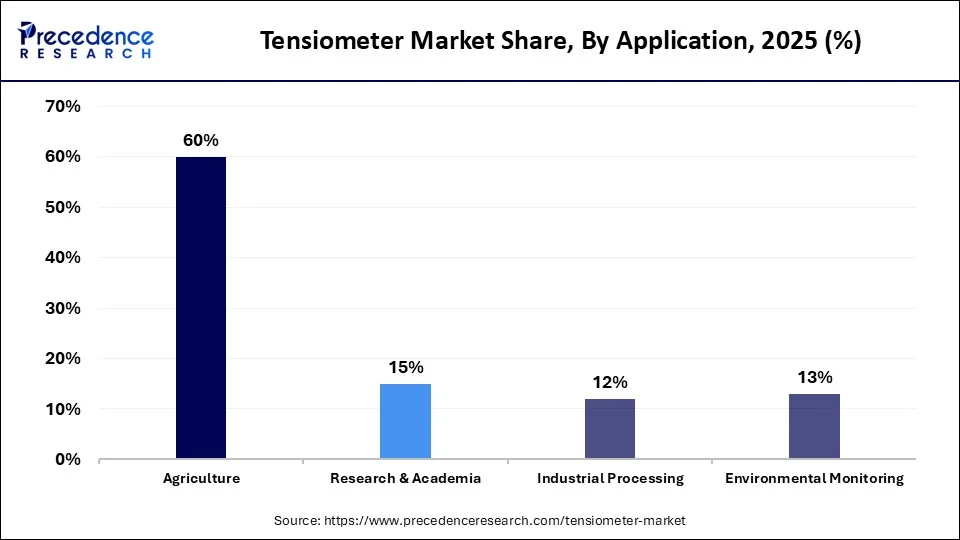
- By application, the agriculture segment held the largest market share of approximately 60% in 2025.
- By application, the environmental monitoring segment is expected to expand rapidly in the market with a CAGR of 7.1% in the coming years.
- By end-use industry, the chemical industry segment contributed the biggest market share of approximately 25% in 2025.
- By end-use industry, the pharmaceutical and biopharmaceutical segment is expected to witness the fastest growth in the market with a CAGR of 7.4% over the forecast period.
What is the Tensiometer Market?
The tensiometer industry refers to the global industry focused on instruments used to measure surface tension, interfacial tension, or soil moisture tension in liquids and soils. These devices are widely used in agriculture, chemical processing, pharmaceuticals, cosmetics, and research laboratories to analyze liquid behaviour and optimize formulations or irrigation management. Tensiometers help improve product quality, irrigation efficiency, and research accuracy by providing precise measurements of liquid interactions or soil water tension, supporting applications in industrial quality control, environmental monitoring, and precision agriculture.
Impact of Artificial Intelligence on the Tensiometer Market
Artificial intelligence (AI) is emerging as a powerful advancement in tensiometer technology by enabling data driven estimation of soil moisture without relying on strong physical assumptions. An IoT based prototype can measure soil tension up to −80 kPa, achieving a high accuracy of R² = 0.99 when compared with the same tensiometer equipped with a mechanical manometer, thereby demonstrating strong reliability and performance.
Recent developments in electronic technology have provided researchers with access to low cost solid state sensors and programmable microcontroller based circuits, making modern sensing systems more practical and efficient. When combined with the potential of 3D printing, prototype development for automated data collection has become significantly more feasible. Additionally, AI integration enables predictive maintenance, further enhancing system sustainability and operational efficiency.
Tensiometer Market Trends
- Adoption of an IoT-integrated Tensiometer System: The integration of a tensiometer with IoT-based remote sensing and smart technologies is enabling real-time, data-driven, and automated solutions. This is driving rapid growth, as farmers increasingly adopt these integrated systems to improve efficiency.
- Growing Adoption of Optical Tensiometers: Optical tensiometers offer precise non-contact surface and interfacial tension measurements with advanced imaging and data analysis, and are increasingly adopted across biotechnology, pharmaceutical, and environmental applications, reinforcing their importance in the market.
- Increased Agricultural Productivity: Tensiometers are essential tools to measure soil moisture tension, helping farmers to determine when to irrigate by indicating the level of soil dryness. Precision irrigation management is essential to provide a consistent, controlled water supply for crop growth.
Market Scope
| Report Coverage | Details |
| Market Size in 2025 | USD 152.16 Million |
| Market Size in 2026 | USD 164.48 Million |
| Market Size by 2035 | USD 331.56 Million |
| Market Growth Rate from 2026 to 2035 | CAGR of 8.10% |
| Dominating Region | North America |
| Fastest Growing Region | Asia Pacific |
| Base Year | 2025 |
| Forecast Period | 2026 to 2035 |
| Segments Covered | Product Type, Technology/Instrument Type, Application, End-Use Industry, and Region |
| Regions Covered | North America, Europe, Asia-Pacific, Latin America, and Middle East & Africa |
Tensiometer Market Dynamics
Driver
Increasing Use in Agricultural Sector
The increasing use of tensiometers across farming and agriculture, as well as in pharmaceutical, biomedical, and oil and gas industries, is acting as a key driver for market expansion. Tensiometers measure soil water tension, indicating how tightly water is held in the soil. This helps farmers make more informed irrigation decisions, especially in high-value crops and experimental setups.
Restraint
Cavitation of Tensiometers
The adoption of tensiometer-based systems is constrained by the need for periodic maintenance and refilling due to cavitation at high tensions of 80-100 kPa, which limits their use in unattended sensor networks, particularly in semi-arid regions. These operational requirements negatively impact long-term reliability and hinder large-scale deployment.
Opportunity
Expanding Applications
The market has significant growth potential in greenhouse systems and grasslands, aligned with precision agriculture and sustainability goals. Golf courses and outdoor sports stadiums also represent expanding application areas. Moreover, the increasing adoption of automated and digitally integrated instruments is expected to accelerate future development and broader implementation.
Segmental Insights
Product Type Insights
How did the Soil Tensiometers Segment Dominate the Tensiometer Market?
The soil tensiometers segment accounted for the highest market share of approximately 52% in 2025, due to its role in increasing crop yields. These instruments provide accurate measurements that help avoid plant drought stress and meet water requirements without wasting irrigation resources. They enable users to manage soil moisture levels effectively to maintain healthy turf and landscape crops, and they offer valuable information for planning irrigation and managing soil conditions.
Soil tensiometers are widely used in agricultural irrigation as a cost-effective and reliable method for measuring soil moisture. They accurately indicate the optimal irrigation point and clearly inform growers whether plants are short of water, how frequently water shortages occur, and how often irrigation is needed. This functionality improves both the yield and quality of crops, thereby driving market growth.
The digital tensiometers segment is expected to show the fastest growth with a CAGR of 6.7% over the forecast period. Digital tensiometers, composed of load cells, electronic circuits, digital displays, and fixtures, clamp samples under tension or compression to measure mechanical properties. They are used across industries for quality control and inspection in machining and manufacturing, pull and seal-strength tests in packaging, tensile testing in textiles, leather, and rubber, and material testing in construction and engineering. Their quick, accurate digital readouts, along with user-friendly operation and handling, are key factors driving their growing adoption.
Technology/Instrument Type Insights
Tensiometer Market Share, By Technology / Instrument Type, 2025 (%)
| Technology / Instrument Type | 2025 |
| Automated Force Tensiometers | 29% |
| Du Noüy Ring / Wilhelmy Plate Tensiometers | 26% |
| Bubble Pressure Tensiometers | 22% |
| Drop Shape / Optical Tensiometers | 23% |
Which Technology/Instrument Type Segment Dominated the Tensiometer Market?
The automated force tensiometers segment contributed the biggest market share with approximately 29% in 2025, as they allow for precise measurement of surface tension, interfacial tension, drop-adhesion force, and density in a compact design. With automatic adjustment, a magnetically locked windshield, and a high-precision force sensor, they are ideal for research and quality control applications.
Automated force tensiometers are crucial in chemical, pharmaceutical, and industrial laboratories for consistent measurement of surface and interfacial tension. They enhance throughput, reduce operator dependency, and are well-suited for quality control and high-volume testing, further supported by their integration with software and data management systems.
The bubble pressure tensiometers segment is expected to gain the highest market share with a CAGR of 6.9% between 2026 and 2035, driven by the increasing demand for dynamic surface tension measurements in rapid-processing applications. Various industries, including detergents, inks, coatings, and spray-based formulations, depend on these instruments to analyze surface behavior over very short timescales. By assessing the maximum internal pressure of a gas bubble that forms in a liquid, bubble pressure tensiometers offer crucial insights into surfactant concentration and longevity, dynamic surface tension and adsorption rates, micro-droplet formation times in aerosols and emulsifiers, concentrations of cleaning or wetting agents in industrial baths, and the immediate wettability of inks and coating fluids.
Application Insights
Tensiometer Market Share, By Application, 2025 (%)
| Application | 2025 |
| Agriculture | 60% |
| Research & Academia | 15% |
| Industrial Processing | 12% |
| Environmental Monitoring | 13% |
What Made the Agriculture Segment Dominate the Tensiometer Market?
The agriculture segment dominated the market with a share of approximately 60% in 2025, driven by the ability of agricultural tensiometers to save water and optimize irrigation. They reveal over and under irrigated areas, enabling significant water savings, and provide easy to interpret readings that accurately reflect soil water conditions at the root level, unaffected by soil salinity.
Suitable for most soil types, crops, and irrigation modes without calibration, tensiometers are simple to install and ensure good soil–sensor contact for natural tension equilibration. Their evolution from manual, intermittent readings to more continuous monitoring, typically using at least three repetitions for statistical reliability, has further boosted adoption and market growth.
The environmental monitoring segment is expected to witness the fastest growth in the market with a CAGR of 7.1% over the forecast period, driven by the expanding use of tensiometers across diverse ecosystems. These instruments measure soil–water relationships, supporting sustainable water management by quantifying soil moisture content and tracking changes under varying climatic conditions. The resulting data underpins studies on ecosystem resilience, drought risk, groundwater recharge, and conservation effectiveness, all of which are critical for informed decision making in land and water resource management and are collectively propelling market growth.
End-Use Industry Insights
Which End-Use Industry Segment Led the Tensiometer Market?
The chemical industry segment led the market with a share of approximately 25% in 2025, as tensiometers play a key role in studying the properties of liquids and interfaces, supporting the design and optimization of processes such as emulsification, foaming, and wetting. They are used to measure the surface tension of liquids involved in the production of chemicals, including coatings, adhesives, and solvents. Accurate surface tension measurements using tensiometers enable manufacturers to optimize product performance, reduce waste, and improve process efficiency.
Tensiometer Market Share, By End-Use Industry, 2025 (%)
| End-Use Industry | 2025 |
| Chemical Industry | 25% |
| Pharmaceutical & Biopharmaceutical | 20% |
| Food & Beverage 15% | 15% |
| Cosmetics & Personal Care | 12% |
| Agriculture | 18% |
| Others | 10% |
The pharmaceutical and biopharmaceutical segment is expected to grow with the highest CAGR of 7.4% in the market during the studied years, driven by increasing investment in biologics and advanced therapies, which is boosting demand for precise and repeatable measurements. In pharmaceutical manufacturing, tensiometers are used to measure the surface tension of liquid formulations, ensuring consistency and effective quality control in drug production. Moreover, they are used to study the surface tension of biological fluids and tissues, supporting research in areas such as lung function, cell biology, and biomaterials. Rising formulation complexity and stricter quality requirements are further underpinning the expansion of this segment.
Regional Insights
North America Tensiometer Market Size and Growth 2026 to 2035
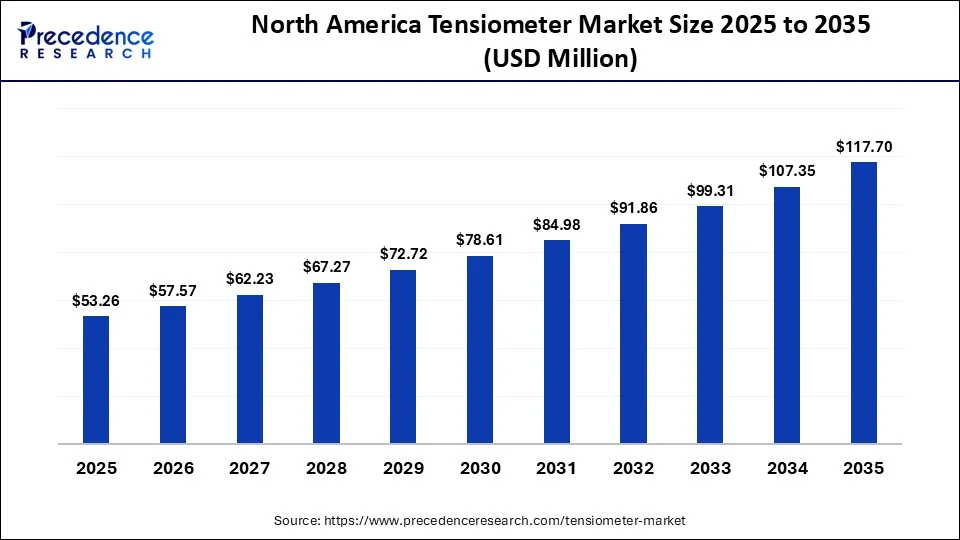
The North America tensiometer market size is estimated at USD 53.26 million in 2025 and is projected to reach approximately USD 117.70 million by 2035, with a 8.25% CAGR from 2026 to 2035.
Why North America Dominated the Tensiometer Market?
North America held a major market share of approximately 35% in 2025. Strong research and development efforts continue to propel market expansion, bolstered by government funding and favourable policies that encourage technological advancements. Additionally, rising investments in the oil and gas sector within the region, especially in the U.S. and Canada, are further enhancing the demand for tensiometers.
U.S. Tensiometer Market Size and Growth 2026 to 2035
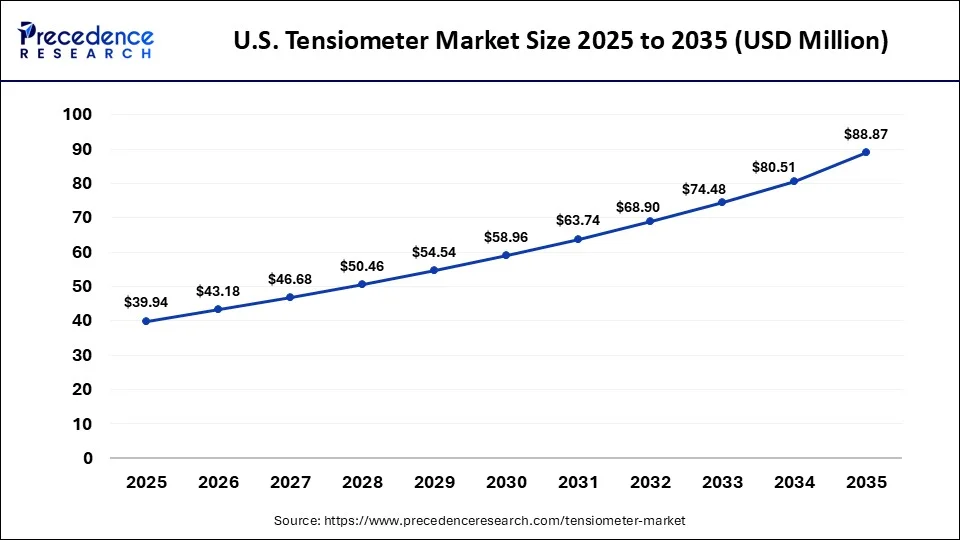
The U.S. tensiometer market size is calculated at USD 39.94 million in 2025 and is expected to reach nearly USD 88.87 million in 2035, accelerating at a strong CAGR of 8.33% between 2026 and 2035.
Country-Level Analysis
The U.S. dominated the North American market, driven by significant demand from the pharmaceutical, medical device, and oil and gas sectors, supported by substantial R&D expenditures and the widespread use of advanced laboratory instruments, which ensures steady demand. Laboratories in the U.S. and Canada exhibit a strong inclination towards automated and software-integrated tensiometers, and facilities nationwide are increasingly modernizing their systems to meet rigorous regulatory and quality standards.
The food and beverage sector also plays a significant role, utilizing tensiometers to improve product consistency, stability, and overall performance. Furthermore, the growth of advanced healthcare facilities and the increasing demand for high-performance materials in the automotive, aerospace, and electronics sectors are anticipated to further accelerate market growth.
How is Asia-Pacific Growing in the Tensiometer Market?
Asia-Pacific is expected to experience the fastest growth with a CAGR of 8.5% during the predicted timeframe. This growth is driven by the rapid expansion of chemical manufacturing, electronics production, and academic research infrastructure across the region. Countries are investing heavily in laboratory facilities and industrial R&D, which is creating strong demand for both entry level and mid range tensiometers. Cost effective manufacturing and rising quality standards further reinforce adoption and market penetration.
Country-Level Analysis
Within the Asia Pacific, China and Japan lead in production capacity and technological advancements, particularly in high precision and automated tensiometer systems. Meanwhile, India and Southeast Asian countries such as Indonesia and Thailand are experiencing expanding agricultural activities that increasingly rely on soil moisture monitoring instruments. Regional government initiatives promoting sustainable farming and efficient water management are further accelerating tensiometer deployment across agricultural and environmental applications, solidifying Asia-Pacific's position in the market.
Tensiometer Market Value Chain Analysis
- Raw Material Sourcing
This stage involves the procurement of durable and corrosion-resistant raw materials, such as stainless steel, high-grade polymers, and specialized ceramics.
Key Players: Soilmoisture Equipment Corp, Highborn Group
- Component Fabrication and Machining
Varies with device design, spanning rugged agricultural soil sensors to sophisticated, high-precision laboratory instruments.
Key Players: Virtual Hydromet, Highborn Group
- Testing and Certification
Guarantee accurate, repeatable measurements across applications, from agricultural soil moisture monitoring to precision laboratory surface science.
Key Players: KRÜSS Scientific, Biolin Scientific (Attension)
- Installation and Commissioning
Vary by application, as soil tensiometers prioritize hydraulic contact while laboratory models ensure precise mechanical alignment and calibration.
Key Players: Specialised Instruments Marketing Co., KRÜSS Scientific
- Distribution and Sales
Major manufacturers serve large industrial clients and universities; regional distributors and online platforms handle standardized units.
Key Players: Orbit Research Associates, IndiaMART
- Maintenance and After-Sales Service
Routine maintenance and after-sales services primarily emphasize periodic re-certification and timely replacement of essential consumables.
Key Players: Jayasree Reva Phoenix Metrology, Biolin Scientific
- Product Lifecycle Management
Strikes a balance between rugged durability for field sensors and ultra-high precision for demanding laboratory instruments.
Key Players: KRÜSS GmbH, Siemens Digital Industries Software
Tensiometer Market Companies
- Krüss GmbH
- Biolin Scientific
- DataPhysics Instruments
- Kibron Inc.
- SITA Messtechnik
- Rame-Hart Instrument Co.
- Kyowa Interface Science
- LAUDA Scientific
- Thermo Fisher Scientific
- CSC Scientific Company
- Mettler-Toledo
- Nima Technology
- SEO Surface Electro Optics
- Cole-Parmer Instrument Company
- Apex Instruments
Recent Developments
- In March 2025, Dyne Testing unveiled the Sigma 702 Force Tensiometer from Biolin Scientific, which is a standalone device designed for accurate measurement of surface tension and interfacial tension. The Sigma 702 Force Tensiometer is equipped with a precision balance, a motorized sample stage, and a user-friendly interface, allowing minimal training to operate the instrument.(Source: https://metrology.news)
- In February 2025, Biolin Scientific enhanced its presence in the semiconductor sector with the introduction of the Attension Theta Wafer. This state-of-the-art optical tensiometer was meticulously engineered for accurate contact angle measurements on silicon wafers. Equipped with the superior Theta Flow frame, it established a new benchmark for quality in an industry known for its stringent requirements.(Source: https://www.biolinscientific.com)
Segments Covered in the Report
By Product Type
- Soil Tensiometers
- Laboratory Tensiometers
- Industrial Tensiometers
- Digital Tensiometers
By Technology/Instrument Type
- Automated Force Tensiometers
- Du Noüy Ring/Wilhelmy Plate Tensiometers
- Bubble Pressure Tensiometers
- Drop Shape/Optical Tensiometers
By Application
- Agriculture
- Research & Academia
- Industrial Processing
- Environmental Monitoring
By End-Use Industry
- Chemical Industry
- Pharmaceutical and Biopharmaceutical
- Food and Beverage
- Cosmetics and Personal Care
- Agriculture
- Others
By Region
- North America
- Latin America
- Europe
- Asia-pacific
- Middle and East Africa
For inquiries regarding discounts, bulk purchases, or customization requests, please contact us at sales@precedenceresearch.com
Frequently Asked Questions
Tags





Ask For Sample
No cookie-cutter, only authentic analysis – take the 1st step to become a Precedence Research client
 Get a Sample




 sales@precedenceresearch.com
 Schedule a Meeting
