



Vaccine Delivery Devices Market Size, Companies, Share, Patient Volume, Treatment Adoption Rates, Pricing Analysis, Regulatory Landscape, Competitive Positioning, and Demand Forecast
Vaccine Delivery Devices Market (By Device Type: Pre-filled Syringes, Auto-Disable (AD) Syringes, Safety Syringes & Safety Needles, Needle-Free Injectors, Microneedle Patches, Other Delivery Devices; By Technology: Conventional Needle-Based Delivery, Standard syringes, Electroporation / thermal delivery, Microneedles; By End-User: Hospitals & Clinics, Public Health / Immunization Program, Diagnostic & Specialty Centers, Homecare / Self-Administration) - Global Industry Analysis, Size, Trends, Leading Companies, Regional Outlook, and Forecast 2026 to 2035
Source: https://www.precedenceresearch.com/vaccine-delivery-devices-market
 Get a Sample
 Table Of Content


What is the Vaccine Delivery Devices Market Size?
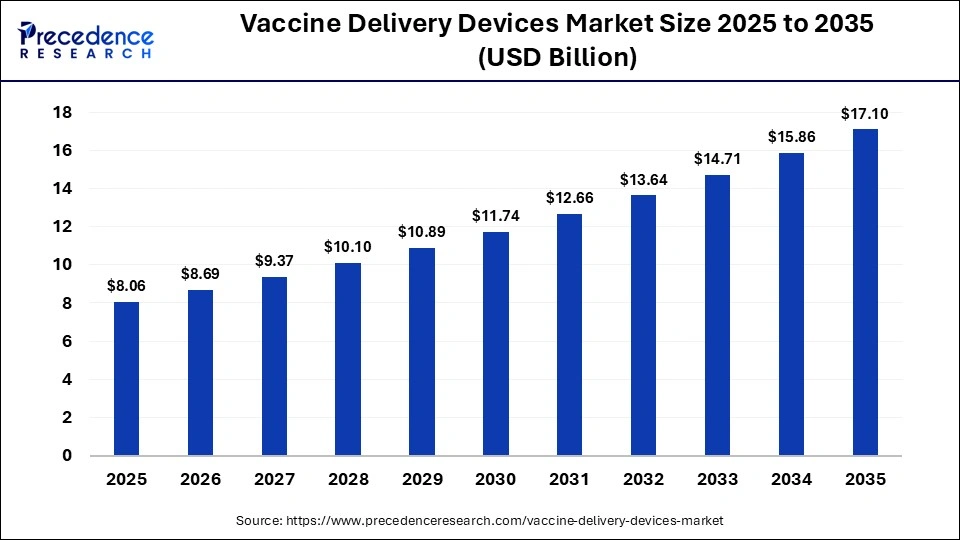
The global vaccine delivery devices market size was calculated at USD 8.06 billion in 2025 and is predicted to increase from USD 8.69 billion in 2026 to approximately USD 17.10 billion by 2035, expanding at a CAGR of 7.81% from 2026 to 2035.The vaccine delivery devices market is expanding steadily, driven by rising global immunization programs, technological innovations like needle-free systems, and increasing vaccine demand.
Market Highlights
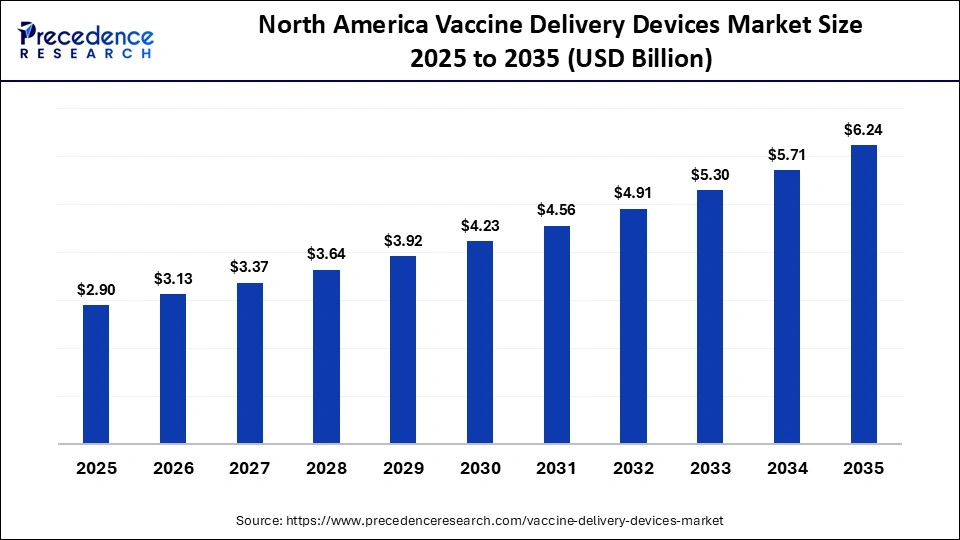
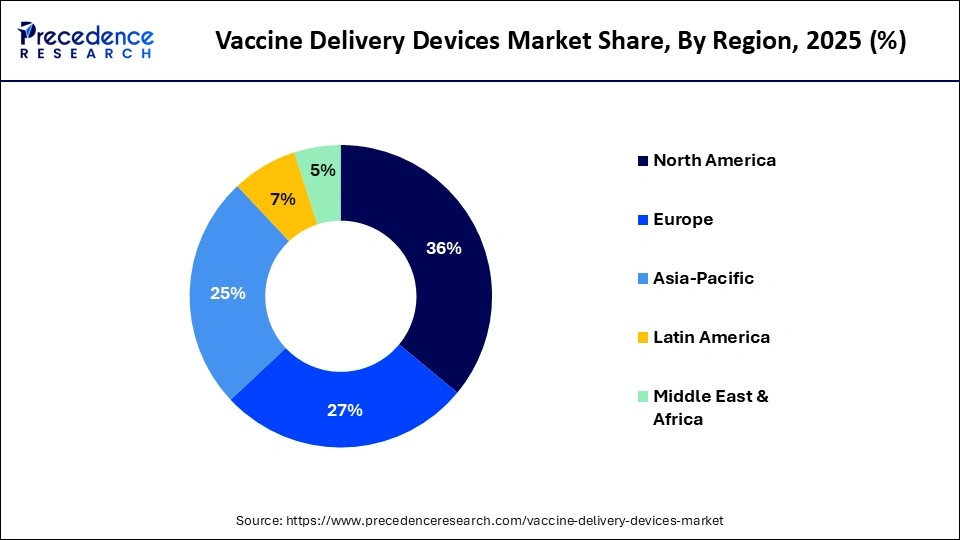
- North America led the vaccine delivery devices market with approximately 36% market share in the 2025.
- Asia Pacific is estimated to expand the fastest CAGR in the market between 2026 and 2035.
- By device type, pre-filled syringes segment dominated the market in 2025 with 36% of market share.
- By device type, the micro-needle patches segment is growing at a strong CAGR during 2026 and 2035.
- By technology, the conventional needle-based delivery segment captured 72% market share in 2025.
- By technology, the needle-free / needle-less delivery segment is expected to expand at a notable CAGR from 2026 to 2035.
- By end-user, hospitals & clinics segment dominated the market with 41% of market share in 2025.
- By end-user, the homecare / self-administration segment is growing at a strong CAGR during 2026 and 2035.
Are Vaccine Delivery Devices Developing New Approaches to Immunization?
Delivery systems for vaccines are specialized equipment designed for the safe delivery and administration of vaccines in multiple ways, including via intramuscular, subcutaneous, intradermal, or transdermal routes. Examples include syringes, auto-injectors, jet injectors, micro needle arrays, and safety-engineered devices.
The market for vaccine delivery devices is currently evolving with the growth of the global vaccine market, preparations for future pandemics, and an increased focus on vaccinating adults. Additionally, there is a higher need for needle-free and greater options for minimally invasive methods of administration that will result in better adherence by patients and fewer instances of needle stick-related injuries. Advances in technology such as smart injectors and use of dose-sparing methods are improving the accuracy of vaccine administration and increasing the efficiency of the cold chain. Immunization efforts at the national level by various governments, expansion of biologics pipelines, and large-scale vaccination campaigns in developing countries all have contributed to increasing overall volume of vaccine acquisition.
AI Changes The Dynamics Of Vaccine Delivery Devices Market
Artificial intelligence is changing how companies produce and distribute vaccines by improving precision, personalization and efficiency throughout the vaccine lifecycle from development through to distribution. An example of this is MIT's research into using AI to create more effective RNA vaccine delivery particles; this illustrates how machine learning has sped up the development of delivery technologies as well as improving their performance profiles, thereby potentially reducing the time-to-market for novel therapeutics.
As a result many leading companies such as Pfizer and Moderna have begun to incorporate large amounts of AI in their research and development (R&D) as well as in their distribution strategies; this indicates a strategic shift away from traditional practices towards data-driven solutions that maximise the effectiveness of vaccine formulation and administration. The overlap between artificial intelligence and device innovation is attracting additional investment, creating competitive differentiation and offering increased access to both emerging and established markets.
Key Trends Driving the Vaccine Delivery Devices Market
- Needle-Free Devices: Improvements in needle-free injectors and jet injectors are decreasing needle stick injuries as a result of their increased use. More patients are willingly using these devices. These advancements in technology offer safety benefits to the vaccine recipient, create less biohazard waste, and are conducive to large scale vaccination programs, primarily in pediatric settings and mass vaccination situations.
- Smart Devices: The integration of digital tracking capabilities into both auto-injectors and wearable devices enables tracking doses and monitoring adherence to the treatment plan. The use of connected devices enhances the management of vaccination records, enables remote healthcare delivery, and increases supply chain visibility throughout the vaccination process.
- Prefilled devices: The increased adoption of prefilled syringes and ready-to-use cartridges increases the accuracy of dosing and decreases preparation errors. In addition, these formats improve the efficiency of operation within hospitals, pharmacies, and outreach vaccination groups by streamlining administration and minimizing chances for contamination.
- Thermostable Delivery: The design of devices for use with thermostable and lyophilized vaccines decreases the dependence on stringent cold-chain logistics. This trend further enhances access to vaccines for individuals in remote or resource-limited regions by increasing the flexibility of storage and increasing the resiliency of vaccine distribution channels.
Market Scope
| Report Coverage | Details |
| Market Size in 2025 | USD 8.06 Billion |
| Market Size in 2026 | USD 8.69 Billion |
| Market Size by 2035 | USD 17.10 Billion |
| Market Growth Rate from 2026 to 2035 | CAGR of 7.81% |
| Dominating Region | North America |
| Fastest Growing Region | Asia Pacific |
| Base Year | 2025 |
| Forecast Period | 2026 to 2035 |
| Segments Covered | Device Type,Technology,End-User, and Region |
| Regions Covered | North America, Europe, Asia-Pacific, Latin America, and Middle East & Africa |
Segment Insight
Drug Type Insight
Why Do Pre-filled Syringes leads Vaccine Delivery Devices Market?
Pre-filled syringes are the dominant segment of vaccine delivery devices market due to their ease of usage, accurate dosing, and reduced possibility of contamination. Pre-filled syringes enable faster preparation and fewer medication mistakes, leading to improved work efficiency in mass vaccinations campaigns. There has been an increased preference among pharmaceutical companies for pre-filled syringes because they help maintain the stability of the product and facilitate cold chain logistics. The compatibility of pre-filled syringes with large scale vaccination programs and the hospital system further supports their dominance in the market.
Micro needle Patches represent the fastest growing segment and are expected to continue to see continued growth due to their painless and minimally invasive delivery method and greater patient compliance with micronutrient patches compared to traditional vaccine administration methods. Micro needle patches offer the potential for self-administration and reduce dependence on trained health care providers. The ability of micro needle patches to provide easier methods for storing and distributing vaccines, especially in underserved locations, provides micro needle patches with great prospects for use in future immunization strategies and pandemic preparedness programs.
Technology Insights
What Keeps Conventional Needle-Based Delivery as Dominant segment?
Conventional needle-based delivery has dominated the market in 2025, due to long-term clinical acceptance as an economically viable option and a well-established global supply chain. Various types of safety-engineered syringes and standard syringes are still the dominant means by which vaccinations are administered globally, and those who administer such vaccines are well-trained in their usage/operation, thus creating an environment of familiarity and reliability when using these types of vaccine delivery systems. In addition, regulatory approval processes and compatibility with existing infrastructure will continue to support needle-based delivery systems as the dominant means of administering vaccines.
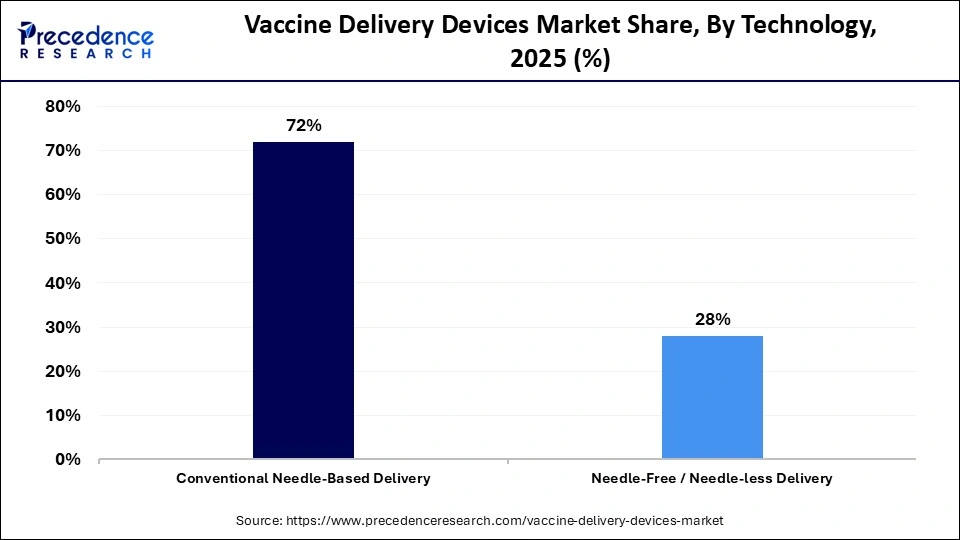
The most rapidly growing segment overall is needle-free delivery systems as a result of customer demand for increased safety and patient comfort when administering vaccines. Technology improvements such as jet injectors, micro-needles, etc., have decreased instances of needle stick injuries and decreased opportunities for cross-contamination. Further, the increased public awareness surrounding infection control and advances in the integration of drug and device systems will drive continued growth in this area, especially as it relates to the administration of vaccines in both pediatric and at-home immunisation settings.
End User Insights
Which End Use Points are the Driving Factors for Inpatient / Hospital Settings to Remain Dominant?
The Inpatient hospital setting leads the vaccine delivery devices market in 2025, due to its organization of process for vaccinations and the integration of care for patients. The hospital provides safe compliance with regulatory requirements, closely supervised classes of trained personnel, and an emergency response capability during vaccination procedures. Additionally, volume procurement contracts and institutional vaccination policies support their stronghold in the overall national or regional structures related to immunization.
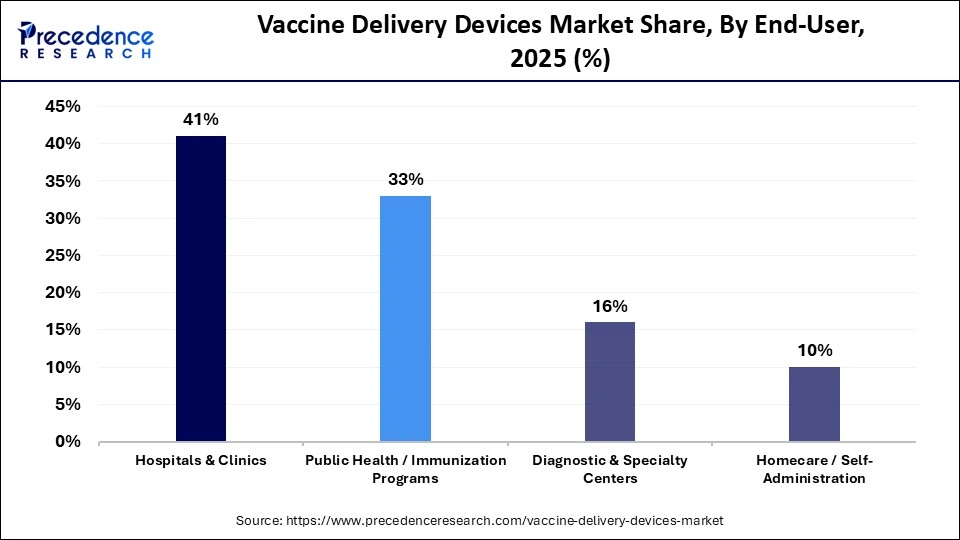
Although the Homecare setting is currently the segment of greatest growth, it is a result of the continual shift in healthcare towards patient-oriented, community-based models. With the creation of compact, safe and easy to use devices for administering vaccines, delivery has moved beyond traditional care facilities as well. The increasing need for convenience by seniors, those with chronic illnesses and those who prefer to avoid any inconveniences is helping to accelerate this transition.
Regional Insights
How Big is the North America Vaccine Delivery Devices Market Size?
The North America vaccine delivery devices market size is estimated at USD 2.90 billion in 2025 and is projected to reach approximately USD 6.24 billion by 2035, with a 7.96% CAGR from 2026 to 2035.
Why is North America Dominating region for Vaccine Delivery Devices Market?
North America is still the largest market for vaccine delivery devices due to its extremely developed healthcare infrastructure, strong government immunization programs, and early adoption of new vaccine delivery systems, including needle-free injectors and auto-injectors. North America also has clear regulations regarding the manufacture of vaccine delivery devices, which promotes innovation and allows for rapid commercialization so that hospitals, clinics, and networks of pharmacies can deploy advanced delivery devices reliably and consistently. In addition, the partnerships between biopharmaceutical companies and vaccine delivery device manufacturers are strengthening so that operational throughput is maximized when delivering routine and emergency immunizations to populations throughout North America.
What is the Size of the U.S. Vaccine Delivery Devices Market?
The U.S. vaccine delivery devices market size is calculated at USD 2.18 billion in 2025 and is expected to reach nearly USD 4.71 billion in 2035, accelerating at a strong CAGR of 8.01% between 2026 and 2035.
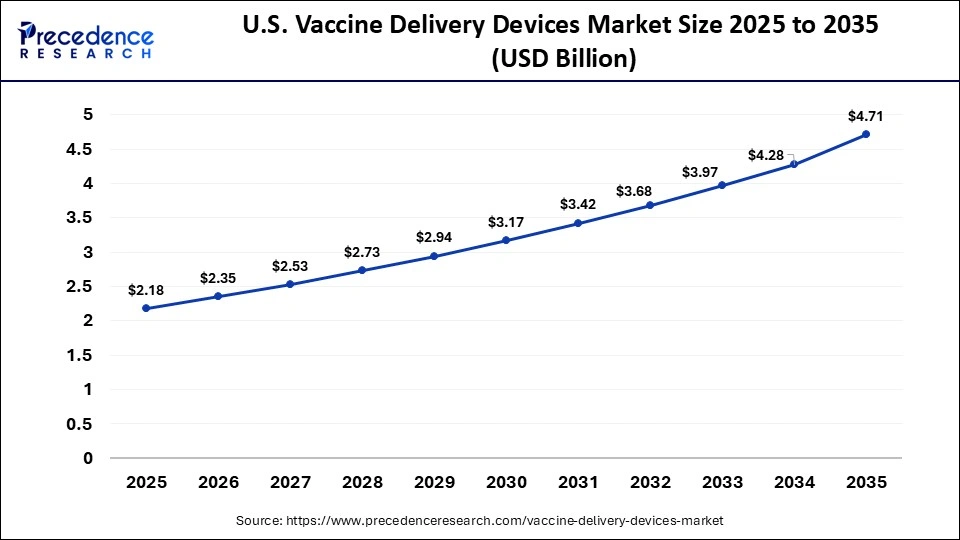
U.S. Vaccine Delivery Devices Market Trend
The U.S. which is the largest market within North America, has extensive vaccine research investment, a well-established immunization infrastructure, and a high public awareness of preventive medicine. The partnership between Sharps Technology Inc. and the biopharmaceutical industry, which is focused on scaling the U.S. production of precision syringes, demonstrates how U.S. vaccine delivery will be moving towards domestic production and quickening the implementation of new vaccine delivery systems. By increasing the speed with which new vaccine delivery systems can be manufactured, the United States will increase its status as an incubator for next-generation systems.
Asia Pacific
Why is Asia Pacific experiencing fastest growth of Vaccine Delivery Devices Market?
Asia Pacific encompasses the world's fastest growing regions in relation to the worldwide vaccine delivery device market, with growth being driven by broader healthcare access, growing awareness of immunisation, and enhancement of public health initiatives. Governments continue to invest in cold chain infrastructure and mobile vaccine delivery units that can reach both remote and urban communities. Furthermore, micro-needle systems and needle-free injectors as alternative delivery methods are being increasingly used, especially in the context of outreach programs aimed at improved compliance and reduced logistical issues to ensure populations have access to the vaccines. Collaborations among regions and local manufacturing hubs will shorten lead times and ensure continued supply stability across many differing regions.
China Vaccine Delivery Devices Market Trend
China is positioned as a leader within the Asia Pacific region with respect to the manufacturing capabilities and speed at which new, advanced vaccine delivery technologies are being adopted. China is leading the development of public health campaigns and community programs that will increase the use of low-cost, needle-free options. Additionally, the local innovation ecosystems and government support will further position China as a key contributor to the continuing growth of regional momentum in the growth and evolution of vaccine delivery technologies.
Will Europe grow in the Vaccine Delivery Devices Market?
Europe is considered to be a significantly growing area, due to high immunization coverage, strict safety regulations, and a focus on reducing needle stick incidents. Nations in this region utilize modern vaccine administration systems to ensure patient satisfaction, improve cold chain logistics, and facilitate effective mass immunization initiatives. Additionally, increased government budget allocation for adult vaccination drives and increasing usage of smart injectable systems will further fuel market expansion.
Germany Market Trends
Germany has a well-developed healthcare sector, sophisticated medical device industry, and heightened emphasis on preventive healthcare. There is an increasing demand for prefilled syringes and safety needles as healthcare professionals are interested in administering vaccines in a safe and effective manner. Furthermore, there is a surge in investments made in vaccine refrigeration systems and automated drug dispensing machines.
How will Latin America grow in the Vaccine Delivery Devices Market?
Latin America is expected to grow at a considerable CAGR in the upcoming period because of better availability of healthcare services, increased government initiatives for vaccination, and an increasing focus on infection prevention. Demand for safe injection products like syringes, needles, and portable injection devices continues to rise due to vaccination programs by nations. Moreover, increasing investments in health care services and awareness about vaccine safety also contribute to market growth.
Brazil Market Trends
The Brazilian market is driven by an extensive public vaccine administration program and a robust healthcare infrastructure. The rising emphasis on pediatric vaccines, influenza vaccines, and preventive campaigns for different diseases led to an increase in the adoption of safe and effective methods of vaccine administration. Higher demand for disposable syringes and cold-chain logistics also boost the market.
What are the Advancements in the Vaccine Delivery Devices Market in the Middle East and Africa?
The Middle East and Africa region is expected to grow at a notable CAGR in the foreseeable future, due to improvements in vaccination drives, healthcare funding, and backing by global health organizations. Syringes that are affordable, syringe-free injection devices, and portable vaccines continue to be sought after, especially in rural communities. Regional governments are concentrating on improving vaccine access and combating infectious diseases with vaccination drives.
UAE Market Trends
The UAE market is driven by the modernization of the healthcare sector, the adoption of digital health, and the emphasis placed by the government on preventive healthcare. High awareness about vaccination, along with investments in advanced medical technology, allowed for the implementation of more modern devices used to deliver vaccines. Smart healthcare services, along with proper vaccination monitoring, helped increase the rate of vaccination among patients.
Vaccine Delivery Devices Market Value Chain Analysis
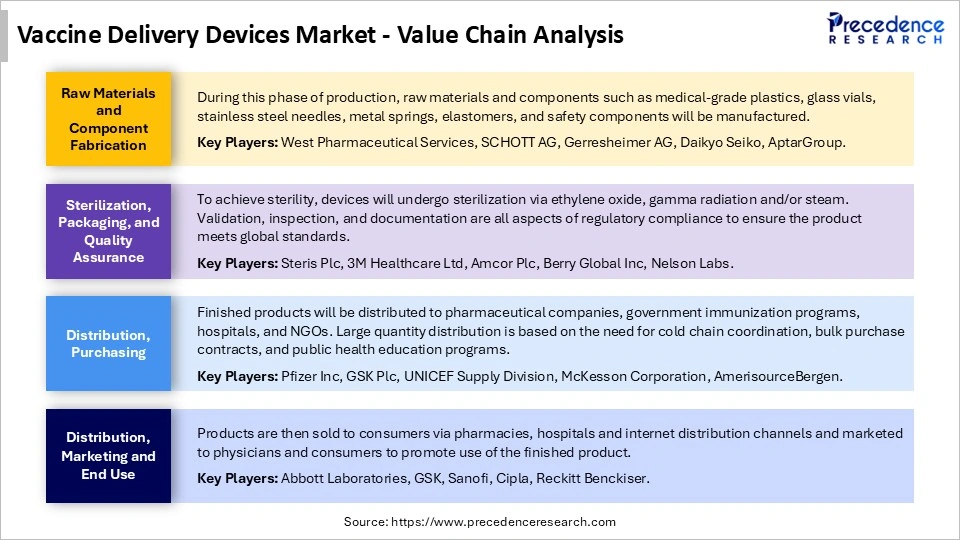
Who are the Major Players in the Global Vaccine Delivery Devices Market?
The major players in the vaccine delivery devices market include Becton Dickinson & Company, Bioject Medical Technologies, Inc. (Inovio Pharmaceutical Inc.), PharmaJet, Vaxxas, Gerresheimer AG, SCHOTT AG, Corium International, Inc., 3M
Recent Developments
- In August 2025, AstraZeneca's FLUMIST nasal spray flu vaccine can now be ordered for at-home delivery in the U.S., enabling eligible adults and caregivers to self-administer during the 2025-26 season. (Source: https://www.astrazeneca-us.com)
- In June 2025, Zeteo Biomedical secured new patents in both the U.S. and EU for its drug delivery technologies, boosting its ZTech platforms for nasal, ophthalmic and sublingual therapeutic delivery.(Source: https://europe.ophthalmologytimes.com)
Segments Covered in the Report
By Device Type
- Pre-filled Syringes
- Auto-Disable (AD) Syringes
- Safety Syringes & Safety Needles
- Needle-Free Injectors
- Microneedle Patches
- Other Delivery Devices
By Technology
- Conventional Needle-Based Delivery
- Standard syringes
- Safety engineered syringes
- Needle-Free / Needle-less Delivery
- Jet injectors
- Electroporation / thermal delivery
- Microneedles
By End-User
- Hospitals & Clinics
- Public Health / Immunization Programs
- Diagnostic & Specialty Centers
- Homecare / Self-Administration
By Region
- North America
- Europe
- Asia-Pacific
- Latin America
- Middle East & Africa
For inquiries regarding discounts, bulk purchases, or customization requests, please contact us at sales@precedenceresearch.com
Frequently Asked Questions





Ask For Sample
No cookie-cutter, only authentic analysis – take the 1st step to become a Precedence Research client
 Get a Sample
.webp)



 sales@precedenceresearch.com
 Schedule a Meeting
