



Agricultural Microbials Market Size, Companies, Share, Crop Production Volume, Yield Analysis, Export & Import Trends, Pricing Metrics, Competitive Positioning, and Demand Forecast
Agricultural Microbials Market (By Type: Bacteria, Fungi, Viruses, Protozoa, Others; By Application: Foliar Spray, Seed Treatment, Soil Treatment; By Function: Crop Protection (Biopesticides), Soil Amendments (Biofertilizers); By Crop Type: Cereals & Grains, Fruits & Vegetables, Oilseeds & Pulses, Turf & Ornamentals, Others) - Global Industry Analysis, Size, Trends, Leading Companies, Regional Outlook, and Forecast 2026 to 2035
Source: https://www.precedenceresearch.com/agricultural-microbials-market
 Get a Sample
 Table Of Content


What is the Agricultural Microbials Market Size?
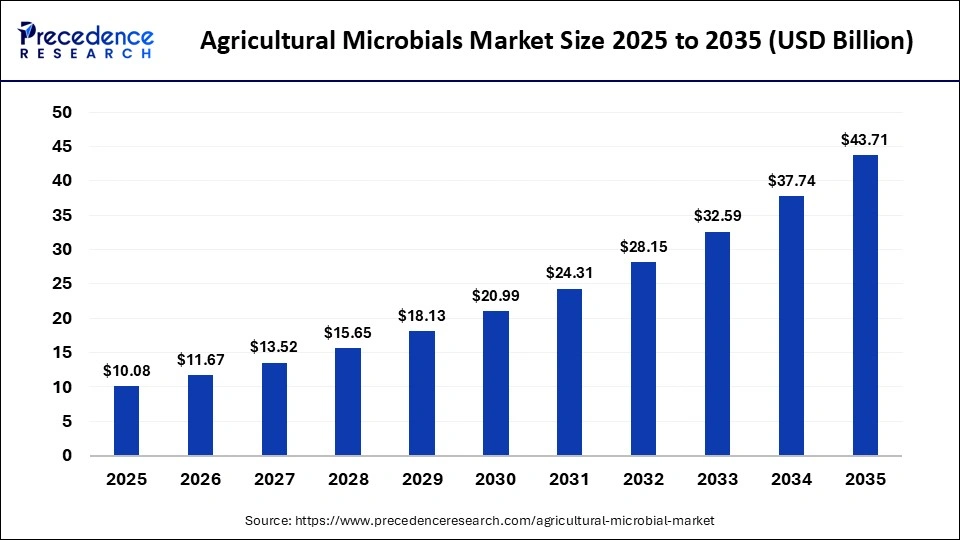
The global agricultural microbials market size was calculated at USD 10.08 billion in 2025 and is predicted to increase from USD 11.67 billion in 2026 to approximately USD 43.71 billion by 2035, expanding at a CAGR of 15.80% from 2026 to 2035.The market is currently entering a "super-cycle" of growth, driven by the global transition toward regenerative agriculture and the urgent need to restore soil microbiome diversity after decades of heavy synthetic chemical use. The growing demand for sustainable food and focus on improving soil health drive the market growth.
Market Highlights
- North America led the agricultural microbials market with a share of approximately 42% in 2025.
- Asia-Pacific is expected to be the fastest-growing region in the foreseeable period.
- By type, the bacteria segment held the largest revenue share of approximately 62.5% in 2025.
- By type, the fungi segment is expected to grow at the fastest CAGR of approximately 14.4% in the market between 2026 and 2035.
- By application, the foliar spray segment dominated the market with a share of approximately 44.6% in 2025.
- By application, the seed treatment segment is expected to grow with the highest CAGR of approximately 14.7% in the market during the studied years.
- By function, the crop protection (biopesticides) segment held a major revenue share of approximately 53.2% in the agricultural microbials market in 2025.
- By function, the soil amendment (biofertilizers) segment is expected to expand rapidly in the market in the coming years.
- By crop type, the cereals & grains segment contributed the biggest revenue share of approximately 38.7% in the market in 2025.
- By crop type, the fruits & vegetables segment is expected to witness the fastest growth in the market with a CAGR of approximately 14.3% over the forecast period.
What are Agricultural Microbials?
Agricultural microbials are beneficial living microorganisms, primarily bacteria and fungi that function as ‘plant probiotics' to enhance crop productivity and soil fertility. Key groups like nitrogen-fixing Rhizobium, phosphorus-solubilizing Bacillus, and nutrient-absorbing Mycorrhizal fungi improve nutrient uptake, stimulate growth through hormone production, and protect plants against diseases and environmental stresses like drought, and plant phenology by modelling sustainable agriculture, genome editing, and omics methods. To ensure maximum efficacy, these microbials are integrated into various farming stages, such as seed inoculation, soil drenching, in-furrow application, and foliar sprays.
Key Technological Shifts in the Agricultural Microbials Market
The market is undergoing key technological shifts driven by the demand for the delivery of natural products, enhancing efficacy, and sustainability. Technological advances in agricultural microbials, such as genomics, precision biotechnology, CRISPR-based gene editing, and nanotechnology, help to develop more effective solutions.
One of the major shifts is the integration of AI, which optimizes product formulation and accelerates growth. For example, microencapsulation and nano-enabled carriers address traditional challenges like short shelf life and inconsistent field performance. These digital agronomy tool innovations and technologies optimize microbial efficacy and support a global shift toward sustainable and regenerative farming practices.
Agricultural Microbials Market Trends
- Surge in Organic Food Demand: Heightened consumer awareness regarding long-term health risks of synthetic chemical residues has triggered a global pivot towards organic food consumption. The growing organic food market increases demand for agricultural microbial products to be inculcated into sustainable farming.
- Increasing Cost of Conventional Chemical Products: The growing cost of conventional synthetic agrochemicals like pesticides, fertilizers, and others increases the adoption of agricultural microbials. Farmers are looking for alternative synthetic chemicals and giving preference to sustainable products like biofertilizers, biopesticides & others.
- Rising demand for Sustainable Agriculture: The growing awareness about environmental concerns and sustainable farming is the primary catalyst for market growth. As regulations are getting stringent with consumer demand for green food, farmers are replacing synthetic chemicals with microbial tools like biostimulants and biofertilizers. These natural solutions effectively manage pests and boost soil fertility while significantly lowering the ecological footprint of modern farming.
- Government Initiatives and Policy Support: Many governments' backing and financial subsidies are crucial accelerators for the agricultural microbial sector. These initiatives overcome challenges like a lack of awareness about microbial products and high cost.
Market Scope
| Report Coverage | Details |
| Market Size in 2025 | USD 10.08 Billion |
| Market Size in 2026 | USD 11.67 Billion |
| Market Size by 2035 | USD 43.71 Billion |
| Market Growth Rate from 2026 to 2035 | CAGR of 15.80% |
| Dominating Region | North America |
| Fastest Growing Region | Asia Pacific |
| Base Year | 2025 |
| Forecast Period | 2026 to 2035 |
| Segments Covered | Type, Application, Function, Crop Type, and Region |
| Regions Covered | North America, Europe, Asia-Pacific, Latin America, and Middle East & Africa |
Segmental Insights
Type Insights
Which Microbe Type Segment Dominated the Agricultural Microbials Market?
The bacteria segment held a dominant position in the market with a share of approximately 62.5% in 2025 due to the versatility and effectiveness of bacterial strains (Bacillus, Rhizobium) in promoting plant growth, fixing nitrogen, and suppressing soil-borne pathogens. Farmers prefer these microbials because they adapt well to different soil types, work smoothly with traditional farming practices, and deliver reliable results in the field of the environment. Consistent field performance, strong scientific validation, and relatively low production costs have further strengthened farmers' confidence and market penetration, boosting the segment's growth.
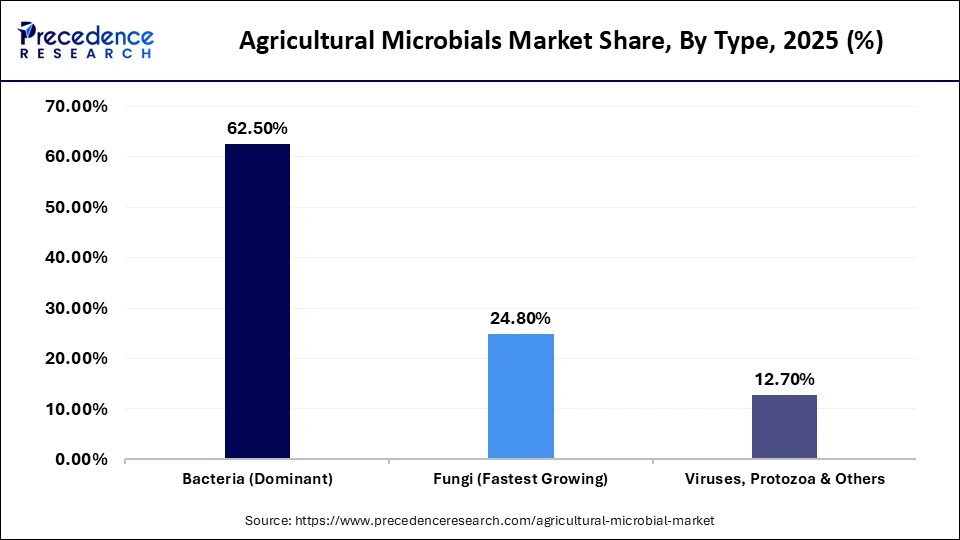
The fungi segment is expected to show the fastest growth with a CAGR of approximately 14.4% over the forecast period. The growing adoption of sustainable farming practices and focus on enhancing crop and soil health increases demand for fungi microbials. The demand for fungi as agricultural microbes is increasing, owing to its ability to produce bioactive metabolites, which can improve plant growth. Fungi can also supply inorganic nutrients to plants, such as ammonium, nitrate, and phosphate.
Application Insights
How the Foliar Spray Segment Dominated the Agricultural Microbials Market?
The foliar spray segment registered its dominance over the global market with a share of approximately 44.6% in 2025. The convenience of application across both organic and conventional farming systems supports its widespread adoption. Increased emphasis on quick nutrient absorption and state-specific crop management drives demand. Compatibility with biofertilizers and biopesticides also contributes to overall segment expansion. Foliar sprays can be directly applied to leaves, enhancing nutrient uptake and boosting stress tolerance.
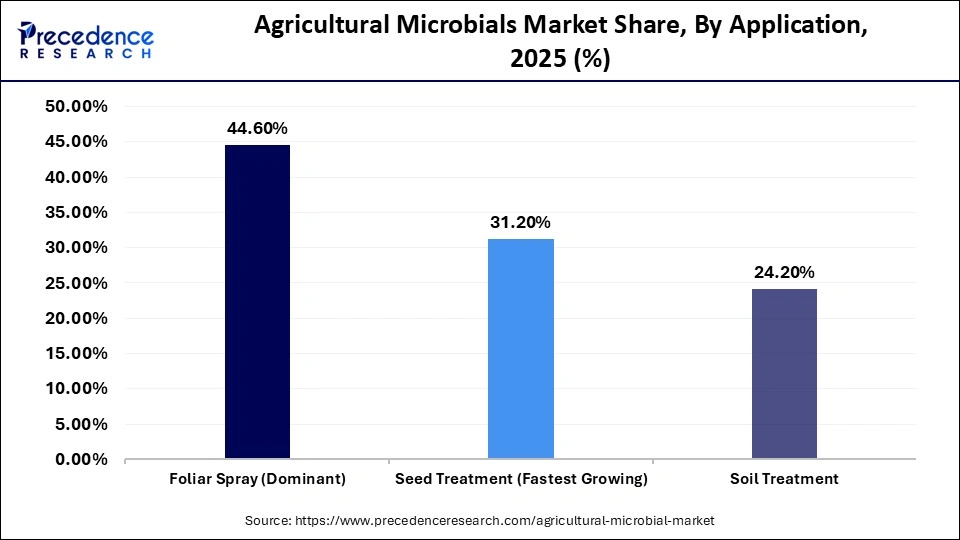
The seed treatment segment is expected to gain the highest share of the market with a CAGR of approximately 14.7% between 2026 and 2035. Rising focus on improving crop productivity and quality, along with increasing pressure to enhance food output, is boosting the demand. Greater adoption of organic farming practices and IPM strategies is further accelerating market growth. Agricultural microbials can improve germination rate, nutrient uptake, plant emergence, and stand establishment.
Function Insights
Why Did the Crop Protection Segment Dominate the Agricultural Microbials Market?
The crop protection (biopesticides) segment held the largest revenue share of approximately 53.2% in the market in 2025 due to the low toxicity and limited environmental impact of biopesticides. Rising consumer preference for organic food and growing awareness of harmful chemical effects lead to demand for microbials. In addition, adoption of integrated pest management (IPM) practices and concerns over excessive pesticide use strengthen the demand for biopesticides.
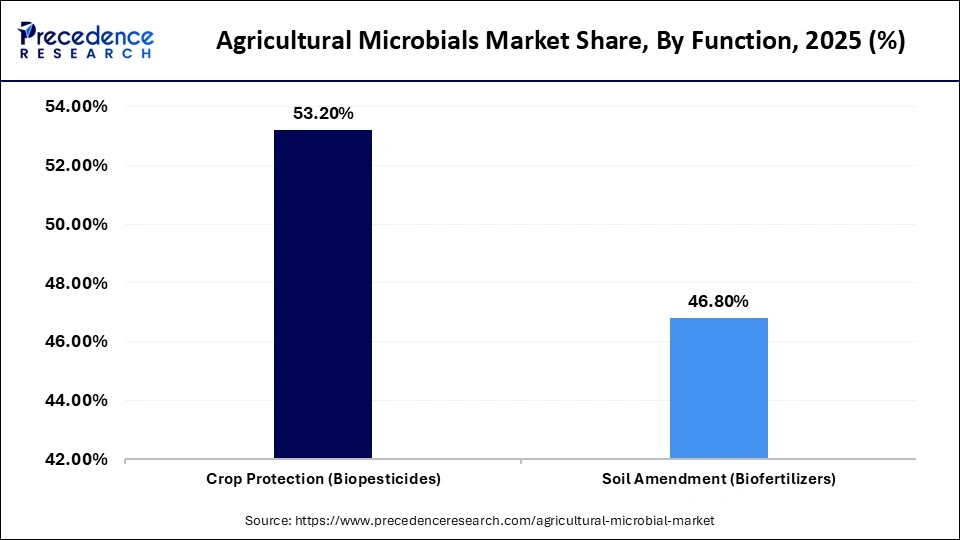
The soil amendment (biofertilizers) segment is expected to grow at the fastest CAGR in the market between 2026 and 2035. The growing concerns due to synthetic chemicals and increasing demand for organic and residue-free products potentiate the use of biofertilizers. The decline in soil fertility and focus on increasing nutrient availability require cost-effective and eco-friendly biofertilizers. Biofertilizers can mobilize nutritionally important elements from unusable forms to usable forms.
Crop Type Insights
The cereals & grains segment accounted for the highest revenue share of approximately 38.7% in the market in 2025. The rising demand for staple crops such as corn, wheat, and rice has strengthened the need for microbial solutions. Extensive cultivation areas and increasing incidence of pests and diseases in the crop have further driven the adoption of biofertilizers and biopesticides. Additionally, shifting dietary patterns and sustained high consumption levels continue to support the segment's growth.
The fruits & vegetables segment is expected to grow with the highest CAGR of approximately 14.3% in the market during the studied years. Increasing emphasis on healthy diet habits and higher consumption of fresh produce are driving the use of agricultural microbials. The vulnerability of fruits and vegetables to pests and diseases further boosts demand for microbial-based products. Expanding cultivation and consumer awareness also contribute to market expansion.
Regional Insights
How Big is the North America Agricultural Microbials Market Size?
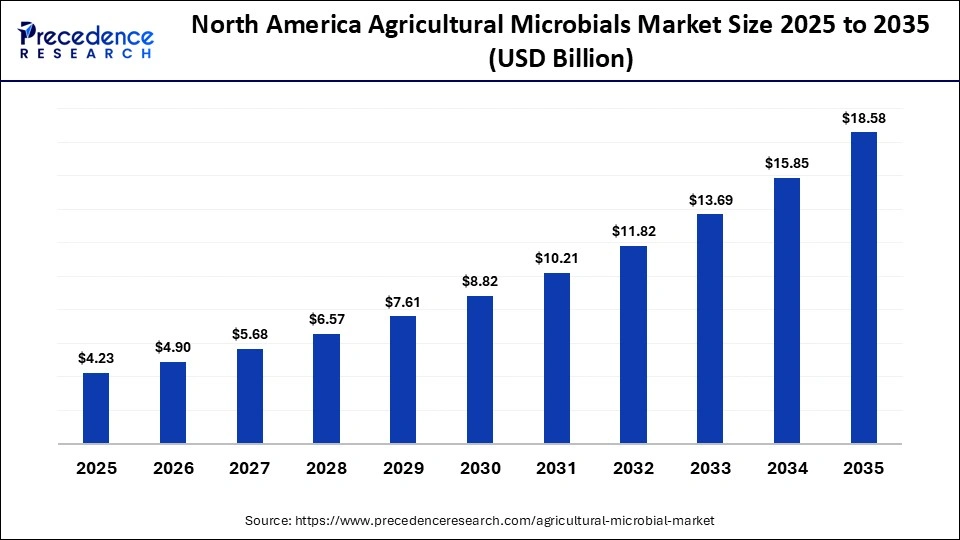
The North America agricultural microbials market size is estimated at USD 4.23 billion in 2025 and is projected to reach approximately USD 18.48 billion by 2035, with a 15.95% CAGR from 2026 to 2035.
Which Factors Drive the Agricultural Microbials Market in North America?
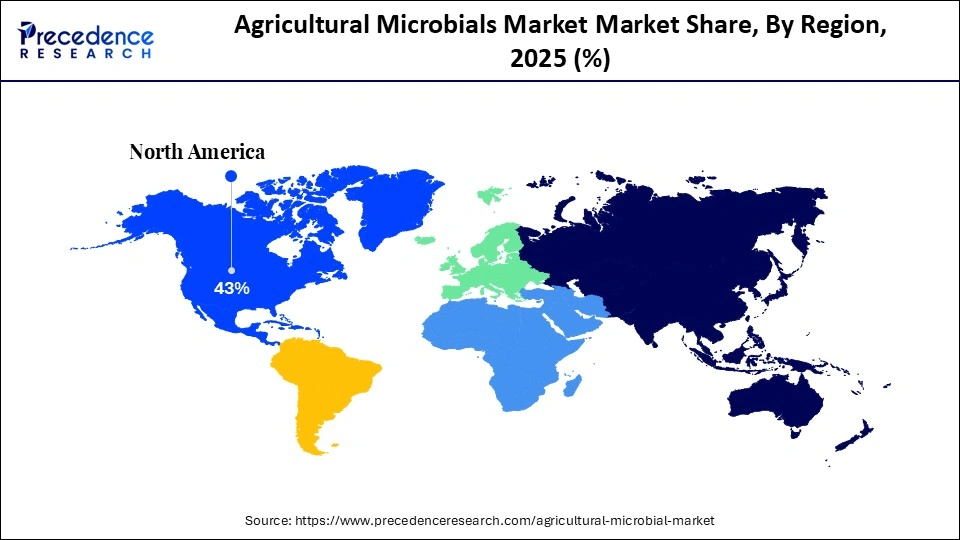
North America dominated the market with a share of approximately 42% in 2025. The growth is primarily driven by the widespread use of microbial seed treatments in larger-scale crops such as corn and soybean, along with the presence of advanced biotechnology hubs in the U.S.
Increasing consumer preference for organic food and stricter regulations on chemical pesticides are encouraging the development of agricultural inputs. Continuous product commercialization and a strong R&D ecosystem further support regional market expansion. The growing emphasis on sustainable farming practices also contributes significantly to overall growth.
What is the Size of the U.S. Agricultural Microbials Market?
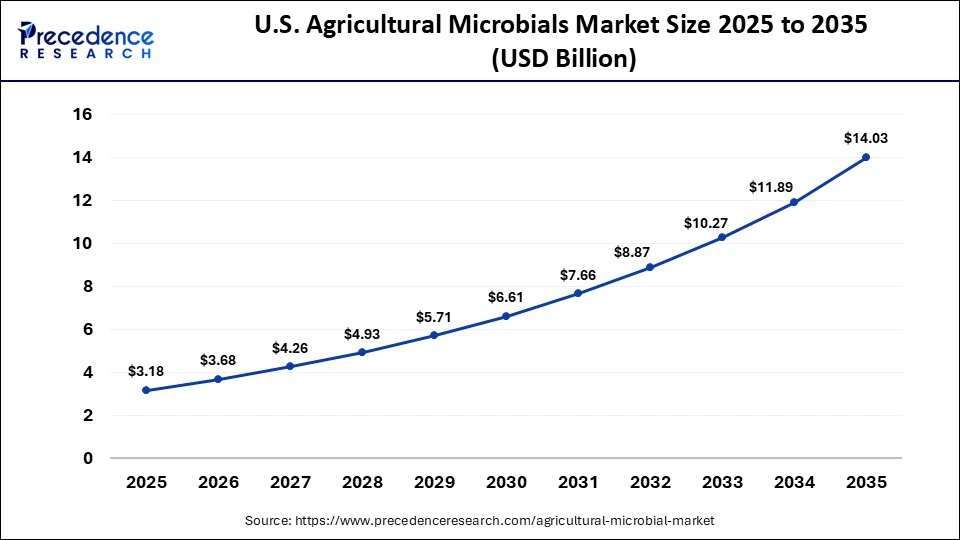
The U.S. agricultural microbials market size is calculated at USD 3.18 billion in 2025 and is expected to reach nearly USD 14.03 billion in 2035, accelerating at a strong CAGR of 16.00% between 2026 and 2035.
U.S. Market Trends
The U.S. holds a major regional share in North America. Rising demand for organic produce, including fruits and vegetables, is increasing the adoption of microbial solutions. Government initiatives promoting sustainable agriculture, such as the USDA's organic transition initiative, along with ongoing advancements in targeted microbial technologies, are further driving market growth.
How is Asia-Pacific Growing in the Agricultural Microbials Market?
Asia-Pacific is expected to witness the fastest growth during the predicted timeframe due to the increasing presence of a vast agricultural base, and the growing production of high-yielding crops increases demand for agricultural microbials. Rapid population growth in countries like India and China is increasing food demand, encouraging farmers to adopt agricultural microbials to improve sustainable productivity. Strong government support for organic farming and initiatives promoting biofertilizers are further accelerating market growth, along with growing awareness among farmers about the benefits of microbial solutions.
India Market Trends
India stands out as a key contributor in the region. Rising demand for organic food and increasing concern over the environmental impact of synthetic chemicals are pushing the shift toward agricultural microbials. With its extensive cultivation of raw crops and supportive policies such as MOVCD-NER, the National Farmer Policy, and PKVY, India continues to strengthen the development and adoption of biofertilizers and biopesticides, driving overall market expansion.
Will Europe Grow in the Agricultural Microbials Market?
Europe is expected to grow at a notable CAGR in the foreseeable future. The market growth is supported by strong policy backing for organic farming under initiatives such as the Common Agricultural Policy and the Organic Action Plan. Rising consumer inclination towards sustainably produced food, coupled with strict regulations on chemical pesticide usage, is accelerating the adoption of microbial-based products across the region. These factors collectively contribute to market expansion.
Germany Market Trends
Germany holds a major regional share in Europe. Robust government support for sustainable farming practices and a mature organic food sector are driving demand for agricultural microbials. Additionally, the increasing integration of microbial solutions in precision agriculture and the growing focus on natural-based innovations are further strengthening market development in the country.
How is Latin America Growing in the Agricultural Microbials Market?
Latin America is expected to grow at a notable CAGR in the foreseeable future, due to the production of crops on a large scale, along with soybeans and maize planting, and more farmers using biological farming techniques. Biological farming includes using microbes for soil inoculation and biopesticides. Increase in demand for residue-free agricultural products and awareness regarding soil degradation. Farmers adopt microbial-based crop nutrition and protection solutions across the region.
Brazil Market Trends
The Brazilian market is driven by its high soybean, sugarcane, and corn yields. The extensive usage of nitrogen-fixing bacteria in soybean cultivation helped drive demand for microbial products, whereas sustainable agricultural practices boosted demand for biofertilizers and biocontrol solutions. Government support for sustainable agriculture, and with the large agribusiness companies, also accelerated the commercialization and adoption of agricultural microbial technologies in the country.
What are the Advancements of the Agricultural Microbials Market in the Middle East and Africa?
The Middle East and Africa are expected to grow at a notable CAGR in the foreseeable future, due to potential growth issues related to food security, scarcity of arable land, and sustainable production from agriculture. The use of microorganisms in farming contributed to increased soil fertility, efficient water usage, and hardiness of crops in adverse climate conditions. Investments in advanced agricultural practices, such as greenhouse farming and water conservation farming, helped promote the use of microbials across the region.
UAE Market Trends
The UAE market is driven by the country's interest in ensuring food security, secure agricultural operations, and cultivation in the desert. Microorganisms helped out in agriculture with regard to greenhouse operations, hydroponic operations, and soil improvement processes. Further investments in technologies related to vertical farming, intelligent farming practices, and protected environments led to the greater use of microbial products in crop improvement.
Agricultural Microbials Market Value Chain Analysis
- Harvesting and Post-Harvest Handling
Collection of microbial raw materials and managing them to prevent contamination or loss of viability. Efficient handling maintains the high quality of microbial strains used in final products.
Key Players: Bayer, FMC Corporation, Koppert Microbials Systems, BASF SE, Corteva Agriscience, Syngenta Group, AgBiome LLC, Novonesis.
- Storage and Cold Chain Logistics
Because many agricultural microbials contain live organisms, maintaining a strict temperature and controlled environment is essential to preserve their shelf life and microbial activity.
Key Players: Lineage Logistics, Americold, Snowman Logistics, Syngenta, Bayer, FMC Corporation, Lallemand Inc.
- Processing and Packaging
The microbial formation and processing involve a multi-step workflow including raw material sourcing, pretreatment, and manufacturing of actives. This sequence concludes with fermentation, formulation, and rigorous quality control testing to ensure stability and efficacy. Packaging, including microencapsulation used to protect microbes from environmental degradation.
Key Players: Bayer AG, Syngenta Group, Corteva Agriscience, BASF SE, UPL Limited, Novonesis.
- Distribution to Wholesalers/Retailers
The distribution network connects manufacturers to end-users. In this stage, companies leverage a broad logistics network to reach diverse agricultural regions, often adapting formulations to meet local needs.
Key Players: Bayer, Syngenta Group, Koppert Microbials Systems, Corteva Agriscience, BASF SE, UPL Limited.
- Export and Trade Compliance
Navigating fragmented international regulations and safety standards is a significant hurdle. Compliance ensures that microbial products meet the efficacy and environmental requirements of different countries.
Key Players: BASF SE, Bayer AG, Syngenta, Corteva Agriscience, UPL Limited, Novozymes, FMC, Koppert Microbials Systems, IPL Microbials Ltd.
Who are the Major Players in the Global Agricultural Microbials Market?
The major players in the agricultural microbials market include BASF SE, Bayer AG (Crop Science), Syngenta AG (ChemChina), Corteva Agriscience, UPL Limited, Novonesis, FMC Corporation, Koppert Microbials Systems, IPL Microbials Limited, Valent BioSciences LLC (Sumitomo Chemical), Chr. Hansen A/S (now Novonesis), Lallemand Inc., Pro Farm Group (formerly Marrone Bio), AgBiome LLC, Indigo Ag
Recent Developments
- In August 2025, BioConsortia, Inc. announced that it raised $15 million in funding to accelerate the global launch of Always-N, a nitrogen-fixing seed treatment for industrial corn and support continued expansion of its discovery & development engine at its headquarters. The product helps maintain crop yields and reduce reliance on synthetic nitrogen fertilizers.(Source: https://www.businesswire.com)
- In January 2025, Syngenta Crop Protection partnered with TraitSeq to use AI for developing next-generation biostimulants. This helps in identifying biomarkers in plants and predicting how crops will respond to microbial treatments against stress like drought or heat. The collaboration aims to enhance crop resilience and nutrient efficiency. (Source: https://www.sliceofagriculture.com)
Segments Covered in the Report
By Type
- Bacteria
- Fungi
- Viruses
- Protozoa
- Others
By Application
- Foliar Spray
- Seed Treatment
- Soil Treatment
By Function
- Crop Protection (Biopesticides)
- Soil Amendments (Biofertilizers)
By Crop Type
- Cereals & Grains
- Fruits & Vegetables
- Oilseeds & Pulses
- Turf & Ornamentals
- Others
By Region
- North America
- Europe
- Asia-Pacific
- Latin America
- Middle East & Africa
For inquiries regarding discounts, bulk purchases, or customization requests, please contact us at sales@precedenceresearch.com
Frequently Asked Questions





Ask For Sample
No cookie-cutter, only authentic analysis – take the 1st step to become a Precedence Research client
 Get a Sample




 sales@precedenceresearch.com
 Schedule a Meeting
