



CAR-T Therapies for Blood Cancers Market Size, Companies, Share, Patient Volume, Treatment Adoption Rates, Pricing Analysis, Regulatory Landscape, Competitive Positioning, and Demand Forecast
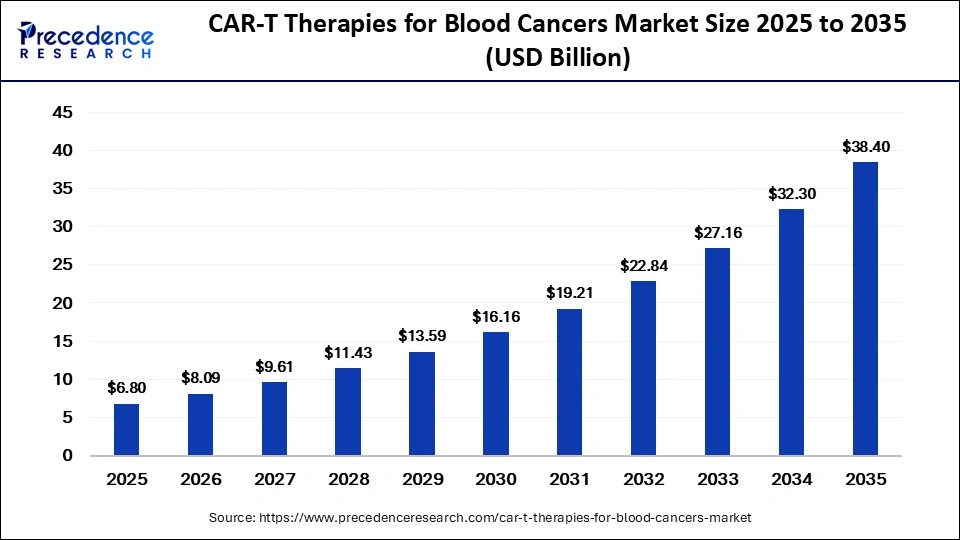
Rohan Patil, a Healthcare Industry Expert, highlights that the CAR-T therapies for blood cancers market has reached USD 8.09 billion in 2026 and is on track to reach USD 38.40 billion by 2035, advancing at a CAGR of 18.90%. Key CAR-T therapies for blood cancers market companies shaping the market include Novartis AG, Gilead Sciences, Inc. (Kite Pharma), Bristol Myers Squibb Company (Celgene/Juno Therapeutics), Johnson & Johnson (Legend Biotech Corporation), while major growth segments span By Target Antigen, By Cancer Type, By Therapy Type, By End-Use, By Manufacturing Type.
Source: https://www.precedenceresearch.com/car-t-therapies-for-blood-cancers-market
 Get a Sample
 Table Of Content


What is the CAR-T Therapies for Blood Cancers Market Size in 2026?
The global CAR-T therapies for blood cancers market size accounted for USD 6.80 billion in 2025 and is predicted to increase from USD 8.09 billion in 2026 to approximately USD 38.40 billion by 2035, expanding at a CAGR of 18.90% from 2026 to 2035. The CAR-T therapies for blood cancers market is driven by the success of CAR-T cell therapy in treating resistant blood cancers and increasing demand for personalized therapies.
Key Takeaways
- North America dominated the CAR-T therapies for blood cancers market with a share of 50% in 2025.
- Asia Pacific is expected to grow at the fastest CAGR of 22.5% during the forecast period.
- By target antigen, the CD19-targeted CAR-T segment held a 45% share of the market in 2025.
- By target antigen, the BCMA-targeted CAR-T segment is the second-largest shareholder and is expected to grow at a 21.5% CAGR between 2026 and 2035.
- By cancer type, the diffuse large B-cell lymphoma (DLBCL) segment accounted for a major share of 35% in the market in 2025.
- By cancer type, the multiple myeloma segment is expected to grow at the fastest CAGR of 22% between 2026 and 2035.
- By therapy type, the autologous CAR-T segment led the global market with a share of 80% in 2025.
- By therapy type, the allogeneic CAR-T segment is the second-largest shareholder and is expected to grow at a 25% CAGR between 2026 and 2035.
- By end-use, the hospitals segment held a 50% market share in 2025.
- By end-use, the specialty cancer treatment centers segment is the second-largest shareholder and is expected to grow at a 20.5% CAGR between 2026 and 2035.
- By manufacturing type, the in-house manufacturing segment led the global market with a share of 60% in 2025.
- By manufacturing type, the contract manufacturing segment is expected to grow at a 21.5% CAGR between 2026 and 2035.
Market Overview
The CAR-T therapies for blood cancers market revolves around the development and distribution of new types of immunotherapies, such as CAR-T therapies. These therapies are used in the treatment of blood cancers, such as leukemia, lymphoma, and myeloma. They involve using patients' own T-cells to help kill cancer cells. The rising global cancer incidence is aiding market growth. These therapies are extremely popular due to their specific mode of action. Pharmaceutical and biotech firms are significantly investing in R&D of novel therapies, which is expected to boost market growth.
Impact of AI on the CAR-T Therapies for Blood Cancers Market
Artificial intelligence (AI) is significantly impacting the market by accelerating the development and efficiency of CAR-T therapies. AI enables rapid identification of tumor-specific antigens from large genetic and clinical datasets, supporting precise target discovery and CAR design. Additionally, machine learning helps identify patients most likely to benefit from CAR-T therapy. AI-driven tools also enhance T-cell engineering, optimize gene editing, and streamline manufacturing processes, improving production speed, quality, and consistency.
CAR-T Therapies for Blood Cancers Market Trends
- With the growing burden of hematologic malignancies, healthcare providers are increasingly using CAR-T cell therapies for their targeted and personalized approaches.
- Increasing FDA approvals for expanded indications and earlier-line use of CAR-T therapies are improving patient access and accelerating global market adoption.
- Advancements in gene-editing technologies like CRISPR-Cas are enabling the development of safer, more efficient, and effective CAR-T therapies, expanding their therapeutic potential.
- Growing collaborations between biotech and pharmaceutical companies, along with rising R&D investments, accelerating product development, scaling manufacturing, and strengthening commercialization to meet rising demand.
Market Scope
| Report Coverage | Details |
| Market Size in 2025 | USD 6.80 Billion |
| Market Size in 2026 | USD 8.09 Billion |
| Market Size by 2035 | USD 38.49 Billion |
| Market Growth Rate from 2026 to 2035 | CAGR of 18.90% |
| Dominating Region | North America |
| Fastest Growing Region | Asia Pacific |
| Base Year | 2025 |
| Forecast Period | 2026 to 2035 |
| Segments Covered | Target Antigen, Cancer Type, Therapy Type, End-Use, Manufacturing Type, and Region |
| Regions Covered | North America, Europe, Asia-Pacific, Latin America, and Middle East & Africa |
Market Dynamics
Drivers
Demand for Personalized Treatment
The rising demand for personalized therapies is driving the CAR-T cell therapies for blood cancer market. These therapies are revolutionizing the treatment of blood cancer by shifting treatment from traditional chemotherapy and radiotherapy to individualized medicine. By engineering a patient's own T-cells to specifically target cancer cells, CAR-T therapy delivers improved response rates and longer-lasting outcomes, particularly in relapsed or refractory cases. Its effectiveness and continued advancement are supported by innovations in genomics, biomarker discovery, and cell engineering.
Restraint
High Treatment Cost and Complex Manufacturing
One of the major factors restraining the growth of the CAR-T therapies for blood cancer market is the high cost and complexity of these therapies. Tailoring therapies to individual patients (isolation, genetic modification, and infusion) is time-consuming. Also, the technology and experience of the investigators and clinicians add to the costs. This can be especially challenging in low-income countries. Furthermore, lack of insurance and supply chain issues can limit access to CAR-T therapies and impact patient outcomes.
Opportunity
Expansion of Allogeneic and Next-Generation Therapies
CAR-T therapies are evolving from autologous approaches toward more accessible allogeneic “off-the-shelf” therapies derived from healthy donors. These therapies enable faster manufacturing and treatment delivery, which is critical for patients with urgent needs. They are also cost-effective and have greater scalability, improving accessibility across diverse healthcare settings and regions. Meanwhile, next-generation CAR-T innovations are enhancing safety, specificity, and durability of response, helping to reduce relapse rates and improve overall treatment outcomes.
Segment Insights
Target Antigen Insights
CAR-T Therapies for Blood Cancers Market Share, By Target Antigen, 2025-2035 (%)
| Target Antigen | 2025 | 2035 | CAGR(%) |
| CD19-targeted CAR-T | 45.00% | 40.00% | 15.50% |
| BCMA-targeted CAR-T | 30.00% | 35.00% | 21.50% |
| CD20-targeted CAR-T | 10.00% | 9.00% | 14.50% |
| Dual-target & Multi-antigen CAR-T | 15.00% | 16.00% | 22.00% |
The CD19-targeted CAR-T Segment Held a 45% Market Share in 2025
The CD19-targeted CAR-T segment dominated the CAR-T therapies for blood cancers market with a major share of 45% in 2025, driven by strong clinical efficacy and multiple regulatory approvals for treating leukemia and lymphoma. CD19 remains a well-validated target in B-cell malignancies, demonstrating high response rates and durable outcomes, particularly in relapsed or refractory settings, which has accelerated its adoption across global cancer care centers.
The BCMA-targeted CAR-T segment held a 30% share of the market in 2025 and is projected to grow at a CAGR of 21.5% during the projection period, supported by its strong clinical success in multiple myeloma. B-cell maturation antigen (BCMA) has emerged as a highly effective target, especially for relapsed or refractory multiple myeloma patients, driving increasing adoption.
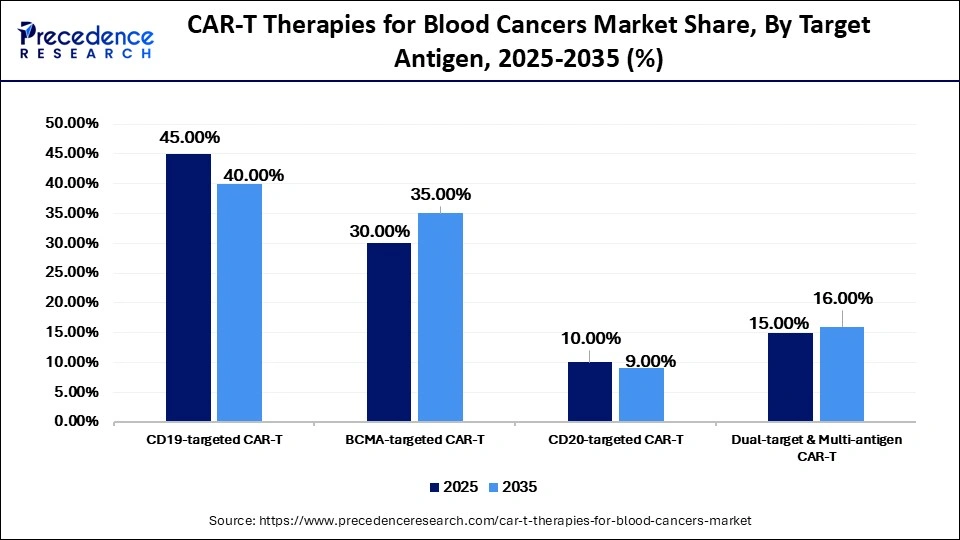
The CD20-targeted CAR-T segment held a 10% market share in 2025 and is expected to grow at a CAGR of 14.5% during the forecast period. This growth is supported by encouraging clinical outcomes and ongoing trials evaluating its safety and efficacy in B-cell lymphomas, where CD20 is a well-established antigen target.
The dual-target and multi-antigen CAR-T segment held a 15% share of the market in 2025 and is expected to grow at the fastest CAGR of 22% in the coming years. This growth is driven by improved efficacy and reduced relapse rates, as these therapies enhance tumor recognition and minimize antigen escape. Advances in gene editing and synthetic biology are further enabling the development of more precise multi-specific CAR-T therapies.
Cancer Type Insights
CAR-T Therapies for Blood Cancers Market Share, By Cancer Type, 2025-2035 (%)
| Cancer Type | 2025 | 2035 | CAGR(%) |
| Diffuse Large B-Cell Lymphoma (DLBCL) | 35.00% | 33.00% | 16.50% |
| Multiple Myeloma | 30.00% | 34.00% | 22.00% |
| Acute Lymphoblastic Leukemia (ALL) | 20.00% | 18.00% | 15.00% |
| Chronic Lymphocytic Leukemia (CLL) | 10.00% | 9.00% | 14.50% |
| Other Hematologic Malignancies | 5.00% | 6.00% | 18.50% |
The Diffuse Large B-Cell Lymphoma Segment Led the Market in 2025
The diffuse large B-cell lymphoma (DLBCL) segment led the CAR-T therapies for blood cancers market with a share of 35% in 2025, owing to its status as one of the most common and aggressive forms of non-Hodgkin lymphoma. Strong clinical outcomes and early regulatory approvals have established CAR-T therapy as a standard treatment option for relapsed or refractory DLBCL patients.
The multiple myeloma segment held a 30% share of the market in 2025 and is expected to grow at the fastest CAGR of 22% in the upcoming period. This growth is driven by a robust pipeline of BCMA-targeted therapies and the high unmet need in this relapsing disease, making CAR-T a promising treatment approach. Multiple myeloma is a high-risk relapsing cancer, and therefore needs new treatments.
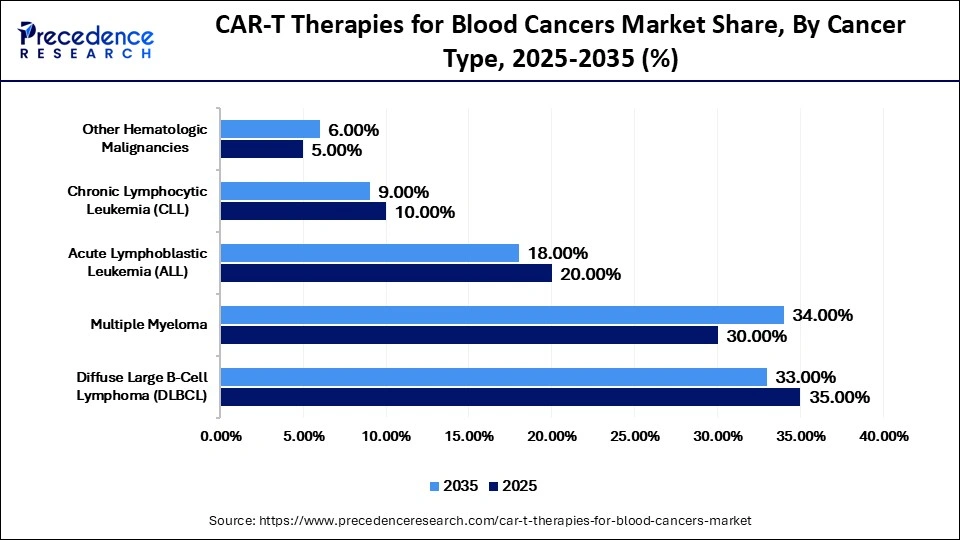
The acute lymphoblastic leukemia (ALL) segment held a 20% share of the market in 2025 and is expected to grow at a CAGR of 15% in the coming years. This is because ALL is among the first cancers treated with CAR-T therapy, particularly in relapsed or refractory cases. Strong success in pediatric populations driving continued adoption of these therapies to treat ALL.
The chronic lymphocytic leukemia (CLL) segment held a 10% share of the market in 2025 and is expected to grow at a CAGR of 14.5% during the projection period, driven by ongoing clinical trials aimed at treating CLL. Although clinical responses have been more variable compared to other blood cancers, ongoing research and combination strategies are improving outcomes and expanding the potential of CAR-T therapy in treating CLL.
Therapy Type Insights
What Made Autologous CAR-T the Dominant Segment in the Market in 2025?
The autologous CAR-T segment dominated the CAR-T therapies for blood cancers market with the highest share of 80% in 2025. This is mainly due to the availability of approved autologous CAR-T therapies and well-established production methods. These therapies use a patient's own T-cells, enabling highly personalized and effective treatment outcomes. Most currently approved commercial CAR-T therapies are autologous, which has strengthened physician confidence and regulatory acceptance.
The allogeneic CAR-T segment held a 20% share of the market in 2025 and is expected to grow at the fastest CAGR of 25% during the projection period, due to its scalability, cost-effectiveness, and off-the-shelf availability. These donor-derived therapies eliminate the need for patient-specific manufacturing, enabling faster treatment delivery and improving accessibility for patients requiring urgent care.
End-Use Insights
Hospitals Held a 50% Share of the CAR-T Therapies for Blood Cancer Market in 2025
The hospitals segment registered its dominance in the global market by holding a share of 50% in 2025, owing to the fact that they are the primary point of care. Hospitals play a crucial role in delivering CAR-T cell therapies, as they have dedicated facilities, skilled expertise, and sophisticated infrastructure, which are required to manage potential adverse effects such as cytokine release syndrome. This makes them the preferred setting for therapy administration.
CAR-T Therapies for Blood Cancers Market Share, By End-Use, 2025-2035 (%)
| End-Use | 2025 | 2035 | CAGR(%) |
| Hospitals | 50.00% | 48.00% | 17.50% |
| Specialty Cancer Treatment Centers | 35.00% | 38.00% | 20.50% |
| Academic & Research Institutes | 15.00% | 14.00% | 16.00% |
The specialty cancer treatment centers segment held a 35% share of the market in 2025 and is expected to grow at the fastest CAGR of 20.5% during the projection period, driven by the rising need for specialized services. Specialized cancer treatment centers play a key role in delivering CAR-T cell therapies, driven by their advanced capabilities, close integration with cell processing laboratories, and focus on personalized oncology care.
The academic & research institutes segment held a 15% share of the market in 2025 and is expected to grow at a significant CAGR of 16% during the forecast period, owing to their critical role in clinical trials & development. They play a vital role in the further development of CAR-T cell therapies through innovation & early development with biotech startups. They help to identify new targets and enable the development of next-gen CAR-T cell therapies.
Manufacturing Type Insights
The In-house Manufacturing Segment Held a 60% Share of the Market in 2025
The in-house manufacturing segment dominated the CAR-T therapies for blood cancers market with a share of 60% in 2025, owing to greater control over quality, intellectual property, and supply chain processes. This approach ensures consistent product quality, reduces contamination risks, and maintains strict regulatory compliance in complex cell therapy production.
CAR-T Therapies for Blood Cancers Market Share, By Manufacturing Type, 2025-2035 (%)
| Manufacturing Type | 2025 | 2035 | CAGR(%) |
| In-house Manufacturing | 60.00% | 55.00% | 17.00% |
| Contract Manufacturing (CDMO) | 40.00% | 45.00% | 21.50% |
The contract manufacturing segment held a 40% share of the market in 2025 and is expected to grow at the fastest CAGR of 21.5% during the projection period. This growth is driven by increasing outsourcing trends, scalability needs, and faster commercialization timelines. Contract manufacturing organizations (CMOs) provide advanced production capabilities and regulatory expertise, helping accelerate market entry for CAR-T therapies.
Regional Insights
North America CAR-T Therapies for Blood Cancers Market Size and Growth 2026 to 2035
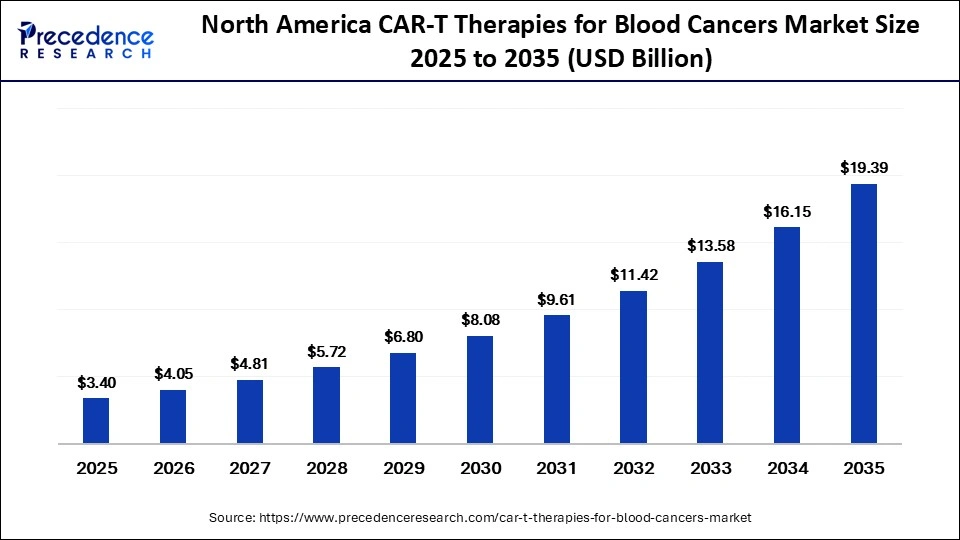
The North America CAR-T therapies for blood cancers market size is estimated at USD 3.40 billion in 2025 and is projected to reach approximately USD 19.39 billion by 2035, with a 19.02% CAGR from 2026 to 2035.
Why Did North America Lead the CAR-T Therapies for Blood Cancers Market in 2025?
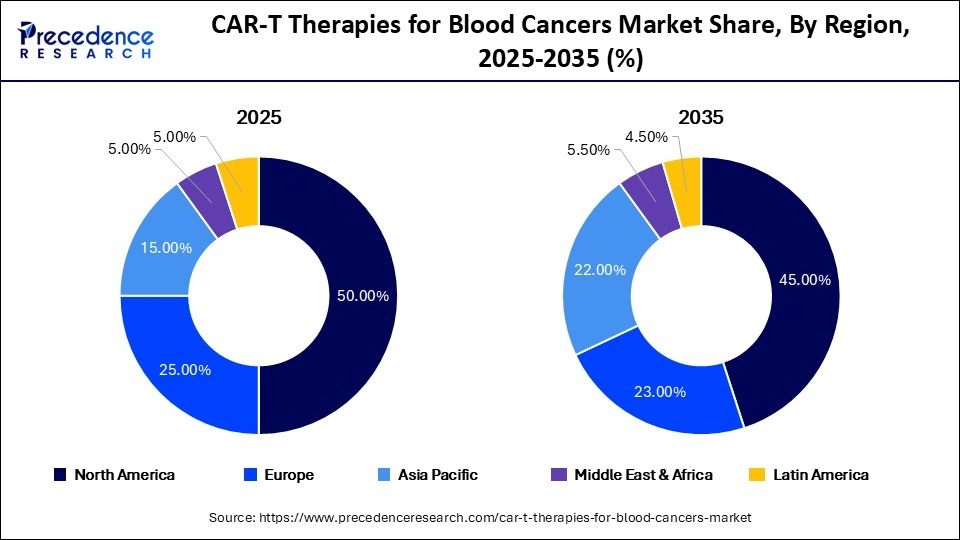
North America led the CAR-T therapies for blood cancers market while holding a major share of 50% in 2025, owing to the presence of leading manufacturers of CAR-T therapies. The region also benefits from its well-developed healthcare system and early adoption of innovative therapies. The region accounts for a high burden of blood cancers, including lymphoma and multiple myeloma, supported by an ageing population and improved diagnostic capabilities. Strong clinical research activity, well-established treatment protocols, and a clear regulatory pathway have further facilitated the rapid commercialization and uptake of CAR-T therapies in the region.
U.S. CAR-T Therapies for Blood Cancers Market Size and Growth 2026 to 2035
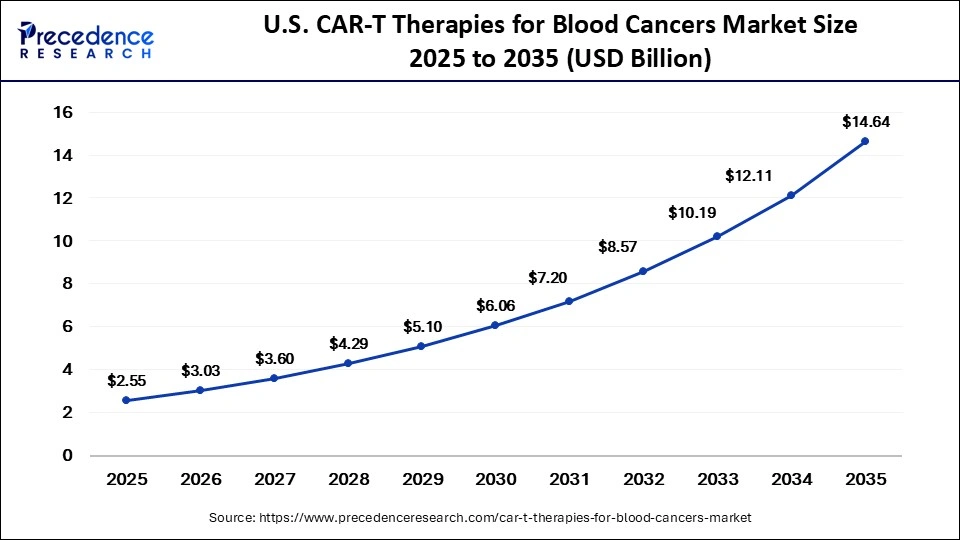
The U.S. CAR-T therapies for blood cancers market size is calculated at USD 2.55 billion in 2025 and is expected to reach nearly USD 14.64 billion in 2035, accelerating at a strong CAGR of 19.10% between 2026 and 2035.
U.S. Market Analysis
The U.S. CAR T-cell therapies for blood cancers market is experiencing significant growth, driven by the rising incidence of hematologic malignancies such as lymphoma and multiple myeloma, alongside an ageing population requiring advanced treatment options. Improvements in diagnostic technologies are enabling earlier detection and timely intervention. A robust healthcare infrastructure, combined with accelerated regulatory approvals and fast-track designations, is supporting wider therapy adoption. Additionally, strong biotech funding and R&D investments are driving continuous innovation in CAR-T development.
What Makes Asia Pacific the Fastest-Growing Region in the Market?
Asia Pacific held a 15% share of the CAR-T therapies for blood cancers market in 2025 and is expected to grow at the fastest CAGR of 22.5% during the projection period. This growth is supported by rising cancer incidence, expanding clinical trial activity, government initiatives, and increasing investment in biotechnology and cell therapy manufacturing. Countries such as China and India are witnessing rapid adoption due to a large patient pool, improving healthcare infrastructure, and strong policy support for advanced cancer treatments.
China Market Analysis
The China CAR T-cell therapies for blood cancers market continues to grow, driven by a large patient population and strong government support for biotechnology innovation. Ongoing improvements in healthcare infrastructure and increased investment in domestic biotech firms are accelerating market growth. China is also a global leader in CAR-T clinical trials, with active R&D programs and collaborations between domestic and international companies. Rising healthcare expenditure and expanding access to advanced treatment facilities are further supporting demand.
How is the Opportunistic Rise of Europe in the CAR-T Therapies for Blood Cancer Market?
Europe held a 25% share of the market in 2025 and is expected to grow at a significant CAGR of 16.5% during the projection period. This is mainly due to the increasing regulatory approvals, expansion of CAR-T treatment centers, and strong focus on advanced oncology therapies. Government support through reimbursement frameworks and insurance coverage is improving patient access. Additionally, ongoing investments in research and clinical trials are enhancing treatment outcomes and expanding therapeutic applications.
UK Market Analysis
The market in the UK is expected to grow steadily, supported by government initiatives, NHS adoption, and active participation from academic institutions. Increasing incidence of blood cancers is driving demand for advanced treatment options. The NHS plays a key role in expanding access to CAR-T therapies, while strong collaboration between hospitals, universities, and research organizations is fostering innovation and clinical advancement in the field.
Value Chain Analysis-CAR-T Therapies for Blood Cancers Market
- R&D: This stage involves designing, enhancing the safety, and efficacy of the CAR-T cell therapy via the latest gene editing, antigen recognition, and next-generation cell engineering technologies for efficacy.
Key Players: Novartis, Gilead Sciences, Bristol Myers Squibb
- Clinical Trials and Regulatory Approvals: This stage ensures the safety, efficacy, and dose of CAR-T therapies, and regulatory approvals provide a safe and compliant product. These are crucial steps to establish the efficacy of CAR-T cell therapies for clinical application.
Key Players: CARsgen Therapeutics, JW Therapeutics, Arcellx
- Distribution to Hospitals and Pharmacies: The approved CAR-T therapies are then distributed to specialized hospitals or licensed pharmacies in cold-chain transport. This enables the timely supply of CAR-T therapies and product quality and safety to patients.
Key Players: Gilead Sciences, Novartis, Lonza, WuXi Biologics
CAR-T Therapies for Blood Cancers Market Companies
- Novartis AG
- Gilead Sciences, Inc. (Kite Pharma)
- Bristol Myers Squibb Company (Celgene/Juno Therapeutics)
- Johnson & Johnson (Legend Biotech Corporation)
- Fate Therapeutics, Inc.
- Allogene Therapeutics, Inc.
- Cellectis S.A.
- Bluebird Bio, Inc.
- Autolus Therapeutics plc
- Precision BioSciences, Inc.
- Adaptimmune Therapeutics plc
- CRISPR Therapeutics AG
- Sana Biotechnology, Inc.
- Caribou Biosciences, Inc.
- Arcellx, Inc.
Recent Developments
- In January 2026, Australian companies AdAlta and SHcell entered an agreement to collaborate in bringing the development and marketing of CAR-T therapy BZDS1901 for solid tumors to market. This includes manufacturing and the launch of Phase 1 clinical trials in Australia, promising to extend the breakthroughs in CAR-T cell therapies to non-blood cancers.(Source: https://pharmadispatch.com)
- In December 2025, Bristol Myers Squibb launched its first CAR T-cell therapy, Breyanzi, for adult patients with relapsed or refractory marginal zone lymphoma. This highlights the good efficacy and safety of CAR-T cell therapy for another blood cancer.(Source: https://news.bms.com)
- In April 2025, Johnson & Johnson reported that the European Commission granted a new indication for the Darzalex (daratumumab) subcutaneous formulation for the treatment of newly diagnosed multiple myeloma patients, demonstrating safety and efficacy in combination with other therapies.(Source: https://www.jnj.com)
Segments Covered in the Report
By Target Antigen
- CD19-targeted CAR-T Therapies
- BCMA-targeted CAR-T Therapies
- CD20-targeted CAR-T Therapies
- Dual-target & Multi-antigen CAR-T Therapies
By Cancer Type
- Acute Lymphoblastic Leukemia (ALL)
- Diffuse Large B-Cell Lymphoma (DLBCL)
- Multiple Myeloma
- Chronic Lymphocytic Leukemia (CLL)
- Other Hematologic Malignancies
By Therapy Type
- Autologous CAR-T Therapies
- Allogeneic (Off-the-shelf) CAR-T Therapies
By End-Use
- Hospitals
- Specialty Cancer Treatment Centers
- Academic & Research Institutes
By Manufacturing Type
- In-house Manufacturing
- Contract Manufacturing (CDMO-based)
By Region
- North America
- Latin America
- Europe
- Asia-pacific
- Middle and East Africa
For inquiries regarding discounts, bulk purchases, or customization requests, please contact us at sales@precedenceresearch.com
Frequently Asked Questions





Ask For Sample
No cookie-cutter, only authentic analysis – take the 1st step to become a Precedence Research client
 Get a Sample




 sales@precedenceresearch.com
 Schedule a Meeting
