



Ceftriaxone Sodium Market Size, Companies, Share, Patient Volume, Treatment Adoption Rates, Pricing Analysis, Regulatory Landscape, Competitive Positioning, and Demand Forecast
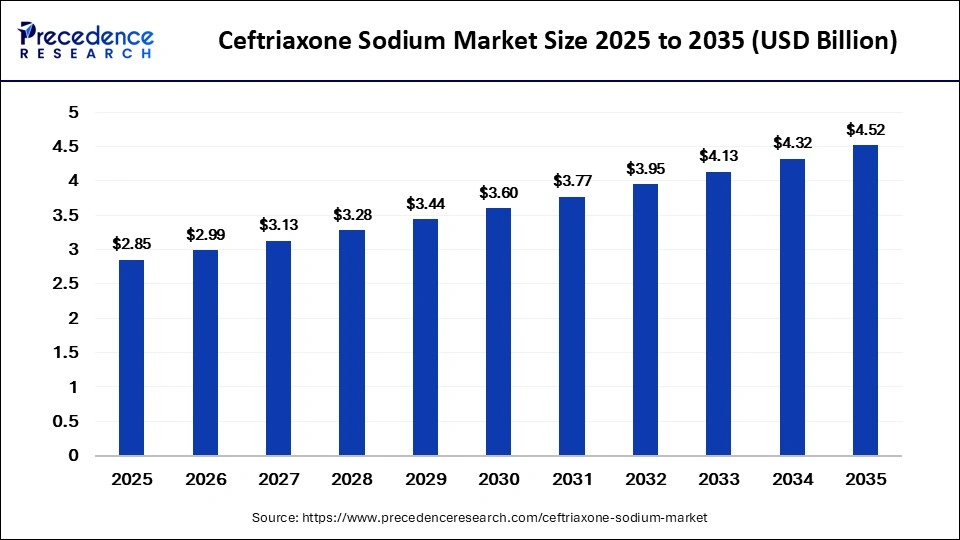
Rohan Patil, a Healthcare Industry Expert, highlights that the ceftriaxone sodium market has reached USD 2.99 billion in 2026 and is on track to reach USD 4.52 billion by 2035, advancing at a CAGR of 4.80%. Key ceftriaxone sodium market companies shaping the market include F. Hoffmann-La Roche Ltd., ACS Dobfar S.p.A., Qilu Pharmaceutical Co., Ltd., while major growth segments span product strength, dosage form, route of administration, application, end user, distribution channel.
Source: https://www.precedenceresearch.com/ceftriaxone-sodium-market
 Get a Sample
 Table Of Content


Ceftriaxone Sodium Market Size and Forecast 2026 to 2035
The global ceftriaxone sodium market size accounted for USD 2.85 billion in 2025 and is predicted to increase from USD 2.99 billion in 2026 to approximately USD 4.52 billion by 2035, expanding at a CAGR of 4.80% from 2026 to 2035. The market is driven by the increasing global prevalence of severe bacterial infections.
Key Takeaways
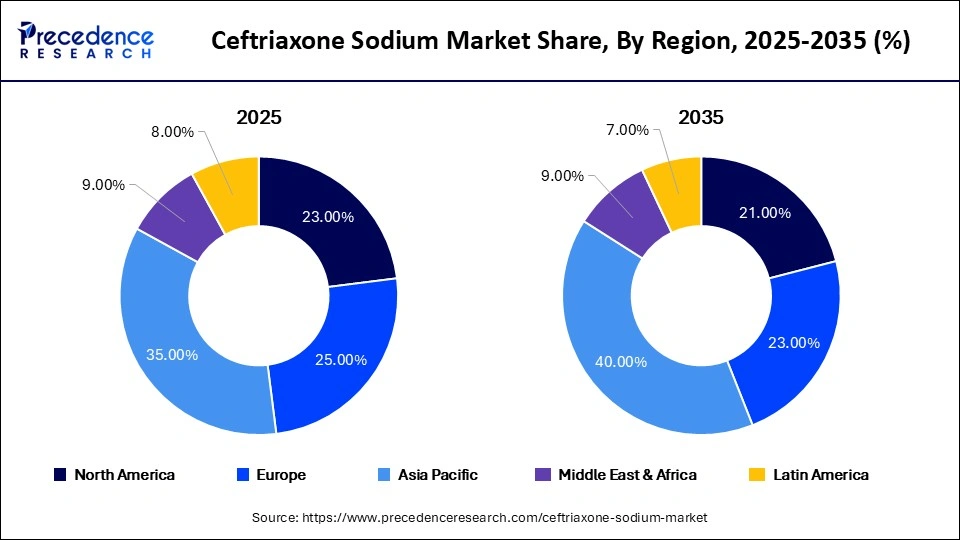
- Asia-Pacific dominated the global ceftriaxone sodium market with a share of 35% in 2025 and is expected to sustain as a leader with a CAGR of 6.1% in the upcoming period.
- Europe held the second-largest market share of 25% in 2025.
- By product strength, the 1 g vial segment led the global market with a share of 48% in 2025.
- By product strength, the 2 g vial segment is expected to grow at the fastest CAGR of 5.8% between 2026 and 2035.
- By dosage form, the powder for injection segment accounted for a revenue share of 82% in the market in 2025.
- By dosage form, the ready-to-use injectable formulations segment is expected to grow at the fastest 6.8% CAGR between 2026 and 2035.
- By application, the respiratory tract infections segment dominated the market with a share of 24% in the ceftriaxone sodium market in 2025.
- By application, the surgical prophylaxis segment is expected to grow at the highest CAGR of 6.3% between 2026 and 2035.
- By end user, the hospitals segment held the largest revenue share of 68% in the market in 2025.
- By end user, the ambulatory surgical centers segment is expected to grow rapidly with a CAGR of 5.9% between 2026 and 2035.
- By distribution channel, the direct tender sales segment accounted for the highest revenue share of 55% in the market in 2025.
- By distribution channel, the online pharmacies segment is expected to grow at the fastest 7.3% CAGR between 2026 and 2035.
Market Overview
The ceftriaxone sodium market refers to the global trade and manufacturing of a vital third-generation cephalosporin antibiotic used to treat severe bacterial infections, for example, pneumonia, meningitis, and gonorrhea. This market encompasses the production of the raw active pharmaceutical ingredient (API) along with its final injectable formulations. The market is driven mainly by institutional hospital tenders, the rising prevalence of bacterial infections, and even antimicrobial stewardship protocols. Because the drug is a mature, off-patent antibiotic, financial growth depends heavily on high-volume production, reliable sterile manufacturing, and cost-effective pricing rather than brand-name premiums.
How is AI Influencing the Ceftriaxone Sodium Market?
Artificial Intelligence (AI) is transforming the market by optimizing pharmaceutical manufacturing, modernizing supply chains, and guiding antimicrobial stewardship. With the global market for this vital broad-spectrum antibiotic heavily impacted by generic production, AI solutions are decreasing operational costs and enhancing production efficiency. AI platforms are being integrated into hospital settings to track resistance patterns and flag infection hotspots in real-time. By helping clinicians in diagnostic and prescribing reasoning, AI guarantees that ceftriaxone remains highly effective against resistant pathogens by optimizing targeted therapies.
Ceftriaxone Sodium Market Trends
- Increasing incidence of severe bacterial infections, which include sepsis, pneumonia, and meningitis, demands broad-spectrum antibiotics such as Ceftriaxone.
- Intense competition among generic producers is squeezing profit margins. This commoditization requires firms to focus on volume and supply chain efficiency to remain profitable.
- Global health initiatives, including the World Health Organization (WHO) Action Plan, are heavily promoting antibiotic stewardship. Strict prescription controls may restrict the overuse of Ceftriaxone, slightly tempering volume growth.
- Because Ceftriaxone is predominantly administered intravenously or intramuscularly, hospital settings and ambulatory care centers account for the vast majority of consumption.
Market Report Coverage and Key Metrics
| Report Coverage | Details |
| Market Size in 2025 | USD 2.85 Billion |
| Market Size in 2026 | USD 2.99 Billion |
| Market Size by 2035 | USD 4.52 Billion |
| Market Growth Rate from 2026 to 2035 | CAGR of 4.80% |
| Dominating Region | Asia Paicfic |
| Fastest Growing Region | Europe |
| Base Year | 2025 |
| Forecast Period | 2026 to 2035 |
| Segments Covered | Product Strength, Dosage Form, Route of Administration, Application, End User, Distribution Channel, and Region |
| Regions Covered | North America, Europe, Asia-Pacific, Latin America, and Middle East & Africa |
Market Dynamics
Drivers
Rising Global Prevalence of Bacterial and Infectious Diseases
The rising global prevalence of bacterial and infectious diseases is the primary driver for the market because it demands a highly effective, broad-spectrum antibiotic to manage severe, widespread, and even complex infections. A growing geriatric population worldwide is more susceptible to bacterial infections because of naturally weaker immune systems. Moreover, changing environmental factors, dense populations, and poor sanitation in some regions contribute to the persistent spread of diseases.
Restraint
Strict Regulatory Guidelines
Strict regulatory guidelines act as a major restraint for the market because they increase manufacturing costs, delay generic approvals, and mandate strict limits on antibiotic usage to combat growing drug resistance. Regulatory agencies closely monitor manufacturing plants, which can result in production halts or drug recalls if supply chain or environmental standards are violated.
Opportunity
Generic Drug Expansion
Generic drug expansion offers a monumental opportunity for the market by drastically lowering treatment costs and even increasing accessibility across developing nations. Because this critical, broad-spectrum antibiotic is highly utilized in hospitals globally, cost reductions drive mass-market volume and even volume-based revenue. Generic manufacturers, mainly in major hubs such as India and China, dominate active pharmaceutical ingredient (API) production. As regional healthcare infrastructure expands, these generic suppliers scale output to meet rising global demand.
Market Segmentation Analysis
Product Strength Insights
The 1 g Vial Segment Held the Largest Market Share of 48% in 2025
The 1 g vial segment dominated the ceftriaxone sodium market with a share of 48% in 2025, owing to its standard adult dosing regimen, wide hospital adoption, strong efficacy profile, and preferred inpatient treatment option. It is frequently used off-label and is even the standard prophylactic antibiotic administered before many surgical procedures to prevent post-operative infections. The increasing number of hospital admissions globally supports steady, high-volume demand.
Ceftriaxone Sodium Market Share, By Product Strength, 2025-2035 (%)
| Product Strength | 2025 | 2035 | CAGR (%) |
| 250 mg Vial | 6.00% | 5.00% | 3.5% |
| 500 mg Vial | 24.00% | 21.00% | 4.0% |
| 1 g Vial | 48.00% | 50.00% | 5.1% |
| 2 g Vial | 18.00% | 21.00% | 5.8% |
| Others | 4.00% | 3.00% | 3.8% |
The 2 g vial segment held 18% share of the market in 2025 and is expected to grow at the fastest CAGR of 5.8% during the projection period. This is mainly due to severe infection treatment, sepsis management, and increasing ICU admissions. The 2 g dose is usually preferred for treating severe, complicated infections, like meningitis, septicemia, and bone infections, as it achieves strong, prolonged therapeutic concentrations.
The 500 mg vial segment held a 24% share of the market in 2025 and is expected to grow at a 4% CAGR during the projection period. This is due to common treatment protocols, broad physician familiarity, and cost-effective dosing. Ceftriaxone sodium is a third-generation cephalosporin highly effective against a wide array of Gram-positive and Gram-negative bacteria. It is a front-line treatment for critical conditions such as meningitis, sepsis, pneumonia, and gonorrhea. It is broadly deployed in clinical protocols for pre-operative and peri-operative prophylaxis to prevent site infections during contaminated or high-risk surgical procedures.
Dosage Form Insights
The Powder for Injection Segment Dominated the Market with 82% of Market Share in 2025
The powder for injection segment dominated the ceftriaxone sodium market with a share of 82% in 2025, owing to the long shelf life, cost-effective manufacturing, and global regulatory acceptance. As multidrug-resistant bacterial strains have become increasingly persistent globally, there is a mounting need for potent, reliable antibiotics to handle both community-acquired and hospital-acquired infections. The lyophilized powder formulation is frequently preferred in both hospital and outpatient clinic settings because it enables rapid onset of action and is cost-effective.
Ceftriaxone Sodium Market Share, By Dosage Form, 2025-2035 (%)
| Dosage Form | 2025 | 2035 | CAGR (%) |
| Powder for Injection | 82.00% | 78.00% | 4.5% |
| Premixed Injectable Solutions | 10.00% | 13.00% | 6.2% |
| Ready-to-use Injectable Formulations | 6.00% | 8.00% | 6.8% |
| Others | 2.00% | 1.00% | 3.0% |
The ready-to-use injectable formulations segment held a 6% share of the market in 2025 and is expected to grow at the fastest CAGR of 6.8% during the projection period. This is mainly due to increasing outpatient care, reduced preparation time, enhanced convenience, and lower contamination risk. Ceftriaxone sodium is a third-generation cephalosporin that requires only once-daily dosing due to its long half-life. This convenience makes it an ideal choice for both inpatient care and outpatient antimicrobial therapy.
The premixed injectable solutions segment held a 10% share of the market in 2025 and is expected to grow at a CAGR of 6.2% during the projection period. This is due to reduced medication errors, faster administration, and improved workflow efficiency. Premixed, ready-to-reconstitute solutions eliminate the demand for manual compounding in hospital pharmacies, which significantly decreases the risk of contamination and medication errors.
Application Insights
Why Did the Respiratory Tract Infections Segment Lead the Ceftriaxone Sodium Market?
The respiratory tract infections segment held a dominant position in the market with a share of 24% in 2025, driven by high prevalence of pneumonia, increasing hospitalization rates, and broad-spectrum efficacy. The expiration of major patents has allowed generic manufacturers, thus, heavily based in countries such as India and China, to produce affordable and accessible formulations.
Ceftriaxone Sodium Market Share, By Application, 2025-2035 (%)
| Application | 2025 | 2035 | CAGR (%) |
| Respiratory Tract Infections | 24.00% | 22.00% | 4.4% |
| Urinary Tract Infections | 12.00% | 11.00% | 4.2% |
| Skin & Soft Tissue Infections | 11.00% | 10.00% | 4.0% |
| Intra-abdominal Infections | 10.00% | 10.00% | 4.7% |
| Bloodstream Infections (Sepsis) | 15.00% | 17.00% | 5.9% |
| Gonorrhea Treatment | 8.00% | 7.00% | 3.8% |
| Meningitis Treatment | 9.00% | 10.00% | 5.4% |
| Surgical Prophylaxis | 8.00% | 11.00% | 6.3% |
| Others | 3.00% | 2.00% | 3.5% |
The surgical prophylaxis segment held 8% share of the market in 2025 and is expected to grow at the fastest CAGR of 6.3% during the projection period. This is mainly due to the increasing surgical volumes, infection prevention protocols, and rising hospital admissions. Ceftriaxone sodium is a third-generation cephalosporin known for its unusually long biological half-life compared to other antibiotics. This enables effective once-daily prophylactic administration, thus highly favored in busy hospital and clinical settings.
The bloodstream infections (sepsis) segment held a 15% share of the market in 2025 and is expected to grow at a CAGR of 5.9% during the projection period. This is due to rising sepsis incidence, critical care utilization, and the need for early empirical therapy. With rising antimicrobial resistance, clinicians heavily depend on ceftriaxone for empiric (initial) treatment before specific pathogens are identified. Patent expirations of blockbuster drugs have enabled major generic pharmaceutical producers in regions like the Asia-Pacific to produce cost-effective ceftriaxone.
End User Insights
What Made the Hospitals Segment Dominant in the Ceftriaxone Sodium Market?
The hospitals segment dominated the global market with the largest share of 68% in 2025. This is due to high inpatient antibiotic usage, ICU demand, surgical procedure expansion, and infection management programs. Growth in global hospitalizations, surgeries, and trauma cases has led to a greater requirement for injectable antibiotics for therapeutic and perioperative prophylactic uses.
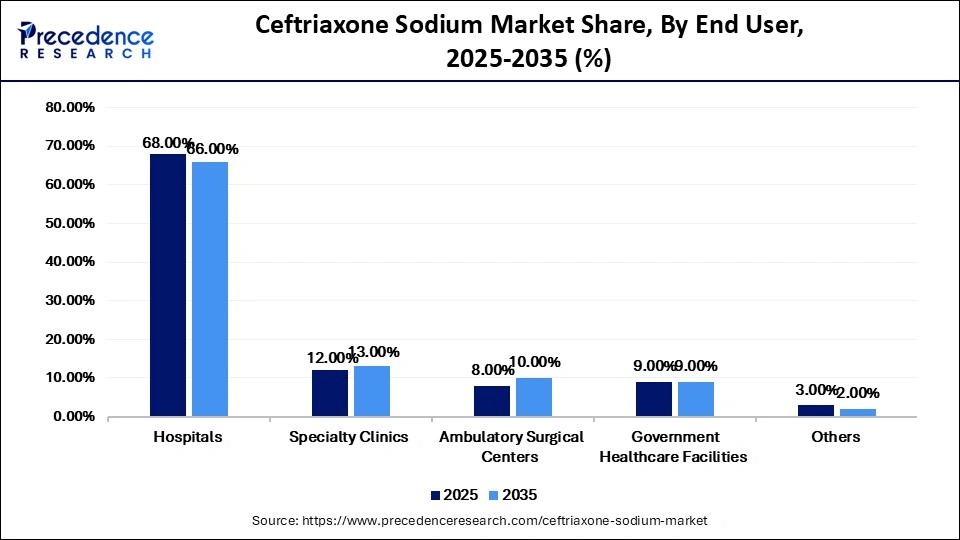
The ambulatory surgical centers segment held an 8% share of the market in 2025 and is expected to grow at the fastest CAGR of 5.9% during the projection period. This is mainly due to the growing number of day-care surgeries, the need for surgical prophylaxis, and healthcare cost optimization. There is an ongoing transition of surgeries, such as orthopedics, ophthalmology, and pain management, from traditional hospitals to ASCs to cut costs and improve convenience. This translates to a massive increase in the volume of patients receiving prophylactic and treatment antibiotics, such as Ceftriaxone sodium, in outpatient clinics.
The specialty clinics segment held a 12% share of the market in 2025 and is expected to grow at a CAGR of 5.1% during the projection period. This is due to convenient administration options and growing healthcare access. Ceftriaxone is highly effective against a broad range of bacterial pathogens, including bacterial meningitis, sepsis, community-acquired pneumonia, and various sexually transmitted infections. Because of its extended half-life, it requires only once-daily dosing, improving patient compliance and reducing clinic workloads.
Distribution Channel Insights
What Made the Direct Tender Sales Segment Dominant in the Ceftriaxone Sodium Market?
The direct tender sales segment dominated the global market with the largest share of 55% in 2025. This is due to government procurement contracts and large-volume hospital purchasing. As a versatile, broad-spectrum third-generation cephalosporin, Ceftriaxone sodium is frequently selected as a first-line treatment in clinical and hospital settings to effectively combat resistant bacterial strains. Direct tender sales bypass traditional pharmaceutical distributors. This allows producers to offer competitive pricing, ensure secure supply chains, and thus, establish long-term contracts with large healthcare institutions and public health departments.
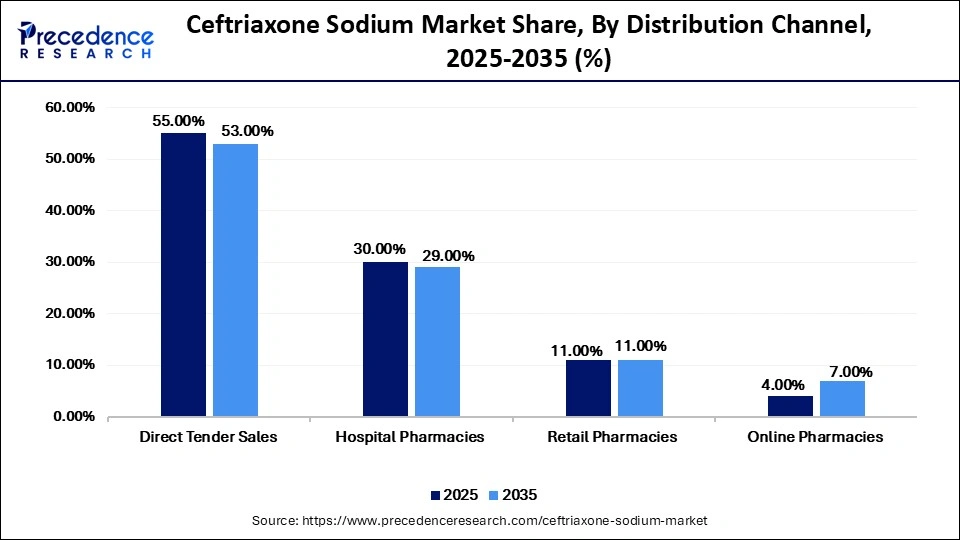
The online pharmacies segment held a 4% share of the market in 2025 and is expected to grow at the fastest CAGR of 7.3% during the projection period. This is mainly due to digital healthcare adoption, e-pharmacy expansion, and improved drug accessibility. The expansion of e-commerce and telemedicine, accelerated significantly post-pandemic, enables patients to easily source prescriptions and medications online. Platforms such as 1mg or Netmeds offer streamlined access to prescription medications.
The hospital pharmacies segment held a 30% share of the market in 2025 and is expected to grow at a CAGR of 4.5% during the projection period. This is mainly due to the inpatient treatment requirements, controlled antibiotic dispensing, and strong hospital infrastructure. Rising rates of chronic illnesses and surgeries demand strict post-operative infection management, which boosts institutional need for injectable antibiotics.
Market Regional Analysis: North America, Europe, Asia-Pacific
Asia Pacific Ceftriaxone Sodium Market Size and Growth 2026 to 2035
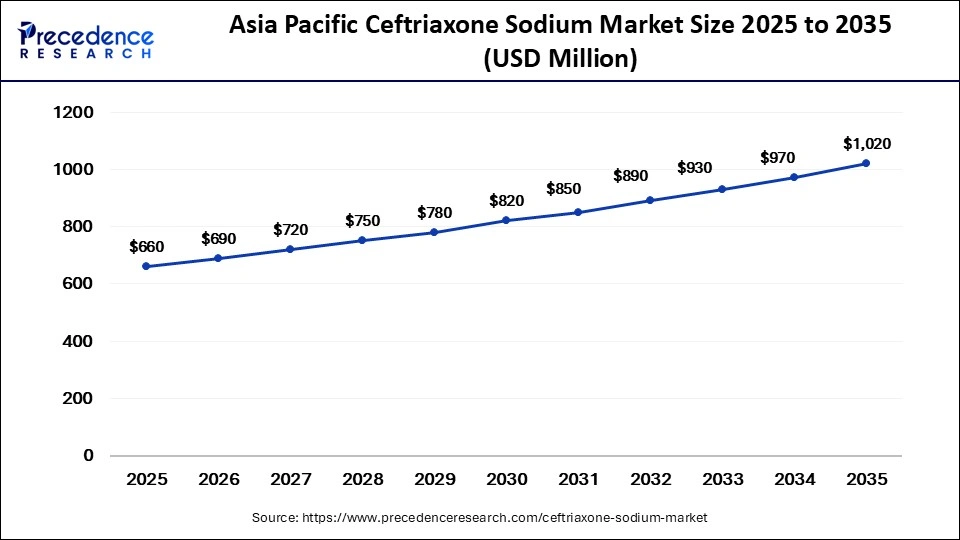
The Asia Pacific ceftriaxone sodium market size was evaluated at USD 660 million in 2025 and is projected to reach around USD 1,020 million by 2035, growing at a CAGR of 4.45% from 2026 to 2035.
What Led the Global Asia-Pacific Ceftriaxone Sodium Market Grow in 2025?
Asia-Pacific held a major market share of 35% in 2025 and is expected to witness the fastest growth with a CAGR of 6.1% over the studied period. This is due to the large patient population, rising incidence of bacterial infections, expanding hospital infrastructure, and increasing healthcare expenditure. Expanding healthcare infrastructure, growing health awareness among a growing middle class, and even government-backed essential medicine supply programs have heavily increased regional demand.
China Market Analysis
China's market is driven by rising bacterial infection rates, expanding hospital networks, and its dominant role as a highly effective third-generation cephalosporin. Favorable manufacturing capacities and even government policies pushing for affordable generic drugs propel this market's massive scale.
Europe: The Second-Largest Market
Europe held the second-largest share at 25% in 2025 and is expected to grow at a notable CAGR of 4.2% during the projection period, driven mainly by advanced healthcare infrastructure, an increasing elderly population, and growing antimicrobial resistance monitoring. Ceftriaxone sodium features a long biological half-life, which allows for convenient, once-daily parenteral administration. This makes it highly favorable in both inpatient hospital settings and outpatient care.
UK Market Analysis
The UK market has grown significantly due to a surge in bacterial infections, rising hospitalization rates, and the drug's high efficacy against multidrug-resistant strains. Its broad-spectrum action and even once-daily dosing make it a first-line hospital treatment.
Will the Middle East and Africa Grow in the Ceftriaxone Sodium Market?
The Middle East and Africa held a 9% share of the market in 2025 and are expected to grow at a CAGR of 5% during the projection period, driven by improving healthcare access, rising infectious disease burden, and the expansion of public healthcare programs. Government initiatives to enhance public health, coupled with increased healthcare spending and better access to medical facilities in emerging markets, have bolstered consumption.
Saudi Arabia Market Analysis
The Saudi Arabian market is driven by a surge in bacterial infections, the rising prevalence of antimicrobial resistance, and increasing healthcare expenditures.
What Drives the Ceftriaxone Sodium Market in North America?
North America held a 23% share of the market in 2025 and is expected to grow at a significant CAGR of 4% during the projection period, driven by growing surgical procedures and the need for broad-spectrum injectable antibiotics. Ceftriaxone is a third-generation cephalosporin valued for its once-daily administration, broad-spectrum efficacy, and even use as an alternative for penicillin-allergic patients.
U.S. Market Analysis
Growth in the U.S. market is mainly driven by the rising prevalence of bacterial infections, like pneumonia and meningitis, and increasing antimicrobial resistance, which necessitates the usage of potent broad-spectrum antibiotics.
How is the Opportunistic Rise of Latin America in the Ceftriaxone Sodium Market?
Latin America held an 8% share of the market in 2025 and is expected to grow at a notable CAGR of 4.7% during the projection period, driven by the rising prevalence of community-acquired infections, increasing government healthcare spending, and increasing hospital admissions. The expiration of patents for legacy drugs has allowed generic pharmaceutical producers to introduce cost-effective versions of ceftriaxone sodium. This has significantly improved accessibility and even volume across emerging regions like Latin America.
Brazil Market Analysis
The growth of Brazil's market is driven by rising bacterial infections, expanded generic drug availability, and a growing preference for hospital-grade injectables.
Market Competitive Landscape: Leading Companies and Strategies
The ceftriaxone sodium market is highly competitive and largely driven by generic producers, resulting in intense price competition. Key players include Pfizer, Fresenius Kabi, Hikma Pharmaceuticals, Lupin, Teva Pharmaceutical Industries, Aurobindo Pharma, and Sandoz. Companies compete via manufacturing scale, regulatory approvals, product quality, supply-chain reliability, and hospital tender contracts. Indian and Chinese producers are strengthening their positions through cost-effective production and export expansion, while multinational companies focus on regulated markets and premium-quality offerings. Strategic initiatives such as capacity expansion, API integration, partnerships, and geographic expansion remain key competitive strategies shaping market dynamics.
Ceftriaxone Sodium Market Companies
- F. Hoffmann-La Roche Ltd.
- ACS Dobfar S.p.A.
- Qilu Pharmaceutical Co., Ltd.
- Shandong Luoxin Pharmaceutical Group
- NCPC Group
- United Laboratories International Holdings Ltd.
- CSPC Pharmaceutical Group
- Aurobindo Pharma Limited
- Lupin Limited
- Alkem Laboratories Ltd.
- Hikma Pharmaceuticals PLC
- Pfizer Inc.
- Sandoz Group AG
- Fresenius Kabi AG
- Baxter International Inc
Recent Developments Ceftriaxone Sodium Market (2025-2026)
- In December 2025, Delius Pharmaceuticals imported the ceftriaxone sodium API, a raw drug utilized to manufacture antibiotic products, directly from China. Delius Pharma stated that it imports 120-130 tons of the chemical annually to meet the growing formulation needs across generic markets and even government tenders.(Source: https://economictimes.indiatimes.com)
- In December 2025, the FDA approved zoliflodacin by Innoviva Specialty Therapeutics, which is a single-dose oral medication for uncomplicated urogenital gonorrhea in adults and pediatric patients 12 years and older weighing at least 77 lbs.(Source: https://www.urologytimes.com)
Segments Covered in the Report
By Product Strength
- 250 mg Vial
- 500 mg Vial
- 1 g Vial
- 2 g Vial
- Others
By Dosage Form
- Powder for Injection
- Premixed Injectable Solutions
- Ready-to-use Injectable Formulations
- Others
By Route of Administration
- Intravenous (IV)
- Intramuscular (IM)
By Application
- Respiratory Tract Infections
- Urinary Tract Infections
- Skin & Soft Tissue Infections
- Intra-abdominal Infections
- Bloodstream Infections (Sepsis)
- Gonorrhea Treatment
- Meningitis Treatment
- Surgical Prophylaxis
- Others
By End User
- Hospitals
- Specialty Clinics
- Ambulatory Surgical Centers (ASCs)
- Government Healthcare Facilities
- Others
By Distribution Channel
- Direct Tender Sales
- Hospital Pharmacies
- Retail Pharmacies
- Online Pharmacies
By Region
- North America
- Latin America
- Europe
- Asia-pacific
- Middle and East Africa
For inquiries regarding discounts, bulk purchases, or customization requests, please contact us at sales@precedenceresearch.com
Frequently Asked Questions





Ask For Sample
No cookie-cutter, only authentic analysis – take the 1st step to become a Precedence Research client
 Get a Sample




 sales@precedenceresearch.com
 Schedule a Meeting
