



CNS Biomarkers Market Size, Size, Companies, Share, Patient Volume, Treatment Adoption Rates, Pricing Analysis, Regulatory Landscape, Competitive Positioning, and Demand Forecast
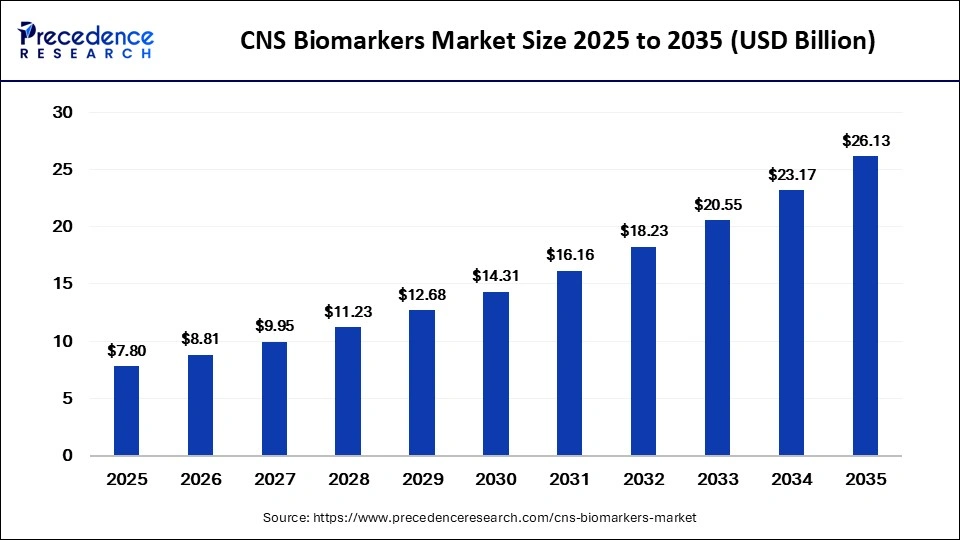
Rohan Patil, a Healthcare Industry Expert, highlights that the cns biomarkers market has reached USD 8.81 billion in 2026 and is on track to reach USD 26.13 billion by 2035, advancing at a CAGR of 12.90%. Key cns biomarkers market companies shaping the market include F. Hoffmann-La Roche Ltd., Thermo Fisher Scientific, Bio-Rad Laboratories, Quanterix Corporation, while major growth segments span By Biomarker Type, By Technology, By Application, By Sample Type.
Source: https://www.precedenceresearch.com/cns-biomarkers-market
 Get a Sample
 Table Of Content


What is the CNS Biomarkers Market Size in 2026?
The global CNS biomarkers market size accounted for USD 7.80 billion in 2025 and is predicted to increase from USD 8.81 billion in 2026 to approximately USD 26.13 billion by 2035, expanding at a CAGR of 12.90% from 2026 to 2035. The market is driven by the increasing use of CNS biomarkers, the growing need for understanding various neurological disorders, and rapid advancements in biomarker technologies.
Key Takeaways
- North America dominated the global CNS biomarkers market with a share of 41% in 2025.
- Asia-Pacific is expected to grow at the fastest CAGR of 16.8% during the forecast period.
- By biomarker type, the protein biomarkers segment held a major market share of 42% in 2025.
- By biomarker type, the genetic biomarkers segment is expected to grow at the fastest CAGR of 15% between 2026 and 2035.
- By technology, the immunoassays segment accounted for a revenue share of 30% in the market in 2025.
- By technology, the AI and bioinformatics-based analysis segment is expected to grow at the highest CAGR of 20.5% between 2026 and 2035.
- By application, the Alzheimer's disease segment led the global market with a share of 32% in 2025 and is expected to grow at the fastest CAGR of 15.5% between 2026 and 2035.
- By sample type, the blood segment contributed the highest market share of 65% in 2025 and is expected to further grow at the fastest CAGR of 16.5% during the forecast period.
Market Overview
Central nervous system (CNS) biomarkers are measurable biological indicators or characteristics that objectively indicate normal brain/spinal cord function, pathogenic processes, or responses to therapy. They are crucial for diagnosing, monitoring, and treating various neurodegenerative diseases such as Alzheimer's disease, Multiple sclerosis, Parkinson's disease, and others. CNS biomarkers are widely used to screen, monitor, or diagnose any activity of CNS-related diseases to guide molecularly targeted therapy and accurately evaluate treatment efficacy. Several pharmaceutical companies are increasingly investing in biomarker research to streamline drug development and improve treatment outcomes.
How are AI-driven Innovations Impacting the Growth of the CNS Biomarkers Market?
In the rapidly evolving technological landscape, the integration of artificial intelligence (AI) emerges as a changer in the market by improving patient stratification, enhancing early diagnosis, and streamlining drug development for CNS diseases like Alzheimer's, multiple sclerosis, and Parkinson's disease. AI and machine learning (ML) integration into biomarker discovery processes can enhance the accuracy and efficiency of identifying potential candidates for clinical use. AI integration significantly accelerates the identification of novel drug candidates and reduces operational inefficiencies in clinical trials. AI algorithms can improve diagnostic accuracy in analyzing MRI, CT, and PET scans, enabling the detection of neurodegenerative conditions at earlier stages.
CNS Biomarkers Market Trends
- The increasing demand for early diagnosis and disease-modifying therapies is anticipated to accelerate the market's growth. Early detection is crucial for managing various neurodegenerative diseases, which propels the demand for CNS biomarkers to identify diseases before advanced symptoms arise.
- Rapid advancements in molecular biology, proteomics, and neuroimaging are enabling the discovery of advanced and reliable biomarkers, bolstering the market's growth.
- The rising shift towards personalized medicine is expected to spur the demand for CNS biomarkers to identify patient-specific and targeted therapies. Biomarkers are essential for selecting the specific therapies for the right patient.
- The rising advancement in diagnostic technology, such as blood-based biomarkers, omics technology, and AI-powered analytics, improves test accuracy and accessibility.
- The increasing regulatory approval of biomarker-based and disease-modifying therapies, along with the rising government research funding, are anticipated to contribute to the overall growth of the market.
Market Scope
| Report Coverage | Details |
| Market Size in 2025 | USD 7.80 Billion |
| Market Size in 2026 | USD 8.81 Billion |
| Market Size by 2035 | USD 26.13 Billion |
| Market Growth Rate from 2026 to 2035 | CAGR of 12.90% |
| Dominating Region | North America |
| Fastest Growing Region | Europe |
| Base Year | 2025 |
| Forecast Period | 2026 to 2035 |
| Segments Covered | Biomarker Type, Technology, Application, Sample Type, and Region |
| Regions Covered | North America, Europe, Asia-Pacific, Latin America, and Middle East & Africa |
Market Dynamics
Drivers
Rising Prevalence of CNS Disorders
The increasing global incidence of CNS disorders is anticipated to drive the growth of the market. A crucial step in reducing the burden of central nervous system (CNS) disorders is identifying disease-specific biomarkers that can predict, monitor, and guide treatment development. The use of CNS biomarkers in clinical trials has been most prevalent, particularly in studies of multiple sclerosis (MS), Alzheimer's disease (AD), and Parkinson's disease (PD). These biomarkers facilitate early diagnosis, monitoring disease progression, and evaluation of therapeutic responses, thereby supporting better patient outcomes and advancing personalized treatment approaches.
Restraint
Rising Development and Validation Costs
The rising cost associated with the development and validation of biomarkers is anticipated to hamper the growth of the market. The substantial expense required in developing, validating, and performing CNS biomarker assays, particularly molecular imaging and liquid biopsies, often limits their use in budget-limited environments. In addition, the stringent regulatory scenario may hinder the growth of the global market during the forecast period.
Opportunity
Rising Demand from Drug Development and Clinical Trials
The growing use of CNS biomarkers to demonstrate target engagement, safety, and efficacy in clinical trials presents a lucrative growth opportunity for the market. Pharmaceutical companies are increasingly using biomarkers in clinical trials to evaluate safety, efficacy, and patient stratification. CNS biomarkers are extensively utilized in drug development to identify potential therapeutic targets, evaluate the efficacy and safety of candidate drugs, and monitor biological responses in preclinical and clinical trials. Neuroimaging biomarkers have significantly contributed to the development of CNS drugs and have been widely used in determining dosing for investigational new drugs (INDs) featuring novel mechanisms and targets.
Segmental Insights
Biomarker Type Insights
CNS Biomarkers Market Share, By Biomarker Type, 2025-2035 (%)
| Biomarker Type | 2025 | 2035 | CAGR (%) |
| Protein Biomarkers | 42.00% | 45.00% | 14.50% |
| Genetic Biomarkers | 24.00% | 26.00% | 15.00% |
| Metabolic Biomarkers | 10.00% | 9.00% | 9.50% |
| Imaging Biomarkers | 18.00% | 15.00% | 10.20% |
| Cellular Biomarkers | 6.00% | 5.00% | 8.50% |
The Protein Biomarkers Segment Held a 42% Market Share in 2025
The protein biomarkers segment generated approximately USD 3.28 billion in 2025 and is projected to reach nearly USD 11.76 billion by 2035, growing at a CAGR of 14.5% during the forecast period. The protein biomarkers segment dominated the CNS biomarkers market with a share of 42% in 2025, owing to the rise of blood-based diagnostics, the growing need for early CNS disorder detection, and the increasing use of tau and amyloid beta biomarkers in various neurodegenerative diseases. Protein biomarkers have the superior capability in providing precise, early, and less invasive diagnostics for neurodegenerative disorders compared to other modalities
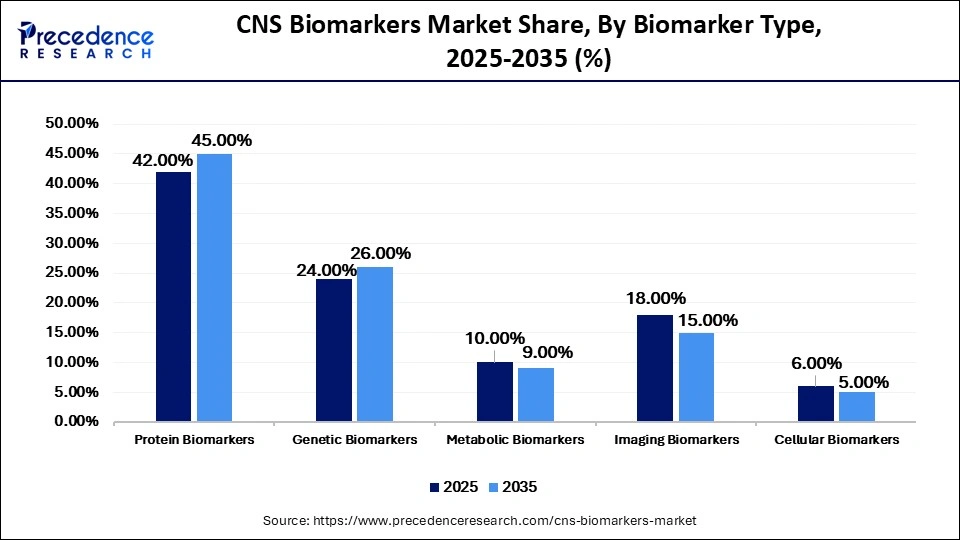
The genetic biomarkers segment accounted for approximately USD 1.87 billion in 2025 and is projected to reach nearly USD 6.79 billion by 2035 at the fastest CAGR of 15% during the forecast period. The genetic biomarkers segment held a 24% share of the market in 2025, owing to the rising shift towards precision medicine approaches, growing adoption of genomic profiling in neurology, and increasing need for target identification in drug discovery. Advanced technologies such as whole-genome sequencing and next-generation sequencing (NGS) have significantly advanced the ability to identify specific risk genes associated with disease onset and progression.
The imaging biomarkers segment generated approximately USD 1.40 billion in 2025 and is expected to reach nearly USD 3.92 billion by 2035, expanding at a CAGR of 10.2% during the forecast period. The imaging biomarkers segment held a 18% market share in 2025, owing to its ability to provide high-resolution visualization of brain pathology, particularly in neurodegenerative diseases. Imaging biomarkers, such as MRI and PET, play a crucial role in early diagnosis and tracking the progression of various neurodegenerative conditions. Moreover, the rising integration of AI for enhanced analytics and increasing demand for early diagnosis of neurodegenerative disorders, such as Alzheimer's and Parkinson's, is anticipated to bolster the segment's growth during the forecast period.
Technology Insights
Why Did the Immunoassays Segment Lead the Market with 30% in 2025?
The immunoassays segment generated approximately USD 2.34 billion in 2025 and is projected to reach nearly USD 7.32 billion by 2035, growing at a CAGR of 11.5% during the forecast period. The immunoassays segment held a dominant position in the CNS biomarkers market with a share of 30% in 2025, driven by its ability to provide high-throughput, rapid, and ultrasensitive detection of low-abundance proteins in biofluids. Immunoassays allow for rapid testing of many samples, critical in both laboratory diagnostics and research. Moreover, the growing automation in immunodiagnostic testing and the increasing expansion of blood-based diagnostics are expected to drive the segment's expansion during the forecast period.
CNS Biomarkers Market Share, By Technology, 2025-2035 (%)
| Technology | 2025 | 2035 | CAGR (%) |
| Immunoassays | 30.00% | 28.00% | 11.50% |
| Molecular Diagnostics | 22.00% | 24.00% | 15.50% |
| Proteomics | 18.00% | 20.00% | 16.00% |
| Genomics | 12.00% | 14.00% | 15.80% |
| Neuroimaging Technologies | 14.00% | 11.00% | 10.00% |
| AI & Bioinformatics-based Analysis | 4.00% | 3.00% | 20.50% |
The molecular diagnostics segment accounted for approximately USD 1.72 billion in 2025 and is projected to reach nearly USD 6.27 billion by 2035, growing at a CAGR of 15.5% during the forecast period. The molecular diagnostics segment is the second-largest shareholder with a share of 22% in 2025, driven by the increasing prevalence of neurodegenerative diseases, a surge in the aging global population, and increasing demand for early-stage Alzheimer's and Parkinson's disease diagnostics. The rapid development of non-invasive and blood-based molecular tests has significantly improved early disease detection and monitoring. Molecular diagnostics plays an essential role in pharmaceutical R&D for demonstrating target engagement, patient stratification, and monitoring efficacy, particularly in neurodegenerative diseases research.
The proteomics segment generated approximately USD 1.40 billion in 2025 and is projected to reach nearly USD 5.23 billion by 2035, growing at a CAGR of 16% during the forecast period. The proteomics segment held a 18% market share of the market in 2025. This growth is largely driven by the increasing use in neurodegenerative disease studies, rising demand for blood-based diagnostics, and the expansion of protein profiling technologies. Proteomics can accurately detect protein changes such as methylation, phosphorylation, and oxidation, crucial in neurodegenerative diseases. Proteomics enables the identification of circulating protein signatures in blood that act as proxies for brain changes.
Application Insights
The Alzheimer's Disease Segment Held a 32% Share of the CNS Biomarkers Market in 2025
The Alzheimer's disease segment generated approximately USD 2.50 billion in 2025 and is projected to reach nearly USD 9.15 billion by 2035 at the fastest CAGR of 15.5% during the forecast period. The Alzheimer's disease segment held a dominant position in the market with a share of 32% in 2025, driven by the growing demand for early diagnosis biomarkers and the increasing prevalence of Alzheimer's disease globally. For instance, according to the data published by the National Institutes of Health (NIH) in April 2025, an estimated 7.2 million Americans age 65 and older are living with Alzheimer's dementia. This number could grow to 13.8 million by 2060.
CNS Biomarkers Market Share, By Application, 2025-2035 (%)
| Application | 2025 | 2035 | CAGR (%) |
| Alzheimer's Disease | 32.00% | 35.00% | 15.50% |
| Parkinson's Disease | 18.00% | 17.00% | 13.20% |
| Multiple Sclerosis | 14.00% | 13.00% | 11.00% |
| Epilepsy | 8.00% | 7.00% | 9.50% |
| Traumatic Brain Injury (TBI) | 10.00% | 11.00% | 14.00% |
| Stroke | 9.00% | 8.00% | 10.50% |
| Psychiatric Disorders | 5.00% | 5.00% | 11.20% |
| Other Neurological Disorders | 4.00% | 4.00% | 8.50% |
The Parkinson's disease segment accounted for approximately USD 1.40 billion in 2025 and is projected to reach nearly USD 4.44 billion by 2035, growing at a CAGR of 13.2% during the forecast period. The Parkinson's disease segment is the second-largest shareholder with a share of 18% in 2025. This is mainly due to rising breakthroughs in alpha-synuclein assays, growing need for early diagnosis, rising investments in R&D, and increasing prevalence of PD. Nearly 90,000 people a year in the U.S. are diagnosed with PD. An estimated 1.1 million Americans are living with PD, a number expected to rise to 1.2 million by 2030. There are 11.8 million people worldwide living with Parkinson's, and that number is expected to more than double by 2050.
he multiple sclerosis segment generated approximately USD 1.09 billion in 2025 and is projected to reach nearly USD 3.40 billion by 2035, growing at a CAGR of 11% during the forecast period. The multiple sclerosis segment held a 14% market share in 2025, driven by the emergence of novel blood biomarkers, increasing need for personalized treatment monitoring, and growing awareness regarding early diagnosis. The increasing cases of multiple sclerosis, along with substantial investment in research into disease-modifying therapies (DMTs) and patient-centric care, are propelling the segment's growth.
Sample Type Insights
CNS Biomarkers Market Share, By Sample Type, 2025-2035 (%)
| Sample Type | 2025 | 2035 | CAGR (%) |
| Blood | 40.00% | 46.00% | 16.50% |
| Cerebrospinal Fluid (CSF) | 32.00% | 26.00% | 9.50% |
| Urine | 8.00% | 7.00% | 8.50% |
| Saliva | 6.00% | 5.00% | 9.00% |
| Brain Imaging Data | 14.00% | 16.00% | 13.50% |
What Made Blood the Dominant Segment in the CNS Biomarkers Market in 2025?
The blood segment generated approximately USD 3.12 billion in 2025 and is projected to reach nearly USD 12.02 billion by 2035 at the fastest CAGR of 16.5% during the forecast period. The blood segment dominated the global market with the largest share of 40% in 2025. This is mainly due to the rising shift towards cost-effective, scalable, and non-invasive alternatives to cerebrospinal fluid (CSF) analysis. Blood tests are safer, easier to perform, and more accepted by patients, which promotes their use in primary care and routine clinical settings.
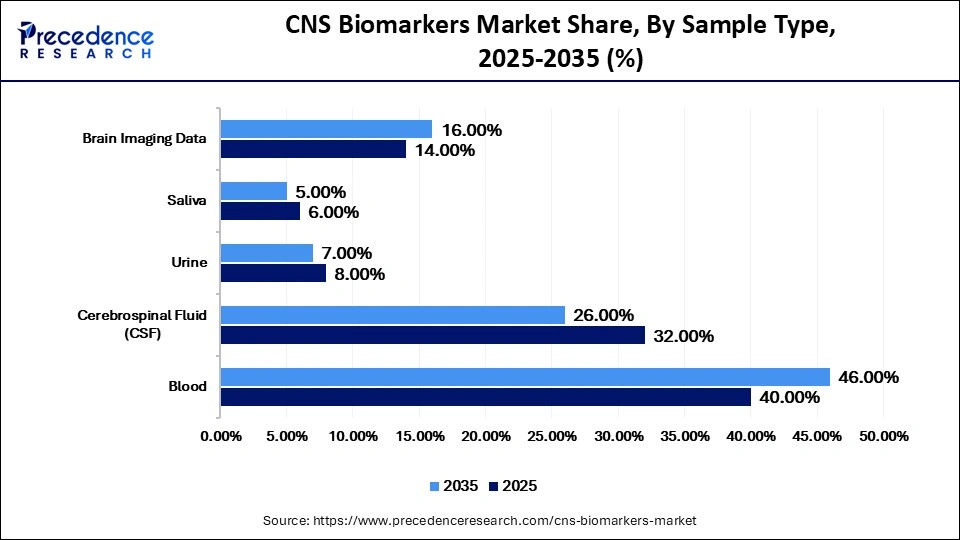
The cerebrospinal fluid (CSF) segment accounted for approximately USD 2.50 billion in 2025 and is projected to reach nearly USD 6.79 billion by 2035, growing at a CAGR of 9.5% during the forecast period. The cerebrospinal fluid (CSF) segment is the second-largest shareholder with a share of 32% in 2025, owing to the diagnostic accuracy for neurodegenerative diseases and increasing use in specialized neurology centers. CSF offers direct and high-concentration access to pathological markers that are otherwise difficult to detect in peripheral blood. CSF analysis provides better differentiation between various neurodegenerative disease types, such as Parkinson's, Alzheimer's, and multiple sclerosis.
The brain imaging data segment generated approximately USD 1.09 billion in 2025 and is projected to reach nearly USD 4.18 billion by 2035, growing at a CAGR of 13.5% during the forecast period. The brain imaging data segment held a 14% market share in 2025. The growth of the segment is mainly driven by the rising investments in advanced imaging technologies such as MRI, PET scans, and CT scans, increasing integration of AI-based neuroimaging analysis, and growing demand for disease progression monitoring. Brain imaging data plays a crucial role in the rapid and accurate diagnosis of neurodegenerative diseases.
Regional Insights
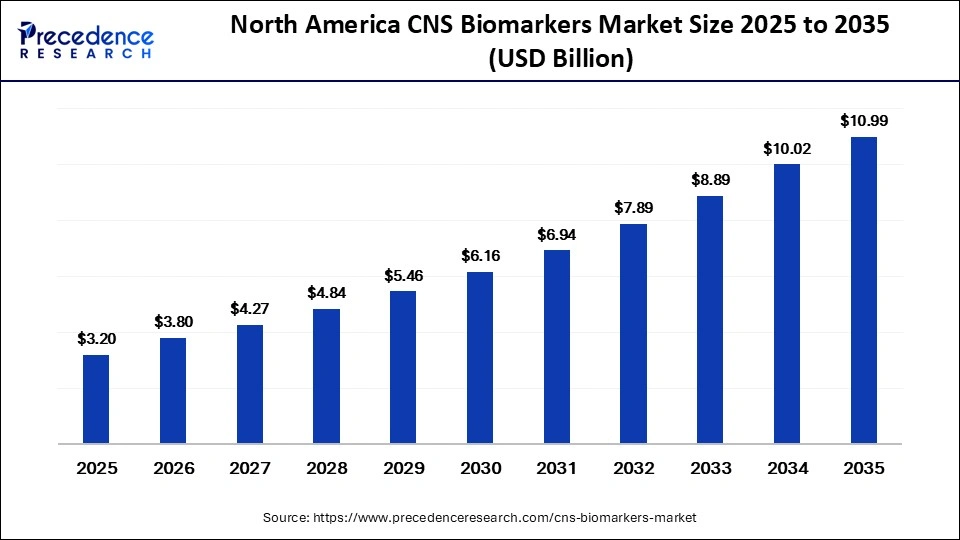
North America CNS Biomarkers Market Size and Growth 2026 to 2035
The North America CNS biomarkers market size was exhibited at USD 3.20 billion in 2025 and is projected to be worth around USD 10.99 billion by 2035, growing at a CAGR of 12.00% from 2026 to 2035.
North America Led the Global CNS Biomarkers Market in 2025
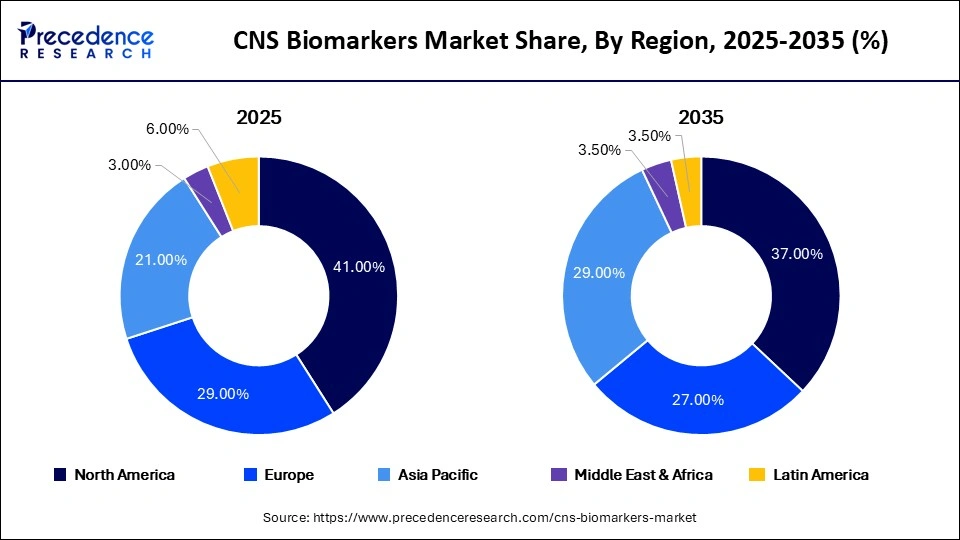
North America led the market by holding a major share of 41% in 2025. The region has a strong and well-established healthcare infrastructure, facilitating the integration of biomarker-guided tests and personalized medicine in clinical practice. North America has a high concentration of leading pharmaceutical and biotechnology companies. The rising aging population, along with the rising incidences of Central Nervous System (CNS) biomarkers, drives the demand for early diagnosis and AI-powered drug development.
U.S. CNS Biomarkers Market Size and Growth 2026 to 2035
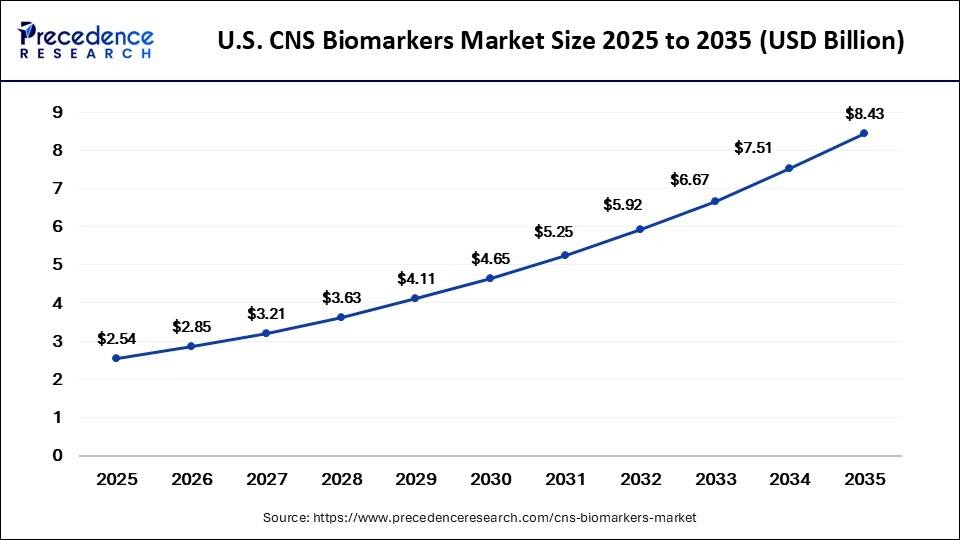
The U.S. CNS biomarkers market size was evaluated at USD 2.54 billion in 2025 and is projected to reach around USD 8.43 billion by 2035, growing at a CAGR of 12.14% from 2026 to 2035.
U.S. Market Analysis
The U.S. is a major contributor to the North American market due to its advanced healthcare infrastructure, rising shift towards AI-driven diagnostics, significant funding for biomarker research and development, widespread use in drug development & clinical trials, rapid adoption of precision medicine, and increasing prevalence of neurological disorders. The country is home to the leading market players such as Thermo Fisher Scientific Inc., Bio-Rad Laboratories, Inc., Quanterix Corporation, Abbott Laboratories, GE HealthCare Technologies Inc., Revvity, Inc., Agilent Technologies, Inc., Danaher Corporation, and others. Moreover, the rising regulatory approval of biomarker-based and disease-modifying therapies is expected to propel the growth of CNS biomarkers in the country.
How is Asia-Pacific Growing in the CNS Biomarkers Market?
Asia-Pacific held a 21% of the market share in 2025 and is expected to grow at the fastest CAGR of 16.8% during the projection period, driven by the massive investment is diagnostic infrastructure, increasing use of biomarkers in personalized medicine, growing aging population, rising adoption of minimally invasive blood-based tests, increasing the number of academic and biotechnology collaborations, rising government support for neurological disease research, and growing awareness of early diagnosis of neurodegenerative diseases such as Alzheimer's, Parkinson's, and multiple sclerosis. Additionally, the rising adoption of advanced diagnostics, such as genomics, proteomics, and specialized tools in the Asia Pacific region, continues to drive market growth.
China Market Analysis
The Chinese market is growing due to the adoption of molecular imaging, such as CT and PET scans, which are critical for detecting CNS pathologies. The increasing focus on research for targeted neurological therapies necessitates reliable biomarkers for monitoring treatment response, accelerating R&D investments in the country. The country is also witnessing the rising AI integration to analyze complex imaging and biochemical data to improve diagnostic accuracy and identify drug targets. China has a strong presence of pharma/biotech companies and continuous technological advancements in diagnostic tools. Such a combination of factors is anticipated to bolster the CNS biomarkers market's growth in the country.
CNS Biomarkers Market Companies
- F. Hoffmann-La Roche Ltd.
- Thermo Fisher Scientific
- Bio-Rad Laboratories
- Quanterix Corporation
- Siemens Healthineers
- Abbott Laboratories
- GE HealthCare
- PerkinElmer
- Qiagen N.V.
- Agilent Technologies
- Sysmex Corporation
- Danaher Corporation
- Merck KGaA
- Illumina Inc.
- Bruker Corporation
Recent Developments
- In April 2026, Biognosys Group and The Michael J. Fox Foundation for Parkinson's Research (MJFF) announced a collaboration to develop sensitive and quantitative biomarker assays for Parkinson's disease. The partnership supports MJFF's LRRK2 Investigative Therapeutics Exchange (LITE), a global initiative designed to accelerate the development of therapies and biomarkers targeting leucine-rich repeat kinase 2 (LRRK2). (Source: https://clpmag.com)
- In March 2026, ImmunoBrain, a clinical-stage biopharmaceutical company developing novel immunotherapies for neurodegenerative diseases, presented new data from the first clinical study in AD patients, evaluating IBC-Ab002, an inhibitory immune checkpoint blockade therapeutic approach. The findings were presented by Professor Catherine J. Mummery, M.B.B.S., Ph.D., F.R.C.P., the study's lead investigator, as part of a symposium at the Alzheimer's & Parkinson's Diseases Conference (AD/PD) 2026 in Copenhagen, Denmark.(Source: https://www.prnewswire.com)
- In March 2026, Alamar Biosciences, Inc., a leader in precision proteomics dedicated to advancing the early detection of disease, announced the launch of the NULISAseq Neuro 220 Panel with multiplexed measurement of 220 biomarkers from a single sample while maintaining ultra-high sensitivity and high specificity. NULISAseq Neuro 220 Panel, the largest precision proteomics panel with the sensitivity and specificity to advance neurological disease research.(Source: https://alamarbio.com)
Segments Covered in the Report
By Biomarker Type
- Protein Biomarkers
- Tau Protein
- Amyloid Beta
- Neurofilament Light Chain (NfL)
- Glial Fibrillary Acidic Protein (GFAP)
- Genetic Biomarkers
- DNA Biomarkers
- RNA Biomarkers
- Epigenetic Biomarkers
- Metabolic Biomarkers
- Imaging Biomarkers
- MRI Biomarkers
- PET Biomarkers
- CT Imaging Biomarkers
- Cellular Biomarkers
By Technology
- Immunoassays
- Molecular Diagnostics
- Proteomics
- Genomics
- Neuroimaging Technologies
- AI & Bioinformatics-based Analysis
By Application
- Alzheimers Disease
- Parkinsons Disease
- Multiple Sclerosis
- Epilepsy
- Traumatic Brain Injury (TBI)
- Stroke
- Psychiatric Disorders
- Other Neurological Disorders
By Sample Type
- Blood
- Cerebrospinal Fluid
- Urine
- Saliva
- Brain Imaging Data
By Region
- North America
- Latin America
- Europe
- Asia-pacific
- Middle and East Africa
For inquiries regarding discounts, bulk purchases, or customization requests, please contact us at sales@precedenceresearch.com
Frequently Asked Questions





Ask For Sample
No cookie-cutter, only authentic analysis – take the 1st step to become a Precedence Research client
 Get a Sample




 sales@precedenceresearch.com
 Schedule a Meeting
