



Electrophoresis Reagents Market Size, Key Companies, Company Market Share, Patient Volume, Treatment Adoption Rates, Pricing Analysis, Regulatory Landscape, Competitive Positioning, and Demand Forecast
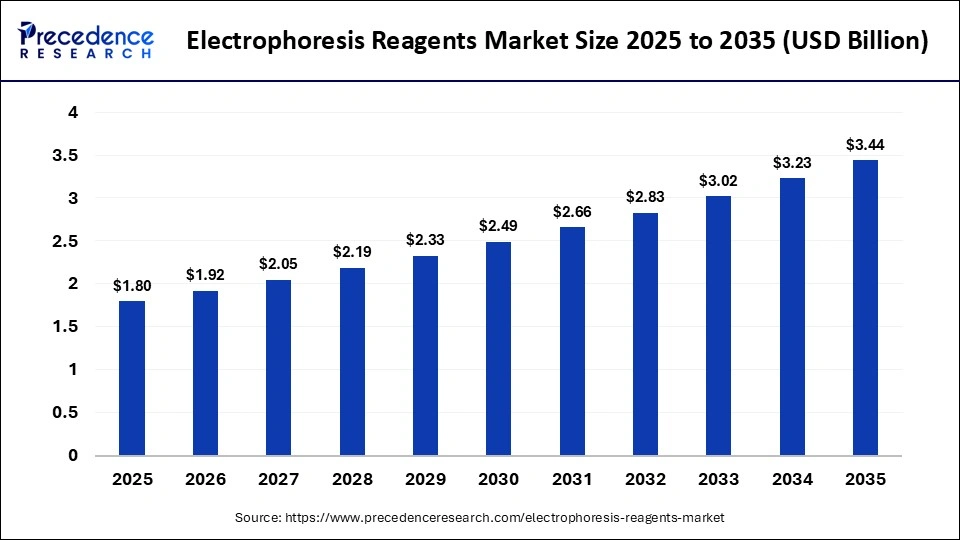
Rohan Patil, a Healthcare Industry Expert, highlights that the electrophoresis reagents market has reached USD 1.92 billion in 2026 and is on track to reach USD 3.44 billion by 2035, advancing at a CAGR of 6.70%. Key electrophoresis reagents market companies shaping the market include Thermo Fisher Scientific Inc., Bio-Rad Laboratories, Inc., Agilent Technologies Inc., GE Healthcare Life Sciences, while major growth segments span By Product Type, By Technique, By Application, By End-Use.
Source: https://www.precedenceresearch.com/electrophoresis-reagents-market
 Get a Sample
 Table Of Content


What is the Electrophoresis Reagents Market Size in 2026?
The global electrophoresis reagents market size accounted for USD 1.80 billion in 2025 and is predicted to increase from USD 1.92 billion in 2026 to approximately USD 3.44 billion by 2035, expanding at a CAGR of 6.70% from 2026 to 2035. The electrophoresis reagents market is driven by rising demand in molecular biology and disease diagnostics.
Key Takeaways
- North America dominated the global electrophoresis reagents market with a share of 40% in 2025.
- The Asia Pacific is expected to grow at the fastest rate in the market during the forecast period.
- By product type, the gel electrophoresis reagents segment held a dominant position in the market, accounting for 70% share in 2025.
- By product type, the capillary electrophoresis reagents segment is the second-largest shareholder and is expected to grow at a significant CAGR of 7% between 2026 and 2035.
- By technique, the agarose gel electrophoresis segment led the global market with a share of 30% in 2025.
- By technique, the polymerase chain reaction electrophoresis segment is the second-largest shareholder and is expected to grow at a significant CAGR of 7.5% between 2026 and 2035.
- By application, the protein & nucleic acid separation segment held a major share of 40% in the market in 2025.
- By application, the genetic research & diagnostics segment is the second-largest shareholder and is expected to grow at a CAGR of 6% between 2026 and 2035.
- By end-use, the biotechnology & pharmaceutical companies segment led the global market with a share of 40% in 2025.
- By end-use, the research & academic institutes segment is the second-largest shareholder and is expected to grow at a 6% CAGR between 2026 and 2035.
Market Overview
The electrophoresis reagents market includes key consumables such as gels, buffers, dyes, and detection reagents used in gel and capillary electrophoresis to separate and analyze proteins and nucleic acids in academic research, pharmaceutical quality control, and diagnostic labs. Market growth is driven by rapid advances in genomics and proteomics, supported by increased funding in government and research institutions. Moreover, the growing need for accurate, early disease diagnosis, especially for complex conditions such as cancer, is boosting the use of electrophoresis methods. Additionally, laboratory workflows are becoming automated, including Western blot systems, which promote the use of ready-to-use reagent kits and recurring procurement models, thus driving market growth.
How is AI Influencing the Electrophoresis Reagents Market?
The integration of artificial intelligence is significantly impacting the electrophoresis reagents market in several ways. Image analysis software based on AI can quickly analyze band patterns in techniques associated with proteomics and genomics, increasing the accuracy of protein and nucleic acid separation. Moreover, AI-driven automation systems are being used in labs to process large amounts of data by combining electrophoresis devices with standardized reagent kits, which provide uniformity in experimental results. AI is also facilitating data sharing and collaboration in the cloud, speeding up the results of research, and creating a need for advanced, standardized electrophoresis reagents.
Electrophoresis Reagents Market Trends
- The integration of automation technologies into electrophoresis processes, like western blot systems, is boosting the demand for standard reagent packages. These standardized solutions help ensure consistency, reproducibility, and efficiency in large-scale laboratory environments where high-throughput processing is essential.
- The rapid evolution of clinical diagnostics and personalized medicine is expanding the role of electrophoresis techniques.
- There is a rising emphasis on sustainability in laboratory practices. To address this, manufacturers are increasingly developing environmentally friendly reagents and packaging systems.
Market Scope
| Report Coverage | Details |
| Market Size in 2025 | USD 1.80 Billion |
| Market Size in 2026 | USD 1.92 Billion |
| Market Size by 2035 | USD 3.44 Billion |
| Market Growth Rate from 2026 to 2035 | CAGR of 6.70% |
| Dominating Region | North America |
| Fastest Growing Region | Asia Pacific |
| Base Year | 2025 |
| Forecast Period | 2026 to 2035 |
| Segments Covered | Product Type, Technique, Application, End-Use, and Region |
| Regions Covered | North America, Europe, Asia-Pacific, Latin America, and Middle East & Africa |
Market Dynamics
Drivers
Rising Chronic Disease Burden
The electrophoresis reagents market is mainly driven by the rise in the rate of chronic diseases, as well as the growing ageing population around the world. This significantly boosts the frequency of diagnostic tests performed, and so does the need for reagents. Modern electrophoresis technologies enable the separation of proteins and nucleic acids with high resolution. Circulating tumor DNA electrophoretic analysis is making inroads into the migration of minimally invasive liquid biopsy methods to replace traditional tissue-based diagnostics and to become more common in patient testing.
Restraint
Rising Competition from High-Performance Analytical Technologies
The electrophoresis reagents market is facing significant challenges due to the introduction of other forms of separation technologies, such as mass spectrometry and chromatography. These new systems offer comparable or even greater sensitivity, increased multiplexing, and reduced processing time, and no longer use the older techniques of electrophoresis. Several laboratories are moving toward high-performance technologies that require high-throughput and complex analysis. This significantly reduces the use of electrophoresis, particularly in time-sensitive applications, and this may constrain the market.
Opportunity
Demand for Precision Medicine
The rising adoption of personalized medicine, where targeted therapies increasingly depend on accurate molecular diagnostics, creates immense opportunities in the electrophoresis reagents market. As a result, there is a rising demand for point-of-care genotyping reagent solutions that enable rapid analysis and real-time clinical insights, as seen in platforms such as QIAstat-Dx. Moreover, regulatory bodies are placing greater emphasis on validated molecular characterization tools during drug approval processes. This requirement, along with the need for compliance and standardization, is contributing to a consistent baseline demand for electrophoresis reagents across research and clinical laboratories.
Segment Insights
Product Type Insights
Electrophoresis Reagents Market Share, By Product Type, 2025-2035 (%)
| Product Type | 2025 | 2035 | CAGR (%) |
| Gel Electrophoresis Reagents | 40.00% | 38.00% | 5.50% |
| Capillary Electrophoresis Reagents | 25.00% | 27.00% | 7.00% |
| Blotting Reagents (Western Blotting, Northern Blotting, Southern Blotting) | 15.00% | 14.00% | 5.00% |
| Electrophoresis Buffers | 15.00% | 14.50% | 6.00% |
| Other Reagents | 5.00% | 6.50% | 8.00% |
The Gel Electrophoresis Reagents Segment Held a 40% Market Share in 2025
The gel electrophoresis reagents segment dominated the electrophoresis reagents market with a major share of 40% in 2025. This is mainly due to their widespread use in research laboratories and diagnostic labs. Gel electrophoresis is an essential method of nucleic acid and protein separation and analysis. Its affordability, versatility, and ability to separate nucleic acid and protein make it the preferred choice in laboratories.
The capillary electrophoresis reagents segment held the second-largest market share of 25% in 2025 and is expected to grow at a CAGR of 7% during the projection period. This is mainly due to the increasing demands for high-resolution, fast, and automated modes of analysis. The capillary electrophoresis method is used heavily in clinical diagnostics. It can easily be integrated into automated systems, enhancing throughput and minimizing human error. These reagents are gaining popularity due to their efficiency and high resolution.
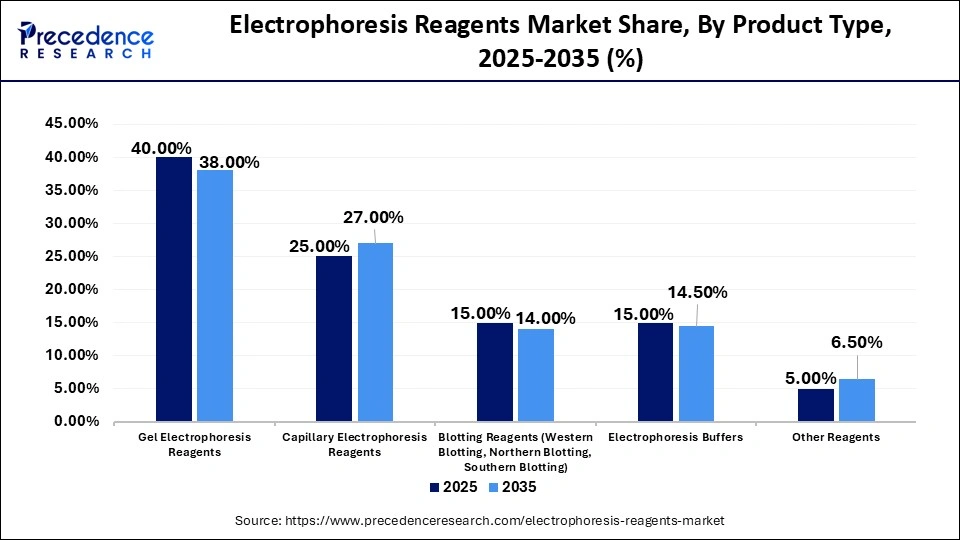
The blotting reagents (western blotting, northern blotting, southern blotting) segment held a 15% share of the market in 2025 and is expected to grow at a CAGR of 5% during the projection period, due to their importance in the detection of protein and nucleic acid. These reagents are mainly employed in the research of molecular biology, the diagnosis of diseases, and the validation of experimental evidence. Their growing application in biomarker studies and the need for confirmatory tests in genomics and proteomics also support segmental growth.
The electrophoresis buffers segment held a 15% market share in 2025 and is expected to grow at a CAGR of 6% during the projection period, driven by their vital functions of preserving optimal pH, conductivity, and stability in the course of electrophoretic separation. Buffers play a vital role in accurate and reproducible results since they have a direct impact on the migration and separation of biomolecules. There is increasing demand for specialized and ready-to-use buffer solutions tailored to specific applications, such as DNA, RNA, and protein analysis, further supporting segment growth.
Technique Insights
Electrophoresis Reagents Market Share, By Technique, 2025-2035 (%)
| Technique | 2025 | 2035 | CAGR (%) |
| Agarose Gel Electrophoresis | 30.00% | 28.00% | 5.50% |
| Polymerase Chain Reaction (PCR) Electrophoresis | 20.00% | 22.00% | 7.50% |
| Capillary Electrophoresis | 20.00% | 22.50% | 8.00% |
| Two-Dimensional Gel Electrophoresis (2D-GE) | 15.00% | 13.50% | 5.00% |
| Immunoelectrophoresis | 5.00% | 5.50% | 6.00% |
| Isoelectric Focusing (IEF) | 10.00% | 9.50% | 6.00% |
Why Did the Agarose Gel Electrophoresis Segment Lead the Electrophoresis Reagents Market in 2025?
The agarose gel electrophoresis segment led the market by holding a share of 30% in 2025, driven by its widespread use in the segregation of nucleic acids. Its simplicity, economical nature, as well as sensitivity in the daily set of DNA and RNA testing make it the preferred choice. The wide applicability of electrophoresis in genetic fingerprinting, cloning, and diagnostic testing underpins the sustained demand for agarose gels, buffers, and staining reagents.
The polymerase chain reaction (PCR) electrophoresis segment held a 20% share of the market in 2025 and is expected to grow at a CAGR of 7.5% during the forecast period, driven by the increasing use of PCR-based techniques in diagnostics, genetic research, and forensic science. This technique is widely used to screen and sequence amplified DNA fragments; hence, it is essential in the procedures involved in molecular testing. The increasing demand for rapid and accurate diagnosis of diseases, particularly genetic and infectious diseases, also drives the segment.
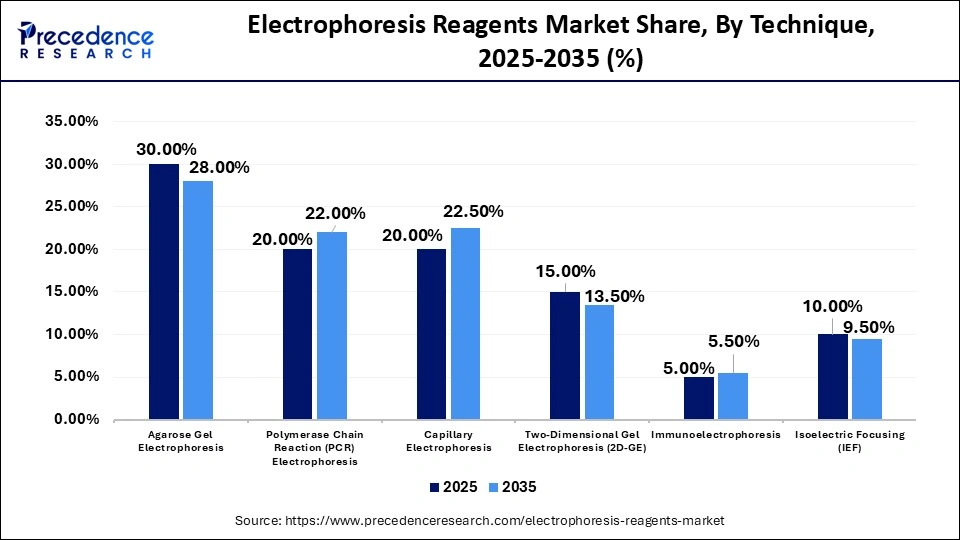
The capillary electrophoresis segment held a 20% share of the market in 2025 and is expected to grow at the fastest CAGR of 8% in the upcoming period, supported by its high resolution, speed, and compatibility. Its ability to deliver definite and reproducible results with a smaller sample size is enhancing its application in clinical diagnosis, pharmaceutical analysis, and forensic analysis. This technology finds application in genetic studies, identification of biomarkers, and quality control of biopharmaceuticals.
The two-dimensional gel electrophoresis segment held a 15% market share in 2025 and is expected to grow at the fastest CAGR of 5% during the projection period, driven by its crucial role in biomarker discovery and proteomics. It allows the separation of complex mixtures of proteins on the basis of isoelectric point and molecular weight with high resolution. Its widespread use in research of the disease mechanism and in pharmaceutical development supports segmental growth.
Application Insights
The Protein & Nucleic Acid Separation Segment Held a 40% Market Share in 2025
The protein & nucleic acid separation segment registered its dominance in the electrophoresis reagents market with a share of 40% in 2025. This is mainly due to the high use of electrophoresis reagents in the separation, identification, and analysis of proteins and nucleic acids in various research, clinical, and biotechnology applications. They are crucial in genomics and proteomics, where proper molecular separation is crucial to experimental results.
The genetic research & diagnostics segment held a 25% share of the market in 2025 and is expected to grow at a CAGR of 6% over the forecast period, supported by increasing applications in gene sequencing and molecular diagnostics as well as genetic testing. The increasing prevalence of hereditary diseases and cancers is accelerating the need for electrophoresis reagents in diagnostic tests. Electrophoresis reagents are important in the analysis of fragments of DNA and in validating genetic information, making them the preferred option in research and diagnostics.
Electrophoresis Reagents Market Share, By Application, 2025-2035 (%)
| Application | 2025 | 2035 | CAGR (%) |
| Protein & Nucleic Acid Separation | 40.00% | 42.00% | 6.50% |
| Genetic Research & Diagnostics | 25.00% | 23.00% | 6.00% |
| Immunology & Clinical Diagnostics | 15.00% | 14.50% | 5.50% |
| Biopharmaceutical Production & Quality Control | 10.00% | 11.00% | 7.50% |
| Forensic Science & Environmental Analysis | 5.00% | 5.50% | 7.00% |
| Others | 5.00% | 4.00% | 5.00% |
The immunology & clinical diagnostics segment held a 15% share of the market in 2025 and is expected to grow at a CAGR of 5.5% in the coming years. This is because electrophoresis is an extensively utilized method in the identification of immune responses and the diagnosis of diseases like infections, autoimmune diseases, and inflammatory diseases. The growing prevalence of autoimmune diseases is boosting the demand for high-throughput diagnostic processes, where electrophoresis reagents are crucial.
The biopharmaceutical production & quality control segment held a 10% share of the market in 2025 and is expected to grow at a CAGR of 7.5% during the projection period, driven by the increasing need to characterize proteins and ensure the quality of biologics. Electrophoresis is an important method to check the purity, stability, and structural integrity of biopharmaceutical products in the manufacturing process. It is used widely in drug development programs and compliance testing.
End-Use Insights
Biotechnology & Pharmaceutical Companies Held a 40% Share of the Market in 2025
The biotechnology & pharmaceutical companies segment held a dominant position in the electrophoresis reagents market with a share of 40% in 2025, driven by their uses in drug discovery, protein research, and quality control processes. These companies heavily rely on the electrophoresis technique to detect the biomolecular structure, to determine the purity of products, and to enable regulatory compliance in drug development. The increased investments in biologics, biosimilars, and more elaborate therapeutic research are increasing the usage of the electrophoresis reagents.
The research & academic institutes segment held a 35% share of the market in 2025 and is expected to grow at a CAGR of 6% during the projection period, driven by high usage of the electrophoresis technique in genomics, proteomics, and molecular biology research. Academic institutions represent a steady source of demand for electrophoresis reagents, driven by continuous experimentation, student training, and government-funded research projects. These reagents are essential in educational laboratories for teaching molecular separation techniques and supporting basic research activities.
Electrophoresis Reagents Market Share, By End-Use, 2025-2035 (%)
| End-Use | 2025 | 2035 | CAGR (%) |
| Biotechnology & Pharmaceutical Companies | 40.00% | 42.00% | 7.50% |
| Research & Academic Institutes | 35.00% | 33.00% | 6.00% |
| Diagnostic Laboratories | 15.00% | 14.50% | 6.50% |
| Contract Research Organizations (CROs) | 5.00% | 6.00% | 7.00% |
| Forensic Laboratories | 5.00% | 5.50% | 6.50% |
The diagnostic laboratories segment accounted for approximately 15% market share in 2025 and is projected to grow at a CAGR of 6.5% during the forecast period. This growth is driven by the increasing use of electrophoresis in clinical diagnostics, particularly for the analysis of blood proteins, disease diagnosis, and monitoring of medical conditions. The rising prevalence of chronic and infectious diseases is further accelerating the demand for accurate and efficient diagnostic testing.
The contract research organizations (CROs) segment held around 5% market share in 2025 and is expected to grow at the fastest CAGR of 7% over the projection period. The growth of this segment is fueled by the increasing outsourcing of research and clinical trial activities by pharmaceutical and biotechnology companies. CROs utilize electrophoresis reagents across a range of applications, including drug testing, biomolecular analysis, and clinical research. This trend is supported by the growing complexity of drug development processes and the need to manage costs associated with in-house research.
Regional Insights
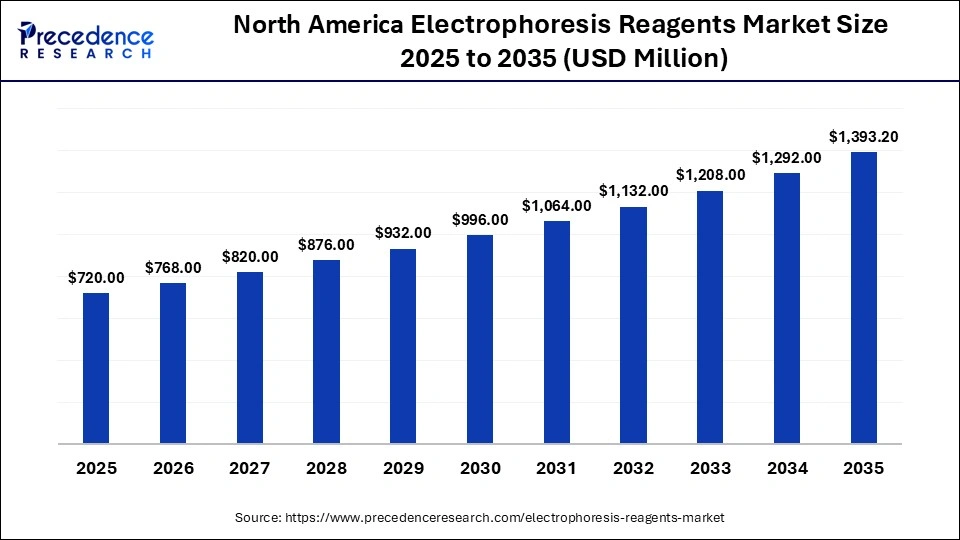
North America Electrophoresis Reagents Market Size and Growth 2026 to 2035
The North America electrophoresis reagents market size is estimated at USD 720.00 million in 2025 and is projected to reach approximately USD 1,393.20 million by 2035, with a 6.82% CAGR from 2026 to 2035.
North America Led the Global Electrophoresis Reagents Market in 2025
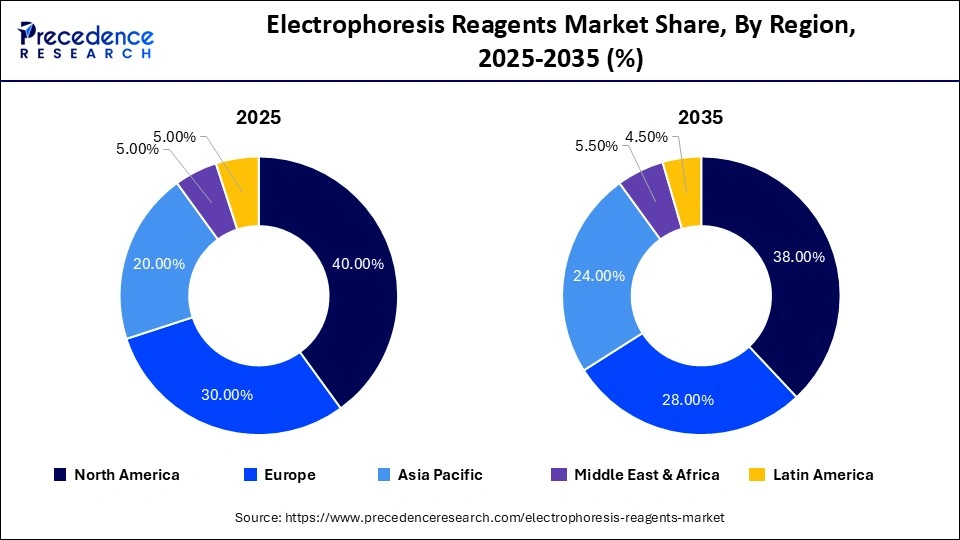
North America dominated the global electrophoresis reagents market with a major share of 40% in 2025, supported by its well-developed research ecosystem, strong biotechnology industry, and an extensive network of diagnostic laboratories. The region benefits from the presence of leading pharmaceutical and biotechnology companies, which rely heavily on electrophoresis techniques for applications such as drug discovery, protein profiling, and quality control of biologics. There is a high prevalence of chronic diseases, including cancer and genetic disorders, which has increased the demand for accurate molecular diagnostic tools.
U.S. Electrophoresis Reagents Market Size and Growth 2026 to 2035
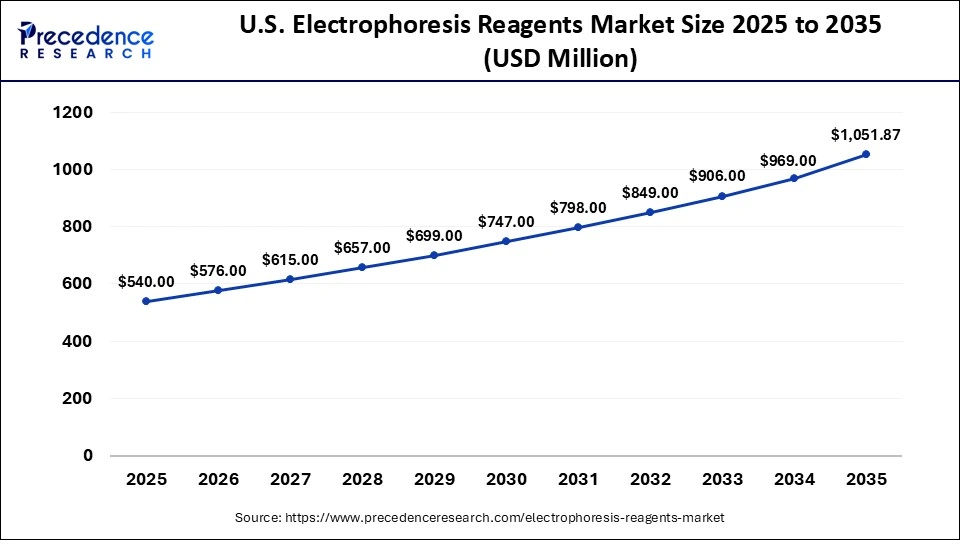
The U.S. electrophoresis reagents market size is calculated at USD 540.00 million in 2025 and is expected to reach nearly USD 1,051.87 million in 2035, accelerating at a strong CAGR of 6.89% between 2026 and 2035.
U.S. Electrophoresis Reagents Market Analysis
The U.S. is a major contributor to the North American market, supported by the presence of a well-developed academic and research infrastructure. The increasing popularity of personalized medicine and diagnostics is boosting the utilization of electrophoresis-based solutions in clinical care. Laboratories in the country are moving toward hi-tech reagent kits to increase the level of accuracy, speed, and reproducibility of the test results. The presence of key players, as well as the continuous creation of new products, also enhances access to high-quality reagents.
Europe: The Second-Largest Market
Europe is the second largest market for electrophoresis reagents, holding a 30% share in 2025, and is expected to grow at a notable CAGR of 6% during the projection period. This is mainly due to the well-developed research ecosystem, advanced healthcare infrastructures, and strong government support. The use of electrophoresis reagents among European colleges and labs has contributed to the innovation, and is motivated to continue using the reagents. The growing demand for advanced diagnostic technologies and a strong emphasis on protein and biomolecular studies are contributing to market growth.
UK Electrophoresis Reagents Market Analysis
The UK has emerged as a major player in the European market, supported by strong research funding, innovation-driven policies, and a well-established biotechnology sector. Increasing activity in life sciences research and a growing emphasis on early disease detection are driving demand for diagnostic methods that rely on electrophoresis reagents. Additionally, support from government agencies and private research institutions plays a crucial role in advancing technological development. This sustained investment fosters innovation and encourages the adoption of advanced electrophoresis techniques across both academic and clinical settings.
Asia Pacific: The Fastest-Growing Region
Asia Pacific held a 20% share of the electrophoresis reagents market in 2025 and is expected to grow at the fastest CAGR of 8.5% during the projection period. This growth is driven by rapid improvements in healthcare infrastructure, expanding pharmaceutical development, and increasing investments in biotechnology research. Funding for life sciences, diagnostics, and academic research is rising in key countries such as China and India. Additionally, a stronger focus on healthcare accessibility and enhanced laboratory capabilities is contributing to the rising demand for electrophoresis reagents. The growing burden of chronic and infectious diseases is further accelerating the need for advanced diagnostic solutions.
Japan Electrophoresis Reagents Market Analysis
Japan plays a significant role in the regional market, supported by its high-quality healthcare system and a well-established regulatory framework that encourages the adoption of advanced electrophoresis techniques. Substantial investments in biotechnology, pharmaceutical manufacturing, and clinical diagnostics also drive the market. Rising healthcare expenditure, increasing awareness of genetic testing, and expanding academic research activities are further strengthening its position in the market.
Electrophoresis Reagents Market Companies
- Thermo Fisher Scientific Inc.
- Bio-Rad Laboratories, Inc.
- Agilent Technologies Inc.
- GE Healthcare Life Sciences
- Merck KGaA (Sigma-Aldrich)
- Qiagen N.V.
- Lonza Group AG
- Promega Corporation
- Horizon Discovery Ltd.
- New England Biolabs Inc.
- Becton, Dickinson and Company (BD)
- Takara Bio Inc.
- Eppendorf AG
- Labnet International, Inc.
- Sartorius AG
Recent Developments
- In April 2025, QIAGEN declared three new sample-preparation tools, such as QIAsymphony Connect and QIAsprint Connect, each with the capability to prepare up to 192 samples at once. The innovation improves the workflow capability and automation of the laboratory and enables efficiency of workflow in hectic diagnostic and research environments.(Source: https://corporate.qiagen.com)
- In February 2025, Thermo Fisher Scientific acquired the Purification and Filtration division of Solventum at USD 4.1billion that added USD 1billion to their annual sales. Its purchase improves its mastery of biologics workflow and assists it to gain greater influence on the life sciences and bioprocessing markets.(Source: https://ir.thermofisher.com)
- In February 2025, Bio-Rad Laboratories projected the acquisition of Stilla Technologies to include in its digital PCR. This move is in tandem with its interest in advanced molecular diagnostics and assists in growing the growth in precision research and clinical applications.(Source: https://investors.bio-rad.com)
Segments Covered in the Report
By Product Type
- Gel Electrophoresis Reagents
- Capillary Electrophoresis Reagents
- Blotting Reagents (Western Blotting, Northern Blotting, Southern Blotting)
- Electrophoresis Buffers
- Other Reagents
By Technique
- Agarose Gel Electrophoresis
- Polymerase Chain Reaction (PCR) Electrophoresis
- Capillary Electrophoresis
- Two-Dimensional Gel Electrophoresis (2D-GE)
- Immunoelectrophoresis
- Isoelectric Focusing (IEF)
By Application
- Protein & Nucleic Acid Separation
- Genetic Research & Diagnostics
- Immunology & Clinical Diagnostics
- Biopharmaceutical Production & Quality Control
- Forensic Science & Environmental Analysis
- Others
By End-Use
- Biotechnology & Pharmaceutical Companies
- Research & Academic Institutes
- Diagnostic Laboratories
- Contract Research Organizations (CROs)
- Forensic Laboratories
By Region
- North America
- Latin America
- Europe
- Asia-pacific
- Middle and East Africa
For inquiries regarding discounts, bulk purchases, or customization requests, please contact us at sales@precedenceresearch.com
Frequently Asked Questions





Ask For Sample
No cookie-cutter, only authentic analysis – take the 1st step to become a Precedence Research client
 Get a Sample




 sales@precedenceresearch.com
 Schedule a Meeting
