



Hemophilia Market Size, Companies, Share, Patient Volume, Treatment Adoption Rates, Pricing Analysis, Regulatory Landscape, Competitive Positioning, and Demand Forecast
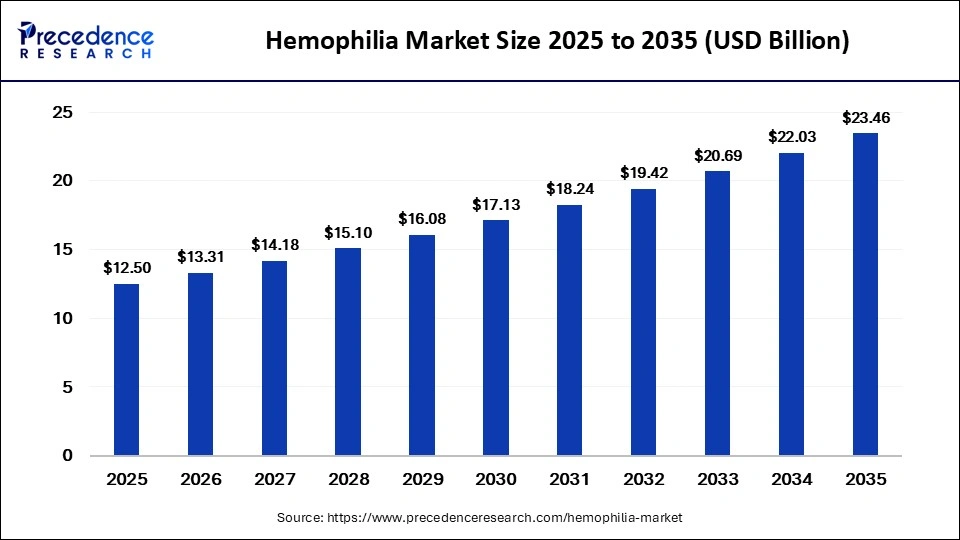
Deepa Pandey, a Healthcare Industry Expert, highlights that the hemophilia market has reached USD 13.31 billion in 2026 and is on track to reach USD 23.46 billion by 2035, advancing at a CAGR of 6.50%. Key hemophilia market companies shaping the market include Bayer, Novo Nordisk, Pfizer, Sanofi, while major growth segments span By Type, By Treatment, By Product, By Route of Administration, By End-Use.
Source: https://www.precedenceresearch.com/hemophilia-market
 Get a Sample
 Table Of Content


What is the Hemophilia Market Size in 2026?
The global hemophilia market size was estimated at USD 12.50 billion in 2025 and is predicted to increase from USD 13.31 billion in 2026 to approximately USD 23.46 billion by 2035, expanding at a CAGR of 6.50% from 2026 to 2035. The market is driven by rising diagnosis rates and advanced prophylactic therapies.
Hemophilia Market Key Takeaways
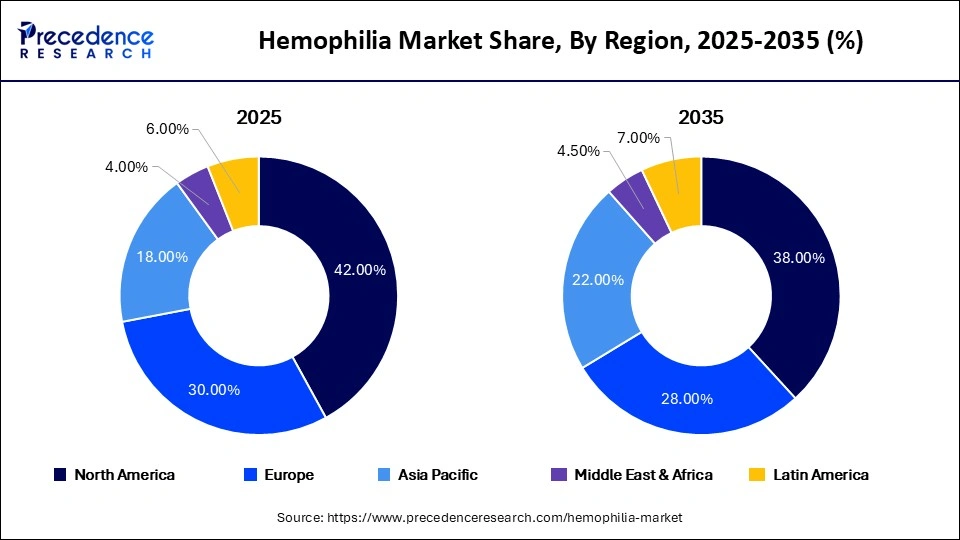
- North America dominated the global hemophilia market with a share of 42% in 2025.
- Asia-Pacific is expected to grow at the fastest CAGR of 9.5% during the forecast period.
- By type, the hemophilia A segment held a dominant position with a share of 75% in 2025 and is expected to grow at the fastest CAGR of 6% during the forecast period.
- By type, the hemophilia B segment held 20% of the market share in 2025 and is expected to grow at a 5.5% CAGR between 2026 and 2035.
- By treatment, the replacement therapy segment accounted for a considerable revenue share of 50% in the market in 2025.
- By treatment, the gene therapy segment is expected to be the fastest-growing segment with a CAGR of 12.5% between 2026 and 2035.
- By product, the coagulation factor concentrates segment led the global hemophilia market with a share of 55% in 2025 and is expected to grow at the highest CAGR of 7% during the forecast period.
- By product, the recombinant factor segment is expected to expand significantly with a CAGR of 6.5% between 2026 and 2035.
- By route of administration, the intravenous (IV) segment accounted for a considerable revenue share of 55% in the market in 2025.
- By route of administration, the subcutaneous (SC) segment is expected to witness the fastest growth with a CAGR of 9% between 2026 and 2035.
- By end-use, the hospitals segment led the global market with a share of 45% in 2025.
- By end-use, the research institutes segment is expected to be the fastest-growing segment with a CAGR of 8% between 2026 and 2035.
Advancing Hemophilia Care Through Innovative Treatment Solutions
The RBD is one of the fastest-growing areas in the hemophilia market primarily because of increasing awareness and understanding of rare bleeding disorders, increased diagnosis, and overall advances in treatment technologies. The market is expanding due to better efforts from healthcare authorities in developing the industry, along with sending cash incentives to the developing regions. Therefore, pharmaceutical companies are putting huge effort into research & development of new drugs with a lower frequency of administration, namely long-acting drugs, and new innovative biological drugs. Furthermore, growing investment in healthcare, growing reimbursement tariffs, and greater collaborations among healthcare providers and biotechnology firms will further fuel the market expansion.
Hemophilia Market Trends
- High uptake of options for prophylaxis of hemophilia followed by a move to “prevention first” with a more proactive approach and promotion of preventive treatment strategies that reduce bleeds, increase mobility and hospitalisations, and improve life satisfaction for the market.
- Pharmaceutical companies are also playing a role in the market, spending heavily on new therapies that may offer patients a "cure" and enable them to produce their own clotting factors without having to take a drug for their entire life, worldwide.
- Efforts to raise awareness and establish a support programme in the field of rare diseases and early diagnosis are contributing to increasing accessibility to treatment. These efforts have helped minimise the number of undiagnosed cases and enhance care provision for persons with hemophilia around the world.
Key AI Integration in the Hemophilia Market
The healthcare landscape is undergoing a significant transformation, and artificial intelligence (AI) systems play a significant role in hemophilia, improving patients' long-term management, treatment planning, and diagnosis. AI can shift through patient data, including genetic information, medical history, imaging, and how the patients have responded to treatments, to facilitate rapid and accurate treatment decisions. Predictive analytics and cutting-edge imaging technology aid in the early detection of bleeding risk and timely interventions, making it easier to reduce the risk of complications due to delayed interventions.
Market Scope
| Report Coverage | Details |
| Market Size in 2025 | USD 12.50 Billion |
| Market Size in 2026 | USD 13.31 Billion |
| Market Size by 2035 | USD 23.46 Billion |
| Market Growth Rate from 2026 to 2035 | CAGR of 6.50% |
| Dominating Region | North America |
| Fastest Growing Region | Asia Pacific |
| Base Year | 2025 |
| Forecast Period | 2026 to 2035 |
| Segments Covered | Type, Treatment, Product, Route of Administration, End-Use, and Region |
| Regions Covered | North America, Europe, Asia-Pacific, Latin America, and Middle East & Africa |
Market Dynamics
Driver
Growing Adoption of Non-factor Replacement Therapies
The heightened prevalence of non-factor replacement medications is becoming an impactful part of the hemophilia market in general, particularly for the treatment of hemophilia A. These treatments are meant to reduce the need for so-called replacement therapy with a clotting factor, to decrease the work and burdens of therapy, and to maximise patients' quality of life. The innovative aspect is especially desirable for paediatric patients and for those requiring long-term preventive therapy.
Restraint
High Treatment Costs
The major factor hampering the growth of the market is the high cost of the treatment. Hemophilia treatment may require life-long treatment with clotting factor replacement, prophylactic treatment, regular monitoring, and specialized health care services, which can be expensive to the patient and health system. These are advanced biologic therapies and gene therapy, they are more effective but will run at a higher price tag than other therapies, as they have a complicated manufacturing process and are expensive for research and development.
Opportunity
Increasing Research and Development for Novel Therapies
The newly developed markets for hemophilia treatments have huge growth potential in the global market, which is supported by the increasing investment in research and development. The leading pharmaceutical and biotechnology companies are seeking to develop high-tech drug/biotechnology products to fill some of the unmet medical needs and provide improved long-term benefits for patients. The innovative approaches seek to decrease the necessity for treatment, increase the stability of clotting factors, and possibly offer treatments that are of long duration or provide a cure to a patient with hemophilia.
Segment Insights
Type Insights
Hemophilia Market Share, By Type, 2025-2035 (%)
| Type | 2025 | 2035 | CAGR (%) |
| Hemophilia A | 75.00% | 77.00% | 6.0% |
| Hemophilia B | 20.00% | 18.00% | 5.5% |
| Hemophilia C | 5.00% | 5.00% | 4.8% |
The Hemophilia A Segment Held a 75% Share for the Hemophilia Market in 2025
The hemophilia A segment held a dominant position in the market with a share of 75% in 2025 and is expected to expand rapidly with a CAGR of 6% in the coming years, due to the occurrence of this disorder and the desire for advanced treatment approaches. Hemophilia A is the most frequent type of hemophilia, and the diagnosis and treatment rates in the world are much higher. The continued availability of recombinant, along with increasing trends toward a more proactive trend in treatment, is helping to drive the growth.
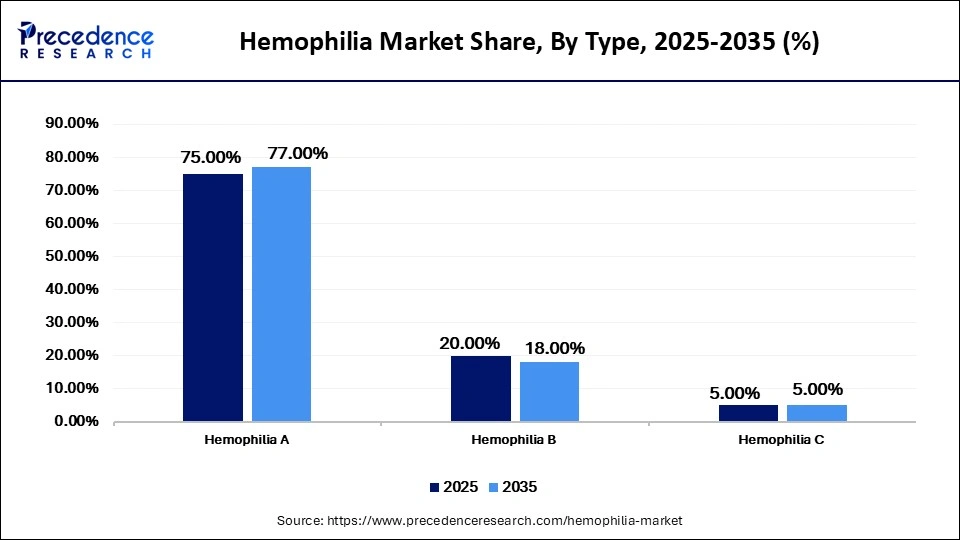
The hemophilia B segment held a 20% of the market share in 2025 and is expected to grow at a CAGR of 5.5% during the projection period, driven by the growing popularity of recombinant factor IX products and the rate of uptake of sophisticated biologic products for bleeding control. There is considerable investment by the pharmaceutical industry in research and development of long-acting recombinant products and hemophilia B gene therapy treatments.
The hemophilia C segment held a 5% of the market share in 2025 and is expected to grow at a notable growing CAGR of 4.8% during the projection period. Rare bleeding disorders awareness week and the development of specific treatment options. Rare disease organisations and health care providers are actively promoting awareness campaigns, making treatments more accessible and the treatment of patients living with a rare disease more effective.
Treatment Insights
The Replacement Therapy Segment Held 50% of Market Share in 2025
The replacement therapy segment held a dominant position in the hemophilia market with a share of 50% in 2025, because this is the preferred treatment among most people with hemophilia. The commonly used forms of replacement therapy are the use of clotting factors to be able to control and prevent any bleeding episodes from occurring. Advancements in plasma-derived and recombinant products of clotting factor and increasing awareness of the requirement for prevention and treatment products for home use contribute to the segment's growth.
The gene therapy segment held a 15% of the market share in 2025 and is expected to grow at the fastest CAGR of 12.5% during the projection period, driven by increasing focus on sourcing treatment options that cater to these long-term and potentially curable conditions. Gene therapy aims at enabling a person to produce clotting factor without the need for regular injections of replacement clotting factor. The research and clinical trial management companies in the pharmaceutical and biotechnology sectors are spending millions on cutting-edge clinical trials to accelerate innovation.
Hemophilia Market Share, By Treatment, 2025-2035 (%)
| Treatment | 2025 | 2035 | CAGR (%) |
| Replacement Therapy | 50.00% | 48.00% | 5.8% |
| Gene Therapy | 15.00% | 22.00% | 12.5% |
| Desmopressin Therapy | 12.00% | 10.00% | 4.5% |
| Immunotherapy | 23.00% | 20.00% | 6.0% |
The desmopressin therapy segment held a 12% of the market share in 2025 and is expected to grow at a notable CAGR of 4.5% during the projection period. The widespread use of desmopressin today is for mild cases of hemophilia, particularly for emergency and short-term treatment cases. An increased awareness of low-cost treatments and improved healthcare access to treatment is contributing to the segment's growth.
The immunotherapy segment held 23% of the market share in 2025 and is expected to grow at a CAGR of 6% during the projection period, driven by the growing number of immune-modulating drugs and biochemically specific drugs that target particular biochemical pathways in the body, thereby minimizing complications to treatment and bleeding disorders. A comprehensive clinical research development program into new immunotherapies is being supported by pharmaceutical companies to improve treatment response and longer disease control.
Product Insights
Hemophilia Market Share, By Product, 2025-2035 (%)
| Product | 2025 | 2035 | CAGR (%) |
| Coagulation Factor Concentrates | 55.00% | 58.00% | 7.0% |
| Recombinant Factor | 35.00% | 36.00% | 6.5% |
| Plasma-derived Factor | 10.00% | 6.00% | 4.0% |
The Coagulation Factor Concentrates Segment Held 50% of Market Share in 2025
The coagulation factor concentrates segment dominated the global hemophilia market with a share of 55% in 2025 and is expected to grow at the highest CAGR of 7% during the projected period, due to the extensive use of drugs in typical treatment for hemophilia. They are commonly used to treat clotting factor deficiencies and for people with hemophilia to avoid excessive bleeding. The increasing consumption of recombinant clotting factor concentrates, increasing interest in prophylactic lines of therapy, and access to personalized therapies boost the segment's growth.
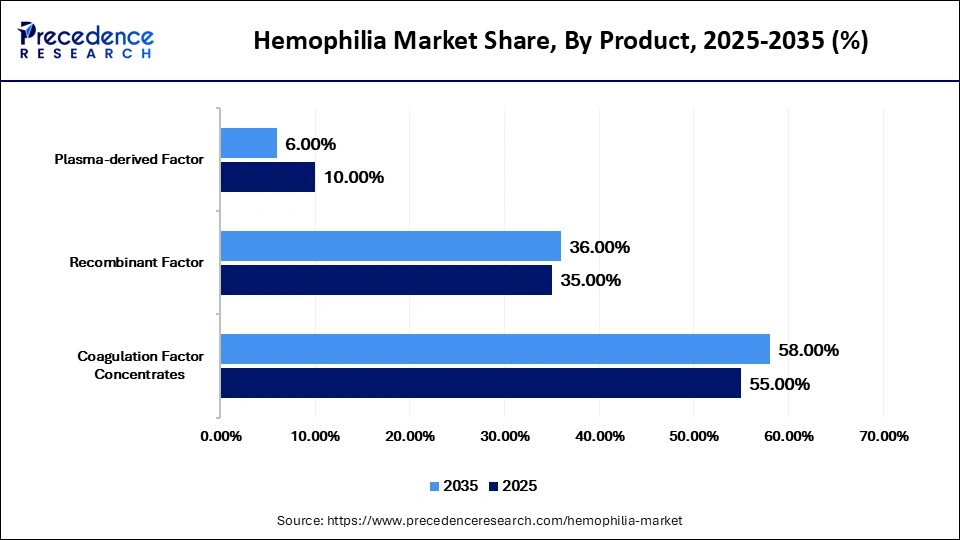
The recombinant factor segment held 35% of the market share in 2025 and is expected to grow at a notable CAGR of 6.5% during the projection period, driven by the rising trend of utilization of high efficacy and safe plasma-free recombinant products as compared to the plasma-derived products. The growth of the home care/treatment and outpatient therapy programs is also contributing to the need for recombinants.
The plasma-derived factor segment held 10% of the market share in 2025 and is expected to grow at a notable CAGR of 4% during the projection period. New stem cell collection centers, a growing demand for easily available treatments, and enhanced blood product transportation capabilities are responsible for market growth. Hospitals are also working on improving their plasma donation programs in order to be able to provide plasma without any restrictions.
Route of Administration Insights
The Intravenous (IV) Segment Held the Largest Market Share of 55% in 2025
The intravenous (IV) segment registered its dominance over the global hemophilia market with a share of 55% in 2025. IV delivery is effective for treatment during an acute bleeding episode and for preventive treatment; it allows for a quick absorption into the system and thus a quick therapeutic effect. It is widely used throughout hospitals, speciality clinics, and emergency care facilities in the event of severe hemophilia, where immediate action is required.
The subcutaneous (SC) segment held 30% of the market share in 2025 and is expected to grow at the fastest CAGR of 9% during the projection period. The subcutaneous route provides the advantages of simplified dosing, less discomfort, and greater patient compliance with the treatment, as opposed to the routine intravenous infusions. The rising number of novel treatments without the need for replacement of the factors, which also include monoclonal antibodies, augments the segment's growth.
The oral segment held 15% of the market share in 2025 and is expected to grow at a significant CAGR of 4.8% during the projection period, due to research that has been of high priority and has resulted in the development of oral therapies. Oral administration can enhance patient compliance as there is no need for injections or a complicated infusion process. Pharma companies are keenly searching for innovative drug delivery technologies that can improve the efficacy and bioavailability of their oral drug products for hemophilia.
Hemophilia Market Share, By Route of Administration, 2025-2035 (%)
| Route of Administration | 2025 | 2035 | CAGR (%) |
| Intravenous (IV) | 55.00% | 50.00% | 5.5% |
| Subcutaneous (SC) | 30.00% | 35.00% | 9.0% |
| Oral | 15.00% | 15.00% | 4.8% |
End-use Insights
The Hospitals Contributed the Highest Market Share of 45% in 2025
The hospitals segment registered its dominance over the global hemophilia market with a share of 45% in 2025. Specialized care facilities and sophisticated care systems are common in hospitals. The role of the hospital is particularly important in the diagnosis, monitoring, and management of severe cases of hemophilia, particularly those requiring emergency care and for complex cases. Hospitals also have access to special clinicians who have the expertise in treating patients.
The research institutes segment held 10% of the market share in 2025 and is expected to grow at the fastest CAGR of 8% during the projection period, driven by advances in research on new treatment options, such as gene therapies, monoclonal antibodies, and novel biologic therapies. Research institutes are essential to performing clinical trials, enhancing comprehension of the disease, and assisting with the creation of new treatment possibilities.
The oncology clinics segment held 25% of the market share in 2025 and is expected to grow at a notable CAGR of 6.5% during the projection period. Increased integration of hemophilia treatment services into specialized oncology/haematology care infocenters. At these clinics, patients receive access to better diagnostic testing, treatment via precision medicine, and access to exciting and innovative biologic and gene therapies. There is a growing focus on ‘personalized medicine' and a ‘targeted treatment approach', which is driving the need for more specialist clinical treatments.
The homecare segment held 15% of the market share in 2025 and is expected to grow at a significant CAGR of 7.5% during the projection period, due to the preference of patients for home-based, convenient, and self-administered drug therapy. Home care services allow patients to conduct proactive treatment, monitoring, and maintenance care. New infusion devices and remote patient monitoring technologies, such as remotely enabled platforms, are contributing to the growing home care treatment options.
Hemophilia Market Share, By End-use, 2025-2035 (%)
| End-use | 2025 | 2035 | CAGR (%) |
| Hospitals | 45.00% | 42.00% | 5.5% |
| Oncology Clinics | 25.00% | 28.00% | 6.5% |
| Research Institutes | 10.00% | 12.00% | 8.0% |
| Homecare | 15.00% | 14.00% | 7.5% |
| Blood Banks | 5.00% | 4.00% | 4.5% |
Region Insights
North America Hemophilia Market Size and Growth 2026 to 2035
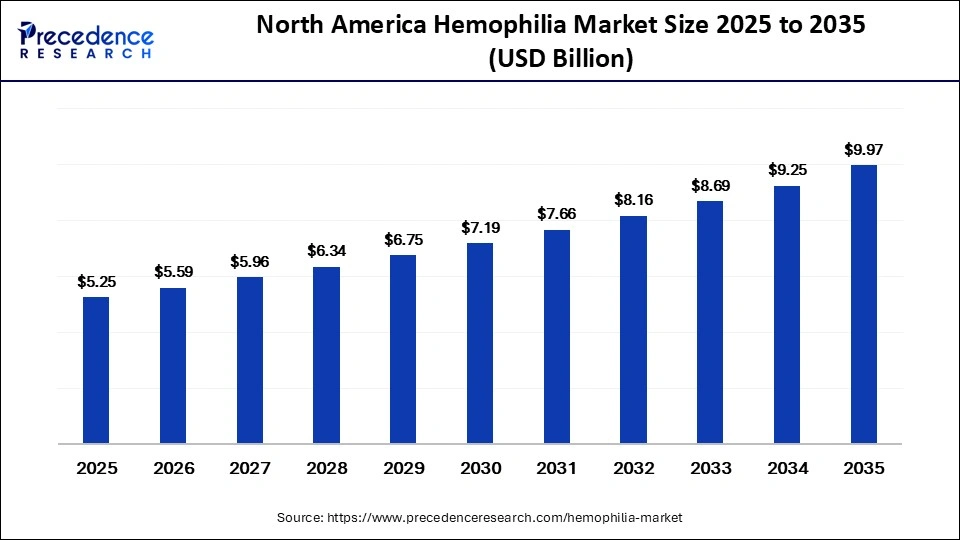
The North America hemophilia market size was exhibited at USD 5.25 billion in 2025 and is projected to be worth around USD 9.97 billion by 2035, growing at a CAGR of 6.62% from 2026 to 2035.
Which Factors Drive the Hemophilia Market in North America?
North America held a major market share of 42% in 2025, owing to the presence of well-established specialized disease treatment centers, patient access to biologics, and the development of end-user adoption of emerging gene therapies for controlling chronic diseases. The rising recognition of therapeutic techniques that can be employed in early detection and prevention is driving the market. In addition, government initiatives and appropriate insurance coverage are making more expensive treatments for hemophilia more available in more countries. The Food and Drug Administration (FDA) and other important universities and organisations are also heavily investing in research and development activities in the field.
U.S. Hemophilia Market Size and Growth 2026 to 2035
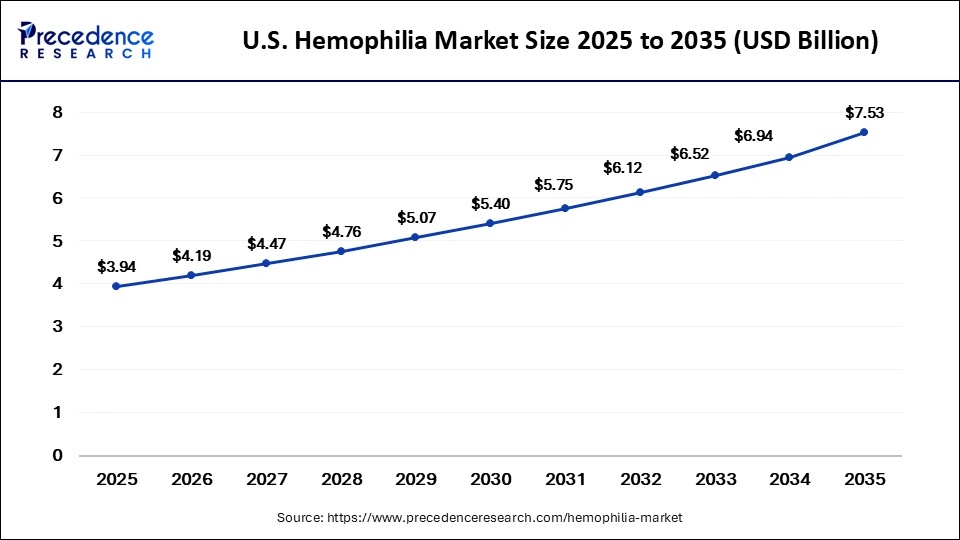
The U.S. hemophilia market size was evaluated at USD 3.94 billion in 2025 and is projected to reach around USD 7.53 billion by 2035, growing at a CAGR of 6.69% from 2026 to 2035.
U.S. Market Trends
The U.S. represents a large market in North America, owing to the presence of many pharmaceutical companies, availability of advanced healthcare facilities and high expenditure incurred on healthcare in the region. Hemophilia patients have access to specialized treatment, genetic counselling and access to cutting-edge treatment at frequent hemophilia treatment centers available in the country. Favorable regulatory processes and the growing acceptance of a speedy commercialization of advanced therapies are due to solid reimbursement support.
How is Asia-Pacific Growing in the Hemophilia Market?
Asia-Pacific held 18% of the market share in 2025 and is expected to grow at the fastest CAGR of 9.5% during the projection period, due to the increase in healthcare facilities, the rising healthcare expenses, and enhanced awareness of rare bleeding disorders. Advanced treatment solutions are required in countries such as China and India to diagnose cases of hemophilia. Governments and medical bodies are engaged in medical awareness campaigns to ensure access to medical centers specializing in medical management to address medical needs. Market growth is also being supported by the increasing use of clotting factor replacement therapies, as well as the use of biologic treatments.
Japan Market Trends
The Japanese market is driven by bulging pharmaceutical markets and advances in health care, as well as the interest and introduction of new biologic therapy options. The country has a successful reimbursement policy framework, conducive to the affordability of high-cost hemophilia products, including gene therapy and recombinant clotting factors. There are a number of clinical trials and biotechnology research & development oriented advanced technologies being developed by Japanese pharmaceutical companies and research institutes.
Will Europe Grow in the Hemophilia Market?
Europe held 30% of the market share in 2025 and is expected to grow at a notable CAGR of 6.5% during the projection period, driven by growing demand for home care infusion treatment, access to recombinant factor therapy, and the increasing trend of personalised medicine. Reimbursement policy is being strengthened, and rare disease management buying programs are being expanded by European governments. New digital technologies and home monitoring are paving the way for increased access to and adherence to healthcare treatment. The non-adherence rate amongst patients and lack of access to treatment are both declining with digital healthcare technologies and remote monitoring systems.
UK Market Trends
The UK market is growing due to the healthcare infrastructure, growing awareness, and the development of new treatments. The country's continued commitment to developing specialized hematology and rare disease treatment has helped to make it easier for patients to access advanced treatments. Furthermore, collaboration exists between drug companies and research institutes, and government investment is being made in health care innovations that are fueling the clinical research enterprise.
Top Companies in the Hemophilia Market
- Bayer
- Novo Nordisk
- Pfizer
- Sanofi
- Grifols
- CSL Behring
- Ferring Pharmaceuticals
- Baxter International
- Shire (Takeda)
- Octapharma
- Hematologic Technologies
- Sobi
- Medi-Pharm
- Kedrion Biopharma
- Biogen
Recent Developments
- In December 2024, Indian scientists reported successfully treating severe hemophilia A, a hereditary bleeding disorder due to a defective gene, with gene therapy. This clinical trial was spearheaded by the Christian Medical College team, led by Alok Srivastava from the Centre for Stem Cell Research with an award of financial support from the Union Department of Biotechnology. (Source: https://www.thehindu.com)
- In November 2024, Pfizer received authorization from the EMA to use HYMPAVZI in patients aged 12 years and older, and with a body weight of ≥ 35 kg, without an inhibitor in adult and paediatric hemophilia A or B patients. The therapy is convenient once a week, and there is minimal preparation for the patient. (Source: https://www.pfizer.com)
- In May 2024, the FDA added more Phase 3 XTEND-Kids data to the ALTUVVIIIO label. The new data demonstrated that ALTUVIIO (one daily application) provides very good bleed protection in hemophilia A "paediatrics-only" populations. (Source: https://www.news.sanofi.us)
Segments Covered in the Report
By Type
- Hemophilia A
- Hemophilia B
- Hemophilia C
By Treatment
- Replacement Therapy
- Gene Therapy
- Desmopressin Therapy
- Immunotherapy
By Product
- Coagulation Factor Concentrates
- Recombinant Factor
- Plasma-derived Factor
- Others
By Route of Administration
- Intravenous (IV)
- Subcutaneous (SC)
- Oral
By End-Use
- Hospitals
- Specialty Clinics
- Homecare
By Region
- North America
- Latin America
- Europe
- Asia-pacific
- Middle and East Africa
For inquiries regarding discounts, bulk purchases, or customization requests, please contact us at sales@precedenceresearch.com
Frequently Asked Questions
Tags





Ask For Sample
No cookie-cutter, only authentic analysis – take the 1st step to become a Precedence Research client
 Get a Sample
.webp)



 sales@precedenceresearch.com
 Schedule a Meeting
