



Inflammatory Disease Market Size, Companies, Share, Patient Volume, Treatment Adoption Rates, Pricing Analysis, Regulatory Landscape, Competitive Positioning, and Demand Forecast
Inflammatory Disease Market (By Disease Type: Rheumatoid Arthritis, Inflammatory Bowel Disease (Crohn’s Disease, Ulcerative Colitis), Psoriasis & Psoriatic Arthritis, Asthma & Chronic Inflammatory Respiratory Diseases, Multiple Sclerosis & Neuroinflammatory Disorders; By Drug Class: Biologics (TNF Inhibitors, IL Inhibitors, JAK Inhibitors), Nonsteroidal Anti-inflammatory Drugs (NSAIDs), Corticosteroids, Immunosuppressants, Biosimilars; By Route of Administration: Injectable (Subcutaneous & Intravenous), Oral, Topical; By Distribution Channel: Hospital Pharmacies, Retail Pharmacies, Online Pharmacies; By End-Use: Hospitals, Specialty Clinics, Homecare Settings) - Global Industry Analysis, Size, Trends, Leading Companies, Regional Outlook, and Forecast 2026 to 2035
Source: https://www.precedenceresearch.com/inflammatory-disease-market
 Get a Sample
 Table Of Content


What is the Inflammatory Disease Market Size in 2026?
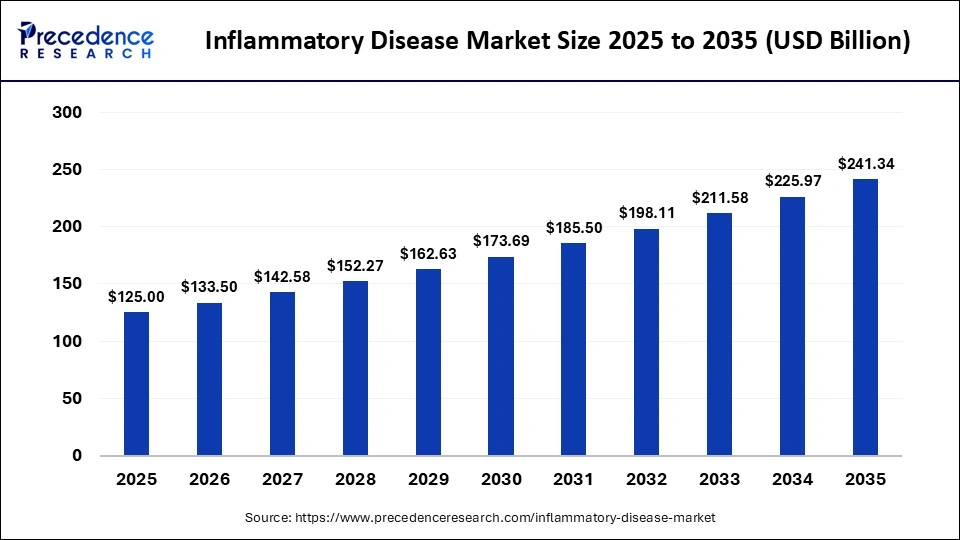
The global inflammatory disease market size accounted for USD 125.00 billion in 2025 and is predicted to increase from USD 133.50 billion in 2026 to approximately USD 241.34 billion by 2035, expanding at a CAGR of 6.80% from 2026 to 2035. The inflammatory disease market is driven by the rising burden of chronic inflammatory disorders and the ongoing need for more effective, targeted therapies.
Key Takeaways
- North America dominated the inflammatory disease market with a share of 40% in 2025.
- Asia Pacific is projected to grow at the fastest CAGR of 8.5% between 2026 and 2035.
- By disease type, the rheumatoid arthritis segment held a dominant market share of 30% in 2025.
- By disease type, the inflammatory bowel disease segment is expected to grow at the fastest CAGR of 7.8% between 2026 and 2035.
- By drug class, the biologics (TNF, IL, and JAK inhibitors) segment accounted for a 45% market share in 2025.
- By drug class, the biosimilars segment is expected to grow at the fastest CAGR of 9.5% CAGR between 2026 and 2035.
- By route of administration, the injectable segment held the largest share of 55% in the market in 2025.
- By route of administration, the oral segment is the second-largest shareholder and is expected to grow at a significant CAGR of 6% between 2026 and 2035.
- By distribution channel, the hospital pharmacies segment led the global market with a share of 45% in 2025.
- By distribution channel, the online pharmacies segment is expected to grow at the fastest CAGR of 9% between 2026 and 2035.
- By end-use, the hospitals segment led the global market with a share of 50% in 2025.
- By end-use, the specialty clinics segment is expected to grow at the fastest CAGR of 7.5% between 2026 and 2035.
Market Overview
The inflammatory disease market comprises drugs, testing, and management systems used to treat diseases caused by immune-mediated inflammation, including asthma, arthritis, inflammatory bowel disease, psoriasis, etc. Improvements in diagnostic tools are making it simpler to detect and manage inflammatory diseases at an early stage, thereby driving market growth. The pharmaceutical industry's substantial resources in biologics, targeted therapy, and individualized medicine are transforming treatment modalities, offering greater efficacy and fewer side effects than traditional therapy. Reimbursement systems, the expansion of healthcare infrastructure, and positive government initiatives are enhancing patient access to treatment.
How is AI Influencing the Inflammatory Disease Market?
Artificial intelligence is transforming the inflammatory disease market by improving disease identification, enabling personalized treatments, and enhancing patient management. AI-driven diagnostic tools analyze large volumes of clinical data, radiographic images, and biomarkers to support earlier and more accurate detection of conditions such as rheumatoid arthritis, psoriasis, and inflammatory bowel disease. In personalized medicine, AI leverages genomic, proteomic, and patient history data to recommend tailored treatment strategies. This individualized approach helps improve clinical outcomes while minimizing adverse effects, making therapy more effective and patient-centric.
Inflammatory Disease Market Trends
- There is increasing demand for biologics and targeted therapies due to their proven effectiveness in managing inflammatory diseases. Such treatments have fewer side effects, thereby becoming more common than conventional anti-inflammatory drugs and corticosteroids.
- There is a growing focus on developing advanced therapies that react to natural inflammation resolution pathways, including FPR2 agonists. Instead of suppressing immunity, this new form of treatment is created to heal defective immunity, which is advantageous in terms of long-term treatment.
- The integration of digital technologies, such as remote monitoring, wearable devices, and AI-powered diagnostics, is transforming disease management. In the management of inflammatory diseases, these technologies are useful in early disease management and improving patient outcomes.
Market Scope
| Report Coverage | Details |
| Market Size in 2025 | USD 125.00 Billion |
| Market Size in 2026 | USD 133.50 Billion |
| Market Size by 2035 | USD 241.34 Billion |
| Market Growth Rate from 2026 to 2035 | CAGR of 6.80% |
| Dominating Region | North America |
| Fastest Growing Region | Asia Pacific |
| Base Year | 2025 |
| Forecast Period | 2026 to 2035 |
| Segments Covered | Disease Type, Drug Class, Route of Administration, Distribution Channel, End-Use, and Region |
| Regions Covered | North America, Europe, Asia-Pacific, Latin America, and Middle East & Africa |
Market Dynamics
Drivers
Growing Awareness and Diagnosis Rates
People are becoming more aware of the early symptoms of chronic inflammatory diseases, such as rheumatoid arthritis, psoriasis, asthma, and inflammatory bowel disease, which is driving the demand for more effective therapeutics. Moreover, awareness campaigns and the extensive availability of disease information on the Internet and social media are expanding patient knowledge. With the heightened awareness, more patients are now seeking medical attention at an early stage of the disease. Innovations in diagnostic technologies and biomarker testing are helping to pursue proper and timely detection.
Restraint
Limited Access to Healthcare in Certain Regions
One of the major factors restraining the growth of the inflammatory disease market is limited access to healthcare in many low and middle-income regions. Healthcare infrastructure in these areas is often underdeveloped, with shortages of hospitals, diagnostic centers, and trained medical professionals. The lack of access to advanced diagnostic tools and affordable treatment options further worsens disease outcomes, increasing disability and reducing patients' quality of life. Additionally, geographic and economic barriers, along with limited health insurance coverage, restrict access to specialist care.
Opportunity
Focus on Patient-Centric Care
Growing focus on patient-centric care creates immense opportunities in the inflammatory diseases market. Patient-centric models promote shared decision-making between healthcare providers and patients, leading to higher patient satisfaction and improved clinical outcomes. Additionally, the integration of digital health solutions, such as mobile health applications, remote monitoring devices, and patient support programs, enables continuous engagement and more effective disease tracking. These tools support better adherence to treatment and more proactive disease management.
Segment Insights
Disease Type Insights
Inflammatory Disease Market Share, By Disease Type, 2025-2035 (%)
| Disease Type | 2025 | 2035 | CAGR (%) |
| Rheumatoid Arthritis | 30.00% | 28.00% | 6.20% |
| Inflammatory Bowel Disease | 20.00% | 22.00% | 7.80% |
| Psoriasis & Psoriatic Arthritis | 20.00% | 19.00% | 6.50% |
| Asthma & Chronic Inflammatory Respiratory Diseases | 20.00% | 21.00% | 7.20% |
| Multiple Sclerosis & Neuroinflammatory Disorders | 10.00% | 10.00% | 6.80% |
The Rheumatoid Arthritis Segment Held a 30% Market Share in 2025
The rheumatoid arthritis segment dominated the inflammatory disease market by holding a major share of 30% in 2025, driven by increasing use of biologics and targeted therapies for long-term disease management. Increased awareness about early diagnosis and increased access to high-quality healthcare services also contributed to the segment's dominance. Innovations such as TNF inhibitors, IL-6 inhibitors, and JAK inhibitors are making it easy to enhance patient outcomes and manage the disease.
The inflammatory bowel disease segment held a 20% share of the market in 2025 and is expected to grow at the fastest CAGR of 7.8% during the projection period, driven by the growing prevalence of Crohn's and ulcerative colitis. The management of inflammatory bowel disease (IBD) is improving due to earlier and more accurate diagnosis. Advances in diagnostic modalities, including improved imaging techniques and biomarker-based tests, are enabling timely detection and more effective disease monitoring.
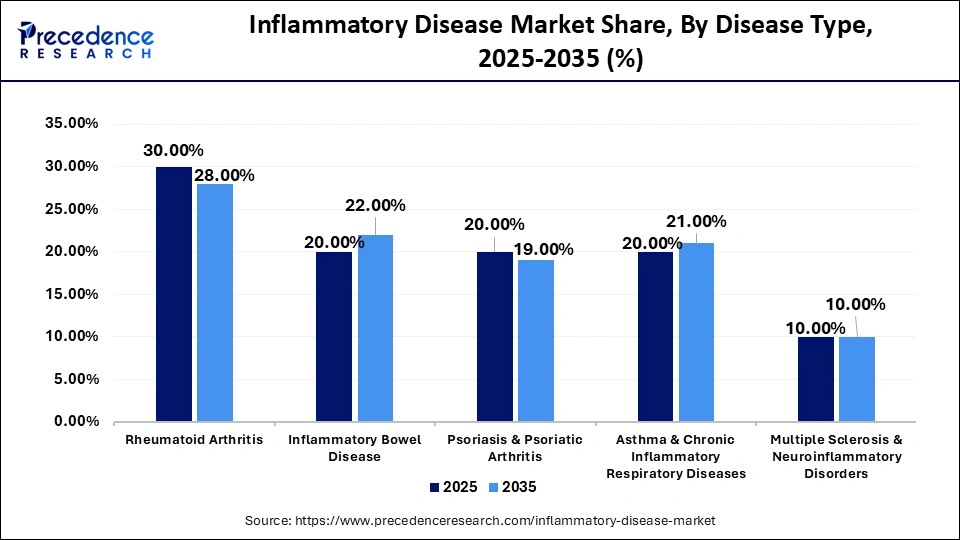
The psoriasis & psoriatic arthritis segment held a 20% market share in 2025 and is expected to grow at a CAGR of 6.5% during the projection period, driven by increasing knowledge of chronic skin and joint inflammatory conditions. The introduction of certain biologic interventions, in particular, IL-17 and IL-23 inhibitors, has contributed to great improvement in the therapeutic outcomes and quality of life of the patients. Early detection of psoriatic conditions and better diagnostic possibilities are leading to timely intervention and lessening the severity of the disease.
The asthma & chronic inflammatory respiratory diseases segment held a 20% share of the market in 2025 and is expected to grow at a CAGR of 7.2% during the forecast period, driven by the rising pollution rate, urbanization, and changing lifestyle patterns. There has been a rise in exposure to environmental pollutants and allergens over the years, which has led to increased prevalence of asthma and other respiratory inflammatory diseases. The use of inhaled corticosteroids, biologics, and combination therapies is greatly improving treatment outcomes.
Drug Class Insights
Inflammatory Disease Market Share, By Drug Class, 2025-2035 (%)
| Drug Class | 2025 | 2035 | CAGR (%) |
| Biologics (TNF, IL, JAK Inhibitors) | 45.00% | 48.00% | 8.50% |
| NSAIDs | 15.00% | 13.00% | 4.50% |
| Corticosteroids | 15.00% | 13.50% | 5.00% |
| Immunosuppressants | 15.00% | 14.00% | 5.80% |
| Biosimilars | 10.00% | 11.50% | 9.50% |
Why Did the Biologics Segment Dominate the Inflammatory Disease Market in 2025?
The biologics (TNF, IL, JAK Inhibitors) segment dominated the market with a 45% share in 2025 due to their great efficacy in targeting specific inflammatory pathways and increasing adoption in chronic disease management. Therapies such as TNF, interleukin, and JAK inhibitors have revolutionized the treatment of the disease as they are more clinically effective and are suitable for long-term management. They are specific in modulating immune reactions and have the least side effects, limiting the development of diseases.
The NSAIDs segment held a 15% share of the market in 2025 and is expected to grow at a CAGR of 4.5% in the upcoming period, due to their success in the first line of analgesic and symptomatic treatment of inflammatory diseases. Medicines are affordable, easily accessible, and are commonly used in mild to moderate inflammation. Also, the growing access to innovative treatment options like biologics and targeted immunotherapies for chronic diseases contributes to segmental growth.
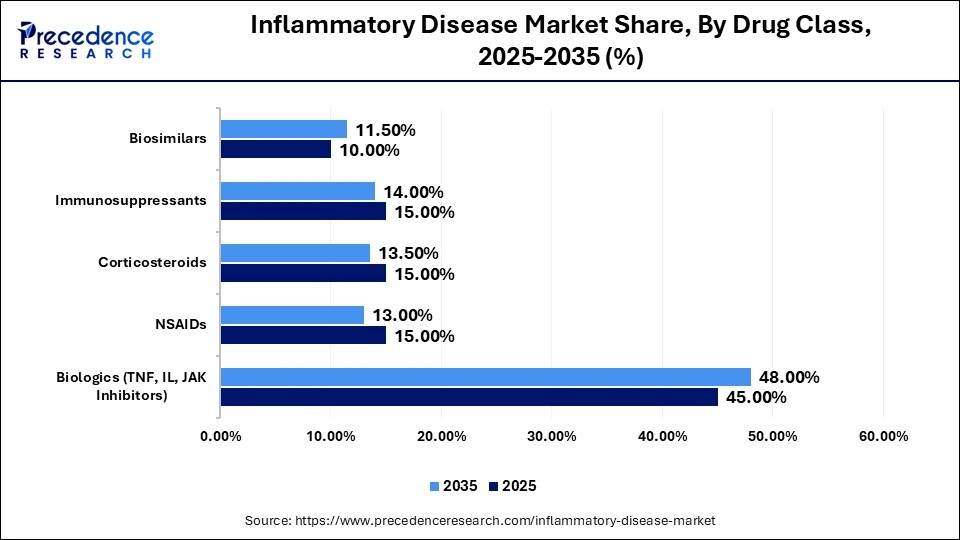
The corticosteroids segment held a 15% market share in 2025 and is expected to grow at a CAGR of 5% during the projection period. This is because of their high anti-inflammatory properties and speedy alleviation of symptoms. They are suitable for acute exacerbations and temporary management of various inflammatory and autoimmune diseases.
The immunosuppressants segment held a 15% share of the market in 2025 and is expected to grow at a CAGR of 5.8% during the projection period, driven by their crucial role in the treatment of severe and refractory inflammatory diseases. These drugs have the effect of suppressing the immune system in certain instances, like rheumatoid arthritis, lupus, and inflammatory bowel disease, to treat undue inflammation. They are specifically suitable for complicated autoimmune diseases.
The biosimilars segment held a 10% market share in 2025 and is expected to grow at the fastest CAGR of 9.5% over the projected period. This is mainly due to their cost-effectiveness compared to branded biologics, making advanced therapies more accessible to a broader patient population. Additionally, increasing patent expirations of original biologic drugs and supportive regulatory frameworks are encouraging the adoption of biosimilars, thereby driving segmental growth.
Route of Administration Insights
Inflammatory Disease Market Share, By Route of Administration, 2025-2035 (%)
| Route of Administration | 2025 | 2035 | CAGR (%) |
| Injectable | 55.00% | 57.00% | 7.50% |
| Oral | 35.00% | 33.00% | 6.00% |
| Topical | 10.00% | 10.00% | 5.50% |
The Injectable Segment Held a 55% Share of the Inflammatory Disease Market in 2025
The injectable segment registered its dominance in the global market with a share of 55% in 2025, primarily due to the increasing use of biologics administered via subcutaneous or intravenous routes. Injectable therapies are essential for managing moderate to severe inflammatory conditions such as rheumatoid arthritis, inflammatory bowel disease, and psoriasis, offering higher bioavailability and faster therapeutic action, which makes them the preferred choice for advanced disease treatment.
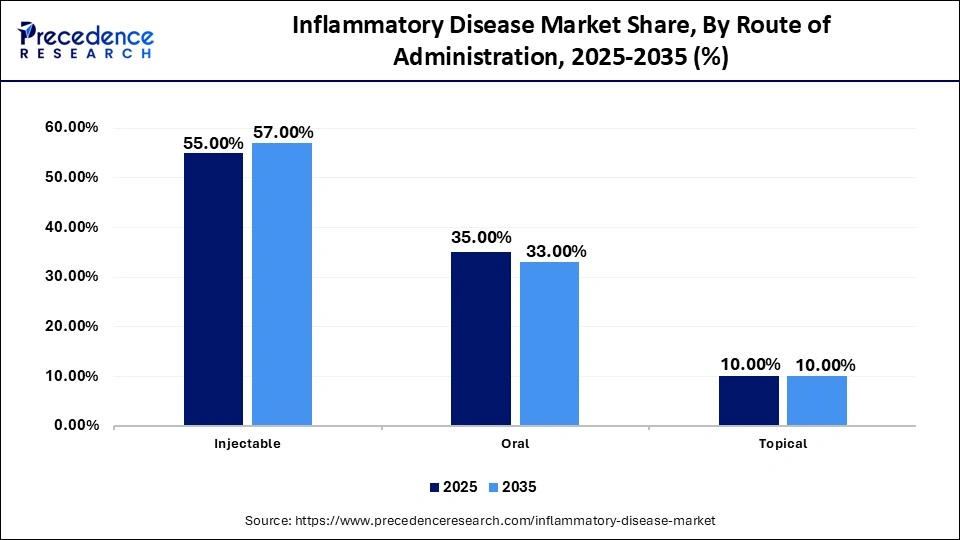
The oral segment held a 35% market share in 2025 and is expected to grow at a significant CAGR of 6% during the projection period, driven by its convenience, easy administration, and high patient preference. Oral immunosuppressants, corticosteroids, JAK inhibitors, and NSAIDs are common drugs used because they are easily accessible and inexpensive. With the help of such treatments, patients can now live with chronic conditions and do not have to visit the hospital to improve treatment quality and adherence. The growing trend of self-medication is also driving the demand for oral medications.
The topical segment held a 10% share of the market in 2025 and is expected to grow at a CAGR of 5.5% during the projection period. This growth is driven by the increasing use of localized treatments for skin conditions such as psoriasis, eczema, and dermatitis, which offer targeted therapy while minimizing systemic exposure and side effects. Commonly used options include topical corticosteroids, calcineurin inhibitors, and emollients for managing mild to moderate inflammation.
Distribution Channel Insights
Hospital Pharmacies Led the Market With a 45% Share in 2025
The hospital pharmacies segment led the inflammatory disease market while holding a 45% share in 2025. This is mainly due to the high volume of patients receiving treatment for moderate to severe inflammatory diseases in hospital settings, where advanced therapies such as biologics are typically administered. Additionally, the availability of specialized healthcare professionals, proper storage facilities, and integrated patient care within hospitals supports the safe dispensing and monitoring of these complex treatments.
Inflammatory Disease Market Share, By Distribution Channel, 2025-2035 (%)
| Distribution Channel | 2025 | 2035 | CAGR (%) |
| Hospital Pharmacies | 45.00% | 43.00% | 6.50% |
| Retail Pharmacies | 35.00% | 34.00% | 6.20% |
| Online Pharmacies | 20.00% | 23.00% | 9.00% |
The retail pharmacies segment held a 35% share of the market in 2025 and is expected to grow at a CAGR of 6.2% during the projection period, owing to increasing patient preference for convenient and easily accessible sources of medication for managing chronic inflammatory conditions. Expansion of retail pharmacy networks, along with greater availability of prescribed maintenance therapies and improved prescription fulfillment services, is further driving this segment's growth.
The online pharmacies segment held a 20% share of the market in 2025 and is expected to grow at the fastest CAGR of 9% during the projection period, driven by increasing consumer preference for convenient home delivery services and the ease of ordering long-term medications for chronic inflammatory conditions. Greater internet penetration, digital health adoption, and discounts on prescription drugs are also encouraging patients to shift toward online platforms.
End-Use Insights
Why Did Hospitals Held a 50% Share of the Inflammatory Disease Market in 2025?
The hospitals segment registered its dominance in the global market by holding a share of 50% in 2025 because of their crucial role in managing severe and complex chronic inflammatory diseases. Hospitals provide comprehensive diagnostic, monitoring, and emergency care services, making them essential for managing acute flare-ups and advanced stages of disease. The presence of specialized healthcare professionals, multidisciplinary teams, and advanced infrastructure further strengthens the dominance of this segment.
Inflammatory Disease Market Share, By End-Use, 2025-2035 (%)
| End-Use | 2025 | 2035 | CAGR (%) |
| Hospitals | 50.00% | 47.00% | 6.20% |
| Specialty Clinics | 30.00% | 32.00% | 7.50% |
| Homecare Settings | 20.00% | 21.00% | 7.00% |
The specialty clinics segment held a 30% market share in 2025 and is expected to grow at the fastest CAGR of 7.5% during the projection period. This growth is driven by the rising demand for specialized and focused care in chronic inflammatory diseases. These clinics are designed to manage specific conditions such as rheumatoid arthritis, psoriasis, and inflammatory bowel disease, while the high concentration of specialists enables improved diagnosis, personalized treatment planning, and better patient outcomes.
The homecare settings segment held a 20% share of the market in 2025 and is expected to grow at a significant CAGR of 7% during the projection period, supported by increasing patient preference for treatment in comfortable and convenient environments. The adoption of drug delivery devices, remote monitoring technologies, and patient education programs is facilitating this shift. Homecare reduces hospital visits and treatment costs while improving quality of life, particularly for patients requiring long-term disease management.
Regional Insights
North America Inflammatory Disease Market Size and Growth 2026 to 2035
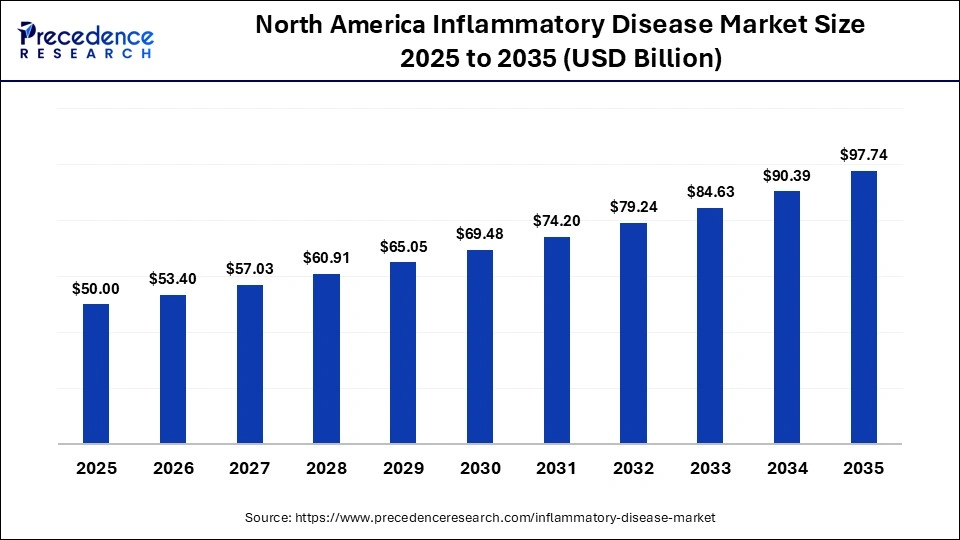
The North America inflammatory disease market size is estimated at USD 50.00 billion in 2025 and is projected to reach approximately USD 97.74 billion by 2035, with a 6.93% CAGR from 2026 to 2035.
Why Did North America Lead the Global Inflammatory Disease Market in 2025?
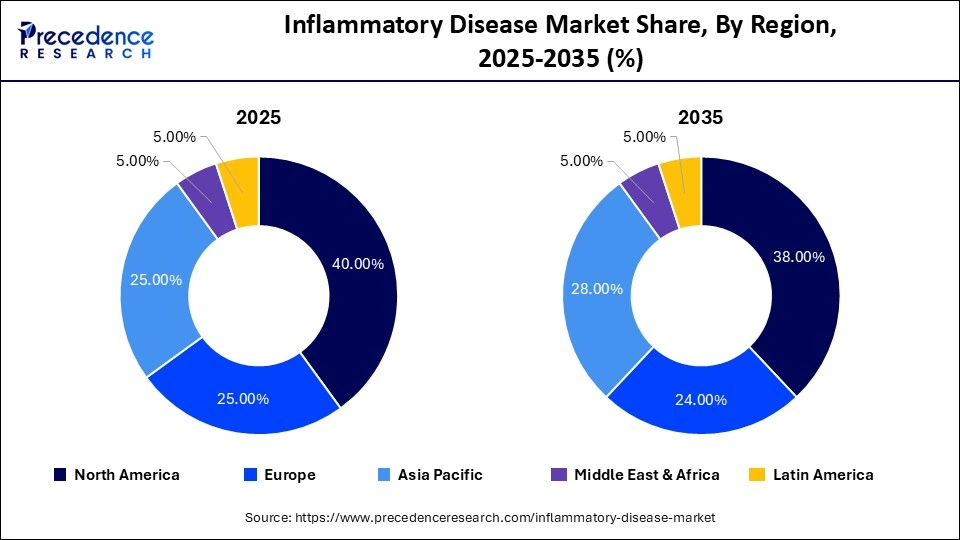
North America dominated the global inflammatory disease market with a share of 40% in 2025 due to its developed healthcare system, high biologics use, and increased research and development activities. The prevalence of autoimmune and other chronic inflammatory diseases like rheumatoid arthritis, psoriasis, and inflammatory bowel disease is high in the region, contributing to the continuous demand for sophisticated therapies. The development and commercialization of the drugs is further promoted by close collaboration between the pharmaceutical companies, biotechnology companies, and academic research institutions. In addition, advanced diagnostic capabilities enable the identification of the disease in its initial stages and start its treatment.
U.S. Inflammatory Disease Market Size and Growth 2026 to 2035
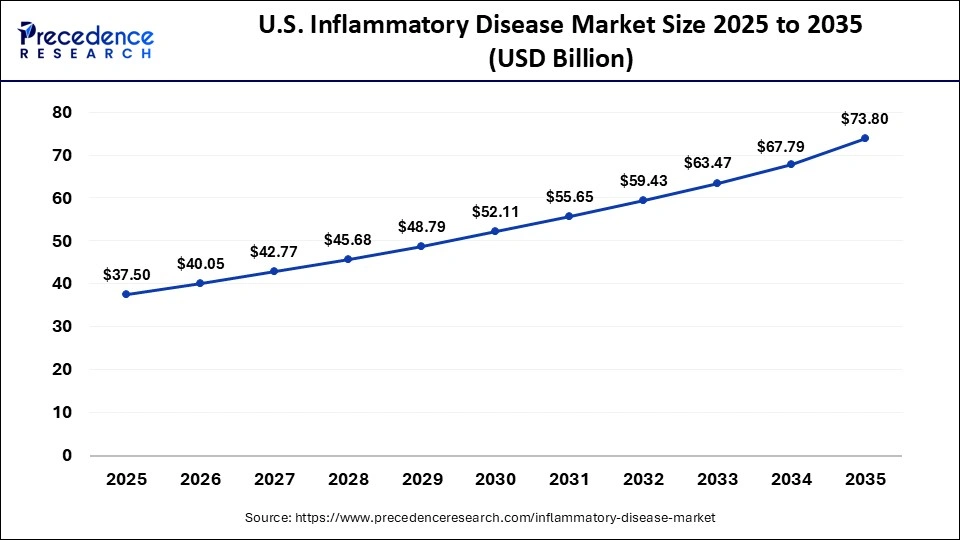
The U.S. inflammatory disease market size is calculated at USD 37.50 billion in 2025 and is expected to reach nearly USD 73.80 billion in 2035, accelerating at a strong CAGR of 7.00% between 2026 and 2035.
U.S. Market Analysis
The U.S. is a major contributor to the North American market because of its well-established healthcare system, increasing cases of inflammatory diseases, and the availability of advanced therapeutics. The country is home to many leading pharmaceutical and biopharmaceutical companies, boosting the development of biologics and clinical trials. High awareness of the disease is also driving the market.
Why is Asia Pacific undergoing the Fastest Growth in the Inflammatory Disease Market?
Asia Pacific held a 25% share of the inflammatory disease market in 2025 and is expected to grow at the fastest CAGR of 8.2% during the projection period. This growth is driven by the rising prevalence of inflammatory diseases, improving healthcare infrastructure, and increasing awareness of chronic conditions across the region. Countries such as China, India, and Japan are witnessing higher diagnosis rates due to better access to healthcare services and expanding medical facilities. Additionally, increasing healthcare expenditure and supportive government initiatives aimed at improving the management of chronic diseases are contributing to market growth.
China Market Analysis
China is emerging as the fastest-growing market in Asia Pacific due to its large patient population, increasing healthcare investments, and rapid urbanization. Growing awareness of autoimmune and chronic inflammatory diseases is leading to higher diagnosis and treatment rates across the country. Moreover, government healthcare reforms and expanding health insurance coverage are improving patient access to advanced therapies.
Why is Europe Experiencing Notable Growth in the Inflammatory Disease Market?
Europe held a 25% share of the inflammatory disease market in 2025 and is expected to grow at a notable CAGR of 6.2% during the projection period. This is mainly due to its well-established healthcare systems, increasing adoption of biologics, and favorable regulatory frameworks. Key countries such as Germany, France, and the UK contribute significantly to the market due to high healthcare expenditure, advanced diagnostic capabilities, and early adoption of innovative therapies. Additionally, rising interest in biosimilars is improving the affordability and accessibility of treatment options across the region. Government initiatives focused on cost containment and expanding patient access to advanced biologics are further reshaping the competitive landscape and supporting market growth.
UK Market Analysis
The UK is a key player in the European market, supported by a strong healthcare system and an increasing focus on early diagnosis and advanced treatment approaches. The National Health Service (NHS) provides broad access to innovative biologics and immunotherapies, contributing to improved patient outcomes. In addition, the UK is highly active in clinical research and drug development, particularly in the fields of immunology and autoimmune diseases. This strong research ecosystem further strengthens its position in the regional market.
Inflammatory Disease Market Companies
- AbbVie Inc.
- Johnson & Johnson
- Pfizer Inc.
- Novartis AG
- Amgen Inc.
- Roche Holding AG
- Sanofi S.A.
- Bristol Myers Squibb
- Eli Lilly and Company
- Merck & Co., Inc.
- GlaxoSmithKline plc
- Takeda Pharmaceutical Company Limited
- UCB S.A.
- Biogen Inc.
- Regeneron Pharmaceuticals, Inc
Recent Developments
- In April 2026, OSE Immunotherapeutics announced that their abstract on a new FPR2 agonist monoclonal antibody had been chosen to be presented at the 2026 Annual Meeting of the American Association of Immunologists (AAI) in Boston. The FPR2 receptor binding helps to increase the natural resolution of inflammation by the therapy, a shift towards resolution biology in chronic inflammatory disease treatment.(Source: https://www.biospace.com)
- In November 2025, Animate Biosciences used multi-omics data and generative AI to launch the AnimateIQ™ platform to create peptide therapeutics against inflammatory and fibrotic diseases. The platform seeks to hasten the discovery of specific, well-tolerated therapies for pulmonary, dermatological, and cardiac inflammatory diseases.(Source: https://www.businesswire.com)
Segments Covered in the Report
By Disease Type
- Rheumatoid Arthritis
- Inflammatory Bowel Disease (Crohn's Disease, Ulcerative Colitis)
- Psoriasis & Psoriatic Arthritis
- Asthma & Chronic Inflammatory Respiratory Diseases
- Multiple Sclerosis & Neuroinflammatory Disorders
By Drug Class
- Biologics (TNF Inhibitors, IL Inhibitors, JAK Inhibitors)
- Nonsteroidal Anti-inflammatory Drugs (NSAIDs)
- Corticosteroids
- Immunosuppressants
- Biosimilars
By Route of Administration
- Injectable (Subcutaneous & Intravenous)
- Oral
- Topical
By Distribution Channel
- Hospital Pharmacies
- Retail Pharmacies
- Online Pharmacies
By End-Use
- Hospitals
- Specialty Clinics
- Homecare Settings
By Region
- North America
- Latin America
- Europe
- Asia-pacific
- Middle and East Africa
For inquiries regarding discounts, bulk purchases, or customization requests, please contact us at sales@precedenceresearch.com
Frequently Asked Questions
Tags





Ask For Sample
No cookie-cutter, only authentic analysis – take the 1st step to become a Precedence Research client
 Get a Sample
.webp)



 sales@precedenceresearch.com
 Schedule a Meeting
