



Neuropharmacology Market Size, Key Companies, Company Market Share, Patient Volume, Treatment Adoption Rates, Pricing Analysis, Regulatory Landscape, Competitive Positioning, and Demand Forecast
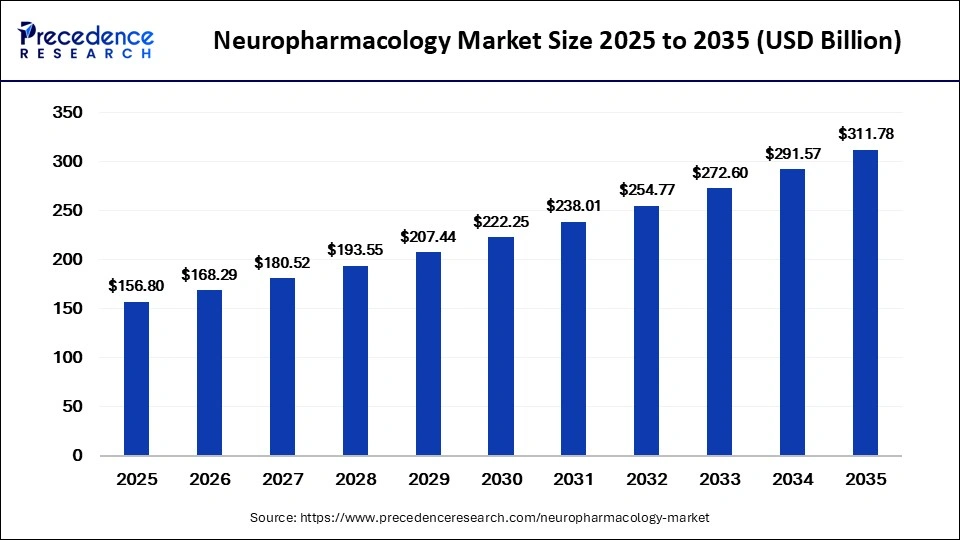
Rohan Patil, a Healthcare Industry Expert, highlights that the neuropharmacology market has reached USD 168.29 billion in 2026 and is on track to reach USD 311.78 billion by 2035, advancing at a CAGR of 7.20%. Key neuropharmacology market companies shaping the market include Pfizer, Eli Lilly and Company, Johnson & Johnson, while major growth segments span drug class, indication, route of administration, distribution channel, end user, region.
Source: https://www.precedenceresearch.com/neuropharmacology-market
 Get a Sample
 Table Of Content


Neuropharmacology Market Size and Forecast 2026 to 2035
The global neuropharmacology market size accounted for USD 156.80 billion in 2025 and is predicted to increase from USD 168.29 billion in 2026 to approximately USD 311.78 billion by 2035, expanding at a CAGR of 7.20% from 2026 to 2035. The increasing prevalence of neurological diseases, advances in research, and the growing number of clinical trials are key factors driving market growth.
Key Takeaways
- North America led the neuropharmacology market with a share of 41% in 2025.
- Asia-Pacific is expected to be the fastest-growing region with a CAGR of 9.1% in the forecast duration.
- By drug class, the antidepressants segment led the market with 24% share in 2025.
- By drug class, the Alzheimer's disease drugs segment is expected to be the fastest growing, with a CAGR of 10.5% in the coming years.
- By indication, the depression segment accounted for the highest revenue share of 26% in 2025.
- By indication, the Alzheimer's disease segment is expected to be the fastest-growing segment with a CAGR of 10.4% in the foreseeable period.
- By route of administration, the oral segment held the largest revenue share of 72% in 2025.
- By route of administration, the injectable segment is expected to be the fastest growing with a CAGR of 9% in the neuropharmacology market in the forthcoming years.
- By distribution channel, the retail pharmacies segment accounted for the highest revenue share of 46% in 2025.
- By distribution channel, the online pharmacies segment is expected to grow at the fastest CAGR of 11.2% in the foreseeable period.
- By end user, the hospitals segment held the largest revenue share of 47% in 2025.
- By end user, the specialty neurology clinics segment is expected to grow at the highest CAGR of 8.4% from 2026 to 2035.
Market Overview
Neuropharmacology explores how drugs affect the nervous system to create compounds that can aid individuals suffering from psychiatric and neurological disorders. This field emerged just fifty years ago; before its inception, only four medications, morphine, caffeine, nitrous oxide, and aspirin, were available for nerve-related conditions. Current research in neuropharmacology focuses on developing new medications that can restore chemical balance in the nervous system while also evaluating their safety and effectiveness for clinical application.
Impact of Artificial Intelligence on the Neuropharmacology Market
Artificial intelligence (AI) is revolutionizing the field of neuropharmacology. Techniques like machine learning and deep learning are being utilized to analyze intricate neurobiological datasets, forecast pharmacokinetic and pharmacodynamic profiles, and discover new drug targets. Additionally, the implementation of automated feedback control in technologies such as microfluidics and organ-on-chip systems enhances the quantitative evaluation of drug effects on in vitro biological models, leading to improved experimental precision.
Neuropharmacology Market Trends
- Nanotechnology-Enabled Neurotherapeutics: Nanotechnology is advancing neurotherapeutics through predictive modelling and precision-targeted delivery systems, enabling data-driven, patient-specific interventions that enhance treatment efficacy and optimize neurological care outcomes.
- Pharmacogenomics-Driven Precision Psychiatry: The growing adoption of pharmacogenomic testing is transforming psychiatric care by enabling gene-guided medication selection, supporting improved therapeutic outcomes, reducing adverse effects, and enabling more individualized treatment strategies.
- Personalized Neuropharmacology in Traumatic Brain Injury (TBI): Personalized neuropharmacology in TBI is gaining momentum through molecular-profile-based treatment approaches, facilitating tailored therapeutic interventions that address individual patient variability and improve recovery potential.
Market Report Coverage and Key Metrics
| Report Coverage | Details |
| Market Size in 2025 | USD 156.80 Billion |
| Market Size in 2026 | USD 168.29 Billion |
| Market Size by 2035 | USD 311.78 Billion |
| Market Growth Rate from 2026 to 2035 | CAGR of 7.20% |
| Dominating Region | North America |
| Fastest Growing Region | Asia Pacific |
| Base Year | 2025 |
| Forecast Period | 2026 to 2035 |
| Segments Covered | Drug Class, Indication, Route of Administration, Distribution Channel, End User, and Region |
| Regions Covered | North America, Europe, Asia-Pacific, Latin America, and Middle East & Africa |
Market Dynamics
Drivers
Growth Driven by Neurological Disease Burden and Innovation
The market is experiencing robust growth due to the rising prevalence of neurological disorders, an expanding aging population, and heightened investments in innovative drug development. Additionally, swift advancements in biologics and digital neurology tools are transforming the market landscape. Increased funding for neuropharmacology research is further fuelling this growth.
Restraint
Complexity in Biomarker-Guided Neuropharmacology Development
The growing complexity of biomarker guided clinical trial designs, along with technical challenges such as drug resistance, blood-brain barrier (BBB) limitations, and disease heterogeneity, continues to restrain market growth by increasing development complexity, interpretation challenges, and regulatory uncertainties.
Opportunity
Expanding Education and Training for Advanced Neurotherapeutics
Rapid advancements in neuropharmacology technologies present significant opportunities for specialized education and professional training. Increased investment in conferences, seminars, workshops, and scientific awareness programs can enhance trial interpretation, technology adoption, and clinical implementation.
Market Segmentation Analysis
Drug Class Insights
The Antidepressants Segment Led the Market with a 24% Share in 2025
The antidepressants segment led the neuropharmacology market with a 24% share in 2025, driven by the increasing prevalence of depression and heightened awareness surrounding mental health. Antidepressants are vital medications used to address various mental health conditions, including depression, anxiety, PTSD, and certain eating disorders. It plays a role in alleviating long-term pain and addressing sleep difficulties. The rise in individuals seeking treatment, coupled with the introduction of innovative antidepressant therapies, further fuels this market expansion.
Neuropharmacology Market Share, By Drug Class, 2025-2035 (%)
| Drug Class | 2025 | 2035 | CAGR (%) |
| Antidepressants | 24.00% | 23.00% | 6.8% |
| Antipsychotics | 18.00% | 17.00% | 6.5% |
| Antiepileptics | 17.00% | 16.00% | 6.6% |
| Anti-Parkinson Drugs | 13.00% | 14.00% | 8.0% |
| Alzheimer's Disease Drugs | 11.00% | 15.00% | 10.5% |
| CNS Stimulants | 10.00% | 9.00% | 7.1% |
| Others | 7.00% | 6.00% | 5.9% |
The antipsychotics segment held the second-largest market share of 18% in 2025 and is expected to expand at a CAGR of 6.5% during the forecast period, driven by the increasing population of patients with schizophrenia and a rising preference for long-acting formulations. Antipsychotic medications primarily address conditions and symptoms related to psychosis. Additionally, the market is benefiting from higher diagnosis rates and improved access to psychiatric care.
The Alzheimer's disease drugs segment captured 11% of the market share in 2025 and is expected to grow at the fastest CAGR of 10.5% in the coming years, driven by the increasing burden of Alzheimer's disease and the introduction of disease-modifying therapies. The primary medications for Alzheimer's are classified as symptomatic therapies. The growth in this sector is further supported by enhanced research funding and advancements in early diagnosis initiatives.
Indication Insights
The Depression Segment Led the Market with 26% of Market Share in 2025
The depression segment dominated the neuropharmacology market with a share of 26% in 2025, supported by the rising prevalence of depressive disorders, along with improved awareness and diagnosis. Notably, almost 29% of adults have been diagnosed with depression at some point in their lives, with around 18% currently experiencing the condition. Additionally, the expansion of psychiatric care services and the increasing acceptance of pharmacological treatments are strengthening this segment's position in the market.
Neuropharmacology Market Share, By Indication, 2025-2035 (%)
| Indication | 2025 | 2035 | CAGR (%) |
| Depression | 26.00% | 24.00% | 6.7% |
| Schizophrenia | 15.00% | 14.00% | 6.3% |
| Epilepsy | 16.00% | 15.00% | 6.5% |
| Parkinson's Disease | 12.00% | 13.00% | 8.2% |
| Alzheimer's Disease | 11.00% | 15.00% | 10.4% |
| ADHD | 11.00% | 10.00% | 7.0% |
| Others | 9.00% | 9.00% | 6.1% |
The schizophrenia segment held 15% of the market share in 2025 and is expected to grow at a CAGR of 6.3% over the studied period, driven by an increasing demand for long-term management solutions and a developing psychiatric healthcare infrastructure. Schizophrenia, a persistent brain disorder, presents symptoms like delusions, hallucinations, disorganized speech, cognitive difficulties, and diminished motivation. Additionally, improved treatment adherence programs and rising awareness initiatives are contributing to this upward trend.
The Alzheimer's disease segment captured 11% of the market share in 2025 and is expected to be the fastest-growing segment with a CAGR of 10.4% from 2026 to 2035, supported by the increasing prevalence of dementia and the rising number of approvals for innovative therapies. Alzheimer's disease is characterized by the biological process that starts with the accumulation of proteins, forming amyloid plaques and neurofibrillary tangles in the brain. Additionally, the rise in healthcare spending and improved diagnostic capabilities are contributing factors to this growth.
Route of Administration Insights
The Oral Segment Captured a Remarkable 72% Market Share in 2025
The oral segment captured 72% of the neuropharmacology market share in 2025, due to the high convenience for patients and the wide availability of oral formulations. Additionally, strong adherence rates, cost-effectiveness, and established prescribing practices further reinforce its leading position.
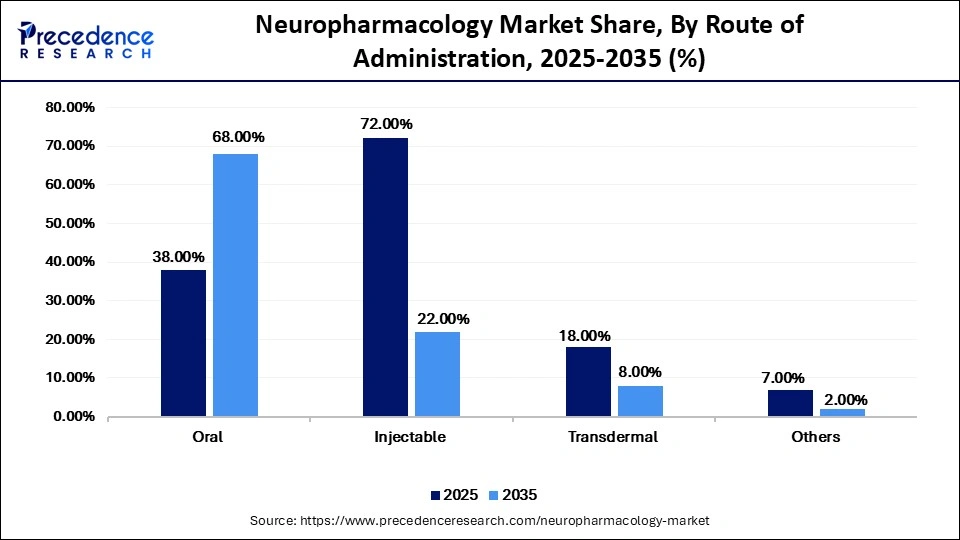
The injectable segment held 18% of the market share in 2025 and is expected to expand rapidly with a CAGR of 9% during the forecast period, supported by advancements in biologics and therapies, along with an increasing use of long-acting injectables. Furthermore, enhanced treatment compliance, the expansion of hospital-based care, and a growing adoption of injectables for severe neurological disorders are driving this growth.
The transdermal segment held 7% of the market share in 2025 and is anticipated to grow at a CAGR of 8.1% in the coming years, driven by improved patient comfort and the advantages of sustained drug delivery. Additionally, the rising use in managing Parkinson's disease, reduced dosing frequency, and the introduction of innovative formulations are contributing to its expansion.
Distribution Channel Insights
The Retail Pharmacies Segment Dominated the Market with 46% of Market Share in 2025
The retail pharmacies segment dominated the neuropharmacology market with a share of 46% in 2025, driven by the widespread availability of CNS medications and well-established distribution networks. Additionally, the increasing focus on chronic disease management and rising prescription volumes further contribute to this upward trend.
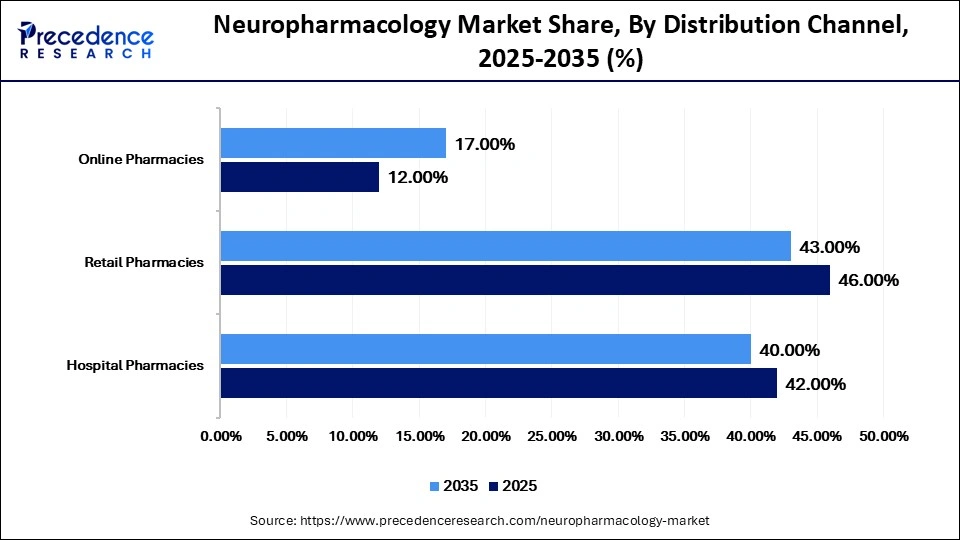
The hospital pharmacies segment held 42% of the market share in 2025 and is expected to expand at a CAGR of 7% in the coming years, driven by the high utilization of specialty neurological therapies and the rising administration of biologic drugs. Moreover, strong physician oversight, the expansion of hospital treatment programs, and an increase in inpatient neurological care are key factors supporting this growth.
The online pharmacies segment held 12% of the market share in 2025 and is expected to be the fastest-growing segment with a CAGR of 11.2% from 2026 to 2035. This rapid growth can be attributed to the rising adoption of digital healthcare solutions and the convenience of home delivery. Furthermore, the expansion of e-pharmacy platforms, increasing internet penetration, and the growth of telemedicine services are all contributing to this dynamic sector.
End User Insights
The Hospitals Segment Led the Market with a 47% Share in 2025
The hospitals segment led the neuropharmacology market with a 47% share in 2025, due to the high volume of neurological patient care and the availability of advanced therapies. Additionally, the expansion of specialty neurology departments, rising hospitalization rates for central nervous system (CNS) disorders, and robust reimbursement support are key factors driving this segment.
The specialty neurology clinics segment captured 27% of the market share in 2025 and is expected to be the fastest-growing segment with a CAGR of 8.4% during the forecast period, supported by the increasing demand for specialized care and a rise in neurological disease diagnoses. Furthermore, the expansion of outpatient treatment models, enhanced access to advanced therapies, and improved patient monitoring capabilities are significant contributors to this trend.
The ambulatory care centers segment accounted for 16% of the market share in 2025 and is expected to grow at a CAGR of 7.1% in the upcoming years, driven by the growing adoption of outpatient treatment and cost-effective care delivery. Additionally, the increasing management of chronic diseases and the expansion of integrated healthcare systems are pivotal in supporting this segment's growth.
Market Regional Analysis: North America, Europe, Asia-Pacific
U.S. Neuropharmacology Market Size and Growth 2026 to 2035
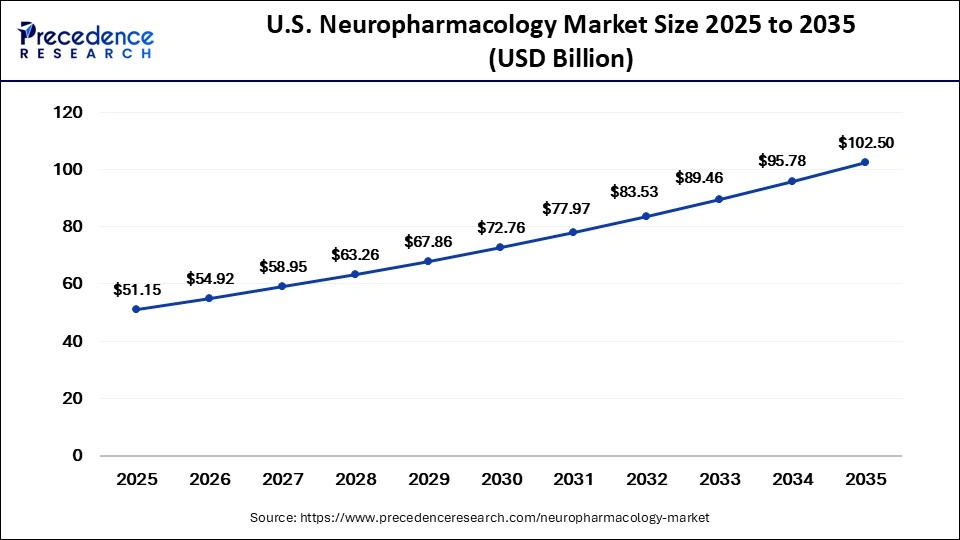
The U.S. neuropharmacology market size was evaluated at USD 51.15 billion in 2025 and is projected to reach around USD 102.50 billion by 2035, growing at a CAGR of 6.72% from 2026 to 2035.
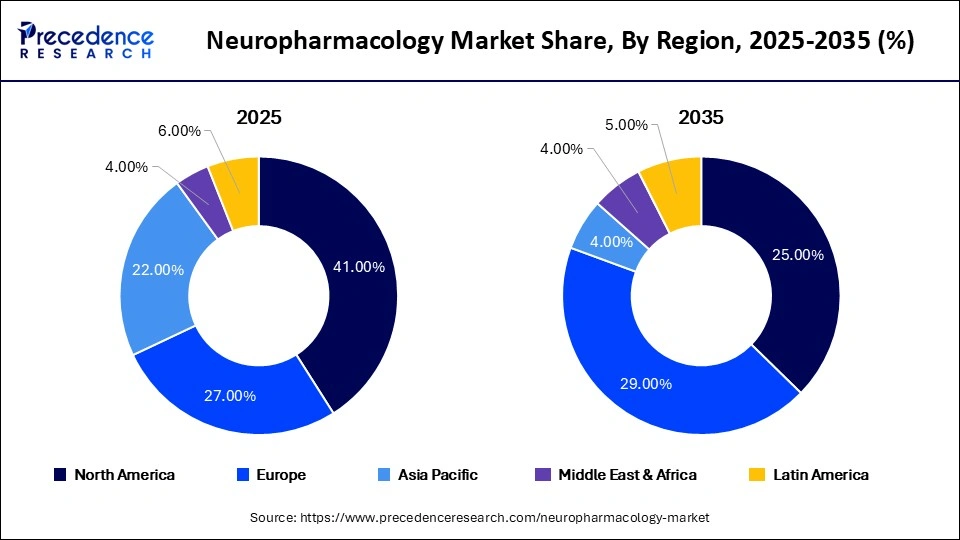
North America: Dominated with 41% share in 2025
North America held a major revenue share of 41% in the neuropharmacology market, driven by the high prevalence of neurological disorders and a robust pipeline of CNS drug innovations. Additionally, the region benefits from advanced healthcare infrastructure and favorable reimbursement systems that further bolster the market. The presence of key players and the availability of several funding programs encourage researchers to develop novel diagnostics and therapeutics.
United States Market Analysis
The U.S. is at the forefront of the North American market, driven by a growing number of initiatives from various organizations that are anticipated to boost market growth in the country. Several nonprofit organizations and foundations are focused on raising awareness and reducing the number of cerebral aneurysm-related deaths through advanced research practices.
Which Factors Drive the Neuropharmacology Market in Asia-Pacific?
Asia-Pacific held 22% of the market share in 2025 and is expected to experience the fastest growth with a CAGR of 9.1% during the predicted timeframe, driven by increasing diagnosis rates of CNS disorders and rising healthcare expenditures. Additionally, the expansion of pharmaceutical manufacturing capabilities, heightened awareness of mental health conditions, and a substantial patient population are contributing factors to this upward trend.
China Market Analysis
China leads the market in Asia-Pacific, driven by increased initiatives in neuropharmacology research led by various government organizations aimed at raising awareness. Additionally, as the prevalence of neuropathic pain conditions continues to grow, there is an escalating demand for innovative and effective treatment options.
Europe: The Second-Largest Region
Europe held 27% of the neuropharmacology market share in 2025 and is expected to grow at a notable CAGR of 6.7% in the foreseeable future, supported by the rising prevalence of neurodegenerative diseases and a robust pharmaceutical research and development ecosystem. Additionally, the expansion of mental health initiatives and enhanced access to specialty therapies are further fueling this growth.
Germany Market Analysis
Germany is thriving in the European market due to a significant boost in research and development capabilities. Additionally, improvements in diagnostic accuracy, better patient outcomes, and more advanced treatment options for conditions such as epilepsy, Parkinson's, and Alzheimer's are driving market growth.
Will the Middle East and Africa Grow in the Neuropharmacology Market?
The Middle East and Africa region held 4% of the market share in 2025 and is considered to be a significantly growing area with a CAGR of 6.9%, due to advancements in neurological care infrastructure and rising healthcare investments. Additionally, the growing awareness of mental disorders and the expansion of specialty treatment centers are contributing to this upward trend.
UAE Market Analysis
The UAE is witnessing significant market growth, driven by advancements in clinical research methods for neuropharmacology and an increasing emphasis on personalized medicine. Additionally, enhanced tertiary care capacity, improved imaging and EEG capabilities, and more efficient approval processes have solidified the market's position.
Latin America: 6% Market Share in 2025
Latin America held 6% of the neuropharmacology market share in 2025 and is expected to grow at a considerable CAGR of 6.8% in the upcoming period, driven by the rising prevalence of neurological diseases, expanding healthcare coverage, an increased adoption of branded CNS drugs, heightened awareness of mental health, and improved accessibility to pharmaceuticals.
Brazil Market Analysis
The Brazilian market is driven by a growing number of participants engaged in research and development. Additionally, the advancement of sophisticated stimulation and neuropharmacology techniques, along with minimally invasive procedures, is becoming increasingly favoured by patients.
Market Competitive Landscape: Leading Companies and Strategies
The neuropharmacology market is characterized by a mix of fragmentation and semi-consolidation. Many companies are broadening their research and development efforts to include gene therapies and RNA-based treatments aimed at rare inherited neurological disorders. Additionally, significant market shares are held by pharmaceutical companies across various sectors, including neuropsychiatry, pain management, and neuroprotection.
However, a significant challenge in this market is the highly selective barrier that protects the human brain from foreign substances. To enable a drug to penetrate the blood-brain barrier (BBB), high doses are often necessary, which can lead to severe toxic side effects throughout the body. Although advancements in blood-based biomarker testing empower clinicians to identify neurodegeneration before the onset of symptoms, thereby creating a promising secondary market for early-intervention neuropharmacology.
Top Companies in the Neuropharmacology Market
- Pfizer
- Eli Lilly and Company
- Johnson & Johnson
- AbbVie
- Novartis
- Roche
- Merck & Co.
- Bristol Myers Squibb
- Otsuka Pharmaceutical
- Lundbeck
- Biogen
- Teva Pharmaceutical Industries
- Sumitomo Pharma
- UC
- Jazz Pharmaceuticals
Recent Developments Neuropharmacology Market (2025-2026)
- In June 2026, a study examined the molecular, cellular, and circuit abnormalities involved in neurodegenerative and neuropsychiatric disorders, with particular focus on the motor and non-motor symptoms of Parkinson's disease and the complications associated with dopamine replacement therapies. The study was based on the characterization of animal models representing these disorders, combined with multiscale analyses to identify molecular, cellular, and circuit abnormalities as potential targets for future treatments.(Source: https://ki.se/en)
- In January 2026, two new therapies entered the final stages of clinical trials ahead of potential FDA approval. One is a novel dopamine-based therapy for managing motor symptoms, while the other is a stem cell therapy designed to replace the brain cells lost in Parkinson's disease (PD). Together, these therapies represent two distinct yet complementary approaches in the fight against PD.(Source: https://www.apdaparkinson.org)
Segments Covered in the Report
By Drug Class
- Antidepressants
- Antipsychotics
- Antiepileptics
- Anti-Parkinson Drugs
- Alzheimer's Disease Drugs
- CNS Stimulants
- Others
By Indication
- Depression
- Schizophrenia
- Epilepsy
- Parkinson's Disease
- Alzheimer's Disease
- Attention Deficit Hyperactivity Disorder (ADHD)
- Others
By Route of Administration
- Oral
- Injectable
- Transdermal
- Others
By Distribution Channel
- Hospital Pharmacies
- Retail Pharmacies
- Online Pharmacies
By End User
- Hospitals
- Specialty Neurology Clinics
- Ambulatory Care Centers
- Homecare Settings
By Region
- North America
- Latin America
- Europe
- Asia-pacific
- Middle and East Africa
For inquiries regarding discounts, bulk purchases, or customization requests, please contact us at sales@precedenceresearch.com
Frequently Asked Questions
Tags





Ask For Sample
No cookie-cutter, only authentic analysis – take the 1st step to become a Precedence Research client
 Get a Sample




 sales@precedenceresearch.com
 Schedule a Meeting
