



Oat Milk Market Size, Companies, Share, Patient Volume, Treatment Adoption Rates, Pricing Analysis, Regulatory Landscape, Competitive Positioning, and Demand Forecast
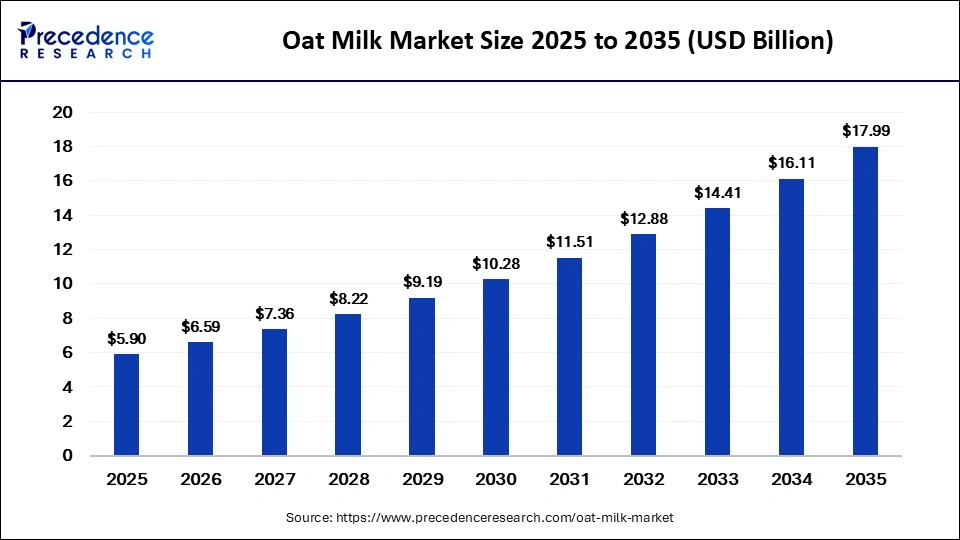
Food and beverage specialist Vidyesh Swar puts the oat milk market at USD 6.59 billion in 2026, with the market expected to reach USD 17.99 billion by 2035 at a CAGR of 11.80%. Major oat milk market companies such as Oatly AB, Danone S.A., Califia Farms, Chobani LLC are responding to changing consumer demand across segments including By Product Type, By Formulation, By Packaging Type, By Distribution Channel, By End-use.
Source: https://www.precedenceresearch.com/oat-milk-market
 Get a Sample
 Table Of Content


What is the Oat Milk Market Size in 2026?
The global oat milk market size accounted for USD 5.90 billion in 2025 and is predicted to increase from USD 6.59 billion in 2026 to approximately USD 17.99 billion by 2035, expanding at a CAGR of 11.80% from 2026 to 2035. The market is significantly expanding due to the increasing production of dairy-free products, rising health awareness, eco-friendly approach, and adoption of vegan beverages, and high rates of lactose-intolerant population on a global scale.
Key Takeaways
- North America held the largest oat milk market share of 36% in 2025.
- Asia-Pacific is expected to grow at the fastest CAGR of 16.5% during the foreseeable period.
- By product type, the plain oat milk segment held the largest market share of 34% in 2025.
- By product type, the flavored oat milk segment held the second-largest market share of 20% in 2025 and is expected to grow at a CAGR of 13.5% during the foreseeable period.
- By formulation, the unsweetened segment held the largest market share of 58% in 2025.
- By formulation, the sweetened segment held the second-largest oat milk market share of 42% in 2025 and is expected to grow at a CAGR of 8.5% between 2026 and 2035.
- By packaging type, the cartons segment held the largest market share of 68% in 2025.
- By packaging type, the bottles segment held the second-largest market share of 24% in 2025 and is expected to grow at the fastest CAGR of 14% during the forecast period.
- By distribution channel, the supermarkets and hypermarkets segment held the largest market share of 42% in 2025.
- By distribution channel, the online retail segment held the second-largest market share of 18% in 2025 and is expected to grow at the highest CAGR of 18.5% during the foreseeable period.
- By end-use, the household consumption segment held the largest market share of 48% in 2025.
- By end-use, the cafes & coffee chains segment held the second-largest market share of 22% in 2025 and is expected to grow at a CAGR of 15.8% during the foreseeable period.
What is the Oat Milk Market?
Oat milk is basically a plant-based dairy option that is made by blending oats and water to produce a milk-like texture. It is characterized by its mild flavor, foam-like creamy texture, and natural sweetness. The market is largely driven by the growing demand for plant-based and lactose-free dairy alternatives.
A significant portion of the population across the world is diagnosed with lactose intolerance, which drives the demand for oat milk on a large scale. Additionally, consumers are increasingly adopting healthy life choices and considering oat milk as a nutritious option, which is low in saturated fat and offers fortified vitamins as well.
Oat Milk Market Trends
- Oat milk has strengthened its position as a mainstream dairy alternative, and it is no longer a niche health item, largely supported by its low environmental impact regarding water and land use.
- It offers a ‘Barista Effect' which defines its ability to foam and blend well, making it a highly attractive choice by many health-conscious consumers, and is mainly used in coffee shops.
- Several consumers are using oat milk due to its creamy texture, neutral taste, and low-fat or dairy-free option for lactose intolerance.
- The market is moving beyond basic milk extraction from oats and offering specialized oat milk-based products like oat-based creamers, yogurts, and fortified formulations.
Market Scope
| Report Coverage | Details |
| Market Size in 2025 | USD 5.90 Billion |
| Market Size in 2026 | USD 6.59 Billion |
| Market Size by 2035 | USD 17.99 Billion |
| Market Growth Rate from 2026 to 2035 | CAGR of 11.80% |
| Dominating Region | North America |
| Fastest Growing Region | Asia Pacific |
| Base Year | 2025 |
| Forecast Period | 2026 to 2035 |
| Segments Covered | Product Type, Formulation, Packaging Type, Distribution Channel, End-use, and Region |
| Regions Covered | North America, Europe, Asia-Pacific, Latin America, and Middle East & Africa |
Market Dynamics
Drivers
Increasing Health Consciousness
The oat milk market's growth is rapidly driven by the combination of factors, including growing lactose intolerance and allergies, vegan preference, and growing demand for nutritious drinks instead of conventional dairy milk. Many consumers are increasingly choosing heart-conscious alternatives that further drive the veganism and raise a question over the environmental impact of dairy farming and animal cruelty.
Restraint
Less Shelf Life
Despite having several benefits and driving factors, the market is witnessing a barrier due to its short shelf life and increasing competition from other peers like plant-based milk options, including almond, soy, and coconut milk. The commercially available oat milk holds a very short shelf life, nearly 6 to 12 months only, which directly impacts logistics, supply chain management, and retailer demand.
Opportunity
Diversification and Product Innovation
The market is witnessing a lucrative opportunity by presenting various flavors and formats of oat milk with increasing product innovation. Many companies are fortifying oat milk with vital micronutrients, vitamins like B12 and D, which are majorly lacking in people with veganism, minerals like calcium to support bone density, and increased clean protein content to stay competitive with dairy profiles. Retailers are also launching their in-house and low-cost plant-based milk brands, creating a major shift in the market.
Segmental Insights
Product Type Insights
Oat Milk Market Share, By Product Type, 2025-2035 (%)
| Product Type | 2025 | 2035 | CAGR (%) |
| Plain Oat Milk | 34.00% | 30.00% | 9.80% |
| Flavored Oat Milk | 20.00% | 22.00% | 13.50% |
| Organic Oat Milk | 16.00% | 18.00% | 14.50% |
| Fortified Oat Milk | 18.00% | 17.00% | 11.80% |
| Barista Oat Milk | 12.00% | 13.00% | 15.20% |
The Plain Oat Milk Segment Held the Largest Market Share of 34% in 2025.
The plain oat milk segment generated approximately USD 2.01 billion in 2025 and is projected to reach nearly USD 5.40 billion by 2035, growing at a CAGR of 9.8% during the forecast period. The plain oat milk segment dominated the oat milk market with a share of 34% in 2025, due to the increasing demand for dairy alternatives and preference for natural ingredients. It is mainly used in cereals, coffee, and various beverages to replace dairy-based products.
The flavored oat milk segment accounted for approximately USD 1.18 billion in 2025 and is projected to reach nearly USD 3.96 billion by 2035, growing at a CAGR of 13.5% during the forecast period. The flavored milk segment held the second-largest market share of 20% in 2025. The segment is growing due to the increasing variants in chocolate and vanilla flavors among the youth and cafe consumer base.
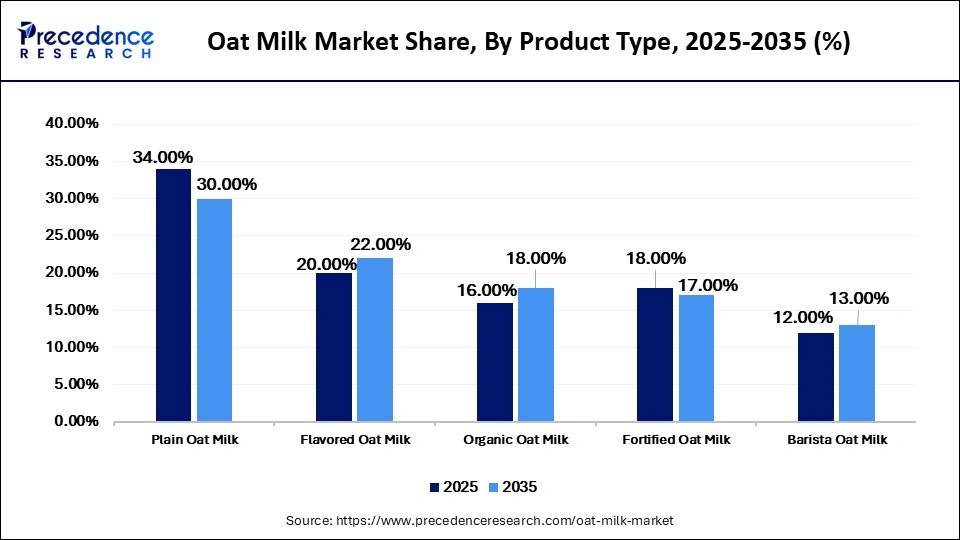
The organic oat milk segment generated approximately USD 944 million in 2025 and is projected to reach nearly USD 3.24 billion by 2035, growing at a CAGR of 14.5% during the forecast period. The organic oat milk segment held the market share of 16% in 2025. The segment is rapidly expanding due to the increasing demand for organic products with clean-labeled products. Many consumers are increasingly focusing on pesticide-free food ingredients, which is a leading driver of the segment.
The barista oat milk segment accounted for approximately USD 708 million in 2025 and is projected to reach nearly USD 2.34 billion by 2035, growing at the fastest CAGR of 15.2% during the forecast period. The barista oat milk segment held the market share of 12% in 2025. The segment is growing due to the increasing use in specialty cafes and coffee chains. The popularity of oat milk-based lattes and cappuccinos is rising, especially among the Gen-Z population.
Formulation Insights
Oat Milk Market Share, By Formulation, 2025-2035 (%)
| Formulation | 2025 | 2035 | CAGR (%) |
| Sweetened | 42.00% | 36.00% | 8.50% |
| Unsweetened | 58.00% | 64.00% | 14.20% |
The Unsweetened Segment Held the Largest Market Share of 58% in 2025
The unsweetened segment generated approximately USD 3.42 billion in 2025 and is projected to reach nearly USD 11.51 billion by 2035, growing at a CAGR of 14.2% during the forecast period. The unsweetened segment dominated the oat milk market with the highest share of 58% in 2025, due to the increasing demand for sugar-free and clean-label products among health-conscious people on a global scale. People are adopting a healthy lifestyle by embracing diabetic-friendly and fitness-focused beverages in a routine.
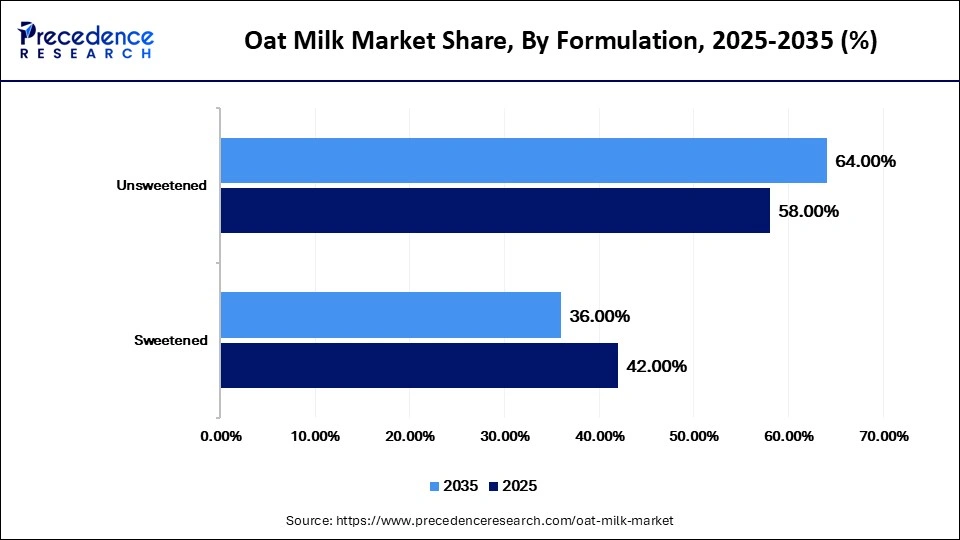
The sweetened segment accounted for approximately USD 2.48 billion in 2025 and is projected to reach nearly USD 6.48 billion by 2035, growing at a CAGR of 8.5% during the forecast period. The sweetened segment held the second-largest market share of 42% in 2025. The segment is driven by the growing use of sweeteners in ready-to-drink beverages and increasing demand from youth in a hustle culture.
Packaging Type Insights
Oat Milk Market Share, By Packaging Type, 2025-2035 (%)
| Packaging Type | 2025 | 2035 | CAGR (%) |
| Cartons | 68.00% | 65.00% | 10.50% |
| Bottles | 24.00% | 27.00% | 14.00% |
| Cans | 8.00% | 8.00% | 11.00% |
The Cartons Segment Held the Largest Market Share of 68% in 2025
The cartons segment generated approximately USD 4.01 billion in 2025 and is projected to reach nearly USD 11.69 billion by 2035, growing at a CAGR of 10.5% during the forecast period. The cartons segment dominated the oat milk market with the highest market share of 68% in 2025, owing to the strong push for shelf-friendly and highly stable packaging formats that cannot be affected by the outside environment and keep beverages safe and fresh. The rapid expansion of sustainable packaging is another driver of the segment, holding its dominance.
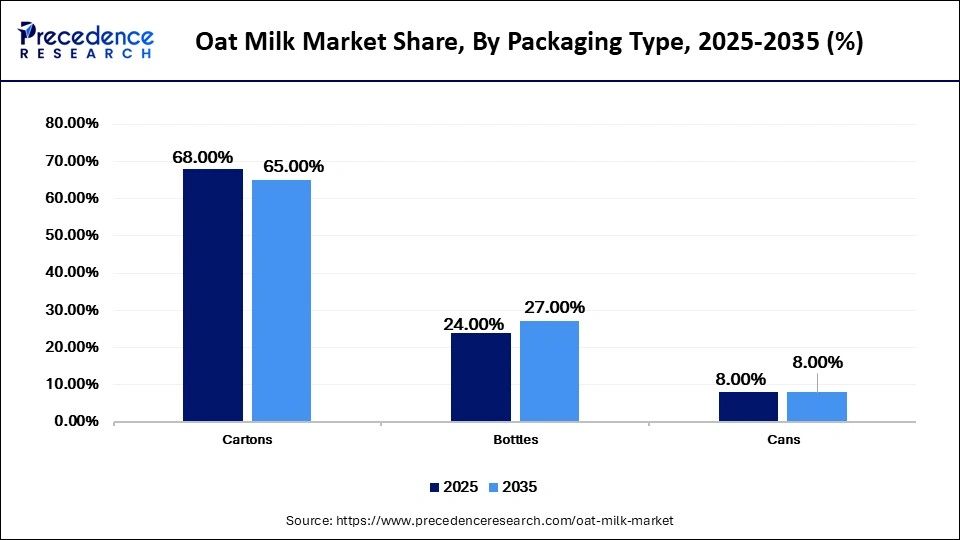
The bottles segment accounted for approximately USD 1.42 billion in 2025 and is projected to reach nearly USD 4.86 billion by 2035, growing at the highest CAGR of 14% during the forecast period. The bottles segment held the second-largest market share of 24% in 2025. The segment is driven by the convenience-focused beverages and the growing demand for ready-to-milk beverages.
The cans segment generated approximately USD 472 million in 2025 and is projected to reach nearly USD 1.44 billion by 2035, growing at a CAGR of 11% during the forecast period. The cans segment held the market share of 8% in 2025. The segment is growing due to the rapid development in cane-based drinks and sustainable cane packaging, along with increasing cafe beverage consumption.
Distribution Channel Insights
The Supermarkets and Hypermarkets Segment Held the Largest Market Share of 42% in 2025
The supermarkets & hypermarkets segment generated approximately USD 2.48 billion in 2025 and is projected to reach nearly USD 6.84 billion by 2035, growing at a CAGR of 9.5% during the forecast period. The supermarkets and hypermarkets segment dominated the oat milk market in 2025 due to the wide range of various beverages available at the same store and the increasing preference by consumers to buy from one-stop markets.
The online retail segment accounted for approximately USD 1.06 billion in 2025 and is projected to reach nearly USD 4.32 billion by 2035, growing at the fastest CAGR of 18.5% during the forecast period. The online retail segment held the second-largest market share of 18% in 2025. The segment is fastest-growing due to the expanding e-commerce platforms that offer groceries at the doorstep with reasonable delivery charges and a wide variety of oat milk-based products on the same platform.
Oat Milk Market Share, By Distribution Channel, 2025-2035 (%)
| Distribution Channel | 2025 | 2035 | CAGR (%) |
| Supermarkets & Hypermarkets | 42.00% | 38.00% | 9.50% |
| Convenience Stores | 10.00% | 9.00% | 8.20% |
| Specialty Stores | 16.00% | 14.00% | 9.00% |
| Online Retail | 18.00% | 24.00% | 18.50% |
| Foodservice Channels | 14.00% | 15.00% | 13.50% |
The specialty stores segment generated approximately USD 944 million in 2025 and is projected to reach nearly USD 2.52 billion by 2035, growing at a CAGR of 9% during the forecast period. The specialty stores segment held the market share of 16% in 2025. The segment is growing due to the increasing consumption of organic and oat milk products, compelling specialty store owners to keep sufficient stock of vegan and natural food products.
The convenience stores segment accounted for approximately USD 590 million in 2025 and is projected to reach nearly USD 1.62 billion by 2035, growing at a CAGR of 8.2% during the forecast period. The convenience store segment held the market share of 10% in 2025. The segment's growth is attributed to the increasing urban convenience shopping trends and demand for ready-to-drink oat milk products.
End-Use Insights
The Household Consumption Segment Held the Largest Market Share of 48% in 2025
The household consumption segment generated approximately USD 2.83 billion in 2025 and is projected to reach nearly USD 7.92 billion by 2035, growing at a CAGR of 10% during the forecast period. The household consumption segment dominated the oat milk market with the highest share of 48% in 2025, due to the growing daily consumption of oat milk as an alternative to dairy-based milk products and preference towards sustainable nutrition consumption through vegan beverages.
The cafes & coffee chains segment accounted for approximately USD 1.30 billion in 2025 and is projected to reach nearly USD 4.68 billion by 2035, growing at a CAGR of 15.8% during the forecast period. The cafes & coffee chains segment held the second-largest market share of 22% in 2025. The segment is expanding rapidly due to the expansion of specialty coffee outlets and demand for plant-based coffee for daily consumption.
Oat Milk Market Share, By End-use, 2025-2035 (%)
| End-use | 2025 | 2035 | CAGR (%) |
| Household Consumption | 48.00% | 44.00% | 10.00% |
| Cafés & Coffee Chains | 22.00% | 26.00% | 15.80% |
| Bakery & Confectionery | 10.00% | 9.00% | 9.50% |
| Smoothies & Beverages | 12.00% | 13.00% | 13.00% |
| Food Processing Industry | 8.00% | 8.00% | 11.50% |
The bakery & confectionery segment generated approximately USD 590 million in 2025 and is projected to reach nearly USD 1.62 billion by 2035, growing at a CAGR of 9.5% during the forecast period. The bakery and confectionery segment held the market share of 10% in 2025. The segment's growth is related to the increasing preference for dairy-free desserts and clean-label food products, supporting the use of oat milk on a large scale.
The smoothies & beverages segment accounted for approximately USD 708 million in 2025 and is projected to reach nearly USD 2.34 billion by 2035, growing at a CAGR of 13% during the forecast period. The smoothies and beverages segment held the market share of 12% in 2025. The segment is growing due to the increasing investment in plant-based food manufacturing and rapid innovation in dairy alternative formulations.
Regional Insights
North America Oat Milk Market Size and Growth 2026 to 2035
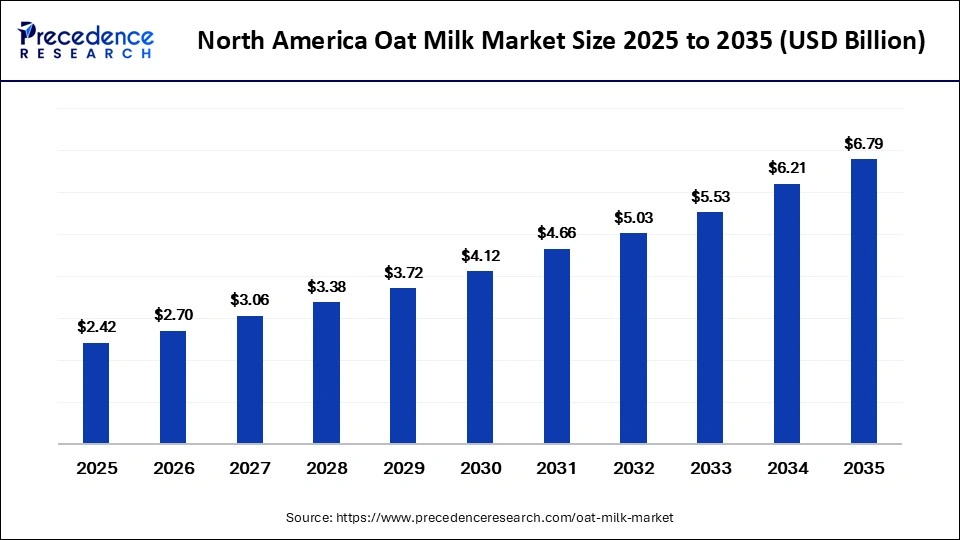
The North America oat milk market size was exhibited at USD 2.42 billion in 2025 and is projected to be worth around USD 6.79 billion by 2035, growing at a CAGR of 13.50% from 2026 to 2035.
Which Factors Drive the Oat Milk Market in North America?
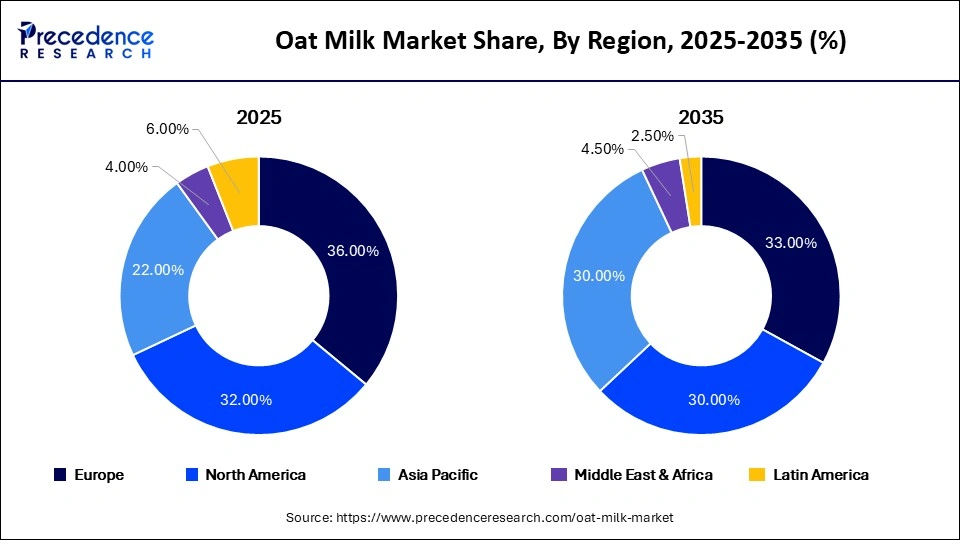
North America held 32% of the market share in 2025 and is expected to grow at a notable CAGR of 11.2% in the coming years due to the increasing consumer demand for plant-based options, high rates of people having lactose intolerance, and the push towards coffee shop culture. It further grows by the active presence of key players like Oatly and Califia farms. The market is fully saturated with various options along with different flavors and organic beverages. The leading brands have strengthened their roots by offering sustainable dairy-free options in the region.
U.S. Oat Milk Market Size and Growth 2026 to 2035
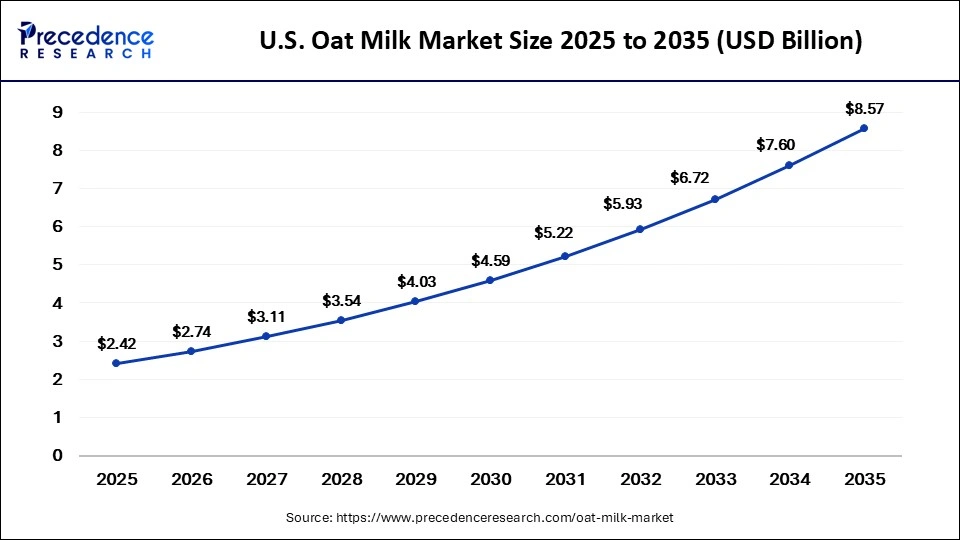
The U.S. oat milk market size was evaluated at USD 2.42 billion in 2025 and is projected to reach around USD 8.57 billion by 2035, growing at a CAGR of 13.78% from 2026 to 2035.
U.S. Market Analysis
The U.S. is a major contributor to the North American market. According to the statistics, nearly 41% of U.S. households buy non-dairy milk daily. Oat milk offers a creamy and foam-based texture that resembles dairy milk, driving its demand on a large scale. Also, the consumers in the region are increasingly perceiving oat milk as an eco-friendly alternative, supporting the market's growth in the U.S.
Europe Held the Largest Market Share of 36% in 2025
Europe held a major revenue share of 36% in the oat milk market in 2025, which is driven by a combination of factors, such as the region's early-stage innovation for dairy-free options and a huge consumer base that prefers plant-based diets. Oats are considered one of the most sustainable crops, locally grown and requiring fewer resources, making them an ideal option for dairy-free products. The European government has also supported the oat milk production and trend towards plant-based options that further reduce taxes.
Germany Market Analysis
The region's growth is attributed to factors like rising health-conscious people and especially the younger generation in Germany, with nearly 75% of plant milk consumers adopting oat milk for their daily beverage consumption. The region is driven by high-quality products that precisely mirror dairy products in texture and creaminess, which is in high demand for various types of coffee.
How is Asia-Pacific Growing in the Oat Milk Market?
Asia-Pacific held 22% of the market share in 2025 and is expected to witness the fastest growth with a CAGR of 16.5% during the predicted timeframe, due to a high lactose intolerance rate, increasing health consciousness among the masses, and the increasing demand for plant-based beverages and non-dairy-based products. A significant portion of the Asian population is turning toward a vegan diet and beverages due to lactose intolerance and awareness of animal abuse in the entire supply chain of dairy products. Also, the increasing popularity of coffee shops with plant-based milk as a main ingredient, especially among the young population, is driving the market growth in Asian countries.
India Market Analysis
India holds a significant capability in the manufacturing sector that offers a large amount of plant-based milk with cost-effective production. It is highly beneficial for local and export markets, making it a highly attractive choice as a dairy-free option. The oat milk industry in India is largely supported by a robust retail and e-commerce infrastructure with the active presence of supermarkets and hypermarkets that make dairy-free products easily accessible.
How is the Opportunistic Rise of the Middle East & Africa in the Oat Milk Market?
The Middle East & Africa held a 4% share of the market in 2025 and is expected to grow at a lucrative rate of 9.5% CAGR in the coming years. This is mainly due to increasing awareness regarding lactose-free and plant-based products among health-conscious consumers. The growing premium café culture and rising demand for specialty beverages are further accelerating the adoption of oat milk across urban markets in the region. Additionally, expanding health and wellness trends, along with increasing interest in sustainable and dairy-alternative products, are supporting market growth within the Middle East & Africa.
UAE Market Trends
The UAE leads the Middle East & Africa oat milk market due to its rapidly growing health-conscious population, strong demand for premium café beverages, and increasing preference for plant-based dairy alternatives. The country's expanding retail sector, high disposable income, and rising awareness regarding lactose-free and sustainable food products are further driving oat milk market growth.
What Drives the Oat Milk Market Within Latin America?
Latin America held a 6% market share in 2025 and is expected to grow at a CAGR of 8.8% throughout the forecast period, driven by growing awareness of plant-based beverages among health-conscious consumers who are increasingly shifting toward dairy alternatives. This trend is further supported by rising urbanization and a stronger preference for healthier, low-lactose, and sustainable drink options in major cities across the region. Additionally, the expanding retail availability of dairy alternatives through supermarkets, specialty stores, and online channels is improving product accessibility and accelerating market penetration.
Brazil Market Trends
Brazil is a major contributor to the Latin American oat milk market due to its large urban consumer base, rising health consciousness, and increasing shift toward plant-based and lactose-free beverages. The country's expanding retail networks, growing cafe culture, and strong penetration of global and local dairy alternative brands are further driving oat milk adoption.
Competitive Landscape
The oat milk market is moderately consolidated, with a mix of global plant-based beverage leaders, dairy companies expanding into alternatives, and emerging regional brands competing for market share. Key players are focusing on strategies such as product innovation, clean-label formulations, fortified nutrition offerings, and the expansion of flavored oat milk variants to attract a broader consumer base. Companies are also investing in aggressive branding, partnerships with cafe chains, and distribution expansion across supermarkets, convenience stores, and online retail platforms to strengthen market penetration and visibility.
In the future, key players must focus on advancing functional and value-added oat milk products, such as high-protein, low-sugar, and vitamin-enriched variants, to meet evolving health-conscious consumer preferences. Strengthening sustainability initiatives, improving supply chain efficiency, and expanding presence in emerging markets are also critical for long-term competitiveness. Additionally, companies should focus on strategic collaborations with foodservice providers and leverage digital marketing and direct-to-consumer channels to build stronger brand loyalty and differentiate themselves in an increasingly competitive market.
Oat Milk Market Companies
- Oatly AB
- Danone S.A.
- Califia Farms
- Chobani LLC
- Nestlé S.A.
- Pacific Foods
- Minor Figures
- Elmhurst 1925
- The Hain Celestial Group
- SunOpta Inc.
- Planet Oat
- Ripple Foods
- Aldi Sud
- Lactalis Group
- Happy Planet Foods
Recent Developments
- In November 2025, Oatly unveiled the new product called Baristamatic oat milk, which is specially designed for automated coffee machines in the UK. The milk alternative was presented to optimize coffee machine performance by minimizing the possibility of sedimentation in milk containers.(Source: https://vegconomist.com)
- In October 2025, Minor Figures, a well-known plant-based milk brand, introduced a new product called barista-standard oat milk that is gluten-free, fortified with vitamins and minerals.(Source: https://vegconomist.com)
Segments Covered in the Report
By Product Type
- Plain Oat Milk
- Flavoured Oat Milk
- Chocolate
- Vanilla
- Coffee
- Others
- Organic Oat Milk
- Fortified Oat Milk
- Barista Oat Milk
By Formulation
- Sweetened
- Unsweetened
By Packaging Type
- Cartons
- Bottles
- Cans
By Distribution Channel
- Supermarkets & Hypermarkets
- Convenience Stores
- Specialty Stores
- Online Retail
- Foodservice Channels
By End-Use
- Household Consumption
- Cafés & Coffee Chains
- Bakery & Confectionery
- Smoothies & Beverage
- Food Processing Industry
By Region
- North America
- Latin America
- Europe
- Asia-pacific
- Middle and East Africa
For inquiries regarding discounts, bulk purchases, or customization requests, please contact us at sales@precedenceresearch.com
Frequently Asked Questions





Ask For Sample
No cookie-cutter, only authentic analysis – take the 1st step to become a Precedence Research client
 Get a Sample




 sales@precedenceresearch.com
 Schedule a Meeting
