



Stem Cell Umbilical Cord Blood Market Revenue to Attain USD 30.16 Bn by 2035
Published: 16 Apr 2026
Author: Precedence Research



Stem Cell Umbilical Cord Blood Market Revenue and Trends 2026 to 2035
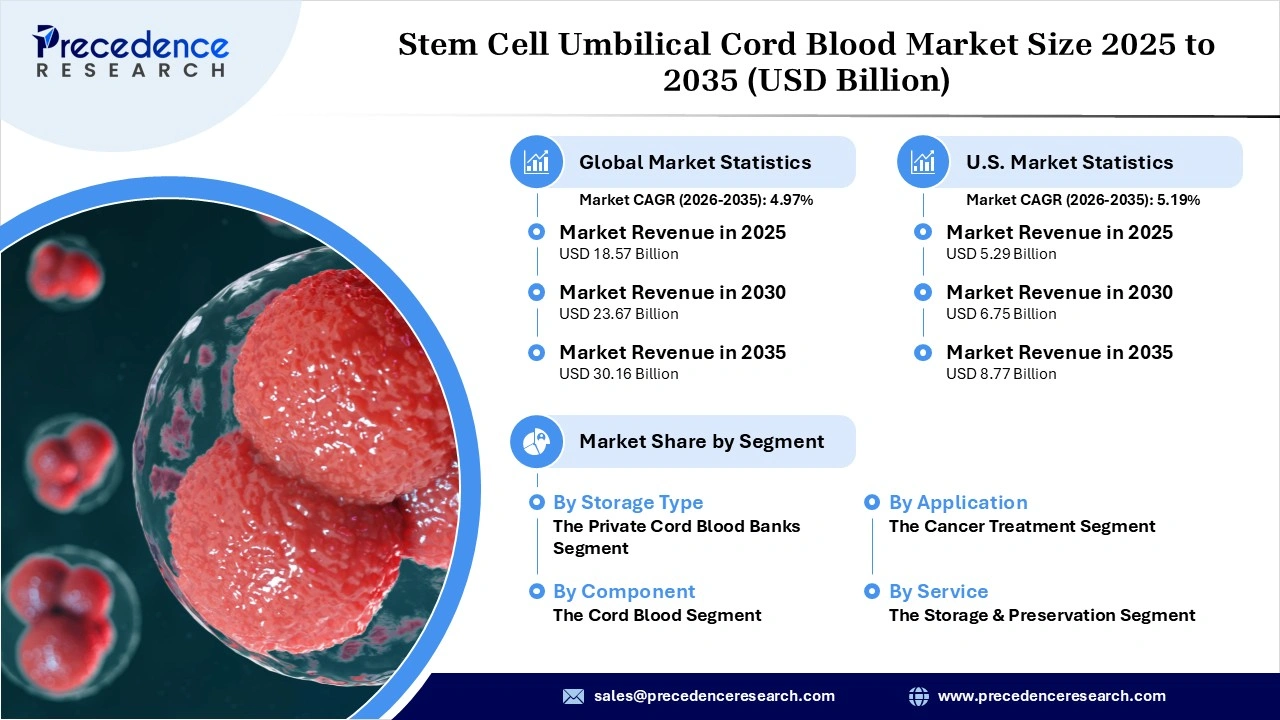
The global stem cell umbilical cord blood market revenue was valued at USD 18.57 billion in 2025 and is expected to attain around USD 30.16 billion by 2035, growing at a CAGR of 4.97% during forecast period. The market is growing rapidly due to rising demand for regenerative medicine, increasing use in cancer treatment, and expanding awareness of cord blood banking benefits.
Market Overview
The stem cell umbilical cord blood market involves the collection, processing, storage, and application of stem cells derived from umbilical cord blood, which are widely used in treating blood disorders, cancers, and in regenerative medicine. It includes both public and private cord blood banking services as well as clinical applications in stem cell transplantation and emerging therapies. The market is driven by the rising use of stem cell therapies in treating diseases such as leukemia and lymphoma, which is increasing the demand for stored and accessible cord blood units.
What are the Growth Factors of the Stem Cell Umbilical Cord Blood Market?
The increasing prevalence of hematological diseases and genetic disorders requiring stem cell-based treatments drives the market. An increase in awareness among parents has increased adoption rates. Technological advancements in cryopreservation and stem cell processing are increasing storage efficiency and therapeutic capabilities. Additionally, increasing investments in regenerative medicine and wide-ranging applications in fields like immunotherapy and neurology are expected to be a driving factor fueling the market growth.
Moreover, increasing investments in regenerative medicine and broader application scope in neurology and immunotherapy are collectively acting as factors driving the growth of this market. Also, supportive government initiatives and the development of public banking networks are adding to the growth of the market.
Segment Analysis
- By storage type, the private cord blood banks segment dominated the stem cell umbilical cord blood market with the largest share of 80% in 2025, as awareness of future medical safety continues to rise, private cord blood banking receives significant traction for families. As it is for exclusive use by the individual or family, it remains a safe bet for potential future therapy.
- By application, the cancer treatment segment held the largest market share of 44.3% in 2025. The dominance of this segment is driven by the increasing demand for extremely effective stem cell transplantation therapy for hematologic cancers. The demand for stem cells from cord blood continues to grow due to the increasing worldwide burden of cancer.
- By service, the storage & preservation segment held the largest share of 62% in the stem cell umbilical cord blood market in 2025. As long-term preservation of stem cells is required, storage services are the foundation of the cord blood banking market. Cryopreservation technologies have improved significantly in terms of storage quality and reliability.
- By component, the cord blood segment held the largest market share in 2025. Cord blood, with its high density of hematopoietic stem cells, is still the only source in use for any therapeutic purpose. The key factor for its dominance in the market is its established clinical use for blood disorders.
Regional Analysis
North America held the largest share of the stem cell umbilical cord blood market in 2025, supported by its advanced healthcare systems and strong research ecosystem. High awareness and adoption of cord blood banking services, along with significant investments in biotechnology and regenerative medicine, are driving regional market growth. The presence of well-established public and private cord blood banks, along with supportive regulatory frameworks and expanding clinical applications, further strengthens its dominance.
Asia Pacific is expected to grow at the fastest rate in the coming years, driven by increasing investments in healthcare and growing awareness regarding the benefits of stem cell therapies. High birth rates and rapid population growth provide a solid foundation for cord blood banking. Governments are actively advancing regenerative medicine and the extension of healthcare infrastructure. Rising disposable incomes are compelling families to switch to private banking services. However, the ongoing growth in the region is attributed to its growing healthcare capabilities and higher patient pool.
Stem Cell Umbilical Cord Blood Market Coverage
| Report Attribute | Key Statistics |
| Market Revenue in 2025 | USD 18.57 Billion |
| Market Revenue by 2035 | USD 30.16 Billion |
| CAGR from 2026 to 2035 | 4.97% |
| Quantitative Units | Revenue in USD million/billion, Volume in units |
| Largest Market | North America |
| Base Year | 2025 |
| Regions Covered | North America, Europe, Asia-Pacific, Latin America, and the Middle East & Africa |
Key Players Competing in the Stem Cell Umbilical Cord Blood Market
Major companies competing in the stem cell umbilical cord blood market include Cord Blood Registry (CBR), Cryo-Cell International, Inc., ViaCord (PerkinElmer), Global Cord Blood Corporation, Cordlife Group Limited, LifeCell International Pvt. Ltd., FamiCord Group (PBKM), StemCyte, Inc., Vita 34 AG, and others. These companies contribute to the market primarily through the collection, processing, cryopreservation, and long-term storage of cord blood stem cells for both public and private banking services.
They also invest in expanding storage infrastructure, improving cell processing and cryopreservation technologies, and ensuring regulatory compliance to enhance the safety, viability, and accessibility of stored stem cells. Additionally, many of these firms support clinical research and regenerative medicine applications, enabling the use of cord blood in treatments for blood disorders, cancers, and emerging therapies, thereby expanding the overall market scope.
Recent Development
- In December 2025, the approval of omidubicel-onlv, an advanced engineered cord blood stem cell therapy, represents a major milestone in treating severe aplastic anemia. It is reshaping biopharmaceutical manufacturing by increasing focus on scalable production, precise processing techniques, and adherence to stringent regulatory and quality standards for cell-based therapies.
Segments Covered in the Report
By Storage Type
- Private Cord Blood Banks (Family Banking)
- Public Cord Blood Banks (Donation-based)
- Hybrid Cord Blood Banks
By Component
- cord blood (Hematopoietic Stem Cells - HSCs)
- Cord Tissue (Mesenchymal Stem Cells - MSCs)
- Placental Stem Cells
By Application
- Cancer Treatment (Leukemia, Lymphoma, Myeloma)
- Blood Disorders (Thalassemia, Sickle Cell Anemia)
- Immune & Metabolic Disorders
- Regenerative Medicine (Cerebral Palsy, Autism, Diabetes)
By Service
- Processing & Characterization
- Storage & Preservation
- Collection & Transportation
By Region
- North America
- Latin America
- Europe
- Asia-pacific
- Middle and East Africa
Get this report to explore global market size, share, CAGR, and trends, featuring detailed segmental analysis and an insightful competitive landscape overview @ https://www.precedenceresearch.com/sample/8304
You can place an order or ask any questions, please feel free to contact us at sales@precedenceresearch.com |+1 804 441 9344