



Stem Cell Umbilical Cord Blood Market Trends, Leading Companies, Company Revenue / Sales Performance, Procedure Volume, Healthcare Spending, Technology Adoption, Reimbursement Analysis, Competitive Landscape, and Growth Outlook
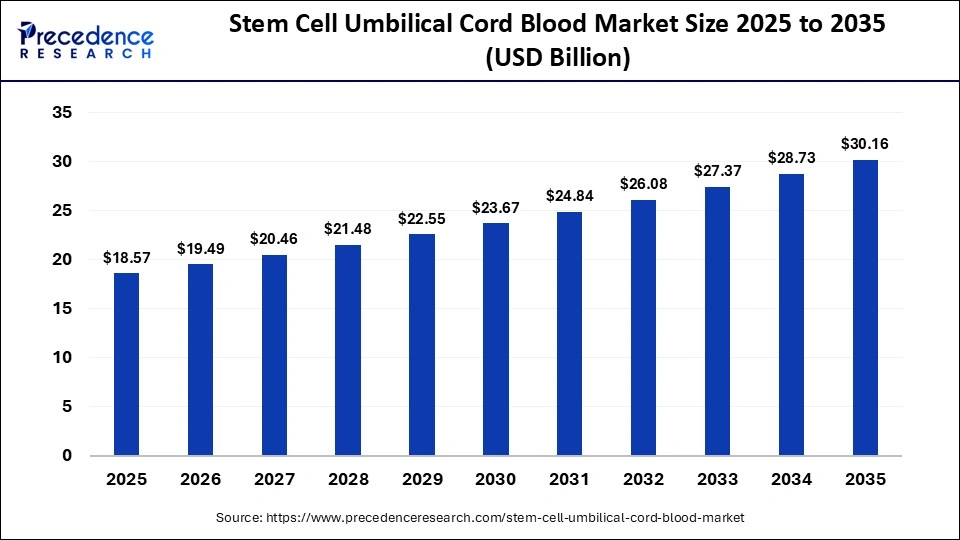
Deepa Pandey, a Healthcare Industry Expert, highlights that the stem cell umbilical cord blood market has reached USD 19.49 billion in 2026 and is on track to reach USD 30.16 billion by 2035, advancing at a CAGR of 4.97%. Key stem cell umbilical cord blood market companies shaping the market include Cord Blood Registry (CBR), Cryo-Cell International, Inc., ViaCord (PerkinElmer), Global Cord Blood Corporation, while major growth segments span By Storage Type, By Component, By Application, By Service.
Source: https://www.precedenceresearch.com/stem-cell-umbilical-cord-blood-market
 Get a Sample
 Table Of Content


What is the Stem Cell Umbilical Cord Blood Market Size in 2026?
The global stem cell umbilical cord blood market size accounted for USD 18.57 billion in 2025 and is predicted to increase from USD 19.49 billion in 2026 to approximately USD 30.16 billion by 2035, expanding at a CAGR of 4.97% from 2026 to 2035. The market is experiencing healthy growth because of the rising demand for regenerative medicine and sophisticated methodologies of therapy.
Key Takeaways
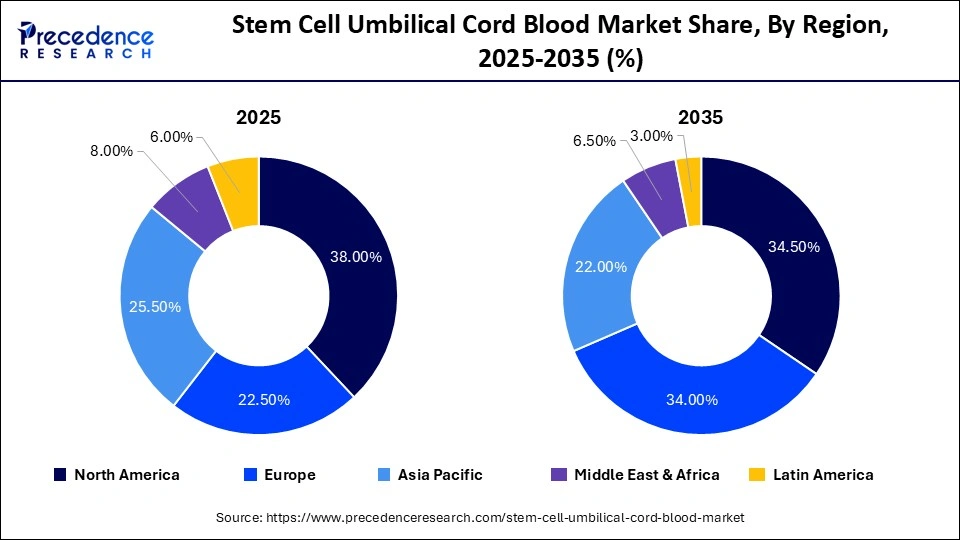
- North America dominated the stem cell umbilical cord blood market, holding a share of 38% in 2025.
- Asia Pacific is expected to grow at the fastest CAGR of approximately 19% in the market during the forecast period.
- By storage type, the private cord blood banks segment dominated the market with a share of 80% in 2025.
- By storage type, the public cord blood banks segment held the second-largest share of 15% in the market in 2025 and is expected to grow at a significant CAGR between 2026 and 2035.
- By component, the cord blood segment dominated the market in 2025.
- By component, the cord tissue segment held the second-largest share in 2025 and is expected to grow at a significant CAGR between 2026 and 2035.
- By application, the cancer treatment segment dominated the market with a share of 44.3% in 2025.
- By application, the regenerative medicine segment held the second-largest share of 12.5% in 2025 and is expected to grow at a significant CAGR between 2026 and 2035.
- By service, the storage & preservation segment dominated the market with a share of 62% in 2025.
- By service, the processing & characterization segment held the second-largest share of 33.3% in 2025 and is expected to grow at a significant CAGR between 2026 and 2035.
Market Overview
The stem cell umbilical cord blood market is experiencing robust growth since the use of stem cell therapies is taking center stage in the contemporary healthcare field. Cord blood banking is gaining immense popularity because of its possible life-saving applications. Continuous advancements in stem cell processing, cryopreservation, and storage technologies are boosting the market.
More partnerships with research institutions and biotechnology companies are creating innovation. Moreover, the growing application of cord blood in the treatment of hematological disorders and new opportunities in the field of regenerative medicine are supporting the market growth. With the growing healthcare awareness, the market is poised for rapid growth.
How is AI Revolutionizing the Stem Cell Umbilical Cord Blood Market?
Artificial intelligence (AI) is significantly influencing the market by improving stem cell research and clinical use. Genetic data can be analyzed using AI-controlled tools, which determine the best stem cell matches and create a higher success rate of transplantation. Machine learning helps foresee treatment outcomes and improve storage and retrieval. AI technologies are also increasingly used in drug discovery and personalized medicines. With the further development of AI, it is bound to make stem cell therapies and cord blood banking systems much more efficient, accurate, and scalable.
Stem Cell Umbilical Cord Blood Market Trends
- Demand for Stem Cell Therapies: The latest trend of using stem cells in the treatment of many diseases is contributing to the growth of the market.
- Increasing Awareness and Adoption: Rising awareness about the benefits of cord blood banking is boosting adoption across both public and private storage segments.
- Technological Advancements: Advancements in cell expansion, cryopreservation, and processing technologies are improving the usability and viability of frozen stem cells.
- Public Banking Expansion: Expansion of public cord blood banking initiatives by governments and healthcare organizations is enhancing accessibility and availability.
- Gene Editing: The development of gene editing tools like CRISPR is creating new opportunities for treating genetic disorders with cord blood stem cells.
Market Scope
| Report Coverage | Details |
| Market Size in 2025 | USD 18.57 Billion |
| Market Size in 2026 | USD 19.49 Billion |
| Market Size by 2035 | USD 30.16 Billion |
| Market Growth Rate from 2026 to 2035 | CAGR of 4.97% |
| Dominating Region | North America |
| Fastest Growing Region | Asia Pacific |
| Base Year | 2025 |
| Forecast Period | 2026 to 2035 |
| Segments Covered | Storage Type, Component, Application, Service, and Region |
| Regions Covered | North America, Europe, Asia-Pacific, Latin America, and Middle East & Africa |
Market Dynamics
Drivers
Increasing Demand for Regenerative and Personalized Therapies
The growing demand for regenerative medicine and individualized treatment is one of the driving forces of the stem cell umbilical cord blood market. Stem cell therapies hold potential to treat many diseases, and this is why stem cell umbilical cord blood is adopted in all healthcare systems. The increased awareness about the advantages of cord blood banking is influencing an increasing number of parents to keep stem cell stores. Moreover, biotechnological developments are also increasing the usefulness and availability of these treatments.
Restraint
Ethical and Exorbitant Costs of Censoring Adoption
Despite strong growth potential, the market faces challenges such as ethical concerns surrounding stem cell use and storage, along with high costs of cord blood banking and treatment that limit patient access. Additionally, regulatory complexities, regional disparities, and lack of awareness in certain areas further hinder widespread adoption.
Opportunity
Innovations in Stem Cell
The market presents strong opportunities driven by ongoing advancements in stem cell research and gene therapy, with gene editing technologies opening new possibilities for treating genetic disorders. Additionally, rising healthcare investments and awareness in emerging markets, along with expanding applications in regenerative medicine, are creating new avenues for growth and innovation.
Segment Insights
Storage Type Insights
Stem Cell Umbilical Cord Blood Market Share, By Storage Type, 2025-2035 (%)
| Storage Type | 2025 | 2035 |
| Private Banking | 80.0% | 84.0% |
| Public Banking | 15.0% | 12.0% |
| hybrid models | 5.0% | 4.0% |
The Private Cord Blood Banks Segment Dominated the Market With a 80% Share in 2025
The private cord blood banks segment dominated the stem cell umbilical cord blood market by holding the largest share of 80% in 2025. This is because of the fact that these banks give families the freedom to store the umbilical cord blood with the sole purpose of individual or familial use. The reason behind this model is the growing awareness among parents about the medical potential of stem cells in the future. Their adoption is further enhanced by the fact that there is an immediate guarantee of the availability of autologous or family-related transplants. There is also increased disposable income and readiness to spend on long-term health security, which is encouraging growth. The growth of the number of providers of the private banking service and marketing is also strengthening the dominance of this segment.
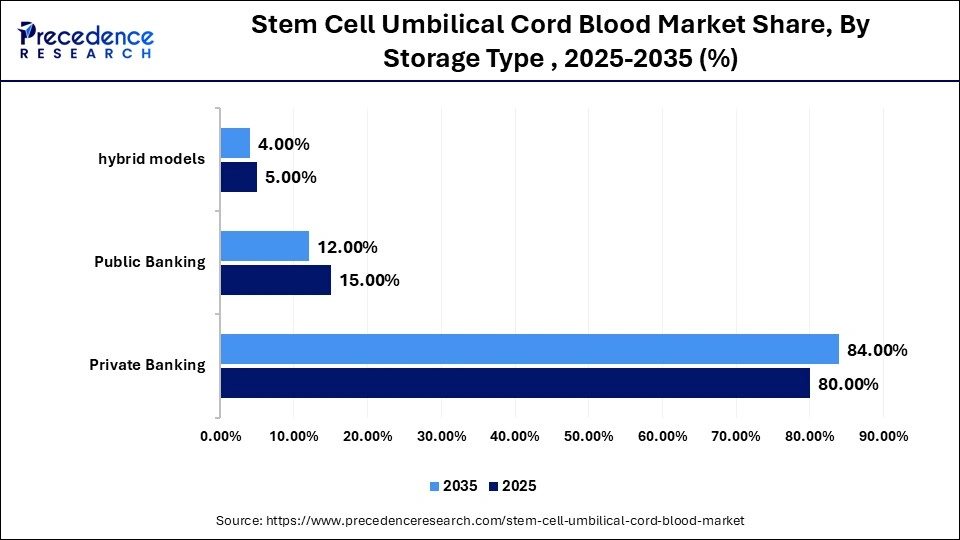
The public cord blood banks segment held a 15% share of the market in 2025 because of the growing state support and donor registry expansion efforts. Such banks preserve cord blood to be utilized by any compatible patient to enhance access to more populations. The increasing concern about the importance of stem cell donation and the benefits it gives to society is motivating an interest in the activity. There are also improvements in the levels of matching technologies that are increasing the success rates of transplantation. The increase in the demand for allogeneic transplants is also enhancing the expansion of the public banking systems even more.
The hybrid cord blood banks segment held a 5% share of the market in 2025 because they are a combination of the pros of the private and the public storage systems. In these models, the family will be able to keep some of its cord blood to use personally and to donate the rest of the sample to a party. This two-fold strategy is becoming more popular because it is flexible and cheap. Adoption is being aided by increasing awareness of common healthcare benefits. Also, partnerships between private and government institutions are leading to the growth of hybrid banking solutions.
Application Insights
Stem Cell Umbilical Cord Blood Market Share, By Application, 2025-2035 (%)
| Application | 2025 | 2035 |
| Cancer Treatment | 44.3% | 40.0% |
| regenerative medicine | 12.5% | 22.5% |
| blood disorders | 28.0% | 25.5% |
| Others | 15.2% | 12.0% |
The Cancer Treatment Segment Led the Market With a 44.3% Share in 2025
The cancer treatment segment dominated the stem cell umbilical cord blood market by holding the largest share of 44.3% in 2025, driven by the widespread use of hematopoietic stem cell transplantation for conditions such as leukemia and lymphoma. Increasing global cancer incidence is boosting demand for effective therapies, while cord blood offers advantages like lower risk of graft-versus-host disease and easier donor matching compared to bone marrow. Additionally, ongoing advancements in transplantation techniques and the expanding role of stem cell therapies in oncology are further strengthening this segment.
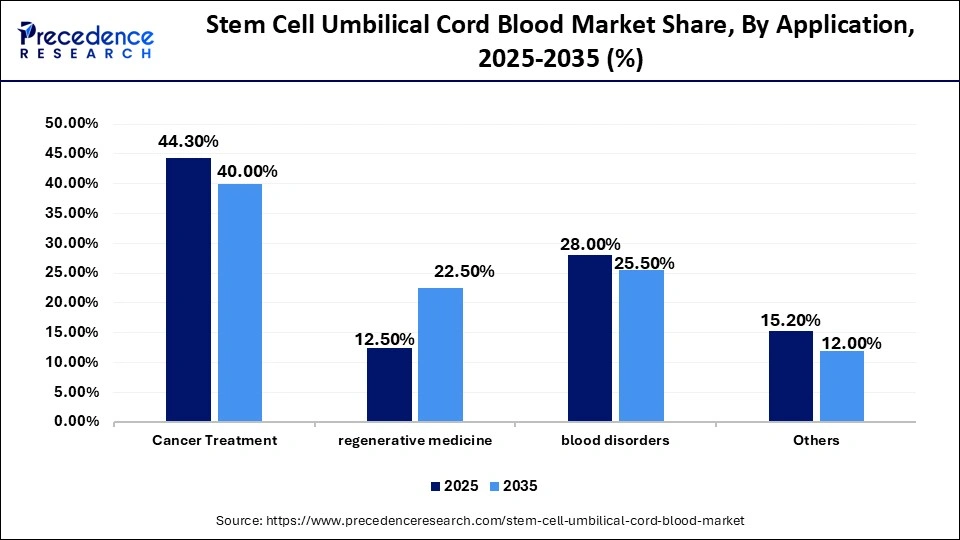
The regenerative medicine segment held a 12.5% share of the market in 2025 due to the fact that stem cells have the potential to repair and regenerate damaged tissues. Studies are also paying much attention to the application of cord blood stem cells in treating neurological disorders, cardiovascular diseases, and diabetes. Innovation in this area is rapidly advancing with the introduction of sophisticated technologies, such as gene editing and tissue engineering. Further growth is also driven by the rise in investments in regenerative medicine research. This market segment will grow tremendously with the availability of new treatments in the market.
The blood disorders segment held a 28% share of the market in 2025, driven by the efficacy of the cord blood stem cells in the treatment of anemia, thalassemia, and sickle cell disease. The increasing incidence of these diseases in the world is creating a need to use stem cell-based therapies. Cord blood is a good source of hematopoietic stem cells, especially when a patient does not have an appropriate bone marrow donor. Treatment success rates are being enhanced by advances in transplantation and other supportive care. Other factors that are contributing to growth in this segment are a rise in awareness and availability of treatment options.
Service Insights
The Storage & Preservation Segment Led the Market With a 62% Share in 2025
The storage & preservation segment dominated the stem cell umbilical cord blood market by holding the largest share of 62.0%, since the cord blood needs to be preserved over the long term, awaiting therapeutic use. The viability and stability of the stem cells are achieved using the latest cryopreservation technologies. One of the major reasons that is fueling the demand for storage services is the growing usage of private banking models. Also, storage infrastructure and quality control standards are being improved, and reliability is being improved. Storage charges are also recurring, which helps in the generation of revenue in this sector.
Stem Cell Umbilical Cord Blood Market Share, By Service, 2025-2035 (%)
| Service | 2025 | 2035 |
| Storage | 62.0% | 68.0% |
| Processing | 33.3% | 28.5% |
| Collection | 4.7% | 3.5% |
The processing & characterization segment held a 33.3% share of the market in 2025 due to the innovation in cell separation, purification, and preservation methods. The quality of the collected stem cells and their therapeutic potential heavily rely on efficient processing to preserve these cells. The growing application of stem cells is demanding more advanced ways of processing. Also, automation and standardization innovations are enhancing efficiency and scalability. The increasing demand for high-quality stem cell products is also boosting the growth in this segment.
The collection & transportation segment held a 4.7% share of the market in 2025, since more pregnant parents are becoming more aware of the cord blood banking services. It has been observed that hospitals and maternity centers are increasingly providing childbirth procedures, including the offering of collection services. This is being enhanced by the development of standardized collection kits and protocols that enhance efficiency and safety. Besides, healthcare providers are creating partnerships with cord blood banks, which increases access to services. It is anticipated that this segment will increase over time as more people consider the use of cord blood banking.
Component Insights
The Cord Blood Segment Held the Largest Market Share in 2025
The cord blood segment led the stem cell umbilical cord blood market with the largest share in 2025 because it is extensively utilized in transplantation therapies. Its good market position is supported by its existing clinical uses in the treatment of blood cancers and genetic disorders. Cord blood is more convenient to harvest than other sources of stem cells, which contributes to its popularity even more. Also, there are improvements in the cryopreservation and storage methods that are increasing its usability in the long run. Its dominance is still enhanced by the high level of accessibility of cord blood banking services.
The cord tissue segment is expected to grow at the fastest rate in the coming years due to its promise in regenerative medicine and in the case of tissue engineering. It has mesenchymal stem cells, which have the potential to develop into different types of cells, with a wider range of therapeutic uses. Demand is being driven by the growing research on orthopedic, neurological, and cardiovascular therapies. The feasibility of cord tissue samples is also getting better because of technological progress in processing and storage.
The placental stem cells segment is expected to grow at a significant CAGR throughout the forecast period, driven by their high proliferation ability, and they can be used in a wide range of therapeutic applications. These are the cells under investigation to be utilized in the field of regenerative medicine and immune system regulation. Their potential is also being outlined in a growing number of research and clinical trials to treat a wide variety of conditions. The fact that it is possible to get huge amounts of stem cells in the placenta is one of the strong points. The development of this segment is also being fueled by increasing demand for alternative sources of stem cells.
Regional Insights
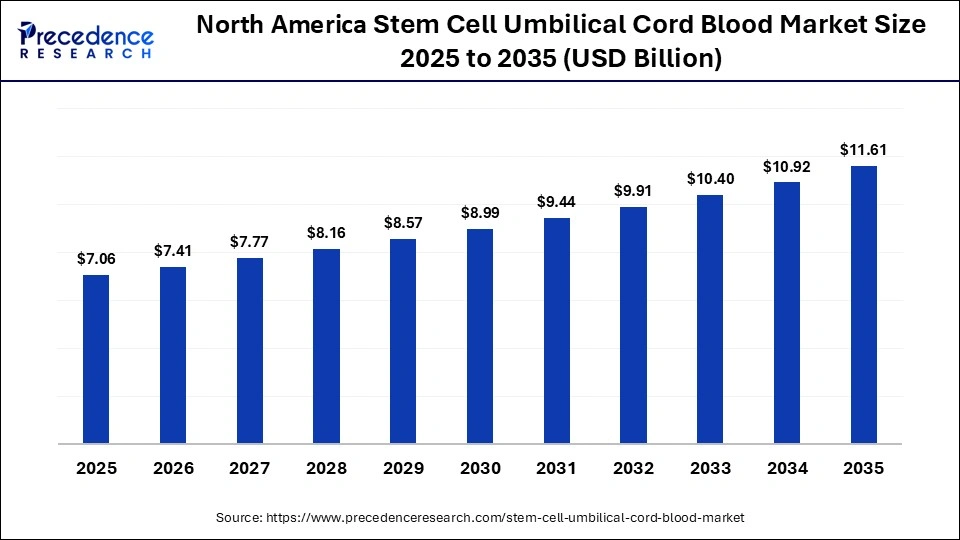
North America Stem Cell Umbilical Cord Blood Market Size and Growth 2026 to 2035
The North America stem cell umbilical cord blood market size is estimated at USD 7.06 billion in 2025 and is projected to reach approximately USD 11.61 billion by 2035, with a 5.10% CAGR from 2026 to 2035.
Why Did North America Dominated the Market in 2025?
North America dominated the stem cell umbilical cord blood market by holding the largest share of 38% in 2025. This is because it has the most developed healthcare system and generates the greatest interest in the field of regenerative medicine. The area enjoys the advantage of low levels of knowledge on cord blood banking and stem cell therapies among pregnant mothers. The use of biotechnology and stem cell studies is also making huge investments in the market.
There is also the availability of well-developed cord blood banks that are either privately or publicly owned, thereby increasing accessibility and availability of services. Innovation and commercialization are being promoted by good regulatory environments and robust clinical research. The growing rate of chronic infections and the requirement for sophisticated treatment still strengthen the dominant role of North America.
U.S. Stem Cell Umbilical Cord Blood Market Size and Growth 2026 to 2035
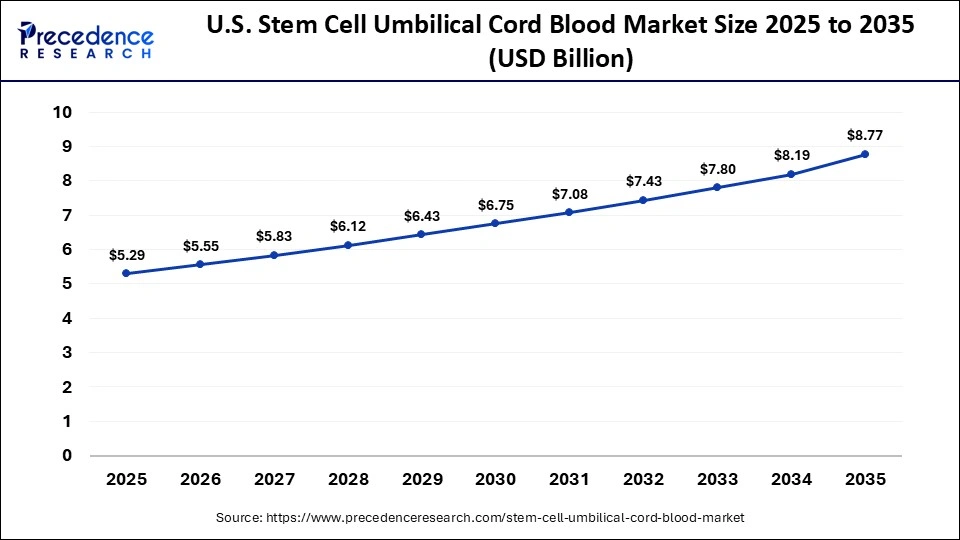
The U.S. stem cell umbilical cord blood market size is calculated at USD 5.29 billion in 2025 and is expected to reach nearly USD 8.77 billion in 2035, accelerating at a strong CAGR of 5.19% between 2026 and 2035.
Country-Level Analysis
The U.S. is a major contributor to the market within North America, driven by its well-developed healthcare system, as well as the availability of substantial cord blood banking facilities. There is an intense stem cell research activity in the nation, with active participation in clinical trials and good funding.
Canada is not an exception, as the government-supported state banking programs and increased awareness of stem cell donation are also influential. Innovation is also enhanced by the fact that there are major companies and research institutes.
Why is Asia Pacific Expanding at the Fastest Rate in the Market?
Asia Pacific is expected to grow at the fastest CAGR of 19% during the forecast period, driven by rising healthcare expenditure and increasing awareness of stem cell therapies. Rapid urbanization, improving healthcare infrastructure, and supportive government policies promoting cord blood banking and regenerative medicine are further accelerating market growth. Additionally, the region's large population base, higher birth rates, and increasing disposable incomes are boosting demand for both public and private cord blood banking services.
Country-Level Analysis
China leads the region due to strong government funding and rapid expansion of both public and private cord blood banks.
India is a key emerging market, supported by rising awareness, improved healthcare access, and a growing middle-class population.
Japan contributes through advanced research in regenerative medicine, while South Korea is driving growth through biotechnology innovation and supportive government initiatives.
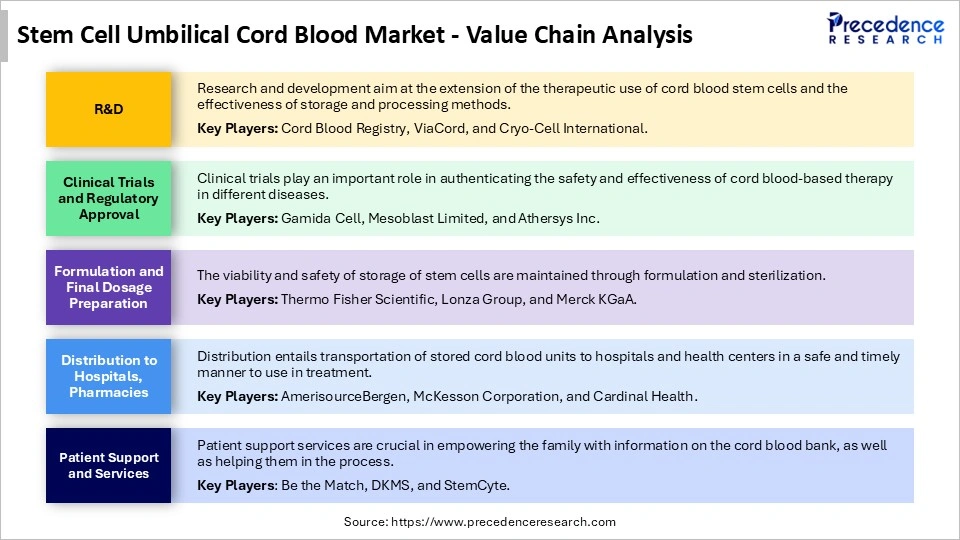
Stem Cell Umbilical Cord Blood Market Value Chain Analysis
Stem Cell Umbilical Cord Blood Market Companies
- Cord Blood Registry (CBR)
- Cryo-Cell International, Inc.
- ViaCord (PerkinElmer)
- Global Cord Blood Corporation
- Cordlife Group Limited
- LifeCell International Pvt. Ltd.
- FamiCord Group (PBKM)
- StemCyte, Inc.
- Vita 34 AG
- Cryo-Save AG
- VcanBio Cell & Gene Engineering
- Medipost (CellTree)
- Americord Registry
- Smart Cells International
- Cryoviva Biotech Pvt. Ltd.
Recent Developments
- In January 2026, the Cord Blood Council (CBC) launched as a nonprofit to support public cord blood banks by providing shared resources to NCBI-funded, FDA-licensed institutions and their stakeholders. It aims to modernize and unify capabilities across the cord blood ecosystem, enhancing operational efficiency, expanding access to high-quality units, and advancing their use in transplants and emerging cell and gene therapies.(Source: https://www.businesswire.com)
- In December 2025, the approval of omidubicel-onlv, an advanced engineered cord blood stem cell therapy, represents a major milestone in treating severe aplastic anemia. It is reshaping biopharmaceutical manufacturing by increasing focus on scalable production, precise processing techniques, and adherence to stringent regulatory and quality standards for cell-based therapies.(Source: https://www.biopharminternational.com)
Segments Covered in the Report
By Storage Type
- Private Cord Blood Banks (Family Banking)
- Public Cord Blood Banks (Donation-based)
- Hybrid Cord Blood Banks
By Component
- cord blood (Hematopoietic Stem Cells - HSCs)
- Cord Tissue (Mesenchymal Stem Cells - MSCs)
- Placental Stem Cells
By Application
- Cancer Treatment (Leukemia, Lymphoma, Myeloma)
- Blood Disorders (Thalassemia, Sickle Cell Anemia)
- Immune & Metabolic Disorders
- Regenerative Medicine (Cerebral Palsy, Autism, Diabetes)
By Service
- Processing & Characterization
- Storage & Preservation
- Collection & Transportation
By Region
- North America
- Latin America
- Europe
- Asia-pacific
- Middle and East Africa
For inquiries regarding discounts, bulk purchases, or customization requests, please contact us at sales@precedenceresearch.com
Frequently Asked Questions





Ask For Sample
No cookie-cutter, only authentic analysis – take the 1st step to become a Precedence Research client
 Get a Sample
.webp)



 sales@precedenceresearch.com
 Schedule a Meeting
