



AI in Omics Studies Market Size, Companies, Share, Patient Volume, Treatment Adoption Rates, Pricing Analysis, Regulatory Landscape, Competitive Positioning, and Demand Forecast
AI in Omics Studies Market (By Omics Type: Genomics, Proteomics, Transcriptomics, Metabolomics, Others; By Component: Software, Services, Hardware; By Application: Drug Discovery, Precision Medicine, Biomarker Discovery, Clinical Diagnostics, Others; By End-Use: Pharmaceutical & Biotechnology Companies, Research Institutes, Hospitals & Clinics, Others) - Global Industry Analysis, Size, Trends, Leading Companies, Regional Outlook, and Forecast 2026 to 2035
Source: https://www.precedenceresearch.com/ai-in-omics-studies-market
 Get a Sample
 Table Of Content


What is the AI in Omics Studies Market Size in 2026?
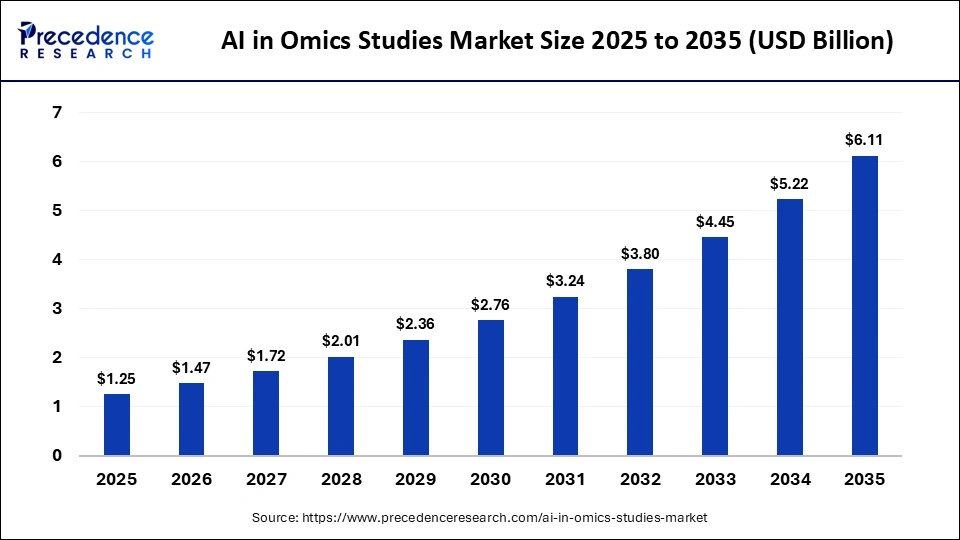
The global AI in omics studies market size accounted for USD 1.25 billion in 2025 and is predicted to increase from USD 1.47 billion in 2026 to approximately USD 6.11 billion by 2035, expanding at a CAGR of 17.20% from 2026 to 2035. The market is rapidly growing due to the increasing demand for precision medicine, accelerated drug development to combat rare disease burden, rapid AI adoption by the healthcare industry, and advancements in AI technologies.
Key Takeaways
- North America held the largest market share of 42% in 2025.
- The Asia Pacific is expected to grow at the fastest CAGR of 19.5% between 2026 and 2035.
- By omics type, the genomics segment dominated the market with a 40% share in 2025.
- By omics type, the proteomics segment is the second-largest shareholder and is expected to grow at a significant CAGR of 17.5% between 2026 and 2035.
- By component, the software segment dominated the market with a 55% share in 2025.
- By component, the services segment is the second-largest shareholder and is expected to grow at a significant CAGR of 16.5% between 2026 and 2035.
- By application, the drug discovery segment dominated the market with a 35% share in 2025.
- By application, the precision medicine segment is the second-largest shareholder and is expected to grow at the fastest CAGR of 18.5% between 2026 and 2035.
- By end use, the pharmaceutical & biotechnology companies segment dominated the market with a 50% share in 2025.
- By end use, the research institute segment is the second-largest shareholder and is expected to grow at a significant CAGR of 17.5% between 2026 and 2035.
Market Overview
AI in omics studies involves studies integrating massive multidimensional datasets of genomics, transcriptomics, proteomics, and metabolomics to detect complex biological patterns, aiming to accelerate biomarker discovery and enable personalized medicine. For this, AI technologies like ML and DL are extensively used. ML is particularly used for heterogenous data handling, while DL is used for drug discovery and disease classification along with molecular mechanism understanding. AI has the potential to integrate multiple layers of biological data, such as DNA mutations, RNA expressions, metabolic activity, protein functionality, and other omics data like genomics or proteomics, offering a more comprehensive view for precision medicine and drug discovery.
The AI in omics studies market is experiencing rapid expansion, driven by several key factors, including the surge of big data in the biotechnology sector, an increasing demand for precision medicine, and the application of AI in spatial biology. Additionally, there is a growing shift toward predictive analysis and mechanistic modeling, moving away from traditional descriptive analysis. This paradigm shift is revolutionizing how omics studies are approached, enabling more advanced, data-driven insights and personalized solutions in areas like drug discovery and disease modeling.
AI in Omics Studies Market Trends
- There is a rising development of AI systems capable of analyzing multi-omics signatures of diseases and recommending approved drugs that target those specific signatures. This approach accelerates the treatment process, particularly for rare diseases.
- AI models are increasingly being trained to prioritize biologically relevant connections over purely statistical correlations, ensuring that results are not only scientifically sound but also contextually accurate.
- The biotech industry is shifting from traditional "black box" algorithms to more transparent "glass box" systems. Researchers are incorporating Explainable AI (XAI) features to clarify the reasoning behind AI-driven results, which is essential for clinical documentation and improving trust in AI recommendations.
Market Scope
| Report Coverage | Details |
| Market Size in 2025 | USD 1.25 Billion |
| Market Size in 2026 | USD 1.47 Billion |
| Market Size by 2035 | USD 6.11 Billion |
| Market Growth Rate from 2026 to 2035 | CAGR of 17.20% |
| Dominating Region | North America |
| Fastest Growing Region | Asia Pacific |
| Base Year | 2025 |
| Forecast Period | 2026 to 2035 |
| Segments Covered | Omics Type, Omics Type, Application, End-Use, and Region |
| Regions Covered | North America, Europe, Asia-Pacific, Latin America, and Middle East & Africa |
Market Dynamics
Drivers
Growing Demand for Precision Medicine
A major factor driving the AI in omics studies market is the increasing demand for personalized medications, which tailors treatments to individuals based on their unique medical history, rather than relying on a one-size-fits-all approach. Traditional statistical methods, which have been used for years, are incapable of analyzing high-dimensional data and the complexities of real-time decision-making. AI models, such as ML DL, play a crucial role in processing large datasets and identifying disease-related biomarkers, enabling the shift toward hyper-personalized medical treatments that are more effective and precise.
Restraint
Lack of Standardization
The market is witnessing a barrier due to the inability to easily analyze and integrate data produced by various labs, technologies, and data heterogeneity. AI models like deep learning need clean, well-annotated, and structured data to effectively train and deliver reliable results, especially when exposed to different data types. However, the lack of standardization slows down the AI adoption in clinical settings, as the performance of models may vary significantly depending on the specific conditions and datasets they encounter.
Opportunity
Unify Multiple Omics Layers
The AI in omics studies market is witnessing a significant opportunity as AI has the ability to unify and analyze multiple layers of data at the same time, providing a comprehensive view of biological systems. AI tools like Graph Neural Networks, generative AI, and deep learning can merge various datasets to offer a system-level understanding of disease that would not be fully possible with single-comics studies. This creates a massive opportunity for uncovering the true causes of complex diseases like sepsis or cancer, where traditional approaches may fall short in identifying underlying mechanisms.
Segment Insights
Omics Type Insights
AI in Omics Studies Market Share, By Omics Type, 2025-2035 (%)
| Omics Type | 2025 | 2035 | CAGR (%) |
| Genomics | 40.00% | 38.00% | 16.50% |
| Proteomics | 20.00% | 21.00% | 17.50% |
| Transcriptomics | 15.00% | 16.00% | 18.00% |
| Metabolomics | 15.00% | 16.00% | 17.80% |
| Others | 10.00% | 9.00% | 15.00% |
The Genomics Segment Dominated the Market With a 40% Share in 2025
The genomics segment dominated the AI in omics studies market by holding the largest share of 40% in 2025, owing to the large-scale sequencing data generation and rapid AI adoption for genomic analysis, variant findings, and personalized medicines. The huge scale of data needs advanced AI/ML algorithms to find patterns and drive drug discovery, genetic diagnostics, and disease management. The reduction in the cost of sequencing is further supporting the segment's growth.
The proteomics segment was the second-largest shareholder in 2025, holding a 20% share, and is expected to grow at a CAGR of 17.5% during the forecast period. The segment growth is driven by the huge complexity and voluminous proteomics data that need AI to analyze. AI offers functional and real-time insights into protein data, which are crucial for biomarker discovery.
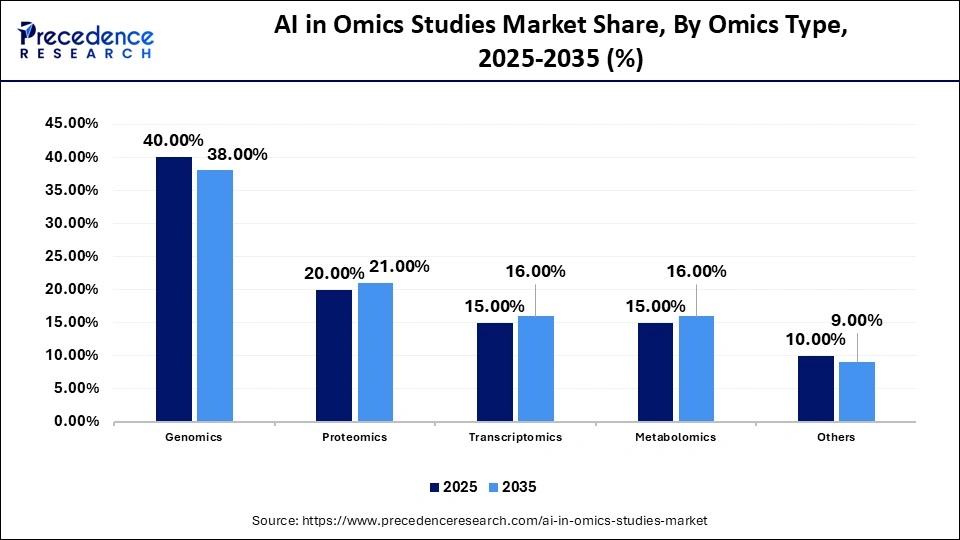
The transcriptomic segment held a market share of 15% in 2025 and is expected to grow at the fastest CAGR of 18% in the foreseeable period. This is mainly due to its critical role in understanding gene expression and its direct influence on disease mechanisms. By analyzing RNA transcripts, transcriptomics provides insights into how genes are regulated, which is essential for identifying disease biomarkers and therapeutic targets.
The metabolomics segment held a market share of 15% in 2025 and is expected to grow at a CAGR of 17.8% during the projected period. The segment is growing due to its ability to integrate high-dimensional, complex data with accuracy and real-time clinical diagnostics. It further offers precision medicine and biomarker discovery, which is vital for rare disease treatments.
Component Insights
AI in Omics Studies Market Share, By Component, 2025-2035 (%)
| Component | 2025 | 2035 | CAGR (%) |
| Software | 55.00% | 57.00% | 18.50% |
| Services | 30.00% | 28.00% | 16.50% |
| Hardware | 15.00% | 15.00% | 14.50% |
Software Held a 55% Share of the AI in Omics Studies Market in 2025
In 2025, the software segment dominated the market while holding the largest share of 55% in 2025 due to its ability to offer essential, scalable, and high-throughput tools, which are crucial in analyzing massive and complex genomics and multiomics data. The rapid data interpretation, automated variant calling, and actionable AI-based strategies are some of the crucial offerings of a software solution. These solutions further reduce operational costs and improve accuracy by outperforming manual analysis.
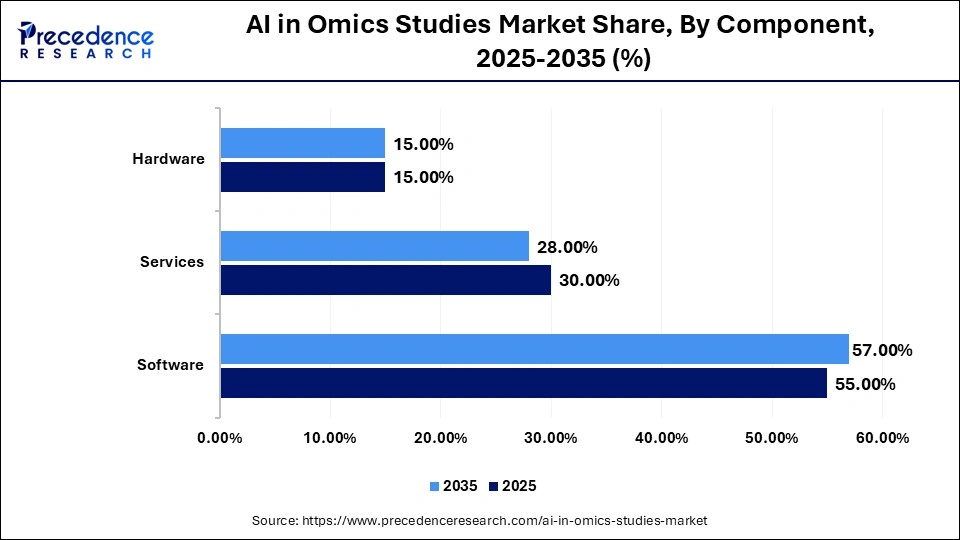
The services segment was the second-largest shareholder in the market, holding a 30% share in 2025, and is expected to grow at a significant CAGR of 16.5% between 2026 and 2035. This is mainly due to the complexity of AI handling that needs expert solutions. The lack of internal AI expertise and growing demand for customized and regulatory-compliant solutions make third-party outsourcing essential. This significantly boosts the demand for professional services.
The hardware segment held a market share of 15% in 2025 and is expected to grow at a CAGR of 14.5% in the upcoming period. The segment is expanding primarily due to the crucial role of hardware solutions in handling vast numbers of datasets in genomics and multiomics. Traditional analytical methods fall short due to vast and complex data generation, necessitating massive parallel processing power hardware. Hardware supports high-performance computing and data storage needs.
Application Insights
AI in Omics Studies Market Share, By Application, 2025-2035 (%)
| Application | 2025 | 2035 | CAGR (%) |
| Drug Discovery | 35.00% | 33.00% | 17.00% |
| Precision Medicine | 25.00% | 27.00% | 18.50% |
| Biomarker Discovery | 20.00% | 21.00% | 17.80% |
| Clinical Diagnostics | 15.00% | 16.00% | 17.00% |
| Others | 5.00% | 3.00% | 14.00% |
The Drug Discovery Segment Led the Market With a 35% Share in 2025
The drug discovery segment dominated the AI in omics studies market with a share of 35% in 2025 due to the global burden of chronic and rare diseases that need proper vaccination. AI leverages huge multimedia and chemical datasets to accelerate target identification, validation, and gain approval as early as possible for better treatment outcomes. AI is transforming drug discovery by accelerating target identification, reducing timelines, and improving success rates. AI allows rapid virtual screenings of vast chemical libraries that offer faster drug candidate identification, making drug discovery easier than traditional ways that took nearly 3 to 6 years.
The precision medicine segment was the second-largest shareholder, holding a 25% share of the market in 2025, and is expected to grow at the fastest CAGR of 18.5% between 2026 and 2035. This is mainly due to the growing demand for more effective and targeted therapies as a result of increasing cancer prevalence. With advancements in omics technologies and AI, healthcare providers are now able to tailor therapies to specific patient profiles, improving treatment efficacy and minimizing adverse effects.
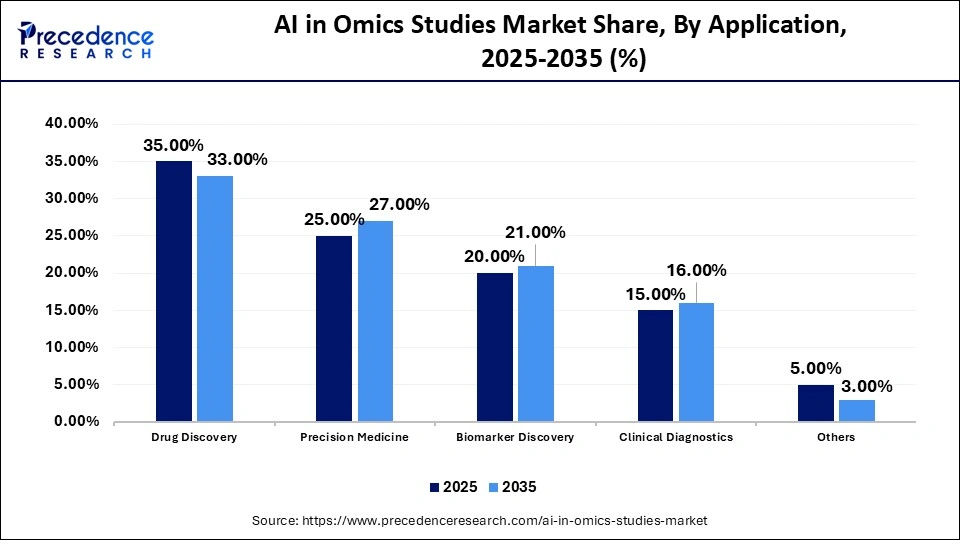
The biomarker discovery segment held a market share of 20% in 2025 and is expected to grow at a CAGR of 17.8% during the foreseeable period. The segment is growing due to its crucial role in identifying early indicators of diseases, enabling earlier diagnosis, and improving treatment outcomes. AI-driven biomarker identification is critical for early disease detection and targeted therapies. Advances in omics technologies and AI are allowing researchers to analyze vast amounts of data to discover novel biomarkers that can predict disease progression, treatment response, and patient prognosis.
The clinical diagnostics segment held a market share of 15% in 2025 and is expected to grow at a CAGR of 17.0% during the forecast period. The segment is growing due to the increasing demand for precise disease identification, especially in oncology and rare diseases, to treat them better and achieve successful outcomes. The healthcare industry is shifting from a one-size-fits-all approach to personalized and preventive approaches, boosting the adoption of AI in clinical diagnostics.
End Use Insights
Pharmaceutical & Biotechnology Companies Dominated the Market With a 50% Share in 2025
The pharmaceutical & biotechnology companies segment dominated the AI in omics studies market with the largest share of 50% in 2025. This is mainly due to their urgent need to reduce timelines and excessive spending in research & development and AI-driven drug discovery. These companies heavily used AI to process huge multiomics datasets and accelerate drug discovery. They also leverage AI to identify novel targets, design molecules, and personalize medicine to reduce clinical trial timelines.
AI in Omics Studies Market Share, By End-Use, 2025-2035 (%)
| End-Use | 2025 | 2035 | CAGR (%) |
| Pharmaceutical & Biotechnology Companies | 50.00% | 48.00% | 17.00% |
| Research Institutes | 25.00% | 26.00% | 17.50% |
| Hospitals & Clinics | 15.00% | 17.00% | 18.00% |
| Others | 10.00% | 9.00% | 15.00% |
The research institutes segment was the second-largest shareholder in 2025, holding a 25% share, and is expected to grow at a significant CAGR of 17.5% between 2026 and 2035. The segment is growing as these institutes play a key role in conducting cutting-edge studies and generating valuable data, particularly in genomics, transcriptomics, and other omics fields. As AI and machine learning technologies continue to evolve, research institutions are adopting these tools to analyze large datasets more efficiently and uncover novel biological insights.
The hospitals & clinics segment held a 15% market share in 2025 and is expected to grow at the highest CAGR of 18% during the forecast years. This is because they generate huge amounts of patient data and are largely adopting AI for rapid diagnostics and personalized medicines. As the demand for precision medicine rises, hospitals and clinics are adopting these advanced technologies to offer targeted therapies, improve patient outcomes, and reduce healthcare costs.
Regional Insights
North America AI in Omics Studies Market Size and Growth 2026 to 2035
The North America AI in omics studies market size is estimated at USD 525.00 million in 2025 and is projected to reach approximately USD 2,596.55 million by 2035, with a 17.33% CAGR from 2026 to 2035.
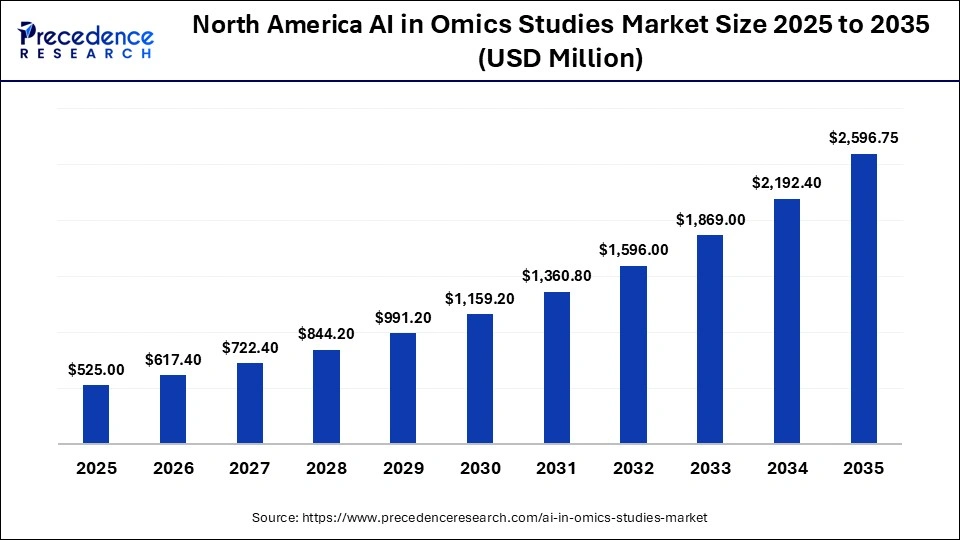
North America Held the Highest Market Share of 42% in 2025
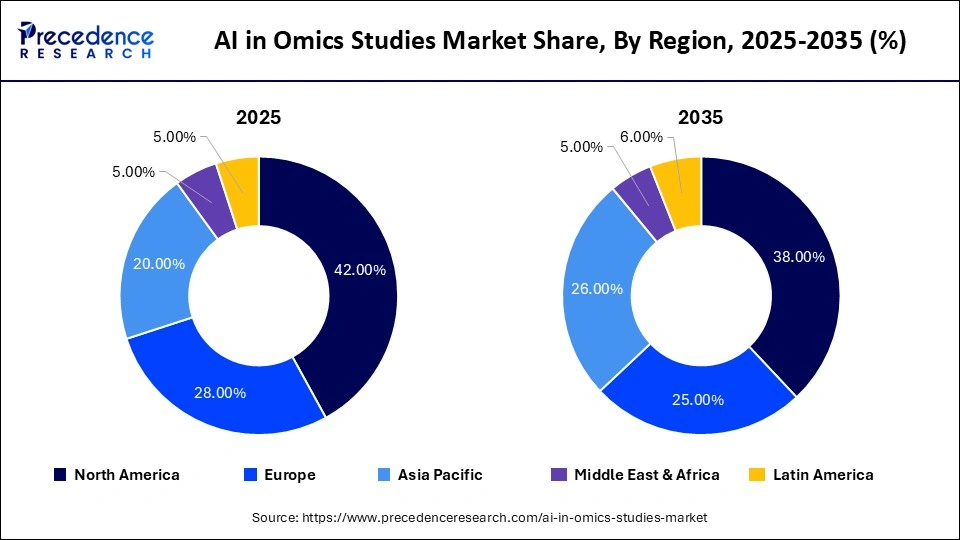
North America dominated the AI in omics studies market with the largest share of 42% in 2025 due to the convergence of high R&D funding, a robust biotech ecosystem, and rapid adoption of precision medicine. Government-supported programs like ‘All of Us' by NIH institutes have supported the region's dominance.
The region also benefits from thriving biotech and pharmaceutical sectors, which are actively leveraging AI technologies for drug discovery and development. Additionally, a highly supportive regulatory environment for clinical genomic research, particularly with AI integration, accelerates innovation and ensures safe and effective applications in healthcare. The increasing focus on personalized and precision medicines, especially for the treatment of rare diseases, is further propelling market expansion, as these advancements enable more targeted therapies and improve patient outcomes.
U.S. AI in Omics Studies Market Size and Growth 2026 to 2035
The U.S. AI in omics studies market size is calculated at USD 393.75 million in 2025 and is expected to reach nearly USD 1,960.55 million in 2035, accelerating at a strong CAGR of 17.41% between 2026 and 2035.
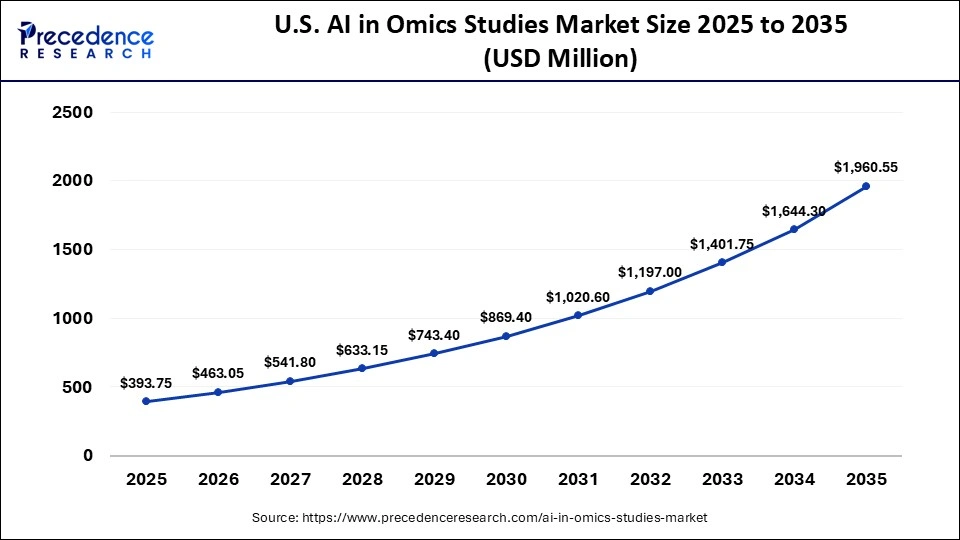
U.S. AI in Omics Studies Market Analysis
The U.S. is the major contributor to the North American market, driven by a combination of significant research and development funding in genomics with AI integration, a robust biotech and pharmaceutical ecosystem, and a growing demand for personalized medicine. The active involvement of tech giants like Google and NVIDIA, in collaboration with government initiatives, further accelerates the country's leadership. This dynamic ecosystem fosters innovation and positions the U.S. at the forefront of AI-driven advancements in healthcare.
Europe: The Second-Largest Market
Europe was the second largest-shareholder in 2025 and is expected to grow at 16.8% CAGR in the coming years. The region is at the forefront of adopting AI and ML technologies, particularly in genomics and multiomics studies. Its strong pharmaceutical sector, a robust regulatory framework, and a deep talent pool supported by leading research institutes also drive the market.
Germany AI in Omics Studies Market Analysis
Germany leads the market within Europe, driven by government-backed AI initiatives, a well-established biotech industry, and increasing demand for precision medicine and diagnostics. The country's robust digital infrastructure, designed to ensure high-level data privacy, supports the use of machine learning in analyzing complex data, such as spatial omics. Germany also prioritizes "Trusted AI" with human-centric policies, establishing a secure framework for handling sensitive genomic data, which enhances the country's position as a leader in AI-driven healthcare innovation.
How is the Opportunistic Rise of Asia Pacific in the AI in Omics Studies Market?
Asia Pacific is expected to grow at the highest CAGR of 19.5% during the forecast period due to the massive data outputs, robust infrastructure development, and strong government support aimed at advancing the genomics sector to facilitate precision medicine. As the most populous region in the world, Asia Pacific offers a rich and diverse healthcare dataset, which is essential for genomic sequencing and patient management. This diverse data serves as critical input for training AI models and developing high-throughput imaging platforms, further accelerating innovation and adoption of AI technologies in healthcare across the region.
China AI in Omics Studies Market Analysis
The market in China is growing due to the abundant datasets, highly skilled professionals, government-led strategies to integrate AI into omics studies, and thriving biotech industry. The Chinese government is heavily prioritizing AI in the biotech sector as a strategic asset with state-backed funds. China largely focuses on rapid AI research and its real-time applications, with firms looking to build areas like genomics or much with the help of AI technology.
AI in Omics Studies Market Companies
- Illumina, Inc.
- Thermo Fisher Scientific Inc.
- QIAGEN N.V.
- Agilent Technologies, Inc.
- NVIDIA Corporation
- IBM Corporation
- Microsoft Corporation
- Google (Alphabet Inc.)
- Benevolent AI
- Insilico Medicine
- Deep Genomics
- SOPHiA GENETICS
- DNAnexus, Inc.
- Tempus Labs, Inc.
- Genedata AG
Recent Developments
- In January 2026, FAU's College of Engineering and Computer Science introduced the Center for Omics Technologies and Data Engineering. This research hub is particularly established to develop scalable and interpretable computational methods to extract insights from biological and environmental data. It is vital for biological and biomedical discovery.(Source: https://www.fau.edu)
- In September 2025, Mayo Clinic announced that it is moving from diagnosis to personalized treatment for children by integrating rapid whole-genome sequencing, AI, and functional omics with the new BabyFORce program launch.(Source: https://www.mayoclinic.org)
Segments Covered in the Report
By Omics Type
- Genomics
- Proteomics
- Transcriptomics
- Metabolomics
Others
By Component
- Software
- Services
- Hardware
By Application
- Drug Discovery
- Precision Medicine
- Biomarker Discovery
- Clinical Diagnostics
- Others
By End-Use
- Pharmaceutical & Biotechnology Companies
- Research Institutes
- Hospitals & Clinics
- Others
By Region
- North America
- Latin America
- Europe
- Asia-pacific
- Middle and East Africa
For inquiries regarding discounts, bulk purchases, or customization requests, please contact us at sales@precedenceresearch.com
Frequently Asked Questions
Tags





Ask For Sample
No cookie-cutter, only authentic analysis – take the 1st step to become a Precedence Research client
 Get a Sample
.webp)



 sales@precedenceresearch.com
 Schedule a Meeting
