



Alzheimers Disease Diagnostics Market Size, Companies, Share, Patient Volume, Treatment Adoption Rates, Pricing Analysis, Regulatory Landscape, Competitive Positioning, and Demand Forecast
Alzheimers Disease Diagnostics Market (By Diagnostic Type: Brain Imaging, Biomarker Testing, Genetic Testing, Cognitive Assessment Tests; By Technology: Imaging Technologies, Molecular Diagnostics, Immunoassays, AI & Digital Diagnostics; By End-use: Hospitals, Diagnostic Laboratories, Specialty Neurology Clinics, Academic & Research Institutes; By Application: Early-stage Diagnosis, Mild Cognitive Impairment Detection, Disease Monitoring, Clinical Research & Drug Development; By Age Group: Below 65 Years, 65–80 Years, Above 80 Years) - Global Industry Analysis, Size, Trends, Leading Companies, Regional Outlook, and Forecast 2026 to 2035
Source: https://www.precedenceresearch.com/alzheimers-disease-diagnostics-market
 Get a Sample
 Table Of Content


What is the Alzheimer's Disease Diagnostics Market Size in 2026?
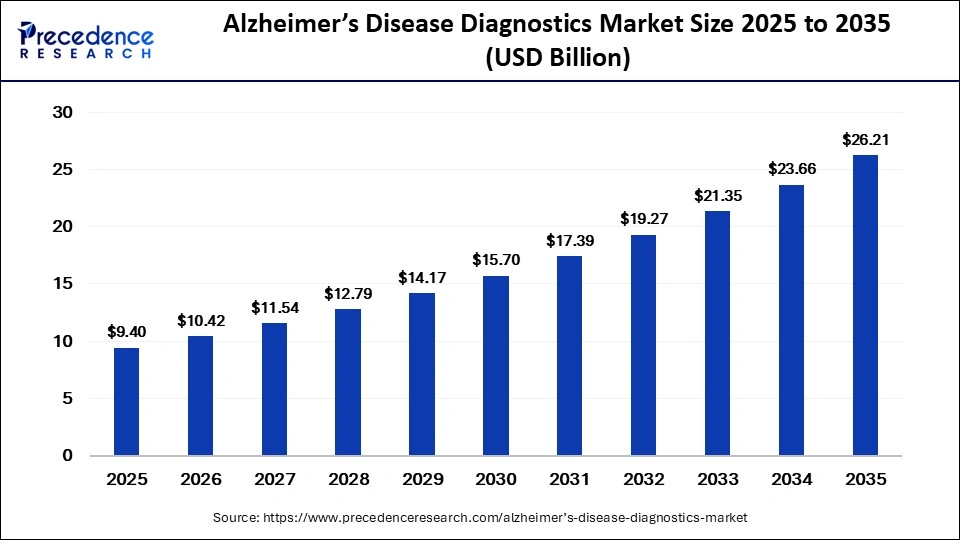
The global alzheimers disease diagnostics market size accounted for USD 9.40 billion in 2025 and is predicted to increase from USD 10.42 billion in 2026 to approximately USD 26.21 billion by 2035, expanding at a CAGR of 10.80% from 2026 to 2035. The market is driven by the growing demand for early Alzheimer's detection and minimally invasive, biomarker-based diagnostics.
Key Takeaways
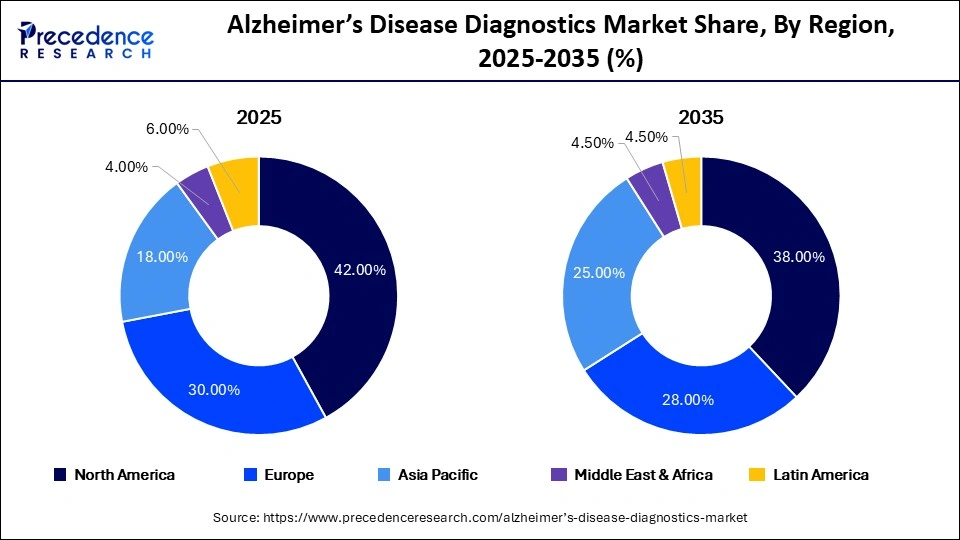
- North America dominated the global Alzheimer's disease diagnostics market, accounting for a 42% share in 2025.
- Asia-Pacific is expected to grow at the fastest CAGR of 14% during the forecast period.
- By diagnostic type, the brain imaging segment held a dominant position in the market, accounting for 38% of the market share in 2025.
- By diagnostic type, the biomarker testing segment is expected to grow at the fastest CAGR 16% between 2026 and 2035.
- By technology, the imaging technologies segment accounted for a considerable revenue share of 45% in the market in 2025.
- By technology, the AI and digital diagnostics segment is expected to grow at the highest CAGR 18% between 2026 and 2035.
- By end-use, the hospitals segment led the global market, accounting for 45% of the market in 2025.
- By end-use, the diagnostic laboratories segment is expected to grow at the fastest CAGR 13% between 2026 and 2035.
- By application, the early-stage diagnosis segment accounted for a considerable revenue share of 40% in the market in 2025.
- By application, the mild cognitive impairment detection segment is expected to grow at a 10% CAGR between 2026 and 2035.
- By age group, the 65-80 years segment accounted for a considerable revenue share of 48% in the market in 2025.
- By age group, the above 80 years segment is expected to grow at the fastest CAGR of 12.5% between 2026 and 2035.
Innovative Diagnostic Advancements Accelerating the Alzheimer's Disease Diagnostics Market
Incidence of Alzheimer's disease is increasing rapidly, and the demand for early and accurate diagnosis of Alzheimer's disease is on the rise, which is fueling the rapid growth of the market. Continuous improvements in blood-based biomarker assays, neuroimaging, CSF testing, and AI-driven diagnostic platforms are driving rapid transformations in the market. The rising demand for innovative diagnostic solutions, the important being the rising awareness of the importance of early intervention, and the global ageing population. Pharmaceutical and diagnostic companies are making more collaborative efforts, and government initiatives are promoting dementia research, also contributing to the market growth.
Key AI Integration in the Alzheimer's Disease Diagnostics Market
Artificial intelligence is transforming the market by leading to quicker, more accurate, and efficient disease identification and assessment. Recent developments in AI algorithms are now helping to identify early-to-subtle changes in the brain using MRI and PET scans, which are associated with Alzheimer's. Using machine learning models to look through a large amount of patient data, like imaging results, biomarker tests, cognitive assessments, and genetic information, can help doctors make more accurate diagnoses.
Alzheimer's Disease Diagnostics Market Trends
- In the field of neuroimaging and cognitive assessment tools, AI and machine learning are being integrated and are becoming increasingly adopted to improve accuracy, automate analysis, and facilitate earlier detection of the progression of Alzheimer's disease in all clinical and research settings worldwide.
- Pharmaceutical and diagnostic companies are seeking to expand collaborations to develop companion diagnostics to direct targeted therapies in Alzheimer's; to develop individualised therapy strategies and improve patient selection for the promising and emerging disease-modifying drugs under clinical trials.
- The elderly population has been increasing worldwide, and there is a greater focus on screening and care provision for cognitive impairments at the first stage of cognitive decline, as evidenced by the increased investments in screening programs, memory clinics, and readily available technologies for measuring cognitive impairments.
- Expanding reimbursement support, enhanced market access due to greater awareness of dementia clinical services globally, and increasing regulatory approvals and commercialisation of innovative diagnostic assays, across Europe and North America, are each furthering market growth and access to Alzheimer's diagnostics.
Market Scope
| Report Coverage | Details |
| Market Size in 2025 | USD 9.40 Billion |
| Market Size in 2026 | USD 10.42 Billion |
| Market Size by 2035 | USD 26.21 Billion |
| Market Growth Rate from 2026 to 2035 | CAGR of 10.80% |
| Dominating Region | North America |
| Fastest Growing Region | Asia Pacific |
| Base Year | 2025 |
| Forecast Period | 2026 to 2035 |
| Segments Covered | Diagnostic Type, Technology, End-use, Application, Age Group, and Region |
| Regions Covered | North America, Europe, Asia-Pacific, Latin America, and Middle East & Africa |
Market Dynamics
Drivers
Growing Awareness and Education
The growing cognisance of Alzheimer's disease and other cognitive disorders is a significant contributor to the market. Multiple government, health, and advocacy organisations conduct educational campaigns to promote awareness of symptoms and risk factors for Alzheimer's disease and the importance of early diagnosis. Additionally, there is also a significant improvement in the training of healthcare professionals to enhance the accuracy of diagnosis and management in the context of biomarker testing, neuroimaging technologies, and cognitive assessment tools.
Restraints
High Cost and Limited Accessibility of Advanced Diagnostics
High cost and low accessibility of advanced diagnostic procedures are one of the major restraints in the market due to a lack of technological advancements. Some diagnostic technologies are complex, have a high demand for healthcare infrastructure and trained staff, and are therefore not used in urban and rural areas in developing countries. Many health systems have been restricted from reimbursing for some diagnostic tests that are associated with Alzheimer's for decades, which has been an obstacle to providing early diagnosis and monitoring for Alzheimer's to patients.
Opportunity
Expansion of Blood-Based Biomarker Testing
Increasingly being developed and commercialised, blood-based biomarker assays are seriously entering the market. One advantage of these tests in the blood is that they could revolutionise early screening, which is currently very limited in primary and community care. Moreover, advanced assays are getting regulatory clearance and advanced technology development, thereby enhancing the commercialisation opportunities of advanced assays across the globe.
Segmental Insights
Diagnostic Type Insights
Alzheimer's Disease Diagnostics Market Share, By Diagnostic Type, 2025-2035 (%)
| Diagnostic Type | 2025 | 2035 | CAGR (%) |
| Brain Imaging | 38.00% | 34.00% | 9.50% |
| Biomarker Testing | 30.00% | 38.00% | 16.00% |
| Genetic Testing | 12.00% | 10.00% | 7.00% |
| Cognitive Assessment Tests | 20.00% | 18.00% | 6.50% |
The Brain Imaging Segment Held the Largest Market Share of 38% in 2025
The brain imaging segment held a dominant position in the Alzheimer's disease diagnostics market with a share of 38% in 2025, with a high degree of accuracy in Alzheimer's disease. Imaging methods are becoming increasingly employed to identify early structural and amyloid markers in the brain to help diagnose patients. The rising investments in advanced imaging equipment and the growing use of amyloid imaging in the clinical stage.
The biomarker testing segment held a 30% of the market share in 2025 and is expected to grow at the fastest CAGR of 16% during the projection period, stimulated by advancements in the blood-based biomarker tests. Targeting precision medicine, biomarker discovery, and commercialization are major areas of biopharmaceutical investments by pharmaceutical and diagnostic companies. Additionally, advancements in laboratory automation, improved regulatory approvals, and the expansion of development and availability of blood-based diagnostic solutions.
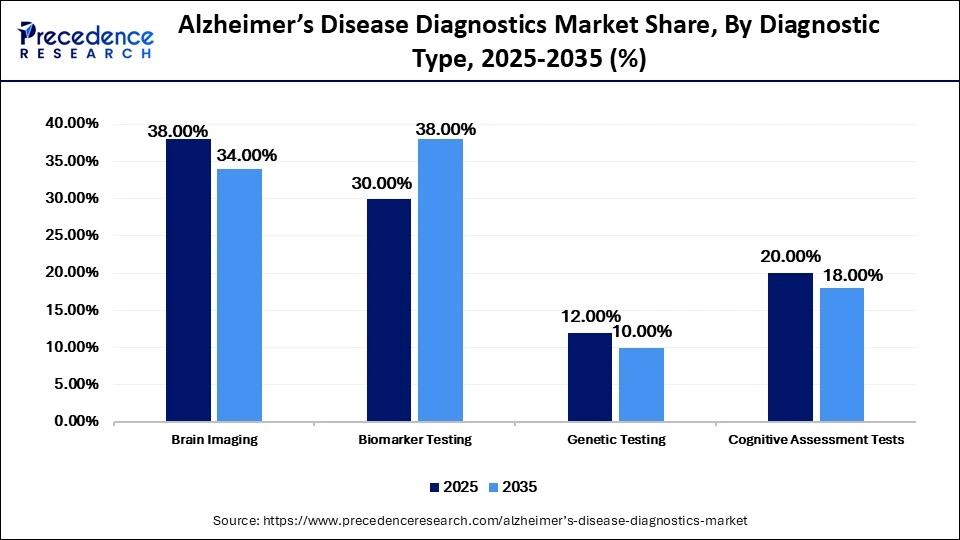
The genetic testing segment held a 12% of the market in 2025 and is expected to grow at a notable CAGR of 7% during the projection period. Development of precision medicine programs and personalized medicine strategies has seen genetic screening technologies being utilised and promoted favorably for risk identification of cognitive decline. Moreover, increasingly new technologies for sequencing and the studies on the genetics of neurodegenerative diseases are improving the accuracy of the test and its availability.
The cognitive assessment tests segment held a 20% of the market in 2025 and is expected to grow at a notable CAGR of 6.5% during the projection period. Low-cost cognitive assessment tools have been delved into by healthcare providers and are being used increasingly in primary care settings to detect markers of cognitive decline and memory deficit. The global geriatric population continues to grow, and there is growing concern about the different types of dementia-related disorders, giving further impetus to the need for easy cognitive assessment.
Technology Insights
Alzheimer's Disease Diagnostics Market Share, By Technology, 2025-2035 (%)
| Technology | 2025 | 2035 | CAGR (%) |
| Imaging Technologies | 45.00% | 40.00% | 9.20% |
| Molecular Diagnostics | 20.00% | 24.00% | 13.50% |
| Immunoassays | 25.00% | 28.00% | 12.80% |
| AI & Digital Diagnostics | 10.00% | 8.00% | 18.00% |
The Imaging Technologies Segment Dominated the Market with 45% of Market Share in 2025
The imaging technologies segment held a dominant position in the Alzheimer's disease diagnostics market with a share of 45% in 2025. Improved use of sophisticated neuro-image technology in hospital and research settings is aiding early diagnosis of these conditions and increasing confidence in the diagnosis. Rapid advancements in investments in imaging infrastructure and the increasing inclination for high-resolution gadgets for evaluating neurological diseases are also contributing to the growth of the market.
The AI and digital diagnostics segment held a 10% of the market share in 2025 and is expected to grow at the fastest CAGR of 18% during the projection period, driven by the increasing uptake of AI-powered imaging analysis and predictive analytics in neurology. In healthcare institutions, automation features increase efficiency, decrease the risk of error, and accelerate the detection of the disease. The combination of using AI-based tools has enabled the medics to better decode MRI, PET, and biomarker information and detect the onset of Alzheimer's disease.
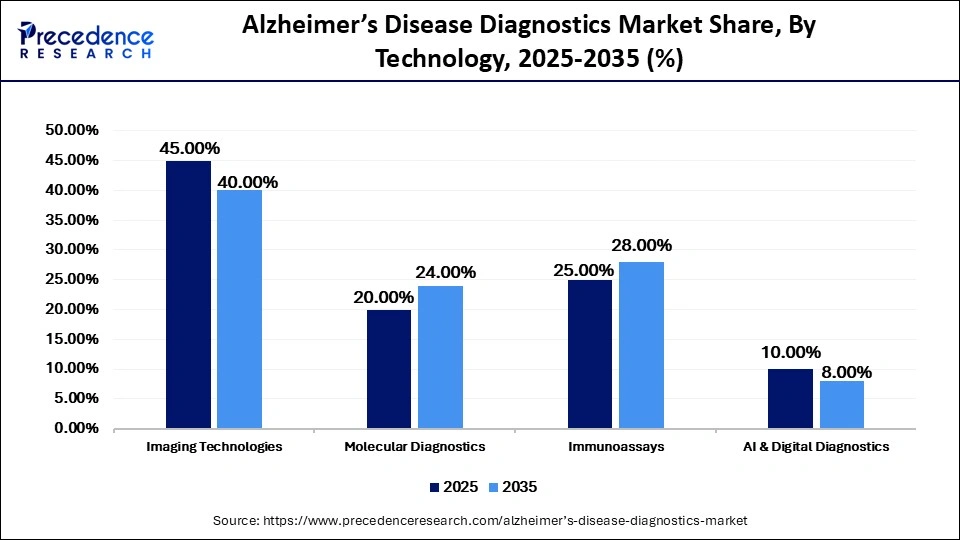
The molecular diagnostics segment held a 20% of the market in 2025 and is expected to grow at a notable CAGR of 13.5% during the projection period, with the rise in the concentration focus on precision medicine applications. Advancements in sequencing and molecular testing have been added to the arsenal of tools that are helping to improve the understanding of the pathogenesis and disease trajectory of Alzheimer's. The growth of the personalised neurology and targeted diagnosis solutions segment is expected to be positive, driven by increasing investments in the same.
The immunoassays segment held a 25% of the market share in 2025 and is expected to grow at a notable CAGR of 12.8% during the projection period, fueled by the continued rise in the demand for laboratory diagnosis of Alzheimer's and cost-effective testing by laboratory-based Alzheimer's or other biomarkers. Advancements in biomarker detection across blood and cerebrospinal fluid for Alzheimer's disease using a different type of technology, called an immunoassay. Immunoassays are becoming more automated to drive testing efficiency and scalability to diagnostic laboratories.
End-use Insights
The Hospitals Segment Held the Largest Market Share of 45% in 2025
The hospitals segment registered its dominance over the global Alzheimer's disease diagnostics market with a share of 45% in 2025, due to increased inflow of patients for neurological evaluation and advanced imaging/diagnostic technologies. The inherent nature of hospitals as coordinated systems of health care, dedicated neurology departments, and access to multi-disciplinary care teams makes them a primary focus for diagnosis of Alzheimer's disease. The demand for comprehensive Alzheimer's diagnostic services, such as imaging, biomarker testing, and cognitive assessments, is contributing to the growth of this segment.
The diagnostic laboratories segment held a 28% of the market share in 2025 and is expected to grow at the fastest CAGR of 13% during the projection period, with the rise in the use of biomarkers for Alzheimer's, and their use in blood testing. Laboratory automation is improving, and testing is becoming more efficient, which is helping to accelerate testing and make it scalable. Self-employed laboratory platforms and molecular diagnostics are being adopted to provide better support for the precision neurology use cases in healthcare systems.
Alzheimer's Disease Diagnostics Market Share, By End-use, 2025-2035 (%)
| End-use | 2025 | 2035 | CAGR (%) |
| Hospitals | 45.00% | 41.00% | 9.50% |
| Diagnostic Laboratories | 28.00% | 32.00% | 13.00% |
| Specialty Neurology Clinics | 15.00% | 16.00% | 11.00% |
| Academic & Research Institutes | 12.00% | 11.00% | 10.00% |
The speciality neurology clinics segment held a 15% of the market share in 2025 and is expected to grow at a significant CAGR of 11% during the projection period, because of the increased demand for specialized Lorenzo houses for patients suffering from dementia and the need to provide specialist neurological care. They supply personal diagnostic pathways and high-tech assessments of cognitive function and targeted treatment plans for an Alzheimer's patient. More awareness about the importance of early neurological intervention persists in encouraging patient attendance in a specialist center.
The academic and research institutes segment held a 12% of the market share in 2025 and is expected to grow at a significant CAGR of 10% during the projection period, supported by increased international investments in researching the toll-like Alzheimer's disease and increased efforts in identifying new blood and urine markers for the disease. In universities and institutes, clinical studies of targeting in disease detection, disease progression, and drug discovery are in progress. Biomedical start-ups are partnering more with pharmaceutical companies and universities for innovations in diagnosis for Alzheimer's disease.
Application Insights
The Early-stage Diagnosis Segment Held a 40% of Market Share in 2025
The early-stage diagnosis segment registered its dominance over the global Alzheimer's disease diagnostics market with a share of 40% in 2025 and is expected to grow at the highest CAGR of 13.5% in the coming years, because more effort is put into the recognition of Alzheimer's disease at relatively early stages of the disease. Healthcare providers are increasingly aware of the importance of including preventive neurological care and timely intervention strategies to improve outcomes for their patients and to keep them functioning cognitively. Advanced biomarker technologies and neuroimaging are aiding efforts to determine the causes of Alzheimer's earlier in the disease.
The mild cognitive impairment detection segment held a 25% of the market share in 2025 and is expected to grow at a CAGR of 10% during the projection period, with the rising cases of mild cognitive disorders in the elderly population. More patient awareness for diagnostic evaluations, as cognitive decline screening becomes more promoted with awareness about its importance, and to stimulate early interventions for neurological disease prevention. The use of neuroimage technologies, biomarker tests, and digital cognitive assessment tools is being used more by healthcare workers to detect the presence of MCI before it turns into dementia.
Alzheimer's Disease Diagnostics Market Share, By Application, 2025-2035 (%)
| Application | 2025 | 2035 | CAGR (%) |
| Early-stage Diagnosis | 40.00% | 45.00% | 13.50% |
| Mild Cognitive Impairment Detection | 25.00% | 24.00% | 10.00% |
| Disease Monitoring | 20.00% | 18.00% | 8.00% |
| Clinical Research & Drug Development | 15.00% | 13.00% | 9.50% |
The disease monitoring segment held a 20% of the market share in 2025 and is expected to grow at a notable CAGR of 8% during the projection period, driven by the increasing demand for monitoring of course and reaction to the therapy of Alzheimer's disease. Generally, imaging, biomarker testing, and digital monitoring are being increasingly adopted in healthcare to evaluate longitudinal changes in patients cognition and to adapt patient management strategies optimally to each patient. Expansion of disease-modifying therapies and treatment approaches that focus on individual prescriptions is driving the need for ongoing monitoring solutions.
The clinical research and drug development segment held a 15% of the market in 2025 and is expected to grow at a significant CAGR of 9.5% during the projection period, driven by the increased involvement of clinical trials in the scope of action for drugs. Pharmaceutical firms and research institutions are bringing cutting-edge diagnostic technologies to bear during clinical studies to aid patients. The need to be more precise in the diagnosis and treatment approach is growing, and the segment is projected to further grow.
Age Group Insights
Alzheimer's Disease Diagnostics Market Share, By Age Group, 2025-2035 (%)
| Age Group | 2025 | 2035 | CAGR (%) |
| Below 65 Years | 12.00% | 10.00% | 7.50% |
| 65–80 Years | 48.00% | 46.00% | 10.20% |
| Above 80 Years | 40.00% | 44.00% | 12.50% |
The 65-80 years Segment Held a 48% of Market Share in 2025
The 65-80 years segment registered its dominance over the global market with a share of 48% in 2025, because of the high prevalence of persons with Alzheimer's disease and the increased costs of services that are given to these older adults. Medical practitioners are stressing on early diagnosis of ageing patients coupled with disease management measures to better quality of life and to minimise the burden on healthcare resources in the long run.
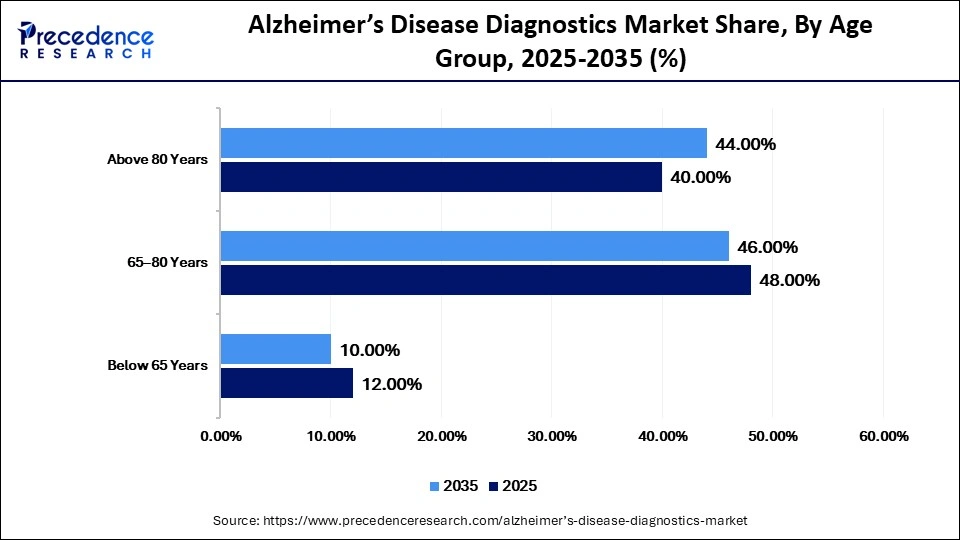
The above 80 years segment held a 40% of the market share in 2025 and is expected to grow at the fastest CAGR of 12.5% during the projection period, due to the increasing elderly population around the world, accompanied by higher chances of dementia and cognitive impairment with age. The monitoring of their diseases, their cognitions, and individual disease plans is shifting the focus of attention in healthcare more and more towards continuity. Enhanced monitoring of diseases and cognitions, and individual plans for each disease – new areas in the provision of healthcare to the elderly.
The below 65 years segment held a 12% of the market share in 2025 and is expected to grow at a notable CAGR of 7.5% during the projection period, fueled by growing awareness about early onset Alzheimer's disease, and the increasing number of genetic and cognitive screens. Qualitative neurologic screening and early risk assessment strategies focus on the genetic risk and early cognitive symptoms in individuals. The shift towards personalized and precision medicine is driving the need for next-generation diagnostics in the elderly population.
Regional Insights
North America Alzheimer's Disease Diagnostics Market Size and Growth 2026 to 2035
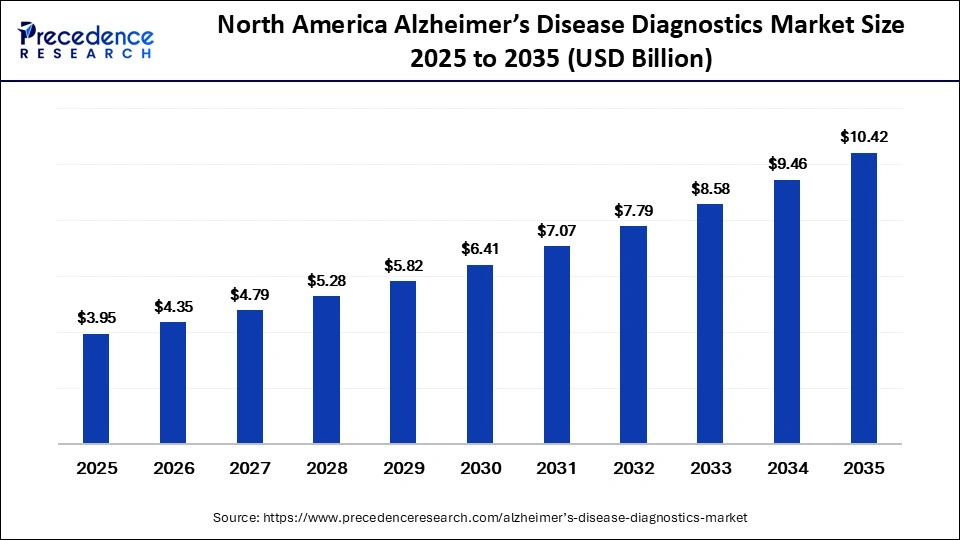
The North America Alzheimers disease diagnostics market size was exhibited at USD 3.95 billion in 2025 and is projected to be worth around USD 10.42 billion by 2035, growing at a CAGR of 10.20% from 2026 to 2035.
Which Factors Drive the Alzheimer's Disease Diagnostics Market in North America?
North America dominated the global market with a share of 42% in 2025, because cutting-edge brain imaging techniques were adopted by many health care facilities, and there are PET and MRI scanners available. This is because it spreads its expenses for healthcare, its reimbursement policies are well-established, and they adopt new diagnostic solutions quickly into its clinical practice. With the ageing population, it is even more essential to develop diagnostic tests as soon as possible and as accurately as possible, and as a result, the frequency of Alzheimer's disease is also rising.
U.S. Alzheimer's Disease Diagnostics Market Size and Growth 2026 to 2035
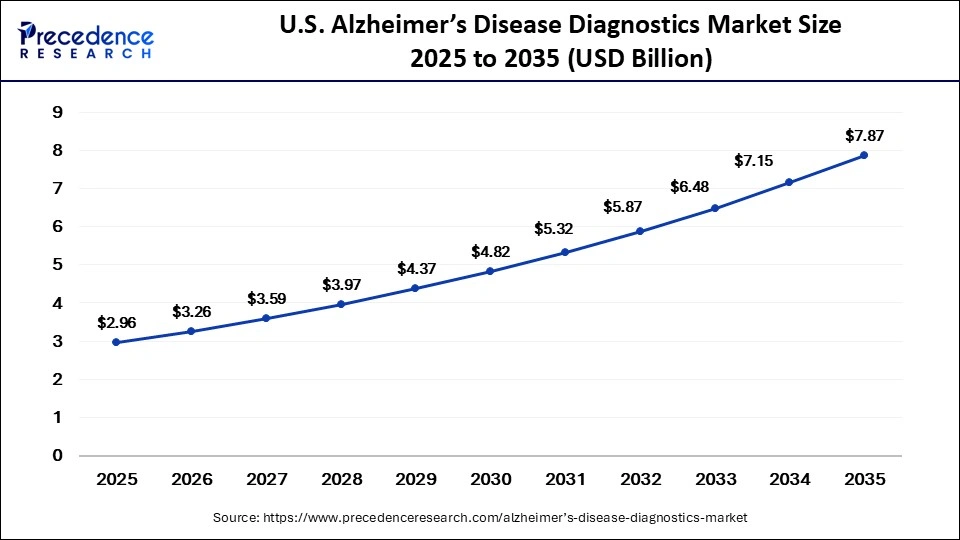
The U.S. Alzheimers disease diagnostics market size was evaluated at USD 2.96 billion in 2025 and is projected to reach around USD 7.87 billion by 2035, growing at a CAGR of 10.28% from 2026 to 2035.
U.S. Market Trends
The U.S. represents a large market in North America, with its well-established healthcare ecosystem and prolific research activities and innovations focused on the nervous system. The widespread use of PET imaging systems, MRI systems, and newly developed blood-based biomarker testing is contributing to a better detection rate of disease. Furthermore, there are efforts to invest in the diagnosis and therapeutic studies of Alzheimer's at the government and private levels.
How is Asia-Pacific Growing in the Alzheimer's Disease Diagnostics Market?
Asia-Pacific held a 18% of the market in 2025 and is expected to grow at the fastest CAGR of 14% during the projection period, driven by the rising spending on healthcare treatment in diagnostics as well as the introduction of advanced imaging technology. There is greater awareness of cognitive abnormalities and early detection, as there is earlier referral to medical services. Research and development in this field is increased further by government programmes on the elderly and neurodegenerative diseases.
China Market Trends
The Chinese market is anticipated to grow significantly, due to the presence of a huge number of people in the Asia-Pacific region ageing and the rapid growth of the region's healthcare infrastructure. Increasingly, patients with Alzheimer's disease and other mental impairments are being diagnosed at an early age, while the demand for early and accurate diagnostics. Government campaigns in awareness and enhancements of neurological healthcare services are helping to spur the development of the market.
Will Europe Experience Notable Growth in the Alzheimer's Disease Diagnostics Market?
Europe held a 30% of the market share in 2025 and is expected to grow at a notable CAGR of 9.8% during the projection period, with the rise in investments in dementia care facilities and the widespread use of advanced neurodiagnostic technologies. The government is promoting earlier diagnosis and prevention of Alzheimer's disease, and this is fueling health care systems to implement screening initiatives. High-class research facilities exist in the area, and main research groups are conducting biomarker discovery research and clinical trials research on neurodegenerative diseases.
UK Market Trends
The UK market is growing it has a well-developed healthcare infrastructure and an active neurological research environment in the aforementioned area. Advanced diagnostic techniques, such as PET imaging, MRI scans, and new blood-based biomarker tests, are gaining traction across the country to aid in early detection of Alzheimer's. The UK has a vibrant clinical research system and a considerable amount of research on the progression of Alzheimer's disease, biomarkers, and therapeutics.
Alzheimer's Disease Diagnostics Market Value Chain Analysis
R&D
Research and development for Alzheimer's disease diagnostics is focused on finding biomarkers to help create more biomarkers improving blood-based tests and using artificial intelligence to make early detection methods more accurate and enable less invasive diagnostic innovations.
Key Players: Hoffmann-La Roche Ltd., Siemens Healthineers, GE HealthCare, Fujirebio, Abbott Laboratories
Clinical Trials and Regulatory Approvals
Clinical trials are done to check how accurate and useful Alzheimers tests are, while regulatory approvals ensure the tests are safe and effective.
Key Players: Siemens Healthineers, Labcorp, Canon Medical Systems, Philips Healthcare
Patient Support and Services
Patient support services include counselling, help with getting tests, and cognitive programs. These services are offered to help patients during the diagnostic process and to support them in following their treatment better.
Key Players: Quest Diagnostics, Labcorp, Fujirebio, Philips Healthcare
Alzheimer's Disease Diagnostics Market Companies
- F. Hoffmann-La Roche Ltd.
- Siemens Healthineers
- GE HealthCare
- Fujirebio
- Quest Diagnostics
- Labcorp
- Canon Medical Systems
- Philips Healthcare
- Bio-Rad Laboratories
- Quanterix
- Abbott Laboratories
- Sysmex Corporation
- PerkinElmer
- Biogen Inc.
- Eisai Co., Ltd.
Recent Developments
- In May 2026, Roche announced that it had been granted a CE Mark for its Elecsys pTau217 blood test developed in collaboration with Eli Lilly and Company for the detection of amyloid pathology in Alzheimer's disease. It is now consistently used in both primary and secondary care and the test aims to rule either in or out cognitive decline which is associated with Alzheimer's disease.(Source: https://www.roche.com)
- In March 2026, MTA announced it had upped the ante on the third round of its $150m Diagnostics Accelerator program, with a new $50m investment. It focuses mainly on the development of new and improved biomarkers to catalyse efforts to develop drugs for Alzheimer's disease and serve as the foundation of precision medicine.(Source: https://www.alzdiscovery.org)
- In August 2025, C2N Diagnostics expanded its blood test portfolio with age 50+ patients globally as an addition to its early detection blood tests for Alzheimer's disease (PrecivityAD). The test can be used to look for amyloid plaques in the brain, and can help make clinical decisions regarding the diagnosis of early-onset Alzheimer's.(Source: https://c2n.com)
Segments Covered in the Report
By Diagnostic Type
- Brain Imaging
- PET Scan
- MRI
- CT Scan
- Biomarker Testing
- Cerebrospinal Fluid (CSF) Testing
- Blood-based Biomarkers
- Genetic Testing
- APOE Testing
- Next-generation Sequencing (NGS)
- Cognitive Assessment Tests
- MMSE
- MoCA
- Neuropsychological Testing
By Technology
- Imaging Technologies
- PET
- MRI
- CT
- Molecular Diagnostics
- PCR-based Diagnostics
- Sequencing Technologies
- Immunoassays
- ELISA
- Chemiluminescence Immunoassays
- AI & Digital Diagnostics
- AI-assisted Imaging Analysis
- Predictive Analytics Platforms
By End-use
- Hospitals
- Diagnostic Laboratories
- Specialty Neurology Clinics
- Academic & Research Institutes
By Application
- Early-stage Diagnosis
- Mild Cognitive Impairment Detection
- Disease Monitoring
- Clinical Research & Drug Development
By Age Group
- Below 65 Years
- 65-80 Years
- Above 80 Years
By Region
- North America
- Latin America
- Europe
- Asia-pacific
- Middle and East Africa
For inquiries regarding discounts, bulk purchases, or customization requests, please contact us at sales@precedenceresearch.com
Frequently Asked Questions





Ask For Sample
No cookie-cutter, only authentic analysis – take the 1st step to become a Precedence Research client
 Get a Sample




 sales@precedenceresearch.com
 Schedule a Meeting
