



Asset Tracking Market Size, Share and Trends 2026 to 2035
Asset Tracking Market (By Component: Hardware, Software, Services; By Technology: RFID (Radio-Frequency Identification), M2M/IoT, GPS, Barcode, Others; By Deployment: Cloud, On-premise; By End Use: Transportation & Logistics, Manufacturing, Healthcare, Retail & E-commerce, Aviation, Government, Others) - Global Industry Analysis, Size, Trends, Leading Companies, Regional Outlook, and Forecast 2026 to 2035
Source: https://www.precedenceresearch.com/asset-tracking-market
 Get a Sample
 Table Of Content


What is Asset Tracking Market Size?
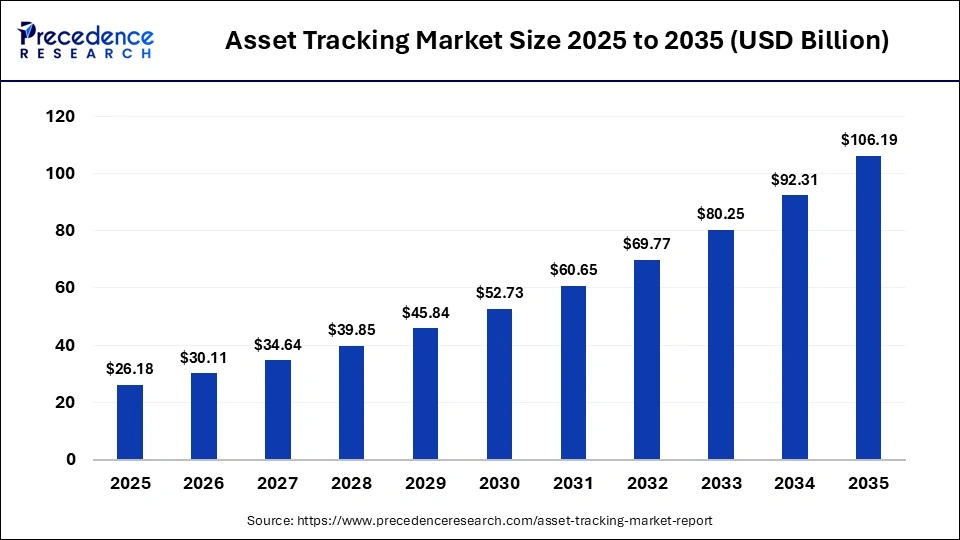
The global asset tracking market size was calculated at USD 26.18 billion in 2025 and is predicted to increase from USD 30.11 billion in 2026 to approximately USD 106.19 billion by 2035, expanding at a CAGR of 15.03% from 2026 to 2035. The market is driven by increasing demand for real-time asset visibility, tighter cost control, and the need to secure and optimize assets in complex supply chains.
Market Scope
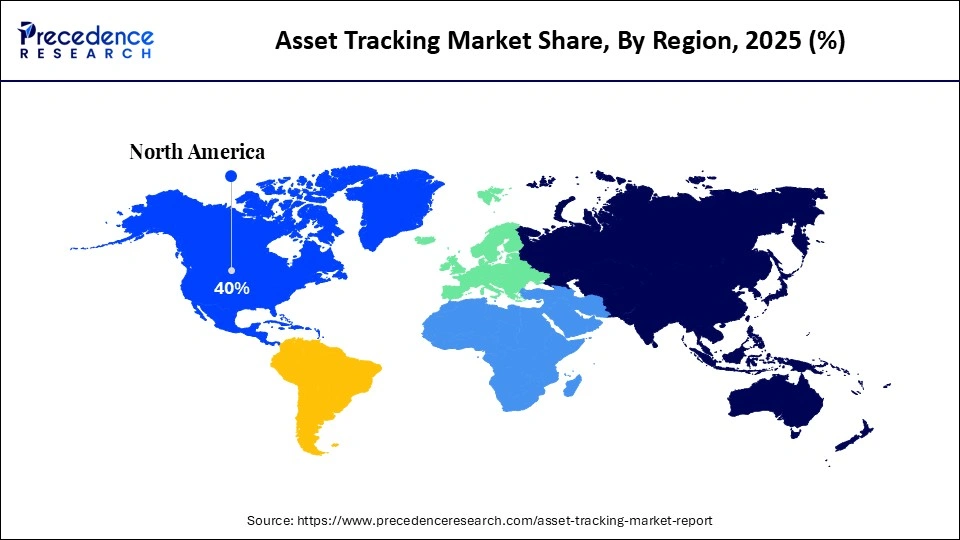
- North America led the global market with the highest share of 40% in 2025.
- Asia-Pacific is expected to grow at the fastest CAGR between 2026 and 2035.
- By component type, the software segment held the major market share of 48% in 2025.
- By component type, the hardware segment is expected to expand at the highest CAGR between 2026 and 2035.
- By technology type, the RFID segment contributed the biggest share of 32% in 2025.
- By technology type, the M2M/IoT segment is expected to grow at a significant rate between 2026 and 2035.
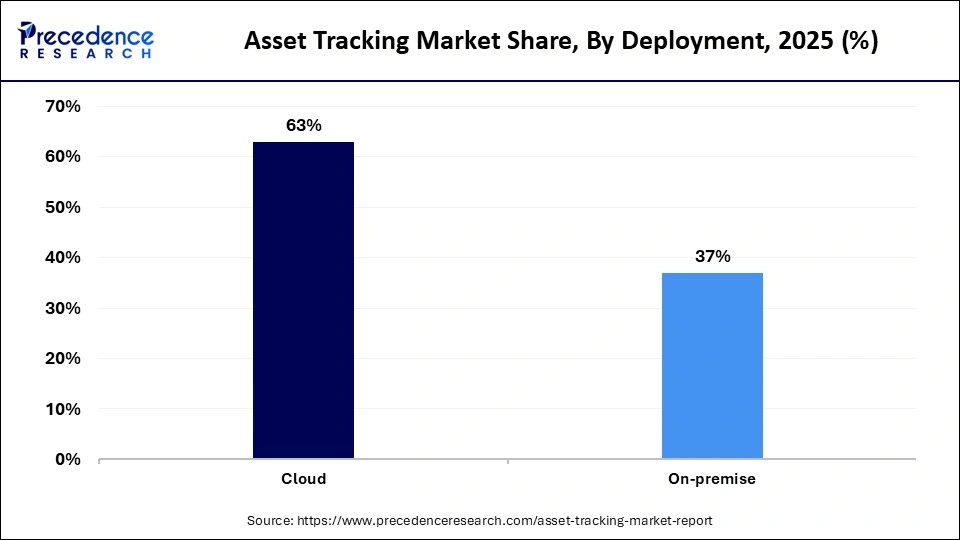
- By deployment type, the cloud segment accounted for the highest market share of 63% in 2025.
- By deployment type, the on-premise segment is expected to grow at a significant CAGR between 2026 and 2035.
- By end user type, the transportation and logistics segment led the market with the highest share of 30% in 2025.
- By end user type, the retail and e-commerce segment is expected to grow at a significant CAGR from 2026 to 2035.
What is the Asset Tracking Market?
Asset tracking involves providing solutions that help organizations locate, track, and manage their assets in real time through the use of technologies such as RFID, IoT sensors, and cloud platforms. These solutions help organizations track the location, usage, and status of assets, which facilitates the reduction of losses and the prevention of theft. The asset tracking market is of significant importance in industries such as logistics, manufacturing, healthcare, construction, and retail. Downtime and loss of assets directly affect the costs and services of the organizations.
Asset tracking is increasingly being transformed from basic location-based tracking to more intelligent and predictive systems. The latest asset management systems use AI and analytics to predict where potential bottlenecks might occur and optimize the use of assets. Cloud-based dashboards and mobile applications provide remote management. Edge computing facilitates real-time decision-making in areas with low connectivity. Energy-efficient sensors and multi-purpose platforms make asset tracking flexible and support sustainability initiatives.
How is AI contributing to the Asset Tracking Market?
Artificial Intelligence is revolutionizing the asset tracking industry by facilitating the use of tracking data for predictive maintenance, anomaly detection, and real-time decision-making. Advanced machine learning algorithms use location and sensor data to predict asset failures, optimize routes, and detect theft and misuse in real time. AI-powered analytics also enhance demand forecasting, inventory management, computer vision, and automation, which helps to track human errors. AI changes the asset tracking paradigm from simple visibility to self-optimizing asset management.
Asset Tracking Market Trends
- Collaborations & Partnerships: Companies offering asset tracking solutions are collaborating with IoT platform companies, AI analytics companies, and cloud service providers. Such collaborations facilitate real-time location services, predictive analytics, and asset condition monitoring. Such innovations help in seamless integration with enterprise systems like ERP and supply chain management systems. For instance, Zebra Technologies collaborated with Microsoft Azure to improve cloud-based RFID and asset tracking solutions.
- Government Initiatives: The adoption of asset tracking technology is being encouraged by governments to improve public infrastructure, transportation, and military logistics. Smart city projects and modernization of public healthcare systems are boosting the usage of RFID, GPS, and IoT-based tracking systems. The Indian government has adopted GPS-based asset tracking in public transportation and logistics as a part of smart city projects.
- Business Expansions: Key players in the asset tracking market are increasing their presence in the global market by enhancing their cloud infrastructure and improving software capabilities. Companies are also diversifying their product offerings to cater to various asset management technologies and verticals. For instance, Trimble has extended its asset management offerings in the Asia-Pacific region to serve the logistics and construction businesses.
Market Scope
| Report Coverage | Details |
| Market Size in 2025 | USD 26.18 Billion |
| Market Size in 2026 | USD 30.11 Billion |
| Market Size by 2035 | USD 106.19 Billion |
| Market Growth Rate from 2026 to 2035 | CAGR of 15.03% |
| Dominating Region | North America |
| Fastest Growing Region | Asia Pacific |
| Base Year | 2025 |
| Forecast Period | 2026 to 2035 |
| Segments Covered | Component Type, Technology Type, Deployment Mode, End User Type and Region |
| Regions Covered | North America, Europe, Asia-Pacific, Latin America, and Middle East & Africa |
Segment Inisghts
Component Type Insights
Why Did Software Segment Dominate the Asset Tracking Market?
The software segment led the market with the highest share in 2025. This segment led the market because it serves as the central intelligence layer that analyses and visualizes asset data in real time. Software platforms support live dashboards, automated alerts, and seamless integration with ERP, logistics, and inventory systems. Software solutions are highly scalable, easy to upgrade, and cost-effective compared to hardware upgrades. The market growth of this segment is further driven by the increasing adoption of cloud computing and AI-based analytics.
The hardware segment is expected to expand at the highest CAGR between 2026 and 2035. The segment growth can be attributed to increasing demand for sophisticated tracking devices like GPS trackers, RFID tags, BLE beacons, and IoT sensors. Companies are adopting more precise, rugged, and power-efficient solutions for real-time condition-based tracking. The adoption of hardware solutions is driven by growing logistics, smart manufacturing, and cold chain tracking applications. The market growth of this segment is further boosted by the declining cost of sensors and enhanced connectivity.
Technology Type Insights
Why Did the RFID Segment Dominate the Asset Tracking Market?
The RFID segment led the market with a major share in 2025. This segment's market growth is due to its ability to offer consistent, high-speed, and remote tracking of assets. This technology is widely used in warehouse manufacturing units, retail stores, and healthcare facilities. The RFID technology facilitates increasing inventory accuracy, reducing labor costs, and minimizing the chances of errors in tracking. This technology helps organizations precisely manage a diverse array of assets in large quantities.
The M2M/IoT segment is expected to grow at a significant rate between 2026 and 2035. The market growth of this segment can be attributed to the increasing adoption of fully connected and automated asset tracking systems. M2M communication allows assets to share location, status, and condition information in real time without the need for human intervention. This technology helps to improve the accuracy of tracking, minimizing delays and facilitating faster decision-making. The market growth of this segment is further driven by the increasing adoption of IoT networks.
Deployment Type Insights
Why Did the Cloud Segment Dominate the Asset Tracking Market?
The cloud segment led the market with the largest share in 2025. The market growth of this segment is due to its ability to provide scalable, flexible, and cost-effective asset management solutions. Cloud platforms provide real-time access to data, monitoring, and integration with ERP and supply chain systems. Cloud platforms facilitate rapid deployment across multiple locations and eliminate the need for large-scale information technology infrastructure.
The on-premise segment is expected to grow at a significant CAGR between 2026 and 2035. The market growth of this segment is due to the rising emphasis by companies on data security and control over asset management systems. On-premise solutions enable organizations to handle their sensitive asset information in-house. This segment has been widely adopted in defense, manufacturing, and healthcare sectors. The market growth of this segment is further driven by rising concerns about data privacy and network reliability.
End User Type Insights
Why Did the Transportation and Logistics Segment Dominate the Asset Tracking Market?
The transportation and logistics segment led the market with the highest share in 2025. The market growth of this segment can be attributed to its significant dependence on real-time visibility of assets. Asset tracking is crucial in this segment due to the need for monitoring, route optimization, and timely delivery of consignments. The market growth of this segment is further driven by the adoption of sensors, GPS, and IoT, which facilitate the optimization of operational costs and increase customer satisfaction.
The retail and e-commerce segment is expected to grow at a significant CAGR from 2026 to 2035. The market growth of this segment is due to the rise in online shopping and the increasing need for fast and reliable delivery services. Asset tracking enables retailers to track their inventory in real time, minimize losses, and manage complicated supply chains. The usage of GPS, RFID, and IoT technology facilitates tracking of warehouse inventory
Regional Insights
How Big is the North America Asset Tracking Market Size?
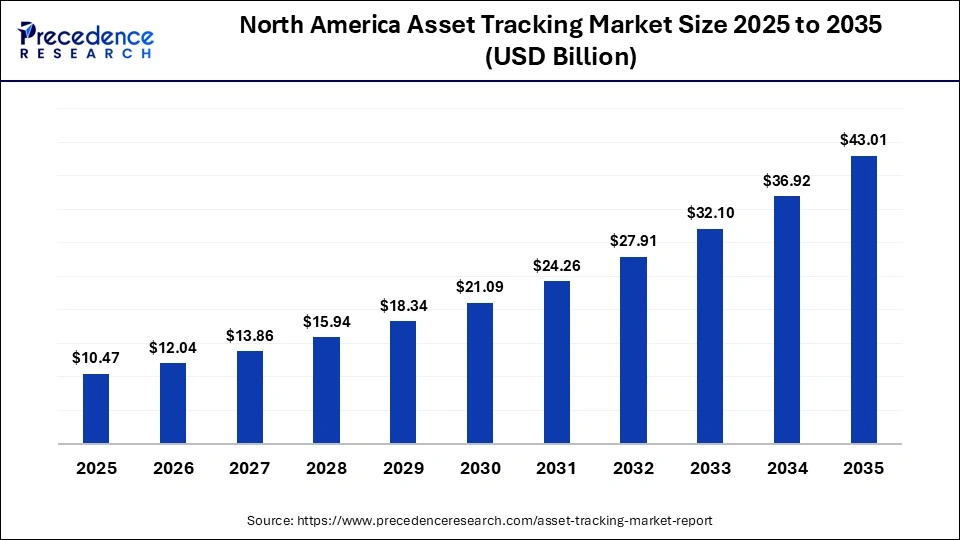
The North America asset tracking market size is estimated at USD 10.47 billion in 2025 and is projected to reach approximately USD 43.01 billion by 2035, with a 15.18% CAGR from 2026 to 2035
What Made North America the Leading Region in the Asset Tracking Market?
North America led the global asset tracking market with the highest share in 2025. The market growth in this region can be attributed to its highly developed technological infrastructure and early adoption of IoT and GPS technology. This region has a strong presence of prominent asset management companies. North America has a significant demand for transportation, logistics, and manufacturing industries. The market growth in this region is further driven by growing e-commerce and supply chain digitization. Governments in this region have promoted favorable policies for smart infrastructure investments.
What is the Size of the U.S. Asset Tracking Market?
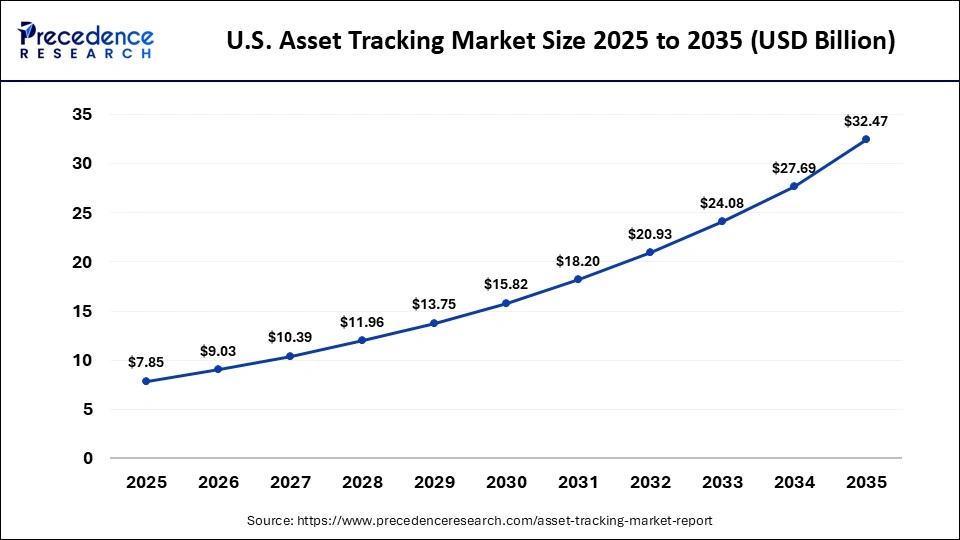
The U.S. asset tracking market size is calculated at USD 7.85 billion in 2025 and is expected to reach nearly USD 32.47 billion in 2035, accelerating at a strong CAGR of 15.26% between 2026 and 2035.
U.S Asset Tracking Market Analysis
The market growth in the U.S. can be attributed to its early adoption of cutting-edge technologies such as IoT, GPS, RFID, and cloud analytics. This country has a significant demand for asset management solutions from the transport, logistics, retail, military, and manufacturing sectors. The government has promoted the integration of advanced technology with existing infrastructure and invested in smart supply chain solutions. The market growth in the country is further boosted by a well-developed e-commerce market.
Why is Asia-Pacific the Fastest-Growing Region in the Asset Tracking Market?
Asia-Pacific is expected to grow at the fastest CAGR between 2026 and 2035. The market growth in this region is due to growing trade and a large volume of freight transportation. Various businesses are dealing with increasingly complex supply chains that are fragmented and extend across several countries. Asset tracking is being adopted to enhance coordination and accountability of supply chains. The market growth in the region is being accelerated by the declining cost of tracking devices and robust connectivity
China Asset Tracking Market Trends
China leads the Asia Pacific market because of its robust manufacturing sector and logistics infrastructure. This country deals in a significant amount of goods movement from the ports, factories, and warehouses daily. Asset tracking is widely adopted to enhance visibility, eliminate delays, and minimize losses. The market growth in this country is boosted by the presence of prominent technology companies and asset management solutions along the industrial corridors.
How is Europe Growing in the Asset Tracking Market?
Europe is expected to grow notably in the market. The strong focus on product safety and the well-developed transportation industry increases demand for asset tracking. The emphasis on automated solutions and the focus on inventory optimization in the manufacturing industry increase the use of asset tracking. The higher demand for advanced logistics solutions and green initiatives increases asset tracking adoption, driving the overall market growth.
UK Market Trends
The United Kingdom is a key player in the market. The rise in the use of advanced technology in the logistics industry and the higher demand for supply chain tracking boost asset tracking adoption. The focus on reducing asset loss and the stricter pharmaceutical regulations boost asset tracking use. The rise in automating manufacturing and the need to improve asset utilization require asset tracking, supporting the overall market growth.
Which Factors Drive the Asset Tracking Market in Latin America?
Latin America is expected to grow significantly in the market. The expansion of logistics operations and the emphasis on optimizing operations increase the use of asset tracking. The emphasis on lowering theft and the focus on asset management increase the adoption of asset tracking. The integration of AI in asset tracking boosts the market growth.
Brazil Market Trends
Brazil is growing in the market. The emphasis on enhancing supply chain operations and the growing cargo theft increases the use of asset tracking for real-time monitoring. High-quality asset management and the increased private companies' investment in road projects increase the adoption of asset tracking, supporting the market growth.
Will the Middle East and Africa Grow in the Asset Tracking Market?
The Middle East and Africa region is expected to grow at a substantial CAGR in the market. The stringent localization laws and the development of smart cities increase demand for asset tracking. The focus on optimizing container tracking and the use of predictive maintenance in the mining industry requires asset tracking. The expansion of the digital-banking license and the interest in cloud-based tracking drive the market growth.
Saudi Arabia Market Trends
Saudi Arabia is rapidly growing in the market in the MEA region. The emphasis on the digital economy and the development of the NEOM project increases asset tracking use. The focus on lowering fuel consumption and minimizing equipment loss requires asset tracking. The rise in real-time inventory tracking and the growing capacity of IT power support the market growth.
Who are the Major Players in the Global Asset Tracking Market?
The major players in the asset tracking market include Zebra Technologies, Honeywell Inc., Trimble Inc., IBM Corporation, AT&T Corporation, Ubisense Limited, Microsoft Corporation, Oracle Corporation, Mojix Inc, Sierra Wireless, Quectel, CalAmp, and OnAsset Intelligence Inc.
Recent Developments
- In June 2025, Hoopo launched hooposense Titan, which is a next-generation IoT-based assets tracking device that integrates efficient LPWA connectivity. This product facilitates sophisticated location detection for containers and equipment. Hooposense Titan improves long-range tracking and battery life, which is perfect for logistics applications.(Source: https://www.hoopo.tech)
- In May 2025, UnaBiz launched DIS-Echo, a low-power asset tracking solution based on Sigfox 0G and Bluetooth beacon technology. This product facilitated scalable and affordable monitoring of industrial and supply chain assets. DIS-Echo is a significant milestone in asset management over a broad geographical area with minimal infrastructure. (Source: https://www.unabiz.com)
- In January 2025, Impinj launched the Monza RFID platform, which enhances storage memory and data analysis speed for dense RFID applications. This offering enables large-scale item-level tracking in the warehouse and retail sectors. This product improved the speed and accuracy of inventory and asset management.
(Source: https://www.impinj.com)
Segments Covered in This Report
By Component
- Hardware
- Software
- Services
By Technology
- RFID (Radio-Frequency Identification)
- M2M/IoT
- GPS
- Barcode
- Others
By Deployment
- Cloud
- On-premise
By End Use
- Transportation & Logistics
- Manufacturing
- Healthcare
- Retail & E-commerce
- Aviation
- Government
- Others
By Region
- North America
- Europe
- Asia-Pacific
- Latin America
- Middle East & Africa
For inquiries regarding discounts, bulk purchases, or customization requests, please contact us at sales@precedenceresearch.com
Frequently Asked Questions
Tags





Ask For Sample
No cookie-cutter, only authentic analysis – take the 1st step to become a Precedence Research client
 Get a Sample




 sales@precedenceresearch.com
 Schedule a Meeting
