



Aviation Carbon Fiber Market Size, Key Companies, Company Production Capacity, Fleet Modernization, Production Volume, Government Investment, Supply Chain Analysis, Company Expansion Strategies, and Growth Forecast
Aviation Carbon Fiber Market (By Raw Material: Pan-Based Carbon Fiber, Pitch-Based Carbon Fiber; By Type: Continuous, Long, Short; By Application: Commercial Fixed-Wing Aircraft, Military Fixed-Wing Aircraft, Rotorcraf) - Global Industry Analysis, Size, Trends, Leading Companies, Regional Outlook, and Forecast 2026 to 2035
Source: https://www.precedenceresearch.com/aviation-carbon-fiber-market
 Get a Sample
 Table Of Content


What is the Aviation Carbon Fiber Market Size?
The global aviation carbon fiber market size is calculated at USD 2.58 billion in 2025 and is predicted to increase from USD 2.84 billion in 2026 to approximately USD 6.55 billion by 2035, expanding at a CAGR of 9.76% from 2026 to 2035. There is a rising demand in the aviation carbon fiber market for lightweight and fuel-efficient aircraft coupled with increasing environmental standards imposed on airplane manufacturing industries.
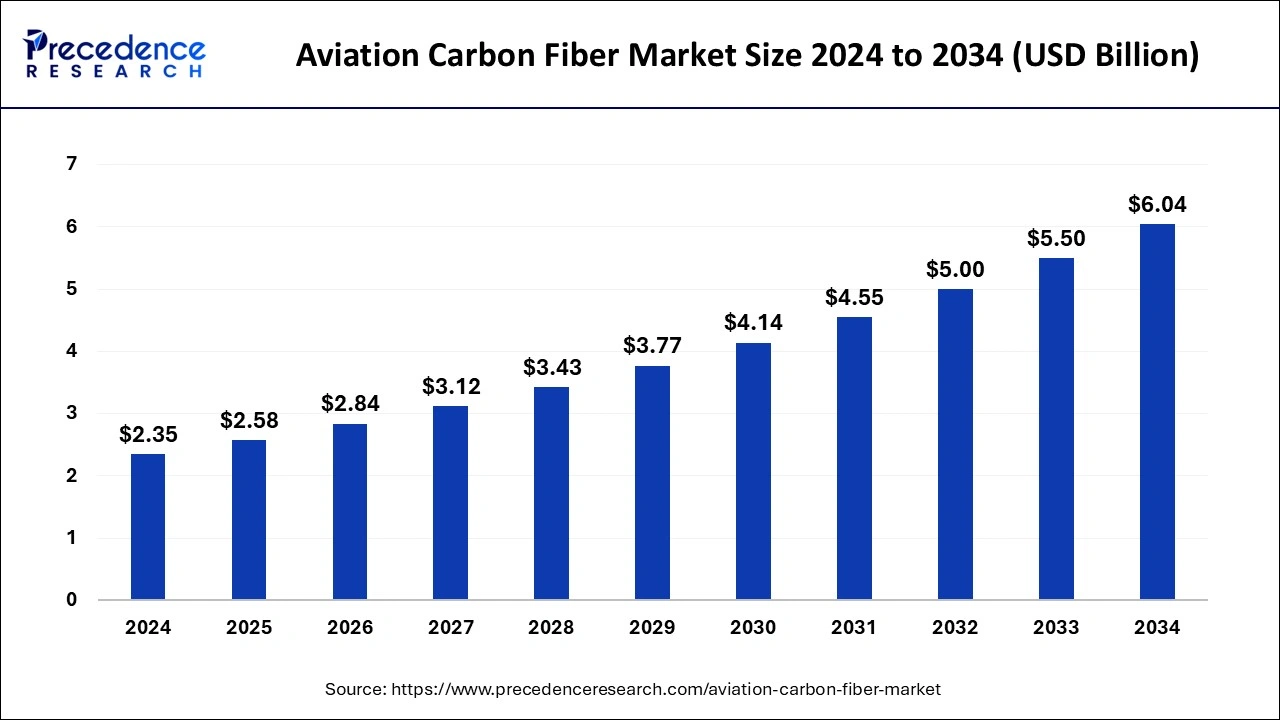
Aviation Carbon Fiber Market Key Takeaways
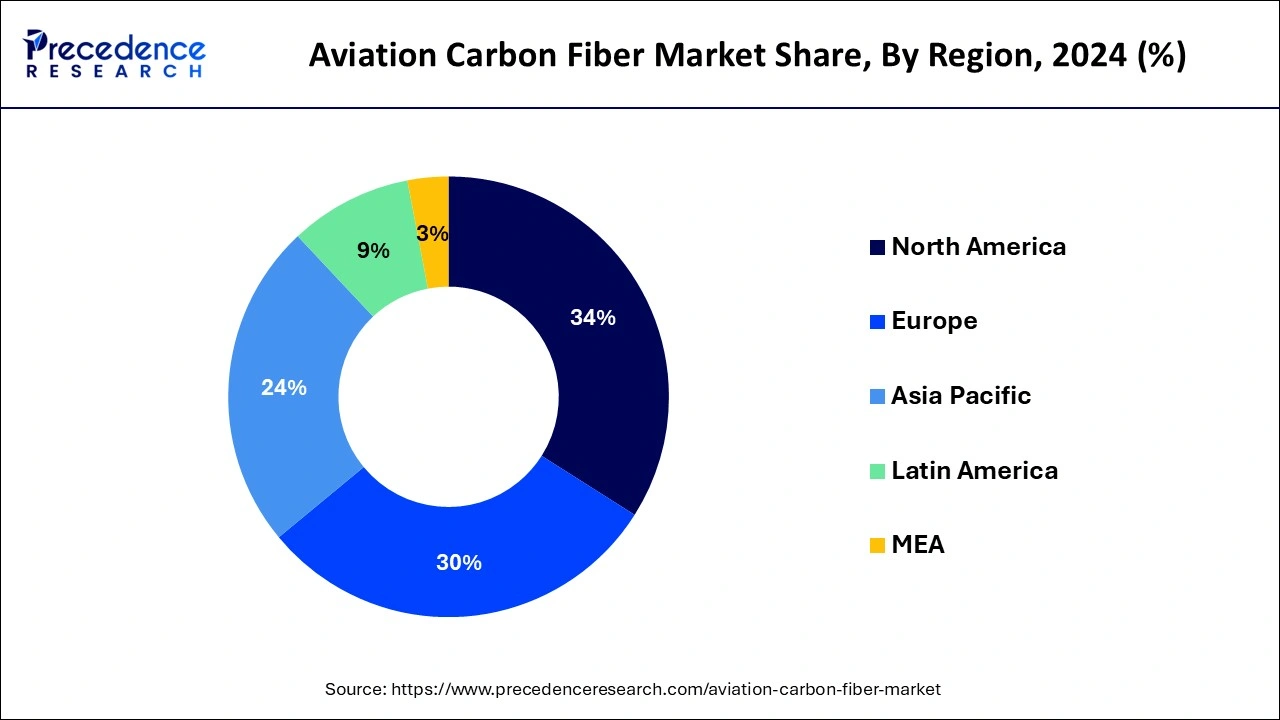
- North America dominated the global aviation carbon fiber market with the highest market in 2025.
- Asia Pacific is anticipated to witness the fastest growth in the market during the forecasted years.
- By raw material, the PAN-based carbon fiber segment has held a major share of 79% market in 2025.
- By raw material, the pitch-based carbon fiber segment is projected to witness the fastest growth in the market during the forecast period.
- By type, the continuous segment contributed the largest share in 2025.
- By type, the long segment is projected to witness the fastest growth during the forecast period.
- By application, the commercial fixed-wing aircraft segment has contributed the largest market share in 2025.
- By application, the military fixed-wing aircraft segment is projected to witness the fastest growth during the forecast period.
How Can We Summarise the Potential of the Aviation Carbon Fiber Market?
Carbon fiber is a strong and lightweight synthetic fiber particularly made by carbonizing acrylic fiber at high temperatures. Due to its mechanical properties such as high strength, low weight, and higher durability, it is being introduced in the aviation industry. Carbon fiber reinforced polymer (CFRP) composites have aided weight reduction of airframe components, supporting in decreasing fuel consumption and carbon emissions. The acceptance of modern manufacturing technologies, such as additive manufacturing, and the development and initiation of new aircraft models are major drivers of the market.
The aviation carbon fiber market is expanding fast as airplane manufacturers, as well as other industries that require light composite materials, demand improvement in fuel efficiency and performance. The growing prominence of sustainable practices in the aerospace sector also increases the adoption of carbon fiber, as it helps reduce carbon emissions. Moreover, new technological developments & research associated with carbon fiber in the aviation business, increased usage of electric aircraft, and the emerging usage of carbon fiber for 3D printing in aviation are primary growth factors for the key market players.
How AI is Landing New Opportunities to Take Off Tech-Innovation in the Aviation Carbon Fiber Market?
The combination of artificial intelligence (AI) and automation systems in the manufacturing processes of the aviation carbon fiber market. Advanced data analytics and machine learning support manufacturers in enhancing production techniques, improving quality control, and decreasing waste. Moreover, automation streamlines operations, resulting in lower labor costs and improved production efficacy. The use of AI in research and development can speed up the discovery of new carbon fiber materials and compounds personalized for particular aviation applications.
Aviation Carbon Fiber Market Growth Factors
- Expansion of the aviation industry: The rate of development of air transportation is growing steadily, as the frequency of flights, and the appearance of new models of aircraft. This growth requires the use of materials such as carbon fibers.
- Technological advancements: Developments in new carbon fiber manufacturing and composite technologies are making the material lighter and cheaper and, therefore, suitable for numerous forms of aviation.
- Increased military expenditure: Increased defense spending and advances in the production of Next Generation airborne platforms are fueling the increased use of carbon fiber because of properties important to the technology defense equipment manufacturing.
Market Outlook
- Start-up Ecosystem: The start-up ecosystem standing tall on aviation carbon fiber values mainly aims at two primary areas of innovation and advancement. The innovation of bio-derived sustainable carbon fibers and advanced carbon fiber optimised plastics to prepare lightweight aircraft structures to mitigate the material's environmental impact. This start-up ecosystem is characterised by a collective huge industry goal in accomplishing net-zero emissions.
- Industrial growth overview: The growth is strong and highly driven by the demand for fuel-efficient and lightweight aircraft to meet rigorous environmental regulations and achieve important sustainability goals. The technological advancement has driven innovative excellence in the manufacturing process to mitigate cost and improve production efficiency, which will make the materials accessible for wider use.
Market Scope
| Report Coverage | Details |
| Market Size by 2026 | USD 2.84 Billion |
| Market Size in 2025 | USD 2.58 Billion |
| Market Size in 2035 | USD 6.55 Billion |
| Market Growth Rate from 2026 to 2035 | CAGR of 9.76% |
| Dominating Region | North America |
| Fastest Growing Region | Asia Pacific |
| Base Year | 2025 |
| Forecast Period | 2026 to 2035 |
| Segments Covered | Raw Material, Type, Application and Regions |
| Regions Covered | North America, Europe, Asia-Pacific, Latin America, and Middle East & Africa |
Market Dynamics
Driver
Growing demand for lightweight, fuel-efficient aircraft components
Airframe elements are expected to be as light as possible, strong enough, and stiff enough to withstand different loads on an aircraft during the flight. Manufacturers build metal structures for aircraft that deliver optimum performance with minimum weight. As airlines and military sectors aim to lessen operational costs and carbon emissions, carbon fiber-reinforced composites are progressively favored for their high strength-to-weight ratio.
In the airline industry, the lower weight of the aircraft is related to the low operating cost since lower weight improves fuel efficiency. Fabrication processes of the aviation carbon fiber market can create very smooth yet complex geometries, allowing aircraft designers and manufacturers to enhance the aerodynamics of aircraft with the growing need for fuel-efficient and environmentally friendly aviation and transportation.
Restraint
Concerns regarding durability and high cost
The aviation carbon fiber market has several advantages for applications. Its durability and maintenance concerns remain a challenge for operators and maintenance suppliers. One of the major concerns is the long-term durability of carbon fiber composites in real-world operating conditions. Furthermore, the cost for maintenance and repair of carbon fiber, compared with conventional metallic material, can be rather expensive because the processes require sophisticated equipment, materials, and expertise. Carbon fiber elements attached to airplanes might prove to be costly for aircraft operators in terms of repair and maintenance, as well as overall airplane downtimes.
Opportunity
Newer models
Carbon fiber and other high-performance composites are deployed for next-generation aircraft engines to achieve fuel efficiency enhancement and noise reduction. Furthermore, carbon fiber materials help in the advanced design of the future generation's submerged power systems, such as electric or combined hybrid power plant structures, to provide enhanced and sustainable systems for aviation propulsion. Also, the aviation carbon fiber market products are utilized in some aircraft types and operation classes like UAVs, rotorcraft, as well as experimental aircraft. Carbon fiber materials have advantages; for example, they are lightweight, strong, and versatile and, therefore, are suitable for enhancing performance and agility in these particular uses. Carbon fiber composites are used largely for experimental airplanes, mainly for the advancement of innovation in aerodynamics, engines, and material sciences in the aerospace sector.
Segment Insights
Raw Material Insights
The PAN-based carbon fiber segment noted the largest share of the aviation carbon fiber market in 2025. PAN-based carbon fiber is a type of carbon fiber that is produced from the polyacrylonitrile (PAN) precursor material. It is characterized by high strength, stiffness, and durability and therefore it is widely used in various applications. PAN-based carbon fiber is used in aircraft structures like wings, fuselages, and empennages. Furthermore, the growing acceptance by the aerospace sector across several countries is the accountable factor for the segment's demand.
The pitch-based carbon fiber segment is projected to witness the fastest growth in the aviation carbon fiber market during the forecast period. Although pitch-based carbon fiber is lower in strength than fiberglass, it has a very high elastic modulus value. Due to their high modulus and relatively high strength, pitch-based carbon fibers have many applications. These fibers are used in the aerospace industry since they possess high thermal and electrical conductivity. They are usually applied in the aircraft brake system and other high-temperature applications.
Type Insights
The continuous segment contributed the largest share of the aviation carbon fiber market in 2025. Continuous carbon fibers are one type of carbon fiber that is used in aircraft manufacturing to reinforce the strength and stiffness of structures. A few of the items made from carbon fiber reinforced plastics are air and spacecraft parts, racing car bodies, golf club shafts, bike frames, fishing rods, automobile springs, sailboat masts, and many other items for which light weight and high strength are paramount. In aerospace, automobile, and sports industries, strength and weight concerns place continuous carbon fibers as the best fit for use. Continuous carbon fiber is widely employed in aerospace applications for the fabrication of aircraft structures such as wing spars, fuselage panels, and bulkheads.
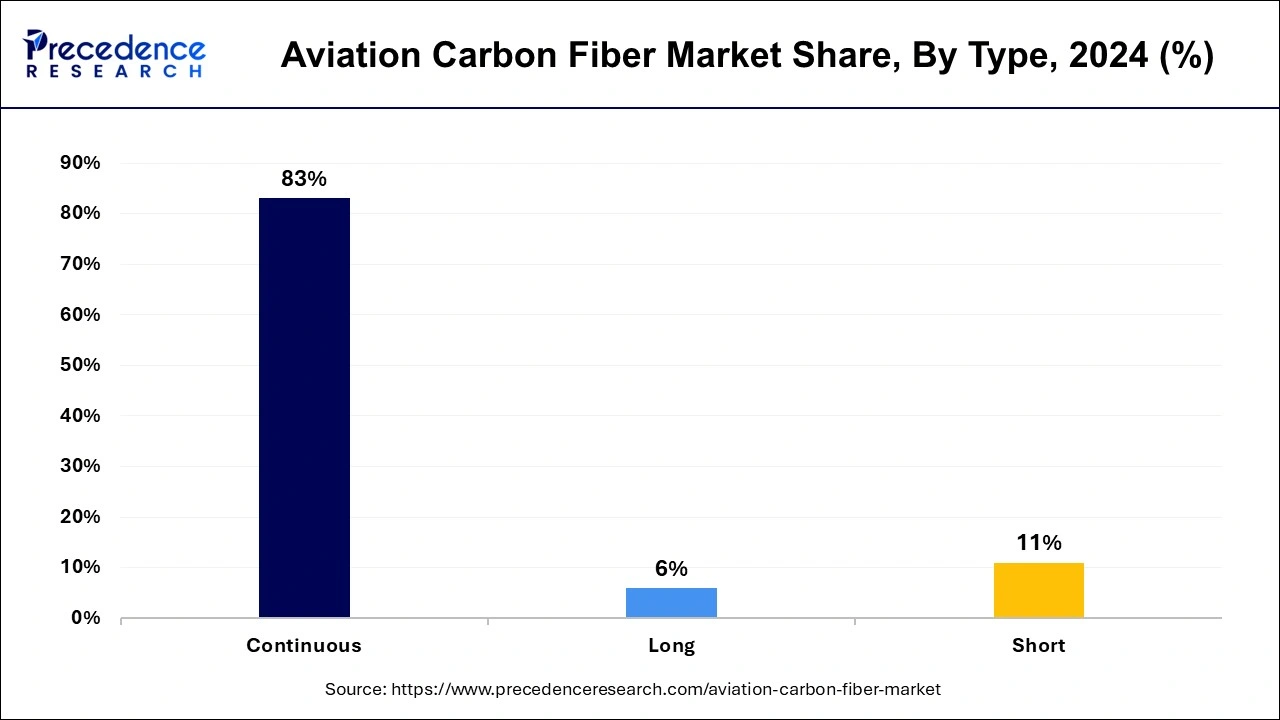
The long segment is projected to witness the fastest growth in the aviation carbon fiber market during the forecast period. Carbon fiber is a lightweight, strong material that is used in aircraft and other industries. It is made by heating a carbon-containing material to high temperatures, which causes the carbon atoms to bond together into long, thin strands. Carbon fiber is used to form complex shapes, which are stronger and much lighter than the same parts made of conventional metal. This is favored in the aviation industry as it assists in the creation of strong and durable aircraft.
Application Insights
The commercial fixed-wing aircraft segment has contributed the largest aviation carbon fiber market share in 2025. The constantly increasing frequency of air passengers and the requirement for airlines to decrease expenses prompt the use of carbon fiber in commercial aircraft. The increase in commercial air traffic has led to a rise in the contribution of the aviation sector to global emissions. Aviation causes greenhouse gas emissions that contribute to global warming. There is an increasing trend towards lightweight material for better fuel efficiency and a growing population of large commercial airliners with high composite content. The governing policies revolving around emission control also define the growth of this segment. This trend is further strengthened by activities that increase aircraft age, decrease maintenance costs, and increase efficiency.
The military fixed-wing aircraft segment is projected to witness the fastest growth in the aviation carbon fiber market during the forecast period. Carbon fiber is a vastly useful material with many applications in the military. Hence, features like high strength, lightweight, and high corrosion resistance make the composite material and its various products ideal for military use. All these properties help to enhance the performance, reliability, and survivability of engineered systems in various military applications. This material is widely employed in military planes and helicopter construction. It is used in components such as wings, fuselage sections, rotor blades, and tail sections.
North America accounted for the largest share of the aviation carbon fiber market in 2024. The strong presence of the large airline industry and the increase in investments for enhancement in aircraft fleets by governments and the military is set to promote the development of the market. The increase in the amount of military aircraft bought by the U.S. due to safety issues increases the demand for carbon fiber. Also, commercial aircraft have a higher growth rate due to higher traffic volumes. Moreover, North America has a strong research and development infrastructure that allows the advancement of carbon fiber production and applications.
Asia Pacific is anticipated to witness the fastest growth in the aviation carbon fiber market during the forecasted years. The growth of orders and deliveries in the regions is currently fuelling the growth of the market. Japan, currently a leading supplier of carbon fiber, is seeking to develop new uses for the material with the help of its international aerospace partners. Likewise, the concerns about carbon emissions in aviation and sustainability within the region are boosting the adoption of carbon fiber.
- In May 2024, India will begin producing ‘T100' type of carbon fiber for the next 2.5 years in a bid to overcome a current major drawback that prevents its use in strategic applications, said NITI Aayog member V K Saraswat. T100 carbon fiber is applied by the defense, aerospace, and civil engineering industries and is used for the production of hydrogen cylinders, missiles, launch vehicles, aircraft, bulletproof jackets, and bridges, among others.
Regional Insights
What is the U.S. Aviation Carbon Fiber Market Size?
The U.S. aviation carbon fiber market size is exhibited at USD 770 million in 2026 and is projected to be worth around USD 1,833 million by 2035, growing at a CAGR of 10.10% from 2026 to 2035.
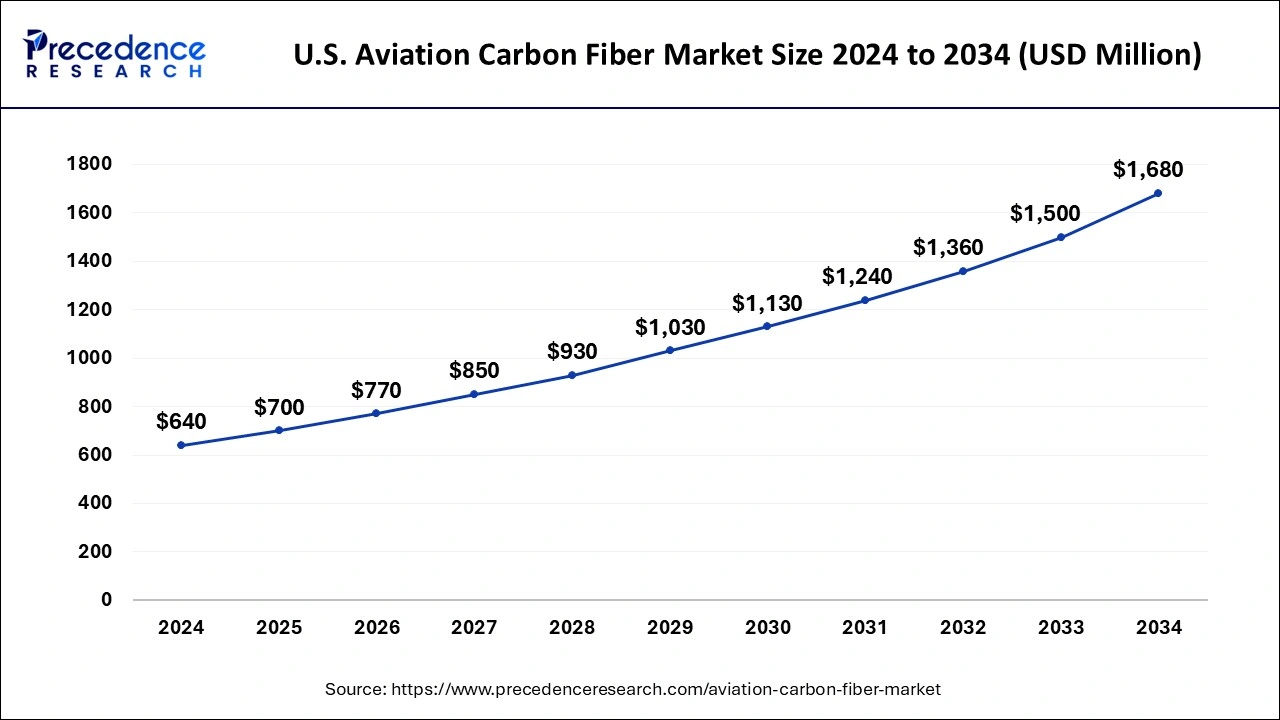
North America accounted for the largest share of the aviation carbon fiber market in 2025. The strong presence of the large airline industry and the increase in investments for enhancement in aircraft fleets by governments and the military are set to promote the development of the market. The increase in the number of military aircraft bought by the U.S. due to safety issues increases the demand for carbon fiber. Also, commercial aircraft have a higher growth rate due to higher traffic volumes. Moreover, North America has a strong research and development infrastructure that allows the advancement of carbon fiber production and applications.
How is Europe contributing to the Aviation Carbon Fiber Market?
Europe is a noteworthy contributor to the aviation carbon fiber sector, characterised by its major R&D initiatives and manufacturing. Alongside, its rigorous environmental regulations and huge aerospace sector are stimulating the market. To serve excellence, the European research institutions and companies play a critical role in the recycling, production and development of carbon fiber composite materials implemented in modern aircraft. Europe is a family of key players in the composite materials and carbon fiber sector
Rising Aircraft Deliveries Propel Asia Pacific Aviation Carbon Fiber Demand
Asia Pacific is anticipated to witness the fastest growth in the aviation carbon fiber market during the forecasted years. The growth of orders and deliveries in the regions is currently fuelling the growth of the market. Japan, currently a leading supplier of carbon fiber, is seeking to develop new uses for the material with the help of its international aerospace partners. Likewise, the concerns about carbon emissions in aviation and sustainability within the region are boosting the adoption of carbon fiber.
- In May 2024, India will begin producing 'T100' type of carbon fiber for the next 2.5 years in a bid to overcome a current major drawback that prevents its use in strategic applications, said NITI Aayog member V K Saraswat. T100 carbon fiber is applied by the defense, aerospace, and civil engineering industries and is used to produce hydrogen cylinders, missiles, launch vehicles, aircraft, bulletproof jackets, and bridges, among others.
What efforts has Latin America made in the Aviation Carbon Fiber Market?
Latin America's major contribution to the aviation carbon fiber industry stands initially as a capable hub and an elevating regional market that has the potential to shape the future of composite manufacturing than just being recognised as a key global creator of the raw material. Latin America is centralised to MRO potential (Maintenance, Repair and Overhaul), acceptance of previous carbon fiber technology from different international suppliers and fleet modernisation.
Value Chain Analysis
- Operations and End-of-life: The analysis involves circular economy practices, recycling, sustainability and MRO. The recycling and sustainability analysis is a popular topic aiming at eco-friendly recycling methods and establishing cost-effectiveness for the carbon fiber composites. By far, this has been complex and limited in the aviation carbon fiber market.
- Raw materials and production: The analysis of price and supply of precursor materials, mainly polyacrylonitrile, which accounts for a vast portion of the final cost, is essential to be accurate in the analysis spectrum. The fiber manufacturing involves capital-intensive and energy-intensive processes to evaluate the conversion rate of precursors into carbon fibers.
- Streamline: The streamline analysis involves midstream and downstream processes involving intermediate products (midstream) and component manufacturing and assembly (downstream). The midstream consists of resin systems and Prepreg and fabric production analysis, helping the conversion of raw fibers into any intermediate form, such as prepregs and fabrics.
Aviation Carbon Fiber Market Companies
- Aernnova Aerospace
- Bally Ribbon Mills
- BGF Industries Inc.
- Chomarat Group
- DowAksa
- DuPont de Nemours, Inc.
- Hexcel Corporation
- HYOSUNG
- Mitsubishi Chemical Group
- Park Aerospace Corp
- SGL Carbon SE
- Solvay S.A.
- TEIJIN LIMITED
- Toray Industries, Inc.
- Zoltek Companies Incorporated
Key Player Announcement
- In February 2024, Nandina REM announced the launch of high-quality carbon fiber material reclaimed from end-of-life aircraft and reprocessed to aviation specifications. Karina Cady, CEO of Nandina REM, said, "Reclaiming high-quality circular materials from end-of-life aircraft is a key industry achievement that will unlock a multitude of possibilities for both aviation and advanced manufacturing."
Recent Developments
- In October 2024, Hexcel is preparing to support the aerospace industry's development of next-generation single-aisle commercial aircraft and the increasing advanced air mobility (AAM) electric aircraft market, to meet the higher rate composite manufacturing requirements in these segments.
- In April 2023, Solvay and GKN Aerospace contracted an extension to their partnership agreement. As part of the partnership, both companies are mapping out a thermoplastic composites (TPC) strategy for material and process development for aerospace structures and manufacturing procedures for aerospace structures while jointly targeting future strategic high-rate programs.
- In March 2023, SGL Carbon presented the new SIGRAFIL T50-4.9/235 carbon fiber, growing its material portfolio with this innovative fiber designed for high-strength pressure vessels.
Segments Covered in the Report
By Raw Material
- Pan-Based Carbon Fiber
- Pitch-Based Carbon Fiber
By Type
- Continuous
- Long
- Short
By Application
- Commercial Fixed-Wing Aircraft
- Military Fixed-Wing Aircraft
- Rotorcraft
By Geography
- North America
- Asia Pacific
- Europe
- Latin America
- Middle East and Africa
For inquiries regarding discounts, bulk purchases, or customization requests, please contact us at sales@precedenceresearch.com
Frequently Asked Questions





Ask For Sample
No cookie-cutter, only authentic analysis – take the 1st step to become a Precedence Research client
 Get a Sample




 sales@precedenceresearch.com
 Schedule a Meeting
