



Cardiac Marker Testing Market Size, Companies, Share, Pricing, Regulatory Landscape, Competitive Positioning, and Demand Forecast
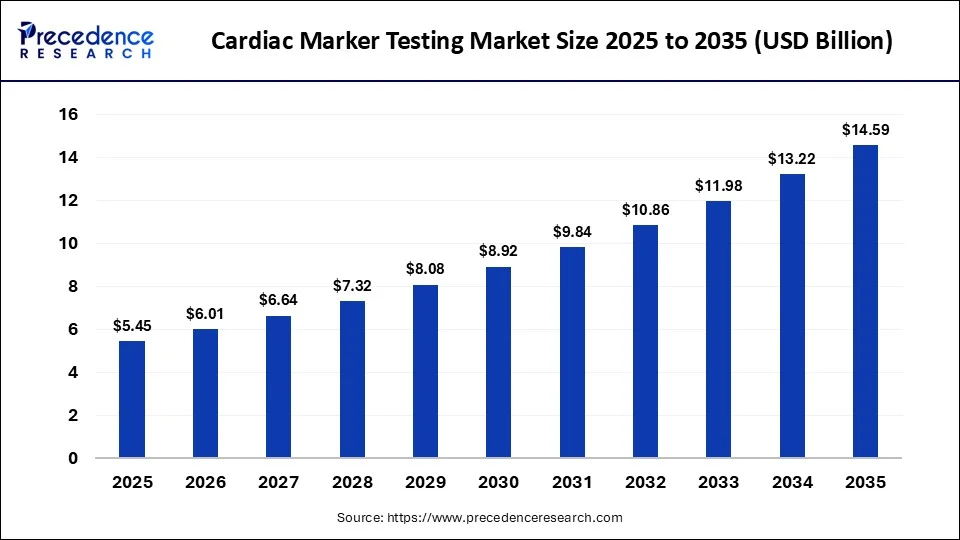
Deepa Pandey, a Healthcare Industry Expert, highlights that the cardiac marker testing market has reached USD 6.01 billion in 2026 and is on track to reach USD 14.59 billion by 2035, advancing at a CAGR of 10.35%. Key cardiac marker testing market companies shaping the market include Abbott Laboratories, Alere Inc., bioMérieux SA, while major growth segments span biomarker type, testing technology, product type, sample type, application, end user, distribution channel, region.
Source: https://www.precedenceresearch.com/cardiac-marker-testing-market
 Get a Sample
 Table Of Content


Cardiac Marker Testing Market Size and Forecast 2026 to 2035
The global cardiac marker testing market is predicted to increase from USD 6.01 billion in 2026 to approximately USD 14.59 billion by 2035, expanding at a CAGR of 10.35% from 2026 to 2035.
Key Takeaways
- By biomarker type, the troponin segment contributed the highest market share of 48% in 2025 and is expected to grow at the highest CAGR of 11.4% between 2026 and 2035.
- By application, the myocardial infarction diagnosis segment held a major market share of 36% in 2025.
- By application, the acute coronary syndrome detection segment held 22% of market share in 2025 and is expected to register the fastest growth of 11.8% CAGR during 2026 and 2035.
- Demand for cardiac diagnostics assays is being driven by a number of factors, including the 2025 ACC/AHA acute coronary syndrome (ACS) guideline, where high-sensitivity troponin (hsTnT and hsTnI) became the guideline standard.
- Danaher's February 2026 deal for Masimo is a sign of consolidation that's changing the landscape for cardiovascular diagnostics.
- AI Integration is emerging as a growth pillar in the biomarker testing space, as evidenced in Roche's news on its merger with PathAI announced in May 2026.
- The new universal recommendation for universal screening for Lp(a) in the 2026 ACC/AHA dyslipidemia guideline and other research findings could expand the cardiac testing market.
Market Size Description
Cardiac biomarkers are the mainstay of heart attack diagnosis and cardiovascular risk management. The ACC, along with AHA, revised their guideline for acute coronary syndrome in 2025. The guideline advocated for the use of particularly high-sensitivity troponin as a biomarker for diagnostic purposes. It suggests measuring troponin immediately and repeat in less than a few hours. These rapid assays are increasingly used in the ED to rapidly diagnose or exclude a heart attack. In November 2025, the FDA cleared QuidelOrtho's VITROS high-sensitivity Troponin I Reagent Pack. The assay is intended for quantitative measurement of cardiac troponin I in human plasma to aid in the diagnosis of myocardial infarction.
Preliminary testing of more recent assays for troponin is ongoing in medical centers. Throughout Europe and the United States in the projected period. In a study published in the European Heart Journal in 2026. New high-sensitivity troponin T test was studied. The Add the relevant primary APACE/BACC study citations, including study year, journal, assay evaluated, and DOI, before publication. The purpose of these trials is to keep the ED decisions relating to discharge and treatment more timely. BNP and NT-proBNP are still essential for the diagnosis and monitoring of HF. Proposing to measure a cardiac biomarker for risk stratification. As done in the 2026 AHA/ACC guideline for pulmonary embolism, it is also recommended.
Market Size and Growth Highlights
The cardiac marker testing market is projected to expand by CAGR of 28.23% from 2026 to 2031. The robust performance of this market is expected to continue between 2026 and 2035 at a CAGR of 10.35%. This increase shows the burden of cardiovascular disease and increasing use of high sensitivity troponin testing. Acute care hospitals and EDs are increasingly utilizing rapid biomarker panels. These tools inform emergency decision making. Point-of-care lab-quality testing continues to grow and come to the patients.
Older generation tests continue to be cheaper than the average selling price (ASP) of the high-sensitivity assays. Indeed, older generation assays offer significant clinical value. On the other hand, national penetration of screening in primary care and ambulatory environments has been incrementally increasing over a period of time, driving screening volume. In 2025, Siemens Healthineers also extended its Atellica troponin platform by adding an Atellica troponin prognostic risk claim. The consistent growth of the regulated market is expected to continue through the projected period.
Leading Market Segments
Biomarker-wise, troponin assays are still the major cardiac marker tests all over the world. This segment is led by high-sensitivity troponin I and T, which have higher levels of diagnostic accuracy. BNP and NT-proBNP have a strong role in the monitoring of heart failure. The immunoassay platform is the predominant testing technology for hospital and reference labs. There is a fairly uniform recurring demand for reagents and consumable kits compared to other product levels.
Acute coronary syndrome (ACS) is, by application, the top application of the cardiac biomarkers. Heart failure management comes in second, related to the high chronic disease rate and the ageing population. The largest end users of cardiac marker tests remain hospitals and diagnostic laboratories. North America is at the forefront with good vouchering systems and quick technology uptake in the area. Europe and Asia Pacific trail, with Germany, Japan and China increasing hospital based testing.
Fastest-Growing Market Opportunities
The fastest growing area of cardiac marker diagnostics is high-sensitivity troponin. New technologies are minimizing the physical size of biosensors. Further improving their detection capabilities beyond their limit. In 2025, electrochemical biosensors were introduced as a potential replacement for conventional ones. Bulky optical biosensors were reviewed in Analytical Science Advances. Passive detection of troponin continues to be a research endeavor for faster assays on paper and with amplification using nanoparticles. These developments will enable a central-lab level of accuracy to be achieved in portable, handheld diagnostic devices.
Another significant growth area is point-of-care diagnostics. Primarily because of the lack of such diagnostic tools in remote and emergency care facilities. At the June 2026 meeting, Proxim presented a portable immunoassay system that provides very sensitive point-of-care assays for troponin I. Also being considered is cardiac surgery monitoring, wherein the surveillance of perioperative cardiac injury looks to biomarkers. Former heart failure markers. Such as galectin-3 and copeptin, are attracting research attention for heart failure risk stratification. These factors represent a transition towards faster, more decentralised and more personalised cardiac diagnostics.
Market Overview
Understanding Cardiac Marker Testing
Cardiac marker testing analyses levels of chemicals and enzymes that leak out of the blood following heart injury. These markers are useful for diagnosing myocardial infarction, heart failure, and other rapidly occurring cardiac issues. In particular, the troponin blood level is a strong indicator of heart muscle damage. Also detectable within a few hours of the attack.
BNP is an example of a group of blood substances known as natriuretic peptides. They can assist the clinician in determining the severity of heart failure and making any necessary changes to the treatment administered. These tests are used to help evaluate a patient's cardiovascular risk assessment beyond diagnosis. Also as a basic component for long-term cardiovascular risk assessment in patients with chronic disease.
Evolution of Cardiac Biomarker Diagnostics
Higher sensitivity markers, such as cardiac troponin T and cardiac troponin I, have replaced older markers such as CK-MB and Myoglobin in cardiac diagnostics. New high sensitivity troponins are increasingly able to detect damage to the heart at much lower concentrations. Multiplex testing has also come to the fore.
This type allows multiple biomarkers to be measured from a single small blood sample. In April 2026, researchers at UCLA introduced a portable sensor with AI capabilities that can detect multiple cardiac biomarkers simultaneously and quickly. Digital solutions are looking to combine these results with electrocardiograms and imaging for more speedy and well-informed choices.
Scope of the Cardiac Marker Testing Market
The cardiac marker market covers various biomarkers such as troponin, natriuretic peptides, CK-MB, and myoglobin. It includes central lab immunoassays, portable biosensors, and digital microfluidic platforms. Products include reagent and instrumentation components and point-of-care testing devices. They are used in the care setting. Applications span from diagnosing ASTC to tracking heart failure and cardiac surgeries. Major areas around the world are continuing to be primary markets for the hospital, diagnostic laboratory, and the ambulatory clinic.
Market Trends
Increasing Adoption of High-Sensitivity Troponin Testing
High sensitivity troponin assays remain step-by-step replacing the old cardiac tests in the clinical gold standard. These assays are sensitive enough to enable rapid decision-making in the emergency setting. They will rule out revascularisation in the patient with a normal troponin, as well as quickly rule it in for those with raised levels. This is the preferred practice at hospitals more often because it reduces the length of time spent diagnosing. But also increases the accuracy of the diagnosis if someone has a heart attack.
Growth of Point-of-Care Cardiac Diagnostics
The concept of POCT is moving beyond hospital laboratories to mobile and remote health care settings, such as an ambulance. This transition allows cardiology services to shift further towards the decentralized care setting. By providing the necessary diagnostic information promptly to ERs that can use it for lab-quality diagnostics.
Integration of Artificial Intelligence and Digital Health Platforms
The interpretation of complex cardiac biomarker and ECG data is increasingly being aided by AI. The research paper that was presented at the ESC Acute Cardiovascular Care 2026 in Lisbon revealed an AI-ECG algorithm. It provides a better detection of occlusive heart attacks than human interpretation. These AI models are now being embedded with trends in troponin levels on digital platforms. Further to provide more consistent and automated clinical decision support.
Expansion of Multiplex Cardiac Biomarker Testing
Demand has been building for a platform that can measure multiple cardiac biomarkers. From the small amount of blood taken for a single measurement. Such multiplex approaches enable clinicians to differentiate heart attack from heart failure. They have the potential to enhance prognosis and treatment planning.
Rising Focus on Preventive Cardiovascular Screening
The screening of cardiovascular diseases is gaining momentum. Due to the increasing incidence of heart disease around the world. The 2026 ACC/AHA dyslipidemia guideline recommends measuring lipoprotein(a) at least once in adulthood to improve cardiovascular risk assessment. The change towards earlier detection of inherited cardiovascular risk includes the detection of risk through biomarkers. That is occurring before the onset of symptoms.
Market Segmentation Analysis
Biomarker Type Insights
What Made Troponin the Leading Biomarker in the Global Cardiac Marker Testing Market?
The troponin sensors segment dominated the market with a share of 48% in 2025 and is expected to grow at the fastest CAGR of 11.4% between 2026 and 2035, driven by the rising clinical preference for highly specific myocardial injury detection.
Cardiac Marker Testing Market Share, By Biomarker Type, 2025 (%)
| Biomarker Type | Market Share (%) | CAGR (%) |
| Troponin | 48.00% | 11.4% |
| Creatine Kinase-MB (CK-MB) | 14.00% | 8.2% |
| Myoglobin | 8.00% | 8.7% |
| BNP | 13.00% | 10.1% |
| NT-proBNP | 12.00% | 11.2% |
| C-Reactive Protein (CRP) | 3.00% | 8.9% |
| Lp-PLA2 | 1.00% | 9.8% |
| Other Emerging Biomarkers | 1.00% | 10.6% |
Testing Technology Insights
How Did Immunoassay-Based Testing Secure Its Leadership in the Global Cardiac Marker Testing Market?
The immunoassay-based testing segment dominated the market with a share of 72% in 2025, due to its established clinical reliability of antibody-based detection methods.
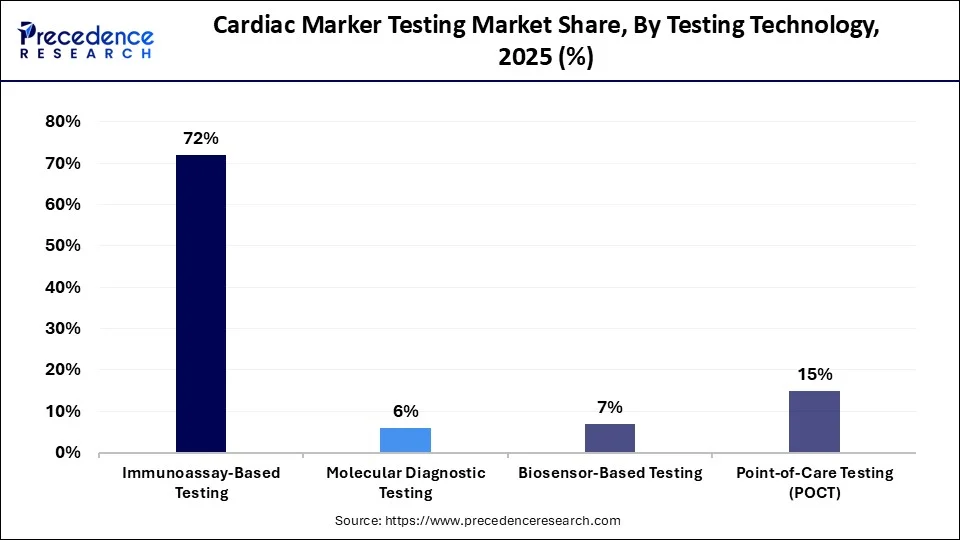
The biosensor-based testing segment held a 7% share of the market in 2025 and is expected to grow at the fastest CAGR of 15.2% between 2026 and 2035, driven by precision medicine continuing to expand across cardiovascular disease management.
Product Type Insights
What Drove Reagents & Consumables to the Top of the Global Cardiac Marker Testing Market?
The reagents & consumables segment dominated the market with a share of 64% in 2025, due to high testing volumes generated by hospitals and clinical laboratories.
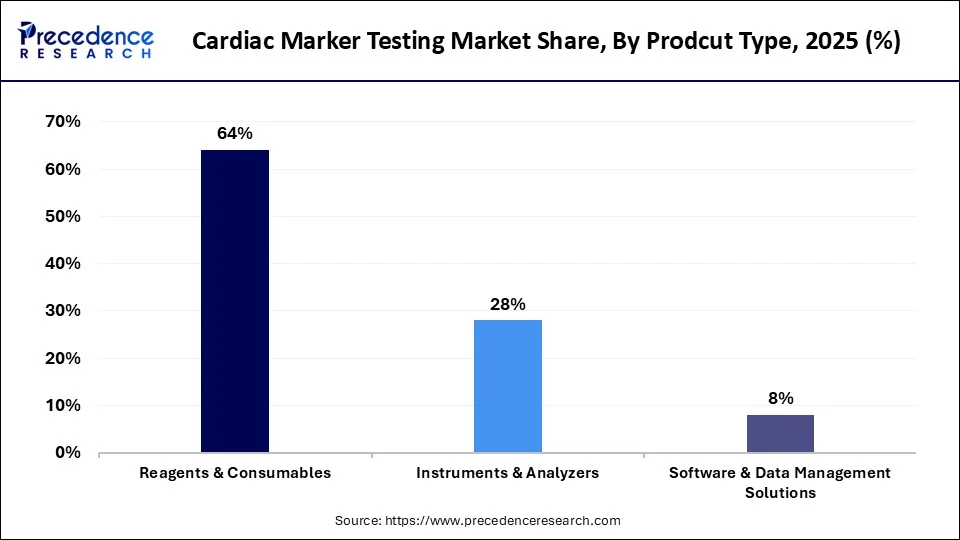
The instruments & analyzers segment held 28% of market share and is expected to grow at the highest CAGR of 11.6% between 2026 and 2035, owing to the increasing laboratory automation and the need for faster diagnostic workflows.
Sample Type Insights
How Did Blood Samples Become the Primary Choice in the Global Cardiac Marker Testing Market?
The blood samples segment dominated the market with a share of 94% in 2025, due to its direct measurement of circulating cardiac biomarkers and established clinical protocols followed across emergency and hospital settings.
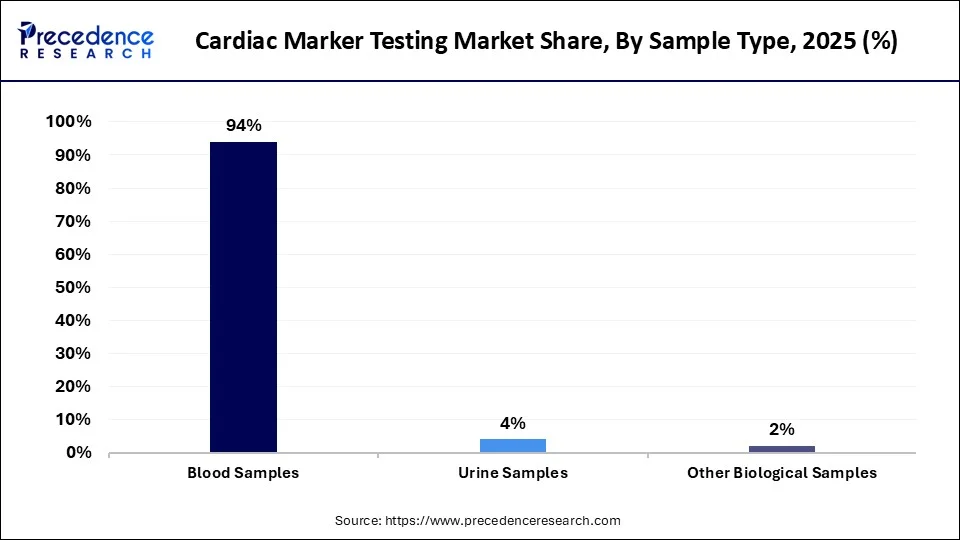
The other biological samples segment held a 2% share of the market in 2025 and is expected to grow at the fastest CAGR of 10.8% between 2026 and 2035, driven by researchers continuing to explore less invasive diagnostic approaches for cardiovascular assessment.
Application Insights
What Positioned Myocardial Infarction Diagnosis at the Forefront of the Global Cardiac Marker Testing Market?
The myocardial infarction diagnosis segment dominated the market with a share of 36% in 2025, owing to the critical need for immediate cardiac assessment.
Cardiac Marker Testing Market Share, By Application, 2025 (%)
| Application | Market Share (%) | CAGR (%) |
| Myocardial Infarction Diagnosis | 36.00% | 10.7% |
| Acute Coronary Syndrome Detection | 22.00% | 11.8% |
| Heart Failure Diagnosis & Monitoring | 21.00% | 10.9% |
| Risk Assessment & Prognosis | 10.00% | 9.8% |
| Cardiac Surgery Monitoring | 6.00% | 9.6% |
| Emergency Department Screening | 4.00% | 11.5% |
| Other Cardiovascular Disorders | 1.00% | 9.9% |
The acute coronary syndrome detection segment held a 22% share of the market in 2025 and is expected to grow at the fastest CAGR of 11.8% between 2026 and 2035, driven by clinicians increasingly emphasizing identifying cardiac events before irreversible myocardial damage develops.
End User Insights
How Did Hospitals Emerge as the Largest End Users in the Global Cardiac Marker Testing Market?
The hospitals segment dominated the market with a share of 54% in 2025, due to the concentration of emergency cardiovascular services and continuous availability of advanced diagnostic laboratories.
Cardiac Marker Testing Market Share, By End User, 2025 (%)
| End User | Market Share (%) | CAGR (%) |
| Hospitals | 54.00% | 10.2 |
| Diagnostic Laboratories | 25.00% | 10.4 |
| Cardiology Centers | 9.00% | 12.2% |
| Emergency Medical Services | 6.00% | 11.8 |
| Research Institutes & Academic Centers | 3.00% | 9.7 |
| Point-of-Care Testing Centers | 3.00% | 12 |
The cardiology centers segment held a 9% share of the market in 2025 and is expected to grow at the fastest CAGR of 12.2% between 2026 and 2035, driven by the specialized cardiovascular care continues expanding across both developed and emerging healthcare systems.
Distribution Channel Insights
What Helped Direct Sales Maintain Their Dominance in the Global Cardiac Marker Testing Market?
The direct sales segment dominated the market with a share of 52% in 2025, due to the preference for long-term procurement agreements by healthcare institutions.
Cardiac Marker Testing Market Share, By Distribution Channel, 2025 (%)
| Distribution Channel | Market Share (%) | CAGR (%) |
| Direct Sales | 52.00% | 9.9% |
| Hospital & Laboratory Distributors | 27.00% | 10.3% |
| Medical Device Distributors | 16.00% | 11.1% |
| Online Healthcare Procurement | 5.00% | 13.6% |
The online healthcare procurement segment held 5% of market share in 2025 and is expected to grow at the fastest CAGR of 13.6% between 2026 and 2035, supported by digital purchasing platforms continuing to improve procurement efficiency for healthcare organizations.
Market Dynamics
Market Drivers
Rising Global Cardiovascular Disease Burden
Sustained demand for cardiac marker testing exists, as cardiovascular disease continues to be the world's greatest killer. Heart disease remains the leading cause of death for Americans. Confirmed by the AHA's 2026 Heart disease and stroke statistics. This burden is now heavily represented by CAD and heart failure. They are also increasingly handling the burden earlier with biomarker screenings.
Growing Demand for Early and Accurate Diagnosis
Quick and precise diagnosis is critical in limiting delays in taking patients for heart attack treatment. Because of the use of new high-sensitivity troponin protocols. The clinical team can rule out myocardial infarction in just one to two hours rather than overnight. Rapidly obtained results immediately reduce time-to-treatment. This is an outcome of quality increasingly monitored by hospitals to increase patient survival and minimise patient complications. Furthermore, as that urgency grows, labs are looking for platforms for cardiac testing that are more accurate as well as faster in their assays.
Healthcare Infrastructure Expansion in Emerging Markets
Emerging markets are creating more diagnostic labs and hospital networks to address increased cardiovascular care needs. In June of 2025, the Brazilian-based company Sysmex Corporation announced plans to expand its diagnostic reagent production site in Brazil to facilitate future expansion in this region. As with other investments in the region. Those in Asia-Pacific and the Middle East are expanding access to central lab and point-of-care cardiac testing. The use of high sensitivity troponin and multiplex panels is anticipated to increase as hospital infrastructure develops in these areas.
Increasing Adoption of Automated Diagnostic Platforms
Automation is changing the way clinical laboratories perform cardiac marker testing. Boosting efficiency of the laboratory workflow, uniformity, and turnaround time. In July 2026, ABB Robotics and Roche Diagnostics announced a global partnership. Putting autonomous robotics into the heart of the diagnostic laboratory.
They work together to shift samples between instruments with mobile manipulators. That lowers the amount of manual handling and repetitive laboratory work. This type of automation allows laboratory personnel to delve deeper into more complex analysis and automated cardiac tests to take place more precisely.
Market Restraints
High Cost of Advanced Cardiac Diagnostic Systems
Upfront and maintenance costs of advanced analyzers, platforms for biosensors, and automated systems are high. This may be a challenge for smaller hospitals and diagnostic labs to justify when dealing with a conservative operating budget.
Limited Diagnostic Infrastructure in Developing Regions
Advanced cardiac testing is still not possible in many under-resourced areas around the world. By 2030, the World Health Organization estimates there will be only 11 million health workers remaining around the world. The majority of them are found in low-income countries. This staff and facility shortage inhibits the uptake of the high sensitivity troponin and multiplex biomarkers outside large urban hospitals.
Regulatory Complexity for New Biomarkers
Validating and approving new cardiac biomarkers into the market is still a long process. Average FDA de novo approval times through June 2026 were about 341 days. Increases averaged 8.3% compared to the previous year. This regulatory process can be overly complex and slow into clinical use even when a promising new biomarker has received promising, adequate trial results.
Market Opportunities
Expansion of Point-of-Care Testing Solutions
Portable analyzers are opening new opportunities and uses for cardiac testing in places other than a hospital lab. Abbott's new i-STAT hs-TnI cartridge provides quantitative results about 15 minutes after they're ordered at the patient's bedside. These tools are used in the ED to quickly and efficiently triage patients with acute chest pain and decrease the total time spent in the ED. This type of rapid testing is becoming more commonly used in decentralized care models such as ambulances and rural clinics.
Development of Novel Cardiac Biomarkers
Scientists are still working on identifying biomarkers other than troponin to narrow the scope of cardiovascular risk assessment. Lp-PLA2 is an enzyme associated with inflammation in the vasculature. It is gaining new interest as a precision diagnostic marker. A study accepted for publication in the journal Frontiers in Cardiovascular Medicine in 2026 analyzed Lp-PLA2 along with inflammatory markers in a Saudi population with cardiovascular disease. Additional markers under study as potential disease monitors, such as soluble ST2 and myeloperoxidase. They are also being developed. These novel biomarkers present new avenues. To more personalized inflammation-driven cardiovascular focused diagnostics.
Growth of Home-Based Cardiac Monitoring
Consumer cardiac monitoring is not only growing in both the number of devices and market share. It also represents the latest trend toward offering patients a more convenient means to keep an eye on their heart health at home. In January 2026, the FDA approved AliveCor's next-generation Kardia 12L system. Features a total of 35 diagnostic determinations.
This mobile ECG technology can be used at home, as well as in clinical settings. These devices are being used more and more in remote monitoring platforms. They are now paired with the review by the cardiologist to complete the circle when it comes to diagnosis. This is due to a wider trend towards proactive patient-centred cardiovascular care.
Strategic Partnerships Between Diagnostic Companies and Healthcare Providers
Diagnostic firms and healthcare practitioners are speeding up technology uptake and clinical clinics. WELL Health Technologies joined with AliveCor in April 2026. Making cardiologists-validated cardiac monitoring available to patients in Canada.
This cooperation enables Canadian-registered cardiologists to perform ECGs within 24 hours. Further providing easy reports to consumers. Closed collaborations among labs, hospitals, and tech companies keep advancing new validated diagnostic reach across the globe. The collaborations address the gap between novel cardiac testing device technology and daily clinical care for the patient.
Market Challenges
Maintaining Accuracy Across Different Testing Platforms
Even for the same patient sample, there is inter-platform variability in cardiac assay results. Clinicians will need to interpret the results of troponin on different platforms. From different manufacturers until full harmonisation is realised.
Reimbursement and Healthcare Cost Pressure
Limitations in reimbursement affect which cardiac tests laboratories can afford. The Clinical Laboratory Fee Schedule (CLFS) portion of the payment update rolled out in January 2026 would delay many test payment reductions through 2026. Despite this, continued rate pressure will likely leave many people without access to more recent, more expensive biomarker tests in 2027 and 2029.
Cardiac Marker Testing Market Ecosystem Analysis
Industry Value Chain Overview
Biomarker discovery is the first part of the cardiac marker testing ecosystem. Taking place in academic and pharmaceutical labs. Reagent manufacturers and diagnostic technology executors subsequently take these findings and turn them into validated products for the market. These tests are performed in a hospital or diagnostic laboratory every day. Further results enter into the doctor's decision making process. This chain revolves around patients, because all of the upstream components are designed ultimately for quicker, more accurate diagnosis.
Key Stakeholders in the Market
Diagnostic companies create and develop assays and analyzers. These are used in the lab. These are tools that are clinically proven and validated by hospitals and research organizations. Before being used in normal practice. The evidence is reviewed by regulatory bodies, including the FDA/EMA, before commercial use. These tests are then directly applied by healthcare providers to aid in diagnosis, treatment, and longterm cardiovascular risk control.
Collaboration and Partnership Landscape
This ecosystem's trajectory is still being defined by collaborations between diagnostic companies and biotech companies and between hospitals and biotech companies. In January 2025, bioMérieux finalized its SpinChip Diagnostics acquisition. Included SplitModel's rapid whole-blood immunoassay platform. Further industry partnerships have been demonstrated at BIO International 2026 in June, with new AI-enabled research capabilities to be showcased by Thermo Fisher Scientific. These partnerships drive new cardiac technologies forward. Providing hospitals and research hubs with access to new cardiac technologies early.
Technology Landscape Analysis
Immunoassay Technology Assessment
Cardiac marker testing basically still relies on immunoassay-based (CLIA, ELISA, FIA, and ECLIA) technologies. Roche's cobas e analyzers in combination with ECLIA platforms are based on ruthenium chemistry. Further achieving superior high sensitivity and a large measuring range. Roche launched its next-generation Elecsys Troponin T hs Gen 6 assay in Vienna at the EUSEM Congress in September 2025. Labs still prefer these types of automated immunoassays. Because they provide quick, accurate, and high-throughput testing.
Biosensor-Based Cardiac Testing Innovation
Biosensor tech drives cardiac diagnostics to smaller, faster, more portable sizes. Over more cumbersome optical-based methods, electrochemical biosensors are becoming the preferred option increasingly. Because they are easily miniaturised. These devices are now quickly able to measure. In minutes, troponin and other markers at the point of care. Further advancements in this aspect lead to the stable use of rapid diagnostics in decentralized and emergency health care environments.
Molecular Diagnostic Approaches
Traditional immunoassays are starting to be complemented by molecular diagnostic techniques for precision cardiovascular testing. In 2026, a single, digital PCR-enabled platform that quantifies multiple classes of biomarkers from blood in a few drops was published. A multiplex molecular tool are knowledge of trying to be able to distinguish overlapping conditions. Such as myocardial injury and inflammation, more precisely. These can be used for future individualized risk profiling with routine troponin.
Digital Diagnostic Platforms and Data Analytics
The trend at present is to integrate the results of cardiac tests directly into clinical workflows using digital platforms and data analytics. In November 2025, Boston Scientific announced a partnership with Epic. This enables the addition of cardiac monitoring data to the Aura version of the diagnostics suite. This type of integration provides a single unified snapshot of the trends in these biomarkers along with imaging and monitoring information. As AI language services evolve. These systems will offer more expedient and uniform cardiac diagnostics decision-making.
Product Pricing and Cost Analysis
Cardiac Marker Test Kit Pricing Overview
The price of cardiac marker test kits varies based on clinical need and complexity of technology. High-sensitivity troponin assays are more costly than older assays, such as the CK-MB. These assays are sensitive and precise. Prospective customers that value the portability of point-of-care cartridges may be willing to pay a premium because it is so convenient. As new manufacturers step onto the market, the price per test continues to drop a little at a time.
Manufacturing Cost Structure
The reagents and antibodies, consumables, and instrument depreciation contribute to the manufacturing costs of cardiac marker tests. One of the higher cost areas of bringing an assay to market is antibody development and validation. The distribution and cold-chain logistics also contribute to the overall production costs. Further significantly extend for temperature-sensitive reagents.
Regional Pricing Analysis
The price range of cardiac marker tests is very different across the different developed and emerging markets. In developed countries such as the U.S. and Western Europe. There is an expectation for high-sensitivity assays to be of higher price. Emerging markets tend to value lower cost. Simpler immunoassay formats make access to the assay common in public hospital systems. Regional price differences are slowly closing as manufacturing expands locally in places such as the Asia Pacific, Latin America and elsewhere.
Future Pricing Outlook
It is anticipated that automation and increased competition will help define price PaCM. Per-test processing costs will continue to decrease as robotics and AI-driven lab systems grow following 2026. Price pressure will remain more or less stable in most segments. New competitors and established competitors are competing with each other. These are combined, heading towards greater access to advanced cardiac diagnostics without compromising testing accuracy.
Supply Chain Analysis
Raw Material and Reagent Supply Chain
Cardiac marker assays rely upon a consistent source of monoclonal antibodies, enzymes, and specialty reagents. Roche and a few integrated manufacturers account for large portions of the supply of monoclonal antibodies for immunoassays. Manufacturers will need to diversify sourcing in 2025. Due to new U.S. tariffs enacted on various components of research reagents and lab supplies. Numerous companies are now developing dual and regional source supply options to reduce reliance on one source.
Diagnostic Instrument Manufacturing Landscape
Some of the analyzer manufacturing sites include Roche, Abbott, Siemens Healthineers, and other top diagnostic companies around the world. Sysmex Corporation educated about expanding the production facility for diagnostic reagents. In June 2025 to facilitate expansion in the region. Roche also worked with ABB Robotics to introduce autonomous robotics into its production of medicine and laboratories in July 2026. Such investments form part of a larger trend to increase manufacturing capacity and to standardise instrument fleets around the world.
Distribution and Procurement Network
Cardiac marker tests are delivered to labs via direct manufacturer sales, distributors, or hospital purchasing platforms.
Large health systems are seeking preferred reagent and instrument vendors. Through acts of consolidation. Consolidated contracts have increasingly come to play a role in securing preferred reagent and instrument vendors in large health systems. Rocking out, Roche's cobas Mass Spec Solution, expected to be introduced in 2026. Highlights the impact direct manufacturer partnerships have on distribution strategy. Regional distributors will continue to be vital to delivering supplies to smaller hospitals and clinics, where larger suppliers are not present.
Supply Chain Risks
These supply chains for cardiac markers continue to be subject to risks. Including availability of reagents, regulatory requirements, and logistics on an international basis. Some manufacturers are already seeing landed reagent or component costs increased. Due to the tariffs on imported reagents and components, which are scheduled on 1 January 2025. Regulatory validation requirements imposed on frameworks such as the EU's In Vitro Diagnostic Regulation can also slow down new suppliers from entering the market. Companies with diverse sourcing and setup regional manufacturing capability will fare better in the future.
Customer Buying Behavior Analysis
Hospital Procurement Decision Factors
Accuracy and turnaround time are among the metrics included in healthcare providers' consideration of cardiac marker platforms. Along with cost per test and automated test abilities. Furthermore, supplier reliability is also important, particularly in the aftermath of the changes in tariffs after 2025.
Procurement gets more flexibility when looking for vendors. That can offer central lab AND point-of-care compatibility in the same platform. Hospitals continue to experience difficulties in meeting their clinical laboratory personnel needs. Automation capability plays a large role in today's decision. Most purchases of reagents are completed for reasons such as vendor support, service reliability, and commitments for long-term supply.
Laboratory Testing Requirements
Efficient workflows, throughput, and seamless integration with the current information systems are important for laboratories. A 2026 research article in the Indian Journal of Hematology and Blood Transfusion is an analysis of the total adoption of automation in laboratories in Asia. Lab automation and system integration were still at the top of the priority list for labs. Part of the MLO State of the Industry survey in 2026, despite the continued strain on the workforce.
Physician and Clinical Adoption Factors
Doctors often use new cardiac tests because treatments are equally innovative. They feel comfortable with the test and have followed established guidelines. Despite the establishment of CBC guidelines for ACS in 2015. The 2025 guideline from the ACC/AHA will further codify clinical confidence in the use of high-sensitivity troponin algorithms. There is continued momentum toward physician-level adoption with strong guideline endorsement and market behavior.
Regulatory and Clinical Landscape
Global Regulatory Framework for Cardiac Diagnostics
Cardiac biomarker tests have unique regulatory routes in each of the US, EU, and Asia-Pacific markets. The FDA has been seeking to round up additional assays in the US via the 510(k) and de novo process. EU's Eudamed will go into effect for diagnostic manufacturers beginning 28th May, 2026 in Europe. The national PMDA (Pharmaceuticals and Medical Devices Agency) and other national regulatory bodies have different systems and add to the complexity for global manufacturers.
Clinical Guidelines and Adoption Standards
Overall rapidity of clinical implementation of the new biomarkers is strongly influenced by the cardiology guidelines. High-sensitivity troponin became the preferred test in the 2025 guideline. From the ACC/AHA for acute coronary syndrome. The guideline revisions have a direct impact on the kind of tests hospitals use when they revise their diagnostic menus.
Regulatory Approval Challenges for Emerging Biomarkers
There is also a long way ahead before bringing totally new cardiac markers to market. That will meet regulatory requirements. In December 2025, the European Commission proposed to harmonise the MDR. Also the IVDR framework, to alleviate systemic bottlenecks. The above reform proposal is not yet adopted. Therefore, the current transition deadlines of 2027-2029 remain. Emerging markers, such as Lp-PLA2, have a slower road to widespread practice until there are regulatory changes.
Investment and Funding Analysis
Investment Trends in Cardiovascular Diagnostics
Investors keep their money flowing to innovative, more accurate, and rapid cardiovascular diagnostic technologies. Sensors, high-sensitivity platforms, and the integration of artificial intelligence in interpretation solutions have been a top focus area for interest. This shift is an indication of increasing strategic momentum in favor of combining AI with existing diagnostic facilities. Funding for innovation is growing to support technological solutions. This can grant quicker diagnostic waiting times without compromising on clinical accuracy.
Mergers and Acquisitions Landscape
Mergers continue in the diagnostics and life sciences equipment field. In 2026, more than 19 life science tools and diagnostics companies merged and acquired entire entities. During the first half of the year alone, according to GenomeWeb. Cardiovascular-related transactions were prominent, as was Medtronic's finished deal with CathWorks in April 2026. Medtronic's expanded capabilities with the technology for diagnosing coronary artery disease manifested as higher-resolution images. On the other hand, the various merger waves indicate more consolidation between well-known manufacturers and new technology providers in the diagnostic space.
Growth Opportunities for Investors
There are a number of segments that are appealing for investors who are closely monitoring cardiovascular diagnosis. As portability and miniaturisation increasingly improve, so do biosensor-based platforms. Point-of-care testing continues to be appealing with its growth in ambulances, clinics, and in rural health care areas. Precision biomarkers such as Lp-PLA2, among other markers of inflammation. They have a high potential for growth in the future as research advances. These segments converge on a faster, more accurate, and more extensively AI-integrated cardiovascular diagnostics market.
Patent and Innovation Analysis
Cardiac Biomarker Patent Activity
Researchers are making strides in the sensitivity and rapidity of cardiac biomarker diagnostics. Patent activity among the increasing number of players in the market still on the rise. Medical device/wearable electronics patents continue to be one of the most dynamic areas of worldwide technology, WIPO reports. The recent filing of these reports makes increasing use of electrochemical sensing with molecularly imprinted polymers (MIPs) for increasing the selectivity of troponin detection.
Emerging Diagnostic Technologies
New test technologies bring cardiac diagnostics out of the blood draw and central lab. Microfluidic platforms are also progressing. They detect multiple biomarkers simultaneously from a small sample. In addition to these physical advancements. AI-powered testing is building upon them, enabling real-time interpretation of complex biosensor data.
Market Regional Analysis: North America, Europe, Asia-Pacific
Why Had North America Established Its Leadership in the Global Cardiac Marker Testing Market?
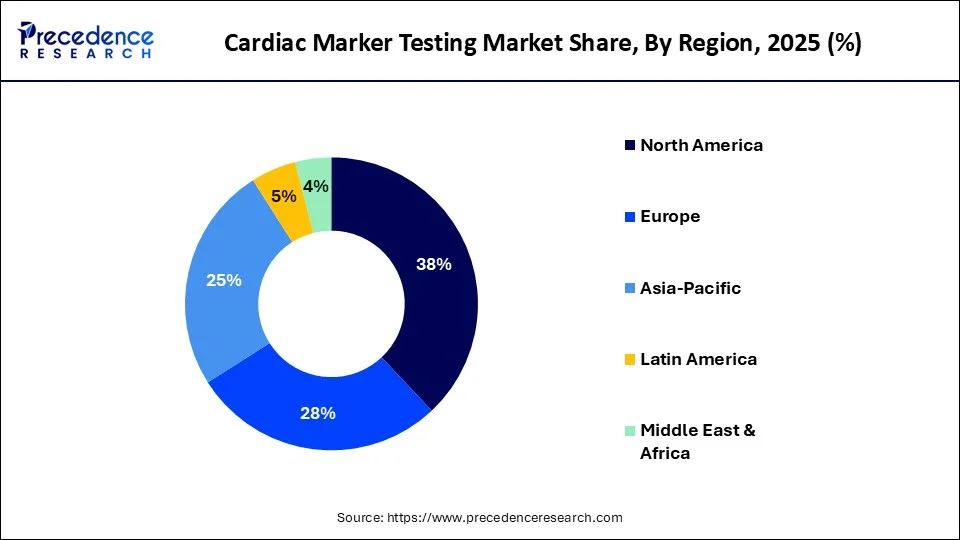
North America led the market, capturing the largest revenue share in 2025, accounting for an estimated 38%, due to high adoption of advanced cardiac diagnostics and well-established emergency healthcare infrastructure across the United States and Canada.
U.S. Cardiac Marker Testing Market Size and Growth 2026 to 2035
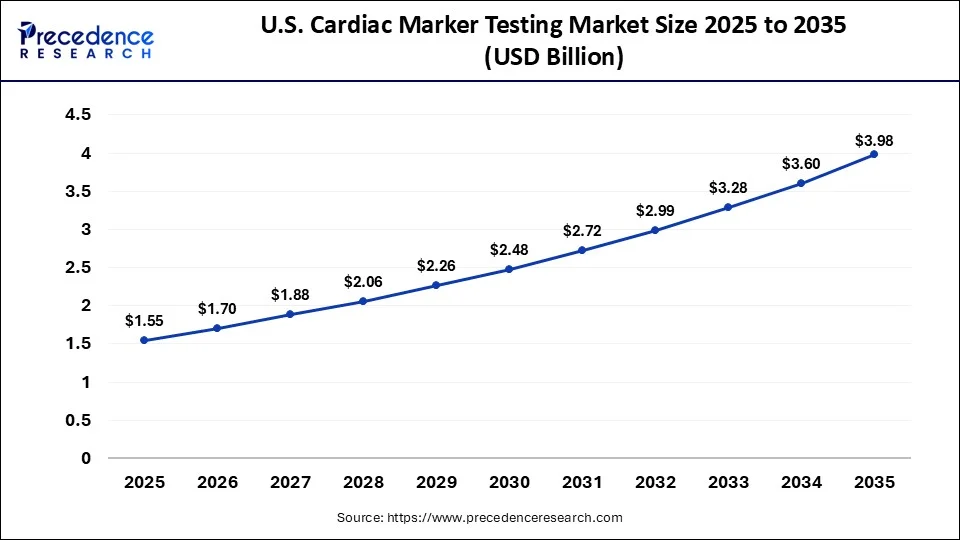
The U.S. cardiac marker testing market size was evaluated at USD 1.70 billion in 2026 and is projected to reach around USD 3.98 billion by 2035, growing at a CAGR of 9.89% from 2026 to 2035.
U.S.
The increasing prevalence of cardiovascular disease, robust reimbursement policies, and ongoing investments in laboratory automation boosted the demand for advanced cardiac biomarker tests.
Canada
The Government of India's investments in public health care contributed to lab modernization to make cardiac biomarker testing available to the provincial health care systems in a standardized format.
Mexico
Increase in health facilities and the availability of more diagnostic laboratories provided more cardiac marker testing services around the country.
Asia Pacific Expected to Held Fastest CAGR of 12.8% in 2025
Asia Pacific is expected to hold 25% of the market in 2025 and is estimated to grow at a strong CAGR of 12.8% over the projected period, supported by a rise in cardiovascular disease driving the need for an increased number of emergency diagnostic tests across the region.
China
In the cities, the increased prevalence of cardiovascular disease drove up the need for emergency cardiac biomarker testing.
Japan
An aging population enhanced the need for frequent cardiovascular screening and for highly sensitive assays for diagnostics.
India
Further development of tertiary level healthcare facilities enhanced access to advanced cardiac diagnostics services in the main metros.
South Korea
Web-based information technology infrastructure for healthcare enabled the integration and implementation of fully automatic or automated laboratory systems for cardiovascular diagnostics quickly.
Australia
Promotion of routine testing of cardiac markers with a short turnaround time, especially in hospitals with well-developed emergency healthcare services.
Singapore
Both innovative healthcare appraisals and advanced diagnostics technology have led to the quicker adoption of joint laboratory automation and advanced diagnostics technology.
Europe Held Significant Market Share of 28% in 2025
The Europe region held a 28% share of the market in 2025 and is expected to grow at a 9.9% CAGR between 2026 and 2035, driven by strong evidence-based cardiovascular diagnostics and a wide complement of advanced laboratory facilities in key healthcare systems.
Germany
Germany had advanced hospital infrastructure and profuse use of automated cardiac diagnostic technologies that kept it in a regional leadership position.
United Kingdom
Rise in the number of national cardiovascular screening programmes led to more requests for early cardiac risk assessment and for biomarker testing in laboratories.
France
A bolstered ECA service further stimulated the routine use of advanced cardiac biomarker testing in tertiary hospitals.
Italy
The introduction of healthcare modernization programs prompted the replacement of traditional analyzers with cutting-edge automated and diagnostic systems.
Spain
Public investment in healthcare infrastructure enhanced the capacity of laboratories for cardiac-biomarker analysis and the treatment of suspected acute coronary syndromes.
Netherlands
Digital connectivity of laboratory settings within the hospital shortened emergency cardiovascular diagnostics turnaround time.
Switzerland
The high cost of health care allowed hospitals to introduce state-of-the-art diagnostic technologies to address cardiovascular disease.
Latin America Held Notable Market Share with 5% in 2025
The Latin America region is expected to grow at a notable CAGR of 10.2% between 2026 and 2035, as healthcare providers increasingly prioritize rapid cardiovascular diagnosis across emergency care facilities.
Brazil
Availability of advanced cardiac biomarker testing services saw a boost with modernization of both public and private hospitals.
Mexico
Expansion of healthcare infrastructure helps to make hospital access easier with automated cardiac testing technologies.
Argentina
Laboratory modernization programmes enhanced the capacity to diagnose cardiovascular diseases for effective management.
Chile
Stable healthcare investments enabled the adoption of automated laboratory systems in being able to diagnose cardiac conditions in emergencies.
Middle East & Africa Held a Considerable Market Share of 4% in 2025
The Middle East & Africa region is expected to grow at a strong CAGR of 10.6% between 2026 and 2035, driven by healthcare investment accelerated across major urban medical centers.
GCC
The development of advanced cardiac care at the top hospitals across the region was a major part of healthcare infrastructure projects.
South Africa
Increasing cardiac biomarker testing availability through diagnostic labs in larger urban healthcare centers.
Egypt
Healthcare reforms were ongoing, which facilitated modernization of hospital laboratories and the more extensive use of advanced diagnostic technologies.
Turkey
Investment in modern hospital facilities for regular expansion bolstered cardiovascular diagnostics power on a national level.
Competitive Landscape
Market Competition Overview
The competition is high, with a small number of global diagnostic leaders, amid cardiac marker testing. The dominant companies are Roche, Abbott, Siemens Healthineers, and Danaher's Beckman Coulter, with wide-ranging immunoassay and PoC solutions. Nowadays, AI and data competencies are key to strategic positioning. Alongside supporting assay performance.
Competitive Benchmarking
There are meaningful differences in companies in terms of their biomarker breadth, analyzer technology, geographic scope, and partner engagement. Global reach and the Elecsys ECLIA platform provide Roche with good depth in hospital and reference laboratories. Innovation capabilities are becoming one of the decisive factors. Distinguishing market leaders, especially for companies making early bets on AI-driven interpretation solutions.
Product Portfolio Analysis
From a diagnostic point of view, it's a range of central lab analyzers. Point-of-care cartridges and new biosensor technologies. Reagent products keep rolling out, as companies add new highly sensitive troponin and NT proBNP products to existing platforms. In March 2026, Beckman Coulter Diagnostics joined forces with Innovaccer. Further integrating AI-based analytics into its laboratory workflow solutions. Technology has become as dependent on the integrated effective working of the reagents, instruments, and software as it is on the individual effectiveness of each.
Strategic Developments
New products, product launches, strategic partnerships, and concentration on secondary operations are among the latest developments. These underscore the growing role of diagnostics companies in the wider market beyond core reagent production. In February 2026, Danaher agreed to purchase Masimo. Broadening its line of diagnostics with cutting-edge sensors and AI-powered monitoring tools. Such acquisitions, coupled with products currently being launched. Regulatory approvals are also altering competitive leverage throughout the sector.
Company Profiles
Roche Diagnostics
Roche Diagnostics in Basel, Switzerland, is one of the world's leading in vitro diagnostics companies. Its focus on cardiac products is its Elecsys assays for troponin and NT-proBNP. They are currently available on cobas e analyzers. With the recent announcement of its merger agreement with PathAI in May 2026. The company has a solid global presence.
Abbott Laboratories
Abbott Laboratories is headquartered in Abbott Park, Illinois, in the Chicago metropolitan area. This is one of the top diagnostic and medical technology companies in the world. It offers a cardiac testing portfolio that includes the ARCHITECT and Alinity immunoassay systems, plus the portable i-STAT point-of-care system. Abbott has a wide range of geographic presence in North America, Europe, and the new Asian Pacific regions.
Siemens Healthineers
Siemens Healthineers is an Erlangen, Germany-based, global leader in the field of medical diagnostics and laboratory technology. Its Atellica IM platform supports the high-sensitivity Troponin I assay. Including a large test menu of various immunoassays and BNP assays. Siemens is further solidifying its diagnostics business worldwide, although Roche and Abbott are strong rivals in assay sensitivity and automation.
Cardiac Marker Testing Market Companies
- Abbott Laboratories
- Alere Inc.
- bioMérieux SA
- Danaher Corporation
- Getinge Group
- Guangzhou Wondfo Biotech Co. Ltd.
- LivaNova PLC
- LSI Medience Corporation
- Medtronic PLC
- Ortho Clinical Diagnostics
- Randox Laboratories Ltd
- Roche Diagnostics Ltd.
- Siemens AG
- XENIOS
Future Market Outlook (2025-2035)
Short-Term Outlook (2025-2028)
Adoption of high-sensitivity troponin is expected to further increase in hospital systems from 2025 to 2028. This will continue to be further driven by the 2025 ACC/AHA acute coronary syndrome guideline. Emergency department testing volumes are expected to rise. Because emergency department (ED) scenes will focus on localising a patient's condition to a point where a quicker test turnaround is needed. New testing options will continue to be introduced with new regulatory clearances such as QuidelOrtho's November 2025 FDA 510(k) clearance for its VITROS hs-Troponin I assay.
Medium-Term Outlook (2028-2032)
The use of AI would be very deeply rooted in the interpretation of heart disease between 2028 and 2032. The adoption of biosensors is likely to be accelerated by the emergence of portable, multiplexed biosensor platforms such as UCLA's AI-powered 2026 sensor. As evidence becomes more abundant. Emerging biomarkers like Lp-PLA2 might become more widely used clinically. These innovations will further advance cardiac diagnostics in the direction of decentralized, data-driven care.
Long-Term Outlook (2032-2035)
To look ahead to the future, cardiac diagnostics would increase in significance toward personalized cardiovascular medicine. In the February 2026 review in the journal Frontiers in Cardiovascular Medicine, they envision a future of polygenic risk scores and digital twins. The next generation of cardiac marker testing might involve continuous biosensor monitoring with patient-specific risk modelling via artificial intelligence. This movement over a long period is towards treatment of cardiovascular disease centred on individual biological and genetic characteristics.
Strategic Recommendations
Recommendations for Diagnostic Companies
High-sensitivity and multiplex assay innovation are essential for diagnostic companies to remain competitive. Companies can benefit from decentralized testing requests. By expanding their portfolio into point-of-care and biosensor formats. The geographic expansion of emerging markets is a clear priority. This is being driven by local manufacturing, such as the 2025 factory in Brazil, owned by Sysmex.
Recommendations for Healthcare Providers
The use of high sensitivity troponin protocols consistent with the 2025 ACC/AHA guideline. This should be encouraged in the care of the patient. Providers must also seek to integrate with digital tools to help bring together patient information. To ensure continued diagnostic accuracy and efficiency. Staff will continue to receive training on new assay platforms.
Recommendations for Investors
Biosensors and point-of-care technologies are two high-growth segments of cardiac diagnostics. That investors can keep an eye on these. An attractive opportunity is software platforms that integrate AI with biomarker interpretation, with Roche's upcoming PathAI deal being one example. New markers such as Lp-PLA2, which are attracting research interest in 2026. They have positive long-term research potential for investors
Cardiac Marker Testing Market Segments
By Biomarker Type
- Troponin
- Troponin I
- Troponin T
- High-Sensitivity Troponin
- Creatine Kinase-MB (CK-MB)
- Myoglobin
- B-Type Natriuretic Peptide (BNP)
- N-Terminal Pro-B-Type Natriuretic Peptide (NT-proBNP)
- C-Reactive Protein (CRP)
- Lipoprotein-Associated Phospholipase A2 (Lp-PLA2)
- Other Emerging Cardiac Biomarkers
By Testing Technology
- Immunoassay-Based Testing
- Chemiluminescence Immunoassay
- Enzyme-Linked Immunosorbent Assay (ELISA)
- Fluorescence Immunoassay (FIA)
- Electrochemiluminescence Immunoassay (ECLIA)
- Molecular Diagnostic Testing
- Biosensor-Based Testing
- Point-of-Care Testing (POCT)
By Product Type
- Reagents & Consumables
- Troponin Reagents
- BNP/NT-proBNP Reagents
- CK-MB Reagents
- Control Materials
- Instruments & Analyzers
- Automated Immunoassay Analyzers
- Portable Analyzers
- Multiplex Testing Platforms
- Software & Data Management Solutions
By Sample Type
- Blood
- Whole Blood
- Plasma
- Serum
- Urine Samples
- Other Biological Samples
By Application
- Myocardial Infarction (Heart Attack) Diagnosis
- Acute Coronary Syndrome (ACS) Detection
- Heart Failure Diagnosis & Monitoring
- Risk Assessment & Prognosis
- Cardiac Surgery Monitoring
- Emergency Department Screening
- Other Cardiovascular Disorders
By End User
- Hospitals
- Diagnostic Laboratories
- Cardiology Centers
- Emergency Medical Services
- Research Institutes & Academic Centers
- Point-of-Care Testing Centers
By Distribution Channel
- Direct Sales
- Hospital & Laboratory Distributors
- Medical Device Distributors
- Online Healthcare Procurement
By Region
- North America
- Latin America
- Europe
- Asia-pacific
- Middle and East Africa
For inquiries regarding discounts, bulk purchases, or customization requests, please contact us at sales@precedenceresearch.com
Frequently Asked Questions





Ask For Sample
No cookie-cutter, only authentic analysis – take the 1st step to become a Precedence Research client
 Get a Sample
.webp)



 sales@precedenceresearch.com
 Schedule a Meeting
