



Decentralized Clinical Trials in Neurology Market Size, Companies, Share, Patient Volume, Treatment Adoption Rates, Pricing Analysis, Regulatory Landscape, Competitive Positioning, and Demand Forecast
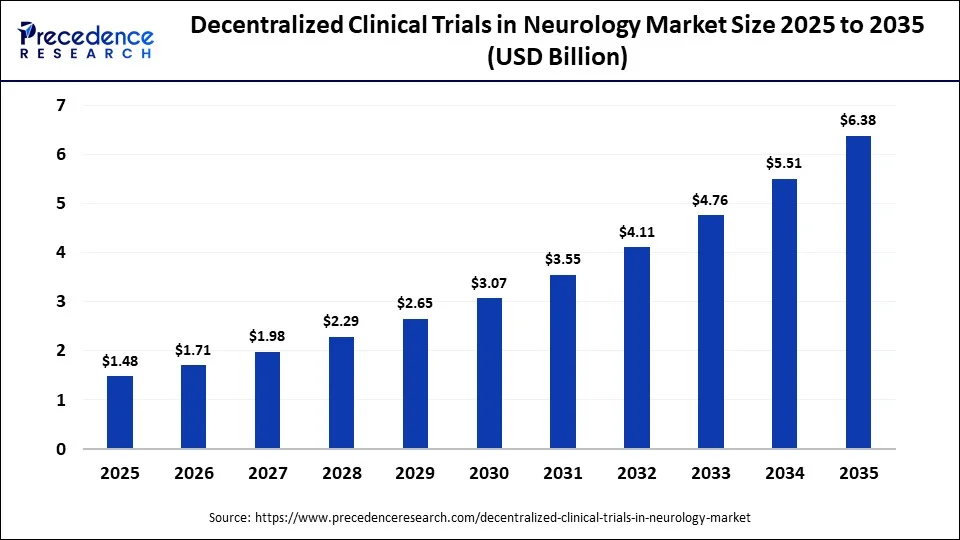
Rohan Patil, a Healthcare Industry Expert, highlights that the decentralized clinical trials in neurology market has reached USD 1.71 billion in 2026 and is on track to reach USD 6.38 billion by 2035, advancing at a CAGR of 15.80%. Key decentralized clinical trials in neurology market companies shaping the market include IQVIA, ICON plc, Parexel, Medpace, while major growth segments span indication, trial phase, trial model, technology, end user, region.
Source: https://www.precedenceresearch.com/decentralized-clinical-trials-in-neurology-market
 Get a Sample
 Table Of Content


Decentralized Clinical Trials in Neurology Market Size and Forecast 2026 to 2035
The global decentralized clinical trials in neurology market size accounted for USD 1.48 billion in 2025 and is predicted to increase from USD 1.71 billion in 2026 to approximately USD 6.38 billion by 2035, expanding at a CAGR of 15.80% from 2026 to 2035. The increasing prevalence of neurological diseases and clinical trial activities are key growth factors for the market.
Key Takeaways
- North America led the decentralized clinical trials in neurology market with a share of 43% in 2025.
- Asia-Pacific is expected to be the fastest-growing region in the forecasted duration with a CAGR of 18.9%.
- By indication, the Alzheimer's disease segment held a dominant position in the market with a share of 30% in 2025.
- By indication, the neuromuscular disorders segment is expected to grow at the fastest CAGR of 17.8% in the market between 2026 and 2035.
- By trial phase, the phase III segment accounted for a considerable revenue share of 42% in the market in 2025.
- By trial phase, phase II is expected to grow with the highest CAGR of 17.3% in the market during the years studied.
- By trial model, the hybrid decentralized trials segment held the largest decentralized clinical trials in neurology market share of 63% in 2025.
- By trial model, the fully decentralized trials segment is expected to grow at the highest CAGR of 17.5% over the studied period.
- By technology, the wearable devices and remote monitoring segment led the global market with a share of 32% in 2025 and is expected to expand rapidly in the market with a CAGR of 18.8% in the coming years.
- By end user, the pharmaceutical companies segment led the global market with a share of 58% in 2025.
- By end user, the biotechnology companies segment is expected to expand rapidly in the market with a CAGR of 18.3% in the coming years.
Market Overview
A decentralized clinical trial (DCT) is a modern approach where some or all trial-related activities take place outside traditional clinical settings. This innovative method offers significant advantages, including the ability to reach patients in rural areas, those from underserved regions, and individuals with limited travel options. By providing greater flexibility for participants, DCTs enhance retention rates and improve overall satisfaction with the trial experience. With over 3 billion people globally affected by neurological conditions, which rank among the top causes of illness and disability, the demand for decentralized clinical trials has surged, driving growth in the market.
Impact of Artificial Intelligence on the Decentralized Clinical Trials in Neurology Industry
Artificial Intelligence (AI) is revolutionizing decentralized clinical trials, establishing it as the new benchmark in clinical research. AI offers significant advantages at multiple stages of the trial process, from recruitment and patient monitoring to retention and post-trial analysis. It can even tailor personalized medication dosages within a DCT framework. Furthermore, AI is essential for managing and analyzing the extensive data produced by these innovative technologies, ensuring that DCTs are both efficient and focused on the needs of patients.
Decentralized Clinical Trials in Neurology Market Trends
- Expansion of Telemedicine in Neurology Trials: The increasing adoption of telemedicine is driving decentralized clinical trials in neurology by improving access to specialty care, particularly in rural and underserved regions, while demonstrating clinical outcomes comparable to traditional in-person evaluations.
- Growing Integration of Digital Health Technologies: Digital health technologies, including electronic sensors, connected platforms, and advanced data systems, are transforming decentralized neurology clinical trials by enabling direct patient data collection, enhancing remote monitoring, and improving trial efficiency.
- Rising Adoption of Wearable Technologies: The growing demand for wearable devices and improved technical capabilities is expanding their role in decentralized neurology clinical trials, supporting continuous disease monitoring, remote patient management, and real-world data collection beyond clinical settings.
Market Report Coverage and Key Metrics
| Report Coverage | Details |
| Market Size in 2025 | USD 1.48 Billion |
| Market Size in 2026 | USD 1.71 Billion |
| Market Size by 2035 | USD 6.38 Billion |
| Market Growth Rate from 2026 to 2035 | CAGR of 15.80% |
| Dominating Region | North America |
| Fastest Growing Region | Asia Paicfic |
| Base Year | 2025 |
| Forecast Period | 2026 to 2035 |
| Segments Covered | Indication, Trial Phase, Trial Model, Technology, End User, and Region |
| Regions Covered | North America, Europe, Asia-Pacific, Latin America, and Middle East & Africa |
Market Dynamics
Drivers
Rising Burden of Neurological Disorders and Digital Trial Adoption
The increasing prevalence of neurological disorders, coupled with growing clinical research activities, expanding telehealth infrastructure, stronger regulatory support for decentralized trial models, and the emergence of AI-powered predictive analytics, is accelerating the adoption of decentralized clinical trials in neurology.
Restraint
Limited Clinical Oversight and Regulatory Complexity
Decentralized clinical trials in neurology face challenges due to reduced opportunities for physical examinations, concerns over investigator oversight and participant safety, and varying regulatory requirements that can delay implementation and limit broader acceptance across global markets.
Opportunity
Enhanced Patient Retention Through Decentralized Trial Models
Decentralized clinical trials provide significant opportunities to improve patient retention in neurology studies by enabling convenient remote participation, strengthening communication between investigators and participants, reducing dropout rates, and supporting successful completion across multiple trial phases.
Market Segmentation Analysis
Indication Insights
The Alzheimer's Disease Segment Dominated the Market with a 30% Share in 2025
The Alzheimer's disease segment dominated the decentralized clinical trials in neurology market with a 30% share in 2025, driven primarily by the rising aging population. In addition, the growing development of anti-amyloid therapies and increasing use of remote cognitive assessments are supporting segment growth. Furthermore, the expansion of biomarker-based trials and the high unmet medical need are reinforcing its leading position.
Decentralized Clinical Trials in Neurology Market Share, By Indication, 2025-2035 (%)
| Indication | 2025 | 2035 | CAGR (%) |
| Alzheimer's Disease | 30.00% | 33.00% | 17.4% |
| Parkinson's Disease | 16.00% | 17.00% | 16.2% |
| Multiple Sclerosis | 14.00% | 13.00% | 15.0% |
| Epilepsy | 11.00% | 10.00% | 14.2% |
| Stroke | 9.00% | 8.00% | 13.8% |
| Migraine | 9.00% | 9.00% | 16.0% |
| Neuromuscular Disorders | 7.00% | 7.00% | 17.8% |
| Others | 4.00% | 3.00% | 14.6% |
The Parkinson's disease segment accounted for 16% of the market share in 2025 and is expected to grow at a CAGR of 16.2% in the coming years, driven by the rising adoption of digital biomarkers and the increased utilization of wearable devices. Moreover, the growing global prevalence of Parkinson's disease, along with the expansion of precision neurology and improved remote motor assessments, is further supporting segment growth.
The neuromuscular disorders segment held 7% of the market share in 2025 and is expected to be the fastest-growing segment with a CAGR of 17.8% in the coming years. Growth is being driven by the expansion of gene therapy studies and the increasing rate of rare disease trial initiation. Additionally, home-based functional assessments and rising orphan drug development are enhancing remote specialist access and further supporting segment expansion.
Trial Phase Insights
The Phase III Segment Led the Market With a 42% Share in 2025
The phase III segment led the decentralized clinical trials in neurology market with a 42% share in 2025, driven by large multicenter studies and virtual patient visits. Phase III clinical trials are the final pre approval stage of clinical studies and involve comparing the new drug to either a placebo or the current standard of care in larger patient populations. Increased use of decentralized monitoring technologies and faster recruitment are further supporting segment growth.
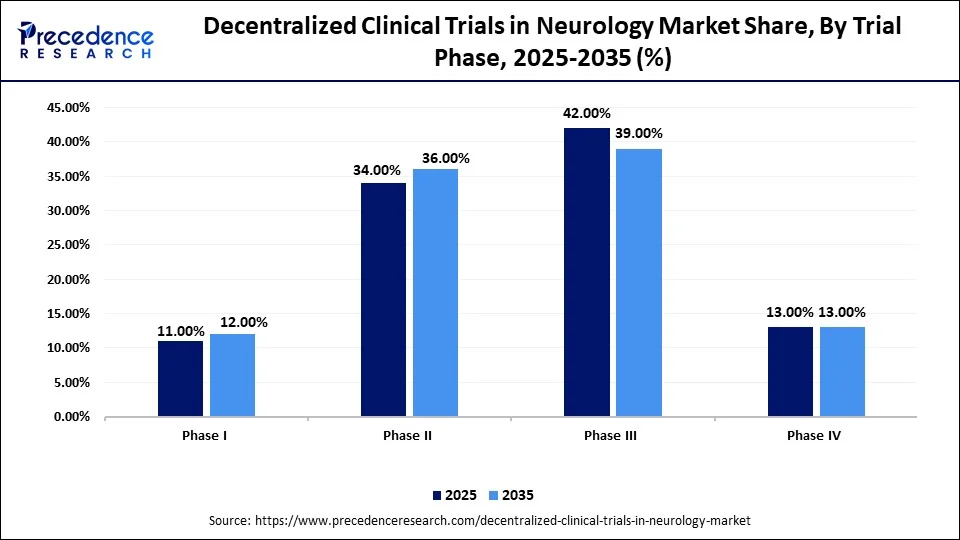
The Phase II segment accounted for 34% of the market share in 2025 and is expected to grow at the fastest CAGR of 17.3% over the forecast period, driven by a rising number of proof of concept studies and increasing adoption of adaptive trial designs. Phase II studies evaluate the effectiveness of an experimental drug for a specific disease or condition in approximately 100 to 300 volunteers. Growing remote endpoint utilization and biomarker driven enrollment are also contributing to this segment's expansion.
The Phase I segment held 11% of the market share in 2025 and is projected to grow at a CAGR of 16.5% in the coming years, supported by early digital biomarker validation and an increasing number of first in human CNS programs. Phase I trials are the first step in testing new treatments in humans and typically involve a small number of participants. Remote safety monitoring, the expansion of biotech innovation, and increased digital recruitment are key factors driving growth in this segment.
Trial Model Insights
The Hybrid Decentralized Trials (DCT) Segment Held the Largest Market Share of 63% in 2025
The hybrid decentralized trials segment held a dominant revenue share of 63% in the decentralized clinical trials in neurology market in 2025, propelled by the effective combination of site and remote visits, alongside greater regulatory acceptance. In these trials, participants engage in a mix of in-person visits to traditional clinical trial sites and activities conducted at alternative locations, such as their homes. Additionally, enhanced protocol flexibility and improved patient compliance further contribute to this growth.
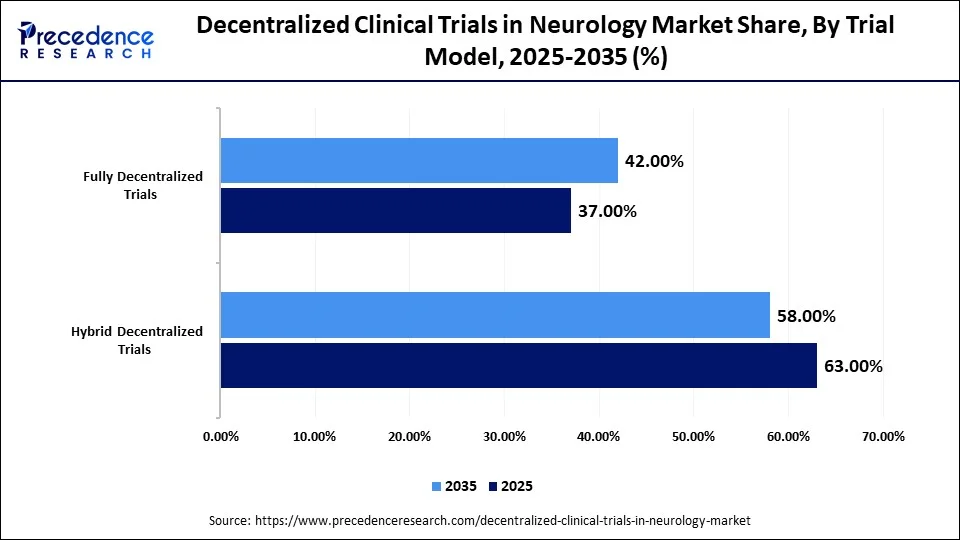
The fully decentralized trials segment accounted for 37% of the market share in 2025 and is expected to be the fastest-growing segment with a CAGR of 17.5% in the coming years, driven by the rising adoption of telemedicine and the integration of home healthcare services. In Fully DCTs, all trial activities are conducted outside traditional trial sites, often taking place in participants' homes or in local healthcare facilities that offer convenience. The expansion of wearable technologies and a reduced travel burden for patients are key factors supporting this upward trend.
Technology Insights
The Wearable Devices and Remote Monitoring Segment Dominated the Market with a 32% Share in 2025
The wearable devices and remote monitoring segment dominated the decentralized clinical trials in neurology market with a 32% share in 2025 and is expected to sustain its dominance with a CAGR of 18.8% in the forthcoming years. Growth is driven by its ability to enable continuous neurological monitoring, the expansion of digital biomarker research, and the adoption of AI-based patient analytics. Moreover, improved endpoint accuracy and rising wearable adoption are further supporting market growth.
Decentralized Clinical Trials in Neurology Market Share, By Technology, 2025-2035 (%)
| Technology | 2025 | 2035 | CAGR (%) |
| Telemedicine Platforms | 29.00% | 27.00% | 14.6% |
| eConsent & eCOA Solutions | 24.00% | 23.00% | 15.7% |
| Wearable Devices & Remote Monitoring | 32.00% | 37.00% | 18.8% |
| eSource & Electronic Data Capture (EDC) | 15.00% | 13.00% | 14.2% |
The telemedicine platforms segment captured 29% of the market share in 2025 and is expected to grow at a CAGR of 14.6% in the coming years, driven by the expansion of virtual neurologist consultations and reduced site visits. These platforms support higher patient accessibility and improved follow-up compliance. Overall, the expansion of digital healthcare is supporting the growth of this segment.
The eConsent and eCOA solutions segment held 24% of the market share in 2025 and is expected to grow at a CAGR of 15.7% in the coming years, driven by strong regulatory acceptance and improved documentation quality. Furthermore, enhanced patient experience and reduced operational costs are supporting the growth of this segment.
End User Insights
The Pharmaceutical Companies Segment Led the Market with A 58% Share in 2025
The pharmaceutical companies segment accounted for the highest revenue share of 58% in the decentralized clinical trials in neurology market in 2025, driven by large neurology drug pipelines and increasing digital transformation. Furthermore, higher R&D investment, the expansion of decentralized trial adoption, and global commercialization strategies are supporting market growth.
Decentralized Clinical Trials in Neurology Market Share, By End User, 2025-2035 (%)
| End User | 2025 | 2035 | CAGR (%) |
| Pharmaceutical Companies | 58.00% | 54.00% | 15.0% |
| Biotechnology Companies | 30.00% | 35.00% | 18.3% |
| Academic & Research Institutes | 12.00% | 11.00% | 13.8% |
The biotechnology companies segment accounted for 30% of the market share in 2025 and is expected to expand rapidly with a CAGR of 18.3% in the coming years. This growth is driven by rising CNS innovation and increasing venture funding. In addition, gene and cell therapy development, flexible DCT adoption, and faster patient recruitment further support segment expansion.
The academic and research institutes segment held 12% of the market share in 2025 and is expected to grow at a CAGR of 13.8% in the coming years, supported by government neuroscience funding and investigator-led virtual studies. Moreover, the expansion of digital health research, increasing international collaborations, and growing real-world evidence generation are contributing to this segment's growth.
Market Regional Analysis: North America, Europe, Asia-Pacific
U.S. Decentralized Clinical Trials Market Size and Growth 2026 to 2035
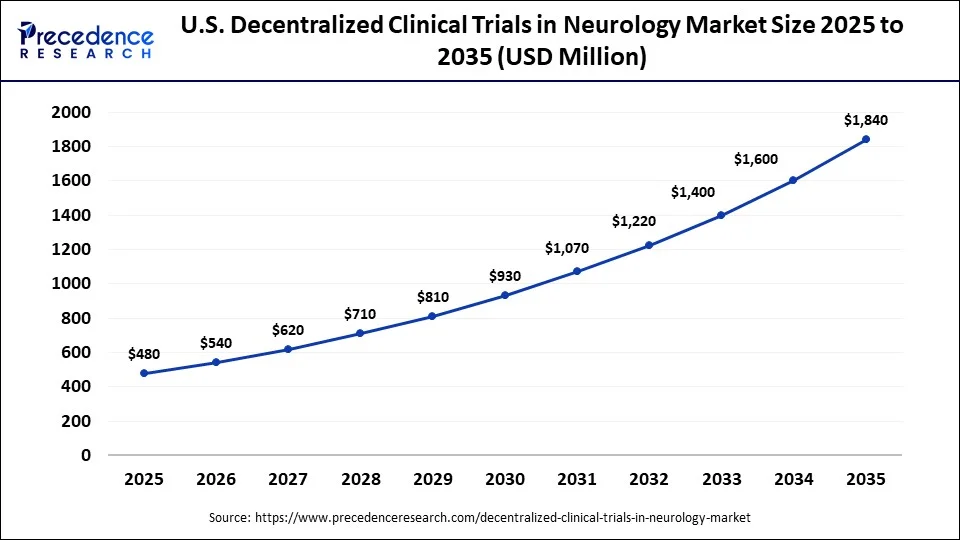
The U.S. Decentralized Clinical Trials market size was evaluated at USD 480 million in 2025 and is projected to reach around USD 1,840 million by 2035, growing at a CAGR of 14.60% from 2026 to 2035.
Which Factors Drive the Decentralized Clinical Trials Market in North America?
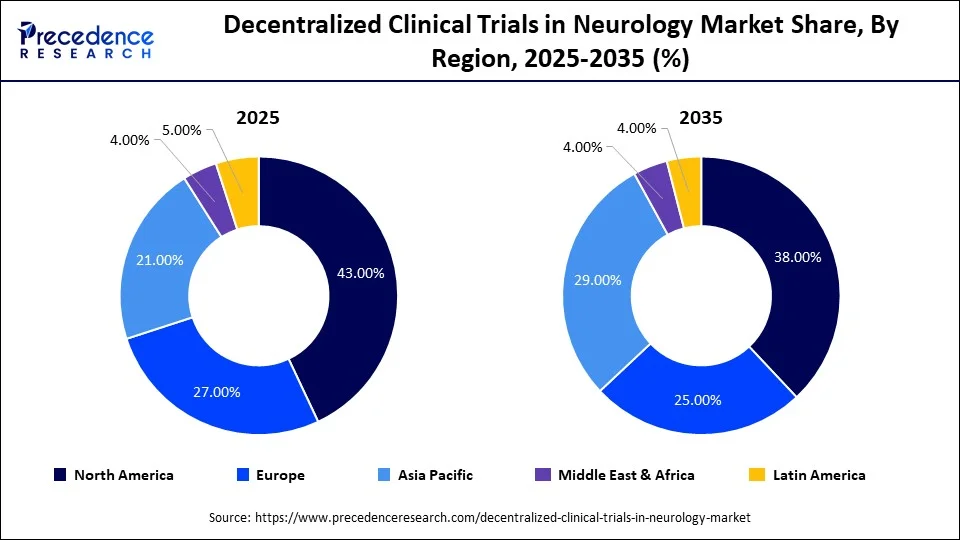
North America held a major market share of 43% in 2025. This growth can be attributed to the widespread adoption of decentralized trial technologies, a robust clinical pipeline in neurology, an advanced digital healthcare ecosystem, and strong patient engagement in remote monitoring.
United States Market Analysis
In North America, the U.S. benefits from substantial FDA support for the implementation of decentralized clinical trials. The FDA's RMAT designation program has notably accelerated approval timelines for cell-based therapies. Additionally, fast-track approvals and growing support for advanced therapy medicinal products and the expansion of remote clinical trials are further driving market growth.
Asia-Pacific: The Fastest-Growing Region
Asia-Pacific held 21% of the market share by 2025 and is expected to experience the fastest growth with a CAGR of 18.9% during the predicted timeframe. This surge is fueled by rapid digital healthcare transformation, a large neurological patient population, and strong government backing for modernizing clinical research.
China Market Analysis
China is leading the way in the Asia-Pacific market, driven by significant investments in research, evolving regulatory frameworks, and competitive pricing strategies. The nation is emerging as a pivotal hub for neurology research, bolstered by increasing smartphone and wearable technology usage and a rise in contract research organization outsourcing, all contributing to market growth.
Europe: The Second-Largest Region
Europe held the second-largest market share of 27% in 2025 and is expected to grow at a notable CAGR of 15.1% in the foreseeable future, supported by the rising adoption of hybrid clinical trials and a strong network of neurological research. The expansion of digital health regulations, growing cross-border clinical collaborations, and heightened investment in remote patient monitoring are further solidifying the region's market position.
Germany Market Analysis
Germany plays a significant role in the European market, where regulatory support and innovation are crucial for shaping the future of decentralized clinical trials. Increased collaboration between research institutions and private companies is accelerating the development of clinical trials for neurological disorders, especially in remote and underserved areas.
Will the Middle East and Africa Grow in the Decentralized Clinical Trials in Neurology Market?
The Middle East and Africa region accounted for 4% of the market share in 2025 and is considered to be a significantly growing area with a CAGR of 14.8% in the forthcoming years, due to advancements in telehealth infrastructure and rising investments in clinical research. The expansion of multinational studies and the increasing prevalence of neurological diseases are also propelling growth.
UAE Market Analysis
Within the Middle East and Africa, the UAE is making significant strides, backed by progress in regenerative medicine, gene editing, and biotechnology. The growing adoption of digital healthcare platforms that facilitate clinical trial participation for neurological conditions is another key driver of growth. An increasing number of remote trials are achieving regulatory approval, further enhancing market expansion.
How is Latin America Growing in the Market?
Latin America held 5% of the market share in 2025 and is expected to grow at a CAGR of 15.3% in the coming years, driven by cost-effective patient recruitment and the increasing adoption of remote healthcare models. Additionally, a surge in multinational neurology studies, the expansion of digital trial capabilities, and improved regulatory acceptance are strengthening the regional market outlook.
Brazil Market Analysis
Brazil stands out as a major growth engine in the Latin American market. Government bodies, healthcare institutions, and private investors are investing significantly in both fully decentralized and hybrid clinical trial infrastructure for neurological conditions. Moreover, the growing adoption of remote healthcare and targeted initiatives aimed at fostering a supportive research environment are empowering the region to enhance its clinical trial capabilities.
Market Competitive Landscape: Leading Companies and Strategies
The decentralized clinical trials in neurology market is semi-consolidated, with key players harnessing advanced analytics and forming strategic partnerships with specialized digital health companies to expand their decentralized operations on a global scale. This approach supports comprehensive digital trial tools that biopharma sponsors utilize to accelerate overall trial timelines.
Despite its potential, the market faces several challenges, including the complexity of neurological assessments, vulnerabilities within patient populations, concerns regarding data reliability, fragmented regulatory environments, and data privacy issues. Nevertheless, companies are actively working on solutions, such as developing single-login portals that effortlessly integrate scheduling, remote consent, and video telemedicine visits for patients. They are also employing artificial intelligence and computer vision through smartphones to monitor medication adherence and detect subtle changes in neurological symptoms.
Top Companies in the Decentralized Clinical Trials in Neurology Market
- IQVIA
- ICON plc
- Parexel
- Medpace
- Labcorp Drug Development
- Syneos Health
- PPD
- Worldwide Clinical Trials
- PSI CRO
- Novotech
- CMIC Holdings
- KCR
- Ergomed
- CTI Clinical Trial and Consulting
- Precision for Medicine
Recent Developments
- In May 2026, URE SYNGAP1 announced a strategic investment of $111,960 in RARE-X to advance the collection of high-quality patient-reported outcome (PRO) measures for the ProMMiS Natural History Study. This multi-year commitment will help ensure that the patient voice is systematically captured and meaningfully integrated into the clinical development pipeline for SYNGAP1-related disorders.(Source: https://www.eurekalert.org)
- In February 2026, Praxis Precision Medicines announced that it had submitted new drug applications (NDAs) to the FDA for ulixacaltamide for the treatment of essential tremor (ET) and relutrigine for SCN2A- and SCN8A-related developmental epileptic encephalopathies (DEEs). These submissions arise from development programs focused on neurologic disorders with significant unmet medical need.(Source: https://www.neurologylive.com)
Segments Covered in the Report
By Indication
- Alzheimer's Disease
- Parkinson's Diseass
- Multiple Sclerosis
- Epilepsy
- Stroke
- Migraine
- Neuromuscular Disorders
- Others
By Trial Phase
- Phase I
- Phase II
- Phase III
- Phase IV
By Trial Model
- Fully Decentralized Trials (DCT)
- Hybrid Decentralized Trials
By Technology
- Telemedicine Platforms
- eConsent & eCOA Solutions
- Wearable Devices & Remote Monitoring
- eSource & Electronic Data Capture (EDC)
By End User
- Pharmaceutical Companies
- Biotechnology Companies
- Academic & Research Institutes
By Region
- North America
- Latin America
- Europe
- Asia-pacific
- Middle and East Africa
For inquiries regarding discounts, bulk purchases, or customization requests, please contact us at sales@precedenceresearch.com
Frequently Asked Questions





Ask For Sample
No cookie-cutter, only authentic analysis – take the 1st step to become a Precedence Research client
 Get a Sample




 sales@precedenceresearch.com
 Schedule a Meeting
