



Diabetes Associated Ophthalmic Treatment Market Size, Companies, Share, Patient Volume, Treatment Adoption Rates, Pricing Analysis, Regulatory Landscape, Competitive Positioning, and Demand Forecast
Diabetes Associated Ophthalmic Treatment Market (By Disease Type: Diabetic Retinopathy, Diabetic Macular Edema, Cataract Secondary to Diabetes, Others; By Treatment Type: Pharmaceuticals, Medical Devices; By Route of Administration: Intravitreal Injection, Topical Administration, Systemic Administration, Others; By End-User: Hospitals, Ophthalmology Clinics, Ambulatory Surgical Centers, Homecare Settings; By Age Group: Pediatric Patients, Working-Age Adults, Elderly Patients) - Global Industry Analysis, Size, Trends, Leading Companies, Regional Outlook, and Forecast 2026 to 2035
Source: https://www.precedenceresearch.com/diabetes-associated-ophthalmic-treatment-market
 Get a Sample
 Table Of Content


What is the Diabetes Associated Ophthalmic Treatment Market Size in 2026?
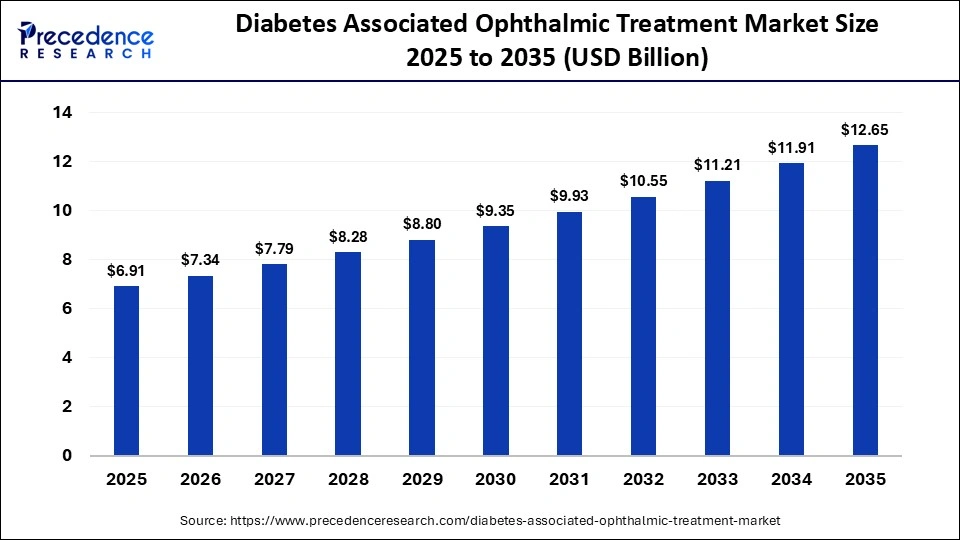
The global diabetes associated ophthalmic treatment market size was calculated at USD 6.91 billion in 2025 and is predicted to increase from USD 7.34 billion in 2026 to approximately USD 12.65 billion by 2035, expanding at a CAGR of 6.24% from 2026 to 2035. The growth of the market is driven by the rising global prevalence of diabetes, which leads to ophthalmic complications such as diabetic retinopathy, diabetic macular oedema, etc. The rising demand for minimally invasive ophthalmic surgeries also contributes to market growth.
Key Takeaways
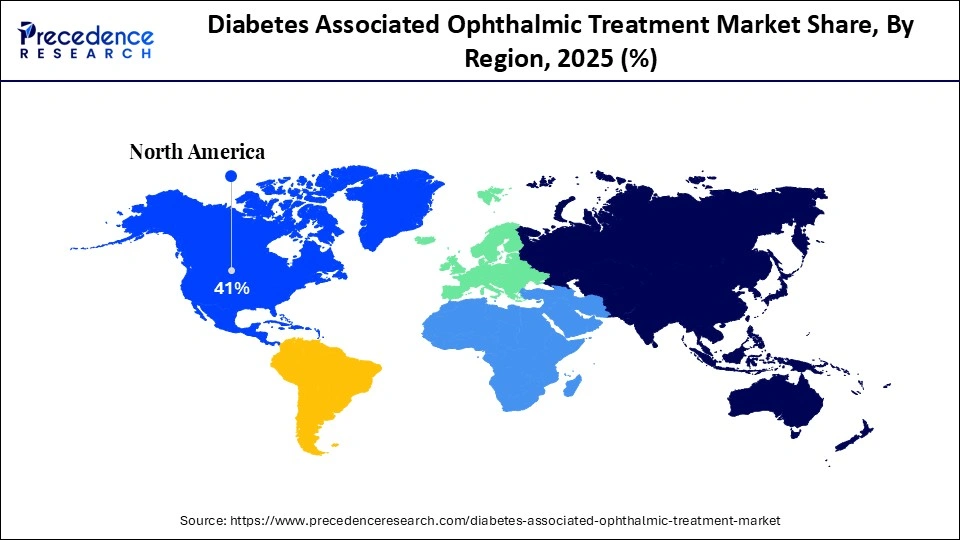
- North America dominated the market with the largest share of 41% in 2025.
- The Asia Pacific is expected to grow at the fastest CAGR during the forecast period.
- By disease type, the diabetic retinopathy segment dominated the market with the largest share in 2025.
- By disease type, the diabetic macular edema segment is expected to grow at a significant CAGR during the forecast period.
- By treatment type, the pharmaceuticals segment dominated the market with the largest share in 2025.
- By treatment type, the medical eye device segment is predicted to grow at the fastest CAGR during the predicted timeframe.
- By route of administration, the intravitreal injection segment dominated the market with a significant share in 2025.
- By route of administration, the topical administration segment is expected to grow at the fastest CAGR during the forecast period.
- By end-user, the hospitals segment dominated the market with the highest share in 2025.
- By end-user, the ophthalmology clinics segment is observed to grow at the fastest rate during the forecast period.
- By age group, the working-age adults segment dominated the market in 2025.
- By age group, the elderly patients segment is expected to grow at a significant rate in the coming years.
What is the Diabetes Associated Ophthalmic Treatment Market?
The diabetes associated ophthalmic treatment market is a branch of the healthcare sector focused on managing eye disorders caused by diabetes, such as diabetic retinopathy and diabetic macular edema. With millions of people affected by diabetes, the demand for effective vision-preserving treatments continues to grow. Market expansion is driven by rising global prevalence of diabetes, an ageing population, advancements in laser and drug therapies, increased awareness, screening programs, and supportive government initiatives that improve health care access and affordability.
How are Technological Advancements Impacting the Diabetes Associated Ophthalmic Treatment Market?
Technological advancements are transforming the management of diabetes associated ophthalmic diseases through improved diagnostics and targeted therapies. Tools such as optical coherence tomography (OCT), fundus imaging, and AI-based screening systems enable early detection of diabetic retinopathy and macular edema. Treatment innovations, including advanced laser therapy, minimal invasive vitrectomy, intravitreal anti-VEGF injections, and sustained release implants, have enhanced precision and patient outcomes. Despite cost and access challenges in some regions, ongoing innovation continues to drive strong market growth.
Diabetes Associated Ophthalmic Treatment Market Trends
- Supportive government policies and funding: Public health initiatives, research funding, and favorable reimbursement frameworks are strengthening the market growth by improving early diagnosis, treatment access, and patient awareness regarding routine eye examinations.
- Rising adoption of contact lenses: The growing preference for contact lenses over spectacles has increased the incidence of dry eye and related ocular conditions, thereby driving demand for ophthalmic medications and supportive therapies.
- Expanding geriatric population: The rapid growth of the elderly population worldwide has led to a higher prevalence of chronic eye diseases and increased the need for prevention and treatment.
- Evolving regulatory landscape: Stringent regulatory standards and approval process ensure product safety and efficacy, while competitive pressure from emerging and minimally invasive therapies encourages continuous innovation among market players.
- Personalized medicine: The focus on the development of targeted treatments for specific ophthalmic complications of diabetes is also determining industry trends. There is an adoption of digital health technologies for remote monitoring and telehealth services in ophthalmology, which enhances accessibility and improves patient treatment.
Market Scope
| Report Coverage | Details |
| Market Size in 2025 | USD 6.91 Billion |
| Market Size in 2026 | USD 7.34 Billion |
| Market Size by 2035 | USD 12.65 Billion |
| Market Growth Rate from 2026 to 2035 | CAGR of 6.24% |
| Dominating Region | Asia Pacific |
| Fastest Growing Region | North America |
| Base Year | 2025 |
| Forecast Period | 2026 to 2035 |
| Segments Covered | Disease Type, Treatment Type, Route of Administration, End-User, Age Group, and Region |
| Regions Covered | North America, Europe, Asia-Pacific, Latin America, and Middle East & Africa |
Segmental Insights
Disease Type Insights
Why Did the Diabetic Retinopathy Segment Dominate the Market?
The diabetic retinopathy segment dominated the diabetes associated ophthalmic treatment market with the largest revenue share in 2025 due to its high prevalence among diabetic patients. As one of the most common microvascular complications of diabetes, diabetic retinopathy requires continuous monitoring, early diagnosis, and long-term treatment. Increased awareness, routine diabetic eye screening programs, and improved access to ophthalmic care further contribute to its large market share.
The diabetic macular edema segment is projected to grow at the fastest rate during the forecast period due to the rising global prevalence of diabetes and the increasing incidence of vision-threatening complications. As a common and serious consequence of diabetic retinopathy that leads to substantial vision impairment, diabetic macular edema requires comprehensive treatment. Additionally, growing awareness, better access to ophthalmic care, and expanding reimbursement coverage are supporting the segment's continued growth.
Treatment Type Insights
What Made Pharmaceuticals the Dominant Segment in the Market?
The pharmaceuticals segment dominated the diabetes associated ophthalmic treatment market in 2025, primarily due to the widespread adoption of anti-VEGF therapy having a strong clinical efficacy. Pharmacological treatments remain the first-line approach for managing diabetic macular edema and diabetic retinopathy, contributing to consistent global demand. Widely prescribed medicines are Lucentis, Eylea, and Evastin, which play a critical role in controlling vascular endothelial growth factor activity and reducing the retinal damage.
The medical devices segment is expected to expand at the fastest CAGR during the forecast period. The growth of the segment is driven by increasing preference for minimally invasive procedures, technological innovation in medical devices, and improved surgical outcomes with these devices. Advanced laser systems such as Micropulsor Laser (MPL) and green laser photo coagulation are widely used for targeting retinal abnormalities in diabetic retinopathy. Intraocular implants like implantable miniature telescope (IMT) are gaining attention for enhancing vision in patients with advanced retinal damage, thereby accelerating segment growth.
Route of Administration Insights
How Does the Intravitreal Injection Route Segment Dominate the Market?
The intravitreal injection segment dominated the diabetes associated ophthalmic treatment market, capturing the largest share in 2025. This is mainly due to its high clinical effectiveness and widespread adoption in managing diabetic eye diseases. This allows direct administration of therapeutic medicines such as anti-VEGF drugs into the vitreous humor for conditions such as diabetic retinopathy. This route minimizes systemic exposure while enabling high local drug concentration. Strong physician preference and robust R&D framework have further enforced its market leadership globally.
The topical administration segment is expected to grow at the fastest rate during the forecast period. The growth of the segment is driven by increasing demand for non-invasive and patient-friendly ophthalmic therapies that improve compliance and reduce treatment burden. Eye drops and topical formulations are preferred for managing early-stage conditions, post-surgical care, and inflammation, as they reduce the need for injections and hospital visits. Additionally, ongoing advancements in drug delivery technologies are improving ocular penetration and therapeutic effectiveness, further supporting the expansion of topical treatments in diabetic eye care.
Meanwhile, the systemic administration segment is expected to grow at a notable rate because many patients with diabetic eye diseases also require comprehensive management of underlying diabetes and related complications. Systemic therapies, including oral and intravenous medications, are gaining traction in cases where metabolic control supports ocular health.
End-User Insights
How Do Hospitals Contribute the Largest Share in the Market?
The hospitals segment held the largest share of the diabetes associated ophthalmic treatment market in 2025. This is mainly due to their role as primary care and referral centers for complex and advanced cases. The availability of multi-disciplinary specialists, advanced diagnosis, and surgical infrastructure enables hospitals to manage severe diabetic eye complications effectively. Also, healthcare policies and investments in hospitals for ophthalmic procedures further strengthen their market dominance.
The ophthalmic clinics segment is projected to grow at the fastest CAGR during the forecast period, driven by its specialized focus on eye care and expertise in managing conditions such as diabetic retinopathy. These centers offer advanced diagnostic technologies and treatment options. The rising demand for personalized eye care contributes to segmental growth.
On the other hand, the ambulatory surgical centers segment is expected to grow at a significant rate. This is mainly due to the rising demand for outpatient procedures, owing to their cost-effectiveness, convenience, and focus on niche treatment areas. Additionally, advancements in minimally invasive ophthalmic techniques and increasing patient demand for convenient same-day procedures are accelerating the shift from hospitals to ASCs for diabetic eye care.
Age Group Insights
Why Did the Working-Age Adults Segment Lead the Market?
The working-age adults segment led the diabetes associated ophthalmic treatment market in 2025 because this population represents the largest share of individuals living with diabetes globally. Prolonged exposure to high blood glucose levels during prime working years increases the risk of complications such as diabetic retinopathy and diabetic macular edema, driving consistent demand for diagnosis and treatment. Additionally, higher healthcare awareness, active employment-based insurance coverage, and regular health screenings among working adults further contribute to the segment's dominant market share.
The elderly patients segment is expected to grow at a significant rate in the coming years. This is due to the rising aging population and the higher prevalence of long-standing diabetes in older adults. Aging increases the risk and severity of complications such as diabetic retinopathy, diabetic macular edema, and cataracts, leading to greater demand for ongoing ophthalmic care and advanced treatments.
Regional Insights
North America Diabetes Associated Ophthalmic Treatment Market Size and Growth 2026 to 2035
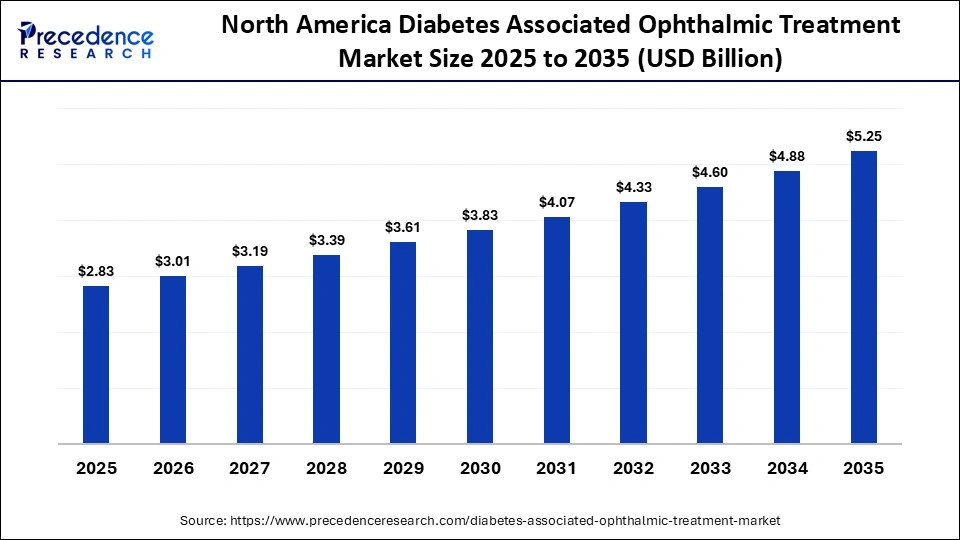
The North America diabetes associated ophthalmic treatment market size is estimated at USD 2.83 billion in 2025 and is projected to reach approximately USD 5.25 billion by 2035, with a 6.37% CAGR from 2026 to 2035.
What Made North America the Dominant Region in the Diabetes Associated Ophthalmic Treatment Market?
North America dominated the diabetes associated ophthalmic treatment market, holding the largest share in 2025, primarily driven by the high prevalence of diabetes and its related ocular complications, particularly diabetic retinopathy. It represents the most common indication for treatment. Strong health care infrastructure across the U.S. and Canada, with significant investments in research and development, has accelerated the adoption of advanced therapies such as anti-VEGF injections, corticosteroid implants, and biologics. Favorable reimbursement frameworks, rising patient awareness, and a strong presence of key pharmaceutical and biotechnology companies further strengthen the region's market position.
U.S. Diabetes Associated Ophthalmic Treatment Market Size and Growth 2026 to 2035
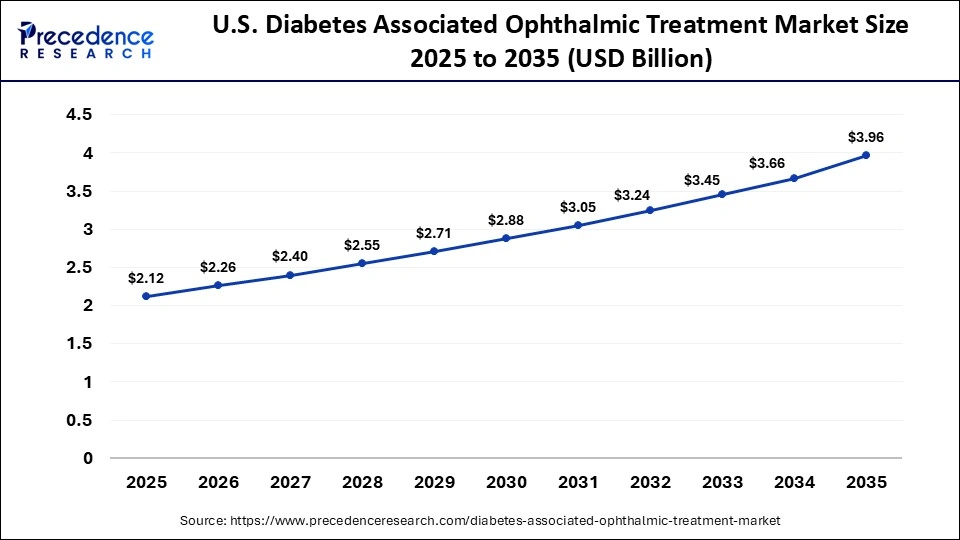
The U.S. diabetes associated ophthalmic treatment market size is calculated at USD 2.12 billion in 2025 and is expected to reach nearly USD 3.96 billion in 2035, accelerating at a strong CAGR of 6.45% between 2026 and 2035.
U.S. Market Analysis
The U.S. dominates the North American diabetes associated ophthalmic treatment market due to the country's substantial diabetic population, high health care expenditure, and rapid adoption of novel therapeutics with intensive treatment options. In addition, widespread availability of advanced diagnostic technologies, including optical coherence tomography and retinal imaging, enables early disease detection and timely intervention.
How is the Opportunistic Rise of Asia Pacific in the Market?
Asia Pacific is expected to grow at the fastest rate in the diabetes associated ophthalmic treatment market due to its large and rapidly increasing population of diabetes patients, along with expanding healthcare infrastructure and rising awareness about diabetic eye complications. Countries like China, India, and Japan are witnessing a diabetic epidemic driven by lifestyle changes, an ageing population, and urbanization, making diabetic retinopathy a highly prevalent disease in the region. Digital solutions, including AI-based retinal image analysis and mobile diagnostic units, are accelerating early intervention and patient management, thereby driving market growth across the region. Health care reforms and government screening initiatives are improving access to early diagnosis and treatment.
India Market Analysis
India is emerging as one of the fastest-growing markets within the region. Increasing awareness, widespread adoption of diagnostic imaging technologies such as OCT and fundus cameras, and expansion of retinal care services are contributing to market growth. Telemedicine and AI screening applications, such as MadhuNetrAI and community-based retinal screening platforms, are improving access in rural and underserved regions. Government initiatives, including national blindness prevention programs and state-level screening projects for eye care, are enhancing early disease diagnosis and patient care.
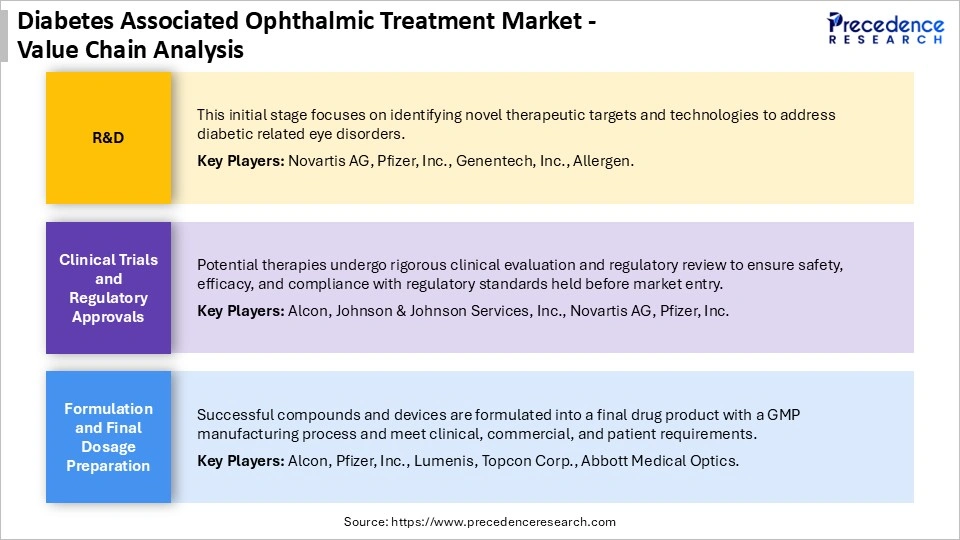
Diabetes Associated Ophthalmic Treatment Market Value Chain Analysis
Diabetes Associated Ophthalmic Treatment Market Companies
- Alcon
- Johnson & Johnson Services, Inc.
- Bausch Health
- F. Hoffmann-La Roche Ltd
- Allergan
- Bayer AG
- Santen Pharmaceutical Co. Ltd.
- Novartis AG
- Pfizer, Inc.
- Genentech, Inc.
- Carl Zeiss Meditec
- Lumenis
- Ellex Medical Lasers Ltd.
- IRIDEX Corp.
- Topcon Corp.
- Abbott Medical Optics
- Quantel
Recent Developments
- In Feb 2025, Roche's Susvimo, which is a ranibizumab injection, received FDA approval as the first continuous delivery implant for macular edema. It allows sustained drug release with fewer treatments per year and improves patient convenience.
- In August 2025, ocular therapeutics advances (AXPAXLI) trials reported significant progress for intravitreal hydrogel with axcitinib in registrational trials aiming for DR labels with strong protocol adherence and safety signals. The FDA special protocol assessment supports a regulatory path for the diabetic eye disease indication.
- In 2025, biosimilar and anti-VEGF pipelines expanded multiple biosimilars for established anti-VEGF drugs to commercialize an aflibercept biosimilar of Zydus Lifescience in Europe and other regions.
- In Feb 2026, there were positive clinical insights on EYLEA HD (aflibercept 8mg) at the Angiogenesis 2026 conference, which showed durable visual improvements and potential fever injections for patients with retinal diseases, reflecting strong clinical momentum.
Segments Covered in the Report
By Disease Type
- Diabetic Retinopathy
- Diabetic Macular Edema
- Cataract Secondary to Diabetes
- Others
By Treatment Type
- Pharmaceuticals
- Medical Devices
By Route of Administration
- Intravitreal Injection
- Topical Administration
- Systemic Administration
- Others
By End-User
- Hospitals
- Ophthalmology Clinics
- Ambulatory Surgical Centers
- Homecare Settings
By Age Group
- Pediatric Patients
- Working-Age Adults
- Elderly Patients
By Region
- North America
- Europe
- Asia-Pacific
- Latin America
- Middle East & Africa
For inquiries regarding discounts, bulk purchases, or customization requests, please contact us at sales@precedenceresearch.com
Frequently Asked Questions





Ask For Sample
No cookie-cutter, only authentic analysis – take the 1st step to become a Precedence Research client
 Get a Sample
.webp)



 sales@precedenceresearch.com
 Schedule a Meeting
