



DNA-Based Non-Viral Technologies Market Size, Companies, Share, Patient Volume, Treatment Adoption Rates, Pricing Analysis, Regulatory Landscape, Competitive Positioning, and Demand Forecast
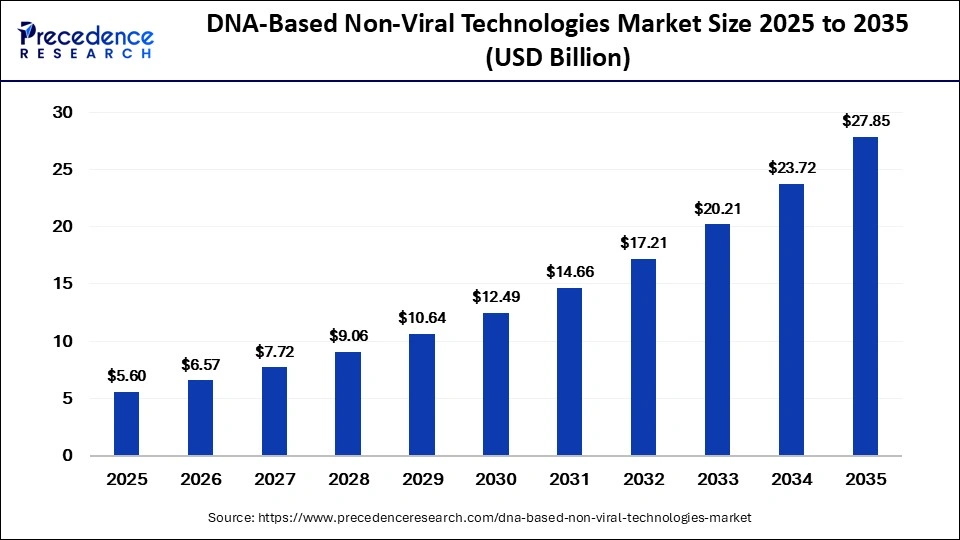
Rohan Patil, a Healthcare Industry Expert, highlights that the DNA-based non-viral technologies market has reached USD 6.57 billion in 2026 and is on track to reach USD 27.85 billion by 2035, advancing at a CAGR of 17.40%. Key DNA-based non-viral technologies market companies shaping the market include Thermo Fisher Scientific Inc., Lonza Group AG, Bio-Rad Laboratories, Inc., Promega Corporation, Qiagen N.V., while major growth segments span By Technology Type, By Application, By Nucleic Acid Type, By End-Use, By Delivery Mode.
Source: https://www.precedenceresearch.com/dna-based-non-viral-technologies-market
 Get a Sample
 Table Of Content


What is the DNA-Based Non-Viral Technologies Market Size in 2026?
The global DNA-based non-viral technologies market size accounted for USD 5.60 billion in 2025 and is predicted to increase from USD 6.57 billion in 2026 to approximately USD 27.85 billion by 2035, expanding at a CAGR of 17.40% from 2026 to 2035. The market is growing due to rising demand for safer, scalable gene therapies, where non-viral delivery methods offer lower immunogenicity, better repeat dosing potential, and cost-effective manufacturing compared to viral vectors.
Key Takeaways
- North America dominated the DNA-based non-viral technologies market with a 45% share in 2025.
- Asia Pacific is expected to grow at the fastest CAGR of 21.5% between 2026 and 2035.
- By technology type, the lipid-based transfection segment held a 30% market share in 2025.
- By technology type, the nanoparticle-mediated delivery segment is expected to grow at the fastest CAGR of 21.5% between 2026 and 2035.
- By application, the gene therapy development segment held a major market share of 30% in 2025.
- By application, the genome editing segment is expected to grow at the fastest CAGR of 21% between 2026 and 2035.
- By nucleic acid type, the plasmid DNA segment dominated the market with a 50% share in 2025.
- By nucleic acid type, the synthetic DNA constructs segment is expected to grow at the fastest CAGR of 20% between 2026 and 2035.
- By end-use, the pharmaceutical & biotechnology companies segment contributed the highest market share of 45% in 2025.
- By end-use, the CROs/CDMOs segment is expected to grow at the fastest CAGR of 18.5% between 2026 and 2035.
- By delivery mode, the ex vivo delivery segment dominated the market with a 60% share in 2025.
- By delivery mode, the in vivo delivery segment is expected to grow at the fastest CAGR of 20.5% between 2026 and 2035.
Market Overview
The DNA-based non-viral technologies market is expanding steadily as the demand for safer and more flexible gene delivery methods increases. These technologies use plasmid DNA, lipid nanoparticles, and physical methods like electroporation to deliver genetic material without using viruses. They are gaining attention for their lower risk of immune reactions and easier manufacturing. Growth is supported by rising gene therapy research, increasing clinical trials, and the need for scalable, cost-effective solutions across the biotechnology and pharmaceutical industries.
Impact of AI on the DNA-Based Non-Viral Technologies Market
Artificial intelligence is playing an important role in improving non-viral delivery systems. AI helps in designing more efficient delivery vectors, predicting gene expression outcomes, and optimizing formulation processes. It also supports faster drug discovery by analyzing large datasets and identifying effective DNA constructs. As the complexity of gene therapies increases, AI is becoming a valuable tool for enhancing precision, reducing development time, and improving overall success rates in non-viral technologies.
Major Market Trends
- Shift Toward Non-Viral Delivery Systems: There is a rapid shift from viral to non-viral methods due to better safety, lower immunogenicity, and easier manufacturing, making them more suitable for scalable and repeatable gene therapy applications.
- Advancements in Delivery Platforms: Companies are investing in lipid nanoparticles, polymers, and physical delivery techniques to improve targeting, stability, and overall efficiency of DNA delivery in therapeutic applications.
- Rise of Personalized & mRNA-Based Therapies: Growing demand for personalized medicine and mRNA technologies is boosting the adoption of non-viral systems, as they offer flexibility and faster development for tailored treatments.
- Collaborations Driving Innovation: Partnerships between biotech firms and research institutions are accelerating R&D, improving delivery efficiency, and supporting faster commercialization of advanced non-viral gene delivery technologies.
Market Scope
| Report Coverage | Details |
| Market Size in 2025 | USD 5.60 Billion |
| Market Size in 2026 | USD 6.57 Billion |
| Market Size by 2035 | USD 27.85 Billion |
| Market Growth Rate from 2026 to 2035 | CAGR of 17.40% |
| Dominating Region | North America |
| Fastest Growing Region | Asia Pacific |
| Base Year | 2025 |
| Forecast Period | 2026 to 2035 |
| Segments Covered | Technology Type, Application, Nucleic Acid Type, End-Use, Delivery Mode, and Region |
| Regions Covered | North America, Europe, Asia-Pacific, Latin America, and Middle East & Africa |
Market Dynamics
Drivers
Demand for Safer Alternatives
The growing demand for safer alternatives to viral gene delivery methods is a major factor driving the growth of the DNA-based non-viral technologies market. Non-viral technologies offer lower immunogenicity, better safety profiles, and the ability for repeated dosing. Increasing investments in gene therapy, rising prevalence of genetic disorders, and advancements in biotechnology are further supporting growth. As healthcare systems focus on personalized and precision medicine, the adoption of non-viral DNA delivery platforms continues to rise across research and clinical applications.
Restraint
Lower Efficiency
Despite strong growth, the market faces challenges due to the lower delivery efficiency of non-viral vectors compared to viral vectors. Non-viral methods may struggle with targeted delivery and stable gene expression in some applications. In addition, technical complexities and the need for continuous innovation can increase development time and costs. Limited clinical success in certain areas also slows adoption, making it important for companies to improve the performance and reliability of these technologies.
Opportunity
Rising Demand for Personalized Medicine
The market presents strong opportunities with the rise of personalized medicine and advanced therapies. Expanding applications in gene editing, cancer treatment, and vaccine development are creating new growth avenues. Improvements in delivery technologies and increasing regulatory support are encouraging innovation. Emerging markets and growing biotech investments are also opening new doors, making non-viral DNA technologies a promising area for long-term development and commercialization.
Segment Insights
Technology Type Insights
DNA-Based Non-Viral Technologies Market Share, By Technology Type, 2025-2035 (%)
| Technology Type | 2025 | 2035 | CAGR (%) |
| Lipid-based Transfection | 30.00% | 32.00% | 18.5% |
| Electroporation-based Delivery | 25.00% | 24.00% | 16.0% |
| Nanoparticle-mediated Delivery | 20.00% | 23.00% | 21.5% |
| Polymer-based Delivery Systems | 15.00% | 13.00% | 15.0% |
| Physical Methods | 10.00% | 8.00% | 13.5% |
The Lipid-based Transfection Segment Held 30% Market Share in 2025
The lipid-based transfection segment dominated the DNA-based non-viral technologies market with a 30% share in 2025, driven by its high transfection efficiency, low toxicity, and widespread use in both research and therapeutic applications. Its ease of use and compatibility with a wide range of cell types have made it a preferred method for gene delivery in laboratory and clinical settings.
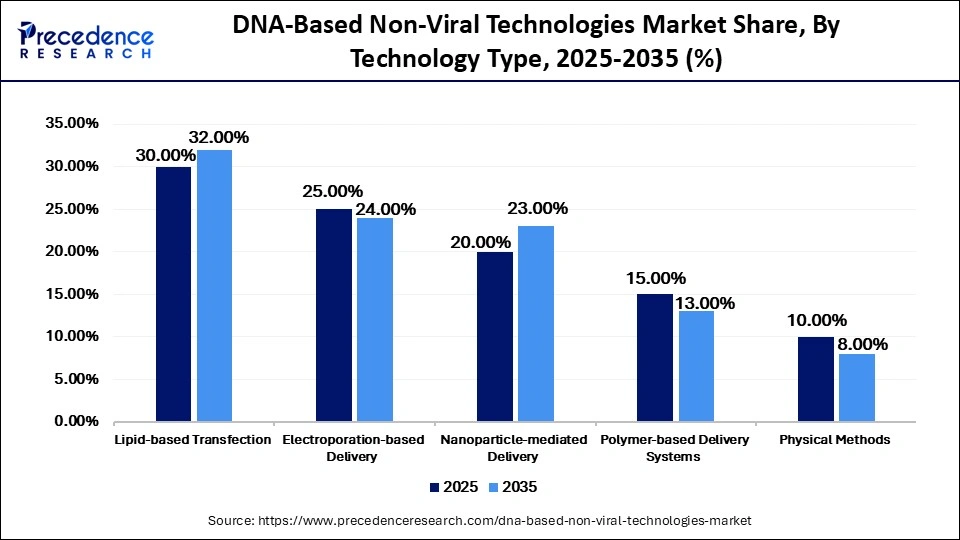
The electroporation-based delivery segment held a 25% share of the market in 2025 and is expected to grow at a CAGR of 16% between 2026 and 2035, driven by its ability to enable efficient gene transfer without relying on chemical carriers. It is increasingly used in hard-to-transfect cells, including primary cells and immune cells, making it highly valuable for cell and gene therapy applications.
The nanoparticle-mediated delivery segment accounted for a 20% share of the market in 2025 and is expected to grow at the fastest CAGR of 21.5% in the coming years, due to its strong potential for targeted and controlled gene delivery. Advances in nanotechnology are improving stability, cellular uptake, and precision, making this method highly promising for next-generation gene therapies.
Application Insights
DNA-Based Non-Viral Technologies Market Share, By Application, 2025-2035 (%)
| Application | 2025 | 2035 | CAGR (%) |
| Gene Therapy Development | 30.00% | 32.00% | 18.5% |
| Cell Therapy (CAR-T, Stem Cells) | 25.00% | 27.00% | 20.5% |
| Genome Editing (CRISPR/Cas) | 20.00% | 22.00% | 21.0% |
| Genetic Research & Functional Genomics | 15.00% | 13.00% | 15.0% |
| DNA Vaccines | 10.00% | 6.00% | 12.5% |
Why Did the Gene Therapy Development Segment Dominate the Market in 2025?
The gene therapy development segment dominated the DNA-based non-viral technologies market by holding a 30% share in 2025, driven by increasing clinical trials and a strong focus on developing advanced treatments for genetic disorders. The growing pipeline of gene-based therapies and rising investment from biotech companies are further supporting its leadership position.
The cell therapy segment held a 25% share of the market in 2025 and is expected to grow at a CAGR of 20.5% throughout the forecast period. The growth of this segment is driven by the rising adoption of engineered cell-based treatments such as CAR-T therapies. Increasing success in oncology and regenerative medicine is further accelerating demand for efficient non-viral gene delivery systems.
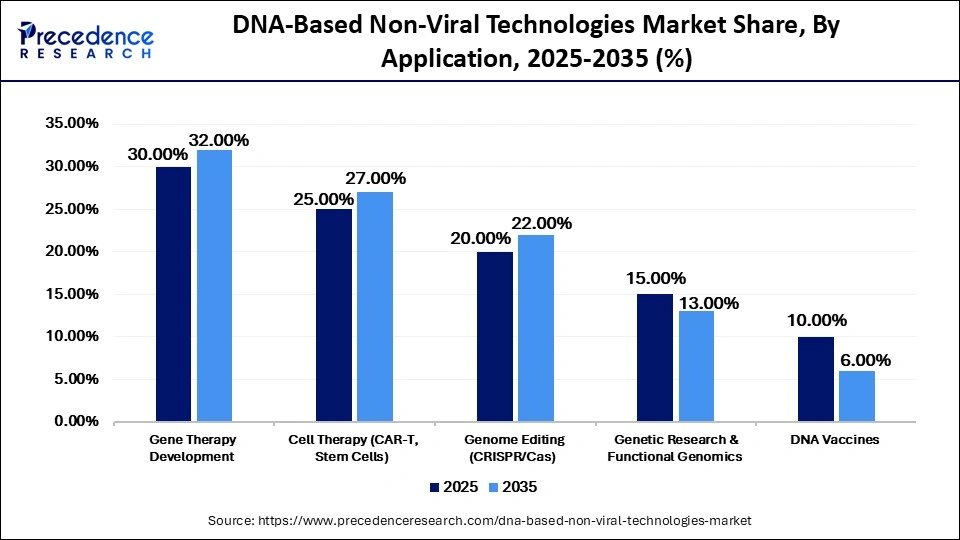
The genome editing segment held a 20% share of the market in 2025 and is expected to grow at the fastest CAGR of 21% between 2026 and 2035, driven by rapid advancements in CRISPR and related technologies. Growing applications in disease correction, functional genomics, and precision medicine are significantly boosting its adoption.
The genetic research & functional genomics segment held a 15% market share in 2025 and is expected to grow at a CAGR of 15% between 2026 and 2035. The increasing focus on understanding gene function, disease mechanisms, and biomarker discovery is driving sustained usage of DNA-based non-viral technologies in research applications.
Nucleic Acid Type Insights
DNA-Based Non-Viral Technologies Market Share, By Nucleic Acid Type, 2025-2035 (%)
| Nucleic Acid Type | 2025 | 2035 | CAGR (%) |
| Plasmid DNA | 50.00% | 45.00% | 15.5% |
| Synthetic DNA Constructs | 30.00% | 35.00% | 20.0% |
| Oligonucleotides | 20.00% | 20.00% | 17.0% |
The Plasmid DNA Segment Dominated the Market in 2025
The plasmid DNA segment dominated the DNA-based non-viral technologies market with a 50% share in 2025, driven by its wide use in gene expression studies, vaccine development, and gene therapy research. Its stability, ease of production, and high transfection efficiency make it the most commonly used nucleic acid type.
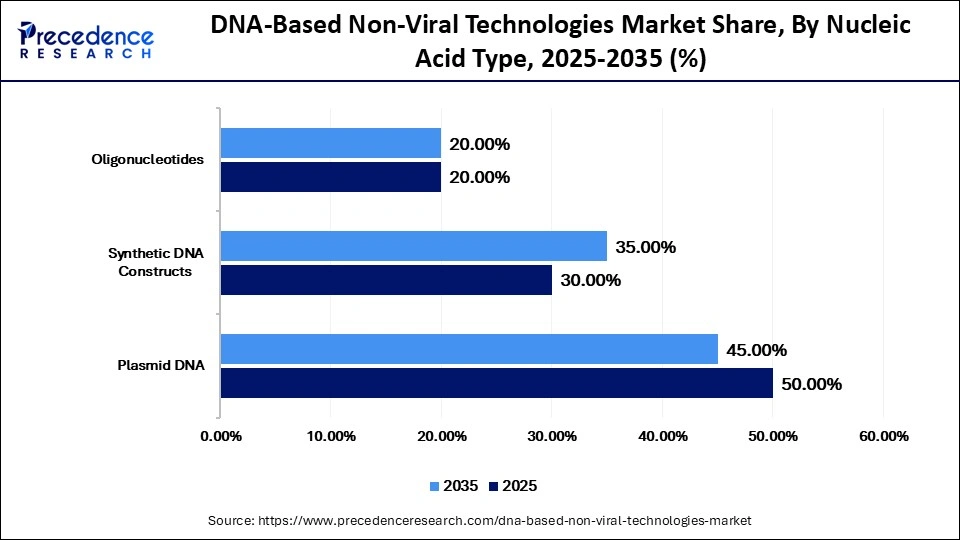
The synthetic DNA constructs segment held the second-largest market share of 30% in 2025 and is expected to grow at the fastest CAGR of 20% between 2026 and 2035. The segment's growth is driven by advancements in DNA synthesis technologies. Rising demand for customized and highly precise genetic sequences for therapeutic and research applications is also fueling segmental growth.
End-Use Insights
Pharmaceutical & Biotechnology Companies Held a 45% Market Share in 2025
The pharmaceutical & biotechnology companies segment led the DNA-based non-viral technologies market with a 45% share in 2025, driven by strong investment in drug discovery, gene therapy pipelines, and clinical development programs. These companies are major adopters of DNA-based non-viral technologies for therapeutic innovation and commercialization.
DNA-Based Non-Viral Technologies Market Share, By End-Use, 2025-2035 (%)
| End-Use | 2025 | 2035 | CAGR (%) |
| Pharmaceutical & Biotechnology Companies | 45.00% | 48.00% | 19.0% |
| Academic & Research Institutes | 35.00% | 30.00% | 14.5% |
| CROs/CDMOs | 20.00% | 22.00% | 18.5% |
The academic & research institutes segment held a 35% market share in 2025 and is expected to grow at a CAGR of 14.5% between 2026 and 2035, supported by increasing focus on genetic research and early-stage innovation. Universities and research centers play a key role in developing novel applications and advancing basic science.
The CROs/CDMOs segment held a 20% share of the market in 2025 and is expected to expand at the fastest CAGR of 18.5% between 2026 and 2035, driven by increasing outsourcing of research, development, and manufacturing activities. Their expertise in scalable production and regulatory compliance is making them essential partners in gene-based research and therapy development.
Delivery Mode Insights
The Ex Vivo Delivery Segment Dominated the Market in 2025
The ex vivo delivery segment dominated the DNA-based non-viral technologies market with the highest share of 60% in 2025, driven by its high efficiency and control over gene modification outside the body. It is widely used in cell therapy applications, particularly for modifying immune cells such as T-cells before reinfusion into patients.
DNA-Based Non-Viral Technologies Market Share, By Delivery Mode, 2025-2035 (%)
| Delivery Mode | 2025 | 2035 | CAGR (%) |
| Ex Vivo Delivery | 60.00% | 55.00% | 16.0% |
| In Vivo Delivery | 40.00% | 45.00% | 20.5% |
The in vivo delivery segment held a 40% market share in 2025 and is expected to grow at the fastest CAGR of 20.5% in the upcoming period, driven by the growing number of gene therapies administered directly into patients. This approach simplifies treatment by avoiding complex cell extraction and reinfusion steps. Increasing regulatory approvals, improved delivery technologies, and rising demand for minimally invasive therapies are key factors supporting its strong adoption and market leadership.
Regional Insights
North America DNA-Based Non-Viral Technologies Market Size and Growth 2026 to 2035
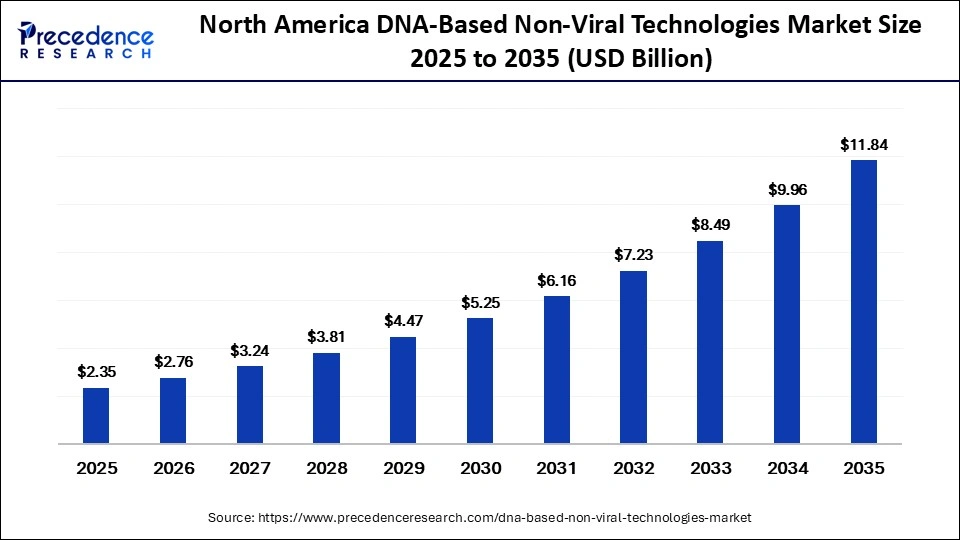
The North America DNA-based non-viral technologies market size is estimated at USD 2.35 billion in 2025 and is projected to reach approximately USD 11.84 billion by 2035, with a 17.55% CAGR from 2026 to 2035.
Why Did North America Lead the DNA-Based Non-Viral Technologies Market in 2025?
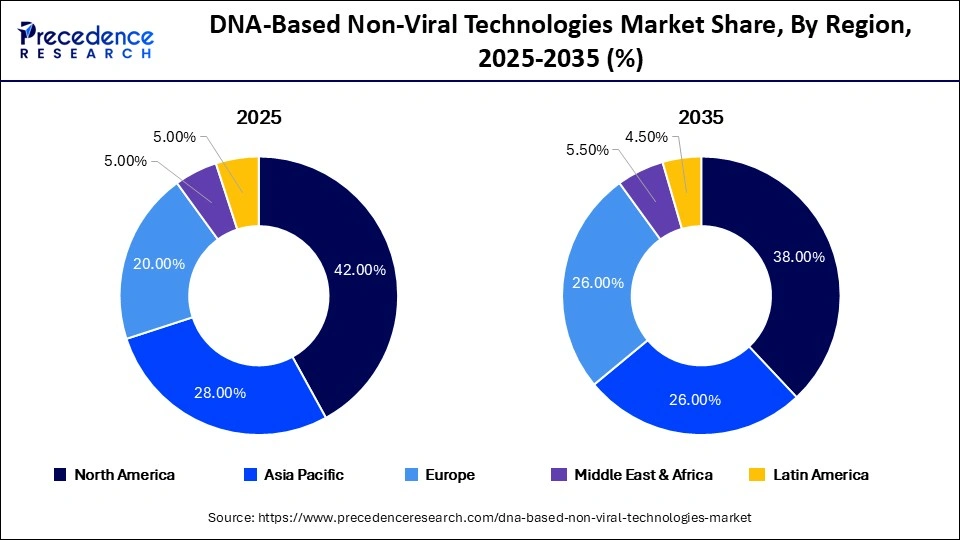
North America dominated the DNA-based non-viral technologies in chemicals market with a 45% share in 2025, driven by a strong gene therapy pipeline, high funding levels, and the presence of leading biotechnology firms. The region benefits from advanced research infrastructure, supportive regulatory frameworks, and rapid adoption of innovative delivery technologies. Continuous investment in clinical trials and commercialization further strengthens its leadership position.
U.S. DNA-Based Non-Viral Technologies Market Size and Growth 2026 to 2035
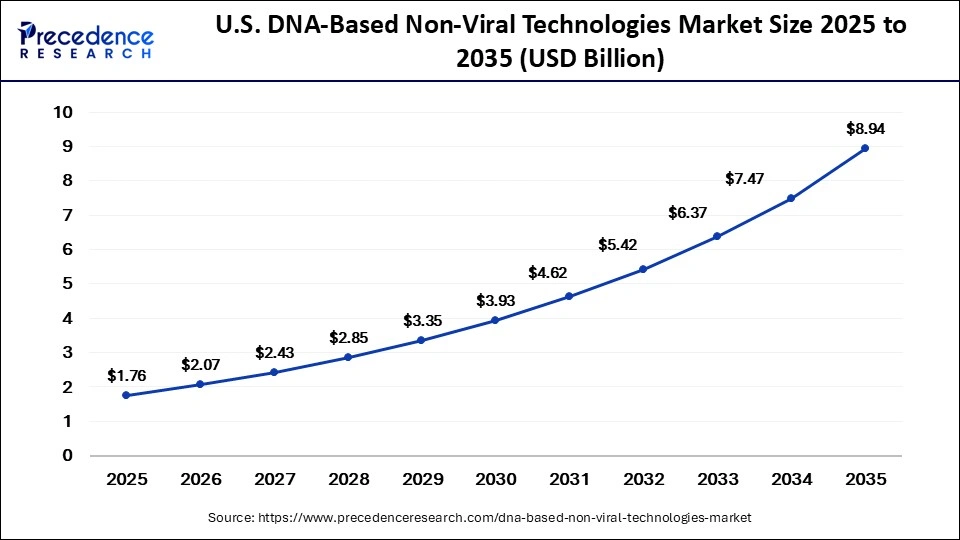
The U.S. DNA-based non-viral technologies market size is calculated at USD 1.76 billion in 2025 and is expected to reach nearly USD 8.94 billion in 2035, accelerating at a strong CAGR of 17.65% between 2026 and 2035.
U.S. Market Analysis
The U.S. remains the largest contributor within North America, supported by a robust biotech ecosystem and significant R&D investments. Strong collaboration between academia and industry, along with early adoption of advanced therapies, is driving market growth. The country also benefits from favorable regulatory pathways and increasing demand for precision medicine solutions.
What Makes Asia Pacific the Fastest-Growing Region in the Market?
Asia Pacific is expected to grow at the fastest CAGR of 21.5% between 2026 and 2035. The regional market growth is driven by rising clinical trials, expanding manufacturing capabilities, and strong government support for biotechnology. Increasing healthcare investments and growing awareness of advanced therapies are accelerating adoption across the region.
China Market Analysis
China plays a major role in the Asia Pacific market, supported by large-scale investments in biotech infrastructure and gene therapy research. Government initiatives promoting domestic innovation and manufacturing are accelerating development. The country's strong industrial base and growing clinical pipeline are helping expand adoption of advanced genetic technologies.
India Market Analysis
India is emerging as a rapidly growing market due to improving healthcare infrastructure and rising biotech investments. Government initiatives supporting digital health and research are encouraging adoption. A growing number of startups, skilled workforce, and increasing demand for affordable advanced therapies are further supporting market expansion across the country.
Europe DNA-Based Non-Viral Technologies Market Trends
Europe held a 28% share of the market in 2025 and is expected to grow at a 15.5% CAGR over the projection period. This growth is driven by strong regulatory support and advanced manufacturing infrastructure. The region benefits from increasing approvals of gene therapies and active research programs. Collaboration between governments and biotech companies is accelerating innovation and supporting consistent adoption of non-viral technologies.
Latin America DNA-Based Non-Viral Technologies Market Trends
Latin America held a 5% market share in 2025 and is expected to grow at a 16% CAGR in the coming years, primarily driven by increasing research collaborations and expansion of the biotech sector. Countries are investing in healthcare modernization and improving access to advanced therapies. Growing awareness of genetic treatments and supportive initiatives are gradually strengthening adoption across the region.
DNA-Based Non-Viral Technologies Market Companies
- Thermo Fisher Scientific Inc.
- Lonza Group AG
- Bio-Rad Laboratories, Inc.
- Promega Corporation
- Qiagen N.V.
- Polyplus-transfection SA (Sartorius)
- MaxCyte, Inc.
- Mirus Bio LLC (Part of Gamma Biosciences)
- Takara Bio Inc.
- Agilent Technologies, Inc.
- STEMCELL Technologies Inc.
- Altogen Biosystems
- VectorBuilder Inc.
- OriGene Technologies, Inc.
- Creative Biogene
Recent Developments
- On April 20, 2026, Corning Life Sciences introduced advanced high-density cell culture and automation systems to improve plasmid DNA and non-viral vector manufacturing, enhancing production efficiency, scalability, and workflow speed to support growing demand for gene therapies and non-viral delivery technologies. (Source: https://www.globenewswire.com)
- In April 2026, PlasmidFactory strengthened its GMP-grade DNA manufacturing capabilities, enabling faster production of high-quality plasmid DNA for non-viral gene delivery systems and advanced therapeutic applications.
- On April 08, 2026, Aldevron reported growing industry confidence in next-generation gene delivery technologies, with increasing focus on in vivo and non-viral approaches to improve scalability and reduce manufacturing constraints in advanced therapies.(Source: https://www.aldevron.com)
- On June 27, 2025, ProBio launched a new large-scale gene therapy manufacturing facility in New Jersey, expanding capabilities across plasmid DNA and vector production to support growing demand for advanced therapies.(Source: https://www.probiocdmo.com)
Segments Covered in the Report
By Technology Type
- Electroporation-based Delivery
- Lipid-based Transfection (Lipofection)
- Polymer-based Delivery Systems
- Nanoparticle-mediated Delivery (LNPs, Gold Nanoparticles)
- Physical Methods (Microinjection, Gene Gun)
By Application
- Gene Therapy Development
- Cell Therapy (CAR-T, Stem Cell Engineering)
- DNA Vaccines
- Genetic Research & Functional Genomics
- Genome Editing (CRISPR/Cas Systems)
By Nucleic Acid Type
- Plasmid DNA
- Synthetic DNA Constructs
- Oligonucleotides
By End-Use
- Pharmaceutical & Biotechnology Companies
- Academic & Research Institutes
- Contract Research & Manufacturing Organizations (CROs/CDMOs)
By Delivery Mode
- In Vivo Delivery
- Ex Vivo Delivery
By Region
- North America
- Latin America
- Europe
- Asia-pacific
- Middle and East Africa
For inquiries regarding discounts, bulk purchases, or customization requests, please contact us at sales@precedenceresearch.com
Frequently Asked Questions





Ask For Sample
No cookie-cutter, only authentic analysis – take the 1st step to become a Precedence Research client
 Get a Sample




 sales@precedenceresearch.com
 Schedule a Meeting
