



Viral and Non-Viral Vectors Market Size, Companies, Share, Patient Volume, Treatment Adoption Rates, Pricing Analysis, Regulatory Landscape, Competitive Positioning, and Demand Forecast
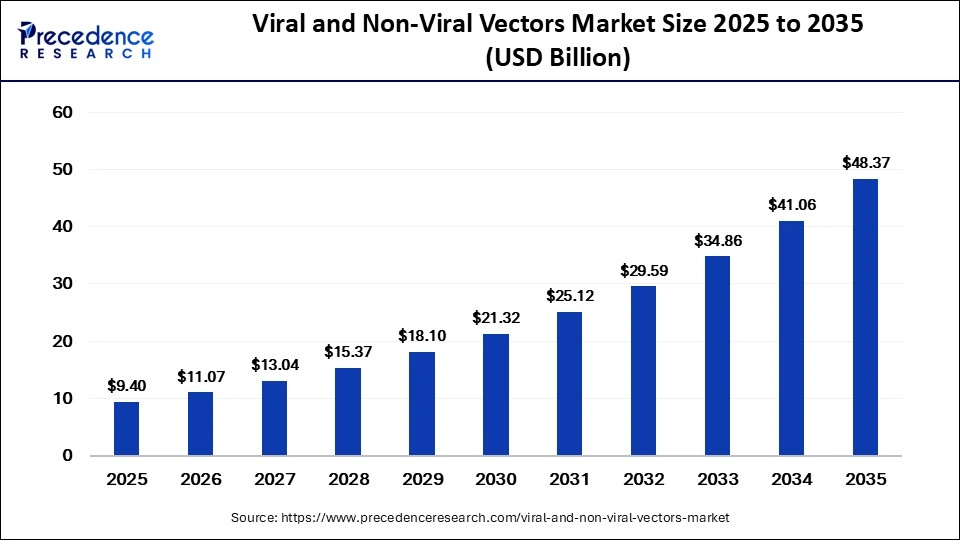
Rohan Patil, a Healthcare Industry Expert, highlights that the viral and non-viral vectors market has reached USD 11.07 billion in 2026 and is on track to reach USD 48.37 billion by 2035, advancing at a CAGR of 17.80%. Key viral and non-viral vectors market companies shaping the market include Thermo Fisher Scientific Inc., Lonza Group AG, Catalent, Inc., WuXi AppTec, Oxford Biomedica plc, while major growth segments span By Vector Type, By Application, By Disease Indication, By End-Use, By Delivery Mode, By Manufacturing Type.
Source: https://www.precedenceresearch.com/viral-and-non-viral-vectors-market
 Get a Sample
 Table Of Content


What is the Viral and Non-Viral Vectors Market Size in 2026?
The global viral and non-viral vectors market size accounted for USD 9.40 billion in 2025 and is predicted to increase from USD 11.07 billion in 2026 to approximately USD 48.37 billion by 2035, expanding at a CAGR of 17.80% from 2026 to 2035. The viral and non-viral vectors market is driven by rising demand for gene and cell therapies, increasing prevalence of genetic and rare diseases, and rapid advancements in vector engineering technologies.
Key Takeaways
- North America led the viral and non-viral vectors market in 2025 with a 45% share.
- Asia Pacific is observed to grow at the fastest CAGR of 22.5% during the forecast period.
- By vector type, the viral vectors segment led the market with a 70% share in 2025.
- By vector type, the non-viral vectors segment is expected to grow at the fastest CAGR of 22.5% in the upcoming period.
- By disease indication, the oncology segment led the global market in 2025 with a 40% share and is expected to grow at the fastest CAGR of 19% in the foreseeable period.
- By application, the gene therapy segment led the global market in 2025 with a 35% share.
- By application, the cell therapy segment is expected to grow at the fastest CAGR of 20% in the coming years.
- By end-use, the pharmaceutical & biotechnology companies segment led the global market in 2025 with a 50% share.
- By end-use, the CROS/CDMOS segment is observed to expand at the fastest CAGR of 20.5% in the upcoming period.
- By delivery mode, the in vivo gene delivery segment led the global market in 2025 with a 55% share and is expected to grow at the fastest CAGR of 18.5% over the forecast period.
Viral and Non-Viral Vectors Market Overview
Viral vectors, derived from the structure of a virus, utilize the virus's inherent capability to penetrate a cell's nucleus and transfer genetic material. In contrast, non-viral vectors encompass naked DNA, particle-based systems, and chemical-based systems. These can be administered through direct delivery of plasmid or naked DNA, as well as via various chemical or physical techniques. Viral transfection is often favored over non-viral methods due to its superior efficiency and specificity, especially in challenging-to-transfect cells, along with its comparatively lower cost and complexity. Nevertheless, non-viral methods provide enhanced safety and greater adaptability for specific recipient or target cell types and diseases, contributing to the expansion of market opportunities.
Impact of Artificial Intelligence on the Viral and Non-Viral Vectors Market
Artificial intelligence plays a crucial role in enhancing treatment efficiency within the healthcare sector. AI-driven models and algorithms facilitate the development of targeted gene delivery systems that can navigate both extracellular and intracellular barriers through strategies that mimic viral mechanisms. The integration of artificial intelligence with viral and non-viral platforms holds promise for advancing safe, effective, and consistently administered gene therapies for patients with a range of disorders.
Viral and Non-Viral Vectors Market Trends
- Expansion of Hybrid Vector Platforms: The market is increasingly leaning towards hybrid vector platforms that integrate the delivery efficiency of viral systems with the safety, flexibility, and scalability of non-viral technologies, ultimately enhancing therapeutic outcomes.
- Robust Growth of Non-Viral Technologies: Non-viral vectors, including lipid nanoparticles and other innovative platforms, are in high demand due to their safer profiles, simplified manufacturing processes, advantages in repeat dosing, and success in RNA therapies.
- Rising Investment and Strategic Collaborations: Pharmaceutical and biotechnology companies are intensifying their investments in vector research and manufacturing capabilities, while also forming strategic partnerships with academic institutions and contract development and manufacturing organizations (CDMOs) to foster innovation and address growing market demands.
Market Scope
| Report Coverage | Details |
| Market Size in 2025 | USD 9.40 Billion |
| Market Size in 2026 | USD 11.07 Billion |
| Market Size by 2035 | USD 48.37 Billion |
| Market Growth Rate from 2026 to 2035 | CAGR of 17.80% |
| Dominating Region | North America |
| Fastest Growing Region | Asia Pacific |
| Base Year | 2025 |
| Forecast Period | 2026 to 2035 |
| Segments Covered | Vector Type, Application, Disease Indication, End-Use, Delivery Mode, Manufacturing Type, and Region |
| Regions Covered | North America, Europe, Asia-Pacific, Latin America, and Middle East & Africa |
Market Dynamics
Drivers
Rising Disease Burden and Expanding Therapy Pipeline
The increasing prevalence of genetic disorders, cancer, and infectious diseases, coupled with a growing number of clinical studies and a strong pipeline of gene and cell therapy products, is driving the growth of the viral and non-viral vectors market. Additionally, the integration of the CRISPR gene editing tool with vector systems is significantly improving precision, efficiency, and opportunities in personalized medicine.
Restraint
High Cost and Manufacturing Challenges
The high costs associated with gene therapy, particularly due to expensive viral vector manufacturing and complications in large-scale production, continue to hinder market growth. Additionally, low transaction efficiency, invasive administration methods, and uneven distribution present significant challenges. Viral vectors are also highly sensitive to shear stress and pH variations, which complicate downstream purification processes, reduce yield, and increase the cost per dose.
Opportunity
Expanding Role of LNP in Gene Editing
LNP is quickly advancing in the field of gene editing and has emerged as the preferred method for transient expression, particularly in delivering Cas9 mRNA, where targeted activity is essential to minimize off-target effects. Their cost-effectiveness and capacity to adapt to disease mutations present significant opportunities for innovation in both the viral and non-viral vector markets.
Segment Insights
Vector Type Insights
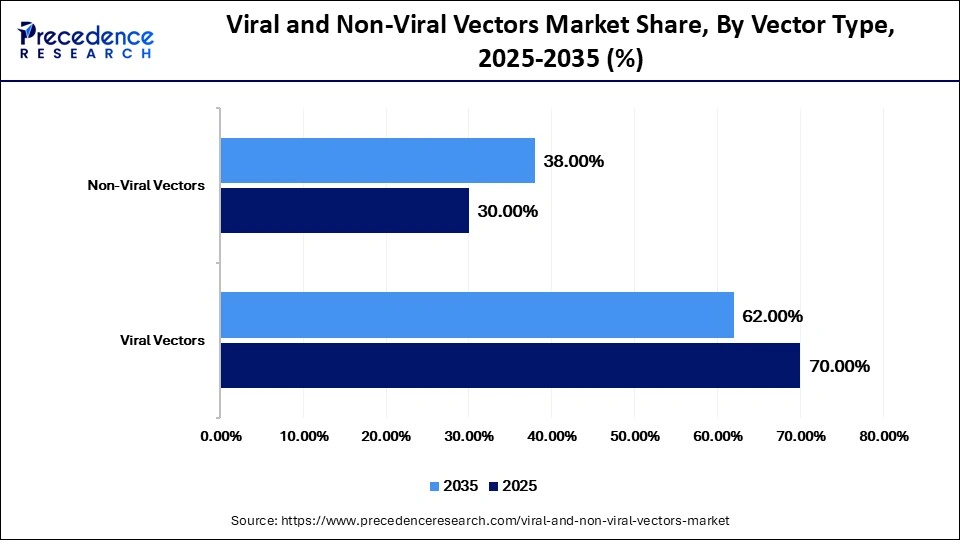
Viral and Non-Viral Vectors Market Share, By Vector Type, 2025-2035 (%)
| Vector Type | 2025 | 2035 | CAGR (%) |
| Viral Vectors | 70.00% | 62.00% | 15.5% |
| Non-Viral Vectors | 30.00% | 38.00% | 22.5% |
The Viral Vectors Segment Held the Largest Market Share of 70% in 2025
The viral vectors (AAV, lentivirus, retrovirus, adenovirus) segment led the viral and non-viral vectors market in 2025, capturing approximately 70% market share. This dominance is attributed to their high transfection efficiency and extensive application in gene therapies. The effectiveness of these vectors is largely determined by their ability to target specific cell types selectively.
They are preferred for their low immunogenicity and their capacity to facilitate long-term in vivo gene therapy. Additionally, their capability to deliver genes to both dividing and non-dividing cells further solidifies their market position. Their potential to offer cures for genetic disorders stemming from single-gene mutations also contributes to their market leadership.
The non-viral vectors (lipid-based, polymer-based, electroporation, nanoparticles) segment held about 30% share of the market in 2025 and is expected to grow at the fastest CAGR of 22.5% during the forecast period. This growth is driven by their enhanced safety, scalability, and reduced immunogenicity. A key advantage of non-viral vectors is their biosafety, which has garnered significant attention due to their lower immunotoxicity. Although they encounter challenges related to target gene size, their overall benefits continue to foster increased adoption.
Application Insights
Why Did the Gene Therapy Segment Dominate the Market in 2025?
The gene therapy segment dominated the viral and non-viral vectors market by holding a 35% share in 2025. The dominance of this segment is attributed to an increase in approvals and the expansion of the development pipeline. Gene therapy operates by either replacing malfunctioning genes, deactivating disease-causing genes, or introducing new copies of genes. Most gene therapies are designed as one-time treatments rather than requiring ongoing medication, a factor that is expected to sustain the segment's dominance.
The cell therapy segment held nearly 30% market share in 2025 and is projected to grow at the fastest CAGR of 20% during the forecast period, driven by the effectiveness of CAR-T and stem cell therapies, along with their expanding applications. Cell therapy involves the transfer of autologous or allogeneic cellular material into patients for therapeutic purposes, often through the genetic modification of the patient's immune cells, such as T-cells. This process enhances the body's natural defense mechanisms, enabling these modified cells to target disease-causing cells when reintroduced as a personalized treatment.
Viral and Non-Viral Vectors Market Share, By Application, 2025-2035 (%)
| Application | 2025 | 2035 | CAGR (%) |
| Gene Therapy | 35.00% | 38.00% | 18.5% |
| Cell Therapy | 30.00% | 32.00% | 20.0% |
| Vaccines | 20.00% | 18.00% | 14.5% |
| Genetic Research & Functional Genomics | 15.00% | 12.00% | 13.5% |
The vaccines segment accounted for around 20% share of the market in 2025 and is projected to grow at a CAGR of 14.5% in the coming years. This growth is fueled by the increasing demand for viral vector and nucleic acid vaccines. Vaccines are essential for protecting against numerous infections and are recognized as one of the most cost-effective public health interventions, significantly reducing the costs associated with treating and managing illness.
The genetic research & functional genomics segment held a 15% market share in 2025 and is expected to grow at a CAGR of 13.5% during the forecast period. This growth is mainly driven by the widespread application of viral and non-viral vectors in academic and early-stage research. Functional genomics focuses on the dynamic expression of gene products in specific contexts and serves as an innovative drug discovery approach to explore the connections between genes and their effects. By employing functional genomics, researchers can identify and investigate genes and biological processes linked to diseases, paving the way for potential drug targets and further supporting market growth.
Disease Indication Insights
Viral and Non-Viral Vectors Market Share, By Disease Indication, 2025-2035 (%)
| Indication | 2025 | 2035 | CAGR (%) |
| Oncology | 40.00% | 42.00% | 19.0% |
| Rare Genetic Disorders | 25.00% | 24.00% | 16.5% |
| Infectious Diseases | 15.00% | 14.00% | 14.5% |
| Neurological Disorders | 10.00% | 11.00% | 18.0% |
| Cardiovascular Diseases | 10.00% | 9.00% | 15.5% |
The Oncology Segment Led the Market in 2025
The oncology segment dominated the viral and non-viral vectors market with about 40% share in 2025 and is projected to sustain its leadership during the forecast period, driven by advancements in CAR-T therapies and targeted gene therapies for cancer treatment. Various factors, including the type of cancer, the stage of the disease, and the overall health of the patient, can significantly impact the success rates of treatments. Both viral and non-viral vector therapies are specifically engineered to target cancer cells, which helps minimize side effects like hair loss, nausea, and fatigue. The versatility of these therapies boosts their usage in oncology.
The rare genetic disorders segment held about 25% market share in 2025 and is expected to grow at a CAGR of 16.5% between 2026 and 2035, supported by a strong pipeline of gene therapies targeting rare diseases. The success rates of clinical trials for gene therapy have been promising, highlighting the potential of these treatments to tackle a wide array of genetic diseases and disorders in the future. Key techniques employed in the treatment of genetic disorders include gene addition, gene editing, and gene silencing.
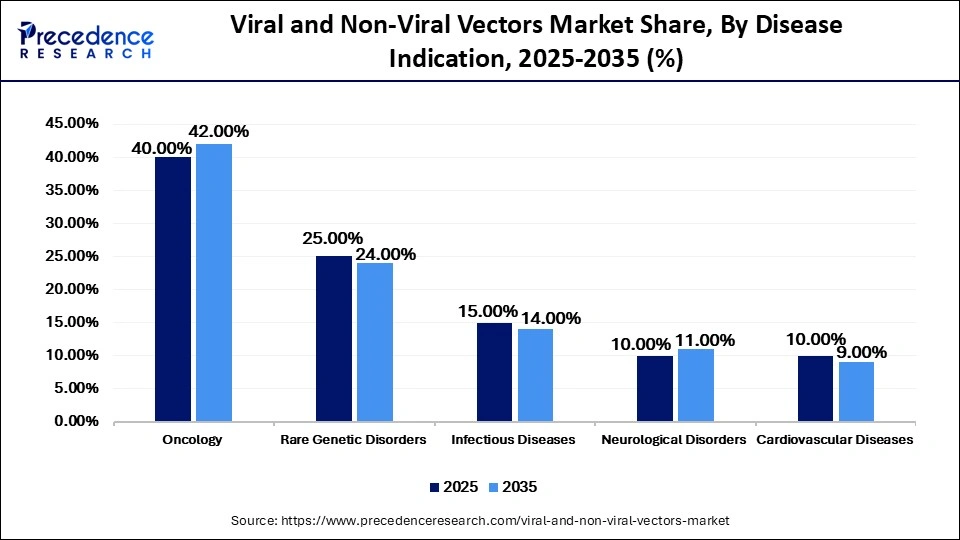
The infectious diseases segment held a 15% share of the viral and non-viral vectors market in 2025 and is projected to grow at a CAGR of 14.5% in the coming years, driven by growing vaccine development for infectious diseases. Targeted gene editing in microorganisms and human cells presents a groundbreaking method for addressing infections at the molecular level. Ongoing emphasis and innovation in this field are anticipated to facilitate market acceptance for applications related to infectious diseases.
The neurological disorders segment accounted for about 10% share of the market in 2025 and is expected to grow at a CAGR of 18% in the coming years, owing to increasing research in CNS-targeted gene therapies. Gene therapy approaches may focus on various mechanisms of action that influence different facets of gene expression in neurological disorders. The effectiveness of these therapies is significantly reliant on the successful delivery of therapeutic agents to the intended cells.
End-Use Insights
Pharmaceutical & Biotechnology Companies Dominated the Market With a 50% Share in 2025
In 2025, the pharmaceutical & biotechnology companies segment dominated the viral and non-viral vectors market by holding about 50% share, primarily due to the commercialization of gene and cell therapies. These organizations are vital in producing vectors that facilitate the safe and effective delivery of genetic material, addressing the increasing demand within the biotechnology and pharmaceutical sectors. Their ongoing commitment to enhancing market presence, optimizing operational efficiency, and advancing therapeutic innovations further solidifies their leadership status.
Viral and Non-Viral Vectors Market Share, By End-Use, 2025-2035 (%)
| End-Use | 2025 | 2035 | CAGR (%) |
| Pharmaceutical & Biotechnology Companies | 50.00% | 52.00% | 19.0% |
| Academic & Research Institutes | 30.00% | 25.00% | 14.5% |
| CROs/CDMOs | 20.00% | 23.00% | 20.5% |
The academic & research Institutes segment held around 30% market share in 2025 and is anticipated to grow at a CAGR of 14.5% in the coming years, driven by increasing focus on genetic research, drug discovery, and early-stage development of gene and cell therapies. Growing funding from public and private organizations, along with expanding collaborations with biotech and pharmaceutical companies, is further supporting segmental growth.
The contract research & manufacturing organizations (CROs/CDMOs) segment held nearly 20% market share in 2025 and is expected to grow at the fastest CAGR of 20.5% during the forecast period. This growth is largely attributed to the increasing trend of outsourcing vector production and clinical development services. CROs and CDMOs provide biotechnology and pharmaceutical companies with a comprehensive array of phase-appropriate research and development services, including clinical research, regulatory affairs, clinical monitoring, data management, logistics, biostatistics, and project management. Their capacity to enhance efficiency, scalability, and speed to market is driving their widespread adoption throughout the industry.
Delivery Mode Insights
The In Vivo Gene Delivery Segment Led the Market in 2025 With a 55% Share
The in vivo gene delivery segment led the viral and non-viral vectors market in 2025 by capturing approximately 55% share and is anticipated to maintain its leadership throughout the forecast period. This leadership is attributed to the increasing approvals of gene therapies that are administered directly to patients. In vivo gene therapy utilizes vectors to insert functional copies of genes into target cells, effectively addressing the underlying causes of various genetic disorders.
Viral and Non-Viral Vectors Market Share, By Delivery Mode , 2025-2035 (%)
| Delivery Mode | 2025 | 2035 | CAGR (%) |
| In Vivo Delivery | 55.00% | 58.00% | 18.5% |
| Ex Vivo Delivery | 45.00% | 42.00% | 16.5% |
The ex vivo gene delivery segment held about 45% market share in 2025 and is projected to grow at a CAGR of 16.5% during the forecast period. This growth is largely fueled by its extensive application in cell therapies, including CAR-T and stem cell treatments. Ex vivo gene therapy involves the genetic modification of a patient's stem cells, which then replace target cells that lack or malfunction due to genetic issues. This approach is effective in treating blood and immunological diseases, along with genetic disorders affecting tissues and organs accessible via blood cells.
Regional Insights
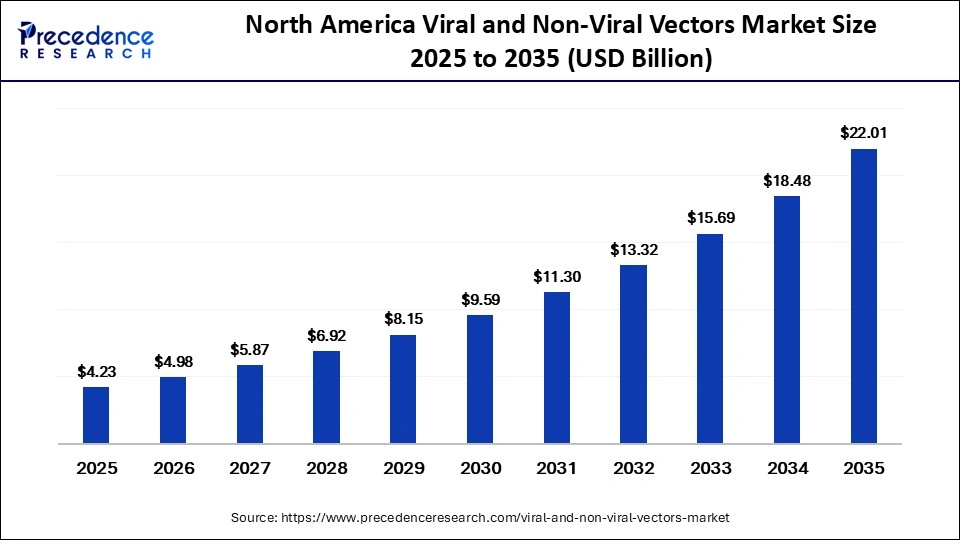
North America Viral and Non-Viral Vectors Market Size and Growth 2026 to 2035
The North America viral and non-viral vectors market size is estimated at USD 4.23 billion in 2025 and is projected to reach approximately USD 22.01 billion by 2035, with a 17.93% CAGR from 2026 to 2035.
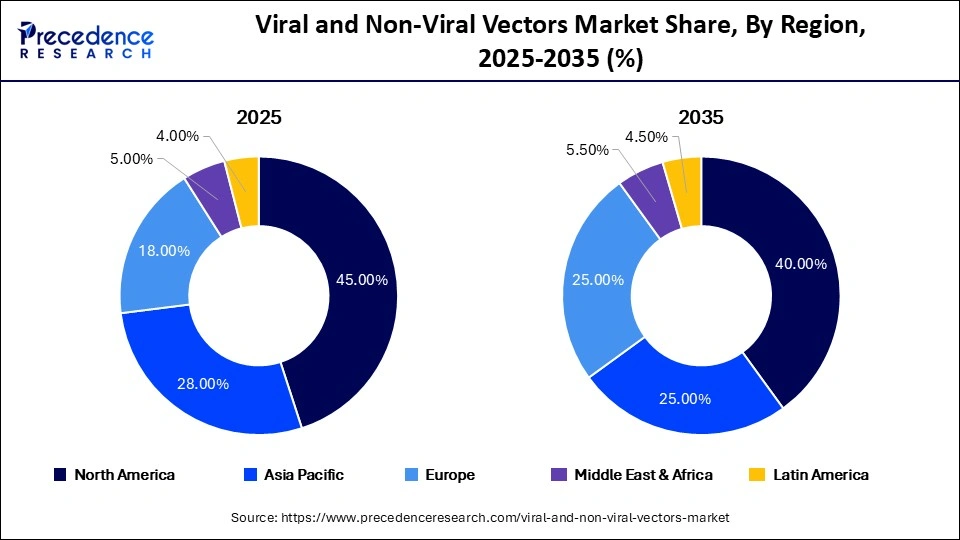
North America Dominated the Market with a 45% Share in 2025
In 2025, North America dominated the viral and non-viral vectors market, capturing 45% share in 2025. This dominance is attributed to a strong pipeline of gene therapies, significant funding, and the presence of leading biotech companies. Additionally, the region's dominance is bolstered by substantial research and development investments, a high number of clinical trials, and favorable regulatory environments.
U.S. Viral and Non-Viral Vectors Market Size and Growth 2026 to 2035
The U.S. viral and non-viral vectors market size is calculated at USD 3.17 billion in 2025 and is expected to reach nearly USD 16.62 billion in 2035, accelerating at a strong CAGR of 17.55% between 2026 and 2035.
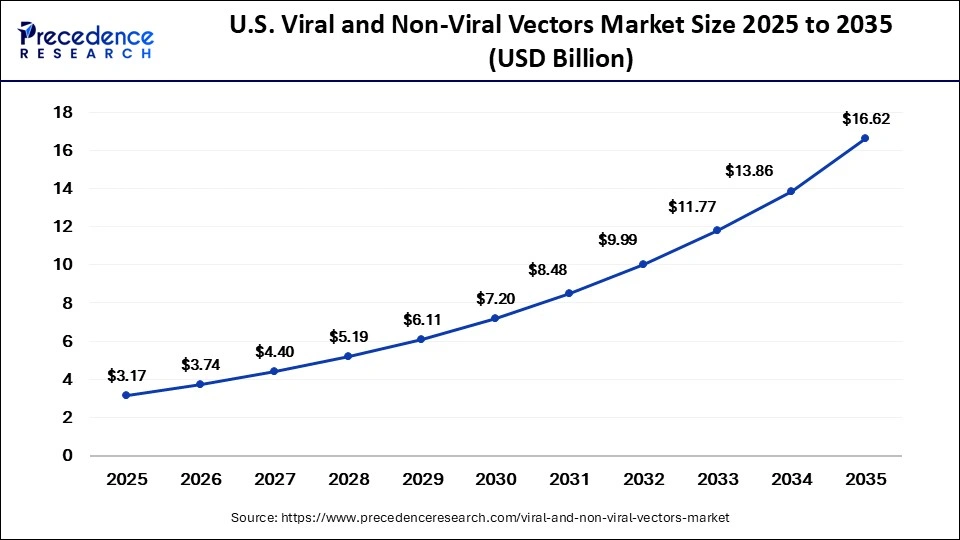
The U.S. is a major contributor to the North American market, holding a notable market share in 2025, due to the early approval and commercialization of gene therapies. The combination of available funding and FDA-approved gene therapies is further enhancing market growth in this region.
Europe: The Second-Largest Market
Europe held the second-largest market share of 28% in 2025 and is anticipated to grow at a CAGR of 15.5% in the coming years. This growth is bolstered by regulatory approvals and a robust manufacturing infrastructure. Additionally, the market is propelled by an increasing emphasis on regulatory compliance, modernization across various industrial sectors, and expansion initiatives supported by smart infrastructure.
Asia Pacific: The Fastest-Growing Region
Asia Pacific held a 18% share of the viral and non-viral vectors market in 2025 and is expected to grow at a CAGR of 22.5% throughout the forecast period. This growth is primarily fueled by a rise in clinical trials, expansion in manufacturing, and robust government support. Additionally, the regional market benefits from industrialization, increased manufacturing activities, digital transformation, strong demand from emerging economies, and ongoing urbanization. Enhanced research initiatives and a growing prevalence of clinical trials further contribute to this market expansion.
China stands out as the leader in the Asia Pacific market, benefiting from streamlined regulatory approvals and tax incentives provided by local authorities, which help to reduce costs and enhance patient access. Moreover, Chinese research institutions, including universities, are actively engaged in developing both viral and non-viral vectors.
Viral and Non-Viral Vectors Market Companies
- Thermo Fisher Scientific Inc.
- Lonza Group AG
- Catalent, Inc.
- WuXi AppTec
- Oxford Biomedica plc
- FUJIFILM Diosynth Biotechnologies
- Samsung Biologics
- Sartorius AG
- Charles River Laboratories International, Inc.
- Takara Bio Inc.
- GenScript Biotech Corporation
- Creative Biogene
- VectorBuilder Inc.
- Aldevron (Danaher Corporation)
- Merck KGaA
Recent Developments
- On 13 April 2026, OXB launched a fast-track development and manufacturing service to accelerate GMP production of lentiviral (LV) and AAV vectors. The offering leverages its inAAVate™ and LentiVector™ platforms to help biotech clients achieve faster clinical and regulatory milestones, enabling earlier patient access to gene and cell therapies.(Source: https://www.londonstockexchange.com)
- In November 2025, Bharat Biotech International, an Indian vaccine joint venture, announced the establishment of a new Contract Research and Development Manufacturing Organization (CRDMO) named Nucleon, located in Hyderabad. This newly launched CRDMO spans 30,000 square feet in Genome Valley and has commissioned a Good Manufacturing Practice (GMP) facility dedicated to the development and production of both plasma viral and non-viral vectors, as well as cell therapies.(Source: https://pharma.economictimes.indiatimes.com)
Segment Covered in the Report
By Vector Type
- Viral Vectors (AAV, Lentivirus, Retrovirus, Adenovirus)
- Non-Viral Vectors (Lipid-based, Polymer-based, Electroporation, Nanoparticles)
By Application
- Gene Therapy
- Cell Therapy (CAR-T, TCR-T, Stem Cells)
- Vaccines (DNA, mRNA, Viral Vector Vaccines)
- Genetic Research & Functional Genomics
By Disease Indication
- Oncology
- Rare Genetic Disorders
- Infectious Diseases
- Cardiovascular Diseases
- Neurological Disorders
By End-Use
- Pharmaceutical & Biotechnology Companies
- Academic & Research Institutes
- Contract Research & Manufacturing Organizations (CROs/CDMOs)
By Delivery Mode
- In Vivo Gene Delivery
- Ex Vivo Gene Delivery
By Manufacturing Type
- In-house Manufacturing
- Contract Manufacturing (CDMO-based)
By Region
- North America
- Latin America
- Europe
- Asia-pacific
- Middle and East Africa
For inquiries regarding discounts, bulk purchases, or customization requests, please contact us at sales@precedenceresearch.com
Frequently Asked Questions





Ask For Sample
No cookie-cutter, only authentic analysis – take the 1st step to become a Precedence Research client
 Get a Sample




 sales@precedenceresearch.com
 Schedule a Meeting
