



Healthcare and Life Sciences Cybersecurity Market Size, Companies, Share, Patient Volume, Treatment Adoption Rates, Pricing Analysis, Regulatory Landscape, Competitive Positioning, and Demand Forecast
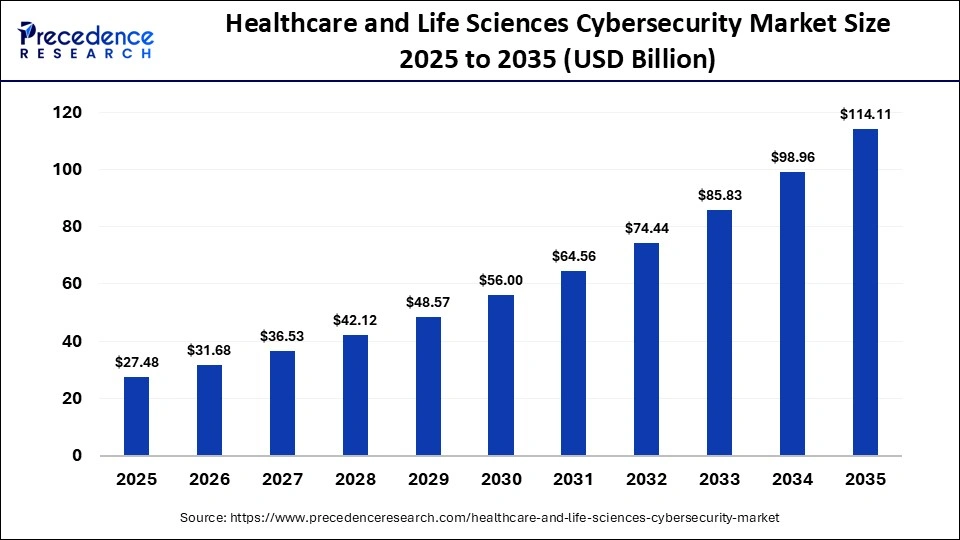
Rohan Patil, a Healthcare Industry Expert, highlights that the healthcare and life sciences cybersecurity market has reached USD 31.68 billion in 2026 and is on track to reach USD 114.11 billion by 2035, advancing at a CAGR of 15.30%. Key healthcare and life sciences cybersecurity market companies shaping the market include IBM, Cisco Systems, Palo Alto Networks, Fortinet, CrowdStrike, while major growth segments span By Component, By Deployment Mode, By Security Type.
Source: https://www.precedenceresearch.com/healthcare-and-life-sciences-cybersecurity-market
 Get a Sample
 Table Of Content


What is the Healthcare and Life Sciences Cybersecurity Market Size in 2026?
The global healthcare and life sciences cybersecurity market size was calculated at USD 27.48 billion in 2025 and is predicted to increase from USD 31.68 billion in 2026 to approximately USD 114.11 billion by 2035, expanding at a CAGR of 15.30% from 2026 to 2035. The growth of the market is mainly driven by the growing incidence of data breaches in the healthcare industry.
Key Takeaways
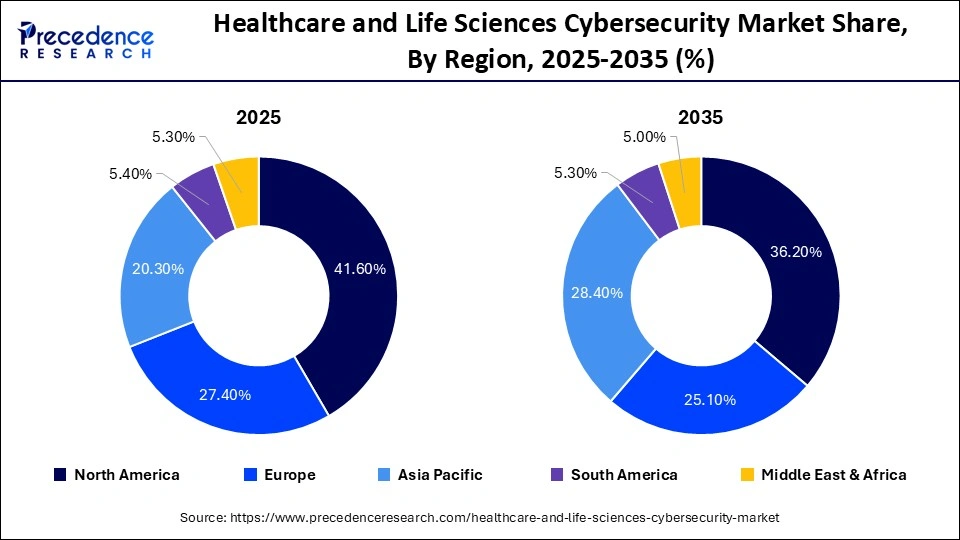
- North America dominated the healthcare and life sciences cybersecurity market with a 41.6% share in 2025.
- Asia Pacific is expected to grow at the fastest CAGR of 16.1% between 2026 and 2035.
- By component, the solutions segment held the biggest market share of 64.7% in 2025.
- By component, the services segment is expected to expand at the fastest CAGR of 13.9% between 2026 and 2035.
- By deployment mode, the on-premises segment contributed to the highest market share of 56.8% in 2025.
- By deployment mode, the cloud segment is expected to grow at a strong CAGR of 15.1% between 2026 and 2035.
- By security type, the network security segment held a major market share of 19.4% in 2025.
- By security type, the cloud security segment is expected to expand at the fastest CAGR of 16.2% from 2026 to 2035.
- By organization size, the large enterprises segment held the biggest market share of 68.9% in 2025.
- By organization size, the small & medium enterprises segment is expected to expand at the fastest CAGR of 14.6% between 2026 and 2035.
Market Overview
The healthcare & life sciences cybersecurity market comprises technologies, platforms, and specialized services designed to protect hospitals, clinics, payers, pharmaceutical companies, biotechnology firms, medical device manufacturers, contract research organizations, and connected care ecosystems from cyber threats. It covers network, endpoint, cloud, application, identity, and data security solutions that safeguard patient records, clinical systems, research data, manufacturing environments, and digital health infrastructure while supporting regulatory compliance, business continuity, and secure digital transformation.
The healthcare & life sciences cybersecurity market is growing rapidly as digital systems, electronic health records, cloud computing, and smart medical devices become increasingly important to hospitals, pharmaceutical companies, and research organizations. Strong cybersecurity solutions are now essential due to the increasing number of ransomware incidents, cyberattacks, and data breaches that target healthcare organizations. Healthcare organizations are a prime target for cybercriminals because they store extremely sensitive patient data, clinical records, and research information.
Additionally, government rules pertaining to patient privacy and data protection are compelling healthcare providers to make investments in cutting-edge cybersecurity systems. Network security, cloud security, endpoint security, and data protection solutions are becoming more necessary in the healthcare and life sciences sectors due to the increasing use of telehealth, digital healthcare systems, and IoT-enabled medical devices. Cybersecurity is anticipated to become an essential component of healthcare infrastructure globally as digital transformation in the industry continues to grow.
How Are Government Initiatives Supporting the Healthcare and Life Sciences Cybersecurity Market?
To safeguard patient data and digital healthcare systems, governments are enacting cybersecurity rules, data protection laws, and healthcare IT security guidelines. Additionally, a lot of governments are funding cybersecurity initiatives for hospitals and healthcare institutions, digital health infrastructure, and safe electronic health records. These programs are promoting the adoption of cutting-edge cybersecurity solutions by life science firms and healthcare providers, thereby fostering market expansion.
How is AI Impacting the Healthcare and Life Sciences Cybersecurity Market?
Artificial intelligence is enhancing healthcare cybersecurity by quickly identifying ransomware cyberthreats and data breaches. Healthcare organizations can more effectively protect patient data and digital health systems by using AI systems to analyze network activity and spot anomalous behavior. In hospitals and life science firms, AI also helps automate threat response, lower cybersecurity risks, and enhance general data protection. AI-based cybersecurity solutions are becoming increasingly crucial for safeguarding sensitive medical and research data as healthcare systems become more digital.
Major Market Trends
- Rising Ransomware Attacks: Increasing ransomware attacks on hospitals are driving demand for advanced cybersecurity solutions.
- Cloud Security Adoption: Growing use of cloud-based healthcare systems is increasing demand for cloud security.
- Connected Medical Device Security: Rising use of IoT medical devices creates the need for device and network security.
- Data Privacy Regulations: Strict healthcare data protection regulations are pushing organizations to adopt cybersecurity solutions.
- Telehealth Security Demand: Growth in telehealth and digital healthcare platforms increases cybersecurity requirements.
- AI in Cybersecurity: Artificial intelligence is being used to detect cyber threats and prevent data breaches.
- Network Security Investments: Healthcare organizations are investing more in network and endpoint security systems.
- Cybersecurity Awareness in Healthcare: Increasing awareness about data security is driving cybersecurity adoption in healthcare and life sciences.
Market Scope
| Report Coverage | Details |
| Market Size in 2025 | USD 27.48 Billion |
| Market Size in 2026 | USD 31.68 Billion |
| Market Size by 2035 | USD 114.11 Billion |
| Market Growth Rate from 2026 to 2035 | CAGR of 15.30% |
| Dominating Region | North America |
| Fastest Growing Region | Asia-Pacific |
| Base Year | 2025 |
| Forecast Period | 2026 to 2035 |
| Segments Covered | Component, Deployment Mode, Security Type, Organization Size, End User, and Region |
| Regions Covered | North America, Europe, Asia-Pacific, Latin America, and Middle East & Africa |
Market Dynamics
Drivers
Increasing Cyberattacks in Healthcare Systems
The need for cybersecurity solutions is being driven by an increase in ransomware incidents, cyberattacks, and data breaches in hospitals and life science organizations. To safeguard sensitive patients and research data, healthcare organizations are investing in cybersecurity.
In October 2025, the Ponemon Institute report highlighted that cyberattacks on healthcare organizations increased significantly, with ransomware and third-party data breaches being major threats affecting healthcare systems and patient data security. The report emphasized the need for stronger cybersecurity systems in healthcare organizations.
Restraint
High Implementation Costs
One significant barrier, especially for small hospitals and healthcare organizations operating on tight budgets, is the high cost associated with cybersecurity software, infrastructure, and ongoing maintenance. As a result, cost constraints often force smaller hospitals to prioritize essential clinical services over advanced cybersecurity, which hinders the growth of the market.
Opportunity
Growth of Digital Healthcare Systems
Strong growth prospects for cybersecurity solutions are being created in the healthcare and life science sectors due to the rapid adoption of telehealth, cloud computing, connected medical devices, and electronic health records (EHRs). As patient data and critical medical systems become increasingly digitized and interconnected, the risk of cyber threats grows, creating a pressing need for advanced cybersecurity measures.
Segment Insights
Component Insights
Healthcare and Life Sciences Cybersecurity Market Share, By Component, 2025-2035 (%)
| Component | 2025 | 2035 |
| Solutions | 64.70% | 58.40% |
| Services | 35.30% | 41.60% |
The Solutions Segment Dominated the Market with a 64.7% Share in 2025
The solutions segment dominated the healthcare & life sciences cybersecurity market with the largest share of 64.7% in 2025. This is mainly due to the widespread adoption of security software in hospitals and life sciences organizations, including network security, endpoint protection, data encryption, identity and access management, and cloud security solutions. With the rising frequency of cyberattacks targeting sensitive patient data and critical research information, the demand for robust cybersecurity solutions has intensified. Moreover, the growing focus of healthcare and life sciences organizations on securing sensitive data boosts the adoption of security solutions, reinforcing the segment's dominance.
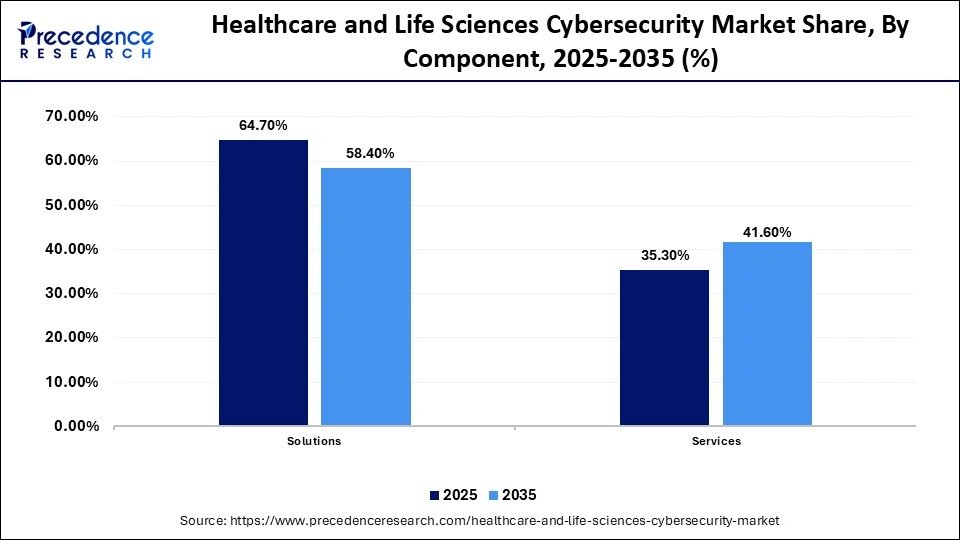
The services segment is expected to grow at the fastest CAGR of 13.9% in the coming years, driven by the growing need for managed, consulting, risk assessment, system integration, and incident response services. Many healthcare organizations lack internal security specialists. Thus, they rely on outside cybersecurity experts. Furthermore, security update services and ongoing monitoring are becoming crucial for healthcare organizations.
Deployment Mode Insights
Healthcare and Life Sciences Cybersecurity Market Share, By Deployment Mode, 2025-2035 (%)
| Deployment Mode | 2025 | 2035 |
| On Premises | 56.80% | 41.20% |
| Cloud | 43.20% | 58.80% |
The On-Premises Segment Dominated the Market in 2025
In 2025, the on-premises segment dominated the healthcare & life sciences cybersecurity market by holding a 64.7% share. This is because many organizations prefer to maintain full control over sensitive patient data and critical research information within their own infrastructure. On-premises deployment allows for stricter compliance with regulatory standards like HIPAA and GDPR, reduces dependency on external networks, and provides customized security protocols tailored to specific organizational needs. Additionally, hospitals and life sciences companies with existing IT infrastructure often find on-premises solutions more reliable for protecting against sophisticated cyberattacks.
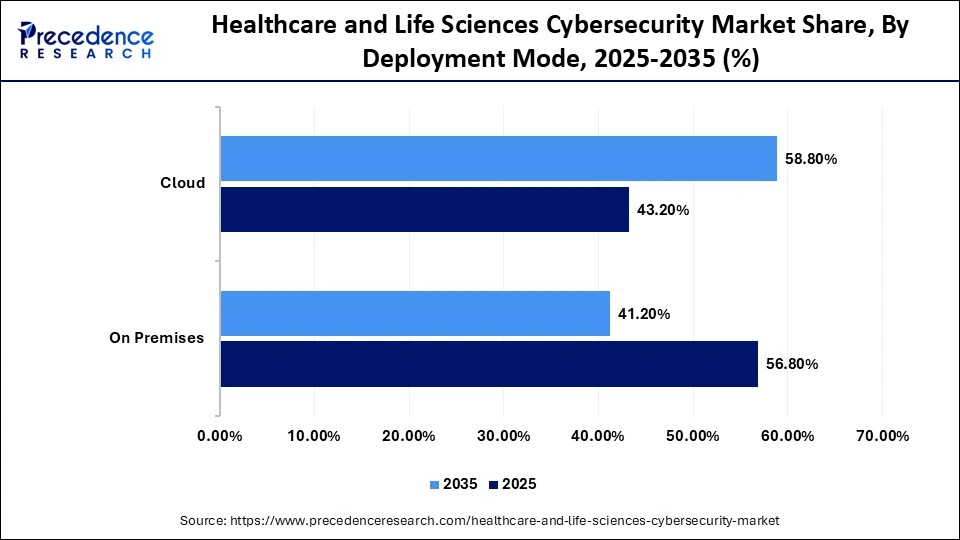
The cloud segment is expected to grow at the fastest CAGR of 15.1% during the forecast period due to its cost-effectiveness, scalability, and ease of deployment without heavy upfront IT investments. Cloud-based solutions enable real-time threat monitoring, automated updates, and remote access to security tools, which is especially valuable for telehealth, connected devices, and multi-site healthcare networks. Additionally, cloud providers offer built-in compliance features, data encryption, and disaster recovery options, making it an attractive choice for organizations aiming to enhance cybersecurity while optimizing operational efficiency.
Security Type Insights
Why Did the Network Security Segment Dominate the Market in 2025?
The network security segment dominated the healthcare & life sciences cybersecurity market with a 19.4% share in 2025. This is primarily because hospitals and life science organizations invest heavily in firewalls, intrusion detection systems, VPNs, and network monitoring tools to protect hospital networks, connected medical devices, and internal communication systems from cyberattacks. The increasing frequency of ransomware attacks on hospital networks has further driven the demand for robust network security solutions.
Healthcare and Life Sciences Cybersecurity Market Share, By Security Type, 2025-2035 (%)
| Security Type | 2025 | 2035 |
| Network Security | 19.40% | 15.10% |
| Endpoint & IoT Security | 16.10% | 17.50% |
| Cloud Security | 12.50% | 17.30% |
| Application Security | 10.40% | 10.90% |
| Data Security | 13.30% | 12.60% |
| Identity & Access Management | 14.20% | 14.80% |
| Security Information & Event Management | 9.60% | 8.70% |
| Others | 4.50% | 3.10% |
The cloud security segment is expected to grow at the fastest CAGR of 16.2% in the coming years. The growth of the segment is driven by the growing use of digital health platforms, telehealth services, cloud computing, and electronic health records, all of which call for robust cloud security solutions to safeguard data kept on these platforms. Cloud security is expanding because of the move to digital healthcare systems.
Organization Size Insights
The Large Enterprises Segment Dominated the Market with a 68.9% Share in 2025
The large enterprises segment registered dominance in the market, holding a major share of 68.9% in 2025. To safeguard vast amounts of sensitive healthcare and research data, big hospitals, pharmaceutical firms, and research institutions make significant investments in cutting-edge cybersecurity infrastructure, security software, and managed security services. These businesses also adhere to the stringent regulations, which have raised cybersecurity expenditures.
Healthcare and Life Sciences Cybersecurity Market Share, By Organization Size, 2025-2035 (%)
| Organization Size | 2025 | 2035 |
| Large Enterprises | 68.90% | 61.30% |
| Small & Medium Enterprises | 31.10% | 38.70% |
The small & medium enterprises segment is expected to grow at the fastest CAGR of 14.6% in the coming years. This growth is driven by the rising number of cyberattacks targeting biotech firms and smaller healthcare providers, coupled with increasing awareness of data protection and the adoption of cost-effective, cloud-based cybersecurity solutions. Additionally, government initiatives supporting digital transformation and cybersecurity adoption among SMEs are further accelerating market expansion.
Regional Insights
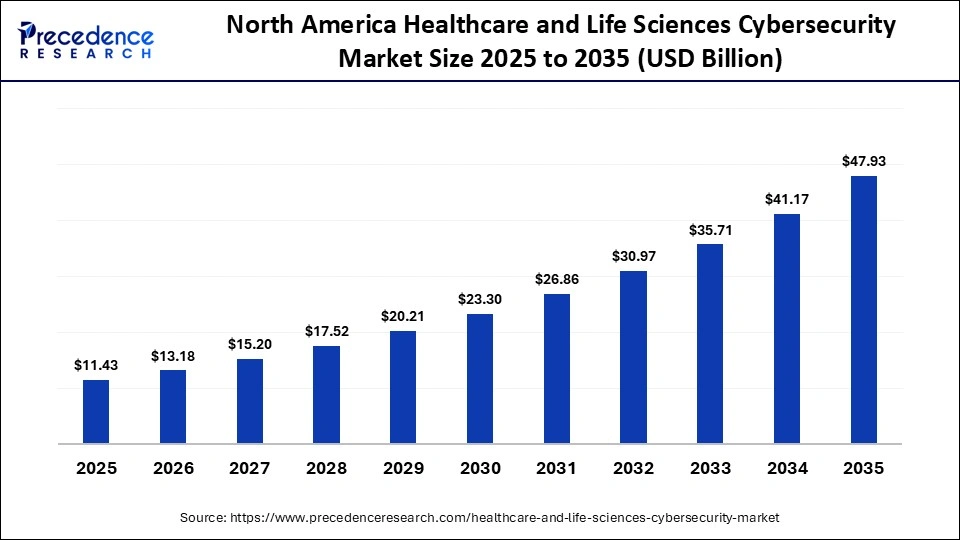
North America Healthcare and Life Sciences Cybersecurity Market Size and Growth 2026 to 2035
The North America healthcare & life sciences cybersecurity market size is estimated at USD 11.43 billion in 2025 and is projected to reach approximately USD 47.93 billion by 2035, with a 15.41% CAGR from 2026 to 2035.
What Made North America the Dominant Region in the Market?
North America dominated the healthcare & life sciences cybersecurity market by holding a 41.6% share in 2025. This is because of the existence of sophisticated healthcare IT infrastructure, widespread use of digital health technologies, and stringent cybersecurity laws. The demand for cybersecurity solutions has increased in the region due to the high frequency of cyberattacks in hospitals and healthcare institutions. The existence of significant cybersecurity firms also contributes to the expansion of the market. Rising investments in cloud security and healthcare data protection also support the region's market dominance.
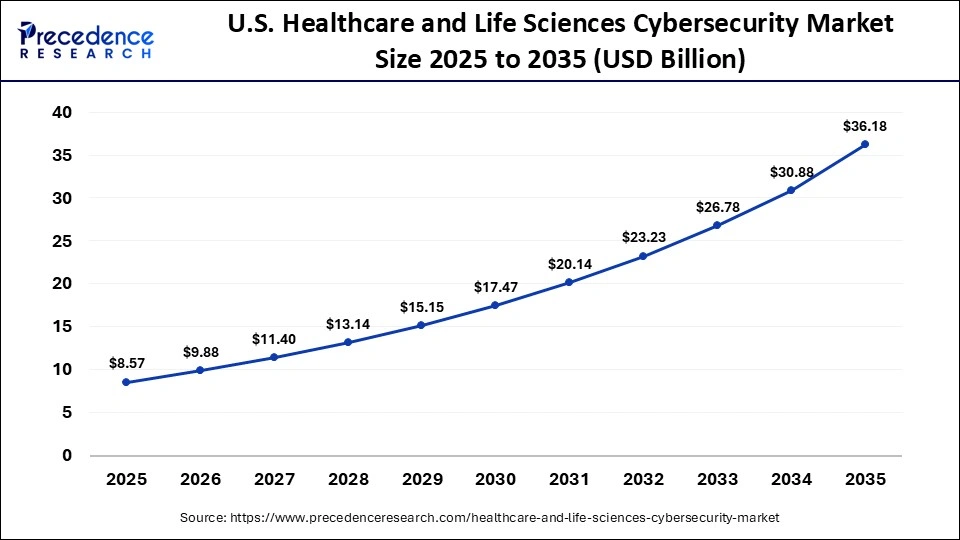
U.S. Healthcare and Life Sciences Cybersecurity Market Size and Growth 2026 to 2035
The U.S. healthcare & life sciences cybersecurity market size is calculated at USD 8.57 billion in 2025 and is expected to reach nearly USD 36.18 billion in 2035, accelerating at a strong CAGR of 15.49% between 2026 and 2035.
U.S. Healthcare & Life Sciences Cybersecurity Market Analysis
The U.S. is the largest contributor to the North American healthcare & life sciences cybersecurity market due to the widespread adoption of telehealth platforms, cloud-based healthcare systems, and electronic health records. Stricter data protection regulations, coupled with a rise in ransomware attacks targeting hospitals, are driving the need for advanced cybersecurity solutions. Additionally, the increasing number of connected medical devices is further fueling demand for robust network, endpoint, and data protection measures across healthcare organizations.
How is the Opportunistic Rise of Asia Pacific in the Market?
Asia Pacific is expected to grow at the fastest CAGR of 16.1% in the coming years because of the growing digitalization of the healthcare systems. With the growing adoption of digital healthcare solutions and cloud platforms, cyber threats in the region continue to rise. Regional governments are investing heavily in cybersecurity and healthcare IT infrastructure to protect patient data and hospital networks. Additionally, the expansion of healthcare infrastructure and ongoing digital transformation initiatives are further driving the region's market growth.
India Healthcare & Life Sciences Cybersecurity Market Analysis
The market in India is growing due to the rising awareness of data protection and the widespread adoption of electronic medical records. Government initiatives promoting digital healthcare, coupled with a rise in cyberattacks targeting healthcare facilities, are further accelerating market growth. Additionally, the expansion of digital health platforms and the rapid development of private hospitals are contributing to the increasing demand for robust cybersecurity solutions in the country.
Healthcare and Life Sciences Cybersecurity Market Companies
- IBM
- Cisco Systems
- Palo Alto Networks
- Fortinet
- CrowdStrike
- Check Point Software Technologies
- Microsoft
- Trend Micro
- Broadcom (Symantec)
- Intel
- Claroty (Medigate)
- Imprivata
- CloudWave
- Cylera
- Armis
- CyberArk
- Sensato Cybersecurity Solutions
Recent Developments
- In March 2026, Stryker Corporation reported a cyberattack that disrupted some internal systems and caused delays in certain surgical procedures and hospital operations. The incident highlighted the growing importance of cybersecurity protection in healthcare systems and medical device companies.(Source: https://www.reuters.com)
- In February 2026, Palo Alto Networks identified a global cyber espionage campaign targeting multiple organizations and conducted cybersecurity investigations and threat intelligence analysis. This development highlights the growing need for advanced cybersecurity monitoring and threat detection solutions across industries, including healthcare and life sciences. (Source: https://www.reuters.com)
- In March 2026, the United States Congress introduced new legislative measures to strengthen cybersecurity protection in the healthcare sector following major cyberattacks that disrupted healthcare services and compromised patient data. The initiative aims to improve cybersecurity infrastructure and protect healthcare systems.(Source: https://www.axios.com)
- In February 2025, Censinet partnered with Amazon Web Services (AWS) to launch Censinet AI, a suite of advanced AI capabilities for healthcare Governance, Risk, and Compliance (GRC) and cybersecurity. Built on AWS AI infrastructure and Censinet's proprietary algorithms, the platform provides enhanced risk visibility, smarter AI-driven governance, and automated cyber risk management for healthcare organizations.(Source: https://industrialcyber.co)
- In January 2025, the U.S. Food and Drug Administration identified cybersecurity vulnerabilities in certain patient monitoring devices and advised healthcare organizations to take preventive cybersecurity measures to protect connected medical devices and patient data.(Source: https://www.reuters.com)
Segments Covered in the Report
By Component
- Solutions
- Services
By Deployment Mode
- On Premises
- Cloud
By Security Type
- Network Security
- Endpoint & IoT Security
- Cloud Security
- Application Security
- Data Security
- Identity & Access Management
- Security Information & Event Management
- Others
By Organization Size
- Large Enterprises
- Small & Medium Enterprises
By End User
- Hospitals & Health Systems
- Clinics & Ambulatory Care Centers
- Health Insurance & Payers
- Pharmaceutical & Biotechnology Companies
- Medical Device Companies
- Contract Research Organizations
- Diagnostic Laboratories
- Others
By Region
- North America
- Latin America
- Europe
- Asia-pacific
- Middle and East Africa
For inquiries regarding discounts, bulk purchases, or customization requests, please contact us at sales@precedenceresearch.com
Frequently Asked Questions





Ask For Sample
No cookie-cutter, only authentic analysis – take the 1st step to become a Precedence Research client
 Get a Sample




 sales@precedenceresearch.com
 Schedule a Meeting
