



Malonic Acid Market Size, Companies, Share, Production Capacity, Raw Material Pricing, Export & Import Analysis, Manufacturing Cost, Competitive Positioning, and Demand Forecast
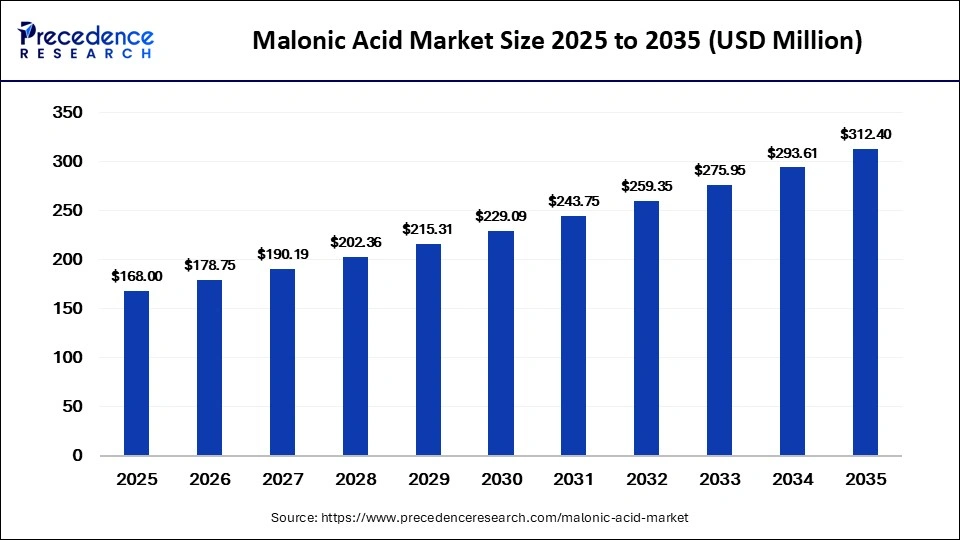
Yogesh Kulkarni, a Chemical and Materials Industry Expert, estimates the malonic acid market at USD 178.75 million in 2026, with the market projected to reach USD 312.40 million by 2035 at a CAGR of 6.40%. Major malonic acid market companies such as Lonza Group, Tokyo Chemical Industry, Merck KGaA are competing across key material and application segments, including product type, production method, application, end-use industry, distribution channel.
Source: https://www.precedenceresearch.com/malonic-acid-market
 Get a Sample
 Table Of Content


Malonic Acid Market Size and Forecast 2026 to 2035
The global malonic acid market size accounted for USD 168.00 million in 2025 and is predicted to increase from USD 178.75 million in 2026 to approximately USD 312.40 million by 2035, expanding at a CAGR of 6.40% from 2026 to 2035. The increasing use of malonic acid in the pharmaceutical, agricultural, and cosmetic industries is a key growth factor for the market.
Key Takeaways
- Asia-Pacific led the malonic acid market with a share of 38% in 2025 and is expected to be the fastest-growing region with a CAGR of 7.8% in the forecasted duration.
- By product, the pharmaceutical grade segment held a dominant position in the market with a share of 52% in 2025 and is expected to grow at the fastest CAGR of 7% in the market between 2026 and 2035.
- By production method, the petrochemical-based malonic acid segment accounted for a considerable revenue share of 82% in the market in 2025.
- By production method, the bio-based malonic acid segment is expected to grow with the highest CAGR of 10.4% in the market during the studied years.
- By application, the pharmaceuticals segment led the global malonic acid market with a share of 44% in 2025 and is expected to expand rapidly in the market with a CAGR of 7.2% in the coming years.
- By end-use industry, the pharmaceutical industry segment registered its dominance over the global market with a share of 46% in 2025 and is expected to witness the fastest growth in the market with a CAGR of 7.1% over the forecast period.
- By distribution channel, the direct sales segment dominated the global market with a share of 61% in 2025.
- By distribution channel, the online sales segment is expected to witness the fastest growth in the market with a CAGR of 8.3% over the forecast period.
Market Overview
Malonic acid is an important precursor in the production of polymers and polyesters. It is applicable in many manufacturing sectors such as petrochemicals, pharmaceuticals, and cosmetics. Malonic acid has been conventionally prepared from fossil resources by petrochemical routes. In medical contexts, the concentration of malonic acid in serum is known to be a key marker of the availability and utilization of adenosylcobalamin in mitochondria. This measurement is considered the gold standard for determining vitamin B12 metabolic deficiency. Malonic acid is also important in the manufacture of barbiturates, protective coatings, biodegradable containers, and surgical adhesives.
Impact of Artificial Intelligence on the Malonic Acid Industry
Artificial intelligence (AI) in the modern world is a must. As the demand for malonic acid increases, production must increase too. AI and machine learning enhance production efficiency by offering a complete assessment framework that integrates conceptual process design, techno-economic analysis (TEA), and life cycle assessment (LCA). This systematic method allows for a full evaluation of the feasibility of different malonic acid production methods. In addition, AI and ML are enabling the development of new products with malonic acid.
Malonic Acid Market Trends
- Biological Synthesis Advancements: Recent advances in biotechnologies are rendering microbial fermentation more feasible for malonic acid production. Specific bacteria and yeast can be used to achieve environmentally friendly synthesis, and process improvements are gradually reducing the cost of production.
- Rising Demand for Sustainable Solutions: The increasing focus on sustainability is making malonic acid an attractive ingredient for green products. It is also seeing adoption from industries looking to reduce carbon footprints due to the growing demand for its bio-based derivatives.
- Expansion in Biodegradable Polymer Applications: With sustainability trends picking up pace worldwide, malonic acid is emerging as a key ingredient in the production of biodegradable polymers. Its growing utilisation is consistent with increasing consumer demand for environmentally-conscious and environmentally-friendly material solutions.
Market Report Coverage and Key Metrics
| Report Coverage | Details |
| Market Size in 2025 | USD 168.00 Million |
| Market Size in 2026 | USD 178.75 Million |
| Market Size by 2035 | USD 312.40 Million |
| Market Growth Rate from 2026 to 2035 | CAGR of 6.40% |
| Fastest Growing Region | Asia Pacific |
| Base Year | 2025 |
| Forecast Period | 2026 to 2035 |
| Segments Covered | Product Type, Production Method, Application, End-Use Industry, Distribution Channel, and Region |
| Regions Covered | North America, Europe, Asia-Pacific, Latin America, and Middle East & Africa |
Market Dynamics
Drivers
Growing Demand Across Pharmaceuticals, Agrochemicals, and Sustainable Materials
The malonic acid market is driven by rapid pharmaceutical growth, rising chemical and speciality chemical production, and increasing demand for agrochemicals and food additives. Additionally, growth is driven by increased investment in speciality intermediates and bio-based chemicals, advanced drug synthesis, sustainable chemistry initiatives, agricultural modernization, and industrial capabilities.
Restraint
Raw Material Cost Volatility and Regulatory Compliance Challenges
Raw material cost fluctuations continue to affect the production economics and profitability across the market. Moreover, strict environmental and safety regulations create compliance challenges, especially for smaller manufacturers with limited resources and flexibility in operations.
Opportunity
Expanding Applications in Research and Green Chemistry
The enormous potential of malonic acid as a reagent in academic and industrial research presents a great opportunity for growth. Market demand and application development are driven by further growing adoption in sophisticated chemical synthesis, innovation-led research operations, and green chemistry initiatives.
Market Segmentation Analysis
Product Type Insights
The Pharmaceutical Grade Segment Dominated the Market with 52% Share in 2025
The pharmaceutical grade segment dominated the malonic acid market with a 52% share in 2025 and is expected to sustain its dominance with a CAGR of 7% in the coming years, due to growing demand for active pharmaceutical intermediates and the expansion of generic drug manufacturing. Malonic acid is used to produce vitamin B1, vitamin B6, vitamin B2, and amino acids. Furthermore, increasing chronic disease treatment development further supports segment growth.
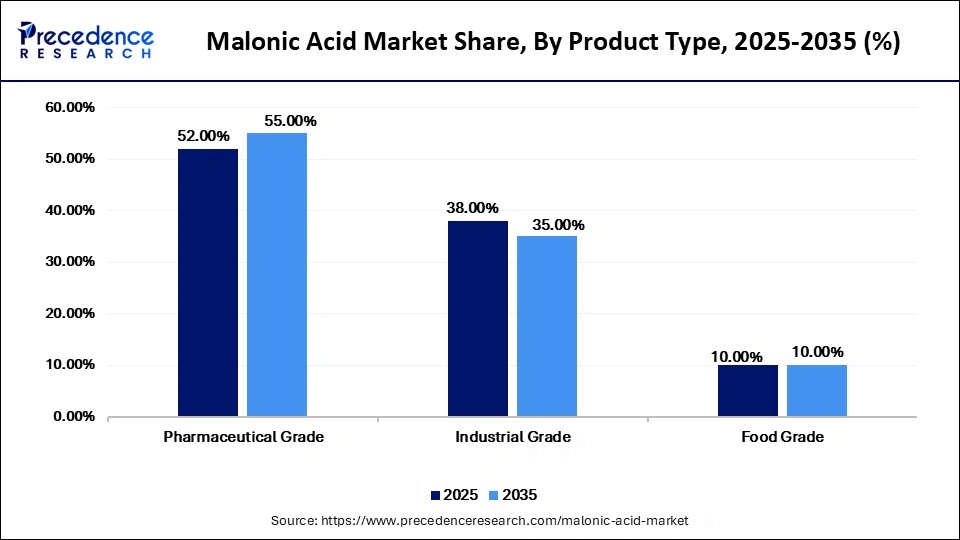
The industrial grade segment accounted for about a 38% market share in 2025 and is expected to grow at a CAGR of 5.8% over the forecast period, driven by increasing specialty chemical production and rising industrial synthesis applications. Moreover, the growing demand for fine chemical intermediates, expansion of polymer and resin production, and cost-effective manufacturing advantages support the segment's growth.
The food grade segment captured 10% of the market share in 2025 and is expected to grow at a CAGR of 5.9% during 2026-2035, driven by rising applications as a food additive and increasing demand for flavor enhancers. Furthermore, rising processed food production and stringent food quality standards support the growth of this segment.
Production Method Insights
The Petrochemical-Based Malonic Acid Segment Led the Market with 82% Share in 2025
The petrochemical-based malonic acid segment led the malonic acid market with a 82% share in 2025, due to its established manufacturing infrastructure and high production efficiency. Its broad industrial acceptance, coupled with reliable raw material availability and cost competitiveness in large-scale production, further solidified its leading position.
Malonic Acid Market Share, By Production Method, 2025-2035 (%)
| Production Method | 2025 | 2026 | CAGR (%) |
| Petrochemical-Based Malonic Acid | 82.00% | 72.00% | 5.20% |
| Bio-Based Malonic Acid | 18.00% | 28.00% | 10.40% |
The bio-based malonic acid segment captured 18% of the market share in 2025 and is expected to be the fastest-growing segment, with a CAGR of 10.4% from 2026 to 2035, driven by increasing sustainability initiatives and a rising demand for green chemicals. It is derived from renewable sources like sugar beet molasses, sugarcane bagasse, and wheat bran. Bio-based malonic acid benefits from heightened investments in biotechnology platforms and a lower environmental footprint, both of which support its expansion.
Application Insights
The Pharmaceuticals Segment Held the Largest Market Share of 44% in 2025
The pharmaceuticals segment held the largest revenue share of 44% in the malonic acid market in 2025 and is expected to grow at the fastest CAGR of 7.2% over the studied period, driven by strong demand for pharmaceutical intermediates and the expansion of API manufacturing. Malonic acid plays a critical role in the pharmaceutical sector as a starting material for producing various drug components. Furthermore, increasing drug discovery activities support the segment's continued dominance.
Malonic Acid Market Share, By Application, 2025-2035 (%)
| Application | 2025 | 2026 | CAGR (%) |
| Pharmaceuticals | 44.00% | 47.00% | 7.20% |
| Agrochemicals | 21.00% | 20.00% | 5.80% |
| Flavors & Fragrances | 12.00% | 12.00% | 6.30% |
| Specialty Chemicals | 15.00% | 15.00% | 6.10% |
| Food Additives | 5.00% | 4.00% | 5.70% |
The agrochemicals segment accounted for 21% of the market share in 2025 and is expected to grow at a CAGR of 5.8% in the coming years, supported by rising crop protection needs and the expansion of pesticide formulation production. Malonic acid is used as a key component in the synthesis of various pesticides and herbicides. Population growth and the need to enhance agricultural productivity further underpin its adoption.
The flavors and fragrances segment held a 12% of the market share in 2025 and is expected to grow at a CAGR of 6.3% in the coming years, driven by rising consumer preference for premium fragrances and the growth of flavor ingredient production. Malonic acid is used in both powder and liquid forms to modify and enhance the chemical composition of aromatic substances, thereby improving their sensory profiles. The expanding personal care industry further supports market growth for this segment.
End-Use Industry Insights
The Pharmaceutical Industry Dominated with 46% Market Share in 2025
The pharmaceutical industry held 46% of the malonic acid market share in 2025 and is expected to show the fastest growth with a CAGR of 7.1% over the forecast period, driven by an increase in the pharmaceutical manufacturing capacity. Malonic acid is a key component in the production of various medications through chemical processes. Additionally, the growth of contract manufacturing organizations further fuels this expansion.
Malonic Acid Market Share, By End-Use Industry, 2025-2035 (%)
| End-Use Industry | 2025 | 2026 | CAGR (%) |
| Pharmaceutical Industry | 46.00% | 49.00% | 7.10% |
| Chemical Industry | 28.00% | 26.00% | 5.80% |
| Agriculture Industry | 14.00% | 13.00% | 5.90% |
| Food & Beverage Industry | 7.00% | 7.00% | 5.80% |
| Cosmetics & Personal Care | 5.00% | 5.00% | 6.50% |
The chemical industry captured 28% of the market share in 2025 and is expected to grow at a CAGR of 5.80% during the forecast period, supported by the rising production of specialty chemicals and the expansion of industrial synthesis processes. Malonic acid serves as a vital ingredient, offering researchers a versatile option for developing innovative compounds. The increasing demand for fine chemicals is also contributing to its adoption.
The agriculture industry segment secured 14% of the market share in 2025 and is expected to grow at a CAGR of 5.9% in the coming years, due to the rising consumption of agrochemicals and the growing need for crop protection. Malonic acid is commonly utilized in agriculture, available in both powder and liquid forms, to enhance performance. Furthermore, the expansion of commercial farming is supporting this growth.
Distribution Channel Insights
The Direct Sales Segment Led the Market with 61% Share in 2025
The direct sales segment led the malonic acid market with nearly 61% share in 2025, due to large-volume industrial procurement and long-term supply agreements. In addition, better pricing efficiency, direct relationships with manufacturers, and strong pharmaceutical industry demand are promoting adoption.
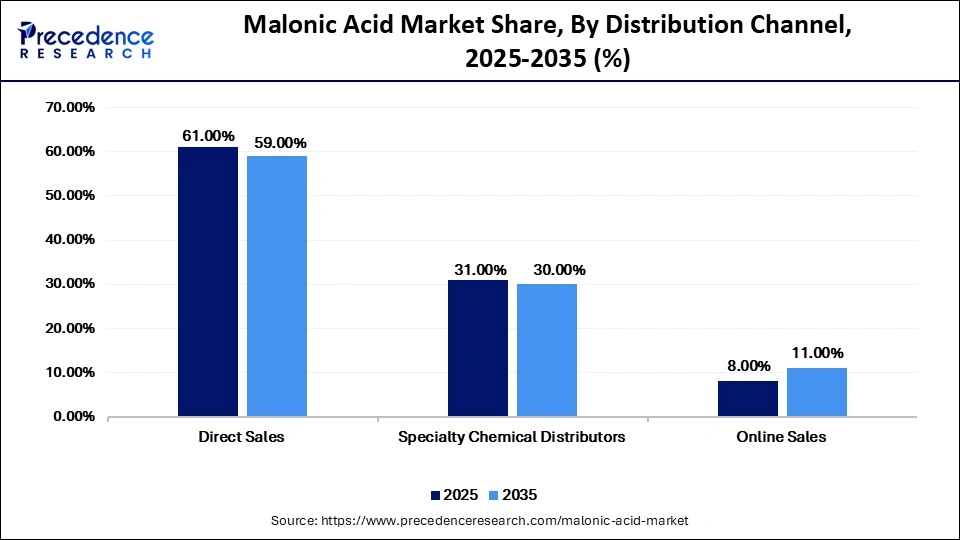
The specialty chemical distributors segment accounted for 31% of the market share in 2025 and is expected to grow at a CAGR of 5.9% in the coming years, supported by broad regional market coverage and access to smaller industrial customers. Furthermore, efficient inventory management, the availability of technical product support, and the expansion of specialty chemical distribution networks are contributing to this growth.
The online sales segment captured 8% of the market share in 2025 and is expected to gain the highest market share with a CAGR of 8.3% in the coming years, driven by the expansion of digital procurement platforms and increasing accessibility for research institutions. Moreover, rising e-commerce adoption in the chemicals sector, faster product sourcing capabilities, and the growth of global online marketplaces are further promoting market expansion.
Market Regional Analysis: North America, Europe, Asia-Pacific
Asia Pacific Malonic Acid Market Size and Growth 2026 to 2035
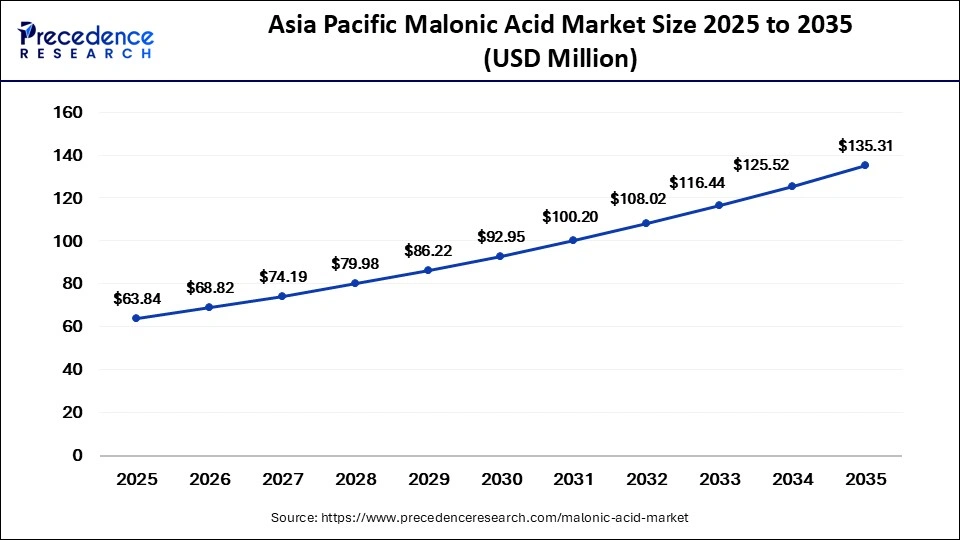
The Asia Pacific malonic acid market size was evaluated at USD 63.84 million in 2025 and is projected to reach around USD 135.31 million by 2035, growing at a CAGR of 7.80% from 2026 to 2035.
Which Factors Drive the Malonic Acid Market in Asia-Pacific?
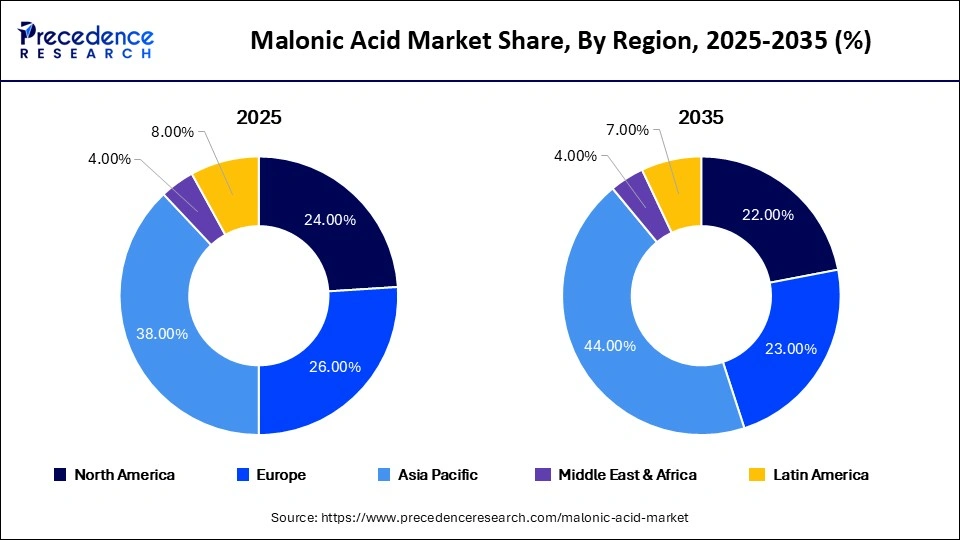
Asia-Pacific held a major market share of 38% in 2025 and is expected to experience the fastest growth with a CAGR of 7.8% during the predicted timeframe, driven by the rapid expansion of the pharmaceutical industry and increasing chemical manufacturing capacity. In addition, rising agrochemical demand, growing investments in specialty intermediates, and expanding contract manufacturing activities are further supporting market growth.
China Market Analysis
China is at the forefront of the Asia-Pacific market, with the increasing proliferation of food and beverage startups expected to further drive market expansion and boost demand across multiple industries in the coming years. Moreover, rising income levels and higher purchasing power are also contributing to this growth.
How is North America Growing in the Malonic Acid Market?
North America accounted for 24% of the market share in 2025 and is expected to grow at a CAGR of 5.8% in the coming years, supported by strong pharmaceutical R&D investments and expanding specialty chemical production. Additionally, increasing demand for high-purity intermediates, the expansion of bio-based chemical development, and rising demand for advanced drug synthesis are key drivers.
United States Market Analysis
The U.S. leads the North American market, supported by consistent pharmaceutical research and development activity and specialty polymer pilot programs that promote sustainable materials development. Moreover, rising R&D activities in the pharmaceutical industry are further propelling market growth.
What are the Key Trends of the Malonic Acid Market in Europe?
Europe held 26% of the market share in 2025 and is expected to grow at a CAGR of 5.9% from 2026 to 2035. This is underpinned by a strong pharmaceutical manufacturing base and increasing sustainable chemical initiatives. In addition, growing agrochemical innovation, expansion of flavor and fragrance production, and favorable regulatory support for specialty chemicals are reinforcing regional growth.
Germany Market Analysis
Germany is performing strongly in the European market, driven by its focus on fine chemical manufacturing clusters and the adoption of green chemistry, which supports sustainable synthesis. Furthermore, increasing emphasis on sustainable use and stringent regulatory compliance for both products and the environment is bolstering growth.
Will the Middle East and Africa Grow in the Malonic Acid Market?
The Middle East and Africa region accounted for 4% of the market share in 2025 and is expected to grow at a CAGR of 5.5% in the coming years, driven by developing chemical production infrastructure and rising pharmaceutical imports and formulation activities. Additionally, growing agricultural modernization, expanding industrial chemical demand, and increasing specialty chemical consumption are supporting market expansion.
UAE Market Analysis
The UAE is experiencing notable market growth, supported by rising specialty chemical consumption. Furthermore, population growth, product diversification through new product launches, increasing consumer trust in product quality, and a robust network of retail outlets that enhances product accessibility and distribution are all contributing to this momentum.
Why is Latin America Growing Significantly in the Malonic Acid Market?
Latin America held 8% of the market share in 2025 and is expected to grow at a CAGR of 6% over the forecast period. Key growth drivers include rising agrochemical industry demand and increasing pharmaceutical production activities. In addition, growing specialty chemical consumption and initiatives to enhance agricultural productivity are supporting market development.
Brazil Market Analysis
Brazil is performing well in the Latin American market, driven by improving industrial manufacturing capabilities. The country is experiencing economic growth and industrial development, and the expansion of various industries, coupled with increasing consumer awareness of sustainable and clean products, is expected to further contribute to market growth.
Malonic Acid Market Value Chain Analysis
- R&D
Explores malonic acid applications, optimizes synthesis, develops novel intermediates and drugs, and enhances process efficiency.
Key Players: BASF, Merck KGaA, Evonik Industries
- Clinical Trials and Regulatory Approval
Assesses malonic acid–based drug candidates for safety, efficacy, regulatory compliance, and successful market authorization.
Key Players: Pfizer, Novartis, IQVIA
- Formulation and Final Dosage Preparation
Leverages malonic acid's properties as a pH controller, buffer, and solubility enhancer to improve drug absorption.
Key Players: Tateyama Kasei Co., Ltd., Wacker Chemie AG, Hebei Chengxin Co., Ltd.
- Packaging and Serialization
Safeguards sensitive acid-based formulations from moisture and environmental damage through advanced medical-grade barrier polymers.
Key Players: Catalent Inc., Thermo Fisher Scientific, Prinova Group LLC
- Distribution to End-Users
Maintains secure cold-chain conditions to avoid chemical degradation and shipment disruptions across key commercial regions.
Key Players: Wuhan Kemi-Works Chemical Co., Ltd., Nantong Acetic Acid Chemical Co., Ltd., Hefei TNJ Chemical Industry Co., Ltd.
Market Competitive Landscape: Leading Companies and Strategies
The malonic acid market is highly consolidated, with key players focused on high-quality chemical intermediate production and comprehensive pharmaceutical development solutions. These companies emphasize process optimization and the distribution of high performance specialty chemicals.
Manufacturers face several challenges, including cyanide chemistry risks, dependence on petrochemical feedstocks, and supply chain concentration. However, malonic acid is widely utilized worldwide for research grade dicarboxylic acids, packaging innovations, and multi scale testing kits. In addition, enterprises are increasingly focusing on developing sustainable, organic, and bio based malonic acid through synthetic biology and fermentation as alternatives to petrochemical routes.
Top Companies in the Malonic Acid Market
- Lonza Group
- Tokyo Chemical Industry
- Merck KGaA
- Thermo Fisher Scientific
- Wuhan Rongcan Pharmaceutical
- Shandong Xinhua Pharmaceutical
- Lygos Inc.
- Trace Zero LLC
- Anhui Jinhe Industrial
- Henan Tianfu Chemical
- Haihang Industry
- Zibo Nalchemy Chemical
- Otto Chemie
- Santa Cruz Biotechnology
- Toronto Research Chemicals
Recent Developments Malonic Acid Market (2025-2026)
- In February 2026, a study introduced a manganese-catalyzed, hydrogen-peroxide-driven protocol for highly enantioselective desymmetrization and γ-/δ-C–H lactonization of malonic acids, enabling efficient access to versatile quaternary stereocenters despite the low reactivity of electron-poor C(sp3)–H bonds.(Source: https://onlinelibrary.wiley.com)
- In July 2025, researchers developed a deep eutectic solvent (Thr/Mal-DES) from equimolar L-threonine and malonic acid, characterized it by multiple analytical techniques, and used it as an efficient, solvent-free catalyst to rapidly synthesize chromeno[4,3-d]pyrimidines in high yields.(Source: https://www.nature.com)
Segments Covered in the Report
By Product Type
- Pharmaceutical Grade
- Industrial Grade
- Food Grade
By Production Method
- Petrochemical-Based Malonic Acid
- Bio-Based Malonic Acid
By Application
- Pharmaceuticals
- Agrochemicals
- Flavors and Fragrances
- Specialty Chemicals
- Food Additives
- Others
By End-Use Industry
- Pharmaceutical Industry
- Chemical Industry
- Agriculture Industry
- Food and Beverage Industry
- Cosmetics and Personal Care
By Distribution Channel
- Direct Sales
- Specialty Chemical Distributors
- Online Sales
By Region
- North America
- Latin America
- Europe
- Asia-pacific
- Middle and East Africa
For inquiries regarding discounts, bulk purchases, or customization requests, please contact us at sales@precedenceresearch.com
Frequently Asked Questions
Tags





Ask For Sample
No cookie-cutter, only authentic analysis – take the 1st step to become a Precedence Research client
 Get a Sample




 sales@precedenceresearch.com
 Schedule a Meeting
