



Synthetic Lethality-Based Drugs and Targets Market Size, Companies, Share, Patient Volume, Treatment Adoption Rates, Pricing Analysis, Regulatory Landscape, Competitive Positioning, and Demand Forecast
Synthetic Lethality-Based Drugs and Targets Market (By Target Type: PARP Inhibitors, ATR Inhibitors, DNA Damage Repair Targets, Others; By Application: Oncology, Genetic Disorders, Others; By End-User: Hospitals, Specialty Clinics, Research Institutes, Others) - Global Industry Analysis, Size, Trends, Leading Companies, Regional Outlook, and Forecast 2026 to 2035
Source: https://www.precedenceresearch.com/synthetic-lethality-based-drugs-and-targets-market
 Get a Sample
 Table Of Content


What is the Synthetic Lethality-Based Drugs and Targets Market Size?
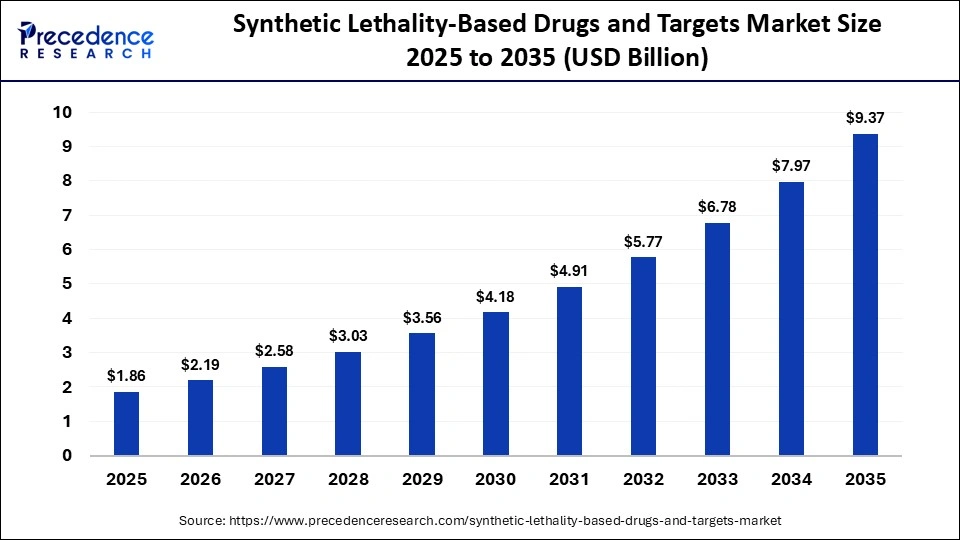
The global synthetic lethality-based drugs and targets market size accounted for USD 1.86 billion in 2025 and is predicted to increase from USD 2.19 billion in 2026 to approximately USD 9.37 billion by 2035, expanding at a CAGR of 17.52% from 2026 to 2035. The market is driven by the surging demand for cancer treatments, coupled with growing pharmaceutical research and development activities.
Key Takeaways
- North America led the market with a major share in 2025.
- Asia Pacific is expected to grow at the highest CAGR during the forecast period.
- By drug type, the small molecules segment held the largest share of the market in 2025.
- By drug type, the biologics segment is expected to expand at a significant CAGR during the forecast period.
- By target type, the PARP inhibitors segment held the largest share of the market in 2025.
- By target type, the ATR inhibitors segment is expected to grow at a robust CAGR between 2026 and 2035.
- By application, the oncology segment held the highest share of the market in 2025.
- By application, the genetic disorders segment is expected to grow at a significant CAGR during the forecast period.
- By end-user, the hospitals segment led the market in 2025.
- By end-user, the specialty clinics segment is expected to expand at a significant CAGR during the forecast period.
Market Overview
The synthetic lethality-based drugs and targets market is a prominent segment of the pharmaceutical industry. This market deals with the production and distribution of high-quality therapeutics for treating a wide range of complex disorders. Synthetic lethality (SL) drugs are unique cancer medications that destroy cancer cells by exploiting specific and pre-existing genetic mutations or deficiencies. The market is rapidly expanding as pharmaceutical companies leverage targeted therapies that exploit genetic vulnerabilities in cancer cells, driving precision oncology and personalized treatment approaches. The surging focus of the biopharmaceutical companies in developing novel therapeutics, as well as the rise in the number of healthcare centers globally, is also driving the market.
How is AI Revolutionizing the Synthetic Lethality-Based Drugs and Targets Industry?
AI is integral in reshaping the landscape of the overall pharmaceutical industry. AI helps in optimizing clinical trials, accelerating drug discovery, and enhancing manufacturing efficiency through significantly reducing time-to-market and costs. Also, by integrating machine learning, AI advances R&D, enables personalized medicine, and improves medicine development according to regulatory compliance. In recent times, AI is widely deployed in the synthetic lethality-based drugs and targets industry for identifying, mapping, and validating complex gene-pair interactions that kill cancer cells by sparing healthy ones. Additionally, AI accelerates biomarker discovery, patient stratification, and combination therapy development, making treatments more precise, effective, and personalized while reducing R&D costs and timelines.
- In May 2025, PharmAla Biotech launched Phenesafe AI. Phenesafe AI is a drug discovery platform designed for the development of novel therapeutics.
Synthetic Lethality-Based Drugs and Targets Market Trends
- Increasing Prevalence of Genetic Diseases: The prevalence of genetic diseases has grown rapidly in several nations, including Canada, Germany, China, the UAE, and Denmark, thus increasing the demand for high-quality synthetic lethality drugs. According to the IntuitionLabs. AI, around 6000 cases of rare diseases were identified globally in 2025.
- Opening New Cancer Research Institutes: Numerous healthcare providers are investing significantly in opening cancer research institutions for advancing R&D of cancer treatment solutions. For instance, in August 2025, the Medical College of Wisconsin announced an investment of around US$153 million. This investment is made to open a cancer research institution in Wauwatosa, U.S.
- Partnerships: Several market players are partnering with precision oncology companies to develop novel therapeutics for treating cancers. For instance, in April 2025, Boehringer Ingelheim partnered with Tessellate Bio. This partnership aims at developing precision treatments for people suffering from hard-to-treat cancer.
Market Scope
| Report Coverage | Details |
| Market Size in 2025 | USD 1.86 Billion |
| Market Size in 2026 | USD 2.19 Billion |
| Market Size by 2035 | USD 9.37 Billion |
| Market Growth Rate from 2026 to 2035 | CAGR of 17.52% |
| Dominating Region | North America |
| Fastest Growing Region | Asia Pacific |
| Base Year | 2025 |
| Forecast Period | 2026 to 2035 |
| Segments Covered | Drug Type, Target Type, Application, End-User, and Region |
| Regions Covered | North America, Europe, Asia-Pacific, Latin America, and Middle East & Africa |
Segment Insights
Drug Type Insights
Why Did the Small Molecules Segment Dominate the Synthetic Lethality-Based Drugs and Targets Market?
The small molecules segment dominated the market in 2025. This is mainly due to the increased adoption of small-molecule-based drugs in the treatment of several infectious diseases, including cancers and metabolic disorders. Small molecules are widely used to exploit synthetic lethal interactions in cancer cells, particularly for targeting DNA damage repair pathways, making them highly effective in precision oncology. Additionally, their established manufacturing processes, scalability, and compatibility with combination therapies further reinforce their dominant position in the market.
The biologics segment is expected to grow at a significant CAGR during the forecast period. This is due to their ability to target complex proteins and signaling pathways that are difficult to modulate with small molecules. Biologics, including monoclonal antibodies and antibody–drug conjugates, enable highly specific interactions with cancer cell targets, reducing off-target effects and enhancing therapeutic efficacy. Additionally, advances in protein engineering, antibody design, and delivery technologies are expanding the scope of biologics for combination therapies, driving their increasing adoption in precision oncology.
Target Type Insights
What Made PARP Inhibitors the Leading Segment in the Market?
The PARP inhibitors segment led the synthetic lethality-based drugs and targets market in 2025. This is due to the surging application of PARP inhibitors to treat advanced, BRCA-mutated, and platinum-sensitive cancers. Additionally, numerous advantages of PARP inhibitors, such as low toxicity, high efficacy, and synthetic lethality, have driven their adoption.
The ATR inhibitors segment is expected to expand with a robust CAGR between 2026 and 2035. The growth of the segment is attributed to the growing usage of ATR inhibitors to enhance the efficacy of DNA-damaging agents, such as cisplatin, gemcitabine, and topoisomerase. Moreover, several benefits of ATR inhibitors, including selective targeting, triggering cGAS-STING pathways, and overcoming treatment resistance, are driving their adoption in various applications.
Application Insights
Why Did the Oncology Segment Dominate the Market?
The oncology segment dominated the synthetic lethality-based drugs and targets market in 2025. This is mainly due to the increased prevalence of prostate cancer among men in several nations, such as the U.S., Germany, and China. There is a strong focus of pharmaceutical companies on developing high-quality medications to treat a wide range of cancers, as well as technological advancements in the oncology sector, also support the segment's growth. Moreover, extensive research, clinical trials, and regulatory support for oncology-focused synthetic lethal therapies have further reinforced its leading position in the market.
The genetic disorders segment is expected to rise with a significant CAGR during the forecast period. This is owing to the surging cases of Huntington's disease and hemophilia in youths, as well as the growing research and development activities performed by biotech companies on developing novel therapeutics for treating genetic issues. Also, the increasing emphasis of healthcare providers on opening new specialty centers for treating genetic disorders is playing a prominent role in driving segmental growth. Moreover, the rising focus of the pharma companies on conducting human trials to determine the efficacy of genetic medicines is expected to accelerate segmental development.
End-User Insights
What Made Hospitals the Leading Segment in the Synthetic Lethality-Based Drugs and Targets Market?
The hospitals segment led the market while holding the largest share in 2025. This is because hospitals are the primary centers for cancer diagnosis, treatment, and clinical trials. Hospitals provide direct access to patients with specific genetic profiles, enabling the administration of targeted therapies and combination treatments based on synthetic lethality. Additionally, hospitals often have advanced infrastructure, trained oncology specialists, and research collaborations, allowing them to adopt novel therapies quickly and deliver personalized cancer care effectively.
The specialty clinics segment is expected to grow with a notable CAGR during the forecast period. This is due to the surging preference of patients to visit specialty clinics for treating a wide range of diseases, such as cystic fibrosis, Down syndrome, carcinomas, and leukemias. Additionally, the growing investment by private entities in opening specialty clinics in developed nations for delivering advanced treatment to cancer patients is playing a prominent role in driving the segment. Moreover, the integration of modern technologies such as AI and IoT in specialty clinics to enhance treatment methodologies is expected to accelerate the growth of this segment.
Regional Insights
Why Did North America Dominate the Synthetic Lethality-Based Drugs and Targets Market?
North America dominated the synthetic lethality-based drugs and target market by capturing the largest share in 2025. This is due to the increasing cases of genetic disorders in numerous countries, such as the U.S., Canada, and Mexico, along with technological advancements in the pharma industry. Also, the rise in the number of cancer hospitals, coupled with the surging investment by the government in developing the oncology sector, is positively impacting the industry. Moreover, innovations and business expansions by several market players, such as Pfizer, AbbVie, Celgene Corporation, and Amgen Inc, have boosted the growth of the market in this region.
- In September 2025, AbbVie opened a new production center in North Chicago, Illinois, U.S. This new manufacturing plant was inaugurated to increase the production of oncology therapeutics for the end-users of this nation.
U.S. Synthetic Lethality-Based Drugs and Targets Market Trends
The U.S. leads the North American synthetic lethality-based drugs and targets market. This is due to the increasing cases of colorectal cancers among men, as well as constant research and development activities performed by biotechnology companies in developing novel therapeutics. Moreover, the rapid investment by the healthcare providers to deliver advanced care among patients suffering from genetic disorders is playing a vital role in shaping the industrial landscape.
How is the Opportunistic Rise of Asia Pacific in the Market?
Asia Pacific is expected to expand at the fastest CAGR during the forecast period. This is due to the surging prevalence of brain cancers in several nations, including China, India, Japan, South Korea, and Australia, as well as the rapid expansion of the biopharma industry. Numerous government initiatives aimed at strengthening the healthcare sector, along with the opening of new cancer research institutions, are playing a vital role in shaping the industrial landscape. Moreover, collaborations and product launches by numerous market players, including Takeda Pharmaceutical, Sun Pharma, Astellas Pharma Inc., and Shanghai Fosun Pharmaceutical Co., Ltd, are expected to drive the growth of the synthetic lethality-based drugs and targets market in this region.
- In October 2025, Takeda partnered with Innovent Biologics. This partnership is aimed at developing oncology medicines to treat colorectal cancers.
China Synthetic Lethality-Based Drugs and Targets Market Analysis
China is a major contributor to the synthetic lethality-based drugs and targets market within Asia Pacific. This is due to the rapid investment by the pharmaceutical brands in opening new medicine production centers, as well as the availability of a skilled workforce at a low wage rate. Additionally, the rise in the number of healthcare startups, coupled with numerous collaborations among healthcare companies and tech providers in advancing drug discovery, is contributing to market growth.
Which Factors Drive the Synthetic Lethality-Based Drugs and Targets Market in Europe?
Europe is experiencing notable growth in the global market, primarily due to the high prevalence of cancer, rapid advancements in precision oncology, and a strong supportive infrastructure for biotechnology research. The European Medicines Agency provides frameworks that facilitate this growth, including accelerated approvals and orphan drug designations for novel oncology agents. Key reforms, such as the Clinical Trials Regulation and the European Health Data Space, are streamlining clinical trials and improving access to data.
Germany Market Trends
Germany is strengthening its position as a European hub for industrial innovation and technical standards, particularly in the areas of synthetic lethality drug development and CRISPR-based screening. This initiative aims to identify novel genomic targets and pioneer clinical applications that integrate DNA repair inhibitors with traditional cancer treatments.
How is Latin America Growing in the Synthetic Lethality-Based Drugs and Targets Market?
Latin America is also witnessing significant growth in the global market, driven by an increasing cancer burden, the growing adoption of precision medicine, and a surge in biotechnology investment. Increased funding for research and development, along with improvements in regional laboratories, is supporting the discovery of new synthetic lethal targets. Countries in the region are working to streamline the approval process for innovative pharmaceuticals, reducing the time it takes for new targeted therapies to become available in the market.
Brazil Market Trends
Brazil is emerging as a critical hub for international, specialized clinical trials of synthetic lethal cancer drugs, thanks to its large, diverse population and favorable regulatory environment. The country's growing participation in oncology research is driven by a rising cancer burden and the active adoption of targeted therapies, positioning Brazil as a strategic, cost-effective market for pharmaceutical innovation.
Will the Middle East and Africa Grow in the Synthetic Lethality-Based Drugs and Targets Market?
The Middle East and Africa region is significantly growing in the global market, largely due to the urgent need for advanced precision oncology, increasing cancer prevalence, and substantial investments in healthcare infrastructure. Countries such as the UAE and Saudi Arabia are making significant investments in biotechnology, research centers, and smart city projects. These governments are creating favorable regulatory environments and streamlining approval processes for advanced biologics, encourages local production.
UAE Market Trends
The UAE established itself as a global leader in AI-driven healthcare, recently unveiling ISM0387, the nation's first fully AI-discovered cancer drug candidate, developed in a record-breaking six months. Powered by advanced in-silico platforms, this breakthrough therapy, targets synthetic lethality, provides a powerful solution penetrating brain tissues and significantly compress the drug development timeline.
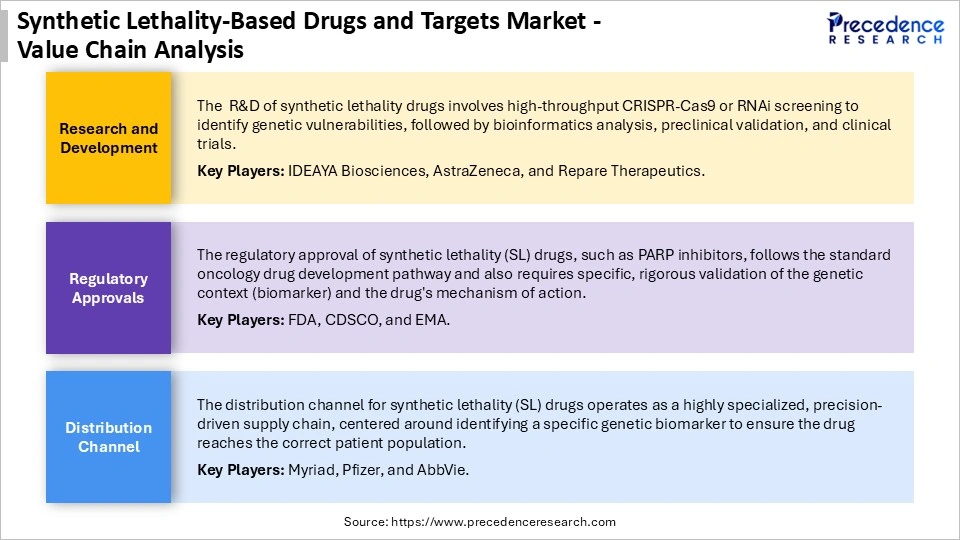
Synthetic Lethality-Based Drugs and Targets Market Value Chain Analysis
Synthetic Lethality-Based Drugs and Targets Market Companies
- AstraZeneca
- GlaxoSmithKline
- Pfizer
- Merck & Co.
- Bristol-Myers Squibb
- Novartis
- Roche
- Eli Lilly and Company
- Sanofi
- Johnson & Johnson
- Tesaro
- Repare Therapeutics
- IDEAYA Biosciences
- Artios Pharma
- Bayer AG
- Takeda Pharmaceutical
- Celgene Corporation
- AbbVie
- Amgen
- Clovis Oncology
Recent Developments
- In March 2026, Starlight Therapeutics received FDA clearance for its IND application to launch a Phase 1 trial of STAR-001, an AI-identified precision compound, for children with rare, relapsed CNS cancers. Working with POETIC, this crucial study aims to offer new, targeted hope against high-grade pediatric brain tumors.
(Source: https://ir.lanternpharma.com) - In August 2025, Starlight Therapeutics announced that the FDA approved STAR-001. STAR-001 is a synthetically lethal DNA-damaging agent that is effective for treating patients suffering from brain cancers.(Source: https://www.businesswire.com)
- In May 2025, DCx Biotherapeutics Corporation partnered with Repare Therapeutics Inc. Through this partnership, these companies aim to discover synthetic lethal drugs that are crucial for cancer treatment. (Source: https://www.biospace.com)
- In March 2025, IDEAYA Biosciences, Inc. collaborated with ATTMOS. This collaboration aims to accelerate an AI/ML-enabled drug discovery platform to develop cancer-treating solutions.(Source: https://www.prnewswire.com)
Segments Covered in the Report
By Drug Type
- Small Molecules
- Biologics
By Target Type
- PARP Inhibitors
- ATR Inhibitors
- DNA Damage Repair Targets
- Others
By Application
- Oncology
- Genetic Disorders
- Others
By End-User
- Hospitals
- Specialty Clinics
- Research Institutes
- Others
By Region
- North America
- Europe
- Asia-Pacific
- Latin America
- Middle East & Africa
For inquiries regarding discounts, bulk purchases, or customization requests, please contact us at sales@precedenceresearch.com
Frequently Asked Questions





Ask For Sample
No cookie-cutter, only authentic analysis – take the 1st step to become a Precedence Research client
 Get a Sample




 sales@precedenceresearch.com
 Schedule a Meeting
