



THR-β Agonist Market Size, Companies, Share, Patient Volume, Treatment Adoption Rates, Pricing Analysis, Regulatory Landscape, Competitive Positioning, and Demand Forecast
THR-β Agonist Market (By Product Type: Selective THR-? Agonists, Non-Selective THR Agonists; By Application: Non-Alcoholic Steatohepatitis (NASH), Dyslipidemia, Obesity, Others; By Route Of Administration: Oral, Injectable; By Distribution Channel: Hospital Pharmacies, Retail Pharmacies, Online Pharmacies; By End-User: Hospitals, Clinics, Research Institutes, Others) - Global Industry Analysis, Size, Trends, Leading Companies, Regional Outlook, and Forecast 2026 to 2035
Source: https://www.precedenceresearch.com/thr-b-agonist-market
 Get a Sample
 Table Of Content


What is the THR-β Agonist Market Size?
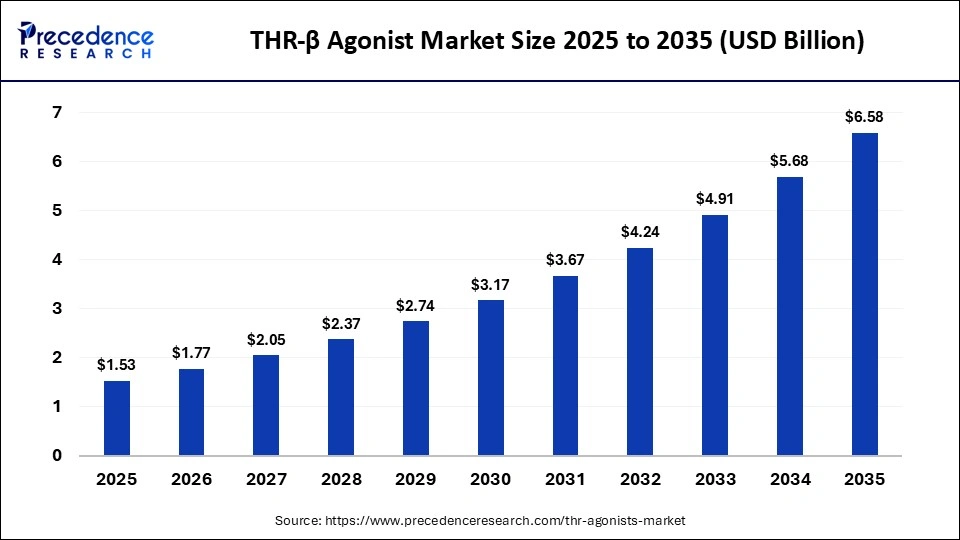
The global THR-β agonist market size accounted for USD 1.53 billion in 2025 and is predicted to increase from USD 1.77 billion in 2026 to approximately USD 6.58 billion by 2035, expanding at a CAGR of 15.72% from 2026 to 2035. The market is driven by rising metabolic disease prevalence and advances in targeted liver therapies.
Market Highlights
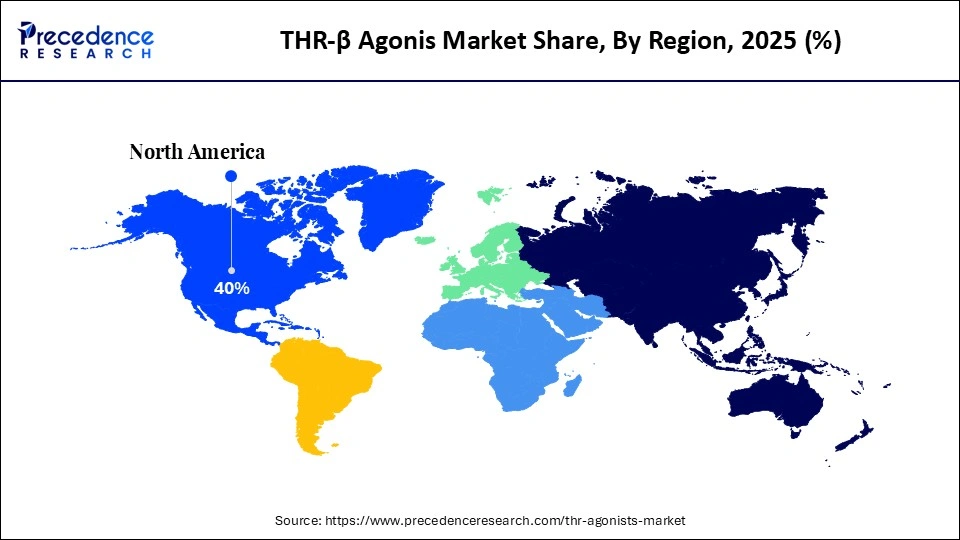
- North America dominated the THR-β agonist market with the largest market share of 40% in 2025.
- The Asia Pacific is expected to grow at the fastest CAGR in the market during the forecast period.
- By product type, the selective THR-β agonists segment dominated the global market in 2025.
- By product type, the non-selective THR agonists segment is expected to grow at the fastest pace during the forecast period.
- By application, the non-alcoholic steatohepatitis segment held a dominant position in the market in 2025.
- By application, the obesity segment is expected to grow at a significant rate during the forecast period.
- By route of administration, the oral segment led the global market in 2025.
- By route of administration, the injectable segment is expected to expand rapidly over the coming years.
- By distribution channel, the hospital pharmacies segment accounted for a major revenue share in the market in 2025.
- By distribution channel, the online pharmacies segment is expected to show the fastest growth over the forecast period.
- By end-user, the hospitals segment dominated the global market in 2025.
- By end-user, the research institutes segment is expected to grow at a significant CAGR over the studied period.
Market Overview
The THR-β agonist market is being driven by the rising global burden of metabolic disorders and the development of more endocrine- and liver-specific therapeutic options. The increasing prevalence of conditions such as metabolic dysfunction-associated steatohepatitis (MASH), non-alcoholic steatohepatitis (NASH), dyslipidemia, and rare genetic disorders like X-linked adrenoleukodystrophy (X-ALD) has created a pressing need for effective, targeted treatments. Adoption is further fueled by growing clinical recognition of THR-β agonists, supported by promising trial outcomes and favorable regulatory approvals. At the same time, ongoing R&D by pharmaceutical and biotechnology companies is bringing next-generation THR-β agonists with improved safety and efficacy profiles to the market.
How is AI Influencing the THR-β Agonist Market
Artificial intelligence is making the drug discovery, development, and commercialization process quicker. Researchers are able to eliminate off-target effects using highly selective THR-b agonists with maximized affinity and binding and liver-selective applications by the use of AI-driven molecular modeling and predictive analytics. To increase the rate of success and reduce the time of development, AI may be implemented in clinical trials to produce smarter trials, patient stratification, and real-time data monitoring. In addition, AI-driven biomarker discovery enhances precision medicine strategies by identifying the patient who is most likely to respond to the treatment with THR-b agonists.
Major Market Trends
- Focus on Selective THR-β Agonists: Developers are emphasizing liver-specific effects while minimizing cardiovascular and systemic side effects seen with non-selective thyroid agonists.
- Advancements in Drug Development: New molecules are showing improved potency, safety, and metabolic outcomes, targeting conditions such as dyslipidemia and rare genetic disorders.
- Regulatory Support and Labeling: Favorable regulatory frameworks and product labeling are driving innovation, accelerating clinical development, and boosting confidence among investors and strategic stakeholders.
- Strategic Collaborations: Licensing and partnerships between biotech firms and large pharmaceutical companies are facilitating commercialization and accelerating global market expansion.
- Precision Medicine and Biomarkers: The use of biomarkers is enhancing patient selection, improving therapeutic outcomes, and simplifying the clinical application of THR-β agonist therapies.
Market Scope
| Report Coverage | Details |
| Market Size in 2025 | USD 1.53 Billion |
| Market Size in 2026 | USD 1.77 Billion |
| Market Size by 2035 | USD 6.58 Billion |
| Market Growth Rate from 2026 to 2035 | CAGR of 15.72% |
| Dominating Region | North America |
| Fastest Growing Region | Asia Pacific |
| Base Year | 2025 |
| Forecast Period | 2026 to 2035 |
| Segments Covered | Product Type, Application, Route Of Administration, Distribution Channel, End-User, and Region |
| Regions Covered | North America, Europe, Asia-Pacific, Latin America, and Middle East & Africa |
Segment Insights
Product Type Insights
Why Did the Selective THR-β Agonists Segment Hold a Dominant Position in 2025?
The selective THR-β agonists segment held a dominant position in the THR-β agonist market in 2025. This is mainly due to the growing emphasis on precision medicine and safety-driven drug development, which strengthened their adoption in clinical practice. These agents are designed to target liver-specific thyroid hormone receptors, enabling precise regulation of lipid metabolism while minimizing the systemic side effects associated with non-selective thyroid treatments. This targeted mechanism makes selective THR-β agonists particularly suitable for chronic metabolic conditions such as non-alcoholic steatohepatitis (NASH) and dyslipidemia. Additionally, positive late-stage clinical trial results and a robust pipeline of preferred agents have contributed to their widespread use.
The non-selective THR agonists segment is expected to grow at the fastest pace in the market between 2026 and 2035. Despite their broader receptor activity, these agents remain attractive as potential therapies for complex metabolic disorders and rare genetic diseases. Innovations in formulation and dose optimization are improving their safety and tolerability, renewing developer interest. Additionally, increased focus on early- and mid-stage clinical research, particularly by emerging biotechnology companies, is expanding the pipeline. Growth is further supported by regulatory flexibility for orphan and rare disease indications, accelerating development and market entry.
Application Insights
Why Did the Non-Alcoholic Steatohepatitis Segment Lead the THR-β Agonist Market?
The non-alcoholic steatohepatitis (NASH) segment dominated the global market in 2025. This is mainly due to the rising prevalence of NASH and its strong association with metabolic disorders such as obesity, diabetes, and dyslipidemia. THR-b agonists have shown high potential regarding the maintenance of lipid deposition, inflammation, and fibrosis within the liver tissue, which places them as potential therapeutic options in the management of NASH. Moreover, there is a high level of clinical trial activity in the area of NASH that has been motivating the research emphasis and investment in the application.
The obesity segment is expected to witness the fastest growth in the market over the forecast period. The growth of the segment is driven by rising sedentary lifestyles, unhealthy diets, and urbanization, which have contributed to the increasing prevalence of obesity in both developed and emerging economies. THR-β agonists are gaining traction as they regulate lipid metabolism, boost energy expenditure, and promote fat loss without negatively affecting heart rate, making them effective therapeutic options for obesity. Furthermore, growing awareness of obesity-related complications, such as cardiovascular disease, diabetes, and non-alcoholic fatty liver disease, is driving early diagnosis and treatment, further fueling market growth.
Route Of Administration Insights
What Made Oral the Leading Segment in the THR-β Agonist Market?
The oral segment led the market with a major revenue share in 2025 because it is the most convenient form and has ease of administration, which is highly preferred by both patients and healthcare providers. Oral formulations avoid invasive procedures, making them particularly suitable for the long-term management of chronic metabolic and liver-related disorders. Enhanced patient compliance, especially in outpatient settings, has further strengthened this segment's dominance. Additionally, oral drugs are simpler to manufacture, store, and distribute, supporting broader commercialization and market penetration.
The injectable segment is expected to expand at a rapid pace in the market in the coming years. This is because injectable formulations are particularly useful when rapid therapeutic action or controlled, sustained drug delivery is required. Growth of this segment is further supported by the increasing use of injectables for complex metabolic conditions, especially in hospitals and specialty clinics. Advances such as sustained-release injectables and prefilled pen systems have improved patient acceptance and adherence. Additionally, injectables are frequently used in clinical trials due to their predictable pharmacodynamics, further enhancing their adoption in late-stage drug development.
Distribution Channel Insights
Why Did the Hospital Pharmacies Segment Lead the THR-β Agonist Market?
The hospital pharmacies segment dominated the global market in 2025, as diagnosis and treatment of metabolic and liver disorders are predominantly conducted in hospital settings. Hospitals serve as key centers for managing complex and chronic conditions, where THR-β agonists are commonly prescribed by specialists. The presence of trained medical staff, advanced diagnostic facilities, and integrated patient care systems has further strengthened the leading position of hospital pharmacies in the market.
The online pharmacies segment is expected to grow at the fastest rate in the market during the forecast period, driven by the digitalization of healthcare and the growing demand for convenient access to medications. Increased internet penetration, widespread smartphone use, and the expansion of e-commerce networks have made prescription and specialty drugs more accessible via online platforms. Additionally, the rise of telemedicine services, remote consultations, and online prescriptions has further accelerated the adoption and growth of online pharmacies.
End-User Insights
Why Did the Hospitals Segment Lead the THR-β Agonist Market?
The hospitals segment held a major revenue share of the market in 2025. This is because hospitals treat a large number of patients with complex metabolic and liver-related disorders, requiring specialized care and attention. Access to experienced clinicians, advanced diagnostic imaging, and laboratory services enables accurate diagnosis and effective treatment planning. Hospitals also serve as key sites for clinical trials and post-marketing surveillance, promoting early adoption of new therapies. Additionally, integrated care pathways enhance treatment outcomes and patient monitoring, while specialty facilities within hospitals address complications and advanced-stage conditions, further strengthening their market leadership.
The research institutes segment is expected to grow at the fastest rate over the forecast period. Government investments, public-private partnerships, and global research initiatives are significantly enhancing research capabilities in both developed and developing regions. Rising interest in disease pathophysiology, biomarker identification, and precision medicine has increased the adoption of new compounds within academic and research settings. Furthermore, research institutes play a key role in clinical trials and translational research, enabling the rapid validation and advancement of novel therapies.
Region Insights
How Big is the North America THR-β Agonist Market Size?
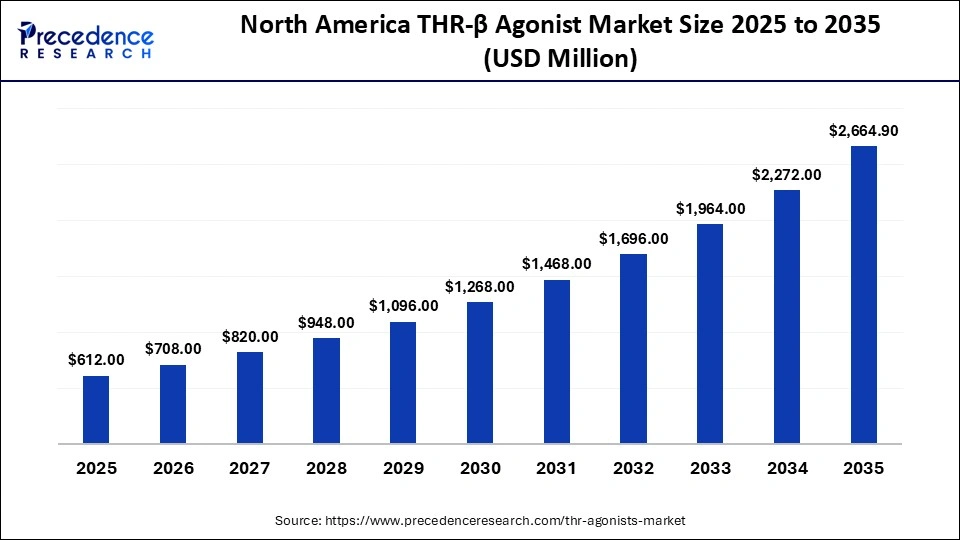
The North America THR-β agonist market size is estimated at USD 612.00 million in 2025 and is projected to reach approximately USD 2,664.90 million by 2035, with a 15.85% CAGR from 2026 to 2035.
What Made North America the Leading Region in the Global THR-β Agonist Market?
North America led the global THR-β agonist market with the maximum share in 2025. The region's leading position in the market is attributed to a high prevalence of metabolic and liver-related disorders, such as non-alcoholic steatohepatitis (NASH) and dyslipidemia, driving the ongoing need for innovative treatment options. It is home to a large number of pharmaceutical and biotechnology companies actively engaged in the development, research, and commercialization of THR-β agonists. Supportive regulatory frameworks, particularly from agencies like the U.S. Food and Drug Administration, have accelerated clinical trials and product development timelines. Additionally, favorable reimbursement policies and the early adoption of new therapies have further strengthened market penetration in the region.
What is the Size of the U.S. THR-β Agonist Market?
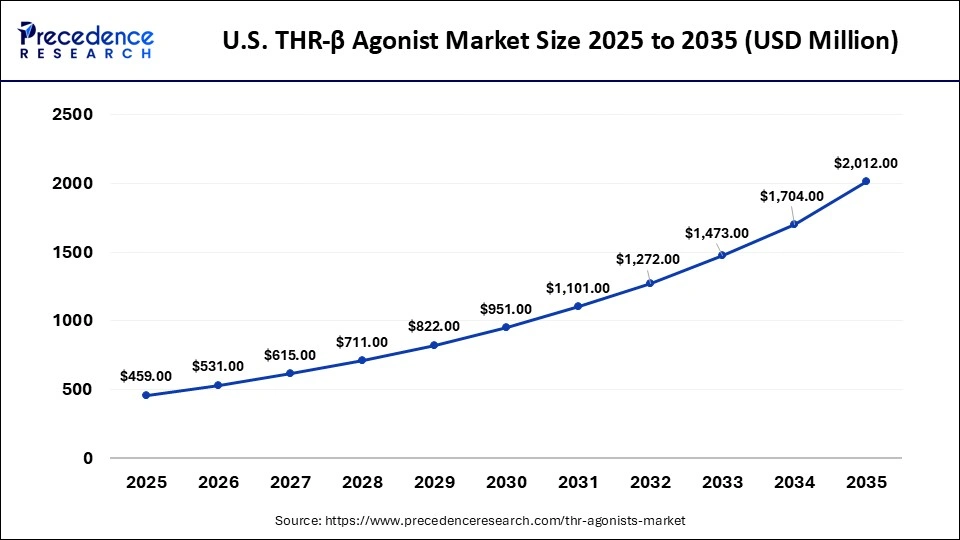
The U.S. THR-β agonist market size is calculated at USD 459.00 million in 2025 and is expected to reach nearly USD 2,012.00 million in 2035, accelerating at a strong CAGR of 15.93% between 2026 and 2035.
U.S. Market Trends
The THR-β agonist market in the U.S. is growing due to the high prevalence of metabolic and liver-related disorders, such as NASH and dyslipidemia, which drives demand for innovative therapies. The presence of numerous pharmaceutical and biotechnology companies, along with strong regulatory support from the FDA, accelerates clinical trials and product development. Additionally, favorable reimbursement policies and early adoption of new treatments have boosted market penetration and uptake.
Why is Asia Pacific Undergoing the Fastest Growth in the THR-β Agonist Market?
Asia Pacific is expected to grow at the fastest CAGR in the market during the forecast period. This is due to the rising healthcare spending in both developing and developed economies, which is improving access to advanced therapies. Pharmaceutical manufacturing capabilities and clinical research activities are expanding in countries such as China, India, and Japan, enhancing regional supply and innovation potential. Supportive government initiatives aimed at increasing healthcare access and streamlining regulatory processes are further driving growth. Additionally, the expanding middle-class population and the increasing demand for effective treatments for chronic metabolic and liver disorders are accelerating the adoption of new therapies in the region.
China Market Trends
China is a major contributor to the THR-β agonist market within Asia Pacific due to its large patient population with metabolic and liver-related disorders, including NASH and dyslipidemia. The country has seen significant investment in pharmaceutical manufacturing, clinical research, and healthcare infrastructure, which enhances the availability and development of advanced therapies. Supportive government policies, increasing healthcare access, and rising middle-class demand for effective treatments further drive the adoption of THR-β agonists in China.
How is the Europe Region Growing in the THR-β Agonist Market?
Europe is expected to have significant market growth throughout the forecast years, largely because regulators are now treating MASH as a major public health burden. The market is also benefiting from rising awareness that MASH is becoming one of Europe's fastest-growing causes of liver transplantation. This has pushed healthcare systems and liver societies to strengthen screening programs for obesity-linked liver disease, especially among diabetic and cardiovascular-risk populations. As a result, THR-β agonists are increasingly being viewed not simply as liver drugs, but as part of a larger metabolic disease treatment ecosystem tied to endocrinology, obesity care, and cardiometabolic medicine.
Germany Market Trends
The country's steady growth and development can be attributed to its strong hepatology infrastructure, widespread use of non-invasive liver diagnostics, and a large number of diagnosed MASH patients.
How is the Latin America Region Growing in the THR-β Agonist Market?
Latin America is expected to have significant growth in the market, due to the rising burden of metabolic dysfunction-associated steatohepatitis (MASH) and metabolic dysfunction-associated steatotic liver disease (MASLD). Brazil and Mexico are emerging as the primary growth centers due to increasing obesity, diabetes, and fatty liver disease prevalence, which is pushing hepatology societies and healthcare institutions to prioritize early diagnosis and novel therapies.
Brazil Market Trends
In Brazil, the liver specialists are expanding the use of non-invasive fibrosis assessment tools and multidisciplinary obesity management programs, as global guidelines increasingly recognize THR-β agonists as a targeted option for fibrosis-stage MASH patients.
What are the Advancements in the THR-β Agonist Market in the Middle East and Africa Region?
The Middle East and Africa are expected to have significant market growth due to the emergence of region-specific liver disease data and collaborative research networks. Middle Eastern academics and hepatology experts are getting into a greater number of global MASLD studies, especially to forecast disease burden, as well as to understand trends in fibrosis progression. At the same time, healthcare practitioners here in this area are also scrutinizing the development of THR-β agonists within international regulatory frameworks. This has generated great interest in non-invasive imaging techniques; new biomarker-driven patient classification; and anticipation of reimbursement for highly-specialized liver therapies.
Saudi Arabia Market Trends
A major trend evident in the Saudi market is that obesity management and liver disease treatment are linked together. In response, rather than treating fatty liver disease as a one-off problem, hospitals have adopted screening routines of linkages among endocrinology, cardiology, obesity medicine, and hepatologists. Expert panels from Saudi Arabia are further integrating international standards on MASLD and MASH into clinical guidelines tailored to their specific local settings.
Who are the Major Players in the Global THR-β Agonist Market?
The major players in the THR-β agonist market include Viking Therapeutics, Inc., Madrigal Pharmaceuticals, Inc., Resverlogix Corp., HighTide Therapeutics, Inc., Novartis AG, Pfizer Inc., Roche Holding AG, AstraZeneca PLC, GlaxoSmithKline plc, Johnson & Johnson, Merck & Co., Inc., Eli Lilly and Company, Bristol Myers Squibb Company, AbbVie Inc., Novo Nordisk A/S, Sanofi S.A., Amgen Inc., Takeda Pharmaceutical Company Limited, Bayer AG, and Gilead Sciences, Inc.
Recent Developments
- In June 2025, Madrigal was granted a positive opinion by the Committee of Medicinal Products for Human Use (CHMP) of REZDIFFRA (resmetirom) use in the management of MASH with moderate to advanced fibrosis. This was ruled on the basis of Phase III MAESTRO-NASH clinical trial data.
(Source: https://ir.madrigalpharma.com) - In November 2024, Viking Therapeutics provided 52-week secondary endpoint outcomes of the Phase IIb VOYAGE trial of VK2809 in biopsy-confirmed NASH/MASH at the 75th AASLD Liver Meeting. The results also justified the potential of the drug in developing MASH therapy.
(Source: https://ir.vikingtherapeutics.com)
Segments Covered in the Report
By Product Type
- Selective THR-β Agonists
- Non-Selective THR Agonists
By Application
- Non-Alcoholic Steatohepatitis (NASH)
- Dyslipidemia
- Obesity
- Others
By Route Of Administration
- Oral
- Injectable
By Distribution Channel
- Hospital Pharmacies
- Retail Pharmacies
- Online Pharmacies
By End-User
- Hospitals
- Clinics
- Research Institutes
- Others
By Region
- North America
- Europe
- Asia-Pacific
- Latin America
- Middle East & Africa
For inquiries regarding discounts, bulk purchases, or customization requests, please contact us at sales@precedenceresearch.com
Frequently Asked Questions
Tags





Ask For Sample
No cookie-cutter, only authentic analysis – take the 1st step to become a Precedence Research client
 Get a Sample
.webp)



 sales@precedenceresearch.com
 Schedule a Meeting
