



Amylin Analog Drugs Market Size, Companies, Share, Patient Volume, Treatment Adoption Rates, Pricing Analysis, Regulatory Landscape, Competitive Positioning, and Demand Forecast
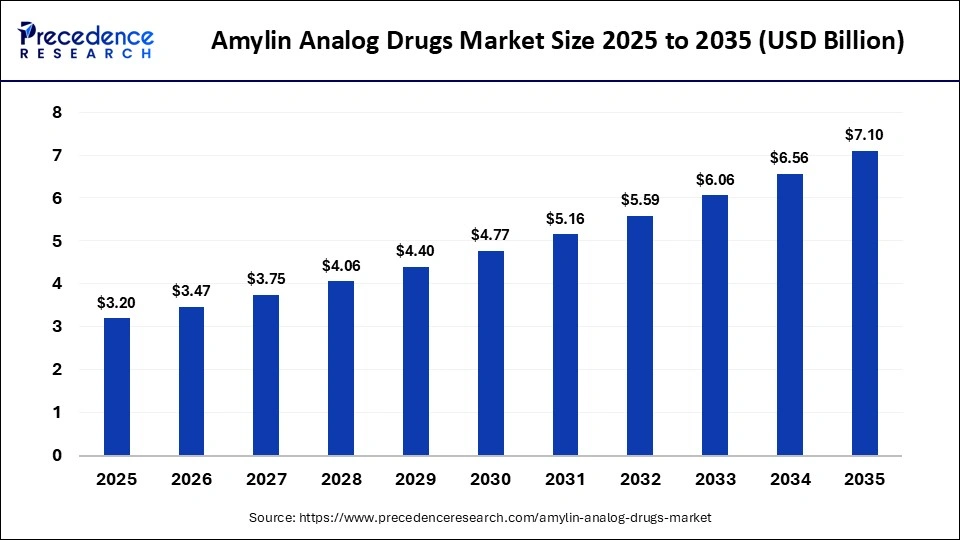
Rohan Patil, a Healthcare Industry Expert, highlights that the amylin analog drugs market has reached USD 3.47 billion in 2026 and is on track to reach USD 7.10 billion by 2035, advancing at a CAGR of 8.30%. Key amylin analog drugs market companies shaping the market include Eli Lilly and Company, Sanofi S.A., Boehringer Ingelheim, Novartis AG. , while major growth segments span By Type, By Administration Route, By Application, By End-Use.
Source: https://www.precedenceresearch.com/amylin-analog-drugs-market
 Get a Sample
 Table Of Content


What is the Amylin Analog Drugs Market Size in 2026?
The global amylin analog drugs market size accounted for USD 3.20 billion in 2025 and is predicted to increase from USD 3.47 billion in 2026 to approximately USD 7.10 billion by 2035, expanding at a CAGR of 8.30% from 2026 to 2035. The market is rapidly growing due to the high obesity rate across the globe, technological advancements in developing amylin analogs with high efficiency, and government support in terms of reimbursement policies.
Key Takeaways
- North America held the largest market share of 40% in 2025.
- Asia Pacific is expected to grow at the fastest CAGR of 9.5% during the forecast period of 2026-2035.
- By type, the pramlintide segment held the largest market share of 55% in 2025.
- By type, the ipragliflozin segment held the second-largest market share of 35% in 2025 and is expected to grow at a CAGR of 9% during the foreseeable period.
- By administration route, the subcutaneous injection segment held the highest market share of 80% in 2025.
- By administration route, the intravenous segment is expected to grow at a CAGR of 8.2% during the projection period.
- By application, the type 1 diabetes segment held the highest market share of 50% in 2025.
- By application, the type 2 diabetes segment held the second-largest market share of 40% in 2025 and is expected to grow at a CAGR of 8.5% between 2026 and 2035.
- By end-use, the hospitals segment held the largest market share of 60% in 2025.
- By end-use, the clinics segment held the second-largest market share of 25% in 2025 and is expected to grow at a CAGR of 8% during the foreseeable period of 2026-2035.
Market Overview
Amylin analog drugs are basically injectable medications that mimic the natural hormone amylin, which is co-secreted along with insulin by pancreatic beta cells. They are primarily used to improve glycemic control in adults with type 1 or type 2 diabetes. These agents work by slowing gastric emptying and reducing glucagon secretion while supporting satiety. Pramlintide is currently the only amylin analog approved by the U.S. Food and Drug Administration (FDA).
The market is largely dominated by key players like AstraZeneca, Roche, and Novo Nordisk. The market is rapidly growing due to the increasing prevalence of disorders like type 2 diabetes and obesity. Many conventional therapies used in the management of diabetes and related metabolic disorders are associated with weight gain as a side effect. In contrast, amylin analogs act directly on brain centers responsible for regulating satiety, offering a more favorable metabolic profile. Additionally, combination therapies involving amylin analogs and GLP-1 receptor agonists, such as CagriSema, have demonstrated superior weight loss outcomes compared to GLP-1 monotherapy, further driving interest in this therapeutic.
Amylin Analog Drugs Market Trends
- Previously, amylin therapy required multiple daily injections; however, current research and development efforts are focused on long-acting amylin analogs designed for once-weekly or even once-monthly administration, significantly improving patient convenience and adherence.
- The market is also witnessing a strong shift toward combination therapies involving GLP-1/GIP receptor agonists and amylin analogs. This approach leverages the complementary mechanisms of both hormones, where GLP-1 primarily suppresses appetite and promotes weight loss, while amylin helps regulate glucagon secretion and enhances satiety.
- Rresearchers are actively developing dual amylin and calcitonin receptor agonists that target both receptor pathways to achieve enhanced weight loss and broader metabolic benefits.
- There is also increasing emphasis on regulatory compliance and patient-centric drug delivery systems. As a result, the market is moving toward prefilled and disposable injection pens for subcutaneous administration, offering improved safety, convenience, and ease of use.
Market Scope
| Report Coverage | Details |
| Market Size in 2025 | USD 3.20 Billion |
| Market Size in 2026 | USD 3.47 Billion |
| Market Size by 2035 | USD 7.10 Billion |
| Market Growth Rate from 2026 to 2035 | CAGR of 8.30% |
| Dominating Region | North America |
| Fastest Growing Region | Asia Pacific |
| Base Year | 2025 |
| Forecast Period | 2026 to 2035 |
| Segments Covered | Type, Administration Route, Application, End User, and Region |
| Regions Covered | North America, Europe, Asia-Pacific, Latin America, and Middle East & Africa |
Market Dynamics
Drivers
Increasing Demand for Advanced Obesity Solutions
The amylin analog drugs market is primarily driven by the growing demand for next-generation obesity management solutions and synergistic combination therapies that address unmet needs in type 1 and type 2 diabetes. Following the strong clinical and commercial success of GLP-1 therapies such as Wegovy, there is increasing demand for more effective and durable treatment options. Amylin analogs offer significant potential for combination with other therapeutic agents. In particular, combinations such as cagrilintide with GLP-1 receptor agonists have demonstrated superior efficacy in clinical trials, thereby supporting broader market expansion.
Restraint
Concerns About GI Tolerance
Despite having several benefits of amylin analog drugs, they may also have side effects like frequent nausea and vomiting or other gastrointestinal issues. It may cause increased discontinuation rates among patients with low tolerance for GI activities. Designing a stable, long-acting formulation is highly difficult in terms of technical steps. Also, the expensive development and production process of complex peptide-based drugs is further limiting wide access to such a treatment for the masses, creating a bottleneck for the market to grow.
Opportunity
Development of Multihormonal Triple Agonists
The rising development of antihormonal triple agonists like retatrutide creates immense opportunities in the market. It demonstrates unprecedented weight loss outcomes in clinical trials. This therapeutic approach combines GLP-1, GIP, and glucagon receptor activity to counteract the metabolic slowdown commonly observed during dieting. These agents have shown strong glycemic control and improved insulin sensitivity in patients with type 2 diabetes. Additionally, they contribute to significant reductions in liver fat, which is an important factor in metabolic health, while supporting weight loss without compromising muscle mass.
Segment Insights
Type Insights
Amylin Analog Drugs Market Share, By Type, 2025-2035 (%)
| Type | 2025 | 2035 | CAGR (%) |
| Pramlintide | 55.00% | 53.00% | 7.00% |
| Ipragliflozin | 35.00% | 37.00% | 9.00% |
| Other Amylin Analog Drugs | 10.00% | 10.00% | 6.00% |
The Pramlintide Segment Held the Largest Market Share of 55% in 2025
The pramlintide segment dominated the amylin analog drugs market by holding the largest share of 55% in 2025. This is because pramlintide remains the most widely applicable amylin analog, owing to its well-established efficacy in improving glucose control in both type 1 and type 2 diabetes. Its proven effectiveness in regulating glucose levels by slowing gastric emptying and increasing satiety levels makes it the preferred choice.
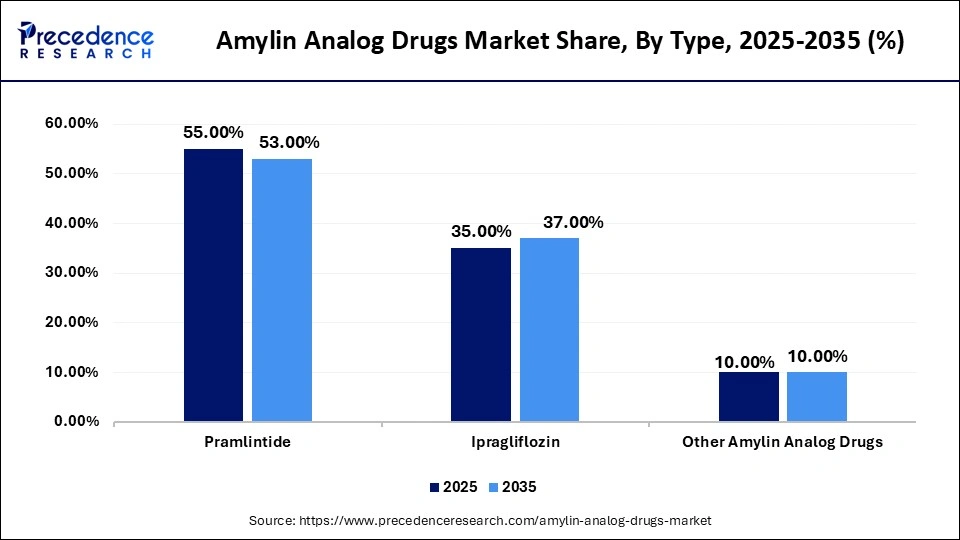
The ipragliflozin segment was the second-largest shareholder in 2025, holding a 35% share, and is expected to grow at the fastest CAGR of 9% during the foreseeable period. The segment growth is driven by the increasing adoption of ipragliflozin in diabetes management due to its ability to enhance insulin sensitivity and minimize postprandial glucose. It is a highly potent, selective SGLT-2 inhibitor that enhances urinary glucose excretion at an expected level and reduces blood glucose levels independently of insulin secretion.
Administration Route Insights
Amylin Analog Drugs Market Share, By Administration Route, 2025-2035 (%)
| Administration Route | 2025 | 2035 | CAGR (%) |
| Subcutaneous Injection | 80.00% | 78.00% | 7.50% |
| Intravenous Injection | 20.00% | 22.00% | 8.20% |
The Subcutaneous Injection Segment Held the Highest Market Share of 80% in 2025
The subcutaneous injection segment dominated the amylin analog drugs market with the highest share of 80% in 2025 due to its unmatched efficiency and easy administration. The segment dominance is also attributed to the efficiency and clinically established method that makes injectables highly safe to administer medications with consistent therapeutic doses. This method directly delivers drug dosage into fatty liver tissue and offers higher bioavailability.
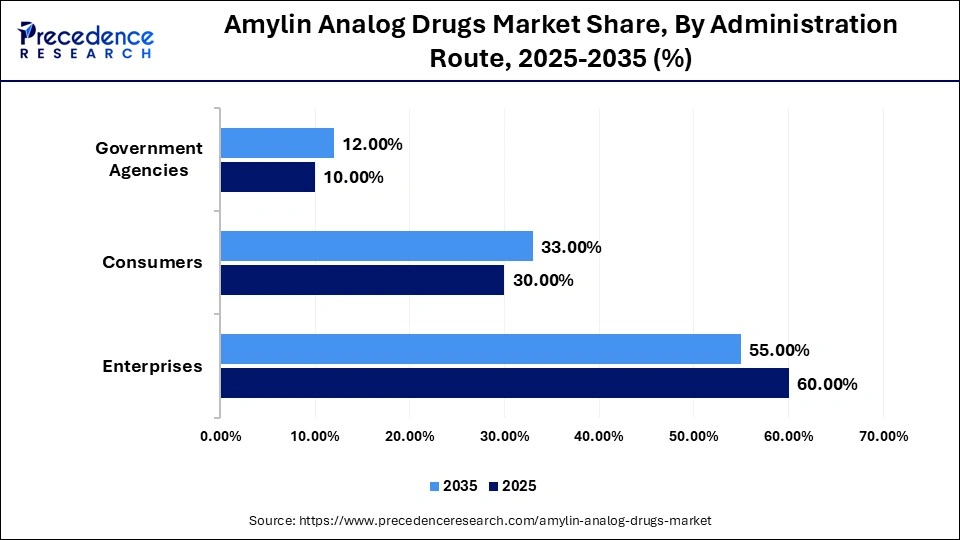
The intravenous segment held the second-largest market share of 20% in 2025 and is expected to grow at a CAGR of 8.2% during the foreseeable period of 2026-2035. This is mainly due to its use for short-term management in hospital settings or acute conditions requiring fast insulin action. Delivering medications directly into the tissue bypasses the gastrointestinal tract, which ensures systemic drug circulation with maximizing efficacy. The combination therapies can be directly administered via the intravenous route for high efficacy and expected outcomes, supporting the segment's growth.
Application Insights
The Type 1 Diabetes Segment Held the Largest Market Share of 50% in 2025
The type 1 diabetes segment dominated the amylin analog drugs market with the largest share of 50% in 2025 due to the complete absence of an amylin hormone that is co-secreted with insulin in patients having type 1 diabetes. Amylin analog mimics the satiety signal and suppresses the release of glucagon, which extensively increases glucose after meals. Research shows that adding amylin analogs to the treatment of type 1 diabetes leads to a greater reduction in blood sugar spikes.
Amylin Analog Drugs Market Share, By Application, 2025-2035 (%)
| Application | 2025 | 2035 | CAGR (%) |
| Type 1 Diabetes | 50.00% | 48.00% | 6.50% |
| Type 2 Diabetes | 40.00% | 42.00% | 8.50% |
| Obesity | 7.00% | 7.50% | 9.00% |
| Others | 3.00% | 2.50% | 5.00% |
The type 2 diabetes segment was the second-largest shareholder in 2025, holding a market share of 40%, and is expected to grow at a CAGR of 8.5% between 2026 and 2035. The segment is mainly driven by the massive population dealing with type 2 diabetes and associated obesity rates. There is a growing shift in managing glucose levels with the help of amylin analog drugs due to their proven effectiveness. The rising incidence and growing emphasis on early intervention also drive segmental growth.
The obesity segment held a 7% market share in 2025 and is expected to grow at the fastest CAGR of 9% in the coming years. The segment is growing due to the high prevalence of obesity across the globe and the increasing need for satiety-based treatments. Next-gen amylin analogs showed a substantial weight reduction of over 10% in clinical trials and marked them as long-acting and anti-obesity agents.
End-Use Insights
Hospitals Dominated the Market With a 60% Share in 2025
The hospitals segment dominated the amylin analog drugs market while holding the largest share of 60% in 2025, as these medications are highly specialized and need to be administered by healthcare professionals under controlled health parameters with advanced equipment and precise dosage. Hospital pharmacies are also dealing with providing complex inventory and cold storage of such drugs to avoid a lack of these drugs in case of an emergency. The large volume of acute care patients in hospitals requires insulin and glucose control therapies, reinforcing their leading position in the market.
Amylin Analog Drugs Market Share, By End-Use, 2025-2035 (%)
| End-Use | 2025 | 2035 | CAGR (%) |
| Hospitals | 60.00% | 58.00% | 6.20% |
| Clinics | 25.00% | 26.00% | 8.00% |
| Homecare Settings | 10.00% | 12.00% | 8.50% |
| Others | 5.00% | 4.00% | 4.50% |
The clinics segment held the second-largest market share of 25% in 2025 and is expected to grow at a CAGR of 8% during the foreseeable period of 2026-2035. The segment is largely driven by the increasing demand for outpatient management of chronic metabolic disorders. Clinics offer personalized patient education on these drugs and their outcomes, which is essential to gain patients' consent before proceeding with treatments. Clinics are increasingly adopting amylin analogs for outpatient diabetes management, where efficiency and patient monitoring are key priorities.
The homecare settings segment held a market share of 10% in 2025 and is expected to grow at a CAGR of 8.5% during the forecast period. The segment growth is attributed to the increasing focus on reducing the high overhead cost of treatment related to hospital-based care and clinical visits. The growth of telemedicine and remote glucose monitoring with digital health tools allows remote patient management. Additionally, amylin analogs offer a vital therapeutic alternative for weight loss and enhanced post-meal control, which is also possible in a home-care setting, driving the segment's growth.
Regional Insights
North America Amylin Analog Drugs Market Size and Growth 2026 to 2035
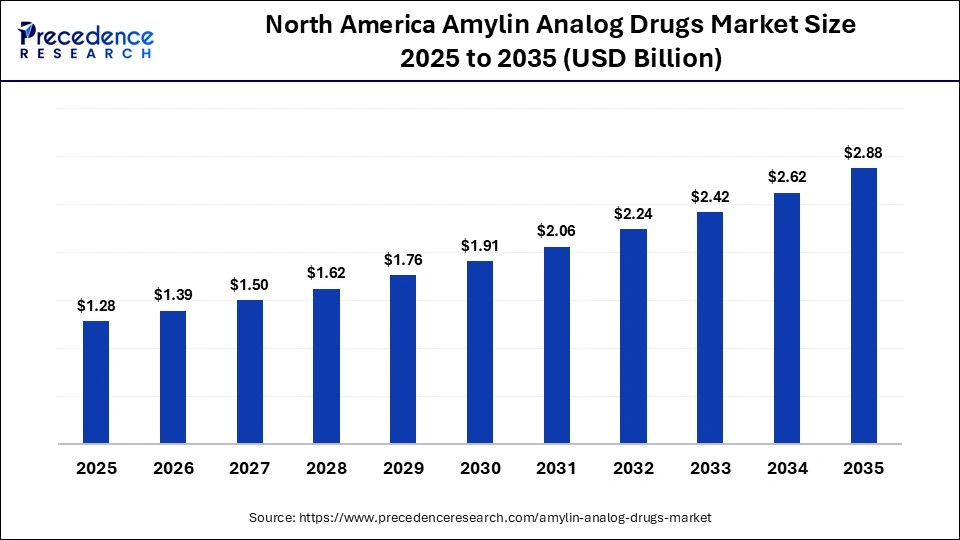
The North America amylin analog drugs market size is estimated at USD 1.28 billion in 2025 and is projected to reach approximately USD 2.88 billion by 2035, with a 8.45% CAGR from 2026 to 2035.
What Made North America the Dominant Region in the Amylin Analog Drugs Market?
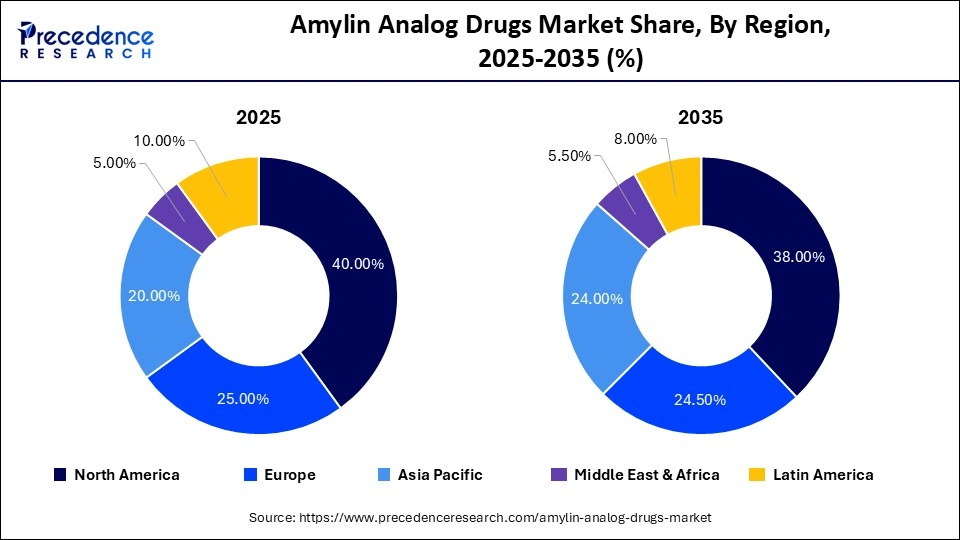
North America dominated the amylin analog drugs market by capturing a 40% share in 2025. The region's dominance in the market is driven by a combination of high metabolic disease prevalence, well-developed healthcare infrastructure, and increased disposable income that led to high spending on a healthy lifestyle. There is a rising adoption of innovative therapies, contributing to the region's leading position. The region has witnessed a high prevalence of diabetes and obesity that needs intense weight management and metabolic management therapies.
Additionally, the extensive insurance coverage and government programs in the region facilitate the higher adoption of amylin analog drugs and combination therapies. The healthcare system in North America holds the ability to support high-cost and specialized injectables that offer faster adoption of newer and innovative therapies, supporting the region's hold over the market.
U.S. Amylin Analog Drugs Market Size and Growth 2026 to 2035
The U.S. amylin analog drugs market size is calculated at USD 1.00 billion in 2025 and is expected to reach nearly USD 2.24 billion in 2035, accelerating at a strong CAGR of 8.40% between 2026 and 2035.
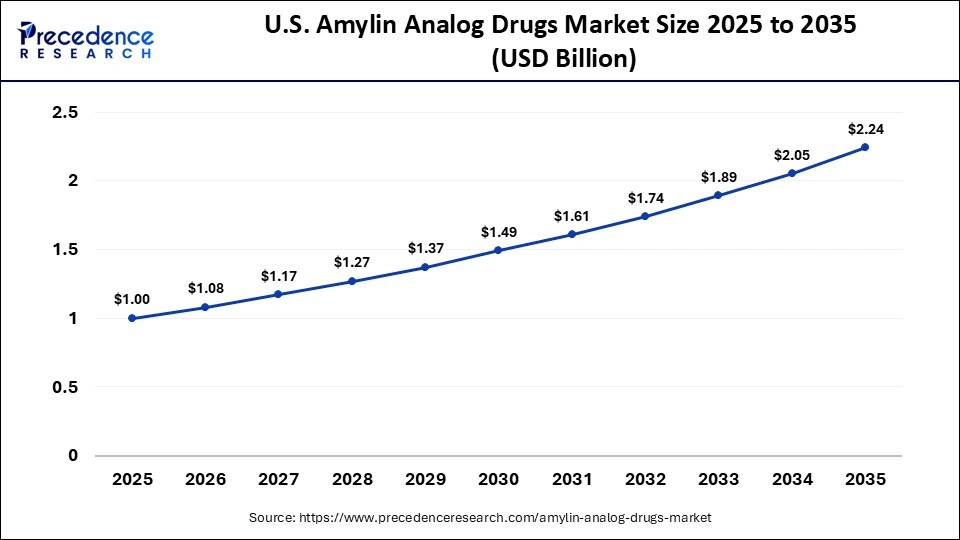
U.S. Amylin Analog Drugs Market Analysis
The U.S. is a major contributor to the North American market due to the rising cases of diabetes and supportive reimbursement policies. Nearly 40% of the U.S. adult population is confirmed as obese, which creates a huge demand for amylin drugs. Nearly 38.4 million people were registered as diabetic patients in 2024. This massive patient pool often needs therapies like pramlintide to enhance glycemic control for weight management.
Europe: The Second-Largest Shareholder
Europe held the second-largest market share of 25% in 2025 and is expected to grow at a CAGR of 6.5% during the foreseeable period . The region's growth is attributed to the alarming hike in metabolic disturbances like obesity and diabetes, a proactive regulatory environment, and an increasing concentration of key players with an innovative solution to combat these issues. Key players like Novo Nordisk and Sanofi are actively preparing next-generation analog drugs under a supportive regulatory environment and well-structured healthcare systems.
Germany Amylin Analog Drugs Market Analysis
The market in Germany is mainly driven by the presence of leading pharmaceutical and research organizations. There is a rising demand for novel and combination therapies. Germany serves as a central hub for drug production due to its position as a leading European pharmaceutical center. Additionally, the regulatory environment is characterized by a structured and transparent evaluation process led by the Federal Joint Committee (G-BA), which facilitates the assessment and introduction of new pharmaceutical products.
Asia Pacific: The Fastest-Growing Region
Asia Pacific held a 20% share of the amylin analog drugs market in 2025 and is projected to grow at the fastest CAGR of 9.5% during the foreseeable period. The region's growth is driven by the rising number of diabetic patients, increasing cases of lifestyle diseases, and growing healthcare expenditure. The region is witnessing a high demand for novel drug therapies like amylin analogs that can improve glycemic control, which is a leading cause of hypoglycemia.
China Amylin Analog Drugs Market Analysis
China is a major player in the market within Asia Pacific, driven by a large diabetic population, substantial government investment in chronic disease management, and the accelerated approval of new and more affordable therapies. Another key factor supporting market expansion is the relatively low production cost in China, particularly for complex chemical compounds such as amylin analogs. As a result, the country is transitioning from a generics-focused pharmaceutical market to a more innovation-driven industry, supported by highly integrated chemical and pharmaceutical manufacturing clusters.
Amylin Analog Drugs Market Companies
- Eli Lilly and Company
- Sanofi S.A.
- Boehringer Ingelheim
- Novartis AG
- Amgen Inc.
- Novo Nordisk A/S
- Bristol Myers Squibb
- Merck & Co., Inc.
- MannKind Corporation
- Pfizer Inc.
- Teva Pharmaceutical Industries Ltd.
- Baxter International Inc.
- Eli Lilly and Co.
- Hikma Pharmaceuticals PLC
- Mylan N.V.
Recent Developments
- In March 2026, Roche announced positive phase 2 results for petrelintide. It is an amylin analog drug that is specially designed for people dealing with an overweight and obese nature.(Source: https://www.roche.com)
- In March 2025, AbbVie and Gubra A/S, an organization which is specialized in preclinical contract research services and peptide-based drug discovery, announced a license agreement to develop a best-in-class and long-acting amylin analog to treat obesity.(Source: https://news.abbvie.com)
Segments Covered in the Report
By Type
- Pramlintide
- Ipragliflozin
- Other Amylin Analog Drugs
By Administration Route
- Subcutaneous Injection
- Intravenous Injection
By Application
- Type 1 Diabetes
- Type 2 Diabetes
- Obesity
- Others
By End-Use
- Hospitals
- Clinics
- Homecare Settings
- Others
By Region
- North America
- Latin America
- Europe
- Asia-pacific
- Middle and East Africa
For inquiries regarding discounts, bulk purchases, or customization requests, please contact us at sales@precedenceresearch.com
Frequently Asked Questions
Tags





Ask For Sample
No cookie-cutter, only authentic analysis – take the 1st step to become a Precedence Research client
 Get a Sample




 sales@precedenceresearch.com
 Schedule a Meeting
