



Digital Twin in Oncology Market Size, Companies, Share, Patient Volume, Treatment Adoption Rates, Pricing Analysis, Regulatory Landscape, Competitive Positioning, and Demand Forecast
Digital Twin in Oncology Market (By Component: Software Platform,s Services; By Type: Patient Digital Twin, Process/Workflow, Device/Equipment Twin, Whole Body/System Twin; By Application: Drug Discovery & Clinical Trails, Surgical Planning & Simulation, Hospital & Asset Management; By End User: Pharmaceutical & Biotech Companies, Research & Academic Institutes) - Global Industry Analysis, Size, Trends, Leading Companies, Regional Outlook, and Forecast 2026 to 2035
Source: https://www.precedenceresearch.com/digital-twin-in-oncology-market
 Get a Sample
 Table Of Content


What is the Digital Twin in Oncology Market Size?
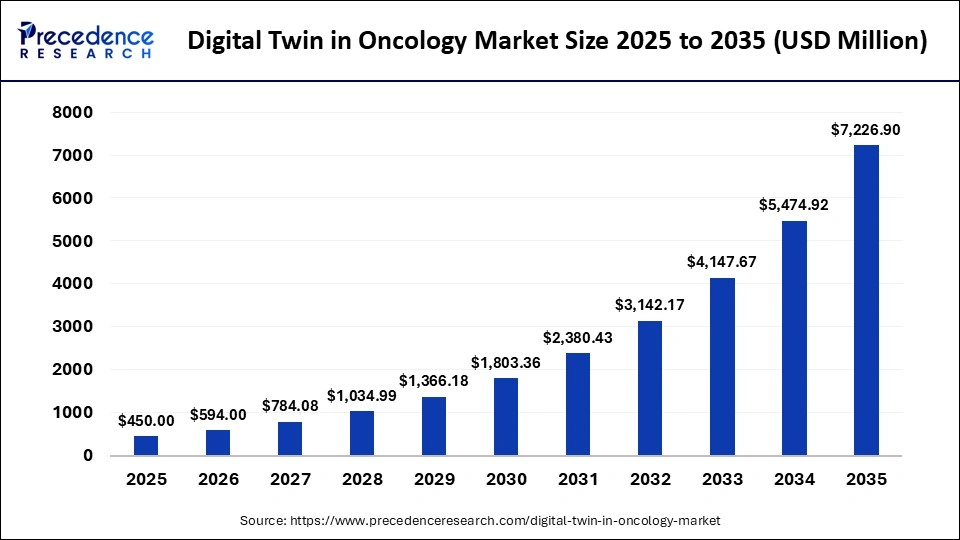
The global digital twin in oncology market size was calculated at USD 450.00 million in 2025 and is predicted to increase from USD 594.00 million in 2026 to approximately USD 7226.90 million by 2035, expanding at a CAGR of 32.00% from 2026 to 2035.The market is driven by the increasing shift toward personalized oncology care, the use of digital twins in clinical trials and drug development, and advancements in real-time tumor simulation and monitoring to improve treatment outcomes.
Market Highlights
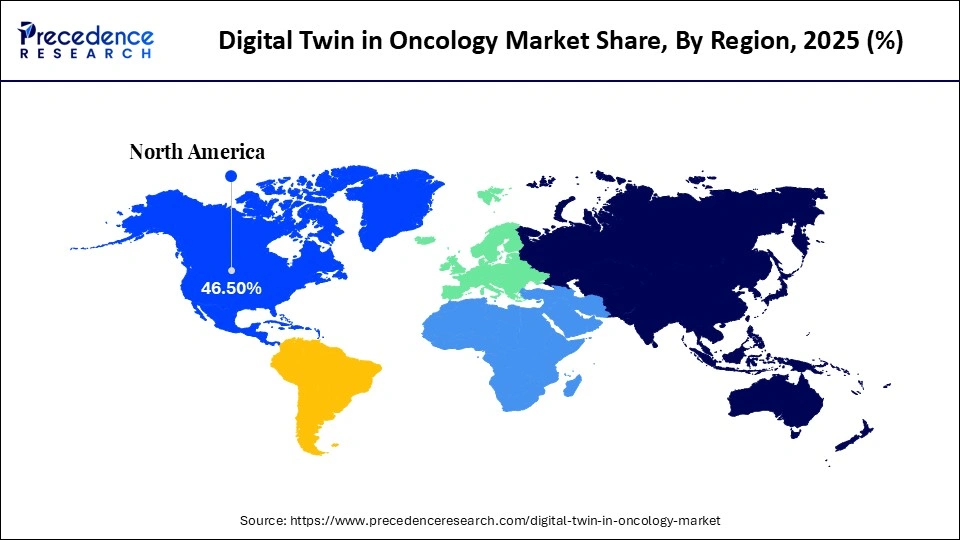
- North America held the largest market share of nearly 46.5% in 2025.
- Asia Pacific is projected to grow at the fastest CAGR during the foreseeable period.
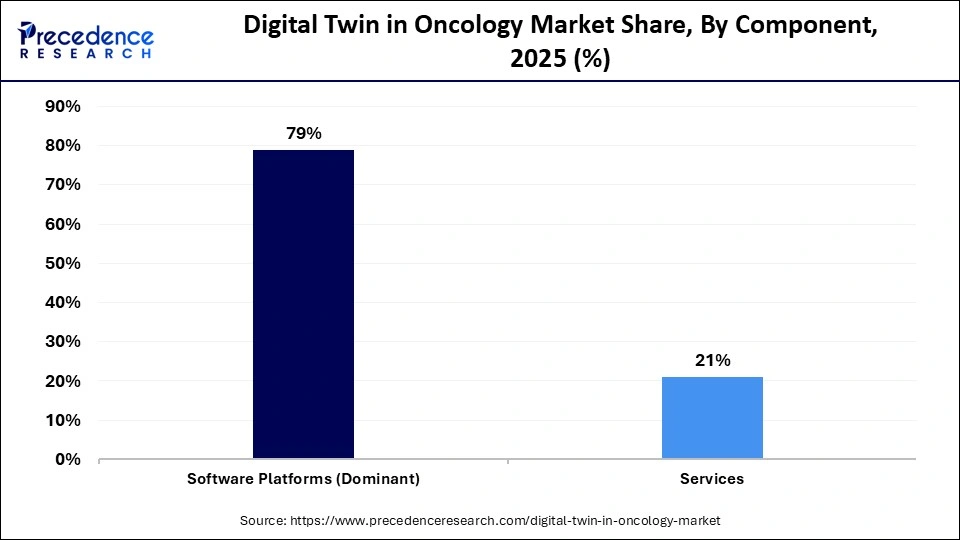
- By component, the software platforms segment held the largest market share of nearly 79% in 2025.
- By component, the services segment is projected to grow at the fastest CAGR of nearly 28.5% during the foreseeable period.
- By type, the patient digital twins segment held the largest market share of nearly 44.5% in 2025.
- By type, the whole body/system twins segment is projected to grow at the fastest CAGR of nearly 31.2% during the foreseeable period.
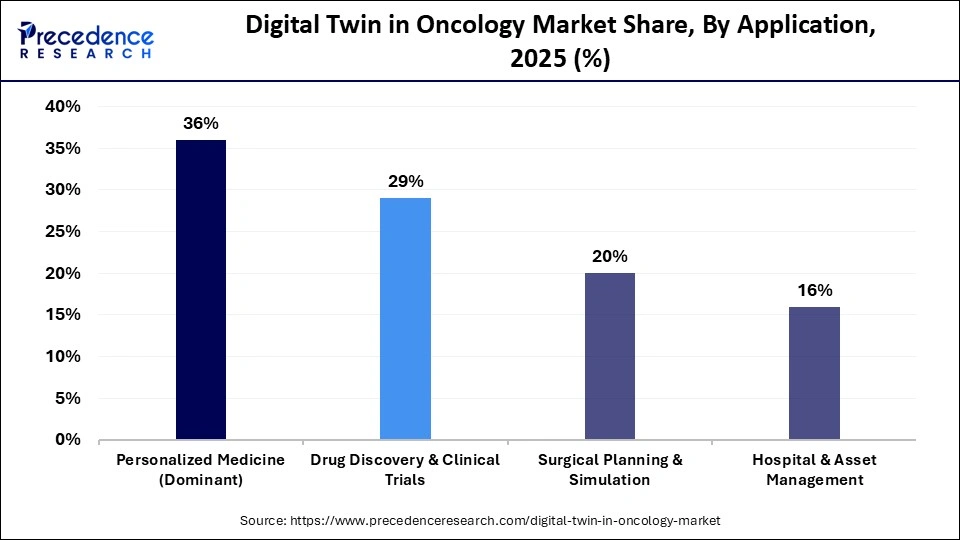
- By application, the personalized medicine segment held the largest market share of nearly 36% in 2025.
- By application, the drug discovery & development segment is projected to grow at the fastest CAGR of nearly 30.8% during the foreseeable period.
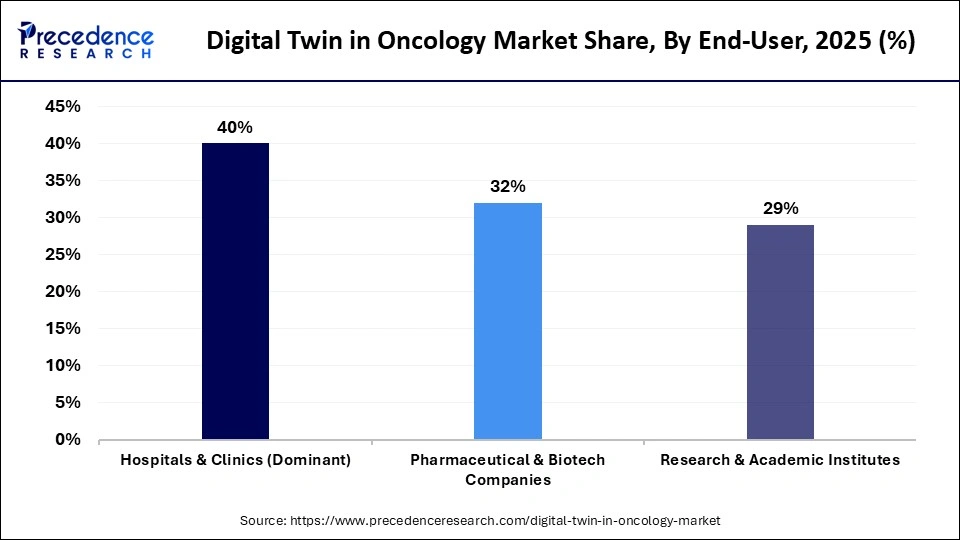
- By end user, the hospitals & clinics segment held the largest market share of nearly 39.5% in 2025.
- By end user, the pharma & biotech companies' segment is projected to grow at the fastest CAGR of nearly 29.4% during the foreseeable period.
Market Overview
The digital twin in oncology market refers to the use of dynamic, virtual replicas of individual cancer patients or their biological systems, integrating real-time clinical, genomic, and imaging data. These twins allow for personalized simulations of disease progression and treatment responses, enabling clinicians to optimize therapeutic regimens and reduce the risk of ineffective interventions. The market is experiencing significant growth due to the growing adoption of AI-powered patient simulation models to enable personalized cancer treatment, optimize clinical trials, and enhance real-time tumor monitoring.
AI Shifts in Digital Twin in Oncology Market
The integration of Artificial Intelligence with digital twin technology is emerging as a transformative advancement in the oncology sector. Rapid adoption of AI-driven tools, combined with the growing volume of real-world data collected from IoT devices, wearables, sensors, and other monitoring systems, is accelerating the development of healthcare digital twins. These data-driven models enhance clinical decision-making by enabling more accurate, personalized, and predictive cancer care.
AI techniques, including machine learning and deep learning, are highly effective in identifying trends and patterns, which can be directly applied to cancer care and treatment optimization. These insights are instrumental in driving drug development and enabling personalized oncology management. Reflecting this impact, the U.S. FDA has approved over 64 AI-powered algorithms and devices for clinical use, including applications in oncology, underscoring AI's growing significance in the market.
Digital Twin in Oncology Market Trends
- There is an increasing use of digital twins to simulate tumor behavior under various therapeutic regimens, including therapeutic interventions in radiotherapy and immuno oncology that enable clinicians to predict patient-centric output.
- There is a high adoption of digital twins to develop synthetic control arms and simulate virtual trials that significantly reduce the time and cost associated with traditional drug development.
- A key market trend is the integration of AI with dynamic digital twin models, allowing continuous real-time data updates to better understand patient physiology and tumor progression over time.
- Growing demand for precision treatment, such as minimizing damage to healthy tissues and optimizing radiation dosage, has led to the emergence of “theranostic twins,” which combine diagnostics and therapy modeling for improved clinical outcomes.
Market Scope
| Report Coverage | Details |
| Market Size in 2025 | USD 450.00 million |
| Market Size in 2026 | USD 594.00 million |
| Market Size by 2035 | USD 7226.90 million |
| Market Growth Rate from 2026 to 2035 | CAGR of 32.00% |
| Dominating Region | North America |
| Fastest Growing Region | Asia Pacific |
| Base Year | 2025 |
| Forecast Period | 2026 to 2035 |
| Segments Covered | Component,Type,Application, End User, and Region |
| Regions Covered | North America, Europe, Asia-Pacific, Latin America, and Middle East & Africa |
Segment Insights
Component Insights
Why Does the Software Platforms Segment Dominate the Digital Twin in Oncology Market?
The software platforms segment dominated the market while holding the largest share of nearly 79% in 2025, as platforms offer unmatched benefits like computational and analytical capabilities to generate actionable treatment plans with fragmented data. Platforms enable simulation of tumor behavior and treatment outcomes. Software platforms are highly crucial for integrating various data inputs from genomics, proteomics, and imaging into unified frameworks. Specific software platforms used for radiotherapy and maximizing tumor control are highly beneficial in the oncology sector.
The services segment is expected to grow at the fastest CAGR of nearly 28.5% during the foreseeable period. The growth of the segment is driven by the complexity of integrating digital twin technology into oncology, which requires technical expertise and adherence to strict safety regulations. Effective oncology applications demand the handling of large volumes of data, which is facilitated by services that standardize, clean, and optimize datasets for seamless integration into uniform systems. This makes service offerings essential for enabling accurate, efficient, and compliant digital twin deployment in cancer care.
Type Insights
What Made Patient Digital Twin the Leading Segment in the Digital Twin in Oncology Market?
The patient digital twin segment led the market by holding the largest share of nearly 44.5% in 2025. This is because of its ability to simulate patient-specific tumor responses to develop therapies that significantly enhance precision medicine and minimize side effects. For example, MRI-based twins are used to find pathological responses in breast cancer and optimize treatment schedules further. Also, the pharmaceutical industry is increasingly adopting the patient digital twin by integrating genomic and proteomic data, which can later simulate findings of tumor development and its response to treatment, allowing active care and reducing side effects to a significant extent.
The whole body/system twins segment is expected to grow at the fastest CAGR of nearly 31.2% during the foreseeable period. The growth of the segment is driven by the shift from prediction-based treatment to proactive, real-time tumor monitoring for improved patient outcomes. Rising demand for personalized medicine and therapy is a key driver, as whole-body twins enable oncologists to simulate tumor responses to treatments such as chemotherapy, radiotherapy, and immunotherapy.
Application Insights
Why Did the Personalized Medicine Segment Dominate the Digital Twin in Oncology Market?
The personalized medicine segment dominated the market with the largest share of nearly 36% in 2025, as digital twins address the critical need for tailored treatment strategies, predictive tumor modeling, and real-time drug response simulation. Traditional therapies often fail to address the unique characteristics of each patient's cancer, making generalized approaches less effective. By providing tailored insights and optimizing therapy outcomes, digital twins have become essential for advancing personalized oncology care.
The drug discovery & development segment is expected to grow at the fastest CAGR of nearly 30.8% during the foreseeable period, as digital twins allow researchers to simulate tumor responses, test therapeutic strategies virtually, and create synthetic control arms, significantly reducing the time and cost of traditional drug development. These models enable more accurate prediction of treatment efficacy and patient outcomes, accelerating clinical trials and improving decision-making. Additionally, the integration of AI and real-world data with digital twins enhances precision in designing and optimizing oncology drugs, driving demand in this segment.
End User Insights
Why Does the Hospitals & Clinics Segment Lead the Digital Twin in Oncology Market?
The hospitals & clinics segment led the market while holding the largest share of nearly 39.5% in 2025 because these facilities are primary centers for cancer diagnosis, treatment, and patient monitoring, where real-time, patient-specific insights are critical. Digital twins help clinicians simulate tumor behavior, personalize therapy plans, and predict drug responses, enhancing treatment accuracy and patient outcomes. Additionally, hospitals and clinics have the infrastructure and access to large volumes of patient data necessary to implement and benefit from advanced digital twin solutions.
The pharma & biotech companies segment is expected to grow at the fastest CAGR of nearly 29.4% during the foreseeable period, driven by strong financial incentives to accelerate drug development and reduce clinical trial failures while developing personalized therapies for complex diseases. These companies leverage patient digital twins, built from genetic and clinical data, as synthetic control groups, minimizing the number of real patients needed for trials. This approach enhances trial efficiency, lowers costs, and supports the development of targeted oncology treatments.
Regional Insights
How Big is the North America Digital Twin in Oncology Market Size?
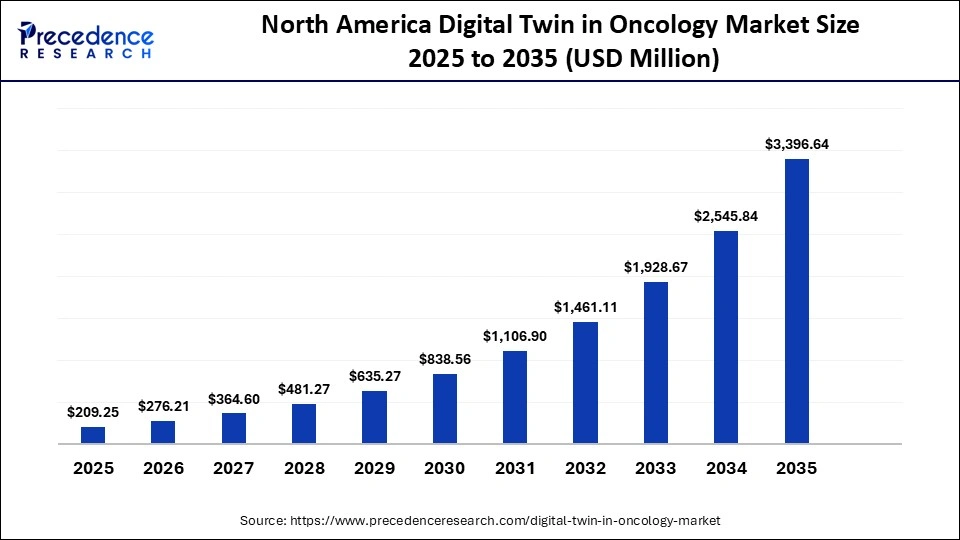
The North America digital twin in oncology market size is estimated at USD 209.25 million in 2025 and is projected to reach approximately USD 3.396.64 million by 2035, with a 32.14% CAGR from 2026 to 2035.
What Made North America the Dominant Region in the Digital Twin in Oncology Market?
North America registered dominance in the market by holding the largest share of nearly 46.5% in 2025. This is mainly due to a combination of factors like advanced digital infrastructure, specialized biotech firms serving the oncology sector, and substantial public and private investments. Supportive regulatory frameworks, data policies, and early adoption of digital twin technology in clinical settings further strengthened the region's position. Significant funding from institutions like the NIH, NSF, and FDA, along with rising demand for personalized medicine and a collaborative industry environment, continues to fuel market growth in North America.
What is the Size of the U.S. Digital Twin in Oncology Market?
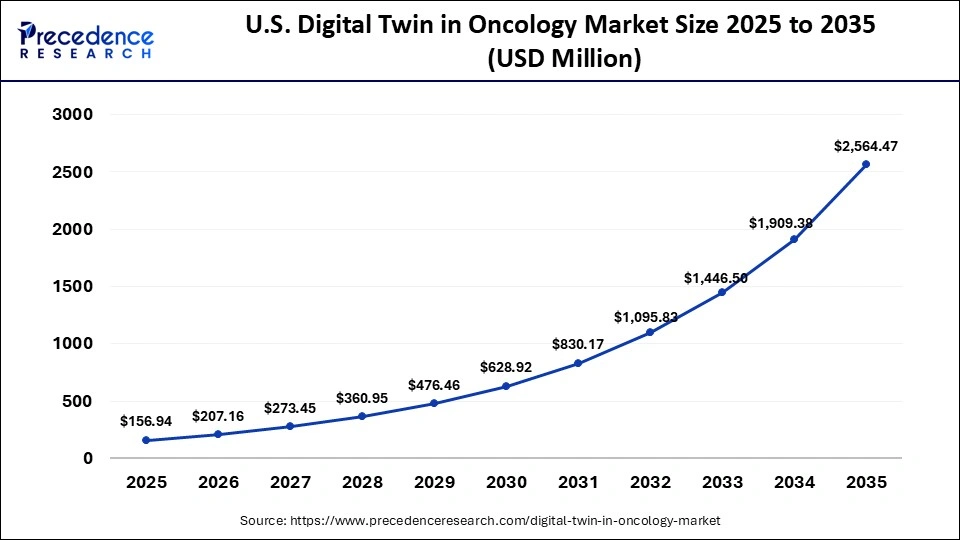
The U.S. digital twin in oncology market size is calculated at USD 156.94 million in 2025 and is expected to reach nearly USD 2564.47 million in 2035, accelerating at a strong CAGR of 32.23% between 2026 and 2035.
U.S. Digital Twin in Oncology Market Trends
The U.S. is a major contributor to the market within North America due to the increasing shift toward ‘In-Silico' clinical trials and regulatory backup. In the U.S, digital twin technology is rapidly embraced by hospitals and clinics as it is used to create synthetic or virtual control arms in clinical trials. The U.S. FDA also support in silico approach to speed up R&D and minimize the timeline for drug approval to combat the increasing cancer rate in the region.
What are the Key Factors Driving the Asia Pacific Digital Twin in Oncology Market?
Asia Pacific is expected to grow at the fastest CAGR during the forecast period, driven by the rising incidence of complex cancers that require personalized therapies and precise treatment pathways, as traditional treatments often fail to address the hidden evolution of tumors. The expansion of smart hospital infrastructure and government initiatives promoting healthcare digitalization for cancer treatment are further accelerating market growth in the region.
China Digital Twin in Oncology Market Analysis
The market in China is growing due to initiatives like “Healthy China 2030”, significant investment in AI/ML technologies supporting R&D in pharma, biotech, and genetic engineering, and a well-developed 5G infrastructure. The area is advancing data-driven applications that enhance patient care, hospital management, and oncology treatment. Additionally, national mandates from China's State Council requiring local public hospitals to integrate operational and management platforms are further boosting the adoption of digital twin technology in the country's oncology sector.
Who are the Major Players in the Global Digital Twin in Oncology Market?
The major players in the digital twin in oncology market include Dassault Systems (3DEXPERIENCE), Siemens Healthineers AG, Microsoft Corporation (Azure Digital Twins), IBM Corporation (Watson Health/Life Sciences), GE HealthCare, Ansys, Inc., Unlearn.AI, Inc., Twin Health, Philips Healthcare, Aitia (formerly GNS Healthcare), PrediSurge SimBioSys, Verto Healthcare, NVIDIA Corporation, Atos SE
Recent Developments
- In January 2026, a team of researchers at the University of Michigan developed a machine learning base approach to detect real-time tumor metabolism. A simulation of patients' brain tumors with recent datasets can detect whether dietary changes or drugs will serve the best outcome for brain cancer.(Source: https://www.eurekalert.org)
- In October 2025, a leading marketer in AI-driven precision medicine, SOPHiA GENETICS, introduced a digital twin called SOPHiA DDM, which is a breakthrough research technology aiming to help oncologists make better treatment decisions with a virtual representation of the patient and their treatment outcome.(Source: https://ir.sophiagenetics.com)
Segments Covered in the Report
By Component
- Software Platforms
- Services
By Type
- Patient Digital Twin
- Process/Workflow
- Device/Equipment Twin
- Whole Body/System Twin
By Application
- Drug Discovery & Clinical Trails
- Surgical Planning & Simulation
- Hospital & Asset Management
By End User
- Pharmaceutical & Biotech Companies
- Research & Academic Institutes
By Region
- North America
- Europe
- Asia-Pacific
- Latin America
- Middle East & Africa
For inquiries regarding discounts, bulk purchases, or customization requests, please contact us at sales@precedenceresearch.com
Frequently Asked Questions





Ask For Sample
No cookie-cutter, only authentic analysis – take the 1st step to become a Precedence Research client
 Get a Sample
.webp)



 sales@precedenceresearch.com
 Schedule a Meeting
