



Precision Biotics Market Size, Companies, Share, Pricing Analysis, Regulatory Landscape, Competitive Positioning, and Demand Forecast
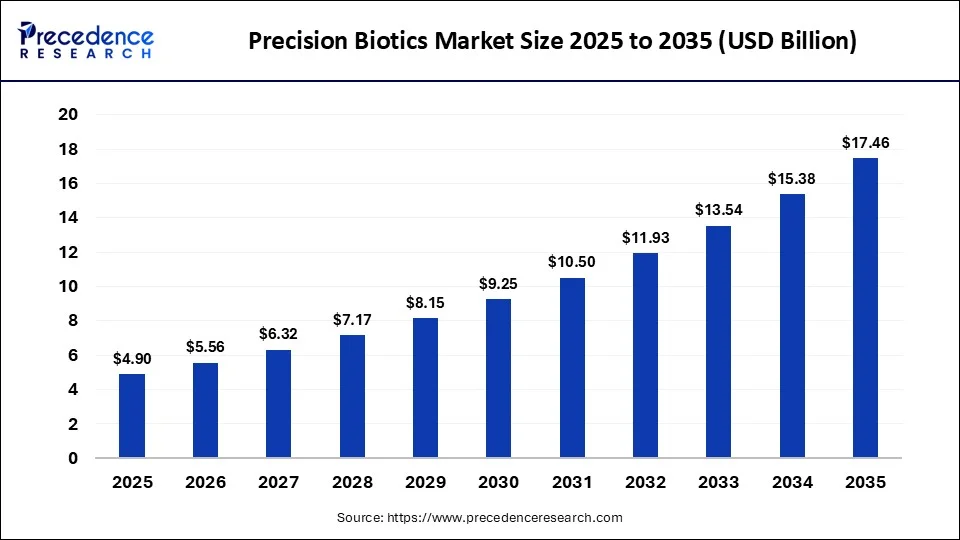
Deepa Pandey, a Healthcare Industry Expert, highlights that the precision biotics market has reached USD 5.56 billion in 2026 and is on track to reach USD 17.46 billion by 2035, advancing at a CAGR of 13.55%. Key precision biotics market companies shaping the market include Adisseo, Alltech, Archer Daniels Midland (ADM), while major growth segments span product type, microorganism type, formulation, application, distribution channel, end user, region.
Source: https://www.precedenceresearch.com/precision-biotics-market
 Get a Sample
 Table Of Content


Precision Biotics Market Size and Forecast 2026 to 2035
The global precision biotics market size is predicted to increase from USD 5.56 billion in 2026 to approximately USD 17.46 billion by 2035, expanding at a CAGR of 13.55% from 2026 to 2035.
Key Takeaways
- By product, the probiotics segment contributed the highest market share of 34% in 2026.
- By product, the precision microbiome therapeutics segment held 16% of market share and is expected to grow at the fastest CAGR of 18.6% between 2026 and 2035.
- By microorganism type, the lactobacillus segment held a major market share of 20% in 2026.
- By microorganism type, the akkeramansia segment is expected to register the fastest growth of 21.4% CAGR during 2026 and 2035.
Executive Summary
The sector of precision biotics is in a new light in the world of fitness and gut health. Adding probiotics to yogurt is no longer the only health. Engineered strains are being developed for particular gut mechanisms. That focus is on stability of the biofilms, production of short-chain fatty acids, and maintenance of mucosal barrier integrity. The connections consumers make between gut health and outcomes. They can feel better sleep, stress resilience, and sharper digestion are what they desire. Those are also driving ingredient manufacturers and traditional food companies into the same opportunities. 2026 is proving to be a key year for these biotics trends.
The area is already being commercialised with the assistance of consolidation. Investment by Danone in 2026 will go to Akkermansia Company. Belgian biotech company with a specialty in next-generation biotics for future growth. To bolster its practitioner-recommended line of probiotics, Metagenics acquired Symprove and added a debt recapitalization.
This was to be used for additional acquisitions. On the other hand, Pendulum was building Glucose Control around its living Akkermansia. Their product's effect on A1C reduction in a group of type 2 diabetes patients successfully obtained clinically validated data. This proves that precision strains can drive a real health message and not just for marketing purposes. The actions demonstrate the direction of future growth for the category by larger companies.
Market Size and Growth Outlook
The precision biotics category heads into 2026 and continues on its path into the future. According to the Precedence Research, the global precision biotic market size was estimated at USD 5.56 billion in 2026. They also indicated an increase at a CAGR of 13.55% from 2026 to 2035. The market momentum is on the rise, including clinical, regulatory, and commercial spaces. Analysts who follow the whole space expect a slow trajectory to compound in the coming years, not an eventual peak, through 2035. The difference is the maturity of science supporting these products. All of this disease burden from chronic illnesses and consumer desire for personalized health are fuelling the market growth in the coming years.
The future continually promises new challenges for 2035. The growth prospects hinge on this convergence of depth in science and expanded manufacturing. It is now moving live biotherapeutic products from academic labs to GMP production lines. Using AI to identify new strains is reducing the time usually 10 years to discover a new strain. Early stakeholders fulfilling clinical partnerships and manufacturing capacity are benefiting the most as the transition speeds up.
Executive Business Highlights
Even though fitness and health sector of the precision biotics industry has potential to become biggest. Traditional probiotics include a wide range of products from fermented foods, dietary supplements, and live biotherapeutic products. These are still in development. Furthermore, the postbiotics segment is emerging as the fastest-growing in the market.
The transition was highlighted by ADM during Expo West 2026, where they presented inanimate microbial compounds as compared to live strains. They are easier to keep on shelves and are more formulation-friendly. PepsiCo has followed suit with the launch of its first Prebiotic Cola with functional fiber into a mainstream drink format, in July 2026. The two manoeuvres highlight the fact that biotics are no longer a product for supplement shelves, but one for mainstream consumer products.
Asia Pacific is the top regional market with Japan's heritage in consuming probiotics. Demand for digestive and immune support products is structurally high, due to the ageing population in Japan, Korea and China. North America region is the second largest, with clinical-stage live biotherapeutic pipelines and firsts in regulatory activity. Western regulators approved a strain of one of Taiwan's trademark probiotics, marking a new competitive shift among Asian companies. On the other hand, emerging investment focuses on microbial consortia edited with CRISPR technology and targeted applications such as women's health and the gut-skin axis research.
Strategic Insights for Decision Makers
Increased hype without evidence to back it up for microbiomes in pharmaceutical and biotechnology companies. Physicians and researchers led a 2026 Lancet consensus cautioning the lack of evidence for the use of much microbiome testing in routine clinical practice. This is a signal, not a setback for the market.
Personalized nutrition is developing faster than the laws that regulate it. Pinkmatter is a women's health startup, launching a microbiome-informed trio of supplements. They are aimed at alleviating PMS via the gut, the hormonal system, and the nervous system pathways in January 2025. However, there is a lag in oversight. In a 2026 legal analysis by Oxford Academic, it was revealed that many companies offering direct-to-consumer microbiome testing claimed that clinical evidence was lacking and were making unfounded claims.
The simple strategy for investors is to invest in businesses with clarity, not companies that are going through regulatory uncertainty. Consumer diagnostics in the gray area pose a higher risk to regulation than firms. They are already using AI-driven analytics with true clinical validity with regard to Phase 2 and Phase 3 microbiome trials. As requirements for evidence become stricter, the company predicts that more microbiome tools for use by clinicians will hit the market. Pharma and biotech companies that are ahead of the FDA regulatory guidance instead of behind will rule the next wave of approvals.
Winning Growth Strategies
Microbiome therapeutic development
Vedanta Biosciences is executing its RESTORATiVE-303 Phase 3 trial for recurrent C. diff infection in 2025. Difficile infection, which is akin to farmers' traditional practice of standardizing what a fecal transplant used to do.
AI-powered microbiome diagnostics
ZOE and DayTwo combine data from the microbiome to AI-driven dietary recommendations based on the individual's real-time glycemic response. AI infusing diagnostics rather than marketing is gaining the lead for companies on speed to recommendation insight.
Clinical partnerships
In April 2026, Mbiomics completed its Series A round, providing a complete technology stack. They needed to design and manufacture microbial consortia on a scale that enables clinical applications.
Market Overview
Market Definition
Precision biotics is a group of products and services designed around purposeful alteration of the human microbiome. It covers probiotics, prebiotics, postbiotics, and synbiotics, but the precision title moniker takes things to a higher level. Products in this space are based on specific and characterised strains. They are optimized for specific health outcomes, rather than on generalised microbial blends. The market is inclusive of precision targetability services and analytical and diagnostic services.
This is a market that culminates with services. The biotics pipeline from discovery to shelf is supported by personalized nutrition platforms and clinical partnership networks. Bimuno GOS plus Probi Defendum are not just prebiotics and probiotics being sold together. It is an example of the two being put together in a single product as a combined supply for sale. The whole idea of precision biotics is about a multidimensional market, which includes consumer health products, diagnostic tests, and therapeutics. This makes this market at broder scope of solutions and science.
Scope of the Study
All precision biotics products, consumer and clinical stage, are included in this report. The period for the forecast is 2026 to 2035. The new time frame pipeline and policy planners are already familiar to companies. Main geographic segments are North America, Europe, and Asia-Pacific, as their regulatory requirements and usage differ. Secondary treatment is provided to markets in Latin America and the Middle East, where robust growth in secondary market activity is seen in personalized nutrition and functional food.
The types of segmentation are product type, application, and distribution channel. Product type is regarded as separate categories: probiotics, prebiotics, postbiotics, synbiotics, and live biotherapeutic products. Application segments are gut health, gut-brain axis indications, metabolic disease, oncology-side carbohydrate support, and women's health. The categorization of the product in each regional chapter (EU, FDA) of its categorization impacts the evolution of categorization.
Evolution of Precision Biotics
Precision biotics was not a precise science in the beginning. Prior to the modern era of probiotics. They were a very general product, typically used to ferment foods like yogurts and drinks. None of them had a high degree of specificity to the strain level. But that would work for decades, and leave a great deal of therapeutic potential on the table.
Postbiotics and synbiotics can be seen as the next level up from live bacteria. Unlike the previous probiotic technology, which involved live microorganism products, needed for cold-chain and shelf stability issues. Postbiotics are inanimate microbial compounds. But a combination of a prebiotic fiber and a selected probiotic strain is more precise; that is a synbiotic. Furthermore, the latest trend in the evolution of these interventions is the movement towards personalized microbiome interventions, facilitating market growth in the coming years.
Role of Precision Biotics in Personalized Healthcare
Precision biotics is currently firmly embedding itself in the sector of preventive medicine. Rather than just waiting for symptoms. These testing platforms are now identifying microbiome imbalances before they eventually become diagnosed. Tiny Health's infant-specific testing is one such example. These test patterns of gut development to intervene before issues mount. But in Southeast Asian markets, through Trinature Wellness, Leucine Rich Bio demonstrates how the approach to prevention. Taking root action in markets beyond those of wealthy, majority-English-speaking nations. Effective preventive microbiome screening requires a clear action plan, rather than simply a data report that is presented back to the consumer.
Market Size Analysis
Historical Market Performance
The precision biotics field didn't originate from a marketing trend. It was developed based on a particular research initiative. The NIH's Human Microbiome Project, which began in 2007. The project, which invested nearly ten years, characterized the microorganisms. That live in and on the human body, which was mostly uncharacterized prior to its launch. Researchers sequenced samples from various sites in hundreds of healthy individuals. Further creating the reference datasets that are still the base for all microbiome companies today.
Current Market Size (2026)
Multiple factors are propelling this market. Rising global trend in the prevalence of chronic disease and a growing consumer base with gut dysbiosis, such as metabolic disorders and inflammatory bowel disease expected to continue. More patients and providers are adopting the perspective of consuming biotics.
The microbiome is a modifiable, changing risk factor instead of a set course. They're not just pandemic trends that are going to last a little longer. They're a change in the structure of how chronic disease is dealt with by multiple healthcare systems. Clinical validation is the act of favorable work to grow the wellness consumers' addressable market.
Forecast Market Outlook (2026-2035)
Precision biotics becomes part of the new normal in health care distribution. The opportunities become significantly broader into commercialisation. The fastest transition is facilitated by new science, as payer systems are finally following the trend of clinical trial results. Furthermore, the number of regulatory decisions, pilot reimbursements, and trial results could have a significant impact on the market growth forecast.
Market Growth Scenario Analysis
Hospital systems start to incorporate microbiome diagnostics into routine pathways. Value-based care incentives are a key component, encouraging meaningful reduction in downstream treatment costs with microbiome interventions that prevent disease. Oncology co-therapy tests might be even more successful in the coming years. Major players are likely to utilize these opportunities in the absence of sizeable regulatory or clinical validations.
Precision Biotics Industry Ecosystem Analysis
Industry Ecosystem Structure
The precision biotics ecosystem begins with the companies developing microbial strains. That isolate specific microbial strains, characterize them, and scale them, based on which others build. The characterized probiotics and postbiotics strains are being supplied by the two major supplier companies. DSM-Firmenich and IF&T are comparable to the downstream drug companies that receive their raw materials from DSM.
Next door to the strain developers are sequencing technology providers and diagnostic firms. They are converting raw biological samples into information that can be used. This collaboration between Illumina and Microba Life Sciences is targeted specifically at increasing the speed of gut microbiome-related research. Providing access to Illumina's next-generation sequencing (NGS) infrastructure and Microba's own analysis platform. These diagnostic companies then build the ability to sequence and add layers of analysis into a consumer-facing or clinician-facing product.
The mid-stream of this ecosystem is filled by pharmaceutical and biotechnology companies. They are working to transform characterized strains into controlled drugs and medicines, not consumer goods. Live biotherapeutic products, engineered consortia, and CRISPR-edited microbial treatments are constructed and evaluated here. On the other hand, healthcare professionals, who are downstream from this level, can then prescribe these downstream of regulatory review.
Stakeholder Mapping
At the core of the microbiome landscape stands the number one, according to the whole microbiome ecosystem, including the microbiome researchers themselves and an industry that isn't standing aside from them any longer. With the input of the Advanced Research Projects Agency for Health, Ginkgo Bioworks signed a five-year deal with the University of Illinois Urbana-Champaign (UIUC) Institute for Genomic Biology to identify oral microbiome phage therapy. Such collaboration crosses the traditional boundary between the academic and commercial realms. Industry partners provide them with scale and the resources to help drive innovation toward real products, and universities provide the fundamental biological knowledge.
The mandate of regulatory agencies no longer resembles a gatekeeper, but rather ones who are active participants in the product development process to begin with. The distinct category given to live biotherapeutic products by the FDA and the split responsibility of commercialization between EFSA and EMA affects the upfront clinical and commercial plans of companies. Science is catching on with smart companies, becoming integral in their decision-making process, consulting regulators in advance of developing a pathway rather than after. This proactive involvement is not just a regulatory obligation, but also a competitive differentiator.
Strategic Collaboration Landscape
Pharmaceutical firms and research institutions are teaming up on a more professional basis through conversations in conference hallways. Ginkgo Bioworks' five-year collaboration with the University of Illinois Urbana-Champaign's Institute for Genomic Biology began in 2026. The partnership between research and Ginkgo's cell programming platforms will use the academic expertise of ARPH.
The Advanced Research Projects Agency for Health supports the collaboration and focuses on a phage-based intervention targeting the oral microbiome. Such multi-year grant opportunities allow researchers to work on more difficult problems. Thus, they would be able to outline in one grant cycle. This stability is really important in an area where discoveries can take many years before they can be applied to a commercial product.
Market Trends Analysis
- Shift Toward Personalized Microbiome-Based Therapies: The concept of precision medicine has always had an unyielding problem. Two people with the same genetic mutation can have very different responses to the same drug. The logic driving this shift is straightforward, as gut microbiomes vary far more between individuals than human DNA does. Further treating the microbiome as generic rather than personal leaves real therapeutic value on the table.
- Growth of Precision Nutrition Solutions: This personalised reasoning approach also influences the practice of prescribing food and diet, and is not just being applied to drug prescribing. One interesting discovery was that the Mediterranean diet was associated with an increase in concentrations of butyrate in the feces. This resulted from the activity of Roseburia, a fermentation ability associated with insulin sensitivity. They're able to collect data at this scale, and now it's not just from small-scale pilot studies. That they can draw on individual recommendations is enough, as data collected at the population level.
Expansion of AI and Bioinformatics in Microbiome Analysis
The sheer volume of this data is a time-consuming process to go from what you have to what is useful clinically. The AI-driven bioinformatics approach is helping to uncover gut microbiome patterns in relation to inflammatory bowel disease (IBD) in children and adults. AI is filling a gap, as the raw sequence data outstrips our ability to interpret it.
Increasing Clinical Validation of Microbiome Therapeutics
The advantages of better analytics are now clearly driving better clinical pipelines and diagnostics. Bioscience companies are conducting clinical research studies. That examine gut microbiome profiles of patients going on immunotherapy. Giving them types of microbes that affect the immune response in the context of cancer therapy
Market Dynamics
Market Drivers
Increasing Advances in Microbiome Sequencing and Strain Discovery
Sequencing and discovery of strains and other microbiomic technologies continue to drive uptake of precision biotics. Next generation sequencing technologies are still discovering strains of bacteria associated with digestive, metabolic, and immune health. In 2026, microbiome analytics partnering efforts continued to grow with Microba Life Sciences, Viome Life Sciences, and Illumina. They continue to build on their partnerships for biomarker discovery and development for personalized formulations. On the other hand, ongoing clinical validation of strain-specific biotics is expected to further bolster the industry's growth.
Market Restraints
Hamper Commercial Growth Through Limited Long-Term Clinical Validation
Limited long-term clinical validation is expected to be a key constraint in precision biotics through the entire commercialization process. Several targeted microbial strains show good short-term results. But there are only limited, large-scale, multicentre studies on wide populations. Formulations that have a proven track record in humans tend to be the first to be adopted, which delays the uptake of new strains.
Market Opportunities
Strategic Investments and Partnerships for Fast Product Innovation
Strong strategy of investments and partnerships is expected to bolster the innovation efforts in the precision biotics development. Biotechnology firms are partnering with ingredient suppliers, sequencing experts, and universities to speed up commercialization efforts. The University of Cork, Wageningen University & Research, and APC Microbiome Ireland are among the universities. They actively develop discoveries in the field of the microbiome that feed into commercial product pipelines. Studies have shown that cross-disciplinary teams help in the characterization of strains, formulation stability, and targeted delivery technologies for consumer and clinical nutrition applications.
Market Challenges
Standardisation of manufacturing is still a challenge for precision biotics. They must be controlled for their strain identity, viability, purity, and genomic stability during the manufacturing process. Microbial performance and formulation consistency are affected by small variations in fermentation parameters, raw material quality, freeze-drying processes, and storage conditions. The scientific challenge is further complicated as there is a need for a huge amount of clinical research for a particular microbial strain to be scientifically validated. Instead of general probiotic statements.
Precision Biotics Pricing Analysis
Pricing Analysis by Product Type
Prescription grade live biotherapeutics are at the highest end of the price spectrum. Cost analyses for gastroenterology procedures published by the American College of Gastroenterology reveal an estimated USD 17,490 price tag for a complete course of treatment with Vowst. An estimated USD 9,500 price tag for a complete course of treatment with Rebyota. Compared with this, the traditional FMT approach costs almost USD 1,500 and has similar clinical success rates in most instances. The difference in prices creates an actual hurdle in the minds of clinicians in whether the FDA-approved standardization is worth the price difference. Because the results seem comparable based on the scientific information in the papers.
Pricing Across Healthcare Channels
The hospital and prescription pharmacy channels are almost completely insurance billing codes and not consumer paid. The cost of Rebyota infusions depends primarily on individual insurance coverage and the formulary status, and is billed using specific procedure codes. FDA approval is a huge focus, as insurers won't pay for anything without it, and that is why premium pricing that is traditionally only possible for FMT is possible for Rebyota and Vowst.
This channel is not about the cost of the treatment, but rather regulatory clearance, something most consumer health products don't have to go through. Furthermore, the precision biotics pricing has such a large range from one competitor to the next, which is why the pricing for prescription LBP remains relatively stable among providers.
Factors Influencing Pricing
Much of the difference in cost between prescription and consumer products is due to manufacturing complexity. Whereas consumer probiotic brands need not maintain these rigorous screening, transport, and quality control processes for live biotherapeutic products. That complexity is directly reflected in the final price tag that patients and insurers pay, and the multi-year clinical trials necessary for FDA approval.
This adds to the uncertainty as insurers compare the quality of the USD 17,500 treatment to a USD 1,500 one and decide if they will cover the entire treatment. Competition, clinical credibility, and subscription fatigue are the forces that drive consumer pricing. With the industry's increasingly stringent evidence requirements, pricing in both channels will continue to trend in the same direction - toward the person who can prove it!
Technology Landscape
Microbiome Sequencing Technologies
The accuracy of sequencing has just improved significantly. In 2026, Oxford Nanopore released its assembly tool, NanoMDBG, which is able to assemble microbial genomes with a third of the computing power of previous tools. That efficiency is significantly important for gut microbiome-related projects, since one stool sample can contain hundreds of different bacterial species that are munged together.
Long-read sequencing now delivers results on par with PacBio's gold-standard HiFi technology, filling in a quality gap that was long held by short-read platforms. Various firms submitted a patent for a nanopore sequencer. That utilizes an electrolyte chemistry enhanced by modifications, which represented the firm's first major threat to the leadership of Oxford Nanopore in the nanopore sequencing space. Every therapeutic platform downstream of faster, cheaper sequencing is fed.
Precision Microbiome Therapeutic Platforms
Therapeutic platforms need to be able to respond to better sequencing data if they are to be of any use. Kanvas Biosciences' pipeline is based on spatial biology and high resolution imaging, focusing on the precise interaction between host cells and microbes before narrowing down to those that have actual therapeutic potential. These platforms mark a transition from knowing what microbes to look at to how to engineer a desired outcome at the strain level. That's where AI is beginning to drive the discovery process.
AI and Digital Health Integration
The integration of AI with digital health is already in evidence at scale. In 2026, researchers developed MINERVA, the Microbiome Network Research and Visualization Atlas. Using large language models on almost 130,000 scientific publications. The outcome says nearly 3,429 different microbes and more than 35,883 diseases. All organized in a manner that no human research team could have manually created. This paves the way for the next generation of precision tools developed specifically to map these patterns to patient diagnostics.
Companion Diagnostic Technologies
Companion diagnostics is where that research-to-bedside translation takes place. Bio companies are developing microbiome-based companion diagnostics in lung, breast, colorectal, and pancreatic cancers. Determining which patients will have a response to immunotherapy. These kinds of tools are the ones that are going to translate clinical evidence from a purchasing factor into a tangible test that a doctor may order prior to writing a prescription.
Customer Demand and Purchasing Behavior
Purchasing Decision Factors
Physician recommendation is also behind physician awareness. That divide keeps unproven products languishing on shelves, even if they will be interesting to consumers.
Regulatory approval and price are both factors that influence final decision-making. Insurance formulary access is routinely granted to products that have been approved by the FDA, such as Rebyota and Vowst, but doesn't happen to most supplements. Consumers considering personalized nutrition platforms do the same exercise, balancing cost with the degree of personalized feeling of the results.
Demand by Therapeutic Area
Established clinical evidence leads gastro-intestinal and metabolic health. ADM's ES1 postbiotic is effective in reducing bloating and improving digestion in patients with IBS in a consistent manner, and Novonesis is promoting the use of human milk oligosaccharides in all age groups. These categories have the highest conversion rates in terms of sales generated from interest, as they already have the data.
There is a high growth rate in women's health and in neurological applications, with no commensurate increase in evidence. Companies highlighted the growing interest in research on the gut-hormone axis. A similar trend is evident with psychobiotics, amid inconsistent neurological evidence.
Consumer Adoption Trends
Not only are preventive wellness subscriptions more popular, but they're more accessible. Generally, lowering barriers like this indicates a company that wants to position itself more in the middle of the road than in the upper tier.
Digital health engagement continues to grow as AI can be found in consumer applications. Research infrastructure is percolating into everyday tools in 2026, as MINERVA maps more than 66,000 microbe-disease relationships. That change is making gut health monitoring a regular health care practice and no longer a specialty.
Regulatory and Clinical Landscape
Global Regulatory Environment
The regulators have yet to keep up with this field's pace. The FDA's foundational guidance, titled "Early Clinical Trials with Live Biotherapeutic Products," was published in 2016 and is the foundation for the development plans of companies. One particularly contentious issue is that neither the FDA nor EMA have made a clear stance on the regulation of injectable microbiome products. This entire delivery system is still in a grey area.
Regional Regulatory Frameworks
It is easy to see the differences in the region when looking at how reimbursement works in each country. Canada's Drug Expert Committee reviewed Rebyota in 2026 and recommended the drug be conditionally reimbursed. If it is used to treat patients who have had 2 or more C. difficile recurrences, and the manufacturer lowers the price. These aren't small bureaucratic details. They directly determine who receives a therapy and in what time period.
Clinical Trial Landscape
The trial pipeline seems to be growing more crowded, then increasingly more exact. Vedanta Biosciences and Microbiotica are pursuing similar and more stringent programs in C. difficile prevention and oncology, respectively, which are in clear contrast to "no-evidence" trials until now.
Quality and Manufacturing Standards
By FDA requirements, donor-derived products must be tested for at least 29 different pathogens before they are administered to a patient. This is the kind of documentation that distinguishes a pharmaceutical grade live biotherapeutic from an unregulated fecal transplant. It is what the entire next generation of microbiome therapeutics will have to adhere to.
Investment and Innovation Landscape
Venture Capital and Private Equity Investments
Financing has returned to the microbiome biotech sector, albeit with a bit more enthusiasm than the last few years. Investors are also no longer diversifying portfolio bets. On the other hand, there is increasing demand for IND-ready data before talking to term sheets in Series A rounds, which is high compared to pre-clinical stage funding a few years ago.
Pharmaceutical and Biotechnology Collaborations
Big pharma continues to collaborate on acquisitions and partnerships around this space. Ginkgo Bioworks joined the University of Illinois Urbana-Champaign for 5 years. Collaboration under the Advanced Research Projects Agency for Health's “Oral Microbiome Intervention using Phages” program. The pattern of these deals is that big pharmacas provide the capital and power of the regulators, while small platform companies provide the specialized biology.
Research and Development Trends
The focus of R&D has been moving away from generic gut health claims to more specifically targeted, mechanistically defined research and development programs. Traditionally, academic institutions are producing the majority of the baseline papers in both gut-brain and metabolic health research. This enables firms to eradicate harmful bacteria precisely rather than wiping out an entire microbial community.
Patent Landscape Analysis
IP rights are as competitive as the science itself. Companies like Eligo Bioscience and SNIPR Biome are attempting to secure freedom-to-operate claims before others nail them down with patents in the case of microbial editing employing CRISPR. With all the companies claiming patents over sequencing, strain engineering, and diagnostics, patent wars in this space will become as commonplace as clinical trial readouts are now.
Market Segmentation Analysis
Product Type Insights
Why Did Probiotics Dominate the Precision Biotics Market in 2026?
The probiotics segment dominated the market with a share of 34% in 2026, as there was sufficient clinical evidence for digestive and immune health benefits by specific strains. Increasingly better formulated scientific validations, both in functional foods and in dietary supplements, reinforced its market leadership.
The precision microbiome therapeutics segment held a 16% share of the market in 2026 and is expected to grow at a significant CAGR of 18.6% between 2026 and 2035, due to increasing investments in microbiome-based drug development. The growth of clinical pipelines and personalised medicine programmes is still spurring uptake throughout chronic disease management.
Microorganism Type Insights
What Drove Lactobacillus to Dominate the Precision Biotics Market in 2026?
The lactobacillus segment dominated the market with a share of 29% in 2026, as the consumption of these yogurt probiotics has been clinically validated. This is common in commercial foods and beverages for precision nutrition.
The akkermansia segment held a 9% share of the market in 2026 and is expected to grow at a significant CAGR of 21.4% between 2026 and 2035, driven by rising research into akkermansia's association with metabolic and gut barrier health. Market penetration is ongoing and continues to be accelerated by increased scientific collaboration and commercial product launches.
Formulation Insights
How Did Capsules Secure the Largest Share of the Precision Biotics Market in 2026?
The capsules segment dominated the market with a share of 35% in 2026, as they offered a high level of strain protection, dose accuracy, and durable shelf stability.
The gummies segment held an 8% share of the market in 2026 and is expected to grow at a significant CAGR of 16.2% between 2026 and 2035, supported by consumers increasingly opting for easy-to-swallow and tasty supplements. Fostering product innovation and growing and expanding use in adults drives continued rapid adoption.
Application Insights
Why Did Gastrointestinal Health Capture the Largest Market Share in 2026?
The gastrointestinal health segment dominated the market with a share of 31% in 2026, as there were high demand levels for specific microbial products for digestive disorders and microbiome balance. Many clinical trials and increasing physician endorsement bolstered segment leadership.
The neurological and mental health segment held a 6% share of the market in 2026 and is expected to grow at a significant CAGR of 18.7% between 2026 and 2035, due to increasing research into the gut-brain axis and psychobiotic interventions. The segment is being driven by the rising investments in plant-derived mental wellness solutions based on the microbiome.
Distribution Channel Insights
How Did Retail Pharmacies Lead the Precision Biotics Market in 2026?
The retail pharmacies segment dominated the market with a share of 22% in 2026, due to highly trusting of these pharmacies and they are widely accessible. Pharmacist recommendations and existing healthcare distribution channels kept product sales high.
The online pharmacies segment held a 20% share of the market in 2026 and is expected to grow at a significant CAGR of 17.2% between 2026 and 2035, owing to the growing digital healthcare platforms and subscription-based wellness services. The convenience of buying and the ease of product access are still contributing to the growth of consumer preference, which continues to support demand.
End User Insights
Why Did Consumers Account for the Largest Share of the Precision Biotics Market in 2026?
The consumers segment dominated the market with a share of 36% in 2026, due to rising cases of consumers being aware of personalized health and wellness solutions for their guts. Consumer demand was bolstered by increased usage of the microbiome test and/or targeted nutritional supplements.
The pharmaceutical and biotechnology companies segment held a 25% share of the market in 2026 and is expected to grow at a significant CAGR of 16.8% between 2026 and 2035, owing to the increasing investments in microbiome drug discovery and precision therapeutics. Commercialization activities remain strong through strategic partnerships and development of increasingly clinically oriented programs.
Market Regional Analysis: North America, Europe, Asia-Pacific
Why Did North America Dominate the Precision Biotics Market in 2026?
North America led the market, capturing the largest revenue share in 2026, accounting for an estimated 39% market share, due to the advanced microbiome research ecosystem and vast commercialization of precision biotics. High uptake of personalised healthcare, strong venture capital investment, and an active innovation landscape from big biotechnology firms kept the region at the forefront.
U.S. Precision Biotics Market Size and Growth 2026 to 2035
The U.S. precision biotics market size was evaluated at USD 1.61 billion in 2026 and is projected to reach around USD 4.64 billion by 2035, growing at a CAGR of 12.49% from 2026 to 2035.
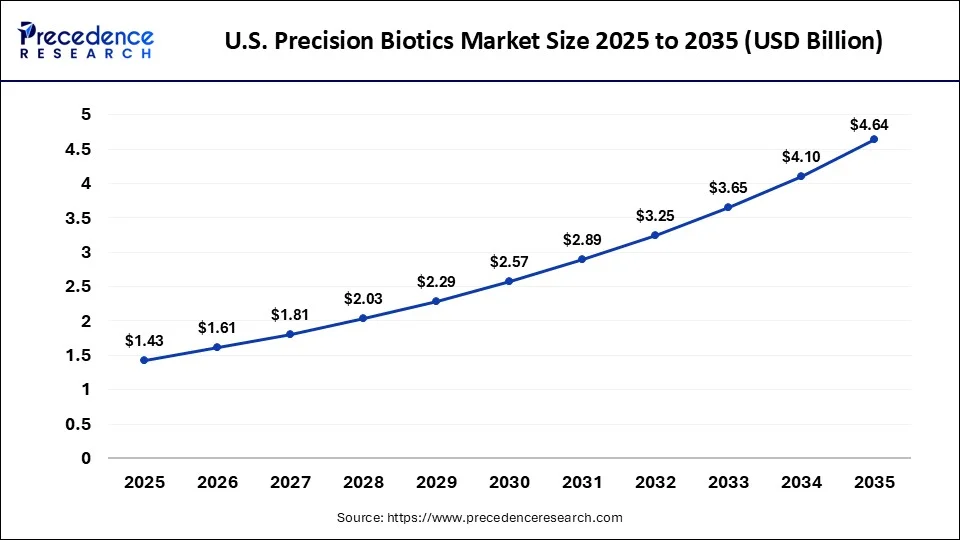
The U.S. controlled the regional market with its globally leading biotechnology ecosystem, capabilities in microbiome research, ample VC investments, and adoption of personalized healthcare.
Canada's accommodation and support of growing microbiome research programs, investments in biotechnology, and adoption of precision medicine through leading research institutions led to the fastest growth.
The Asia Pacific Region Expected to Grow With CAGR of 17.3% of Market Share in 2026
Asia Pacific is the region held second largest market share, with contributed 24% to the market in 2026 and is estimated to grow at a strong CAGR of 17.3% over the projected period, supported by the surge of investments in the biotechnology industry, an uptick in microbiome research, and consumers' interest in preventive healthcare.
In the region, China's sizeable biotechnology investments, growing microbiome research initiatives, and robust consumer healthcare market left an indelible mark. The region was dominated by China's sizeable biotechnology investments, growing initiatives in microbiome research and its robust consumer healthcare market.
Rapid growth in Biotechnology, integration of digital health, healthcare awareness, and personalized nutrition adoption were the key drivers behind the fastest growth in India.
Europe Held Significant Market Share of 29% in 2026
The Europe region held a 29% share of the market in 2026 and is expected to grow at a 12.8% CAGR between 2026 and 2035, driven by a well-established pharmaceutical industry, advanced capabilities of microbiome research, and high scientific cooperation with other parts of the world.
Germany's strong position in the regional market stemmed from its pioneering pharmaceutical production facilities, leadership in microbiome research, and well-established infrastructure in personalized healthcare.
The Netherlands experienced the highest rate of growth, with the number of microbiome startups, biotechnology collaborations, and ongoing innovation in precision nutrition technologies increasing.
Latin America Held Notable Market Share with 5% in 2026
The Latin America region is expected to grow at a notable CAGR of 13.6% between 2026 and 2035, due to wellness and the development of more healthcare facilities as well as the availability of microbiome-based products.
Through healthcare modernization, high demand for digestive health supplements, and growing uptake of microbiome supplements in the region, Brazil was the main driver.
The Argentine market grew into the fastest market due to the growing research activity in biotechnology, precision healthcare initiatives, and the strengthening of microbiome innovation activities.
Middle East & Africa Held a Considerable Market Share of 3% in 2026
The Middle East & Africa region is expected to grow at a strong CAGR of 13.1% between 2026 and 2035, fuelled by precision medicine initiatives and awareness of microbiome-related healthcare solutions.
The regional market was led by the GCC countries, as they have been investing heavily in healthcare, implementing national precision medicine strategies, and developing advanced preventive healthcare programs.
South Africa experienced the highest growth by developing more biotechnology research capacity, enhancing their healthcare system, and raising public awareness of precision microbiome solutions.
Competitive Landscape
The competition in the precision biotics business isn't like most biotech competitions. Traditional competition between companies does not happen in the same therapeutic market segment. Positioning is the key driver for innovation, not price or distribution size, as regulation and clinical validation remain barriers to credible players. Companies having just one single axis to compare these companies doesn't really illustrate the difference in their approaches to winning.
Market Structure Analysis
The market is divided into two distinct segments, including clinical and consumer. Companies, such as Seres Therapeutics and Ferring Pharmaceuticals, have FDA-approved indications for live biotherapeutic products. Dozens of other companies are racing in the preclinical stage to get approval. Consumer probiotics are still much more diverse, with their legacy food manufacturers, ingredient suppliers, and digital-first startups.
Competitive Positioning Matrix
Seres and Ferring are the ones to look at in the clinical-therapeutic corner, with narrow, regulatory-validated indications in C. difficile prevention. Danone and Novonesis hold the top spot for ingredients and food-grade probiotics, with a worldwide manufacturing footprint and acquisitions. Such as Danone's acquisition of The Akkermansia Company in 2025. ZOE and Viome sit at the digital personalized-nutrition corner, where they're both formidable in commercializing their products for consumers. But lack the clinical depth that would make them acceptable for regulatory purposes.
Market Share Analysis
The commercial landscape of prescription-grade live biotherapeutics is most competitive between Ferring and Seres. Both have approved bioagents and have achieved insurance formulary access. Legacy players, such as Yakult and Danone, have the widest distribution bases worldwide and have recently acquired businesses in the precision-biotics sector. Rather than commercial scale, though, earlier-stage platform companies are shaping up competitive positions with clinical trial progress.
Strategic Developments
The strategic moves in this space have a fairly regular with platform companies go looking for partners with regulatory expertise. The bigger moves go looking for access to new science that they can't develop quickly enough. Licensing agreements tend to be quicker than outright acquisitions because buyers can evaluate the clinical potential of a partnership before fully purchasing it. This is driving the changing competitive landscape more than aggressive consolidation.
Competitive Benchmarking
It is important to consider several aspects in an overall assessment of the prospects for benchmarking within this industry. Because there is no single company today that is the superior performer on all of the factors. Though scientific capability and regulatory advances are at odds, with companies developing the most innovative mechanisms often being subjected to the longest and most uncertain approval process. Financial strength and global reach are most important in the later stages of competition when the underpinning science has been proven, and the only competition is between execution and distribution.
Precision Biotics Market Companies
- Adisseo
- Alltech
- Archer Daniels Midland (ADM)
- Cargill Incorporated
- Chr. Hansen Held A/S
- DSM-Firmenich
- Elanco Animal Health
- Evonik Industries AG
- Kemin Industries
- Kerry Group
- Lallemand Inc.
- Novonesis
Strategic Growth Opportunities
High-Growth Therapeutic Opportunities
Therapeutic areas are moving ahead, as it has been easier to understand the underlying biology than in others. Chronic, recurrent conditions are also good opportunities in part because existing treatments often do not prevent the return of the condition. Thus providing a real opportunity for a new approach.
Emerging Technology Opportunities
New computational modelling tools allow companies to simulate the behavior of a specific strain or intervention before carrying out costly clinical trials. Precision engineering tools are now allowing the targeting of individual bacteria. While leaving other members of the microbial community intact, a degree of selectivity that was not possible previously.
Geographic Expansion Opportunities
Regulatory readiness is as big a factor as the size of the population or demand for the market in this market. Consumer adoption rates tend to be higher for regions with healthy fermented food cultures or traditional gut-health products already established. A staged process of gaining regulatory and clinical approval in one region, then leveraging that experience in another is becoming the preferred method for expansion.
White Space Analysis
There is still room for real white space, even where there's a proven link to the gut health of a product and no official approval or scientifically sound research has taken place. Some patient populations, especially those that have not been well addressed by current therapies, are a prime opportunity for companies with the stomach for the more challenging clinical trials necessary. The largest white space overall is in getting the science from the early stage through to product. That can get it past the regulatory and reimbursement hurdle that most of the competitors are having trouble with.
Precision Biotics Market Segmentation
By Product Type
- Probiotics
- Prebiotics
- Synbiotics
- Postbiotics
- Precision Microbiome Therapeutics
- Microbiome Diagnostic Solutions
By Microorganism Type
- Lactobacillus
- Bifidobacterium
- Bacillus
- Saccharomyces
- Clostridium
- Akkermansia
- Other Microbial Strains
By Formulation
- Capsules
- Tablets
- Powders
- Liquid Formulations
- Sachets
- Gummies
- Other Formulations
By Application
- Gastrointestinal Health
- Metabolic Health
- Immune Health
- Women's Health
- Pediatric Health
- Cardiovascular Health
- Neurological & Mental Health
- Oncology Support
- Other Therapeutic Applications
By Distribution Channel
- Hospital Pharmacies
- Retail Pharmacies
- Online Pharmacies
- Specialty Clinics
- Direct-to-Consumer (DTC)
By End User
- Hospitals
- Specialty Clinics
- Pharmaceutical & Biotechnology Companies
- Research & Academic Institutes
- Consumers
By Region
- North America
- Latin America
- Europe
- Asia-Pacific
- Middle East and Africa
For inquiries regarding discounts, bulk purchases, or customization requests, please contact us at sales@precedenceresearch.com
Frequently Asked Questions





Ask For Sample
No cookie-cutter, only authentic analysis – take the 1st step to become a Precedence Research client
 Get a Sample
.webp)



 sales@precedenceresearch.com
 Schedule a Meeting
