



Synthetic Stem Cells Market Size, Companies, Share, Patient Volume, Treatment Adoption Rates, Pricing Analysis, Regulatory Landscape, Competitive Positioning, and Demand Forecast
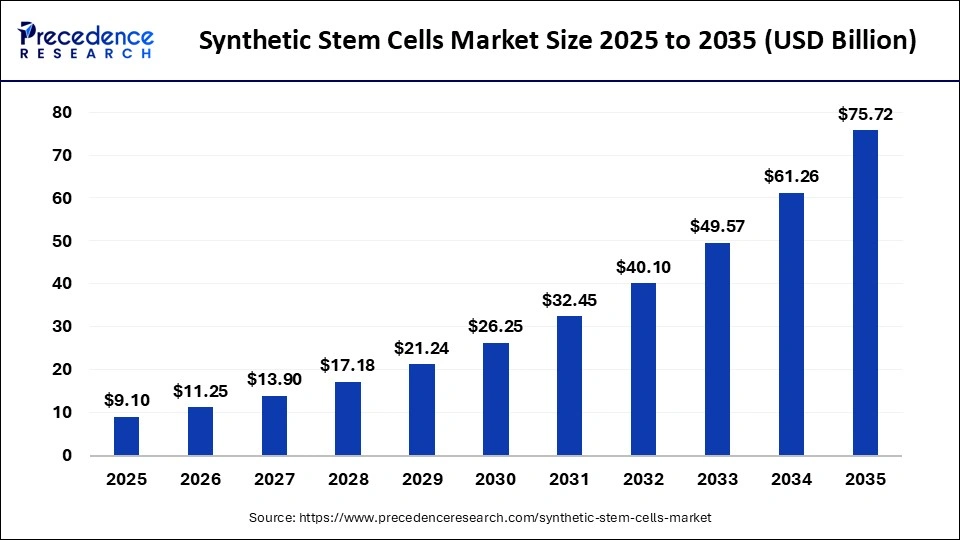
Deepa Pandey, a Healthcare Industry Expert, highlights that the synthetic stem cells market has reached USD 11.25 billion in 2026 and is on track to reach USD 75.72 billion by 2035, advancing at a CAGR of 23.60%. Key synthetic stem cells market companies shaping the market include Brainstorm Cell Therapeutics, Fate Therapeutics, Evotec, Cesca Therapeutics, VistaGen Therapeutics, while major growth segments span By Application, By End-user.
Source: https://www.precedenceresearch.com/synthetic-stem-cells-market
 Get a Sample
 Table Of Content


What is the Synthetic Stem Cells Market Size in 2026?
The global synthetic stem cells market size was calculated at USD 9.10 billion in 2025 and is predicted to increase from USD 11.25 billion in 2026 to approximately USD 75.72 billion by 2035, expanding at a CAGR of 23.60% from 2026 to 2035. The market is experiencing unprecedented growth, driven by the increasing investments in biotechnology and the growing awareness regarding the benefits of synthetic stem cells over natural stem cells.
Key Takeaways
- North America dominated the market, holding the largest share in 2025.
- Asia Pacific is expected to expand at the fastest CAGR in the market between 2026 and 2035.
- By application, the cancer segment accounted for the highest market share in 2025.
- By application, the cardiovascular disease segment is expected to grow at the fastest CAGR between 2026 and 2035.
- By end user, the research laboratories segment contributed the biggest market share in 2025.
- By end user, the pharmaceutical and biotechnology companies segment is expected to grow at a significant CAGR between 2026 and 2035.
Market Overview
Synthetic stem cells, often called synthetic artificial stem cells (SASCs), are engineered, cell-free mimics that replicate the regenerative paracrine effects of natural stem cells like ADSCs. SASC offers a more stable, non-immunogenic, and excellent alternative to traditional cell-based therapies. They provide a safer and more precisely engineered approach for tissue regeneration. Synthetic stem cells offer various therapeutic benefits compared with natural stem cells and hold potential to reduce some of the risks associated with stem cell therapies. They offer benefits like reducing tumorigenic risks, long-term stability, the elimination of complex cold-chain logistics, and bypassing ethical concerns related to embryonic sources. Synthetic stem cells are much more durable than human stem cells and can tolerate harsh freezing and thawing as they are not derived from the patient's own cells.
How is AI influencing the Synthetic Stem Cells Market?
In the rapidly evolving technological landscape, Artificial Intelligence (AI) is significantly accelerating the growth of the synthetic stem cells market by transforming biological research into faster, more accurate, and scalable processes. The rapid convergence of AI with synthetic biology is revolutionizing the market. By leveraging machine learning (ML) and computer vision on massive datasets, AI is significantly enhancing the precision of cell differentiation, optimizing manufacturing, and speeding up drug discovery in the field of regenerative medicine. AI allows for the development of tailored therapies based on a unique genetic profile and medical history of an individual. Synthetic stem cells are widely being utilize in AI-driven drug discovery, which reduces the need for expensive, time-consuming, and ethically challenging in vivo animal trials.
What are the Emerging Trends in the Market?
- The growing demand for safer and stable alternatives to natural stem cells is anticipated to accelerate the growth of the market during the forecast period. Unlike natural stem cells, synthetic stem cells offer better safety profiles with the reduced risk of causing tumors or immune rejection.
- Growing geriatric population and increasing prevalence of chronic diseases like osteoarthritis (OA) and cardiovascular disease (CVD) are expected to contribute to the overall growth of the market.
- The rising need to overcome the ongoing ethical concerns is anticipated to promote the market's growth during the forecast period.
- The use of synthetic stem cells assists in eliminating the ethical and legal challenges associated with embryonic stem cells.
- The increasing focus on customization is anticipated to bolster the growth of the market. Synthetic stem cells can be tailored to target specific biomarkers for personalized treatments in various medical conditions like oncology and neurodegenerative disorders.
Market Scope
| Report Coverage | Details |
| Market Size in 2025 | USD 9.10 Billion |
| Market Size in 2026 | USD 11.25 Billion |
| Market Size by 2035 | USD 75.72 Billion |
| Market Growth Rate from 2026 to 2035 | CAGR of 23.60% |
| Dominating Region | North America |
| Fastest Growing Region | Asia-Pacific |
| Base Year | 2025 |
| Forecast Period | 2026 to 2035 |
| Segments Covered | Application, End-user, and Region |
| Regions Covered | North America, Europe, Asia-Pacific, Latin America, and Middle East & Africa |
Synthetic Stem Cells Market Dynamics
Driver
Rising Adoption of Regenerative Medicine
The increasing demand for regenerative medicine is expected to boost the market's growth during the forecast period. In the field of regenerative medicine, the development of synthetic stem cells marks a remarkable shift from living cell transplants to "cell-free" therapies. These synthetic alternatives are engineered, cell-mimicking materials that act similarly to natural stem cells. These particles are typically created from biocompatible and biodegradable polymers like poly(lactic-co-glycolic acid) (PLGA) and specifically designed to emulate the therapeutic paracrine functions of stem cells while overcoming the various critical limitations related to traditional stem cell therapies, specifically addressing the risks of tumorigenesis (tumor formation) and immune rejection.
Restraint
Regulatory Hurdles
Regulatory hurdles often pose a significant challenge to the synthetic stem cells, which are anticipated to hamper the market's growth. The approval process for synthetic stem cell therapies is often lengthy and complex. In addition, high costs associated with research and development may restrict the entry of new players in the market.
Opportunities
Rising Research & Development Funding
The rising investment in research & development is projected to offer lucrative opportunities in the market during the forecast period. Governments of several nations, research institutions, and private sector players are increasingly investing in the development and commercialization of advanced therapies. The surge in R&D funding is aimed at advancing and facilitating breakthroughs in synthetic stem cells.
Segmental Insights
Application Insights
What Made Cancer the Dominant Segment in the Synthetic Stem Cells Market?
The cancer segment dominated the market with the largest share in 2025. This is because synthetic stem cells are extensively used in oncology research for tumor modeling, drug screening, and developing targeted therapies. Their ability to mimic cancerous tissues enables researchers to study tumor progression, test new treatments, and advance personalized medicine approaches. Additionally, the high global prevalence of cancer and the growing demand for more efficient, reproducible preclinical models have further strengthened the segment's market leadership.
The cardiovascular diseases segment is expected to grow at the fastest CAGR in the upcoming period. This is because cardiovascular disorders remain the leading cause of death globally, creating a significant demand for regenerative solutions to restore damaged heart tissue. The segment's growth is supported by the rising need for regenerative therapies and the rising volume of patients suffering from chronic heart conditions, such as heart failure and myocardial infarction. The rising development of mesenchymal stem cells (MSCs) and induced pluripotent stem cells (iPSCs) for cardiac tissue repair to restore the damaged heart function further drives the segment.
The neurological disorders segment is expected to grow at a notable rate between 2026 and 2035, owing to the increasing global incidence of neurodegenerative conditions, the rising geriatric population, and significant advancements in regenerative medicine. Synthetic stem cells offer a promising approach to repairing the central nervous system (CNS) tissue damaged by medical conditions like Alzheimer's, Parkinson's, and multiple sclerosis.
End User Insights
Why Did the Research Laboratories Segment Dominate the Synthetic Stem Cells Market?
The research laboratories segment dominated the market in 2025 because these labs are the primary hubs for conducting stem cell experiments, disease modeling, and preclinical drug development. Unlike natural stem cells, synthetic stem cells are produced in controlled lab environments without human embryos or tissue donors, providing a sustainable and ethical alternative that focuses on mitigating immune rejection risks. There is a rising integration of synthetic stem cells into research workflows to overcome the ethical and availability constraints associated with natural stem cells. In addition, the surge in preclinical studies, the growing demand for disease modeling, and the rising need for ethically compliant cell models for drug discovery reinforced the segment's dominance.
The pharmaceutical and biotechnology companies segment is expected to grow at a significant rate during the projection period. The growth of the segment is driven by the rising R&D investments, stringent GMP regulatory requirements, extensive clinical trials for chronic diseases, and rapid advancements in regenerative medicine. Pharmaceutical and biotechnology companies are increasingly investing in synthetic stem cells, assisting in overcoming the limitations related to traditional stem cell therapies.
Regional Insights
What Made North America the Dominant Region in the Synthetic Stem Cells Market?
North America dominated the synthetic stem cells market, holding a major share in 2025. The region's dominance in the market is attributed to its advanced healthcare infrastructure and the presence of leading pharmaceutical and biotechnology companies that are engaged in developing synthetic stem cells. The region's leadership position is also reinforced by the rising investments in regenerative medicine, strong R&D infrastructure, the rise in the older population, the increasing prevalence of chronic diseases, and growing awareness regarding the benefits of synthetic stem cells over natural stem cells. Additionally, the rising collaborations between major players like STEMCELL Technologies and research institutes are anticipated to ensure the long-term dominance of the region in the market.
U.S. Synthetic Stem Cells Market Analysis
The U.S. is a major contributor to the North American synthetic stem cells market. The country boasts top-tier academic institutes, research centers, and biotechnology companies, which facilitate the quick adoption of synthetic stem cell technologies. The country is witnessing a rise in R&D spending and funding from both government bodies like the California Institute for Regenerative Medicine (CIRM) and private industry players to accelerate the development of novel therapies. The favorable regulatory frameworks of the FDA in the country provide clear guidelines and accelerated pathways for clinical trials, promoting a secure and supportive environment for testing synthetic and induced pluripotent stem cells (iPSCs).
How is the Opportunistic Rise of Asia Pacific in the Synthetic Stem Cells Market?
Asia Pacific is expected to grow at the fastest CAGR throughout the forecast period. This is mainly due to the high prevalence of cardiovascular disorders, osteoarthritis, and neurodegenerative diseases. This drives the demand for synthetic stem cells, which offer options for repair and regeneration. The growth of the market in the region is also attributed to the developing healthcare infrastructure, the rise in the aging population, increasing shift towards ethical alternatives, rising emphasis on personalized medicine, and supportive regulatory frameworks.
China Synthetic Stem Cells Market Analysis
The market in China is expanding, driven by the rapid expansion of healthcare infrastructure, rising integration of 3D bioprinting and synthetic stem cells, massive investments in biotechnology, increasing incidence of chronic diseases, rising adoption of regenerative medicine, a supportive regulatory & clinical environment, and rapid advancements in synthetic biology. The Chinese government extensively supports synthetic stem cell research, prioritizing it to address ongoing healthcare needs. Additionally, the rising strategic partnerships between academic institutions and industry leaders in regenerative medicine are likely to drive the rapid developments and commercialization of synthetic stem cells.
Why is Europe Leading Synthetic Stem Cell Innovation and Clinical Translation?
Europe region is expected to grow at a significant rate of market share between 2026 and 2035, due to the large network of clinical trials and better regulatory coordination under the EMA made it easier to develop synthetic stem cells. Industrial-scale automation and expanding GMP infrastructure also contributed to enabling Europe to make significant progress in the field of engineering scaffolds for stem cells.
Germany Driving Synthetic Stem Cell Innovation in Europe
Germany is a major contributor to the European market, as a result of its engineering prowess in the field of synthetic stem cells and its clinical translation ecosystem. The synergy between the Max Planck and Fraunhofer also advanced tissue engineering for induced pluripotent stem cells, imparting more scalability for regenerative applications.
Why is the Middle East & Africa Emerging as a New Stem Cell Research Hub?
The Middle East and Africa region is expected to register significant growth in the market during 2026 and 2035, driven by vigorous diversification of the healthcare sector and an increase in clinical trials conducted in the Gulf countries.
Saudi Arabia Leading Stem Cell Expansion in the Middle East & Africa
Saudi Arabia is a major player in the Middle East and Africa market, owing to the fact that major hospitals have started developing cell therapy pipelines with more emphasis on mesenchymal and engineered stem cell systems.
Why is Latin America Gaining Momentum in Synthetic Stem Cell Research and Adoption?
The Latin America region is estimated to grow at a strong CAGR over the projected period, owing to the increased diversity of government-supported regenerative medicine programs. Regulatory enhancements led to shorter clinical approval times, which further increased the efficiency and adoption potential of clinical trials in the region.
Brazil Dominating Synthetic Stem Cell Growth in Latin America
Brazil leads the regional Latin America market, propelled by its strong public research infrastructure and high clinical trial density. Additionally, universities in São Paulo and Rio de Janeiro increased their efforts in the field of the synthesis of stem cells to develop orthopedic and cardiovascular regeneration.
Competitive Landscape
There is dominance by the larger pharmaceutical companies, having already developed R&D infrastructure all over the world. Biotechnology companies enhance engineered stem cell platform differentiation strategies. The competition between emerging startups is carried out quickly as niche synthetic cell reprogramming technologies emerge.
Global pharma, biotech innovators, and manufacturing specialists are some of the key players. The other prominent names in the field of advanced therapies pipeline expansion are Novartis and Roche. Fate Therapeutics and Sana Biotechnology are focused on synthetic immune and stem platforms. Partnerships between pharma and academia help to rapidly validate clinical progress worldwide. Creating a more efficient drug discovery system using AI and enhancing the efficiency of stem cell engineering.
Synthetic Stem Cells Market Companies
- Brainstorm Cell Therapeutics
- Fate Therapeutics
- Evotec
- Cesca Therapeutics
- VistaGen Therapeutics
- North Carolina State University
- Zhengzhou University
- StemBioSys
- Celularity
- Pluri Inc., formerly Pluristem Therapeutics
- LifeCell International
- TiGenix
- Orgenesis
- Sangamo Therapeutics
- Athersys
- Vericel
- Caladrius Biosciences
- Cytori Therapeutics
Recent Developments
- In March 2026, TheWell Bioscience launched RocketCell™ hMSC Xeno-Free Complete Growth Medium, a chemically defined, xeno-free medium designed for high-performance human mesenchymal stem cell (hMSC) expansion and exosome production across research, translational development, and cell therapy manufacturing.(Source: https://www.prnewswire.com)
- In February 2026, Bio-Techne Corporation launched Cultrex™ Synthetic Hydrogel, a fully defined synthetic extracellular matrix (ECM) that supports reproducible and scalable 3D stem cell and organoid research. The product expands Bio-Techne's Cultrex ECM portfolio by offering a synthetic alternative that reduces lot-to-lot variability while supporting translational and regulatory-compliant workflows alongside its traditional matrices.(Source: https://investors.bio-techne.com)
- In February 2026, Royal Biologics, a pioneer in advanced wound care, orthobiologics, and regenerative medicine, announced an investment and strategic partnership with Jellagen Ltd, the UK-based biotechnology innovator pioneering Collagen Type Zero: a next-generation, jellyfish-derived, sustainable biomaterial. Salvatore Leo, CEO and founder of Royal Biologics, stated that they are thrilled to announce their transformative investment and strategic partnership with Jellagen(Source: https://www.prnewswire.com)
- In January 2024, STEMCELL Technologies, Canada's largest biotechnology company, acquired Propagenix Inc., a biotechnology company focused on developing technologies to enable new approaches in regenerative medicine. The acquisition of Propagenix represents a crucial step in STEMCELL's growth journey and an achievement for Canada's biotechnology industry. Propagenix's technology has the potential to contribute to big advancements in scientific research in both labs and clinical settings for the treatment of cancer, airway diseases, and other disorders.
Segments Covered in the Report
By Application
- Cardiovascular Disease
- Neurological Disorders
- Cancer
- Diabetes
- Gastrointestinal
- Musculoskeletal Disorders
By End-user
- Hospitals and surgical centers
- Academic institutes
- Research laboratories
- Pharmaceutical and biotechnology companies
- Others
By Region
- North America
- Latin America
- Europe
- Asia-pacific
- Middle and East Africa
For inquiries regarding discounts, bulk purchases, or customization requests, please contact us at sales@precedenceresearch.com
Frequently Asked Questions
Tags





Ask For Sample
No cookie-cutter, only authentic analysis – take the 1st step to become a Precedence Research client
 Get a Sample
.webp)



 sales@precedenceresearch.com
 Schedule a Meeting
