



AI in Cancer Immunotherapy Drugs Market Size, Companies, Share, Patient Volume, Treatment Adoption Rates, Pricing Analysis, Regulatory Landscape, Competitive Positioning, and Demand Forecast
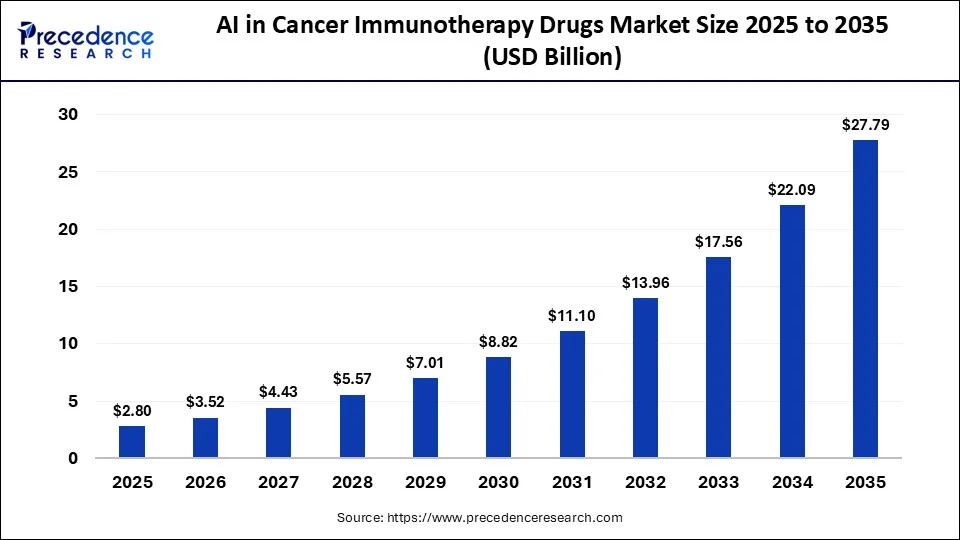
Deepa Pandey, a Healthcare Industry Expert, highlights that the AI in cancer immunotherapy drugs market has reached USD 3.52 billion in 2026 and is on track to reach USD 27.79 billion by 2035, advancing at a CAGR of 25.80%. Key AI in cancer immunotherapy drugs market companies shaping the market include Exscientia, Insilico Medicine, while major growth segments span ai technology, drug development stage, immunotherapy type, cancer type, application, end user, deployment model.
Source: https://www.precedenceresearch.com/ai-in-cancer-immunotherapy-drugs-market
 Get a Sample
 Table Of Content


AI in Cancer Immunotherapy Drugs Market Size and Forecast 2026 to 2035
The global AI in cancer immunotherapy drugs market size accounted for USD 3.52 billion in 2026 and is predicted to increase from USD 3.52 billion in 2026 to approximately USD 27.79 billion by 2035, expanding at a CAGR of 25.80% from 2026 to 2035.
Key Takeaways
- By AI technology, the machine learning segment held 34% of market share in 2025.
- By immunotherapy type, the immune checkpoint inhibitors segment held a major market share of 34% in 2025.
- By cancer type, the lung cancer segment held the largest market share of 24% in 2025.
- By application, the drug discovery segment led the market with a share of 25% in 2025.
- Roche has launched the pharmaceutical industry's largest hybrid-cloud AI factory, powered by over 3,500 NVIDIA Blackwell GPUs to accelerate the development of new therapeutics and diagnostics.
- NVIDIA and Lilly are launching a USD 1 billion co-innovation lab over five years starting January 2026 to speed up drug discovery using NVIDIA BioNeMo and robotics.
- AstraZeneca and Immunai have expanded their oncology AI partnership through 2027 in a deal worth up to USD 37.5 million.
- AstraZeneca extended its AI partnership with Immunai through 2027 in a $37.5 million deal utilizing the AMICA-OS platform for oncology drug development in May 2026.
- In December 2025, Syneron Bio secured nearly USD 100 million in Series A funding led by AstraZeneca and Pfizer, while Syremis Therapeutics launched with a
- USD 165 million Series A round for schizophrenia treatment advancement.
- In February 2026, Philips and the PreciseOnco consortium secured a EUR 14.9 million EU grant and EUR 9 million in industry funds for a five-year program to improve cancer treatments.
- In May and June 2026, major pharmaceutical companies made massive investments in AI, with Roche acquiring PathAI for USD 750 million and Sanofi partnering with Owkin through a USD 270 million financial commitment to enhance drug discovery and diagnostic workflows.
- In early 2026, Senhwa Biosciences partnered with CellType for CX-4945 cancer therapy, while Lantern Pharma cut R&D expenses by 47% and launched Zeta.ai.
- The Cancer Research Institute launched the CRI Discovery Engine in January 2026, which is an artificial intelligence-ready database designed to advance cancer immunotherapy research.
- A Pharma and Globant partnership in March 2026 used a multi-agent AI framework to deliver insights 15 times faster with over 90% accuracy.
- The recent acquisition of Nuvalent, Inc. by GSK for an aggregate equity value of USD 10.6 billion highlights the significance of innovative oncology assets and next-generation targeted therapies for oncology.
- Out of the total 1,031 clinical trials, 366 trials related to cancer immunotherapy drugs are registered in the U.S.
Market Size Description
Artificial intelligence is accelerating cancer immunotherapy development by leveraging predictive biomarkers, digital pathology, and rapid biological data analysis to shift from traditional trial-and-error to an integrated digital ecosystem. The market is mainly driven by rising research costs and the need for better patient stratification and the industry is increasingly adopting these tools to optimize treatment selection. Regulatory bodies are increasing oversight of these AI platforms as corporate investments, such as GSK's USD 50 million investment in Noetik, aim to accelerate drug discovery for cancers by targeting patient sub-populations. This shift aims to improve the speed and precision of developing effective and personalized therapies.
Artificial intelligence is accelerating cancer immunotherapy by enhancing target discovery, biomarker analysis, and patient selection, with machine learning models and generative AI facilitating faster clinical trials and personalized CAR-T cell receptor design. Major pharmaceutical companies, including Roche, AstraZeneca, and Sanofi, are investing heavily in AI, launching high-performance computing centers and forming strategic partnerships with tech firms like NVIDIA and Immunai. Furthermore, regulatory frameworks are evolving, with the FDA issuing 2025 guidelines with significant funding and partnerships for precise oncology and treatment advancements.
Market Snapshot
The global AI in cancer immunotherapy drugs market size accounted for USD 3.52 billion in 2026 and is, expanding at a CAGR of 25.80% from 2026 to 2035. Machine learning acts as the leading AI technology for patient stratification, while generative AI serves as the fastest-growing AI technology for molecule design in cancer immunotherapy. Immune checkpoint inhibitors dominate the market, with combination therapy design emerging as a high-growth application for complex treatment regimens. Pharmaceutical companies drive demand, with North America holding the dominant share and Asia Pacific representing the fastest-growing region in this market.
Strategic Market Insights
The market is shifting from conventional analytics to generative AI, multi-omics modeling, and predictive oncology to improve drug development and patient stratification. AI-enabled cell therapy design and cloud-based systems are accelerating translational research by enabling real-time molecular generation and secure, multi-center federated learning. These advancements leveraging data from multi-omics and imaging, allow for proactive drug regulation and more precise responses to immunotherapy compared to traditional methods.
High-Growth Opportunity Areas
AI is accelerating the market by advancing generative design for novel biotherapeutics, predictive biomarker discovery, and optimizing CAR-T cell engineering for hematological cancers. NIH also highlighted the role of AI-driven platforms in replacing traditional laboratory methods to expedite drug development. Furthermore, the Asia-Pacific region is also driving rapid growth in clinical trials and the commercialization of advanced cellular therapies.
Market Overview
What Is AI in Cancer Immunotherapy Drug Development?
The AI in cancer immunotherapy drugs market leverages machine learning and deep learning for the discovery, optimization, and monitoring of immune-based treatments. It efficiently streamlines the development process by prioritizing neoantigens for personalized vaccines, mapping antigen-T cell interactions, and accelerating virtual compound screening for immunomodulatory drugs. Additionally, AI improves cellular therapies such as CAR-T, while predictive tools and algorithms enhance patient outcomes by forecasting responses to immune checkpoint inhibitors and managing toxicity.
How AI Is Transforming Immuno-Oncology Drug Development
AI accelerates immuno-oncology drug development by integrating multi-omics, imaging, and clinical data to enhance target discovery, patient stratification, and therapeutic monitoring. AI models, especially deep learning and computational pipelines, process complex datasets to identify novel tumor-specific antigens, predict drug responses, and evaluate immune cell infiltration non-invasively with optimized trial designs and monitor for adverse toxicity.
AI also transforms the cancer drug lifecycle by streamlining development, personalization, and surveillance, though significant hurdles remain. AI optimizes target identification, trial protocols, and real-time safety monitoring, supported by tools like EHR-NLP and CURATE.AI, while facing challenges in data integration and regulatory governance.
Market Scope and Industry Boundaries
The market leverages machine learning for drug discovery, biomarker identification, and patient stratification, specifically targeting cancers like melanoma and lung cancer to enhance trial efficiency. These technologies, encompassing operational boundaries, include cloud and on-premise deployment models across global regions, with a focus on optimizing the therapeutic lifecycle. Key applications in hospital settings include analyzing routine clinical data to predict patient responses to checkpoint inhibitors.
AI-Enabled Immunotherapy Development Workflow
The AI-enabled immunotherapy workflow spans biological target identification, biomarker discovery, and drug design and preclinical testing, followed by clinical trials and treatment selection. AI and machine learning models process multi-omics and digital pathology data to pinpoint novel tumor neoantigens and forecast patient responses to immune checkpoint inhibitors. Transitioning to later stages, the pipeline leverages AI for manufacturing optimization and post-market monitoring of safety profiles.
Market Trends
Generative AI Is Accelerating Novel Immunotherapy Design
Generative AI and advanced algorithms accelerate medical treatments by designing new active molecules and predicting tumor targets. Generative artificial intelligence helps build new molecular structures and update patient data to support adaptive treatments and counter the evolving nature of cancer. Furthermore, advanced computer programs find tumor neoantigens to develop custom cancer vaccines. These smart tools help direct the immune system to fight cancer precisely.
Multi-Omics Integration Is Improving Biomarker Discovery
Data harmonization uses cloud tools and AI to merge genomics, transcriptomics, proteomics, and metabolomics into combined pipelines, mitigating past fragmentation. Cross-platform modeling then leverages these integrated sets to find predictive immune signatures for tumor therapy response. These integrated pipelines let scientists study multiple biological layers at once without separate, isolated methods.
AI Is Supporting Precision Patient Selection
Machine learning models forecast patient responses to immune checkpoint inhibitors by evaluating tumor genetics and clinical metrics. Recent tools improve precision over standard protocols by analyzing multi-cohort clinical histories to inform ideal therapy choices. Predictive configurations also help manage toxicity by anticipating immune-related adverse events before treatment begins. This proactive approach allows doctors to address potential complications early and improve patient safety.
AI-Based Combination Therapy Design Is Expanding
Synergistic Targeting and Overcoming Resistance are two ways artificial intelligence improves cancer treatment. AI models simulate how immune checkpoint inhibitors work with other drugs, and map combination treatments to block tumor escape pathways. For instance, PERCEPTION is an AI tool that evaluates single-cell tumor data to forecast therapy responses, flag drug resistance, and suggest counteractive treatments.
AI Adoption Is Increasing in Cell and Gene Therapy Development
CAR-T optimization uses machine learning to help choose better targets, find strong T-cells, and improve cell design. Manufacturing analytics use smart rules to control cell growth speed and keep custom treatments safe and stable. These digital tools make cell therapies work better and easier to build. They track every step of growth to make sure the final product is strong and safe for each patient.
Cloud-Based Biomedical AI Is Gaining Market Share
Scalable infrastructure and collaborative research use high-performance cloud architectures to support modern medical data and team projects. High-performance cloud systems store and process huge amounts of multi-omics and electronic health record data. Distributed cloud networks let teams across different locations run complex simulations and virtual clinical trials fast. These tools help researchers work together smoothly and handle big workloads with ease.
Market Report Coverage and Key Metrics
| Report Coverage | Details |
| Market Size in 2025 | USD 2.80 Billion |
| Market Size in 2026 | USD 3.52 Billion |
| Market Size by 2035 | USD 27.79 Billion |
| Market Growth Rate from 2026 to 2035 | CAGR of 25.80% |
| Dominating Region | North America |
| Fastest Growing Region | Asia Paicfic |
| Base Year | 2025 |
| Forecast Period | 2026 to 2035 |
| Segments Covered | AI Technology, Drug Development Stage, Immunotherapy Type, Cancer Type, Application, End User, Deployment Model, and Region |
| Regions Covered | North America, Europe, Asia-Pacific, Latin America, and Middle East & Africa |
Market Segmentation Analysis
AI Technology Insights
Which AI Technology Segment Dominated the AI in Cancer Immunotherapy Drugs Market?
The machine learning segment held a dominant position with a share of 34% in the market in 2025, due to its ability to analyze vast amounts of data generated and provide effective outcomes. Machine learning (ML) tools represent powerful tools to improve outcome prediction in oncology by modeling the heterogeneity in treatment effects. ML enhances cancer immunotherapy by predicting treatment response, identifying novel biomarkers, and analyzing complex multi-omics data to guide personalized patient care.
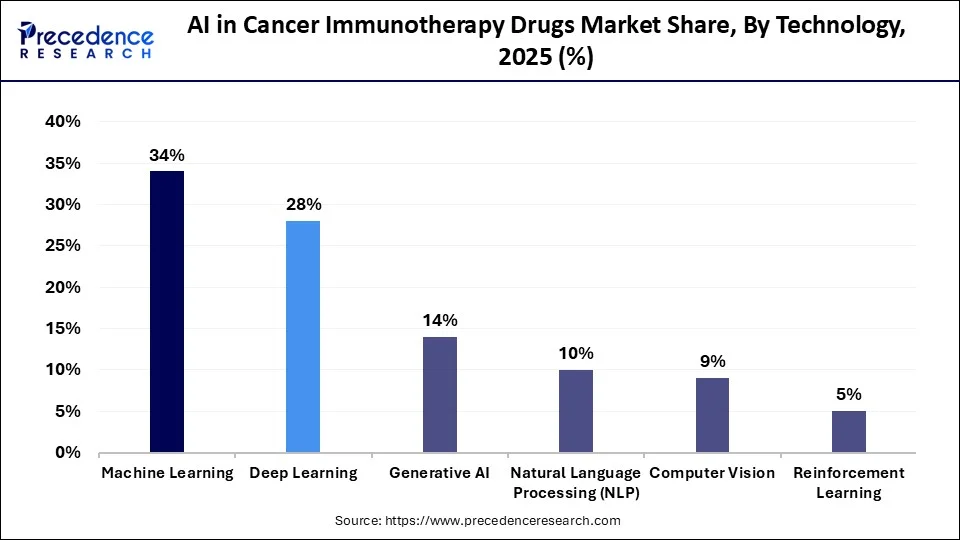
The generative AI segment is expected to grow at the fastest CAGR of 34.6% in the market between 2026 and 2035. Generative AI holds real promise for accelerating progress in cancer immunotherapy, improving treatments, and reaching more patients. It enables the development of next-generation immunotherapies. It accelerates initial therapy design and reduces the risk of later trial failure by reducing the chances of off-target adverse effects.
Drug Development Stage Insights
How the Target Identification and Validation Segment Dominated the AI in Cancer Immunotherapy Drugs Market?
The target identification and validation segment dominated the market with a share of 22% in 2025. Target identification and validation are the primary processes of drug development, as accurate target identification accelerates the development chances of targeted therapies. AI in target identification and validation helps integrate massive multi-omic datasets and improve success rates.
AI in Cancer Immunotherapy Drugs Market Share, By Drug Development Stage, 2025 (%)
| Drug Development Stage | 2025 Share (%) | 2035 Share (%) | CAGR (2025-2035) |
| Target Identification & Validation | 22 | 20 | 24.50% |
| Lead Discovery | 20 | 22 | 27.00% |
| Preclinical Development | 15 | 14 | 23.80% |
| Clinical Trial Design & Optimization | 14 | 15 | 27.60% |
| Biomarker Discovery | 13 | 15 | 29.70% |
| Drug Response Prediction | 10 | 11 | 28.50% |
| Post-market Surveillance | 6 | 3 | 18.40% |
The biomarker discovery segment is expected to grow with the highest CAGR of 29.7% in the market during the studied years due to the growing demand for early disease detection and screening. Multi-omics analysis enables more precise immune-response biomarkers. Researchers can design novel candidates based on the biomarkers involved in disease progression.
Immunotherapy Type Insights
Why Did the Immune Checkpoint Inhibitors Segment Dominate the AI in Cancer Immunotherapy Drugs Market?
The immune checkpoint inhibitors segment held the largest market share of 34% in 2025 due to the growing demand for personalized medicines and advanced cancer therapeutics. Immune checkpoint inhibitors (ICIs) are monoclonal antibodies that reactivate the immune response against tumor cells. They are highly preferred due to a large clinical pipeline and AI-driven response prediction.
AI in Cancer Immunotherapy Drugs Market Share, By Immunotherapy Type, 2025 (%)
| Immunotherapy Type | 2025 Share (%) | 2035 Share (%) | CAGR (2025-2035) |
| Immune Checkpoint Inhibitors | 34 | 29 | 23.70% |
| CAR-T Cell Therapies | 21 | 25 | 29.80% |
| Cancer Vaccines | 10 | 12 | 30.40% |
| Monoclonal Antibodies | 14 | 11 | 21.40% |
| Bispecific Antibodies | 9 | 11 | 30.00% |
| Cytokine-based Immunotherapies | 5 | 4 | 21.30% |
| Oncolytic Virus Therapies | 4 | 5 | 29.10% |
| Other Immunotherapies | 3 | 3 | 25.60% |
The cancer vaccines segment is expected to expand rapidly in the market with a CAGR of 30.4% in the coming years due to the growing awareness of preventive healthcare. AI accelerates neoantigen identification and personalized vaccine design. It also helps optimize mRNA sequences and design targeted delivery systems.
Cancer Type Insights
What Made Lung Cancer the Dominant Segment in the Market?
The lung cancer segment contributed the biggest market share of 24% in 2025 due to the rising prevalence of lung cancer, especially among the male population. The segmental growth is also attributed to high immunotherapy usage and extensive biomarker research. AI predicts patients' responses to ICIs and accelerates drug development.
AI in Cancer Immunotherapy Drugs Market Share, By Cancer Type, 2025 (%)
| Cancer Type | 2025 Share (%) | 2035 Share (%) | CAGR (2025-2035) |
| Lung Cancer | 24 | 22 | 24.20% |
| Breast Cancer | 15 | 15 | 25.80% |
| Colorectal Cancer | 12 | 12 | 25.60% |
| Melanoma | 11 | 9 | 21.70% |
| Prostate Cancer | 8 | 9 | 28.60% |
| Hematological Cancers | 14 | 17 | 30.70% |
| Liver Cancer | 5 | 5 | 26.00% |
| Pancreatic Cancer | 4 | 4 | 25.40% |
| Ovarian Cancer | 3 | 3 | 25.20% |
| Other Cancers | 4 | 4 | 24.90% |
The hematological cancers segment is expected to witness the fastest growth in the market with a CAGR of 30.7% over the forecast period due to the ability of AI tools to accelerate diagnosis and classification of cancer immunotherapy, predict treatment response and toxicity, and optimize complex multi-omics data. AI facilitates rapid development of CAR-T and other cell-based therapies.
Application Insights
Which Application Segment Dominated the AI in Cancer Immunotherapy Drugs Market?
The drug discovery segment accounted for the highest market share of 25% in 2025 due to the need for accelerating the drug discovery process and reducing the risk of drug failure in clinical trials. AI reduces molecular screening time and improves candidate selection. It facilitates multiple steps, including target identification, compound generation, and safety prediction.
AI in Cancer Immunotherapy Drugs Market Share, By Application, 2025 (%)
| Application | 2025 Share (%) | 2035 Share (%) | CAGR (2025-2035) |
| Drug Discovery | 25 | 24 | 25.20% |
| Biomarker Identification | 17 | 19 | 29.40% |
| Patient Stratification | 14 | 15 | 27.60% |
| Treatment Response Prediction | 13 | 15 | 29.70% |
| Combination Therapy Design | 10 | 12 | 31.60% |
| Clinical Trial Optimization | 9 | 8 | 23.40% |
| Personalized Immunotherapy | 7 | 6 | 23.00% |
| Adverse Event Prediction | 3 | 1 | 16.50% |
| Manufacturing & Quality Control | 2 | 0 | 15.80% |
The combination therapy design segment is expected to gain the highest market share with a CAGR of 31.6% between 2026 and 2035 due to the ability of AI to identify drug compatibility within a formulation. AI identifies synergistic drug combinations and treatment strategies. It optimizes drug choices and dosage ratios, eliminating the need for complete prior knowledge of complex molecular pathways.
End User Insights
How the Pharmaceutical Companies Segment Led the AI in Cancer Immunotherapy Drugs Market?
The pharmaceutical companies segment led the market with a share of 39% in 2025 due to the presence of skilled professionals and growing research activities. Pharmaceutical companies invest heavily in AI-enabled drug discovery and immunotherapy pipelines to accelerate the drug discovery process, facilitating new product launches.
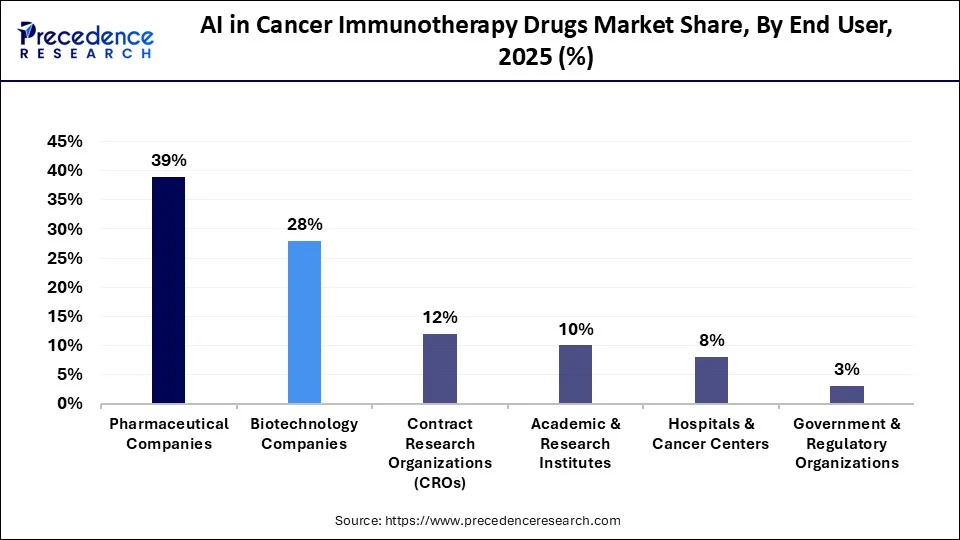
The biotechnology companies segment is expected to show the fastest growth with a CAGR of 29.7% over the forecast period due to the rising complexity of biotech drugs. AI-native biotech firms accelerate innovation in precision oncology. By leveraging AI, biotech companies can strengthen their market position by delivering products faster.
Deployment Model Insights
Why Did the Cloud-based AI Segment Dominate the Market?
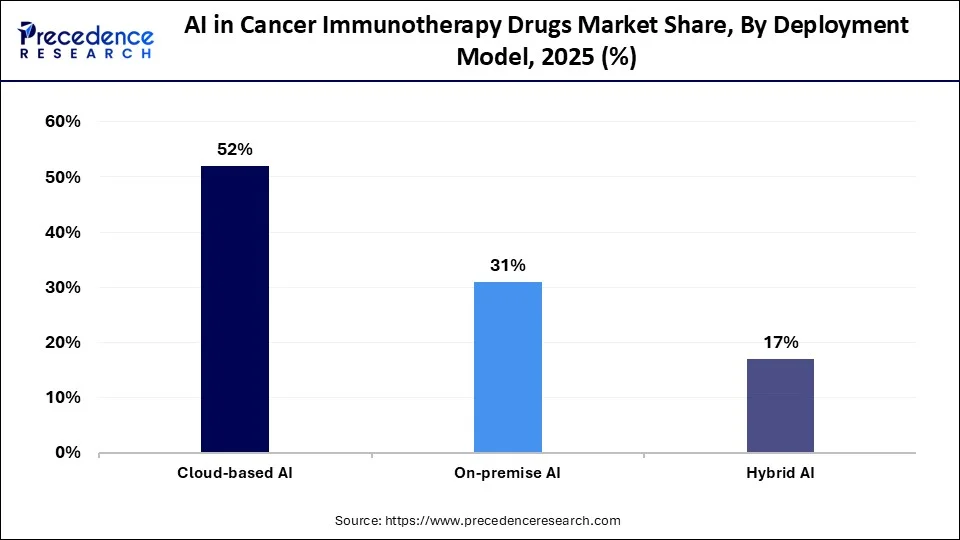
The cloud-based AI segment dominated the market with a share of 52% in 2025 and is expected to grow rapidly with a CAGR of 27.8% during the forecast period, as cloud-based tools can store vast amounts of healthcare data and can be accessed from anywhere and at any time. Cloud-based AI tools are increasingly preferred due to scalable computing and access to large biomedical datasets.
Market Dynamics
Market Drivers
Growing Complexity of Cancer Immunotherapy Development
The major market growth factor is the increasing complexity involved in the development of cancer immunotherapy through conventional methods. Some complexities faced by researchers include the lack of complete understanding of the immune system response, side effects associated with immunotherapy, and enhanced trial complexity. These complexities potentiate the demand for AI-based analysis, assisting researchers in overcoming challenges caused by conventional methods. AI introduces automation and enables predictive analysis, saving time for researchers.
Increasing Investment in Precision Oncology
The rapid market expansion, technological breakthroughs, and the growing demand for personalized medicines are primary reasons for increasing investments in precision oncology. Precision medicines are reshaping the treatment landscape and influencing strategic decision-making throughout the oncology sector. This is driven by the recent acquisition of Nuvalent, Inc. by GSK for an aggregate equity value of $10.6 billion, highlighting the significance of innovative oncology assets and next-generation targeted therapies for oncology.
Rising Availability of Biomedical Data
The increasing adoption of advanced platforms in healthcare settings has enhanced access to patients' health data. Several government bodies make policies to keep a record of their country's genomic databases. The rising integration of electronic health records (EHRs) and the availability of clinical trial data on public databases have made it easier for researchers to access patients' data. These data, along with real-world evidence, assist in developing modern AI tools for the development of cancer immunotherapy drugs.
Expansion of AI-Native Biotechnology Companies
Major biotech companies use AI tools as a core drug discovery platform, rather than using them as a supporting tool. It is estimated that about 80% of pharmaceutical and life science companies use AI in drug discovery. The availability of major AI-based drug discovery platforms from emerging startups facilitates the widespread adoption of AI platforms. Some startups that provide their proprietary products include Zai Lab, Isomorphic Labs, XtalPi, Insilico Medicine, and Nanyang Biologics.
Market Restraints
Limited Availability of High-Quality Clinical Data
The limited availability of high-quality clinical data primarily stems from unstructured documentation, system fragmentation, and privacy restrictions. The non-availability of sufficient datasets to build an AI platform also leads to limited availability of clinical data. This results in inconsistencies and inaccuracies in outcomes generated from the platform, restricting market growth.
High Cost of AI Infrastructure and Specialized Talent
The integration of advanced computing infrastructure and data engineering requires high expenditure. Building and running large systems requires numerous specialized graphics chips, with memory and server rack prices climbing sharply. This is a major challenge, particularly in developing and underdeveloped countries. Such countries also lack the presence of trained professionals, further hindering the development of AI platforms.
Difficulty in Translating AI Predictions into Clinical Outcomes
Outcomes generated from AI platforms generally face challenges related to model validation, reproducibility, interpretability, and clinical adoption. This is due to data quality issues, complex black-box outputs, and slow integration into hospital workflows. This reduces trust among users and hinders their widespread adoption, leading to delayed treatment and inconsistent results.
Market Opportunities
AI-Driven Biomarker Discovery
The future of the AI in cancer immunotherapy drugs market is promising, driven by the use of AI platforms in diagnosing and developing predictive biomarkers. The use of AI-driven biomarker discovery improves precision medicine by uncovering biomarker signatures that are essential for the early detection and treatment of diseases within vast and diverse datasets. AI-based biomarker discovery methods seek to transform cancer care by improving patient survival rates through early diagnosis and targeted therapy.
Generative AI for Therapeutic and Antibody Design
Generative AI properties can enable researchers to expand their research capabilities in novel drug discovery. GenAI also enables researchers to study target proteins and their structures to develop precision medicines that can directly bind to those proteins, providing desired therapeutic effects. It can optimize cancer immunotherapy by predicting patient responses, designing custom mRNA vaccines, and engineering novel antibodies. This helps enhance stability and protein expression for custom cancer vaccines.
AI-Enabled Combination Therapy Development
AI tools facilitate the development of combination therapies, as a single formulation can target multiple proteins associated with tumor generation. AI and machine learning (ML) can identify hidden tumor targets and predict patient responses. They predict compatibility between immunotherapy drugs in a combination and their potential adverse effects, enabling researchers to make proactive decisions. They reduce potential trial-and-error in immunotherapy development, saving time for researchers.
AI Platforms for Small- and Mid-Sized Biotech Companies
The burgeoning healthcare sector and recent technological breakthroughs have overcome accessibility challenges for small- and mid-sized biotech companies. Several companies collaborate with contract research organizations (CROs) and contract manufacturing organizations (CMOs) as they have access to proprietary AI platforms. The increasing adoption of cloud-based AI platforms has enabled researchers to access data from anywhere and at any time. Developers also provide software-as-a-service tools, which are more affordable for small and mid-sized companies, eliminating the need to pay for annual subscriptions.
Market Challenges
Data Privacy and Patient Data Governance
The major market challenge is patient data privacy. Since patients' health data, such as genomic, clinical, and personal data, are stored and managed on cloud platforms, they pose a high risk of data leakage and cybersecurity threats. The market faces major concerns regarding data privacy, informed consent, and algorithmic bias, requiring robust data governance frameworks. Reliance on sensitive patient data introduces risks of breaches, unauthorized access, and difficulty meeting regulatory standards.
Model Bias and Limited Generalizability
The market faces model bias and limited generalizability due to non-representative training data, biological differences across patient cohorts, and demographic disparities. One of the biggest drawbacks of AI models is that they perform differently across populations, cancer types, and healthcare systems based on the data on which they are trained. This leads to unequal treatment recommendations and unreliable clinical performance when algorithms are moved to real-world medical settings.
Regulatory Uncertainty for AI-Enabled Drug Development
Several developing and underdeveloped nations face a lack of standardized validation for high-dimensional multi-omics data. Different countries have varying standards for validating AI models. For AI-generated therapies to gain regulatory approval, their decisions must be clear and biologically plausible. More harmonized standards for validation, reproducibility, data interoperability, and monitoring are needed to accelerate the approval process.
AI in Cancer Immunotherapy Drugs Market Ecosystem Analysis
Industry Value Chain
The market constitutes an interdependent value chain, linking upstream multi-omics data providers and AI developers with midstream clinical validation networks, such as contract research organizations (CROs) and research institutions. This ecosystem enables the screening of tumor-specific neoantigens, accelerating the development of customized vaccines and immune checkpoint inhibitors by biotech and pharmaceutical companies. Downstream, regulatory bodies oversee the implementation of these technologies, while innovations like agentic AI and model context protocols are expected to further improve efficiency in patient care.
Key Ecosystem Participants
In the market, AI platform providers, cloud infrastructure companies, and genomic data companies build the technological backbone, while drug developers, clinical research organizations (CROs), and healthcare providers drive translational and bedside application.
- AI Platform Providers: Build specialized machine learning and foundational models to interpret complex biological data and predict patient response to checkpoint inhibitors.
- Cloud Infrastructure Companies: supply scalable computing power and secure environments required to process massive multi-omics datasets and run deep learning simulations safely.
- Genomic Data Companies: Sequence tumor DNA, RNA, and single-cell profiles to map neoantigens and identify actionable biomarker signatures for immunotherapy.
- Drug Developers: Leverage computational predictions to design novel therapeutic antibodies, optimize combinations, and accelerate preclinical candidate selection.
- Clinical Research Organizations (CROs): Optimize clinical trial design, automate patient recruitment, and perform real-time protocol monitoring using real-world data analytics.
- Healthcare Providers: Implement AI-driven clinical decision support systems at the point of care to match individual cancer patients with effective immunotherapy regimens.
Strategic Partnerships across AI and Life Sciences
Strategic partnerships integrating AI with life sciences are accelerating target discovery and improving patient selection for cancer immunotherapy by analyzing complex multi-omics data. These collaborations utilize computational platforms to decode tumor microenvironments and optimize clinical trial designs. In May 2026, AstraZeneca extended its artificial intelligence partnership with Immunai through 2027 in a deal worth up to USD 37.5 million. This partnership centers on Immunai's AMICA-OS platform, which models the human immune system leveraging a large clinical immunology dataset supporting oncology drug development in biomarker discovery, patient stratification, and dose optimization.
Data and Model Supply Chain
The cancer immunotherapy data and model supply chain integrates clinical, biological, and imaging inputs to create AI-driven precision treatments leveraging patient biomarkers to predict immunotherapy response. This pipeline processes multi-scale data through computational infrastructure to train algorithms for neoantigen identification and drug efficacy forecasting. These AI models undergo rigorous validation against independent clinical cohorts to ensure safety and accuracy before implementation and link multi-scale biological data with actionable and validated tools for clinical deployment.
AI Infrastructure, Cloud, and Computing Economics
High-Performance Computing Requirements
Analyzing high-performance computing for AI in cancer immunotherapy requires advanced infrastructure to process massive genomic, imaging, and molecular datasets efficiently. These intensive workloads use specialized accelerators, distributed cloud systems, and parallel storage to handle complex multi-omics data. Highlighting this trend, Roche launched the pharmaceutical industry's largest hybrid-cloud AI factory on March 16, 2026, adding 2,176 NVIDIA Blackwell GPUs for a total of over 3,500 GPUs to accelerate therapeutics and diagnostics.
Cloud Infrastructure Economics
Cloud-based AI infrastructure facilitates scalable, high-throughput processing of multi-omics and imaging data, facilitating efficient model training for cancer immunotherapy applications. GPU-driven deep learning optimizes drug delivery kinetics and biomarker identification, while strategic AI application helps manage the high costs associated with data handling and hardware provisioning. In January 2026, NVIDIA and Lilly are investing up to USD 1 billion over five years to launch a co-innovation lab leveraging the NVIDIA BioNeMo platform and robotics to accelerate drug discovery.
AI Software and Platform Monetization
AI software for cancer immunotherapy is increasingly commercialized through modular, subscription-based models and per-case licensing to offer clinical integration by leveraging hybrid pricing structures that integrate base platform access with usage-based charges. Strategic, collaborative partnerships with pharmaceutical firms enable data sharing and cost-sharing for cloud infrastructure to manage the heavy data generation burden in drug development.
Pricing and Commercial Model Analysis
AI Platform Pricing Models
AI platform commercialization relies on subscription, licensing, usage-based, and enterprise pricing models to govern how biotech entities procure oncology tools. While flat fees provide access, the market is shifting toward usage-based metrics, often linked to clinical test volumes to manage costs. Enterprise models, including multi-year contracts, enable bundled services to support high operational expenditures. Value-based approaches are increasingly aligning platform costs with reimbursement frameworks, bridging expenditures to patient episodes and validated therapeutic value.
AI Drug Discovery Service Pricing
Commercial models for outsourced AI drug discovery in cancer immunotherapy use subscription fees, project charges, and milestone payments to provide flexible pricing. These hybrid contracts link vendor costs directly to the clinical success and biological validation of new oncology candidates. Outsourced AI research in oncology often relies on fee-for-service contracts for targeted computational tasks such as virtual screening. These pricing models also include downstream clinical milestones to match translational success.
Total Cost of AI Adoption
AI adoption in the market requires high upfront costs for infrastructure, data, and talent. These investments involve setting up cloud computing, infrastructure, genomic data, and hiring expert bioinformaticians. The ongoing costs include software development, system integration, and clinical validation trials. Organizations must embed these tools into clinical pathways and prove their safety and value through strict testing.
Regulatory, Ethical, and Compliance Landscape
AI Regulation in Drug Development
Regulatory frameworks for AI in drug development use a risk-based approach, focusing on data governance, validation, and human oversight to protect patients and ensure equity. Joint principles from agencies like the FDA require strict proof of data quality and algorithm safety. CDER supports safe AI innovation in drug development. They published a 2025 draft guidance based on hundreds of public comments, past submissions, and workshops to help companies use AI responsibly for drug safety, effectiveness, and quality data.
Clinical Validation Requirements
Validating AI for cancer immunotherapy requires data representativeness, multi-site clinical testing, and transparent algorithm vigilance. Regulatory guidelines require continuous performance monitoring, bias auditing, and explainability-by-design to ensure patient safety and prove generalizability on independent data. Integrating AI into oncology is limited by data quality, model accuracy, and clinical trial validation, so developers must supply traceable documentation to meet compliance standards.
Patient Data Privacy
Patient data privacy in cancer immunotherapy requires protecting genomic data by managing clinical governance and updating consent protocols. Compliance relies on rules like HIPAA and GDPR, while tools like encryption and federated learning let researchers study data safely without exposing raw information. Clinical development needs careful data de-identification for sharing, and consent models must change so patients know how their data and AI tools will use their genetic profiles.
Algorithmic Bias and Fairness
Representative Datasets are vital to avoid healthcare disparities. Biased training data results in poor model performance for underrepresented demographics. These narrow cohorts fail to accurately predict therapeutic responses as well as toxicities for minority patient groups. Ensuring fairness requires active mitigation of algorithmic bias through regulatory compliance and diverse data inputs. Fairness techniques such as reweighting and adversarial debiasing ensure model output remains consistent across subgroups.
Intellectual Property Ownership
Intellectual property ownership of AI-generated cancer immunotherapy assets hinges on demonstrating substantive human contribution, as legal frameworks generally prevent AI from being recognized as an inventor. Ownership rights typically default to human creators who design the objective functions rather than just prompting the system. AI developers protect intellectual property amid legal ambiguities by leveraging contractual assignments and patents for human-guided discoveries and maintaining clear data provenance and documenting human-directed development.
Investment and Funding Landscape
Venture Capital Investment
Venture capital and federal initiatives are driving a surge in funding for AI-native biotechnology and precision oncology, especially for platforms leveraging multi-omics data for neoantigen discovery and immunotherapy response prediction. Public-private co-investments, heightened by programs like the National Cancer Institute's informatics grants, are accelerating clinical validation by pairing high-resolution, single-cell data with proprietary experimental feedback loops
In December 2025, Syneron Bio raised nearly USD100 million in a Series A and A extension funding round led by AstraZeneca, Pfizer, and other major investors. Similarly, Syremis Therapeutics launched with a USD165 million Series A funding round co-led by Dexcel Pharma and Third Rock Ventures to advance its lead schizophrenia treatment candidate, ST-905.
Pharmaceutical Strategic Investment
The market is driven by strategic partnerships, venture funding, and clinical milestone deals, focusing on neoantigen discovery, combination therapies, and patient stratification. Which further fostered by pharma-AI collaborations, co-development licensing agreements, and mergers and acquisitions that secure exclusive ML platforms and accelerate drug discovery. For instance, in February 2026, Prognica Labs and NextGen Immuno Therapeutics (NGIT) partnered to advance AI-powered immune diagnostics and personalized medicine by leveraging integrated technologies for high-growth markets including the GCC, India, and the U.S.
Research Funding
Public and academic investment in AI for cancer immunotherapy is mainly fostered by the National Institutes of Health and the National Cancer Institute, but leveraging key funding mechanisms like the Informatics Technology for Cancer Research and the Smart Health and Biomedical Research initiative to support machine learning integration, multimodal data programs, and clinical trial optimization. In February 2026, Royal Philips and the PreciseOnco consortium secured a EUR 14.9 million EU grant plus EUR 9 million in industry contributions to fund a five-year program advancing precision cancer treatment through imaging, robotics, and minimally invasive therapies.
High-Attractiveness Investment Segments
High-attractiveness AI immunotherapy investments emphasize generative AI for treatment planning and adverse event prediction, AI-driven CAR-T cell optimization using single-cell data, and rational combination therapy design. Furthermore, high-value platforms leverage multi-omic predictive biomarkers to improve patient response rates significantly.
Patent and Innovation Analysis
AI and Immunotherapy Patent Activity
Patent activity in the market highlights deep learning, generative antibody design, and multi-omics biomarkers. Filings show rapid growth in preclinical work, drug responses, and engineering next-generation cellular therapies. Machine learning models analyze massive genomic datasets to find novel targets. Filings target antibody sequencing and predictive biomarker platforms to personalize treatments and fast-track research.
Emerging Technology Areas
Innovation hotspots in AI cancer immunotherapy center on generative molecular design, multi-omics integration, and autonomous drug discovery, with a growing focus on end-to-end platforms and holistic decision-support systems. These technologies, like automated small-molecule optimization and digital twin simulations, are improving preclinical cycles and shifting intellectual property toward AI-driven, automated workflows.
Innovation Commercialization Potential
AI-driven cancer immunotherapy is approaching commercial viability through immune checkpoint inhibitor response prediction tools and AI-assisted neoantigen identification, along with computer-aided digital pathology. These validated models analyze multi-omic data, electronic health records, and standard blood panels to accurately assess tumor microenvironments, actively accelerating patient stratification for personalized treatments in the near future.
Market Regional Analysis: North America, Europe, Asia-Pacific
Why North America Dominated the AI in Cancer Immunotherapy Drugs Market?
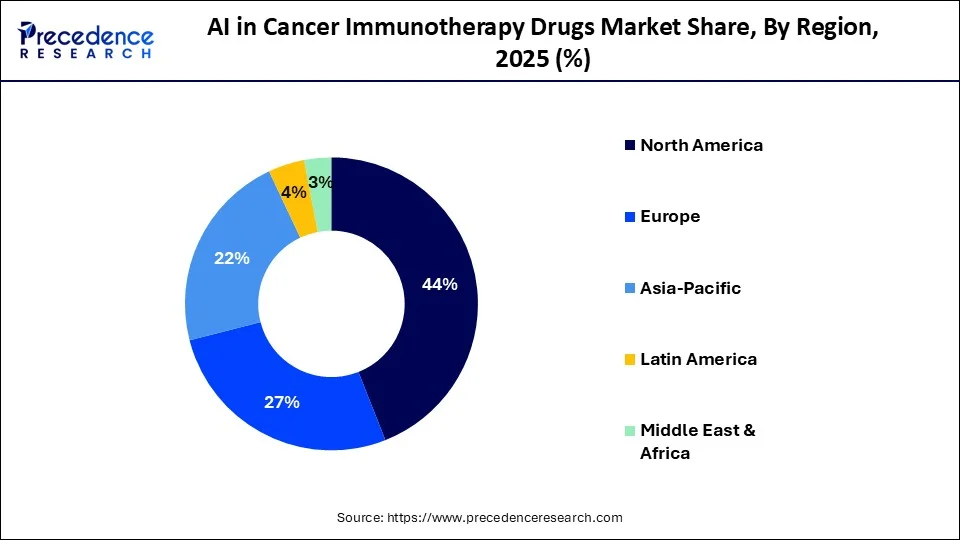
North America held a major market share of 44% in 2025 due to strong AI investments, the presence of a robust biotechnology ecosystem, and advanced oncology research. The presence of key players and the availability of advanced healthcare infrastructure drive the market.
U.S. AI in Cancer Immunotherapy Drugs Market Size and Growth 2026 to 2035
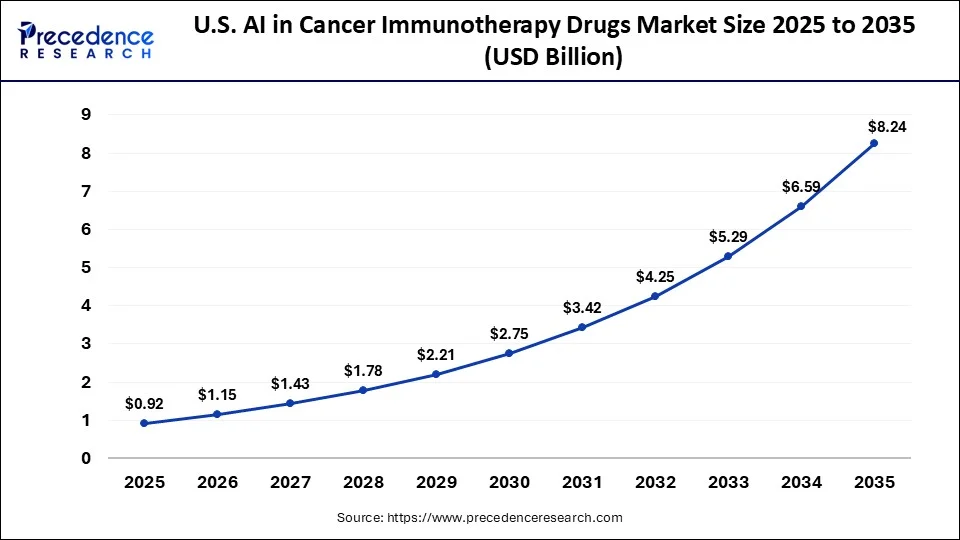
The U.S. AI in cancer immunotherapy drugs market size was evaluated at USD 0.92 billion in 2025 and is projected to reach around USD 8.24 billion by 2035, growing at a CAGR of 24.51% from 2026 to 2035.
U.S. Market Analysis
The U.S. led the market in North America and is expected to sustain its dominance over the years due to a favorable regulatory landscape by the Food and Drug Administration (FDA) and the increasing number of clinical trials. Out of the total 1,031 clinical trials, 366 trials related to cancer immunotherapy drugs are registered in the U.S.
How is Asia-Pacific Growing in the AI in Cancer Immunotherapy Drugs Market?
Asia-Pacific is expected to experience the fastest growth with a CAGR of 30% during the predicted timeframe due to rapid biotechnology expansion, large patient populations, and rising AI investments. The increasing number of pharmaceutical and biotech startups and venture capital investments also boost the market.
China Market Analysis
China dominated the market in 2025, as the nation is emerging as a global hub in the biotech sector and has favorable government initiatives. China is projected to account for 35% of approvals by the U.S. FDA, up from 5% currently.
India Market Analysis
India is a major high-growth opportunity due to the growing demand for personalized medicines and the rising adoption of advanced technologies. The Indian government promotes AI usage in oncology through its IndiaAI mission under MeitY and the National Cancer Grid (NCG).
Which Factors Drive the AI in Cancer Immunotherapy Drugs Market in Europe?
Europe held 27% of the market share in 2025 and is expected to grow at a CAGR of 24.5% in the coming years due to rapidly expanding precision medicine and AI-enabled clinical research initiatives. Evolving regulatory landscapes for AI governance and growing research activities propel the market.
Germany Market Analysis
Germany leads the market in Europe due to the rising prevalence of cancer and the rising demand for healthcare services and products. Germany is one of the most influential markets in Europe and creates opportunities for U.S. companies to engage in the regional market.
UK Market Analysis
The UK market is driven by increasing investments by government organizations. The UK Research and Innovation (UKRI) launched the Cancer Therapeutics programme to encourage the development of life-changing cancer treatments, including immunotherapies and vaccines.
What are the Key Trends of the AI in Cancer Immunotherapy Drugs Market in Latin America?
Latin America held 4% of the market share in 2025 and is expected to grow at a CAGR of 23% during the forecast period due to the gradual adoption of AI-enabled oncology research and treatment technologies. The growing geriatric population and favorable government support augment the market.
Brazil Market Analysis
Brazil led the market in 2025 and is expected to grow rapidly over the studied period due to major partnerships integrating AI into public and private networks and the development of advanced AI algorithms. The growing demand for digital pathology and biomarker discovery fuels the market.
Will the Middle East and Africa Grow in the AI in Cancer Immunotherapy Drugs Market?
The Middle East and Africa region held 3% of the market share in 2025 and is expected to grow at a CAGR of 25% during the predicted timeframe due to growing advancements in cancer care and digital health infrastructure. The rapidly expanding healthcare and biotech sectors also contribute to market growth.
GCC Market Analysis
GCC countries, such as the UAE, Kuwait, Saudi Arabia, Qatar, Oman, and Bahrain, are major market shareholders in the Middle East and Africa. Major national health initiatives in countries like Saudi Arabia and the UAE are integrating ML to tailor treatments. Researchers collaborate with international bioinformatics networks to validate multi-omics data models for regional cohorts.
South Africa is emerging as the fastest-growing market due to advancing cancer care through adaptive radiotherapy tools like the Ethos AI system, local pathology research, and startup drug discovery. The increasing awareness of personalized medicines also foster market growth.
Regional Investment and Market Entry Analysis
Regional Market Attractiveness
Global regional landscapes in AI-driven cancer immunotherapy highlight North America leading through heavy investment and FDA support, Europe prioritizing privacy-focused computational drug discovery, and Asia-Pacific achieving the fastest growth through increasing disease prevalence despite regulatory limitations.
Market Entry Barriers
Entering the AI cancer immunotherapy market requires navigating fragmented regulations, stringent clinical validation, and local infrastructure needs. Commercialization and clinical integration face barriers such as data quality issues and dependence on retrospective datasets. Overcoming these obstacles demands strategic cross-sector partnerships and standardized, multi-center datasets.
Regional Partnership Opportunities
Collaborations in cancer immunotherapy integrate AI firms, hospitals, and researchers to drive target discovery, multi-omics integration, and clinical trial optimization, as evidenced by AstraZeneca and Immunai extending their oncology AI partnership through 2027 in a USD 37.5 million deal in May 2026. This partnership leads to leverage shared datasets and machine learning to accelerate precision oncology and improve patient outcomes.
Supply Chain and Technology Infrastructure Analysis
AI Data Supply Chain
The AI data supply chain maps the flow of biological, clinical, genomic, imaging, and real-world data from patient acquisition to algorithmic model training and clinical validation. Upstream biological and clinical data undergo heavy preprocessing before entering centralized repositories. These integrated streams feed machine learning workflows to power predictive score models and accelerate clinical decision support.
Technology Infrastructure Supply Chain
The market relies on advanced technology infrastructure, including high-performance computing clusters with specialized semiconductor chips, and robust cloud environments. These digital tools process complex single-cell and multi-omics data, helping researchers study biological mechanisms and optimize therapeutic drug responses. In January 2026, the Cancer Research Institute launched the CRI Discovery Engine, an AI-ready database to improve cancer immunotherapy research.
Drug Development and Commercialization Chain
Artificial intelligence platforms enhance the cancer immunotherapy lifecycle by integrating data across discovery, clinical trials, and manufacturing to accelerate development and improve patient outcomes. These systems utilize multi-omics datasets and machine learning to optimize drug screening, patient stratification, and commercial supply chains. A March 2026 collaboration between PharmaMar and Globant highlights this trend by leveraging a multi-agent AI framework to achieve 15x faster insights with over 90% accuracy.
Competitive Landscape
Market Structure and Competitive Intensity
The market involves intense and collaborative competition. Large drug companies such as Roche, Novartis, and Merck partner with AI biotech firms such as Insilco Medicine and Lantern Pharma to identify drug targets by leveraging big clinical data. Tech providers and schools also providing the basic research and computer tools required for better patient matching. This high-stakes effort highlights fixing limits in computer prediction models and tumor differences. CROs also test and prove these new methods for the development of better precision cancer treatments.
Competitive Positioning Matrix
The market is driven by a mix of specialized tech-biomarkers and global pharma leaders. Key players compete across target identification, clinical response prediction, and multi-omics data integration using platforms from companies like Exscientia, Owkin, and Roche. Firms like Exscientia and Insilico Medicine pioneer early clinical translation and generative drug design, while major companies like Roche and PathAI Sanofi and Owkin commercialize these pipelines through strategic acquisitions and co-development models.
In May 2026, Roche is acquiring PathAI for USD 750 million to integrate AI-driven pathology into therapeutic development, enhancing its diagnostic and data integration capabilities. And in June 2026, Sanofi and Owkin are expanding their partnership to develop AI agents for oncology target discovery, deepening the integration of AI directly into the drugmaker's internal workflows. In addition to a USD 90-million payment, Sanofi agreed to invest USD 180 million in Owkin.
AI Capability Benchmarking
Competitive landscape AI capability benchmarking in the cancer immunotherapy drugs market centers on proprietary algorithms, model development, data access, cloud partnerships, and clinical validation. These systems use deep learning for neoantigen prediction, multi-omics data via standardized repositories, cloud-scale GPU infrastructure, and prospective clinical validation to optimize checkpoint inhibitor candidate selection and regulatory approval.
Immunotherapy Pipeline Benchmarking
Benchmarking the AI-enabled cancer immunotherapy pipeline highlights key industry leaders like BioNTech SE, Moderna, Inc., Lantern Pharma, and Immunocore Holdings plc that leverage AI-driven platforms to advance personalized mRNA vaccines, small-molecule immunomodulators, and bispecific TCR therapeutics. By leveraging technologies for neoantigen prediction and target validation progressing their portfolios from preclinical discovery to commercial stages.
Strategic Developments
Strategic developments in AI-driven cancer immunotherapy emphasize partnerships, machine learning integration, and clinical testing frameworks to improve biomarker discovery and match patients with optimal therapies. Industry leaders and public-private consortia are deploying these tools to enhance patient outcomes, manage drug resistance, and refine companion diagnostics. For instance, in early 2026, Senhwa Biosciences partnered with CellType to advance cancer therapy CX-4945, while Lantern Pharma reported a 47% drop in research and development expenses alongside the launch of its Zeta.ai platform.
Company Profiles
Insilico Medicine
Insilico Medicine is a clinical-stage AI company Founded in 2014, and hievily leveraging its end-to-end Pharma.AI platform, including PandaOmics, Chemistry40, and InClinico which further improves drug discovery and develop a robust oncology and fibrosis pipeline. Supported by partnerships with major firms like Sanofi and NVIDIA, the company leverages robotized, AI-driven labs to advance novel therapeutics from target identification to clinical trial forecasting.
Bristol Myers Squibb
Bristol Myers Squibb, founded in 1887 and based in Princeton, New Jersey, is a global biopharmaceutical leader highlighting oncology, immunology, cardiovascular, and neuropsychiatric diseases. Key developments include its established legacy drugs, breakthrough cell therapies like Breyanzi and Abecma, and strategic AI integrations and acquisitions such as Karuna Therapeutics.
AstraZeneca
AstraZeneca is a global biopharmaceutical leader headquartered in Cambridge, UK, with USD58.7 billion in revenue and 16 blockbuster medicines spanning oncology, CVRM, respiratory, immunology, and rare diseases. The enterprise not only leverages advanced AI for predictive modeling and clinical optimization but also fosters a massive immunotherapy portfolio including Imfinzi and Enhertu, and expands its pipeline through strategic partnerships with Immunai, Daiichi Sankyo, and Stanford Medicine.
AI in Cancer Immunotherapy Drugs Market Companies
- Exscientia
- Insilico Medicine
- Recursion Pharmaceuticals
- Lantern Pharma
- Atomwise
- Generate Biomedicines
- Cellworks Group
- Ardigen
- Owkin
- CureMatch
- AstraZeneca
- Bristol Myers Squibb
- Merck & Co.
- Roche
- Pfizer
Customer and Purchasing Behavior Analysis
Key AI Adoption Criteria
AI adoption in cancer immunotherapy necessitates rigorous evaluation of accuracy, data security, and seamless integration with hospital systems. High-performance models must highlights patient privacy, stringent regulatory compliance, and explainable algorithms. Additionally, combining multi-omics data with external validation is vital to ensure clinical trust and successful routine care.
Pharmaceutical Company Buying Behavior
Recently, large pharmaceutical companies need to evaluate AI platforms for cancer immunotherapy by prioritizing predictive accuracy, dataset quality, and regulatory compliance through cross-functional committee testing, proprietary data validation, and strategic licensing and co-development agreements designed to improve therapy development.
Biotechnology Company Purchasing Priorities
Biotechnology purchasing priorities emphasize acquiring flexible, specialized platforms that enable rapid deployment and affordability to address high-complexity oncology development. Additionally, integrating AI across the drug lifecycle for managing patient heterogeneity and minimizing research and development timelines with managing multi-omics data for precise treatments.
CRO and Research Institution Requirements
Increasing necessity for collaborative platforms, data analytics, and AI research tools in cancer immunotherapy to integrate complex multi-omics data, discover biomarkers, and predict patient responses. Research institutions and CRO demand scalable cloud frameworks and interoperable software like the Cancer Research Data Commons for efficient clinical trials and advance precision oncology.
Market Opportunity Analysis
High-Growth Technology Opportunities
These are wider opportunities in biomedicine, including generative AI, deep learning, multi-omics AI, and AI-enabled cell therapy. Generative models design novel antibodies and anticancer compounds. Deep learning decodes complex tumor microenvironments from multi-layered datasets. Meanwhile, multi-omics AI fuses genomic, transcriptomic, and proteomic streams to enhance prognostic accuracy, and AI-enabled cell therapy automates manufacturing, reducing costs.
High-Growth Therapeutic Opportunities
Basically, these opportunities involve CAR-T therapies using predictive analytics, cancer vaccines accelerated by machine learning, and bispecific antibodies optimized through effective simulation tools. These digital technologies improve patient selection and cellular kinetics for CAR-T, pinpoint neoantigens for vaccines, enhance target affinity for antibodies, and predict viral replication for oncolytic viruses.
High-Growth Application Opportunities
These opportunities generally involves combination therapy design, biomarker identification, and treatment-response prediction. These systems leverage predictive modeling for multi-agent regimens, extract hidden phenotypic signatures from complex data, and stratify patient groups to forecast clinical resistance and adverse event risks before treatment.
White-Space Opportunities
Key white-space opportunities also include developing underdeveloped AI applications for real-time toxicity risk mitigation and microbiome-immune modulation modeling. As small-data AI models target underserved cancer types like rare malignancies, use federated learning to address data gaps and expand precision tools into emerging markets.
Scenario Analysis and Future Outlook
Base-Case Market Scenario
This scenario projects steady expansion driven by incremental efficiency goals, measured biopharma integration, and predictable, risk-based regulatory oversight. Current trends indicate that nearly half of firms prioritize productivity, leveraging standard machine learning models for target identification and biomarker evaluation in trials.
Accelerated Adoption Scenario
This scenario projects rapid market growth characterized by compressed drug development timelines and high financial returns, driven by expedited regulatory approvals and increased investment in automated discovery. This trajectory is further enabled by improved multi-omic predictive accuracy, which enhances the mapping of complex tumor microenvironments.
Adoption-Constrained Scenario
This scenario exhibits sluggish market growth, high attrition, and localized proof-of-concept lock-in, mainly characterized by three major limiting factors including severe data-sharing restrictions and algorithmic bias, stringent regulatory friction with conservative validation standards, and limited clinical uptake by physicians hesitant to trust black-box predictive biomarker scores.
Short-Term Outlook: 2025-2028
The market is accelerating toward advanced discovery, multi-omics platforms, and generative AI between 2025 and 2028, particularly to improve efficacy prediction and personalize treatments, with technologies like foundation models advancing antibody design and adverse event prediction. Strategic partnerships and the integration of spatial pathology are driving this shift to improve patient matching for CAR-T and checkpoint inhibitor therapies.
Medium-Term Outlook: 2028-2032
From 2028 to 2032, AI will revolutionize standard clinical workflows for patient recruitment and real-time response monitoring by offering broader integration and sophisticated, algorithm-driven combination therapies. These technologies will model optimal pairings, including checkpoint inhibitors and mRNA vaccines, by evaluating complex tumor microenvironments and T-cell behaviors and will be heightened by advancements in personalized approaches
Long-Term Outlook: 2032-2035
To look ahead to the future, the market will transition to AI-driven immunotherapy and personalized treatment ecosystems. Advanced foundation models will simulate immune reactions for autonomous optimization of cell therapies and neoantigen formulations. This will combine target identification, efficacy prediction, toxicity monitoring, and design into a singular infrastructure, reducing trial-and-error dosing and reshaping precision oncology.
Strategic Recommendations
Recommendations for Pharmaceutical Companies
Pharmaceutical companies should emphasizes external tech alliances, build proprietary multi-omics data strategies, elevate biomarker capabilities, and integrate machine learning across the entire drug lifecycle to co-develop predictive checkpoint inhibitor and monoclonal antibody pipelines, map tumor microenvironments, and thereby drive overall precise patient stratification.
Recommendations for Biotechnology Companies
Biotechnology companies must focus on AI-native discovery platforms for tumor neoantigens and antibody binding, target specialized applications such as cellular immunotherapy and cancer vaccines, and forge strategic co-development collaborations with major pharmaceutical players to finance and secure clinical validation.
Recommendations for AI Technology Providers
AI technology providers must prioritize explainable AI frameworks, rigorous multi-center clinical validation, strict data security, and domain-specific life-sciences models. These efforts build clinical trust with ensuring regulatory compliance with sensitive genomic data and accurately resolving complex biological challenges over generic algorithms.
Recommendations for Investors
Investors should also focus on high-growth areas such as generative AI for molecular design, precision oncology, and multi-omic biomarker discovery. They should fund platforms leveraging real-world evidence and patient stratification to achieve desirable revenue. Portfolio strategies must target early-stage biotechs using machine learning to lower preclinical risks and accelerate combination therapies.
Recommendations for CROs and Research Institutions
CROs and research institutions should develop specialized AI capabilities and build collaborative research infrastructure to attract growing market demand. This strategic emphasis not only enables organizations to scale advanced technological services but also enhances research efficiency and compliance with increasing market demands for tech-driven partnerships.
Complete Market Segmentation
By AI Technology
- Machine Learning
- Deep Learning
- Generative AI
- Natural Language Processing (NLP)
- Computer Vision
- Reinforcement Learning
By Drug Development Stage
- Target Identification & Validation
- Lead Discovery
- Preclinical Development
- Clinical Trial Design & Optimization
- Biomarker Discovery
- Drug Response Prediction
- Post-market Surveillance
By Immunotherapy Type
- Immune Checkpoint Inhibitors
- CAR-T Cell Therapies
- Cancer Vaccines
- Monoclonal Antibodies
- Bispecific Antibodies
- Cytokine-based Immunotherapies
- Oncolytic Virus Therapies
- Other Immunotherapies
By Cancer Type
- Lung Cancer
- Breast Cancer
- Colorectal Cancer
- Melanoma
- Prostate Cancer
- Hematological Cancers
- Liver Cancer
- Pancreatic Cancer
- Ovarian Cancer
- Other Cancers
By Application
- Drug Discovery
- Biomarker Identification
- Patient Stratification
- Treatment Response Prediction
- Combination Therapy Design
- Clinical Trial Optimization
- Personalized Immunotherapy
- Adverse Event Prediction
- Manufacturing & Quality Control
By End User
- Pharmaceutical Companies
- Biotechnology Companies
- Contract Research Organizations (CROs)
- Academic & Research Institutes
- Hospitals & Cancer Centers
- Government & Regulatory Organizations
By Deployment Model
- Cloud-based AI
- On-premise AI
- Hybrid AI
By Region
- North America
- Latin America
- Europe
- Asia-pacific
- Middle and East Africa
For inquiries regarding discounts, bulk purchases, or customization requests, please contact us at sales@precedenceresearch.com
Frequently Asked Questions





Ask For Sample
No cookie-cutter, only authentic analysis – take the 1st step to become a Precedence Research client
 Get a Sample
.webp)



 sales@precedenceresearch.com
 Schedule a Meeting
