



Serum Free Media Market Size, Companies, Share, Patient Volume, Treatment Adoption Rates, Pricing Analysis, Regulatory Landscape, Competitive Positioning, and Demand Forecast
Serum Free Media Market (By Product/Media Type: CHO Cell Media, Protein Expression Media, Immunology/Stem Cell Media, Insect/Hybridoma/Other Media, HEK 293/BHK/Vero Media; By Application: Biopharmaceutical Production, Vaccines Production, Tissue Engineering & Regenerative Medicine, Stem Cell & Gene Therapy; By End-User: Pharmaceutical & Biotechnology Companies, Biotechnology Firms/CROs, Academic & Research Institutions, Others (Hospitals/Labs); By Form/Type: Liquid Media, Semi-solid/Solid Media) - Global Industry Analysis, Size, Trends, Leading Companies, Regional Outlook, and Forecast 2026 to 2035
Source: https://www.precedenceresearch.com/serum-free-media-market
 Get a Sample
 Table Of Content


What is the Serum Free Media Market Size in 2026?
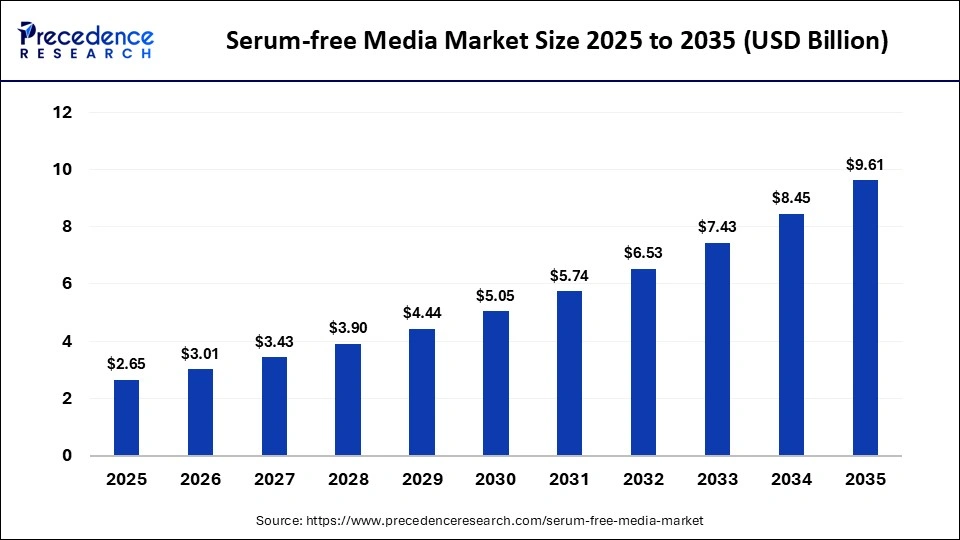
The global serum free media market size was calculated at USD 2.65 billion in 2025 and is predicted to increase from USD 3.01 billion in 2026 to approximately USD 9.61 billion by 2035, expanding at a CAGR of 13.75% from 2026 to 2035. Advancements in emerging medical fields such as cell and gene therapy, monoclonal antibodies, and regenerative medicine are driving the need for serum-free media for the production of biopharmaceutical products.
Key Takeaways
- North America dominated the serum free media market in2025, with a revenue share of approximately 42%.
- Asia Pacific is expected to grow at the fastest CAGR of 11.8% in the market during the forecast period.
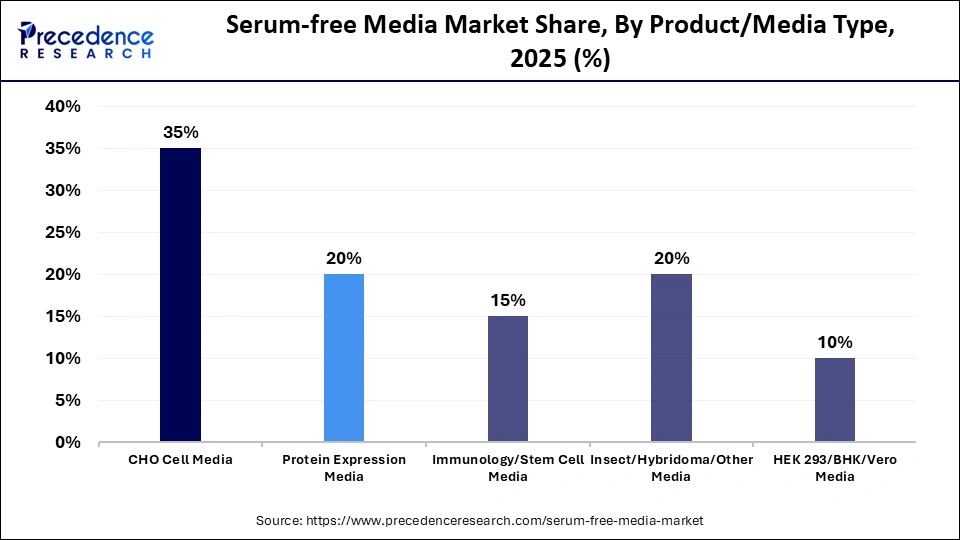
- By product/media type, the CHO cell media segment dominated the market in 2025, with a revenue share of approximately 35%.
- By product/media type, the protein expression media segment in the market is expected to grow at the fastest CAGR in the market during the forecast period.
- By application, the biopharmaceutical production segment dominated the market in 2025, with a revenue share of approximately 75%.
- By application, the stem cell and gene therapy segment is expected to grow at the fastest rate of 10.1% in the market in 2025.
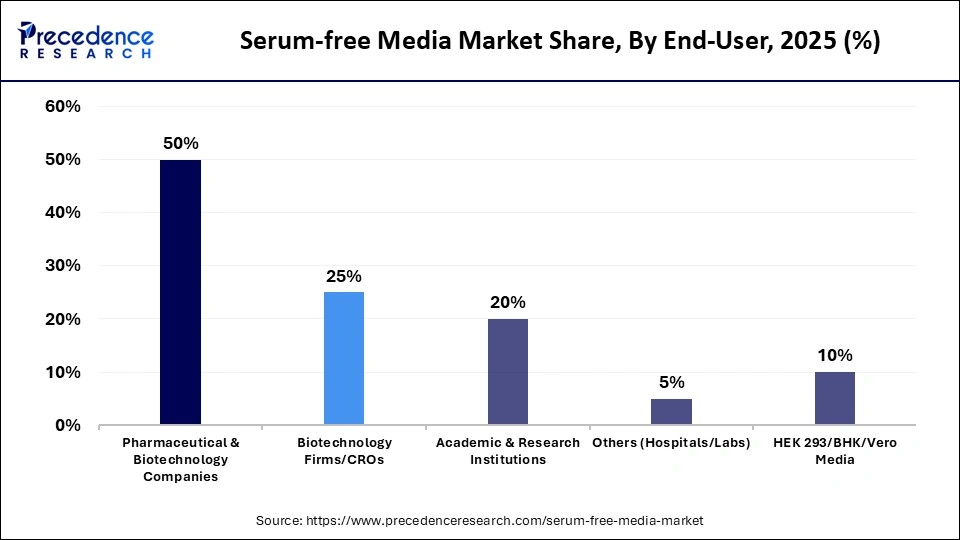
- By end-user, the pharmaceutical and biotechnology companies segment dominated the market in 2025, with a revenue share of approximately 50%.
- By end-user, the academic and research institutions segment is expected to grow at the fastest CAGR of 10.3% in the market during the forecast period.
- By form/type, the liquid media segment dominated the serum free media market in 2025, with a revenue share of approximately 65%.
- By form/type, the semi-solid/solid media segment is expected to grow at the fastest CAGR of 10.6% in the market during the forecast period.
Serum Free Media: Driven by Regulatory and Safety Mandates
The serum free media market includes defined cell culture media formulations that do not contain animal serum, enabling controlled, reproducible cell growth for biopharmaceutical production, research, gene and cell therapy, vaccine manufacturing, and tissue engineering. These media reduce variability and contamination risk in cell culture processes, supporting high-quality biologics and advanced therapies. Growth is driven by rising biologics demand, expanding cell therapy pipelines, regulatory shifts away from animal components, and increased R&D investment globally.
How does AI transform the Serum Free Media Market?
Artificial Intelligence is revolutionizing the biopharmaceutical production by optimizing media formulations, ensuring sustainability and cultured meat, and assisting in real-time bioprocess monitoring. AI-enabled software analyses live-cell imaging and adjusts culture conditions in real-time, which further expands the market. It also ensures consistent media performance and the reliability of different batches of media.
Serum Free Media Market Trends
- Sustainability & Plant-Based Solutions: These include plant-based meat alternatives, which are good protein sources and are similar to conventional meat due to their color, nutritional value, taste, and quality. The leading research organizations have raised their production of meat alternatives, which are driving the expansion of the serum free media market.
- AI-Driven Optimization: It introduces the real-time monitoring of bioprocesses, which further helps in adjusting media composition and ensuring product quality and stable growth conditions. The predictive modelling and digital twins allow researchers to predict specific media components that impact the production of therapeutic proteins.
Market Scope
| Report Coverage | Details |
| Market Size in 2025 | USD 2.65 Billion |
| Market Size in 2026 | USD 3.01 Billion |
| Market Size by 2035 | USD 9.61 Billion |
| Market Growth Rate from 2026 to 2035 | CAGR of 13.75% |
| Dominating Region | North America |
| Fastest Growing Region | Asia Pacific |
| Base Year | 2025 |
| Forecast Period | 2026 to 2035 |
| Segments Covered | Product/Media Type, Application, End-User, Form/Type, and region |
| Regions Covered | North America, Europe, Asia-Pacific, Latin America, and Middle East & Africa |
Segmental Insights
Product/Media Type Insights
How does the CHO Cell Media Segment Dominate the Serum Free Media Market in 2025?
The CHO cell media segment dominated the market in 2025 with a revenue share of approximately 35%, owing to the importance of Chinese hamster ovary (CHO) cells for recombinant protein production. The CHO cells are most commonly used for the production of monoclonal antibodies. The serum-free media and chemically defined media are ideal for growing CHO cells in suspension, irrespective of animal-derived components.
The protein expression media segment is expected to grow at the fastest CAGR in the serum free media market during the forecast period due to its integral role in bioprocessing, including yield optimization, scalability, and regulatory compliance. This media is crucial for the production of high-yield proteins in serum-free systems. The cost-effective serum alternatives are plant and insect-derived protein hydrolysates that enable large-scale production of cultivated meat.
Application Insights
What made Biopharmaceutical Production the Dominant Segment in the Serum Free Media Market in 2025?
The biopharmaceutical production segment dominated the market in 2025 with a revenue share of approximately 75%, owing to the growing focus of manufacturers on eliminating the risk of viruses and mycoplasma by adopting animal-origin-free manufacturing. A defined chemical production provided by serum-free media simplifies the downstream purification process by reducing the amount of contaminating proteins. The leading suppliers, like Thermo Fisher Scientific Inc., are adopting AI-driven optimization to reduce the time of media development and
The stem cell and gene therapy segment is estimated to grow at the fastest rate of 10.1% in the serum free media market during the predicted timeframe due to the importance of serum and animal-component-free media for stem cell-based therapeutics. Stem cells are widely used in regenerative medicine to treat degenerative diseases, genetic defects, and tissue injury. The leading companies are providing media designed for the growth and maintenance of high-quality and healthy pluripotent stem cells.
End-User Insights
How did the Pharmaceutical and Biotechnology Companies Segment Dominate the Serum Free Media Market in 2025?
The pharmaceutical and biotechnology companies segment dominated the market in 2025 with a revenue share of approximately 50%, owing to the increased preference for serum-free media for the manufacturing of recombinant proteins and monoclonal antibodies. Modern vaccine production ensures the purity and safety, which depends on serum-free media. Specialized serum-free media formulations are used to guide precise cell differentiation and maintain stem cell pluripotency.
The academic and research institutions segment is anticipated to grow at the highest CAGR of 10.3% in the serum free media market during the upcoming period due to the importance of serum-free media in translational research, stem cell research, cancer research, cell biology, metagenomics, and molecular biology. The manufacturers provide specialized media for modular systems and 3D cell culture systems that help researchers. The serum-free media is used by researchers to evaluate cellular functions, driven by a growing focus on stem cell research and personalized medicine.
Form/Type Insights
Why did the Liquid Media Segment dominate the Serum Free Media Market in 2025?
The liquid media segment dominated the market in 2025 with a revenue share of approximately 60-65%, owing to its wide use for rapid clinical diagnostics and biopharmaceutical scaling. This media supports the production of vaccines, monoclonal antibodies, and recombinant proteins. There is a rapid shift towards serum-free media and chemically defined liquid formulations to improve reproducibility and regulatory compliance.
The semi-solid/solid media segment is predicted to grow at a rapid rate of 10.6% in the serum free media market during the studied period due to its high preference for diagnostics and detection of pathogens in patient samples. This medium is used to test motile bacteria and grow bacteria that require low oxygen levels. There is a wide usage of sustainable media to reduce environmental impact, and the growing efforts to produce high-quality bioproducts.
Regional Insights
North America Serum Free Media Market Size 2026 to 2035
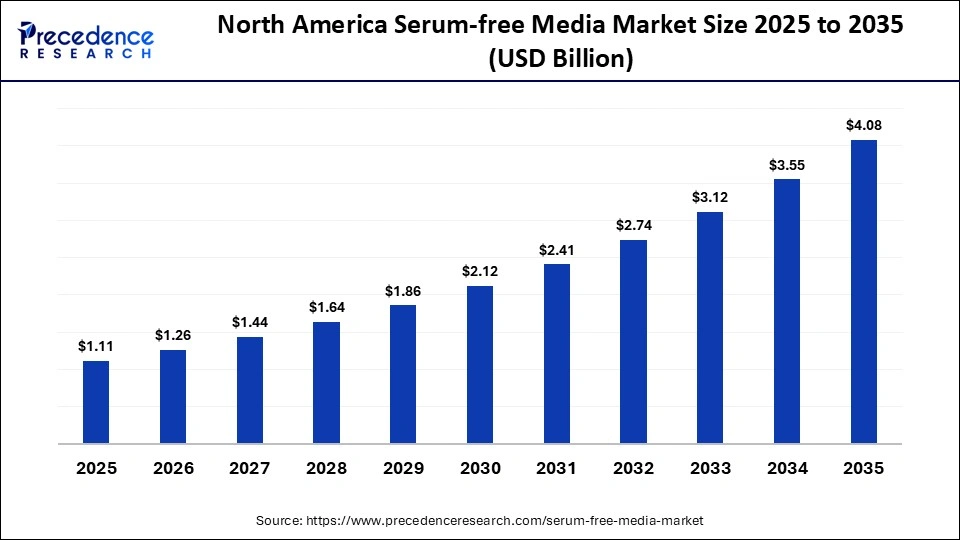
The North America serum free media market size is estimated at USD 1.11 billion in 2025 and is projected to reach approximately USD 4.08 billion by 2035, with a 13.90% CAGR from 2026 to 2035.
How does North America dominate the Serum Free Media Market in 2025?
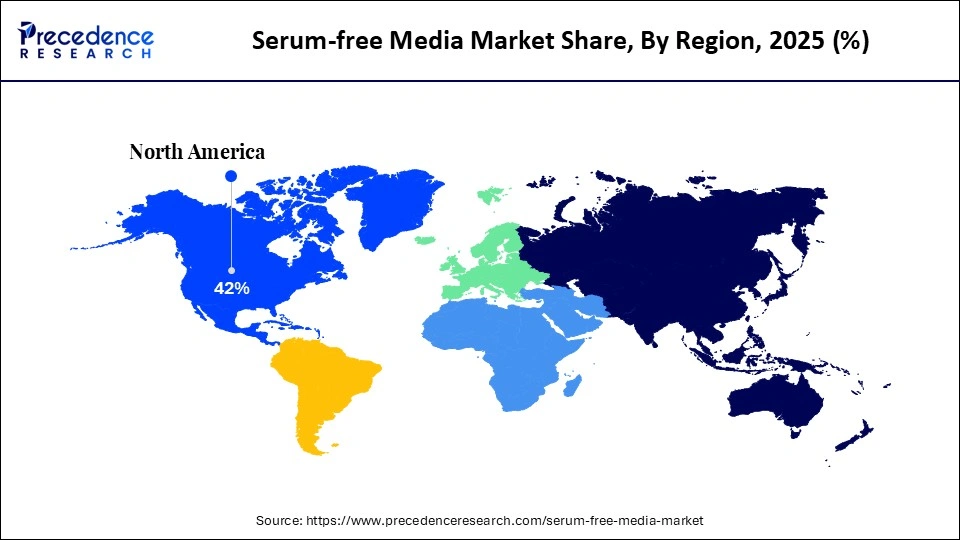
North America dominated the market in 2025 with a revenue share of approximately 42%, owing to the boom of biopharmaceutical manufacturing, cell and gene therapy, and substantial investments in vaccine production platforms. These major growth drivers have transformed the serum free media market across this region. The leading biotechnology and pharmaceutical companies, like Johnson Johnson, Merck, AbbVie, and Eli Lilly, have invested in R&D and manufacturing to expand their biopharmaceutical production across countries like Virginia, the U.S., Chicago, Illinois, and North Carolina. Moreover, the Trump Administration planned to lower prescription drug costs and reduce prices for certain medicines.
U.S. Serum Free Media Market Size 2026 to 2035
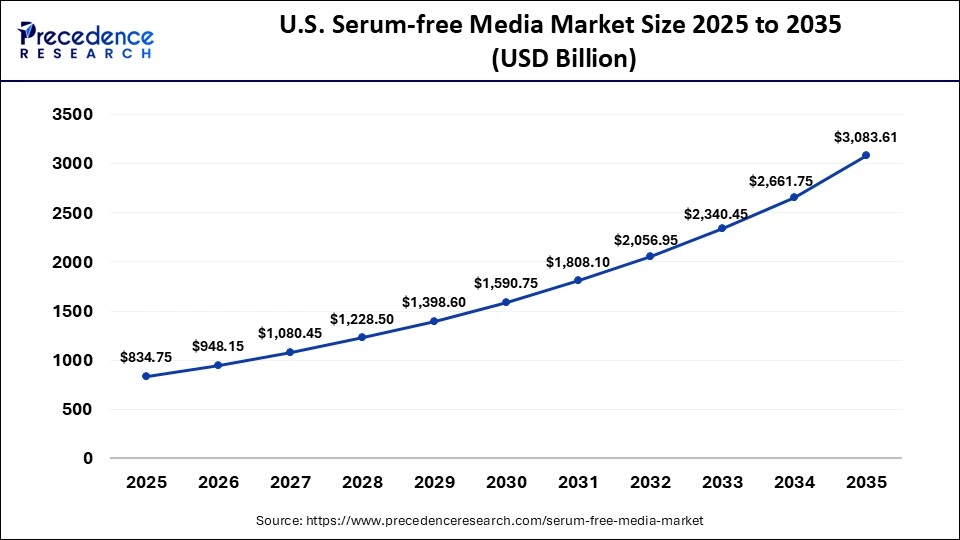
The U.S. serum free media market size is calculated at USD 834.75 million in 2025 and is expected to reach nearly USD 3,083.61 million in 2035, accelerating at a strong CAGR of 13.96% between 2026 to 2035.
U.S. Serum Free Media Market Analysis
The U.S. government introduced regulatory mandates for animal-origin-free and chemically defined media, and supported the increased supply of serum-free media to scale up cell and gene therapies. The Trump Administration launched four projects, which aim to revolutionize pharmaceutical drug manufacturing in the U.S. by using machine learning, AI, and informatics.
What is the Potential of the Serum Free Media Market in the Asia Pacific?
Asia Pacific is expected to grow at the fastest CAGR of 11.8% in the market during the forecast period due to the rising incidence of chronic and infectious diseases and the expanding biopharmaceutical production of vaccines, biosimilars, and monoclonal antibodies. For this purpose, the Administration for Strategic Preparedness and Response (ASPR), the U.S. Department of Health and Human Services (HHS), and the Defense Advanced Research Projects Agency (DARPA) have collaborated with the private sector to advance the use of AI and other technologies to produce essential medicines.
India Serum Free Media Market Trends
The Government of India introduced the BioE3 policy, the national biopharma mission, and invested in vaccine development, stem cell research, and regenerative medicine, which boosts the growth of the serum free media market in India. In February 2026, the Government of India launched a Bio-Pharma SHAKTI scheme of ₹10,000 Crore to strengthen the biopharmaceutical sector and the production of biologics and biosimilars.
How does Europe advance in the Serum Free Media Market?
Europe is expected to grow at a notable rate in the market, owing to upgrades in infrastructure, investments in R&D of personalized therapies and regenerative medicine, and the robust clinical pipeline for cell and gene therapies. The European Commission launched a new hub of biotechnology and biomanufacturing to support companies, startups, and small and medium enterprises to launch novel products to the European market and boost their competitiveness. Biotechnology remains one of the fastest-growing innovative industries in the European Union, which holds the potential to transform healthcare, agriculture, and the food and feed industry in Europe.
Germany Serum Free Media Market Analysis
The German manufacturers focus on producing active pharmaceutical ingredients (APIs) for recombinant proteins and monoclonal antibodies. Moreover, Germany remains the leading producer of biologics and EU-approved biopharmaceuticals, due to which the serum free media market has occupied the leading position in Germany. In December 2025, the German Federal Government launched a new fund to support long-term strategic projects that will enhance the competitiveness of the German economy.
How is Latin America Growing in the Serum Free Media Market?
Latin America is expected to show notable growth during the forecast period. Increased manufacturing of monoclonal antibodies, vaccines, and recombinant proteins is driving the need for specialized media. Serum-free media remove batch-to-batch variability and decrease contamination risks from animal components, thus making them essential for compliance with stringent regulatory standards.
Brazil Market Trends
The Brazilian market is driven by increased biopharmaceutical production, mainly in monoclonal antibodies and vaccines, alongside the rising need for contamination-free and thus, regulatory-compliant cell culture in regenerative medicine.
How is Innovation Shaping the Serum Free Media Market Landscape Across MEA?
The Middle East and Africa region is expected to grow at a considerable CAGR in the upcoming period. Innovation has pushed the industry toward CD media, which removes all animal-derived components to guarantee batch-to-batch consistency, decrease contamination risks, and meet stringent regulatory standards for biologics production. Moreover, the integration of automated cell culture systems, bioreactors, and even high-throughput screening in new facilities in Saudi Arabia, the UAE, and Qatar is driving the requirement for advanced, high-performance, and specialized liquid media.
Saudi Arabia Market Trends
The market is driven by expanding biopharmaceutical manufacturing, mainly for monoclonal antibodies and even recombinant proteins, with CHO (Chinese Hamster Ovary) media serving as the most lucrative segment. Moreover, liquid media is favored for its ease of usage in large-scale production, while stem cell culture media is seeing increased acceptance for regenerative medicine research.
Serum Free Media Market Value Chain Analysis
- R&D
This stage drives formulation discovery, adopts CRISPR/Cas9 genetic engineering techniques, researches recombinant growth factors, and supports regulatory testing.
Key Players: Thermo Fisher Scientific Inc., Merck KGaA, Lonza Group, Sartorius AG, Danaher Corporation, FUJIFILM Irvine Scientific, STEMCELL Technologies, Bio Techne, HiMedia Laboratories. - Distribution to Hospitals, Pharmacies
In this stage, manufacturers focus on maintaining strict quality control and branding rights, and distributors invest in automated systems.
Key Players: Cencora, McKesson Corporation, Cardinal Health, Medline Industries, Thermo Fisher Scientific, Merck KGaA, Lonza Group, Sartorius AG, FUJIFILM Irvine Scientific, Sun Pharmaceuticals, HiMedia Laboratories, Mankind Pharma. - Patient Support & Services
This stage is accelerated by integrated tech-enabled hubs, which provide real-time engagement through telehealth and digital tools.
Key Players: Thermo Fisher Scientific Inc., Merck KGaA, Lonza Group AG, Sartorius AG, FUJIFILM Irvine Scientific.
Serum Free Media Market Comapnies
- Bio-Techne Corporation: Bio-Techne Corporation provides a comprehensive portfolio of high-quality, serum-free and animal-free cell culture media, supplements, and recombinant proteins, mainly through its specialized ExCellerate brand. Their solutions improve experimental consistency, simplify purification, and minimize contamination risks, focusing on stem cell, immune cell, and even CAR-T cell therapy applications.
- PAN-Biotech GmbH: PAN-Biotech GmbH provides a comprehensive portfolio for the serum-free media industry, focusing on defined, reproducible, and even contamination-free conditions for cell culture.
- STEMCELL Technologies Inc.: STEMCELL Technologies Inc. provides a comprehensive portfolio of specialized, high-performance serum-free and xeno-free media programmed for stem cell, immunology, and organoid research, impacting chemically defined formulations to ensure regulatory compliance and reproducibility.
- MP Biomedicals LLC: MP Biomedicals LLC provides a specialized portfolio of serum-free, chemically defined, along with animal-derived component-free products for the cell culture market. Their offerings are programmed to offer consistent, high-performance environments for mammalian and stem cell research while reducing the risks linked with bovine serum.
Other Major Key Players
- Thermo Fisher Scientific Inc.
- Merck KGaA
- Lonza Group AG
- Corning Incorporated
- Cytiva (GE Healthcare Life Sciences)
- Sartorius AG
- Sigma-Aldrich (MilliporeSigma)
- FUJIFILM Irvine Scientific Inc.
- PromoCell GmbH
- HiMedia Laboratories Pvt. Ltd.
- Takara Bio Inc
Recent Developments
- In January 2026, Sartorius AG announced the expansion of its bio-circular product offering to deliver more sustainable bioprocesses. The company has expanded its bio-based product portfolio to support the efforts of biopharmaceutical industries to drive more sustainable manufacturing. For this purpose, the company will use certified renewable raw materials with additional product lines, which also ensures compatibility with existing bioprocesses.(Source: https://www.sartorius.com)
- In June 2025, Multus Biotechnology, a UK startup, launched an animal-free media formulation for cultivated meat, which allows companies to manufacture serum-free media for cultivated meat products. This British startup aims to develop an animal-free culture medium to resolve ethical concerns, lower costs, optimize production, and replace fetal bovine serum albumin for cultivated meat. (Source: https://www.greenqueen.com.hk)
Segments Covered in the Report
By Product/Media Type
- CHO Cell Media
- Protein Expression Media
- Immunology/Stem Cell Media
- Insect/Hybridoma/Other Media
- HEK 293/BHK/Vero Media
By Application
- Biopharmaceutical Production
- Vaccines Production
- Tissue Engineering & Regenerative Medicine
- Stem Cell & Gene Therapy
By End-User
- Pharmaceutical & Biotechnology Companies
- Biotechnology Firms/CROs
- Academic & Research Institutions
- Others (Hospitals/Labs)
By Form/Type
- Liquid Media
- Semi-solid/Solid Media
By Region
- North America
- Europe
- Asia-Pacific
- Latin America
- Middle East & Africa
For inquiries regarding discounts, bulk purchases, or customization requests, please contact us at sales@precedenceresearch.com
Frequently Asked Questions
Tags





Ask For Sample
No cookie-cutter, only authentic analysis – take the 1st step to become a Precedence Research client
 Get a Sample
.webp)



 sales@precedenceresearch.com
 Schedule a Meeting
