



Injectable Peptides Drugs Market Size, Companies, Share, Patient Volume, Treatment Adoption Rates, Pricing Analysis, Regulatory Landscape, Competitive Positioning, and Demand Forecast
Injectable Peptides Drugs Market (By Drug Type: GLP-1 Receptor Agonist, Insulin & Insulin Analogs, GnRH Analogs, Somatostatin Analogs, Parathyroid Hormone Analogs, Other Therapeutic Peptides; By Application: Diabetes & Obesity Management, Oncology, Cardiovascular Diseases, Endocrine Disorders, Gastrointestinal Disorders, Others; By Route of Administration: Subcutaneous Injection, Intravenous Injection, Intramuscular Injection; By Distribution Channel: Hospital Pharmacies, Retail Pharmacies, Online Pharmacies; By End-Use: Hospitals & Clinics, Homecare Settings, Specialty Treatment Centers; By Peptide Type: Short-chain Peptides, Long-chain Peptides, Modified & Conjugated Peptides) - Global Industry Analysis, Size, Trends, Leading Companies, Regional Outlook, and Forecast 2026 to 2035
Source: https://www.precedenceresearch.com/injectable-peptides-drugs-market
 Get a Sample
 Table Of Content


What is the Injectable Peptides Drugs Market Size in 2026?
The global injectable peptides drugs market size accounted for USD 48.60 billion in 2025 and is predicted to increase from USD 53.07 billion in 2026 to approximately USD 117.18 billion by 2035, expanding at a CAGR of 9.20% from 2026 to 2035. The injectable peptides drug market is driven by the rising prevalence of chronic diseases and the demand for targeted therapies.
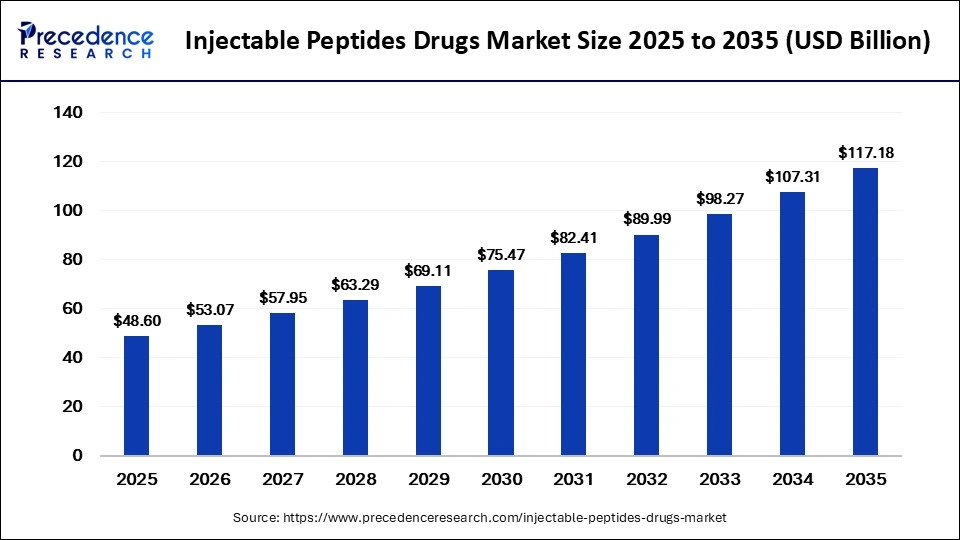
Key Takeaways
- North America dominated the injectable peptides drugs market with a share of 40% in 2025.
- Asia Pacific is expected to grow at the fastest CAGR of 11.5% during the forecast period.
- By drug type, the insulin & insulin analogs segment held a dominant position in the market, holding a 35% of the market share in 2025.
- By drug type, the GLP-1 receptor agonists segment is the second-largest shareholder and is expected to grow at a 14.5% CAGR between 2026 and 2035.
- By application, the diabetes & obesity management segment accounted for a revenue share of 45% in the market in 2025.
- By application, the oncology segment is the second-largest shareholder and is expected to grow at a 8% CAGR between 2026 and are35.
- By route of administration, the subcutaneous injection segment led the global market with a share of 70% in 2025.
- By route of administration, the intravenous injection segment is the second-largest shareholder and is expected to grow at a 8% CAGR between 2026 and 2035.
- By distribution channel, the hospital pharmacies segment accounted for a revenue share of 45% in the market in 2025.
- By distribution channel, the retail pharmacies segment is the second-largest shareholder and is expected to grow at a 9% CAGR between 2026 and 2035.
- By end-use, the hospitals & clinics segment held a revenue share of 50% in the market in 2025.
- By end-use, the home care settings segment is the second-largest shareholder and is expected to grow at a 11.5% CAGR between 2026 and 2035.
- By peptide type, the long-chain peptides segment led the global market with a share of 40% in 2025.
- By peptide type, the modified & conjugated peptides segment is the second-largest shareholder expected to grow at a 12.5% CAGR between 2026 and 2035.
Market Overview
The injectable peptides drugs market is a segment of the pharmaceutical industry focused on therapies derived from peptides. Peptides are short amino acid chains, offering selectivity, potency, and low toxicity for the treatment of metabolic diseases. These drugs are widely used in the treatment of metabolic disorders, cardiovascular diseases, cancer, and hormonal conditions. The market growth is driven by the increasing shift toward personalized medicine, the rising prevalence of chronic diseases, and continuous advancements in biotechnology and drug delivery systems. Additionally, supportive regulatory frameworks for biologics and growing awareness among healthcare providers are further accelerating adoption.
How is AI Impacting the Injectable Peptides Drugs Market?
Artificial intelligence is playing a transformative role across the peptide drug development lifecycle. It enhances efficiency in drug discovery, design, and clinical development. AI-driven systems can rapidly analyze large biological datasets to identify stable and effective peptide candidates, significantly reducing development time and costs. These technologies also enable accurate prediction of peptide structure, binding affinity, and toxicity, helping ensure safer and more effective therapies.
In manufacturing, AI supports process optimization, quality control, and scalability through real-time monitoring and predictive analytics. Additionally, AI is increasingly used in clinical trials for patient selection, outcome prediction, and treatment optimization, improving overall success rates and accelerating time-to-market.
Injectable Peptides Drugs Market Trends
- Rising use of peptide-based injectables in chronic diseases such as diabetes, cancer, and cardiovascular conditions is a key growth driver, owing to their targeted action and reduced side effects.
- Advancements in peptide synthesis and purification technologies are improving stability, scalability, and manufacturability, enabling the development of more complex and effective therapies.
- The emergence of precision medicine is increasing demand for peptide drugs that target specific disease pathways, improving treatment outcomes while minimizing toxicity.
- Peptide-based therapies are gaining importance in oncology, including targeted treatments and peptide vaccines, due to their strong receptor-binding capabilities and compatibility with modern immunotherapy approaches.
- Pharmaceutical and biotechnology companies are increasing investments and collaborations to accelerate innovation, expand product pipelines, and strengthen market competitiveness.
Market Scope
| Report Coverage | Details |
| Market Size in 2025 | USD 48.60 Billion |
| Market Size in 2026 | USD 53.07 Billion |
| Market Size by 2035 | USD 117.18 Billion |
| Market Growth Rate from 2026 to 2035 | CAGR of 9.20% |
| Dominating Region | North America |
| Fastest Growing Region | Asia Pacific |
| Base Year | 2025 |
| Forecast Period | 2026 to 2035 |
| Segments Covered | Drug Type, Application, Route of Administration, Distribution Channel, End-Use, Peptide Type, and Region |
| Regions Covered | North America, Europe, Asia-Pacific, Latin America, and Middle East & Africa |
Market Dynamics
Drivers
Rising Prevalence of Chronic Metabolic and Oncological Conditions
The growing burden of chronic metabolic disorders, obesity, and hormone dysfunction, and the increase in the prevalence of cancer are major factors driving the growth of the injectable peptides drugs market. Peptide drugs are a highly targeted, safe therapy, and so are effective in the management of chronic diseases. Peptide drugs control hormones, blood sugar levels, and induce weight loss in metabolic disorders. The growing prevalence of these diseases is mainly driven by the world's ageing population, unhealthy lifestyles, and dietary factors.
Restraint
High Cost and Instability in Production
Peptide synthesis is an intricate, costly process that may include solid-phase peptide synthesis, purification, and analysis. This requires specific technology and research skills, which add to the cost. Moreover, peptides can qualitatively change due to parameters such as temperature, pH, and enzymes, making them unstable and ineffective. A low-quality product also needs to be stored in certain conditions during transportation (such as a refrigerator), which increases the price.
Opportunity
Advances in Long-acting Delivery and Oral-to-Injectable Transitions
Opportunities in the injectable peptide drugs market are being driven by advancements in drug delivery technologies, particularly those enabling long-acting injectables and improved oral-to-injectable conversion. These innovations address the growing need for formulations that release peptides gradually over time, reducing injection frequency and improving patient compliance in chronic disease management. Technologies such as sustained-release systems, biodegradable delivery platforms, and depot formulations are further enhancing drug efficacy, stability, and ease of administration.
Segment Insights
Drug Type Insights
The Insulin & Insulin Analogs Segment Held a 35% Market Share in 2025
The insulin & insulin analogues segment held a dominant position in the injectable peptides drugs market with a share of 35% in 2025. This is because of the increasing use of insulin for type 1 diabetes and type 2 diabetes, whose prevalence is growing worldwide. The increasing incidence of type 1 and 2 diabetes as a result of changes in lifestyle, obesity, and an aging population stimulates the use of insulin products. These drugs are first-line treatments for diabetes as they reduce blood sugar levels.
The GLP-1 receptor agonists segment held a 30% share of the market in 2025 and is expected to grow at the fastest CAGR of 14.5% during the projection period, owing to their increasing use to treat obesity and other metabolic disorders. These drugs are in high demand due to the rapid rise in obesity and related disease conditions, including cardiovascular disease and diabetes. GLP-1 drugs suppress appetite, maintain glucose levels, and promote weight loss, and are increasingly being used for the treatment of metabolic diseases.
Injectable Peptides Drugs Market Share, By Drug Type, 2025-2035 (%)
| Drug Type | 2025 | 2035 | CAGR (%) |
| Insulin & Insulin Analogs | 35.00% | 30.00% | 7.50% |
| GLP-1 Receptor Agonists | 30.00% | 38.00% | 14.50% |
| GnRH Analogs | 10.00% | 9.00% | 7.50% |
| Somatostatin Analogs | 10.00% | 9.00% | 7.00% |
| Parathyroid Hormone Analogs | 5.00% | 5.00% | 8.00% |
| Other Therapeutic Peptides | 10.00% | 9.00% | 8.50% |
The GnRH analogs segment held a 10% share of the market in 2025 and is expected to grow at a CAGR of 7.5% during the projection period, due to their wide use in cancer and reproductive treatment. They're extensively used to suppress hormone-dependent cancers, such as prostate and breast cancers. All over the globe, the rising incidence of cancer and increasing demand for advanced reproductive medical products are driving the usage of GnRH analgesics.
The somatostatin analogs segment held a 10% share of the market in 2025 and is expected to grow at a CAGR of 7.5% during the projection period, as they are critical in managing endocrine and neuroendocrine diseases. They are commonly used for treating conditions such as acromegaly, carcinoids, and hormone-secreting tumors for hormone suppression and to decrease the excessive release of hormones. The rise in prevalence of rare glandular diseases and improved diagnosis capabilities also drives the segment.
Application Insights
Injectable Peptides Drugs Market Share, By Application, 2025-2035 (%)
| Application | 2025 | 2035 | CAGR (%) |
| Diabetes & Obesity Management | 45.00% | 50.00% | 11.50% |
| Oncology | 15.00% | 14.00% | 8.00% |
| Endocrine Disorders | 15.00% | 13.00% | 7.50% |
| Cardiovascular Diseases | 10.00% | 9.00% | 8.50% |
| Gastrointestinal Disorders | 10.00% | 8.00% | 7.50% |
| Others | 5.00% | 6.00% | 9.00% |
The Diabetes & Obesity Management Segment Lead the Injectable Peptides Drugs Market in 2025
The diabetes & obesity management segment held a dominant position in the market with a share of 45% in 2025, as it constitutes the major and rapidly expanding area of application in line with the growing prevalence of lifestyle diseases. The rapid surge in type 2 diabetes and obesity due to lack of physical activity, unhealthy lifestyles, and an ageing population is also driving demand for peptide-based therapies.
The oncology segment held a 15% share of the market in 2025 and is expected to grow at a CAGR of 8% during the projection period, as a result of the increasing use of peptide-based therapy in the treatment of hormone-sensitive and targeted cancers. These medications help to suppress tumor growth, regulate hormones, and enhance the target specificity of cancer treatments, reducing the side effects. The demand for peptide drugs is rising due to the global rise in cancer prevalence and the growing application of new immunotherapy and targeted cancer therapies.
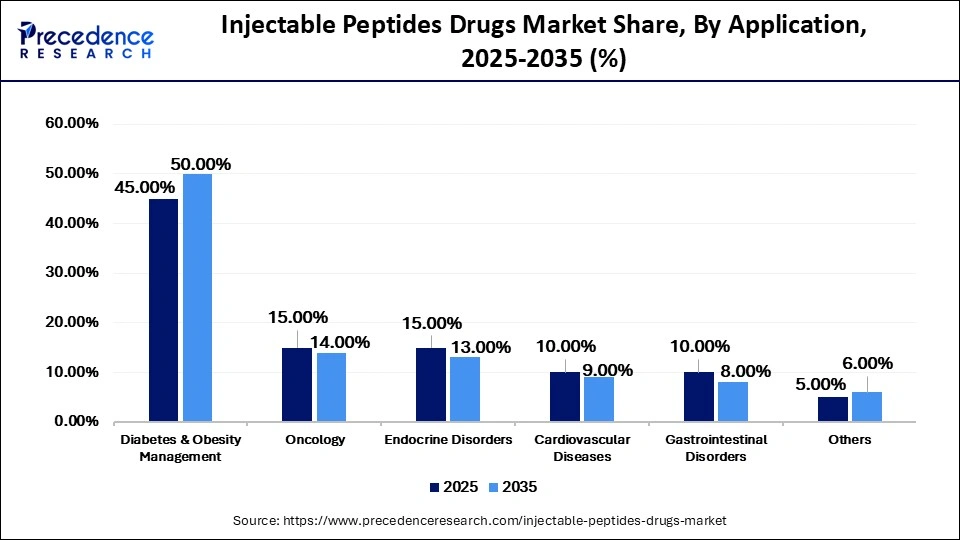
The endocrine disorders segment held a 15% share of the market in 2025 and is expected to grow at a CAGR of 7.5% during the projection period, as peptide hormones are widely used in growth hormone deficiencies, thyroid abnormalities, and sex hormone disorders. They help in hormone regulation and physiological functions in patients with chronic hormone disorders. The segment's growth is also driven by the rise in hormone diseases, improved diagnostic methods, and increasing awareness.
The cardiovascular diseases segment held a 10% share of the market in 2025 and is expected to grow at a CAGR of 8.5% during the projection period, due to increasing application of cardiometabolic peptides for treating cardiac diseases. They help control blood pressure, enhance heart function, and decrease the risk of heart failure and the development of atherosclerosis. The increasing incidence of cardiovascular diseases (CVD) driven by obesity, diabetes, and the older-age population is driving the demand for injectable peptide drugs.
Route of Administration Insights
Injectable Peptides Drugs Market Share, By Route of Administration, 2025-2035 (%)
| Route of Administration | 2025 | 2035 | CAGR (%) |
| Subcutaneous Injection | 70.00% | 72.00% | 9.50% |
| Intravenous Injection | 20.00% | 18.00% | 8.00% |
| Intramuscular Injection | 10.00% | 10.00% | 8.50% |
Why Did the Subcutaneous Injection Segment Lead the Injectable Peptides Drugs Market in 2025?
The subcutaneous injection segment led the market with the highest share of 70% in 2025, due to its excellent convenience and compliance. This type of administration facilitates home-based self-administration, thereby eliminating the need for frequent hospital visits, and is therefore ideal for chronic conditions (such as diabetes and obesity treatment). Subcutaneous injections also allow gradual drug absorption and sustained action, particularly important for drug molecules like peptides.
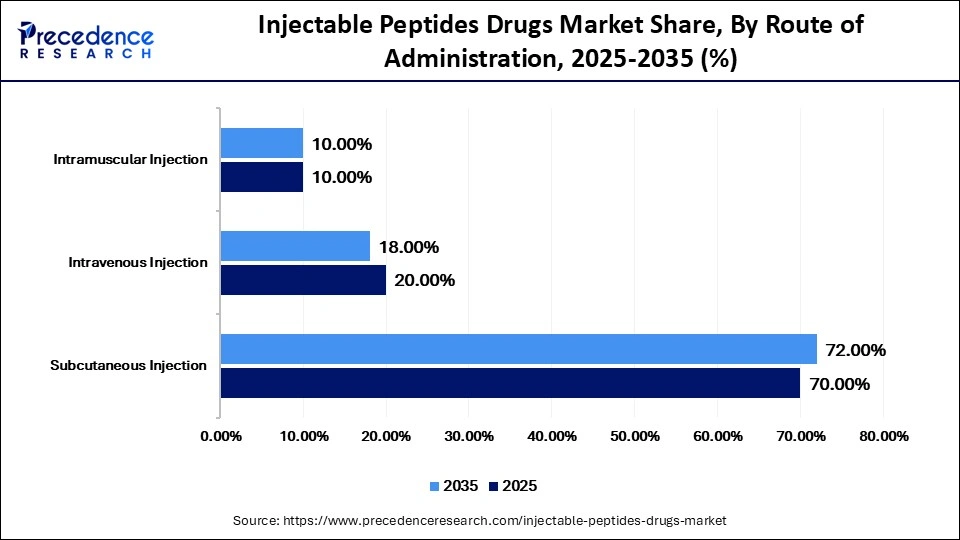
The intravenous injection segment held a 20% share of the market in 2025 and is expected to grow at a CAGR of 8% during the projection period, due to its essential role in hospital and emergency treatments. This is a preferred route for drug administration and offers immediate effect, and is ideal for advanced cancer, acute metabolic diseases, and intensive care. An increase in hospital visits and the use of peptide biologics is increasing the need for intravenous injections.
The intramuscular injection segment held a 10% share of the market in 2025 and is expected to grow at a CAGR of 8.5% during the projection period, driven by its role in sustained-release peptide products and vaccines. This mode offers slower drug release compared to IV injections, resulting in prolonged drug activity. It's widely used for hormone therapies and some peptide-based therapies that need to maintain their effect.
Distribution Channel Insights
Hospital Pharmacies Held a 45% Market Share in 2025
The hospital pharmacies segment dominated the injectable peptides drugs market with a major share of 45% in 2025, driven by the need for supervision with injectable treatments. Peptide-based medications for cancer, hormonal imbalances, and acute metabolic disease are typically administered in hospitals. Expertise in drug administration, optimal storage conditions, and specialized treatment facilities ensures the safe use of the medication.
Injectable Peptides Drugs Market Share, By Distribution Channel, 2025-2035 (%)
| Distribution Channel | 2025 | 2035 | CAGR (%) |
| Hospital Pharmacies | 45.00% | 42.00% | 8.00% |
| Retail Pharmacies | 35.00% | 33.00% | 9.00% |
| Online Pharmacies | 20.00% | 25.00% | 13.50% |
The retail pharmacies segment held a 35% share of the market in 2025 and is expected to grow at a CAGR of 9% during the projection period. Retail pharmacies are a growing source of injectable peptides for patients with diabetes, obesity, and hormonal conditions. Growing pharmacy networks, prescription delivery systems, and growing consumer awareness for self-care are fueling growth.
The online pharmacies segment held a 20% share of the market in 2025 and is expected to grow at the fastest CAGR of 13.5% during the projection period, due to the rapid adoption of digital healthcare. Growing adoption of e-commerce, telehealth, and prescription drug delivery services is fueling growth. Consumers choose online platforms for their convenience, transparency, and choice of peptide-based drugs.
End-Use Insights
Hospitals & Clinics Held a 50% Share of the Injectable Peptides Drugs Market in 2025
The hospitals & clinics segment registered its dominance in the global market with a share of 50% in 2025, due to their well-equipped treatment administration facilities. These are the main sites for diagnosis and treatment of complex medical conditions like cancer and major metabolic diseases treated with injectable peptides. The presence of sophisticated medical equipment, trained health care professionals, and emergency medical services guarantees the safe administration of drugs.
Injectable Peptides Drugs Market Share, By End-Use, 2025-2035 (%)
| End-Use | 2025 | 2035 | CAGR (%) |
| Hospitals & Clinics | 50.00% | 47.00% | 8.00% |
| Homecare Settings | 30.00% | 35.00% | 11.50% |
| Specialty Treatment Centers | 20.00% | 18.00% | 8.50% |
The homecare settings segment held a 30% share of the market in 2025 and is expected to grow at the fastest CAGR of 11.5% during the projection period, driven by the growing focus on self-care and self-medication. Homecare settings have become a popular option for patients with chronic diseases like diabetes and obesity because of their convenience, fewer visits to the hospital, and greater life satisfaction. Easy-to-use tools such as auto-injectors and prefilled syringes are readily available.
The specialty treatment centers segment held a 20% share of the market in 2025 and is expected to grow at a CAGR of 8.5% during the projection period, due to their focus on managing complex and rare diseases. These facilities specialize in providing innovative treatment for cancer, endocrine, and metabolic diseases. The rise in demand for targeted therapies and peptides is contributing to patient referrals to these centers.
Peptide Type Insights
The Long-chain Peptides Segment Held a Major Share of the Market in 2025
The long-chain peptides segment registered its dominance in the injectable peptides drugs market by holding a major share of 40% in 2025. This is mainly due to their sustained release and efficacy. These peptides are widely used to treat chronic diseases, for which extended drug release is needed for sustained drug response. Their ability to retain bioavailability leads to reduced dosing frequency and improved patient compliance.
Injectable Peptides Drugs Market Share, By Peptide Type, 2025-2035 (%)
| Peptide Type | 2025 | 2035 | CAGR (%) |
| Long-chain Peptides | 40.00% | 42.00% | 10.50% |
| Modified & Conjugated Peptides | 35.00% | 38.00% | 12.50% |
| Short-chain Peptides | 25.00% | 20.00% | 6.50% |
The modified & conjugated peptides segment held a 35% share of the market in 2025 and is expected to grow at the fastest CAGR of 12.5% during the projection period, owing to their increased stability and targeted action. Modification increases the resistance of peptides to enzyme degradation, and conjugation enhances uptake in target tissues and improves drug efficacy. This is translating into their use for cancer and precision medicine applications.
Region Insights
North America Injectable Peptides Drugs Market Size and Growth 2026 to 2035
The North America injectable peptides drugs market size is estimated at USD 19.44 billion in 2025 and is projected to reach approximately USD 47.46 billion by 2035, with a 9.34% CAGR from 2026 to 2035.
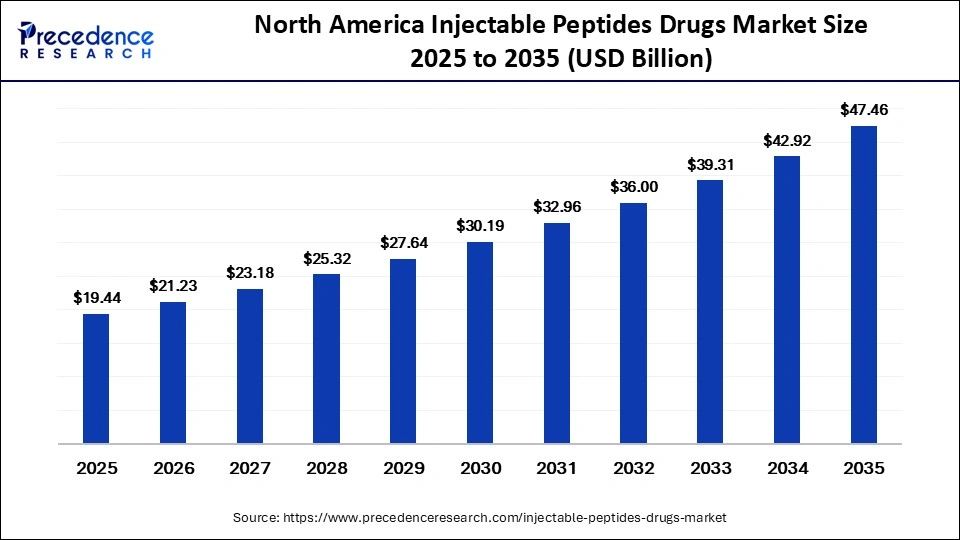
North America Led the Global Injectable Peptides Drugs Market in 2025
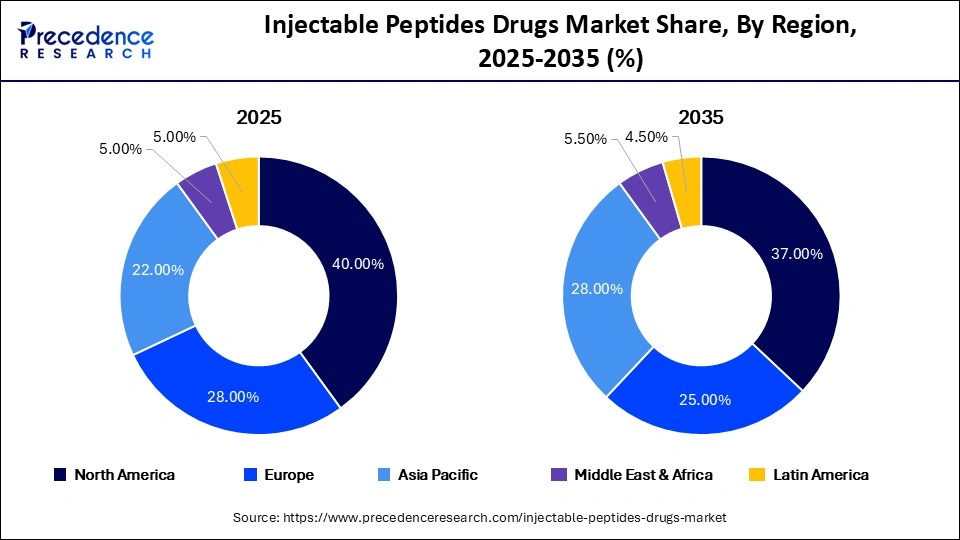
North America dominated the global injectable peptides drugs market with a share of 40% in 2025. The region's dominance is driven by a high prevalence of lifestyle and metabolic diseases, such as diabetes, obesity, cardiovascular disease, and cancer. The widespread adoption of advanced biologics, including GLP-1 derivatives, insulin, and insulin analogues, has further strengthened regional leadership. The region also benefits from the advanced healthcare system, large healthcare expenditure, and strong presence of major pharmaceutical companies and biotech companies.
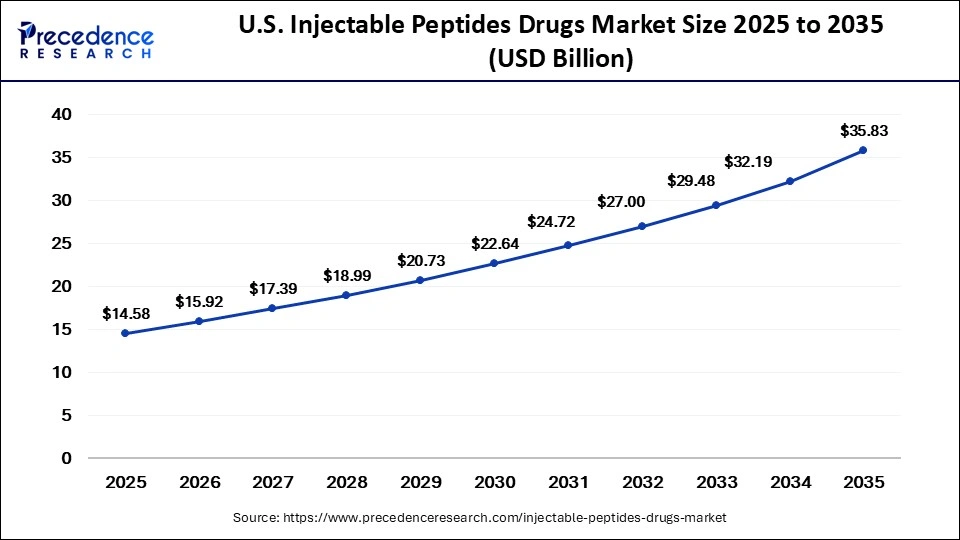
U.S. Injectable Peptides Drugs Market Size and Growth 2026 to 2035
The U.S. injectable peptides drugs market size is calculated at USD 14.58 billion in 2025 and is expected to reach nearly USD 35.83 billion in 2035, accelerating at a strong CAGR of 9.41% between 2026 and 2035.
U.S. Market Analysis
The U.S. is a major contributor to the North American injectable peptides drugs market, due to the high incidence of chronic diseases such as diabetes, obesity, cancer, and cardiovascular disease. The advanced medical system, rising pharmaceutical R&D, and clinical trial capabilities benefit the development of peptide drugs. The introduction of glucagon-like peptide-1 (GLP-1) analogues in diabetes and obesity is a major catalyst because of the obesity epidemic and emphasis on metabolic well-being.
Europe: Second-Largest Market
Europe accounted for the second-largest market share of 28% in 2025 and is projected to grow at a CAGR of 8% during the forecast period. Growth is supported by an aging population and the rising prevalence of chronic diseases such as obesity, diabetes, cancer, and hormonal disorders. The region benefits from well-established public healthcare systems, a strong pharmaceutical industry base, and supportive regulatory frameworks that encourage biologic drug adoption. Continuous R&D in peptide design and targeted therapies further supports market expansion.
UK Market Analysis
The UK plays a significant role in the European market due to its advanced healthcare system and strong pharmaceutical research ecosystem. High rates of chronic conditions such as diabetes, obesity, and cardiovascular diseases are driving demand for peptide-based therapies. The National Health Service (NHS) also facilitates widespread access to advanced treatments, supporting the adoption of injectable peptide drugs. In addition, the U.K. is a key biotechnology hub, supported by leading universities and pharmaceutical companies actively engaged in peptide drug research and development.
What Makes Asia Pacific the Fastest-Growing Region in the Injectable Peptides Drugs Market?
Asia Pacific held a 22% share of the market in 2025 and is expected to grow at the fastest CAGR of 11.5% during the projection period. This growth is driven by expanding healthcare access, a large patient pool, and rising prevalence of chronic diseases across China, India, Japan, and Southeast Asia. Government initiatives improving healthcare affordability, combined with growing middle-class income levels and increased healthcare spending, are further accelerating market expansion.
Japan Market Analysis
The injectable peptides drugs market in Japan is growing steadily due to an aging population and increasing incidence of chronic diseases such as diabetes, cancer, and endocrine disorders. Japan's advanced healthcare infrastructure and strong focus on precision medicine support the adoption of injectable peptide therapies. The country also places significant emphasis on early diagnosis and preventive care, further boosting demand. Additionally, Japan's pharmaceutical industry actively invests in biotechnology and peptide research, while government support for regenerative medicine and biologics continues to drive innovation.
Injectable Peptides Drugs Market Value Chain Analysis
- R&D
Research and Development involves the identification, development, and optimization of peptide molecules using technologies like artificial intelligence and bioinformatics. The goal is to improve the effectiveness, stability, and safety of the injectable peptide drug for targeted treatments.
Key Players: Novo Nordisk, Eli Lilly, Amgen, Sanofi, Pfizer, Roche, AstraZeneca, Takeda, Ipsen, Zealand Pharma
- Formulation and Final Dosage Preparation
This stage involves the conversion of active peptides to injectables. This includes selection of excipients, stabilizing the peptide drug, and formulation for final delivery (vials, prefilled syringes, or auto-injectors).
Key Players: Bachem, Lonza, CordenPharma, PolyPeptide Group
- Distribution & Market Supply
Hospitals, retail, and online pharmacies supply peptide drugs to hospitals via cold-chain distribution. Speed, stability of product, and ability to meet patient demands of health care staff and consumers is key to distribution processes.
Key Players: Teva Pharmaceutical, Novo Nordisk, Pfizer, Sanofi, AstraZeneca
Injectable Peptides Drugs Market Companies
- Novo Nordisk
- Eli Lilly
- Amgen
- Sanofi
- Pfizer
- Roche
- AstraZeneca
- Takeda Pharmaceutical
- Teva Pharmaceutical
- Ipsen
- Bachem
- Lonza
- CordenPharma
- PolyPeptide Group
- Zealand Pharma
Recent Developments
- In February 2026, Eli Lilly signed a global R&D agreement with Zonsen PepLib Biotech to identify and develop new peptide drug candidates using proprietary peptide libraries to bolster its pipeline for chronic and metabolic conditions.
- In December 2025, Eli Lilly invested funds in a new manufacturing facility for peptide and small molecule APIs in Alabama to ramp up production of next-generation peptide therapies, as well as for novel anti-obesity and diabetes drugs like orforglipron.
Segments Covered in the Report
By Drug Type
- GLP-1 Receptor Agonists (Semaglutide, Liraglutide)
- Insulin & Insulin Analogs
- GnRH Analogs
- Somatostatin Analogs
- Parathyroid Hormone (PTH) Analogs
- Other Therapeutic Peptides
By Application
- Diabetes & Obesity Management
- Oncology
- Cardiovascular Diseases
- Endocrine Disorders
- Gastrointestinal Disorders
- Others (Dermatology, Infectious Diseases, etc.)
By Route of Administration
- Subcutaneous Injection
- Intravenous Injection
- Intramuscular Injection
By Distribution Channel
- Hospital Pharmacies
- Retail Pharmacies
- Online Pharmacies
By End-Use
- Hospitals & Clinics
- Homecare Settings
- Specialty Treatment Centers
By Peptide Type
- Short-chain Peptides
- Long-chain Peptides
- Modified & Conjugated Peptides
By Region
- North America
- Latin America
- Europe
- Asia-pacific
- Middle and East Africa
For inquiries regarding discounts, bulk purchases, or customization requests, please contact us at sales@precedenceresearch.com
Frequently Asked Questions





Ask For Sample
No cookie-cutter, only authentic analysis – take the 1st step to become a Precedence Research client
 Get a Sample




 sales@precedenceresearch.com
 Schedule a Meeting
