



Duchenne Muscular Dystrophy Therapeutics Market Size, Companies, Share, Patient Volume, Treatment Adoption Rates, Pricing Analysis, Regulatory Landscape, Competitive Positioning, and Demand Forecast
Duchenne Muscular Dystrophy Therapeutics Market (By Therapy Type: Exon Skipping Therapies, Gene Therapy, Corticosteroids, Stop Codon Read-through Therapies, Cell-based Therapies, Combination Therapies, Supportive Care Therapies; By Disease Stage: Early-stage DMD, Ambulatory DMD, Non-ambulatory DMD, Advanced-stage DMD; By Route of Administration: Intravenous (IV), Oral, Intramuscular, Subcutaneous; By End-User: Hospitals, Specialty Neuromuscular Clinics, Homecare Settings, Rehabilitation Centers, Research and Academic Institutes; By Distribution Channel: Hospital Pharmacies, Specialty Pharmacies, Online Pharmacies) - Global Industry Analysis, Size, Trends, Leading Companies, Regional Outlook, and Forecast 2026 to 2035
Source: https://www.precedenceresearch.com/duchenne-muscular-dystrophy-therapeutics-market
 Get a Sample
 Table Of Content


Duchenne Muscular Dystrophy Therapeutics Market Size and Forecast 2026 to 2035
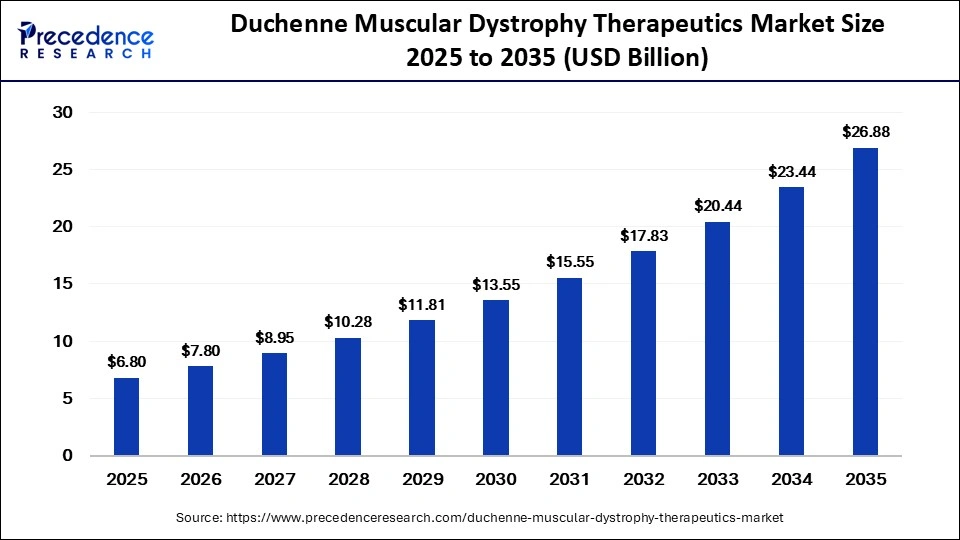
The global duchenne muscular dystrophy therapeutics market size accounted for USD 6.80 billion in 2025 and is predicted to increase from USD 7.80 billion in 2026 to approximately USD 26.88 billion by 2035, expanding at a CAGR of 14.80% from 2026 to 2035. The market is driven by advances in genetic therapies and rising demand for rare disease treatments.
Key Takeaways
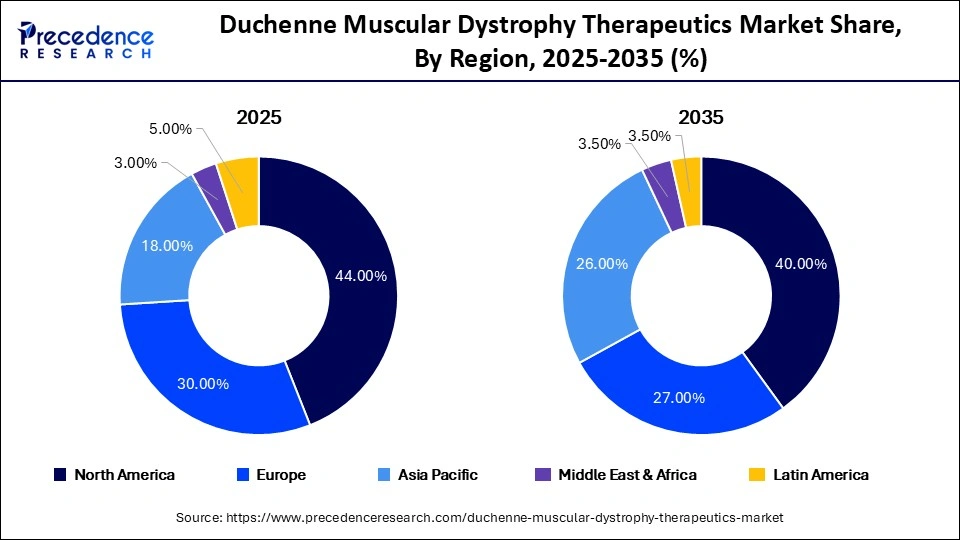
- North America dominated the global Duchenne muscular dystrophy therapeutics market, accounting for a 44% share in 2025.
- Asia-Pacific is expected to grow at the fastest CAGR of 20.5% during the forecast period.
- By therapy type, the exon skipping therapies segment led the global market, accounting for a 34% share in 2025.
- By therapy type, the gene therapy segment is expected to grow at a strong CAGR of 24.5% between 2026 and 2035.
- By disease stage, the ambulatory DMD segment accounted for a considerable revenue share of 38% in the market in 2025.
- By disease stage, the early-stage DMD segment is projected to grow at a solid CAGR of 17.5% between 2026 and 2035.
- By route of administration, the intravenous (IV) segment held a dominant position in the market, accounting for 46% of the market share in 2025.
- By route of administration, the subcutaneous segment is expected to witness the fastest growth with a CAGR of 17.2% between 2026 and 2035.
- By end-user, the hospitals segment accounted for a considerable revenue share of 42% in the market in 2025.
- By end-user, the home care settings segment is expected to be the fastest-growing segment with a CAGR of 18.8% between 2026 and 2035.
Advancing the Duchenne Muscular Dystrophy Therapeutics Market with Precision Genetic Therapies
The Duchenne muscular dystrophy therapeutics industry pertains to the therapies geared toward the treatment of Duchenne muscular dystrophy, a rare gene mutation disease that involves progressive muscle degeneration. The market encompasses corticosteroids, exon-skipping therapy, gene therapy, and supportive care products aimed at alleviating muscle function. The global biopharmaceutical companies are investing in novel biologic and genetic therapeutics to tackle unmet medical needs in neuromuscular diseases. Rising investment in rare disease research and development, new approvals of exon-skipping drugs, and a high uptake of targeted genetic therapy are expected to be major factors driving the market.
Key AI Integration in the Duchenne Muscular Dystrophy Therapeutics Industry
Artificial intelligence has emerged as a key player in enhancing drug discovery processes, optimizing clinical trial workflows, and developing personalized therapies, which play a significant role in the Duchenne muscular dystrophy therapeutics industry. AI and machine learning system can be used to improve the identification of genes that cause disease, such as Duchenne muscular dystrophy, and speed up the process for identification and progress of targeted treatment. LAI technology is playing a role in helping to recruit patients, monitor drug responses, and limit trials' time in rare diseases.
Duchenne Muscular Dystrophy Therapeutics Market Trends
- The growth of the market is fueled by new treatments involving exon skips. Pharma companies are developing drugs for particular mutations to increase the production of dystrophin. These medications slow the progression of illness in patients with a definite subtype of Duchenne muscular dystrophy.
- Growth in uptake of real-world evidence and long-term patient outcomes to inform therapy approvals, reimbursements, and clinical decisions, especially in the case of rare disease therapies and complex trial designs.
- Strategic partnerships among the biotechnology industrys, research laboratories, and patient advocacy organizations pave the way to clinical development pipelines that help improve access to innovative therapy, as well as awareness of the importance of early diagnosis and personalized treatment approaches for Duchenne muscular dystrophy.
Market Report Coverage and Key Metrics
| Report Coverage | Details |
| Market Size in 2025 | USD 6.80 Billion |
| Market Size in 2026 | USD 7.80 Billion |
| Market Size by 2035 | USD 26.88 Billion |
| Market Growth Rate from 2026 to 2035 | CAGR of 14.80% |
| Dominating Region | North America |
| Fastest Growing Region | Asia Pacific |
| Base Year | 2025 |
| Forecast Period | 2026 to 2035 |
| Segments Covered | Therapy Type, Disease Stage, Route of Administration, End-User, Distribution Channel, and Region |
| Regions Covered | North America, Europe, Asia-Pacific, Latin America, and Middle East & Africa |
Market Dynamics
Drivers
Rising Adoption of Disease-Modifying Molecular Therapies
The increasing demand to identify the underlying genes that cause Duchenne muscular dystrophy for applying disease-modifying molecular and gene-targeting therapeutics is the major factor driving the Duchenne muscular dystrophy therapeutics market. Supportive treatments were once used only to treat symptoms, but now it is possible to use specific molecular-level interventions, such as exon-skipping medications, gene therapy, and RNA-based treatments. These new treatments can restore some dystrophin production, reduce the muscle decay rate, and improve the movement and respiratory function of patients.
Restraint
High Treatment Complexity and Long-Term Management Burden
One of the key factors limiting the market is the complex management requirements for long-term treatment along with continuous care needs. DMD is a progressive condition that requires a multidisciplinary approach and the consultation of neurologists, physiotherapists, respiratory physicians and cardiologists. The burden on the health system and families to participate in advanced therapies also decreases; not only because they require repeated treatment, but also because they are 'marined' by specific treatments and treatment facilities.
Opportunity
Expansion of Personalized and Mutation-Specific Therapies
The future of the market is promising, driven by mutation-specific therapies and personalized medicines. Through the development of new tools and technologies involving genomic sequence and molecular diagnostics, it is now possible to accurately define the dystrophin gene mutations for the creation of new drugs. New techniques, including exon-skipping drugs, new technologies for modifying genes and new therapeutic methods derived from RNA, are helping to pave the way to much more personalised treatments.
Market Segmentation Analysis
Therapy Type Insights
The Exon Skipping Therapies Segment Held the Largest Market Share of 34% in 2025
The exon skipping therapies segment generated approximately USD 2.31 billion in 2025 and is projected to reach nearly USD 8.06 billion by 2035, growing at a CAGR of 11.5% during the forecast period. The segment dominated the Duchenne muscular dystrophy therapeutics market with a 34% share in 2025, as physicians become increasingly aware and knowledgeable about exon skipping therapies, as more RNA-based cancer therapeutics are gaining approvals. The treatments are well-equipped to take off because they can specifically target the dystrophin gene involved in the disease progression of Duchenne muscular dystrophy. More diversified exon-skipping pipelines, broader mutation coverage, and new innovative RNA technologies are being presented by pharma companies.
The gene therapy segment accounted for approximately USD 1.63 billion in 2025 and is expected to reach around USD 9.68 billion by 2035, registering the fastest CAGR of 24.5% during the forecast period. Holding 24% market share in 2025, due to the fast-track gene therapy methods, clinical progress, and a great funding opportunity for next-generation gene therapy approaches. Viral vector technologies and gene delivery systems are areas of investment across the biotechnology sector, as efforts increase to make therapy more effective. This enhances the incentive to speed clinical development for innovative drugs for rare diseases through regulatory programs designed to facilitate rare disease drug development.
Duchenne Muscular Dystrophy Therapeutics Market Share, By Therapy Type, 2025-2035 (%)
| Therapy Type | 2025 | 2035 | CAGR (%) |
| Exon Skipping Therapies | 34.00% | 30.00% | 11.50% |
| Gene Therapy | 24.00% | 36.00% | 24.50% |
| Corticosteroids | 18.00% | 12.00% | 5.20% |
| Stop Codon Read-through Therapies | 8.00% | 7.00% | 8.50% |
| Cell-based Therapies | 6.00% | 7.00% | 16.00% |
| Combination Therapies | 5.00% | 5.00% | 12.80% |
| Supportive Care Therapies | 5.00% | 3.00% | 4.50% |
The corticosteroids segment generated about USD 1.22 billion in 2025 and is anticipated to reach nearly USD 3.23 billion by 2035, growing at a CAGR of 5.2%. With an 18% market share in 2025, owing to continued usage, position in routine treatment for DMD, and the growing transition to targeted and advanced therapeutics. Corticosteroids are a useful drug that continues to be used because they help to prevent any further deterioration of the Duchenne muscular dystrophy and allow the muscle integrity and long-term muscle strength. Expectations also continue that as steroid formulations improve, with fewer side effects, segment stability will be maintained across the world.
The stop codon read-through therapies segment was valued at approximately USD 0.54 billion in 2025 and is projected to reach around USD 1.88 billion by 2035, expanding at a CAGR of 8.5%. The segment represented 8% of the market in 2025, owing to the increasing acceptance of nonsense mutations among DMD patients, and a discrimination-based genetic personalized therapy approach. These can help cells bypass the stop codon to stop a protein from being synthesized and do so by helping to ensure that dystrophin production continues. With increased investment in the concepts of personalized medicine and mutation-targeted therapeutics, the clinical research undertakings of the segment are expected to grow.
Disease Stage Insights
Duchenne Muscular Dystrophy Therapeutics Market Share, By Disease Stage, 2025-2035 (%)
| Disease Stage | 2025 | 2035 | CAGR (%) |
| Early-stage DMD | 30.00% | 34.00% | 17.50% |
| Ambulatory DMD | 38.00% | 34.00% | 12.20% |
| Non-ambulatory DMD | 22.00% | 24.00% | 15.00% |
| Advanced-stage DMD | 10.00% | 8.00% | 9.20% |
The Ambulatory DMD Segment Held the Largest Market Share of 38% in 2025
The ambulatory DMD segment generated approximately USD 2.58 billion in 2025 and is expected to reach nearly USD 9.14 billion by 2035, growing at a CAGR of 12.2%. The segment dominated the market with a 38% share in 2025, driven by rising usage of exon skipping treatments and corticosteroid medications, and growing demand for treatments that maintain mobility. The ambulatory DMD patient is a large group that requires therapeutic intervention because they possess the ability to walk, and this is a significant determinant of quality of life and long-term outcomes. The emphasis on slowing muscle deterioration is on early treatment.
The early-stage DMD segment was valued at approximately USD 2.04 billion in 2025 and is projected to reach around USD 9.14 billion by 2035, expanding at the fastest CAGR of 17.5%. The early-stage DMD segment held 30% of the market share in 2025, driven by increasing awareness of early therapeutic intervention and adoption of precision medicine. Prompt diagnosis means that treatment can start before the muscles are much damaged, optimizing the prognosis for future results. Genetic screening programs are increasingly encouraged by governments and healthcare organizations to increase the rate of detection of rare diseases.
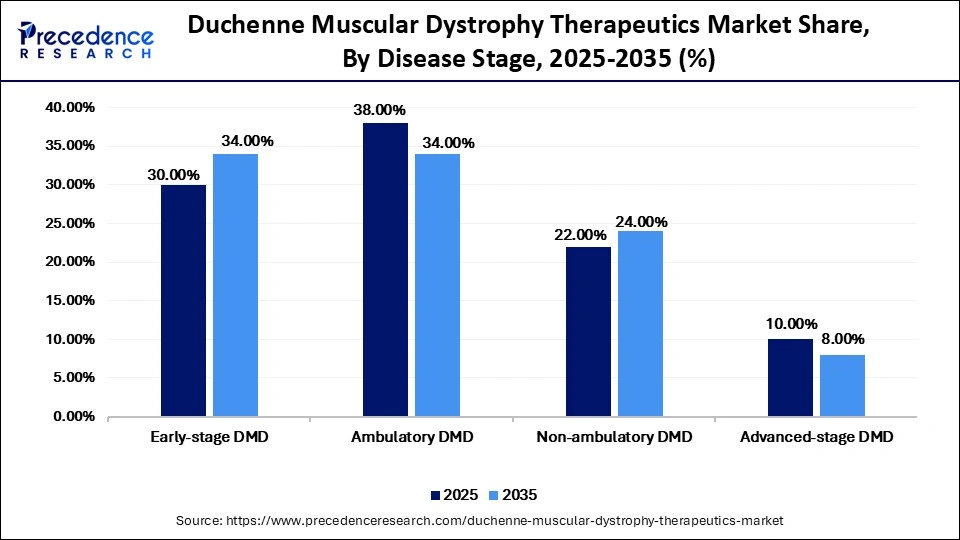
The non-ambulatory DMD segment generated nearly USD 1.50 billion in 2025 and is expected to reach approximately USD 6.45 billion by 2035, growing at a CAGR of 15%. The non-ambulatory DMD segment held 22% of the market share in 2025, driven by rising of advanced supportive/respiratory care, use of gene and regenerative therapies, and emphasis on long-term disease management. This stage calls for comprehensive care that involves several medical specialties as the patient experiences problems with their lungs, heart, and muscles due to the disease. As modern technologies become more advanced, healthcare providers are acting to ensure patients live their best lives.
The advanced-stage DMD segment accounted for about USD 0.68 billion in 2025 and is projected to reach nearly USD 2.15 billion by 2035, registering a CAGR of 9.2%. The advanced-stage DMD segment held 10% of the market share in 2025, due to the rise in the number of supporting therapies for the heart and lungs and the rising trend of home care. Severe complications involving respiratory and heart disease may occur in advanced cases, and the care of these patients is likely to be intensive for a prolonged period. Neurologists, pulmonologists, cardiologists, and rehab specialists are investing in integrated care models within healthcare systems.
Route of Administration Insights
Duchenne Muscular Dystrophy Therapeutics Market Share, By Route of Administration, 2025-2035 (%)
| Route of Administration | 2025 | 2035 | CAGR (%) |
| Intravenous (IV) | 46.00% | 44.00% | 13.80% |
| Oral | 28.00% | 30.00% | 15.50% |
| Intramuscular | 14.00% | 12.00% | 10.20% |
| Subcutaneous | 12.00% | 14.00% | 17.20% |
The Intravenous (IV) Segment Held the Largest Market Share of 46% in 2025
The intravenous (IV) segment generated approximately USD 3.13 billion in 2025 and is expected to reach nearly USD 11.83 billion by 2035, growing at a CAGR of 13.8%. Holding 46% market share in 2025, driven by growing adoption of advanced targeted therapies, strong exonic skipping, and gene therapies being administered by infusion into the hospital, and increasing usage of biologics. The IV route enables controlled systemic distribution, thereby preferred by healthcare providers for advanced biologics and gene therapies. Specially-trained infusion centers are increasingly being added to hospitals, as they meet the growing demand for genetic therapy.
The subcutaneous segment was valued at approximately USD 0.82 billion in 2025 and is projected to reach nearly USD 3.76 billion by 2035, registering the fastest CAGR of 17.2%. The subcutaneous segment held 12% of the market share in 2025, driven by rising interest in managing chronic neuromuscular diseases and increasing development of patient-friendly product formulations. The convenience and reduced dependency in the hospital of subcutaneous administration are improved compared to infusion-based therapies. Biologic formulations that have innovative properties that promote ease of long-term administration and higher patient adherence are being targeted by pharmaceutical companies.
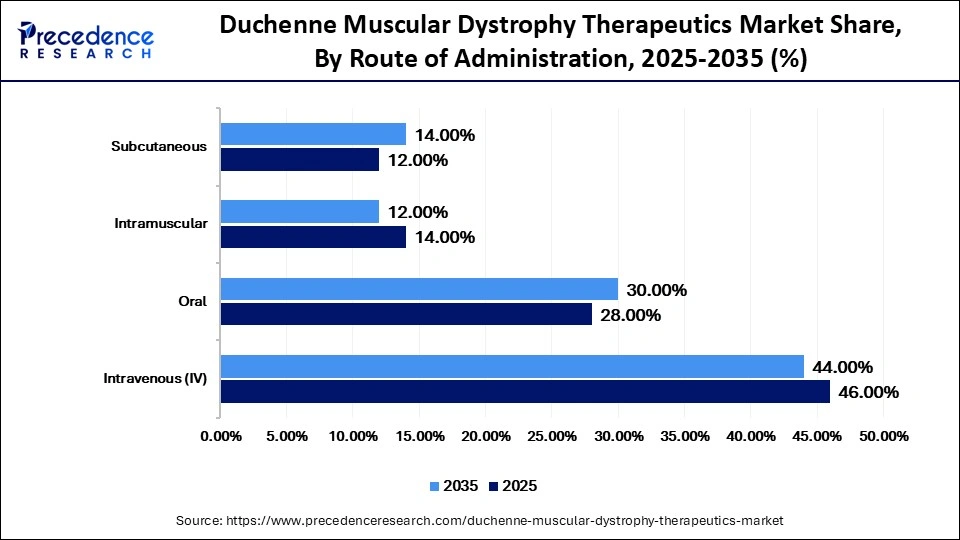
The oral segment accounted for around USD 1.90 billion in 2025 and is projected to reach approximately USD 8.06 billion by 2035, expanding at a CAGR of 15.5%. The oral segment held 28% of the market share in 2025, driven by growing patient preference for convenient long-term treatment, rising drug availability of corticosteroids and oral therapeutics, and progressive oral mutation-targeted drugs development. Oral medication is widely adopted as these medications are more convenient to administer and more likely to be used by patients in chronic disease management protocols. Pharma companies are also engaged in developing next-generation oral therapeutics - efficient and safe.
The intramuscular segment generated nearly USD 0.95 billion in 2025 and is expected to reach around USD 3.23 billion by 2035, growing at a CAGR of 10.2%. The intramuscular segment held 14% of the market share in 2025, due to the continued use in localized gene and regenerative therapies, increased use of direct delivery to muscle in clinical trials, and an emerging focus on targeted therapeutic administration. The intramuscular delivery methods enable direct targeting of affected muscle tissue; they are the subject of increasing investigations in the field of regenerative medicine research. This treatment method is being tested in several experimental stem cell and gene therapies.
End-User Insights
The Hospitals Segment Held the Largest Market Share of 42% in 2025
The hospitals segment generated approximately USD 2.86 billion in 2025 and is expected to reach nearly USD 9.68 billion by 2035, growing at a CAGR of 11.5%. The segment dominated the market with a 42% share in 2025, due to its use of infusion-based therapies and multidisciplinary care and increasing integration of genetic diagnostics and therapy administration. Advanced biologic and gene therapies are still primarily reserved for hospital treatment settings and require specialized monitoring and infusion support. Increasingly, large healthcare facilities are placing more resources on their rare disease treatment and programs for neuromuscular diseases.
The homecare settings segment generated nearly USD 0.95 billion in 2025 and is expected to reach approximately USD 4.84 billion by 2035, growing at the fastest CAGR of 18.8%. The homecare settings segment held 14% of the market share in 2025, owing to the rising use of telehealth, remote monitoring, and oral therapy, along with an increasing need for chronic care management at home. Home care is emerging as a viable alternative to hospital care because of its convenience to patients and caregivers. New technology for remote monitoring and digital health care platforms is helping to enable more effective long-term disease management.
Duchenne Muscular Dystrophy Therapeutics Market Share, By End-user, 2025-2035 (%)
| End-User | 2025 | 2035 | CAGR (%) |
| Hospitals | 42.00% | 36.00% | 11.50% |
| Specialty Neuromuscular Clinics | 30.00% | 34.00% | 16.50% |
| Homecare Settings | 14.00% | 18.00% | 18.80% |
| Rehabilitation Centers | 8.00% | 7.00% | 8.50% |
| Research & Academic Institutes | 6.00% | 5.00% | 9.20% |
The specialty neuromuscular clinics segment accounted for approximately USD 2.04 billion in 2025 and is projected to reach around USD 9.14 billion by 2035, expanding at a CAGR of 16.5%. The speciality neuromuscular clinics segment held 30% of the market share in 2025, fueled by the increasing adoption of advanced genetic therapies and an increased focus on patient monitoring over the long term. Clinics provide specific, specialized medical treatment to complex needs of Duchenne muscular dystrophy patients. The use of exon skipping and gene therapies in clinical trials and precision medicine programmes in speciality clinics is becoming more widespread.
The rehabilitation centers segment was valued at approximately USD 0.54 billion in 2025 and is projected to reach nearly USD 1.88 billion by 2035, growing at a CAGR of 8.5%. The rehabilitation centers segment held 8% of the market share in 2025, due to growing demand for physiotherapy services and improving the quality of life. Rehabilitation centers play a significant role in keeping patients' muscle mobility and flexibility and their breathing in all of the stages of the disease. Regularly incorporate physiotherapy and/or supportive rehabilitation into the whole management of the DMD curriculum.
Market Regional Analysis: North America, Europe, Asia-Pacific
North America Duchenne Muscular Dystrophy Therapeutics Market Size and Growth 2026 to 2035
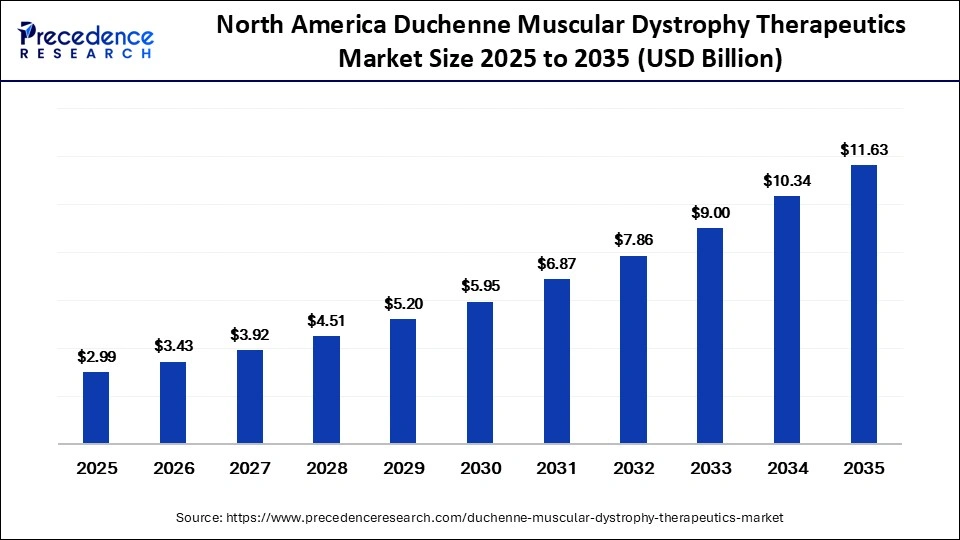
The North America Duchenne muscular dystrophy therapeutics market size was exhibited at USD 2.99 billion in 2025 and is projected to be worth around USD 11.63 billion by 2035, growing at a CAGR of 13.20% from 2026 to 2035.
What Makes North America the Leading Region in the Duchenne Muscular Dystrophy Therapeutics Market?
North America led the market by holding a major market share of 44% in 2025, due to the early commercialization of exon-skipping and gene therapies, the implementation of robust orphan drug reimbursement policies, and huge investment in research. The region's quality healthcare services, emphasis on early detection of rare genetic diseases, and FDA's support also reinforced the region's dominance. Biopharmaceutical companies in the region are actively investing in clinical research to develop RNA-based therapies, driving the market.
U.S. Duchenne Muscular Dystrophy Therapeutics Market Size and Growth 2026 to 2035
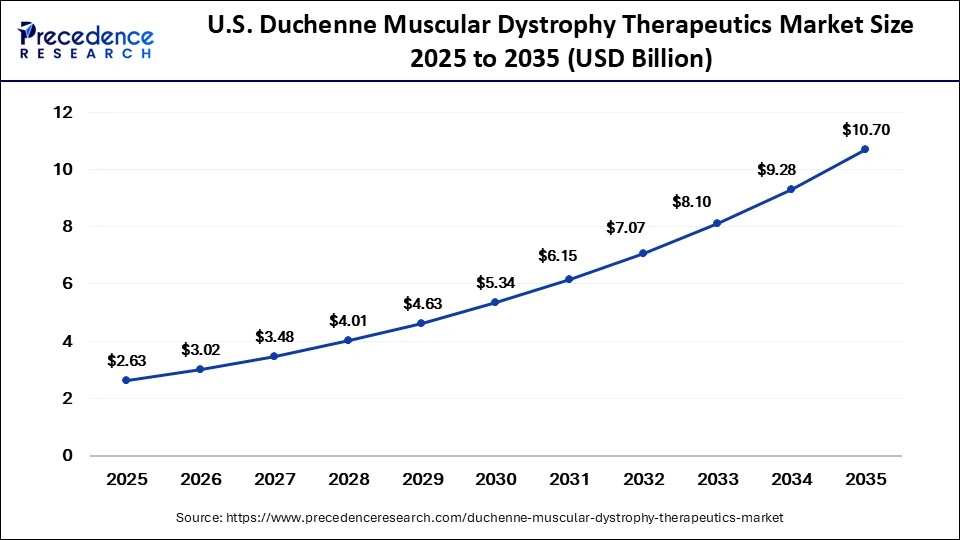
The U.S. Duchenne muscular dystrophy therapeutics market size was evaluated at USD 2.63 billion in 2025 and is projected to reach around USD 10.70 billion by 2035, growing at a CAGR of 13.33% from 2026 to 2035.
U.S. Market Trends
The U.S. leads the market in North America due to its well-established biotechnology industry, clinical trial infrastructure, and increasingly novel technologies of genetic therapeutics. Investments are made in pharmaceuticals and biotechnology by government organizations in the field of rare disease therapeutics. Educating the public about early detection and genetic testing can help identify patients and enable them to be treated.
Europe: The Second-Largest Market
Europe held the second-largest market share of 30% in 2025 and is expected to grow at a notable CAGR of 10.5% during the projection period, driven by support from the public healthcare system, increasing focus on early genetic diagnosis, and increasing clinical trials in neuromuscular disorders. The presence of advanced healthcare facilities and a regulatory environment for drug development also supports regional market growth. Pharmaceutical companies and academic institutions in Europe are working hard on the development of new therapies based on genes and RNA for Duchenne muscular dystrophy.
UK Market Trends
The UK market is driven by the growing adoption of precision genetic therapies, high research-based activity for rare diseases, and quality healthcare infrastructure. Clinical research facilities have been well developed in the country and supported by the leading hands of the universities, biotechnology companies, and specialized treatment centers for neuromuscular disorders. Advanced exon-skipping and gene therapies are patient-accessible, as government funding through patient access programs and orphan drug programs is providing access.
How is Asia-Pacific Growing in the Duchenne Muscular Dystrophy Therapeutics Market?
Asia-Pacific held 18% of the market share in 2025 and is expected to grow at the fastest CAGR of 20.5% during the projection period, due to expanding rare disease awareness, government precision medicine initiatives, and an expansion in healthcare investments. In the healthcare sector, companies in the region have been making significant efforts to enhance genetic screening and rare disease diagnosis. Pharma collaborations and clinical research are also on the rise to addressing unmet medical needs in neuromuscular disorders. The increased health care spending and enhanced access to specialist treatment facilities are contributing to the increased uptake of new DMD therapies.
China Market Trends
China's market is growing due to the growing modernization of the healthcare infrastructure, the development of a strong infrastructure for genetic testing, and support from the government for rare disease management for treating this disease. The country is putting a substantial effort into biotechnology innovations and precision medicine studies to foster its own pharmaceutical capacity. Multinational pharmaceutical companies working on next-generation therapies such as “exon skipping” and “gene therapies” are also drawn to the growing clinical trial infrastructure in China.
What Drives the Duchenne Muscular Dystrophy Therapeutics Market in Latin America?
Latin America held a 5% share of the market in 2025 and is expected to grow at a CAGR of 10.2% in the coming years, driven by increasing awareness of rare genetic disorders, improving healthcare infrastructure, and expanding access to advanced therapies. Governments and healthcare organizations across the region are placing greater emphasis on early diagnosis and genetic screening programs, while the growing adoption of gene therapies, exon-skipping drugs, and alternatives to corticosteroid treatments is further supporting market expansion.
Brazil Market Trends
Brazil is emerging as a key market in Latin America, supported by rising healthcare investments and growing awareness of rare neuromuscular disorders. The country is witnessing increased adoption of advanced genetic testing technologies and precision medicine approaches to facilitate early diagnosis and personalized treatment planning. In addition, government initiatives aimed at improving rare disease management and expanding access to specialized healthcare services are contributing to market growth.
How is the Opportunistic Rise of the Middle East & Africa in the Duchenne Muscular Dystrophy Therapeutics Market?
The Middle East & Africa held a 3% share of the market in 2025 and is expected to grow at a strong CAGR of 11% in the upcoming years, driven by improvements in healthcare infrastructure, rising awareness of genetic disorders, and increasing investments in rare disease treatment programs. Governments and healthcare providers are focusing on enhancing diagnostic capabilities and expanding access to specialized neurological care, while advances in genetic testing technologies and the introduction of novel treatment options continue to support regional market development.
Saudi Arabia Market Trends
Saudi Arabia is experiencing notable growth due to strong government initiatives focused on healthcare modernization and rare disease management. The country is investing in advanced genetic testing infrastructure, precision medicine programs, and specialized neuroscience treatment centers to improve patient outcomes. Furthermore, increasing awareness of Duchenne muscular dystrophy and the availability of innovative therapeutic options are contributing to the expansion of the market.
Duchenne Muscular Dystrophy Therapeutics Market Value Chain Analysis
- R&D
The R&D phase of the market is dedicated to finding molecular targets and gene therapies, and research on exon skipping therapies to target genetic mutations. This covers broad animal modelling studies and laboratory work and the establishment of an exciting new link between biotechnology firms and universities to develop new and impactful disease-modifying treatments.
Key Players: Sarepta Therapeutics, PTC Therapeutics, Wave Life Sciences, Avidity Biosciences, PepGen
- Clinical Trials and Regulatory Approvals
New DMD therapies are tested during clinical trials, such as clinical trials in other patient groups and at various stages of DMD. Regulatory bodies such as the FDA and EMA test cures before they go to the market to make sure they are able to have an impact and do not have adverse effects.
Key Players: REGENXBIO, Pfizer, Solid Biosciences, NS Pharma, Italfarmaco
- Patient Support and Services
Patient service line available for education, genetic counselling, assistance to follow through with treatment and financial support programs. These services are used to help achieve better long-term therapy results and help improve the quality of life of Duchenne muscular dystrophy patients.
Key Players: Roche, Novartis, Catalyst Pharmaceuticals, Santhera Pharmaceuticals, Capricor Therapeutics
Market Competitive Landscape: Leading Companies and Strategies
The Duchenne muscular dystrophy therapeutics market is characterized by the presence of established biopharmaceutical companies alongside emerging biotechnology firms developing innovative gene therapy solutions and precision medicine approaches. Key market participants include Sarepta Therapeutics, Pfizer, Roche, Sanofi, and Solid Biosciences, all of which are actively investing in next-generation therapies to address the unmet needs of DMD patients.
- In 2026, Sarepta Therapeutics continued to advance its gene therapy development programs and research collaborations focused on micro-dystrophin gene therapies aimed at improving long-term treatment outcomes.
Technological innovation is playing a critical role in shaping the competitive landscape, with advancements in CRISPR-based gene editing, RNA-targeted therapeutics, advanced delivery platforms, and gene therapy technologies driving differentiation among market players. Companies are also increasingly leveraging biomarker research, AI-assisted drug discovery, and precision diagnostics to enhance therapeutic efficacy, optimize patient selection, and improve disease monitoring. As a result, organizations that successfully combine cutting-edge genetic technologies with data-driven development strategies are expected to strengthen their competitive position in the evolving DMD therapeutics market.
Duchenne Muscular Dystrophy Therapeutics Market Companies
- Sarepta Therapeutics
- Pfizer Inc.
- Roche Holding AG
- PTC Therapeutics
- Solid Biosciences Inc.
- Catalyst Pharmaceuticals
- Santhera Pharmaceuticals
- Wave Life Sciences
- Dyne Therapeutics
- Avidity Biosciences
- PepGen Inc.
- Capricor Therapeutics
- NS Pharma Inc.
- Italfarmaco S.p.A.
- ReveraGen BioPharma
Recent Developments Duchenne Muscular Dystrophy Therapeutics Market (2025-2026)
- In March 2026, Sarepta Therapeutics made progress with the U.S. FDA regarding VYONDYS 53 for Duchenne muscular dystrophy. The company is working on an SNDA submission in April 2026 to approve its accelerated approval to traditional approval, backed by evidence from the ESSENCE trial and real-world evidence.(Source: https://markets.ft.com)
- In March 2026, REGENXBIO announced that it had a Positive Interim report on its Phase I/II AFFINITY DUCHENNE trial for RGX-202 in Duchenne muscular dystrophy. Data comprised functional, biomarker, safety, and cardiac MRI data presented at the Muscular Dystrophy Association (MDA) conference.(Source: https://ir.regenxbio.com)
- In October 2025, REGENXBIO had finished recruitment for its pivotal AFFINITY DUCHENNE trial for RGX-202 and started manufacturing the first commercial production batches. The milestone enhances the company's route to drug regulatory submission and further commercialization in the field of gene therapy for Muscle Eye Disease.(Source: https://regenxbio.gcs-web.com)
Segments Covered in the Report
By Therapy Type
- Exon Skipping Therapies
- Eteplirsen
- Golodirsen
- Viltolarsen
- Casimersen
- Gene Therapy
- Corticosteroids
- Stop Codon Read-through Therapies
- Cell-based Therapies
- Combination Therapies
- Supportive Care Therapies
By Disease Stage
- Early-stage DMD
- Ambulatory DMD
- Non-ambulatory DMD
- Advanced-stage DMD
By Route of Administration
- Intravenous (IV)
- Oral
- Intramuscular
- Subcutaneous
By End-User
- Hospitals
- Specialty Neuromuscular Clinics
- Homecare Settings
- Rehabilitation Centers
- Research and Academic Institutes
By Distribution Channel
- Hospital Pharmacies
- Specialty Pharmacies
- Online Pharmacies
By Region
- North America
- Latin America
- Europe
- Asia-pacific
- Middle and East Africa
For inquiries regarding discounts, bulk purchases, or customization requests, please contact us at sales@precedenceresearch.com
Frequently Asked Questions





Ask For Sample
No cookie-cutter, only authentic analysis – take the 1st step to become a Precedence Research client
 Get a Sample




 sales@precedenceresearch.com
 Schedule a Meeting
