



US Pharmaceutical Stability and Storage Services Market Size, Companies, Share, Patient Volume, Treatment Adoption Rates, Pricing Analysis, Regulatory Landscape, Competitive Positioning, and Demand Forecast
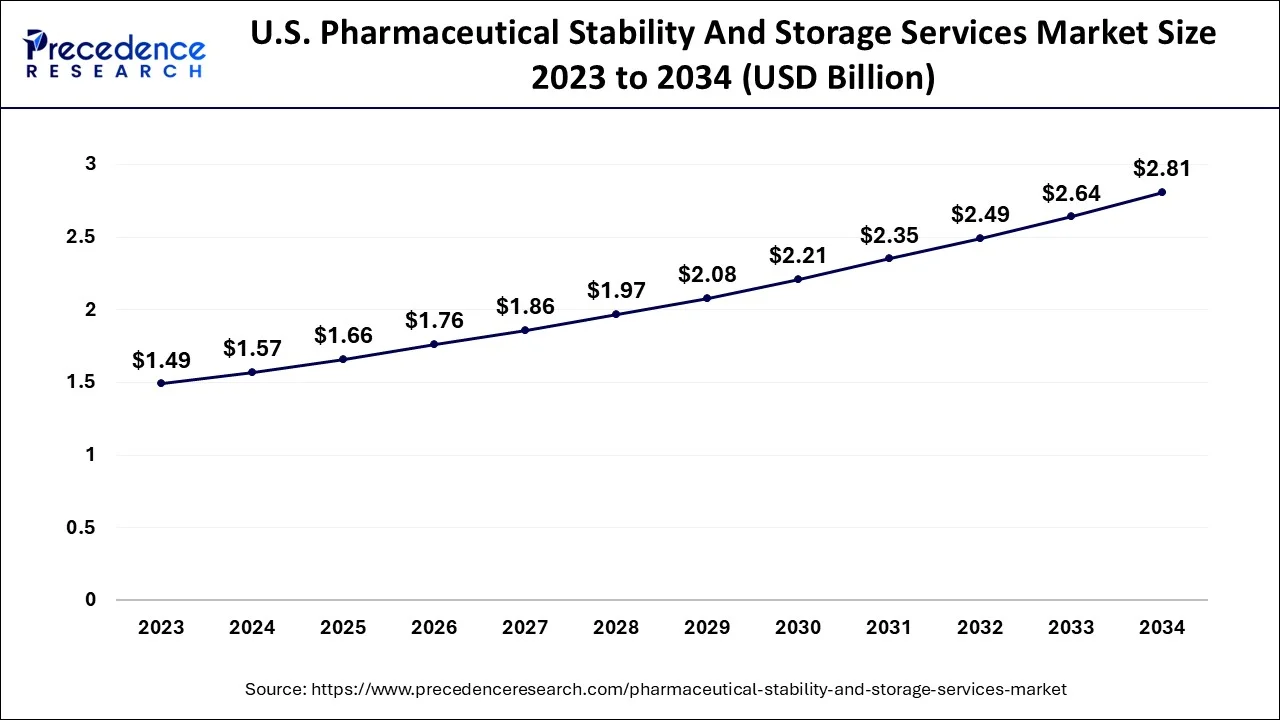
Rohan Patil, a Healthcare Industry Expert, highlights that the US pharmaceutical stability and storage services market has reached USD 1.76 billion in 2026 and is on track to reach USD 2.92 billion by 2035, advancing at a CAGR of 5.81%. Key US pharmaceutical stability and storage services market companies shaping the market include Catalent, Inc., Charles River Laboratories, Inc., Almac Group, while major growth segments span services, molecule, mode.
Source: https://www.precedenceresearch.com/us-pharmaceutical-stability-and-storage-services-market
 Get a Sample
 Table Of Content


US Pharmaceutical Stability and Storage Services Market Size and Forecast 2026 to 2035
The US pharmaceutical stability and storage services market size accounted for USD 1.66 billion in 2025 and is predicted to increase from USD 1.76 billion in 2026 to approximately USD 2.92 billion by 2035, expanding at a CAGR of 5.81% from 2026 to 2035. The market is experiencing robust growth, driven by rising biologics and specialty drug development, expanding clinical trial activities, and stringent regulatory requirements for product quality and long-term stability testing throughout the drug development and commercialization lifecycle.
Key Takeaways
- By service, the stability segment dominated the market in 2025.
- By service, the storage services segment is expected to grow at the fastest CAGR between 2026 and 2035.
- By molecule, the small molecule segment held the largest market share in 2025.
- By molecule, the large molecule segment is expected to grow at the highest CAGR during the forecast period.
- By mode, the in-house segment led the market in 2025.
- By mode, the outsourcing segment is expected to expand rapidly in the coming years.
Market Overview
The U.S. pharmaceutical stability and storage services market includes the unique service aspect of evaluating, monitoring, and maintaining the quality, safety, and effectiveness of pharmaceutical products throughout their lifecycle. Services provided in this industry include stability testing, temperature-controlled storage, cold-chain management processes, shelf-life assessments, and regulatory compliance support for drug manufacturers and biotechnology companies.
The market is driven by an increasing number of pharmaceutical R&D activities, a growing number of testing and storage operations being outsourced, and a growing number of biologics, biosimilars, and cell and gene therapies being developed that have very stringent storage requirements. Additionally, increasing FDA compliance requirements are driving investment in new advanced storage infrastructure, leading to increased demand for these services. The increasing number of temperature-sensitive and specialty pharmaceuticals will provide continued service opportunity growth for service providers within this market.
How is AI Transforming the U.S. Pharmaceutical Stability and Storage Services Market?
In the U.S. pharmaceutical stability and storage services sector, artificial intelligence (AI) is increasingly becoming a key driver of improved monitoring, predictive analytics, and quality assurance. AI provides real-time monitoring of product temperature, humidity, and other storage environments to help prevent product degradation and meet regulatory requirements for the products stored therein.
Using advanced machine learning algorithms, AI systems can be used for predicting the stability of individual products, optimizing inventory management, and ultimately reducing operational risks throughout the pharmaceutical supply chain. Additionally, pharmaceutical companies are now investing heavily in smart warehousing technologies to improve overall efficiency, data accuracy, and product quality during all phases of storage and delivery operations.
U.S. Pharmaceutical Stability and Storage Services Market Trends
- The U.S. is the leading global market for conducting pharmaceutical stability testing and storage services due to the length of time required to develop a new drug and the rigorous regulatory approval process for commercializing a new drug supply chain. The need for conducting stability studies, managing samples, & providing controlled temperature storage will be required throughout the lifecycle of the new drug supply chain.
- Growth in biopharmaceuticals, cell and gene therapies, and orphan drugs is creating new requirements for cold chain infrastructure. With respect to ongoing federal investment in biomedical research being made by the National Institute of Health (NIH) at an annual rate near $48 billion, a significant portion of this funding is directed towards the research grant programs that are generating large quantities of pharmaceutical samples that must be stored and monitored for stability in compliance with FDA requirements.
- As evidence of the increased need for temperature-controlled storage facilities and stability monitoring, 26 out of the 50 new drug approvals by the FDA in 2024 were for drugs classified as orphan drugs.
- The U.S. is strengthening the resilience of the domestic supply chain for pharmaceuticals through FDA programs promoting domestic drug manufacturing by remodeling and modernizing many of its current good manufacturing practices (CGMP)-compliant storage facilities and stability testing capabilities in the U.S. global pharmacy ecosystem..
Market Report Coverage and Key Metrics
| Report Coverage | Details |
| Market Size in 2025 | USD 1.66 Billion |
| Market Size in 2026 | USD 1.76 Billion |
| Market Size by 2035 | USD 2.92 Billion |
| Market Growth Rate from 2026 to 2035 | CAGR of 5.81% |
| Base Year | 2025 |
| Forecast Period | 2026 to 2035 |
| Segments Covered | Services, Molecule, and Mode |
Market Dynamics
Drivers
Increasing Need for Advanced Therapeutics and Biologics
Rising demand for biologics and cell, gene, and specialty pharmaceutical therapies potentiate the demand for pharmaceutical stability and storage services in the U.S. Biologics and other advanced therapies require tightly controlled environmental conditions (e.g., temperature, humidity, and handling) during development and commercialization. As pharmaceutical companies continue to make large capital investments in advanced therapies, outsourcing stability testing and specialized storage services will help companies maintain regulatory compliance, ensure product integrity, and improve supply chain efficiency.
Restraint
High Costs of Operations and Compliance
Providers of pharmaceutical stability and storage services face rising operational costs associated with maintaining validated storage facilities, advanced monitoring systems, and fulfilling regulatory compliance requirements. Continuous investment in cold chain infrastructure, quality assurance programs, and qualified personnel continues to raise operational costs for pharmaceutical and biopharmaceutical stability and storage service providers. Smaller providers may struggle to comply with the rapidly evolving regulatory environment, limiting their profitability and ability to expand into new markets.
Opportunity
Growth in Clinical Trials and Outsourcing
An increase in the number of clinical trials throughout the U.S. means additional growth opportunities for providers of pharmaceutical stability and storage services. Pharmaceutical and biopharmaceutical companies are continuing to outsource storage, sample management, and stability studies to specialist providers. Continued growth in research activities, decentralized clinical trials, and the demand for flexible storage solutions will create new revenue streams for providers of pharmaceutical stability and storage services and will promote more rapid development of new drugs.
Market Segmentation Analysis
Service Insights
Which Service Segment Dominated the U.S. Pharmaceutical Stability and Storage Services Market?
The stability segment held the largest market share in 2025 because of increased regulatory requirements for drug shelf life validation and quality assurance, as well as regulatory processes for product approvals. Pharmaceutical companies are relying more on stability testing during all stages of drug development and commercialization to demonstrate compliance with applicable regulations, maintain product safety, show product effectiveness, and ensure that products perform consistently for extended periods of time under a variety of environmental conditions.
The storage segment is expected to expand rapidly in the market in the coming years, due to the increased demand for specialized temperature-controlled storage solutions for biologics, vaccines, cellular therapies, and personalized medicines. The expanding pipeline of pharmaceutical products, combined with the growing use of third-party logistics and outsourcing of inventory management services, contributes to the need for advanced storage infrastructures across the U.S. The growing demand for cold-chain management and safe handling of expensive, high-value therapeutics is also playing a major role in the growth of this segment.
Molecules Insights
How the Small Molecule Segment Dominated the U.S. Pharmaceutical Stability and Storage Services Market?
The small molecule segment contributed the biggest market share in 2025, due to the availability of numerous approved small molecule drugs in the U.S. There are also many small molecule products currently on the market that require extensive stability testing and storage management throughout the development and commercialization process, sustaining strong demand for these types of pharmaceutical support services. The continued production of conventional therapeutics for chronic and acute diseases has further reinforced this segment's dominant position in the market.
The large molecule segment is expected to grow with the highest CAGR in the market during the studied years, due to increased acceptance of biologics & biosimilars, monoclonal antibodies, and gene-based therapies. These complex products require the implementation of highly specialized stability studies and controlled storage conditions. The demand for large molecules is increasing due to an increase in research activity within biotechnology and the growing number of biologic drug approvals.
Mode Insights
Why Did the In-House Segment Dominate the U.S. Pharmaceutical Stability and Storage Services Market?
The in-house segment accounted for the highest market share in 2025. This is primarily due to pharmaceutical manufacturers wanting to have direct control over the quality of products, regulatory compliance, and sensitive research data. Larger pharmaceutical companies have their own testing labs and storage facilities, which allows them to manage their critical pharmaceutical business processes efficiently. In addition, having a strong internal quality system in place and wanting to protect proprietary information relating to drug development has resulted in large-scale use of in-house services.
The outsourcing method is anticipated to achieve the highest growth rate during 2026-2035. This growth is attributed to several factors: pharmaceutical companies are looking for cost savings and operational flexibility while still having access to specialized expertise. In addition, there is an increasing demand for drug development, and reliance on contract service providers for stability testing and storage services will spur more outsourcing. Outsourcing can also provide pharmaceutical manufacturers with rapid project turnaround times, the ability to scale, and access to advanced technologies without large capital investment.
Market Competitive Landscape: Leading Companies and Strategies
The U.S. pharmaceutical stability and storage services market is highly fragmented; however, there are global contract research organizations, specialized storage providers, and laboratory service companies that compete against one another for market share.
Key participants in the market, including Eurofins Scientific, WuXi AppTec, Labcorp, and Charles River Laboratories, have maintained competitive advantages due to their extensive services, nationwide facilities, and regulatory expertise. Companies are expanding through acquisitions, improvements to their facilities, digital monitoring technologies, and strategic partnerships that improve their capabilities in the areas of cold chain and stability testing.
There are significant barriers to entry into this market, including high regulatory requirements, a substantial amount of capital required for entry, and a high requirement for technical expertise to perform services. As biologics development continues and the demand for advanced storage solutions increases, competition is expected to increase in this market and lead to further consolidation within the market.
Top Companies in the U.S. Pharmaceutical Stability and Storage Services Market
- Catalent, Inc.
- Charles River Laboratories, Inc.
- Almac Group
- Alcami Corporation
- BioLife Solutions
- Masy BioServices
- Precision Stability Storage
Recent Developments US Pharmaceutical Stability and Storage Services Market (2025-2026)
- In January 2026, Astoriom acquired Precision Stability Storage to strengthen its North American stability storage network. The acquisition adds facilities in North Carolina, Florida, and Massachusetts, expanding capacity, geographic reach, and GxP-compliant storage services for biopharmaceutical and biotechnology customers.(Source: https://www.news-medical.net)
- In December 2025, Cencora announced the expansion of its global third-party logistics (3PL) and cold-chain capabilities through new European investments, increased temperature-controlled storage capacity, and plans for a highly automated 500,000-square-foot U.S. logistics facility in Texas. (Source: https://www.contractpharma.com)
Segments Covered in the Report
By Services
- Stability
- Drug Substance
- Stability indicating method validation.
- Accelerated stability testing.
- Photostability Testing
- Other stability testing methods
- Storage
- Cold
- Non-cold
By Molecule
- Small Molecule
- Research Products
- Commercial Products
- Large Molecule
- Research Products
- Commercial Products
By Mode
- In-house
- Outsourcing
For inquiries regarding discounts, bulk purchases, or customization requests, please contact us at sales@precedenceresearch.com
Frequently Asked Questions





Ask For Sample
No cookie-cutter, only authentic analysis – take the 1st step to become a Precedence Research client
 Get a Sample




 sales@precedenceresearch.com
 Schedule a Meeting
